10P/Tempel
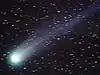
 Comet 10P/Tempel and the trail of dust that accumulates in its orbit. Photo captured on 11 July 2026. | |
| Discovery | |
|---|---|
| Discovered by | Wilhelm Tempel |
| Discovery date | 4 July 1873 |
| Designations | |
| P/1873 N1, P/1878 O1 | |
| |
| Orbital characteristics[1][2] | |
| Epoch | 9 June 2026 (JD 2461200.5) |
| Observation arc | 153.14 years[a] |
| Number of observations | 7,784 |
| Aphelion | 4.71 AU |
| Perihelion | 1.418 AU |
| Semi-major axis | 3.06 AU |
| Eccentricity | 0.5374 |
| Orbital period | 5.37 years |
| Inclination | 12.027° |
| 117.80° | |
| Argument of periapsis | 195.47° |
| Mean anomaly | 350.06° |
| Last perihelion | 2 August 2026[3][4] 24 March 2021 |
| Next perihelion | 11 December 2031[5] |
| TJupiter | 2.965 |
| Earth MOID | 0.407 AU (60.9 million km) |
| Jupiter MOID | 0.620 AU (92.8 million km) |
| Physical characteristics[1] | |
Mean diameter | 10.6 km (6.6 mi)[6] |
| 8.948±0.001 hours[7] | |
| 0.022[8] | |
| Comet total magnitude (M1) | 14.6 |
| 9 (2026-07-11)[11] | |
10P/Tempel, also known as Tempel 2, is a large Jupiter-family comet roughly 10 km in diameter with a 5.4 year orbit around the Sun. It was discovered on 4 July 1873 by Wilhelm Tempel.[12]
As of late August 2026, the comet is around apparent magnitude 9 with a declination of –33.[13] The orbital dust trail created from particles ejected by the nucleus over hundreds of years is visible in images of the comet. At perihelion passage on 2 August 2026 the solar elongation was 164 degrees at a magnitude of approximately 8–9 with a declination of –24.[3][13][b] The closest approach to Earth was the next day on 3 August 2026 at a distance of 0.414 AU (61.9 million km).[13][c][d] The comet got into the reach of most binoculars.
| Date & time of closest approach |
Earth distance (AU) |
Sun distance (AU) |
Velocity wrt Earth (km/s) |
Velocity wrt Sun (km/s) |
Uncertainty region (3-sigma) |
Reference |
|---|---|---|---|---|---|---|
| 2026-Aug-03 20:56 | 0.414 AU (61.9 million km; 38.5 million mi) | 1.42 AU (212 million km; 132 million mi) | 6.5 | 31.0 | ± 34 km | Horizons |
Physical characteristics

The comet nucleus is estimated to be roughly the size of Halley's Comet at 10.6 km (6.6 mi) in diameter with a low albedo of 0.022.[8] The nucleus is dark because hydrocarbons on the surface have been converted to a dark, tar like substance by solar ultraviolet radiation. The nucleus is large enough that even near aphelion (furthest distance from the Sun which is near the orbit of Jupiter) the comet remains brighter than about magnitude 21.
Photometry during four apparitions between 1983 and 2011 shows that cometary activity increases sharply about three months before perihelion and after perihelion declines steadily and slowly.[15] During the 2010 apparition the comet brightened to about apparent magnitude 8.[3] The most favorable apparition of 10P/Tempel 2 was in 1925 when it came within 0.35 AU (52 million km; 33 million mi) of Earth with an apparent magnitude of 6.5.[12][16]
Infrared spectroscopy conducted in July 2010 revealed the presence of CH3OH, C2H6, NH3 and HCN in trace amounts within its coma, with their peak intensities suggesting a possible existence of a distributed source that was released from the nucleus as sublimed icy grains.[17]

Observations by the Infrared Astronomical Satellite in 1983 showed that the comet has a dust trail. At that time it was the most prominent of the observed dust trails and extended for over 48 degrees in the sky while it was narrow, less than 4 arcminutes thick.[18] The particles that comprise it have a diameter over one millemeter and were ejected from the comet over a period of hundreds of years with velocities of several meters per second with respect to the comet. The particles in front of the comet have a diamater of at least 6 mm.[19]
Photometry of the comet in 2010–2011 indicated that the nucleus was rotating once every 8.950±0.002 hours.[15] That rotational period was higher than that calculated in 1999, when it was 8.941±0.002 hours, which in turn was higher than that in 1988, indicating that the nuclear rotation rate was slowing due to asymmetric outgassing. The comet features an almost linear jet in CN and red images by the Lowell Observatory whose appearance changes only slightly during the rotation of the comet, originating from a small region near the pole of the comet.[15]
Proposed exploration
The Jet Propulsion Laboratory proposed a flyby of the comet with a flight spare of Mariner 4.[20] The probe was instead used for a Venus flyby as Mariner 5.[20]
It was the original target of the Comet Rendezvous Asteroid Flyby (CRAF) mission before it was switched to 22P/Kopff due to developmental delays,[21] until its eventual cancellation in 1992.[22]
10P/Tempel was to be the target of the NASA part of the International Comet Mission after transporting a European probe to a flyby of Halley's Comet.[23] The plan was to use Solar electric propulsion to get the craft to orbit the comet.[24] The program was cancelled in November 1979.[24]
Notes
- ↑ Observation arc from the Minor Planet Center database only covered dates from 5 August 1894 until 21 August 2026 (132.05 years). This figure included its entire arc up to 4 July 1873.
- ↑ For comparison, the star Antares has a southern declination of −26.
- ↑ The 2026 Earth approach of 0.414 AU (61.9 million km) was close to the Earth–Minimum orbit intersection distance (MOID) of 0.407 AU (60.9 million km).
- ↑ The 5-km in diameter short period comet 169P/NEAT passed 0.167 AU (25.0 million km) from Earth on 11 August 2026. The 1-km in diameter short period comet 11P/Tempel–Swift–LINEAR will pass 0.401 AU (60.0 million km) from Earth on 11 November 2026.
References
- 1 2 "10P/Tempel 2 – JPL Small-Body Database Lookup". ssd.jpl.nasa.gov. Jet Propulsion Laboratory. Archived from the original on 29 November 2020. Retrieved 24 February 2010.
- ↑ "10P/Tempel Orbit". Minor Planet Center. Retrieved 6 August 2023.
- 1 2 3 S. Yoshida (27 January 2008). "10P/Tempel 2". www.aerith.net. Retrieved 24 February 2010.
- ↑ "Horizons Batch for 10P/Tempel 2 (90000213) on 2026-Aug-02" (Perihelion occurs when rdot flips from negative to positive). JPL Horizons. Archived from the original on 27 June 2022. Retrieved 27 June 2022. (JPL#K214/33 Soln.date: 2022-May-02)
- ↑ "Horizons Batch for 10P/Tempel 2 (90000214) on 2031-Dec-11" (Perihelion occurs when rdot flips from negative to positive). JPL Horizons. Retrieved 4 August 2026. (JPL#K265/43 Soln.date: 2026-Jul-28)
- ↑ P. L. Lamy; I. Toth; Y. R. Fernández; H. A. Weaver (2004). "The Sizes, Shapes, Albedos, and Colors of Cometary Nuclei" (PDF). Comets II. University of Arizona Press. pp. 223–264. doi:10.2307/j.ctv1v7zdq5.22. ISBN 978-0-8165-2450-1. JSTOR j.ctv1v7zdq5.22. Archived from the original (PDF) on 9 October 2022. Retrieved 15 August 2025.
- ↑ D. G. Schleicher; M. M. Knight; S. E. Levine (2013). "The Nucleus of Comet 10P/Tempel 2 in 2013 and Consequences Regarding its Rotational State: Early Science from the Discovery Channel Telescope". The Astronomical Journal. 146 (5): 137–145. arXiv:1309.2944. Bibcode:2013AJ....146..137S. doi:10.1088/0004-6256/146/5/137. S2CID 55337675.
- 1 2 M. F. A'Hearn; H. Campins; D. G. Schleicher; R. L. Millis (1989). "The Nucleus of Comet P/Tempel 2". The Astrophysical Journal. 347: 1155–1166. Bibcode:1989ApJ...347.1155A. doi:10.1086/168204. ISSN 0004-637X.
- ↑ K. J. Meech; O. R. Hainaut; B. G. Marsden (2004). "Comet nucleus size distributions from HST and Keck telescopes". Icarus. 170 (2): 463–491. Bibcode:2004Icar..170..463M. doi:10.1016/j.icarus.2004.03.014.
- 1 2 P. L. Lamy; I. Toth; H. A. Weaver; M. F. A'Hearn; L. Jorda (2009). "Properties of the nuclei and comae of 13 ecliptic comets from Hubble Space Telescope snapshot observations" (PDF). Astronomy & Astrophysics. 508 (2): 1045–1056. Bibcode:2009A&A...508.1045L. doi:10.1051/0004-6361/200811462. S2CID 125249770.
- ↑ "COBS Observation list: 10P". Crni Vrh Observatory. Retrieved 13 July 2026. Comet 10P/Tempel 2 Lightcurve
- 1 2 G. W. Kronk. "10P/Tempel 2". Cometography.com. Retrieved 24 February 2010.
- 1 2 3 G. van Buitenen. "10P/Tempel". astro.vanbuitenen.nl. Retrieved 12 April 2026.
- ↑ F. L. Whipple (1981). On Observing Comets for Nuclear Rotation (PDF). Modern Observational Techniques for Comets Conference Proceedings.
- 1 2 3 M. M. Knight; D. G. Schleicher; T. L. Farnham; E. W. Schwieterman; S. R. Christensen (2012). "A Quarter-Century of Observations of Comet 10P/Tempel 2 at Lowell Observatory: Continued Spin-Down, Coma Morphology, Production Rates, and Numerical Modeling". The Astronomical Journal. 144 (5): 153. arXiv:1210.1228. doi:10.1088/0004-6256/144/5/153.
- 1 2 G. van Biesbroeck (1926). "On the Appearance of the Comets in 1925 from Observations at the Yerkes Observatory". Popular Astronomy. 34: 224–228. Bibcode:1926PA.....34..224V.
- ↑ L. Paganini; M. J. Mumma; B. P. Bonev; G. L. Villanueva; et al. (2012). "The formation heritage of Jupiter Family Comet 10P/Tempel 2 as revealed by infrared spectroscopy". Icarus. 218 (1): 644–653. arXiv:1201.5166. Bibcode:2012Icar..218..644P. doi:10.1016/j.icarus.2012.01.004. PMC 7365286. PMID 32675835. S2CID 106398196.
- ↑ M. V. Sykes; L. A. Lebofsky; D. M. Hunten; F. Low (1986). "The Discovery of Dust Trails in the Orbits of Periodic Comets". Science. 232 (4754): 1115–1117. doi:10.1126/science.232.4754.1115.
- ↑ M. V. Sykes; D. J. Lien; R. G. Walker (1990). "The Tempel 2 Dust Trail". Icarus. 86 (1): 236–247. doi:10.1016/0019-1035(90)90212-R.
- 1 2 P. Ulivi; D. M. Harland (2007). Robotic Exploration of the Solar System Part I: The Golden Age 1957–1982. Springer. pp. 57–58. ISBN 978-0-387-49326-8.
- ↑ M. Neugebauer; R. F. Draper (1987). "The Comet Rendezvous Asteroid Flyby mission". Advances in Space Research. 7 (12): 201–204. Bibcode:1987AdSpR...7l.201N. doi:10.1016/0273-1177(87)90218-3.
- ↑ S. Cole (1992). "Bush cancels CRAF, closes out Magellan". Eos, Transactions, American Geophysical Union. 73 (6): 65-70. Bibcode:1992EOSTr..73Q..66C. doi:10.1029/91EO00058.
- ↑ N. Calder (1992). Giotto to the Comets. Presswork. pp. 25–28. ISBN 0-9520115-0-6.
- 1 2 D. W. Hughes (2006). "The Giotto-Halley 20th anniversary". Astronomy and Geophysics. 47 (1): 1.27 – 1.28. Bibcode:2006A&G....47a..27H. doi:10.1111/j.1468-4004.2006.47127.x. ISSN 1366-8781. S2CID 122044809.
External links
- 10P/Tempel at the JPL Small-Body Database
- 10P/Tempel 2 at Seiichi Yoshida's website
- 10P/Tempel at Gideon van Buitenen's website
- 10P/Tempel 2 (2010) (astrosurf)
- 10P/Tempel mentioned in the June 2026 Comet Chasing Youtube channel
Astronomy Pictures of the Day (APOD)
- NASA Astronomy Picture of the Day: The Dust Trail of Comet Tempel 2 (17 July 2026)
- NASA Astronomy Picture of the Day: A Messier Moment for Tempel 2 (8 August 2026)

2015 in space | ||||||
|---|---|---|---|---|---|---|
| ||||||
Space probe launches  |
|    | ||||
| Impact events | ||||||
| Selected NEOs | ||||||
| Exoplanets | ||||||
| Discoveries |
| |||||
| Comets | ||||||
| Space exploration | ||||||
