Portal:Hungary

The Hungary Portal



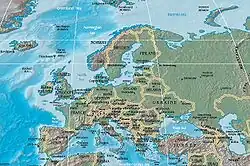
Hungary is a landlocked country in Central Europe. Spanning much of the Carpathian Basin, it is bordered by Slovakia to the north, Ukraine to the northeast, Romania to the east and southeast, Serbia to the south, Croatia and Slovenia to the southwest, and Austria to the west. Hungary lies within the Danube River's drainage basin and is dominated by great lowland plains. It has a population of over 9.5 million, consisting mostly of ethnic Hungarians (Magyars) and a significant Romani minority. Hungarian is the official language and among the few in Europe outside the Indo-European family. Budapest is the country's capital, largest city, and cultural and economic center.
Before the establishment of the Hungarian state, the territory was settled by various groups, including Celts, Romans, Huns, Germanic peoples, Avars, and Slavs. Statehood began in the late ninth century with the Principality of Hungary, which became a medieval Christian kingdom under King Stephen I in 1000. After it was defeated by the Ottoman Empire at the Battle of Mohács in 1526, the kingdom was split into three regions for over 150 years until its reunion under Habsburg rule before the turn of the 18th century. Several uprisings against the Habsburgs precipitated the formation of the Austro-Hungarian Monarchy in the Compromise of 1867; Austria-Hungary remained a European great power until World War I. Hungary's modern borders were then established by the 1920 Treaty of Trianon, which resulted in severe losses for the country, including 71% of its historical territory and the majority of its economy and population; a third of ethnic Hungarians were left outside the new borders.
Hungary endured turmoil in the early interwar period, culminating in the national-conservative regime of regent Miklós Horthy. Hungary joined the Axis powers in World War II, suffering significant damage and casualties. After a brief Soviet occupation, the Hungarian People's Republic was established in 1949 as a satellite state inside the Warsaw Pact. Subsequent political repression and economic stagnation led to the unsuccessful Hungarian Revolution of 1956, though communist rule softened in the following decades. During the Revolutions of 1989, Hungary peacefully transitioned into a democratic parliamentary republic. It joined the European Union (EU) in 2004 and the Schengen Area in 2007. Under the leadership of Viktor Orbán and Fidesz from 2010 to 2026, the country experienced democratic backsliding.
Hungary is a high-income economy with universal health care and tuition-free tertiary education. It has a long history of significant contributions to arts, music, literature, sports, and science and technology. As a popular tourist destination in Europe, Hungary had 24.5 million international visitors in 2019. Hungary is a member of numerous international organizations, including the Council of Europe, EU, NATO, United Nations, World Health Organization, World Trade Organization, World Bank, Asian Infrastructure Investment Bank, and the Visegrád Group. (Full article...)
 Featured article -
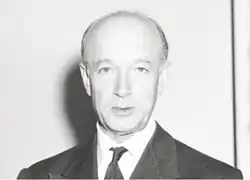
Joseph Szigeti (Hungarian: Szigeti József, [ˈsiɡɛti ˈjoːʒɛf]; 5 September 1892 – 19 February 1973) was a Hungarian violinist.
Born into a musical family, he spent his early childhood in a small town in Transylvania. He quickly proved himself to be a child prodigy on the violin, and moved to Budapest with his father to study with the renowned pedagogue Jenő Hubay. After completing his studies with Hubay in his early teens, Szigeti began his international concert career. His performances at that time were primarily limited to salon-style recitals and the more overtly virtuosic repertoire; however, after making the acquaintance of pianist Ferruccio Busoni, he began to develop a much more thoughtful and intellectual approach to music that eventually earned him the nickname "The Scholarly Virtuoso". (Full article...)
Selected article -

Debrecen is Hungary's second-largest city, after Budapest, the regional centre of the Northern Great Plain region and the seat of Hajdú-Bihar County. A city with county rights, it was the largest Hungarian city in the 18th century and it is one of the Hungarian people's most important cultural centres. Debrecen was also the capital city of Hungary during the revolution in 1848–1849. During the revolution, the dethronement of the Habsburg dynasty was declared in the Reformed Great Church. The city also served as the capital of Hungary by the end of World War II in 1944–1945. It is home to the University of Debrecen. (Full article...)
People
- Musicians
Béla Bartók – János Bihari – Ernő Dohnányi – Béni Egressy – Ferenc Erkel – Zoltán Kocsis – Zoltán Kodály – Franz Liszt - Eugene Ormandy - George Szell - András Schiff
- Painters
Gyula Benczúr – Tivadar Csontváry Kosztka – Béla Czóbel – Árpád Feszty – Károly Lotz – Viktor Madarász – Mihály Munkácsy – József Rippl-Rónai – Pál Szinyei Merse – István Szőnyi – Victor Vasarely
- Photographers
Brassaï – Cornell Capa – Robert Capa – Lucien Hervé – André Kertész – László Moholy-Nagy – Martin Munkácsi
- Scientists
Béla H. Bánáthy – Zoltán Bay – Georg von Békésy – Farkas Bolyai – János Bolyai – Károly Bund – József Eötvös – Loránd Eötvös – Dennis Gabor – John Charles Harsanyi – George de Hevesy – Alexander Csoma de Kőrös – László Lovász – John von Neumann – George Andrew Olah – Ernő Rubik – Hans Selye – Ignaz Semmelweis – Charles Simonyi – János Szentágothai – Albert Szent-Györgyi – Leó Szilárd – Edward Teller – Eugene Wigner
- Writers and poets
Endre Ady – János Arany – József Eötvös – György Faludy – Béla Hamvas – Mór Jókai – Attila József – Ferenc Kazinczy – Imre Kertész – János Kodolányi – Ferenc Kölcsey – Imre Madách – Sándor Márai – Ferenc Molnár – Sándor Petőfi – Miklós Radnóti – Magda Szabó – Antal Szerb – Miklós Vámos – Mihály Vörösmarty
- Statesmen, Politicians and Military
Gyula Andrássy – Lajos Batthyány – Gabriel Bethlen – Stephen Bocskay – Matthias Corvinus – Ferenc Deák – Miklós Horthy – Lajos Kossuth – Ferenc Nagy – Imre Nagy – Bertalan Szemere – István Széchenyi – Miklós Wesselényi – Vilmos Nagy of Nagybaczon
- Sportspeople
József Bozsik – Krisztina Egerszegi – Zoltán Gera – Dezső Gyarmati – Ágnes Keleti – Péter Lékó – Csaba Mérő – Tibor Nyilasi – László Papp – Judit Polgár – Zsuzsa Polgár – Ferenc Puskás
- Film & Stage
Nimród Antal – Michael Curtiz – John Garfield – Miklós Jancsó – Sir Alexander Korda – Peter Lorre – Béla Lugosi – Emeric Pressburger – Miklós Rózsa – Andy G. Vajna – Gábor Zsazsa
 Good article -

The Battle of Kerlés (Hungarian: kerlési csata) also known as the Battle of Cserhalom (Hungarian: cserhalmi csata), was an engagement between an army of Pechenegs and Ouzes commanded by Osul and the troops of King Solomon of Hungary and his cousins, Dukes Géza and Ladislaus, in Transylvania in 1068. The Pechenegs had been the dominant power of the westernmost regions of the Eurasian steppes since around 895. However, large Pecheneg groups moved to the Balkan Peninsula at the same time as the westward migration of the Ouzes and Cumans in the 1040s. The first recorded Pecheneg invasion of Transylvania occurred during the reign of Stephen I of Hungary (r. 997–1038).
In 1068, the invaders broke into Transylvania through the passes of the Carpathian Mountains. Archaeological finds suggest that they destroyed at least three fortresses made of earth and timber, including the ones at Doboka (now Dăbâca in Romania) and Sajósárvár (present-day Șirioara). They also made a plundering raid in the Nyírség region, to the west of Transylvania. After taking much booty, they planned to leave Hungary, but the Hungarians ambushed and annihilated them at a hill near Doboka. According to a popular legend, a "Cuman" warrior tried to escape from the battlefield, taking a Hungarian girl, but Duke Ladislaus defeated and killed him in single combat. (Full article...)
Selected picture

 An image depicting the Hungarian population in Hungary according to the census from 1890
 A view of Miskolc
 The Hungarian Parliament Building in Budapest, 2015
 The Hungarian Romani folk music group Kalyi Jag performing in Warzaw, Poland in 2010
 Grand Prince Árpád crossing the Carpathians. A detail of the Arrival of the Hungarians, Árpád Feszty's and his assistants' vast (1800 m²) cycloramic canvas, painted to celebrate the 1000th anniversary of the Magyar conquest of Hungary, now displayed at the Ópusztaszer National Heritage Park in Hungary.
 Heroes' Square is one of the major squares in Budapest, Hungary, noted for its iconic statue complex featuring the Seven chieftains of the Magyars and other important Hungarian national leaders
 The heroism of Titusz Dugovics grabbing the Ottoman standard-bearer while both of them plunge to their deaths, during the Siege of Belgrade (1456). Painting is titled Titusz Dugovics Sacrifices Himself, by Alexander von Wagner, 1859.
 A view of Lake Neusiedl, which straddles the Austrian–Hungarian border

 A view of downtown Nyíregyháza
Wikiprojects
- WikiProject Hungary
- WikiProject Former countries/AH task force
Related projects:
- WikiProject Europe
- WikiProject Geography
Related portals


Things you can do
| The following stub articles would benefit from expansion. | |
 |
|
General images -
The following are images from various Hungary-related articles on Wikipedia.
 Béla Bartók, Hungarian composer (1881–1945) (from Culture of Hungary)

 Carpathian Basin in the 2nd century AD: provinces of the Roman Empire and the Barbaricum (from History of Hungary)
 Western conquests of Matthias Corvinus. (from History of Hungary)
 A map of the Kingdom of Hungary in 1941. (from History of Hungary)
 Cutaway drawing of Millennium Underground in Budapest (1894–1896) which was the first underground in continental Europe. (from History of Hungary)

 Europe in 1097 (from History of Hungary)

 A vőfély in traditional costume, c. 1885 (from Culture of Hungary)
 Hungarian Arrow Cross army/militia and a German Tiger II tank in Budapest, October 1944. (from History of Hungary)
 Csárdás (from Culture of Hungary)
 Lake Balaton in the 1930s just before the Second World War. (from History of Hungary)
 Artist Mihály Zichy's rendition of Sándor Petőfi reciting the Nemzeti dal (national anthem) to a crowd on 15 March 1848. (from History of Hungary)
- Magyars in the Kingdom of Hungary in 1890. (from History of Hungary)
 Budapest University of Technology and Economics, the oldest University of Technology in the world, founded in 1782. (from History of Hungary)

 Avar Khaganate in the first half of the 7th century (from History of Hungary)
 Withdrawal of Soviet troops from Hungary, 1 July 1990. (from History of Hungary)
 Hortobágyi palacsinta, served in Sopron (from Culture of Hungary)
 Map of the counties in Hungary around 1880. (from History of Hungary)
 Dacian Influence over Pannonia (from History of Hungary)

 Hungarian folk music band Héttorony Hangászok (from Culture of Hungary)
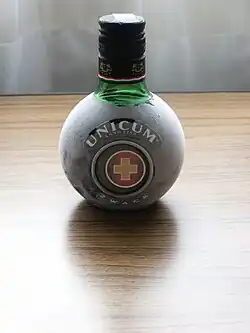 A cold bottle of Unicum (from Culture of Hungary)
 John Hunyadi – one of the greatest generals and a later regent of Hungary. (Chronica Hungarorum, 1488) (from History of Hungary)
 A map of the lands ruled by Louis the Great in Pallas's Great Encyclopedia (from History of Hungary)
 A slice from the Dobos Cake (from Culture of Hungary)
 Franz Liszt, Hungarian composer and pianist (1811–1886) (from Culture of Hungary)

 An image portraying the Flag of Hungary (from Culture of Hungary)
 Erika Szeles, a 15-year-old martyr of the revolution. Her photograph, used as a cover image, spread across Western countries during the October Revolution and grew into a true symbol: "a symbol of courage and hope". (from History of Hungary)


 The Kingdom of Hungary in the 1090s. (from History of Hungary)
 The Siege of Eger (1552), in which 2,000 Hungarians fought against close to 35,000–40,000 Turk warriors. The battle finished with Hungarian victory. (from History of Hungary)
 This weapon was esteemed in the Hungarian royal court as the Sword of Attila. A Hungarian sabre from the first half of the 10th. (from History of Hungary)

 Ernö Gömbös, (r.) aide-de-camp to Ferenc Szálasi and Gyula Gömbös's son, along with a Honved officer and a member of the Arrow Cross Party, in front of the Ministry of Defense, 1944. (from History of Hungary)
 Lake Hévíz (from Culture of Hungary)
 Hungarian campaigns across Europe in the 10th century. Between 899 and 970, according to contemporary sources, the researchers count 47 (38 to West and 9 to East) raids in different parts of Europe. From these campaigns only 8 were unsuccessful and the others ended with success. (from History of Hungary)
 Selection of traditional handpainted ceramics in J&A Kerámia shop, Gyenesdiás (from Culture of Hungary)
 Scythian golden deer shield ornaments from the Iron Age 6th century BC found in Hungary. Above, the Golden Deer of Zöldhalompuszta is 37 cm, making it the largest Scythian golden deer known. Below, the Golden Deer of Tapiószentmárton. (from History of Hungary)
 Hungarian and the Little Entente forces in strength of the 1920s. (from History of Hungary)
 Europeans from various countries relaxing in the wave pool in Budapest in 1939. (from History of Hungary)
 Louis II of Hungary and Bohemia – the young king, who died at the Battle of Mohács, painted by Titian. (from History of Hungary)
 Kingdom of Hungary in the second half of the 13th century (from History of Hungary)
 Carpathian Basin after the fall of the Hunnic and Western Roman empires (from History of Hungary)
 The Treaty of Trianon: Hungary lost 72% of its land, and sea ports in Croatia, 3,425,000 Magyars found themselves separated from their motherland. The country lost five of its ten biggest Hungarian cities. (from History of Hungary)
Topics
Categories

New articles
Rules | Match log | Results page (for watching) | Deleted articles| Last updated: 2026-08-30 19:53 (UTC)
Note: The list display can now be customized by each user. See List display personalization for details.
- Emma Jacques (edit | talk | history | links | watch | logs | tools | Emma Jacques (Q106211577) ) by Fregerslev (talk · contribs · new pages (146)) started on 2026-08-30, score: 60
- Hannu Halinen (edit | talk | history | links | watch | logs | tools | Portal:Hungary (Q8252739) ) by Dafootballguy (talk · contribs · new pages (20)) started on 2026-08-30, score: 40
- Ladislas (edit | talk | history | links | watch | logs | tools | Ladislas (Q19869384) ) by Altenmann (talk · contribs · new pages (161)) started on 2026-08-30, score: 20
- Chung Hyung-kyun (edit | talk | history | links | watch | logs | tools | Chung Hyung-kyun (Q141223041) ) by Fregerslev (talk · contribs · new pages (146)) started on 2026-08-30, score: 20
- Lists of sports champions (edit | talk | history | links | watch | logs | tools | Portal:Hungary (Q8252739) ) by Zsteve21 (talk · contribs · new pages (158)) started on 2026-08-30, score: 20
- Kaposvári MTE (edit | talk | history | links | watch | logs | tools | Portal:Hungary (Q8252739) ) by RuthStevens (talk · contribs · new pages (24)) started on 2026-08-30, score: 90
- Csepel Autó SE (edit | talk | history | links | watch | logs | tools | Portal:Hungary (Q8252739) ) by RuthStevens (talk · contribs · new pages (24)) started on 2026-08-30, score: 60
- Borsodi Bányász SE (edit | talk | history | links | watch | logs | tools | Portal:Hungary (Q8252739) ) by RuthStevens (talk · contribs · new pages (24)) started on 2026-08-30, score: 150
- Bogomoljci (edit | talk | history | links | watch | logs | tools | Portal:Hungary (Q8252739) ) by Absurdum4242 (talk · contribs · new pages (39)) started on 2026-08-30, score: 20
- Arthur Hellmer (edit | talk | history | links | watch | logs | tools | Arthur Hellmer (Q709752) ) by Brendanciecko (talk · contribs · new pages (1)) started on 2026-08-30, score: 40
- Paneveggio barrier (edit | talk | history | links | watch | logs | tools | Portal:Hungary (Q8252739) ) by DnieperSniper (talk · contribs · new pages (16)) started on 2026-08-30, score: 40
- Devínska Nová Ves railway station (edit | talk | history | links | watch | logs | tools | Portal:Hungary (Q8252739) ) by Brutalhovno (talk · contribs · new pages (1)) started on 2026-08-29, score: 20
- Valentin Pierburg (edit | talk | history | links | watch | logs | tools | Valentin Pierburg (Q130016620) ) by Road Atlanta Turn 5 (talk · contribs · new pages (37)) started on 2026-08-24, score: 30
- Bojan Milosavljević (edit | talk | history | links | watch | logs | tools | Bojan Milosavljević (Q140202322) ) by Dfotev (talk · contribs · new pages (2)) started on 2026-08-29, score: 20
- Willemijn Mulder (edit | talk | history | links | watch | logs | tools | Willemijn Mulder (Q125643617) ) by DetroitFan7 (talk · contribs · new pages (51)) started on 2026-08-29, score: 20
- Smallpox in society and culture (edit | talk | history | links | watch | logs | tools | Portal:Hungary (Q8252739) ) by Chiswick Chap (talk · contribs · new pages (10)) started on 2026-08-29, score: 20
- Mertitious Artist of Hungary Award (edit | talk | history | links | watch | logs | tools | Portal:Hungary (Q8252739) ) by Liikiill (talk · contribs · new pages (1)) started on 2026-08-29, score: 70
- Tatabányai Építők SK (edit | talk | history | links | watch | logs | tools | Portal:Hungary (Q8252739) ) by RuthStevens (talk · contribs · new pages (24)) started on 2026-08-29, score: 70
- Kiskunhalasi VSE (edit | talk | history | links | watch | logs | tools | Portal:Hungary (Q8252739) ) by RuthStevens (talk · contribs · new pages (24)) started on 2026-08-29, score: 70
- Pécsi Ércbányász SC (edit | talk | history | links | watch | logs | tools | Portal:Hungary (Q8252739) ) by RuthStevens (talk · contribs · new pages (24)) started on 2026-08-29, score: 70
- Magyar Kábel SC (edit | talk | history | links | watch | logs | tools | Portal:Hungary (Q8252739) ) by RuthStevens (talk · contribs · new pages (24)) started on 2026-08-29, score: 100
- Szabadkai AFC (edit | talk | history | links | watch | logs | tools | Portal:Hungary (Q8252739) ) by RuthStevens (talk · contribs · new pages (24)) started on 2026-08-29, score: 60
- Herbert Batliner (edit | talk | history | links | watch | logs | tools | Herbert Batliner (Q1608022) ) by Eli185 (talk · contribs · new pages (1)) started on 2026-08-29, score: 30
- Görgényi (edit | talk | history | links | watch | logs | tools | Portal:Hungary (Q8252739) ) by Duckmather (talk · contribs · new pages (229)) started on 2026-08-29, score: 20
- List of cities in Central and Eastern Europe by GDP (edit | talk | history | links | watch | logs | tools | List of cities in Central and Eastern Europe by GDP (Q141205949) ) by Magadishu (talk · contribs · new pages (3)) started on 2026-08-28, score: 20
- Conscription in Croatia (edit | talk | history | links | watch | logs | tools | Conscription in Croatia (Q136684905) ) by Moon1238 (talk · contribs · new pages (13)) started on 2026-08-28, score: 20
- 2025 Suhandinata Cup group stage (edit | talk | history | links | watch | logs | tools | 2025 World Junior Badminton Championships – Teams group stage (Q135989950) ) by Ahecht (talk · contribs · new pages (8)) started on 2026-08-28, score: 20
- Ivana Perović (edit | talk | history | links | watch | logs | tools | Ivana Perović (Q109644235) ) by Absurdum4242 (talk · contribs · new pages (39)) started on 2026-08-28, score: 20
- Újszegedi TC (edit | talk | history | links | watch | logs | tools | Portal:Hungary (Q8252739) ) by RuthStevens (talk · contribs · new pages (24)) started on 2026-08-28, score: 130
- Louis III of Hesse (edit | talk | history | links | watch | logs | tools | Ludwig III, Grand Duke of Hesse (Q57508) ) by Illini11 (talk · contribs · new pages (723)) started on 2026-08-28, score: 30
- Tastebuds NYC (edit | talk | history | links | watch | logs | tools | Portal:Hungary (Q8252739) ) by EditDude (talk · contribs · new pages (3)) started on 2026-08-28, score: 20
- Gertrude Wagner (edit | talk | history | links | watch | logs | tools | Gertrude Wagner (Q101064800) ) by Arkistointi (talk · contribs · new pages (5)) started on 2026-08-27, score: 40
- Kálmán Esterházy (edit | talk | history | links | watch | logs | tools | Kálmán Esterházy (Q991504) ) by Edward Mike005 (talk · contribs · new pages (5)) started on 2026-08-27, score: 50
- Lajos Wienermann (edit | talk | history | links | watch | logs | tools | Lajos Wienermann (Q141193676) ) by Kadarov (talk · contribs · new pages (1)) started on 2026-08-27, score: 80
- List of stage names: P (edit | talk | history | links | watch | logs | tools | Portal:Hungary (Q8252739) ) by Clarityfiend (talk · contribs · new pages (38)) started on 2026-08-25, score: 20
- Csépán I Ják (edit | talk | history | links | watch | logs | tools | Csépán I Ják (Q141193726) ) by Norden1990 (talk · contribs · new pages (3)) started on 2026-08-27, score: 80
- Deaths in 1977 (edit | talk | history | links | watch | logs | tools | deaths in 1977 (Q2235343) ) by Albert Eisenstein (talk · contribs · new pages (2)) started on 2026-08-27, score: 20
- Wienermann Lajos (edit | talk | history | links | watch | logs | tools | Lajos Wienermann (Q141193676) ) by Kadarov (talk · contribs · new pages (1)) started on 2026-08-27, score: 60
- Eirini Chatziefstratiadou (edit | talk | history | links | watch | logs | tools | Irini Hatziefstratiadou (Q106835865) ) by G-Lignum (talk · contribs · new pages (6)) started on 2026-08-27, score: 60
- Ivan Danielsson (edit | talk | history | links | watch | logs | tools | Carl Ivan Danielsson (Q5616820) ) by Saftgurka (talk · contribs · new pages (9)) started on 2026-08-27, score: 70
- Zdeněk Pohl (edit | talk | history | links | watch | logs | tools | Zdeněk Pohl (Q18068340) ) by In Vitrio (talk · contribs · new pages (26)) started on 2026-08-27, score: 20
- Sepsiszentgyörgyi Textil SE (edit | talk | history | links | watch | logs | tools | Portal:Hungary (Q8252739) ) by RuthStevens (talk · contribs · new pages (24)) started on 2026-08-27, score: 50
- Jazmine White (edit | talk | history | links | watch | logs | tools | Jazmine White (Q97043885) ) by Fixer88 (talk · contribs · new pages (32)) started on 2026-08-27, score: 30
- Sepsiszentgyörgyi SE (edit | talk | history | links | watch | logs | tools | Portal:Hungary (Q8252739) ) by RuthStevens (talk · contribs · new pages (24)) started on 2026-08-27, score: 50
- Komáromi AC (edit | talk | history | links | watch | logs | tools | Portal:Hungary (Q8252739) ) by RuthStevens (talk · contribs · new pages (24)) started on 2026-08-27, score: 90
- 125, rue des Malaises (edit | talk | history | links | watch | logs | tools | (Q140547321) ) by Bearcat (talk · contribs · new pages (43)) started on 2026-08-26, score: 20
- Peace Walking (edit | talk | history | links | watch | logs | tools | Portal:Hungary (Q8252739) ) by JeziBart (talk · contribs · new pages (1)) started on 2026-08-23, score: 20
- Church of Saint Nicholas (Győr, Hungary) (edit | talk | history | links | watch | logs | tools | Portal:Hungary (Q8252739) ) by Timtrent (talk · contribs · new pages (68)) started on 2026-08-26, score: 60
- Swimming at the 2026 Mediterranean Games – Men's 100 metre backstroke (edit | talk | history | links | watch | logs | tools | Swimming at the 2026 Mediterranean Games – Men's 100 metre backstroke (Q141183047) ) by Alibene567 (talk · contribs · new pages (48)) started on 2026-08-26, score: 20
- Animal Alpha (edit | talk | history | links | watch | logs | tools | Animal Alpha (Q1921329) ) by Geschichte (talk · contribs · new pages (32)) started on 2026-08-26, score: 20
- Hargita TE (edit | talk | history | links | watch | logs | tools | Portal:Hungary (Q8252739) ) by RuthStevens (talk · contribs · new pages (24)) started on 2026-08-26, score: 50
- Shogi in Shanghai (edit | talk | history | links | watch | logs | tools | Portal:Hungary (Q8252739) ) by Absurdum4242 (talk · contribs · new pages (39)) started on 2026-08-26, score: 20
- Serendipity Point Films (edit | talk | history | links | watch | logs | tools | Serendipity Point Films (Q78344865) ) by Guninvalid (talk · contribs · new pages (7)) started on 2026-08-26, score: 40
- UEFA Women's Champions League clubs performance comparison (edit | talk | history | links | watch | logs | tools | Portal:Hungary (Q8252739) ) by Nightfall87 (talk · contribs · new pages (4)) started on 2026-08-26, score: 20
- Fort Vezzena (edit | talk | history | links | watch | logs | tools | Fort Vezzena (Q875791) ) by DnieperSniper (talk · contribs · new pages (16)) started on 2026-08-25, score: 40
- Oleksander Kolessa (edit | talk | history | links | watch | logs | tools | Oleksandr Mychajlovyč Kolessa (Q11801444) ) by Skoropadsky (talk · contribs · new pages (9)) started on 2026-08-25, score: 30
- Bukovina Championship (edit | talk | history | links | watch | logs | tools | (Q125354046) ) by Help.Football.History (talk · contribs · new pages (28)) started on 2026-08-25, score: 20
- Jiří Lobkowicz (racing driver) (edit | talk | history | links | watch | logs | tools | Georg Christian von Lobkowitz (Q22046457) ) by In Vitrio (talk · contribs · new pages (26)) started on 2026-08-25, score: 20
- Fort Serrada (edit | talk | history | links | watch | logs | tools | Werk Serrada (Q1660480) ) by DnieperSniper (talk · contribs · new pages (16)) started on 2026-08-24, score: 40
- Ivan Babejić (edit | talk | history | links | watch | logs | tools | Ivan Babejić (Q110048147) ) by Petar Serbanovic (talk · contribs · new pages (3)) started on 2026-08-22, score: 20
- Michal Valko (edit | talk | history | links | watch | logs | tools | Michal Valko (Q97454550) ) by Jeneyovalucia (talk · contribs · new pages (0)) started on 2026-08-13, score: 20
- History Extra (edit | talk | history | links | watch | logs | tools | Portal:Hungary (Q8252739) ) by Griffindd (talk · contribs · new pages (1)) started on 2026-08-25, score: 20
- List of stage names: S (edit | talk | history | links | watch | logs | tools | Portal:Hungary (Q8252739) ) by Clarityfiend (talk · contribs · new pages (38)) started on 2026-08-25, score: 20
- List of stage names: M (edit | talk | history | links | watch | logs | tools | Portal:Hungary (Q8252739) ) by Clarityfiend (talk · contribs · new pages (38)) started on 2026-08-25, score: 20
- List of stage names: L (edit | talk | history | links | watch | logs | tools | Portal:Hungary (Q8252739) ) by Clarityfiend (talk · contribs · new pages (38)) started on 2026-08-25, score: 20
- List of stage names: K (edit | talk | history | links | watch | logs | tools | Portal:Hungary (Q8252739) ) by Clarityfiend (talk · contribs · new pages (38)) started on 2026-08-25, score: 30
- List of stage names: H (edit | talk | history | links | watch | logs | tools | Portal:Hungary (Q8252739) ) by Clarityfiend (talk · contribs · new pages (38)) started on 2026-08-25, score: 20
- List of stage names: B (edit | talk | history | links | watch | logs | tools | Portal:Hungary (Q8252739) ) by Clarityfiend (talk · contribs · new pages (38)) started on 2026-08-25, score: 20
- Jiři Lobkowicz (racing driver) (edit | talk | history | links | watch | logs | tools | Georg Christian von Lobkowitz (Q22046457) ) by In Vitrio (talk · contribs · new pages (26)) started on 2026-08-25, score: 20
- Red Hungarians (edit | talk | history | links | watch | logs | tools | Portal:Hungary (Q8252739) ) by Suitskvarts (talk · contribs · new pages (1)) started on 2026-08-25, score: 40
- 2026 European Junior Badminton Championships – Teams event (edit | talk | history | links | watch | logs | tools | 2026 European Junior Badminton Championships – Teams (Q141180555) ) by Fanminton (talk · contribs · new pages (2)) started on 2026-08-25, score: 60
- Marosvásárhelyi Attila (edit | talk | history | links | watch | logs | tools | Portal:Hungary (Q8252739) ) by RuthStevens (talk · contribs · new pages (24)) started on 2026-08-25, score: 50
- Aldi Süd (edit | talk | history | links | watch | logs | tools | Aldi Süd (Q41171672) ) by EulerianTrail (talk · contribs · new pages (3)) started on 2026-08-25, score: 20
- Marosvásárhelyi SE (edit | talk | history | links | watch | logs | tools | Portal:Hungary (Q8252739) ) by RuthStevens (talk · contribs · new pages (24)) started on 2026-08-25, score: 50
- Mira Mladějovská (edit | talk | history | links | watch | logs | tools | Mira Mladějovská (Q1937900) ) by Sajjadmrt (talk · contribs · new pages (19)) started on 2026-08-24, score: 20
- Fata Morgana (play) (edit | talk | history | links | watch | logs | tools | Portal:Hungary (Q8252739) ) by Saratoga Sam (talk · contribs · new pages (2)) started on 2026-08-24, score: 50
- Peddi (soundtrack) (edit | talk | history | links | watch | logs | tools | Portal:Hungary (Q8252739) ) by CANthony0125 (talk · contribs · new pages (10)) started on 2026-08-24, score: 20
- Monostori Bridge (edit | talk | history | links | watch | logs | tools | Monostor Bridge (Q16524005) ) by Losipov (talk · contribs · new pages (121)) started on 2026-08-24, score: 60
- Method of types (edit | talk | history | links | watch | logs | tools | Portal:Hungary (Q8252739) ) by Ca (talk · contribs · new pages (17)) started on 2026-08-24, score: 20
- Swimming at the 2026 Mediterranean Games – Men's 50 metre breaststroke (edit | talk | history | links | watch | logs | tools | Swimming at the 2026 Mediterranean Games – Men's 50 metre breaststroke (Q141178499) ) by Alibene567 (talk · contribs · new pages (48)) started on 2026-08-24, score: 20
- Szucs (edit | talk | history | links | watch | logs | tools | Portal:Hungary (Q8252739) ) by FromCzech (talk · contribs · new pages (8)) started on 2026-08-24, score: 20
- Kany (edit | talk | history | links | watch | logs | tools | Portal:Hungary (Q8252739) ) by KimYubin (talk · contribs · new pages (5)) started on 2026-08-24, score: 20
- Günther XLI of Schwarzburg-Arnstadt (edit | talk | history | links | watch | logs | tools | Günther XXIV, Count of Schwarzburg-Arnstadt (Q90957) ) by Illini11 (talk · contribs · new pages (723)) started on 2026-08-24, score: 20
- Serrada (fortress) (edit | talk | history | links | watch | logs | tools | Werk Serrada (Q1660480) ) by DnieperSniper (talk · contribs · new pages (16)) started on 2026-08-24, score: 40
- Siege of Preslav (1185) (edit | talk | history | links | watch | logs | tools | Portal:Hungary (Q8252739) ) by Arxyium (talk · contribs · new pages (31)) started on 2026-08-23, score: 20
- Fort Sommo (edit | talk | history | links | watch | logs | tools | Forte Sommo Alto (Q245083) ) by DnieperSniper (talk · contribs · new pages (16)) started on 2026-08-22, score: 40
- Eastern Flank of NATO (edit | talk | history | links | watch | logs | tools | Portal:Hungary (Q8252739) ) by CDweller (talk · contribs · new pages (4)) started on 2026-08-19, score: 20
- Csaba Szatmári (edit | talk | history | links | watch | logs | tools | Csaba Szatmári (Q18913366) ) by Rakeck (talk · contribs · new pages (26)) started on 2026-08-23, score: 100
- French foreign relations during the armed peace (1563–1567) (edit | talk | history | links | watch | logs | tools | Portal:Hungary (Q8252739) ) by Sovietblobfish (talk · contribs · new pages (9)) started on 2026-08-23, score: 20
- Croatia–Uzbekistan relations (edit | talk | history | links | watch | logs | tools | Croatia–Uzbekistan relations (Q64936238) ) by Spotana Falls (talk · contribs · new pages (18)) started on 2026-08-23, score: 20
- Losonci AFC (edit | talk | history | links | watch | logs | tools | Portal:Hungary (Q8252739) ) by RuthStevens (talk · contribs · new pages (24)) started on 2026-08-23, score: 60
- Marosvásárhelyi NMKTK (edit | talk | history | links | watch | logs | tools | Portal:Hungary (Q8252739) ) by RuthStevens (talk · contribs · new pages (24)) started on 2026-08-23, score: 60
- Kassai VSC (edit | talk | history | links | watch | logs | tools | Portal:Hungary (Q8252739) ) by RuthStevens (talk · contribs · new pages (24)) started on 2026-08-23, score: 70
- Ferenc Deák Bridge (edit | talk | history | links | watch | logs | tools | Deák Ferenc Bridge (Q904807) ) by Losipov (talk · contribs · new pages (121)) started on 2026-08-23, score: 100
- András Recski (edit | talk | history | links | watch | logs | tools | András Recski (Q96626906) ) by Qorilla (talk · contribs · new pages (1)) started on 2026-08-22, score: 120
- Slovenia–Uzbekistan relations (edit | talk | history | links | watch | logs | tools | Slovenia–Uzbekistan relations (Q64921688) ) by Spotana Falls (talk · contribs · new pages (18)) started on 2026-08-22, score: 20
- Teodor Mazilu (edit | talk | history | links | watch | logs | tools | Teodor Mazilu (Q12742077) ) by Dahn (talk · contribs · new pages (15)) started on 2026-08-22, score: 30
- List of de facto leaders of Hungary (1945–1989) (edit | talk | history | links | watch | logs | tools | Portal:Hungary (Q8252739) ) by MarketFruit (talk · contribs · new pages (36)) started on 2026-08-22, score: 90
- Ioan Stoica (edit | talk | history | links | watch | logs | tools | Ioan Stoica (Q141147755) ) by TudorTulok (talk · contribs · new pages (3)) started on 2026-08-22, score: 30
- List of de facto rulers of the Czechoslovak Socialist Republic (edit | talk | history | links | watch | logs | tools | Portal:Hungary (Q8252739) ) by MarketFruit (talk · contribs · new pages (36)) started on 2026-08-17, score: 20
- Tomasz Grzywaczewski (edit | talk | history | links | watch | logs | tools | Tomasz Grzywaczewski (Q91878493) ) by Zorro2212 (talk · contribs · new pages (1)) started on 2026-08-22, score: 20
- Kaposvár Arena (edit | talk | history | links | watch | logs | tools | Kaposvár Aréna (Q39291361) ) by Losipov (talk · contribs · new pages (121)) started on 2026-08-22, score: 80
- Teréz Krammer (edit | talk | history | links | watch | logs | tools | Teréz Krammer (Q1120815) ) by Sajjadmrt (talk · contribs · new pages (19)) started on 2026-08-22, score: 80
- 2008 Ligakupa final (edit | talk | history | links | watch | logs | tools | 2008 Ligakupa final (Q141149675) ) by Rakeck (talk · contribs · new pages (26)) started on 2026-08-22, score: 190
- Lists of ambassadors to the United States (edit | talk | history | links | watch | logs | tools | list of ambassadors to the United States (Q3543373) ) by Zsteve21 (talk · contribs · new pages (158)) started on 2026-08-22, score: 80
- Bodajk SE (edit | talk | history | links | watch | logs | tools | Portal:Hungary (Q8252739) ) by RuthStevens (talk · contribs · new pages (24)) started on 2026-08-22, score: 110
- Hungary–Uzbekistan relations (edit | talk | history | links | watch | logs | tools | Hungary–Uzbekistan relations (Q20536016) ) by Spotana Falls (talk · contribs · new pages (18)) started on 2026-08-22, score: 60
- Busa Grande fortification (edit | talk | history | links | watch | logs | tools | Forte Busa Grande (Q35993994) ) by DnieperSniper (talk · contribs · new pages (16)) started on 2026-08-22, score: 40
- Sommo (fortress) (edit | talk | history | links | watch | logs | tools | Forte Sommo Alto (Q245083) ) by DnieperSniper (talk · contribs · new pages (16)) started on 2026-08-22, score: 40
- Colle delle benne (edit | talk | history | links | watch | logs | tools | Portal:Hungary (Q8252739) ) by DnieperSniper (talk · contribs · new pages (16)) started on 2026-08-21, score: 30
- József Havrán (edit | talk | history | links | watch | logs | tools | József Havrán (Q141145029) ) by Rakeck (talk · contribs · new pages (26)) started on 2026-08-21, score: 70
- 1926 Paris–Bucharest Potez 25 crash (edit | talk | history | links | watch | logs | tools | 1926 Paris–Bucharest Potez 25 crash (Q141147803) ) by TudorTulok (talk · contribs · new pages (3)) started on 2026-08-21, score: 20
- Johnny Risko (edit | talk | history | links | watch | logs | tools | Johnny Risko (Q3809746) ) by GallicGlossator (talk · contribs · new pages (1)) started on 2026-08-21, score: 20
- Malév Flight 203 (edit | talk | history | links | watch | logs | tools | Malév Flight 203 (Q18398630) ) by Ohok12 (talk · contribs · new pages (9)) started on 2026-08-17, score: 140
- Liberation Day (Germany) (edit | talk | history | links | watch | logs | tools | Liberation Day (Germany) (Q93617893) ) by Aaina26 (talk · contribs · new pages (54)) started on 2026-08-21, score: 20
- Michal Vitanovský (edit | talk | history | links | watch | logs | tools | Michal Vitanovský (Q20428322) ) by NoJin (talk · contribs · new pages (4)) started on 2026-08-21, score: 20
- Juho Alasaari (edit | talk | history | links | watch | logs | tools | Juho Alasaari (Q110322269) ) by Hildreth gazzard (talk · contribs · new pages (78)) started on 2026-08-21, score: 20
- 1964 NSWSF season (edit | talk | history | links | watch | logs | tools | Portal:Hungary (Q8252739) ) by Nugget2804 (talk · contribs · new pages (1)) started on 2026-08-21, score: 20
- Gábor Hungler (edit | talk | history | links | watch | logs | tools | Gábor Hungler (Q141142208) ) by Rakeck (talk · contribs · new pages (26)) started on 2026-08-21, score: 100
- Wekerletelepi SC (edit | talk | history | links | watch | logs | tools | Portal:Hungary (Q8252739) ) by RuthStevens (talk · contribs · new pages (24)) started on 2026-08-21, score: 90
- List of international prime ministerial trips made by Jean Chrétien (edit | talk | history | links | watch | logs | tools | Portal:Hungary (Q8252739) ) by CostalCal (talk · contribs · new pages (3)) started on 2026-08-21, score: 20
- List of international presidential trips made by Félix Tshisekedi (edit | talk | history | links | watch | logs | tools | Portal:Hungary (Q8252739) ) by AwesomeQuill67 (talk · contribs · new pages (17)) started on 2026-08-21, score: 20
- Arturo Yrarrázaval (edit | talk | history | links | watch | logs | tools | Arturo Yrarrázaval Correa (Q5482210) ) by Carigval.97 (talk · contribs · new pages (48)) started on 2026-08-20, score: 20
- Project Skyquake (edit | talk | history | links | watch | logs | tools | Project Skyquake (Q123002684) ) by Tommy Lentsch (talk · contribs · new pages (0)) started on 2026-08-10, score: 80
- Albert Nagymihályi (edit | talk | history | links | watch | logs | tools | Albert Nagymihályi (Q141149209) ) by Norden1990 (talk · contribs · new pages (3)) started on 2026-08-20, score: 110
- Baptiste Guyon (edit | talk | history | links | watch | logs | tools | Baptiste Guyon (Q105968359) ) by Hildreth gazzard (talk · contribs · new pages (78)) started on 2026-08-20, score: 30
- 2002 Magyar Kupa final (edit | talk | history | links | watch | logs | tools | 2002 Magyar Kupa final (Q1488652) ) by Rakeck (talk · contribs · new pages (26)) started on 2026-08-20, score: 150
- Debreceni MTE (edit | talk | history | links | watch | logs | tools | Portal:Hungary (Q8252739) ) by RuthStevens (talk · contribs · new pages (24)) started on 2026-08-20, score: 90
- Magyar Posztógyári SE (edit | talk | history | links | watch | logs | tools | Portal:Hungary (Q8252739) ) by RuthStevens (talk · contribs · new pages (24)) started on 2026-08-20, score: 80
- Tenna works (edit | talk | history | links | watch | logs | tools | Forte Tenna (Q2560301) ) by DnieperSniper (talk · contribs · new pages (16)) started on 2026-08-20, score: 40
- Jindra Viková (edit | talk | history | links | watch | logs | tools | Jindra Viková (Q26076303) ) by NoJin (talk · contribs · new pages (4)) started on 2026-08-19, score: 20
- István Markóczi (edit | talk | history | links | watch | logs | tools | István Markóczi (Q141131056) ) by Rakeck (talk · contribs · new pages (26)) started on 2026-08-19, score: 100
- Jugovićevo Airfield (edit | talk | history | links | watch | logs | tools | (Q12747832) ) by Losipov (talk · contribs · new pages (121)) started on 2026-08-19, score: 20
- Nádas (surname) (edit | talk | history | links | watch | logs | tools | Nádas (Q15042909) ) by Charles Matthews (talk · contribs · new pages (46)) started on 2026-08-19, score: 20
- Places inhabited by Rusyns in Hungary (edit | talk | history | links | watch | logs | tools | Portal:Hungary (Q8252739) ) by Hrihoryy (talk · contribs · new pages (1)) started on 2026-08-19, score: 420
- 2026–27 FC Pyunik season (edit | talk | history | links | watch | logs | tools | Portal:Hungary (Q8252739) ) by Klio654 (talk · contribs · new pages (4)) started on 2026-08-19, score: 30
- List of Hungarian football transfers summer 2026 (edit | talk | history | links | watch | logs | tools | Portal:Hungary (Q8252739) ) by Zecke1910 (talk · contribs · new pages (2)) started on 2026-08-19, score: 140
- Oleksandr Volodymyrovych Slipchenko (edit | talk | history | links | watch | logs | tools | Oleksandr Volodymyrovych Slipchenko (Q137338804) ) by Vb8888 (talk · contribs · new pages (2)) started on 2026-08-19, score: 20
- The National Sports Federation of Ukraine "Combat Self Defense ICO" (edit | talk | history | links | watch | logs | tools | Portal:Hungary (Q8252739) ) by Vb8888 (talk · contribs · new pages (2)) started on 2026-08-19, score: 20
- Kőbányai Lombik TK (edit | talk | history | links | watch | logs | tools | Portal:Hungary (Q8252739) ) by RuthStevens (talk · contribs · new pages (24)) started on 2026-08-19, score: 70
- Valmorbia works (edit | talk | history | links | watch | logs | tools | Forte Pozzacchio (Q1353675) ) by DnieperSniper (talk · contribs · new pages (16)) started on 2026-08-19, score: 40
- Artúr Horváth (edit | talk | history | links | watch | logs | tools | Artúr Horváth (Q141122189) ) by DragosTataru (talk · contribs · new pages (9)) started on 2026-08-18, score: 100
- Road signs in Czechoslovakia (edit | talk | history | links | watch | logs | tools | road signs in Czechoslovakia (Q11822222) ) by Arsenka12092011 (talk · contribs · new pages (1)) started on 2026-08-18, score: 20
- Olivér Nagy (footballer, born 2003) (edit | talk | history | links | watch | logs | tools | Portal:Hungary (Q8252739) ) by OPES-FRM (talk · contribs · new pages (2)) started on 2026-08-18, score: 100
- Princess Gisela (edit | talk | history | links | watch | logs | tools | Portal:Hungary (Q8252739) ) by Willthacheerleader18 (talk · contribs · new pages (52)) started on 2026-08-17, score: 20
- Nemzeti Sportrádió (edit | talk | history | links | watch | logs | tools | Nemzeti Sportrádió (Q130237836) ) by RandomMe98 (talk · contribs · new pages (29)) started on 2026-08-17, score: 80
- Zsolt Magyar (edit | talk | history | links | watch | logs | tools | Zsolt Magyar (Q141108340) ) by DragosTataru (talk · contribs · new pages (9)) started on 2026-08-17, score: 120
- Máté Ódor (edit | talk | history | links | watch | logs | tools | Máté Ódor (Q141108412) ) by DragosTataru (talk · contribs · new pages (9)) started on 2026-08-17, score: 80
- Attila Pavlath (edit | talk | history | links | watch | logs | tools | Attila E. Pavláth (Q20481725) ) by Jackicham (talk · contribs · new pages (2)) started on 2026-08-17, score: 40
- Orobanche teucrii (edit | talk | history | links | watch | logs | tools | Orobanche teucrii (Q163380) ) by EmergentAnarchy (talk · contribs · new pages (42)) started on 2026-08-17, score: 30
- Börgönd Airport (edit | talk | history | links | watch | logs | tools | Börgönd Airport (Q855170) ) by Losipov (talk · contribs · new pages (121)) started on 2026-08-17, score: 80
- Switzerland at the 2028 Summer Olympics (edit | talk | history | links | watch | logs | tools | Switzerland at the 2028 Summer Olympics (Q42913981) ) by Amnom Darius (talk · contribs · new pages (20)) started on 2026-08-17, score: 20
- Gizella Hervay (edit | talk | history | links | watch | logs | tools | Gizella Hervay (Q1035771) ) by Sulfurboy (talk · contribs · new pages (246)) started on 2026-08-16, score: 70
- Rocchetta roadblock (edit | talk | history | links | watch | logs | tools | Fort Rocchetta (Q2309207) ) by DnieperSniper (talk · contribs · new pages (16)) started on 2026-08-16, score: 40
- Šeper (edit | talk | history | links | watch | logs | tools | Šeper (Q104440600) ) by ~2026-44766-00 (talk · contribs · new pages (7)) started on 2026-08-16, score: 60
- Marzola Blockhouse (edit | talk | history | links | watch | logs | tools | Portal:Hungary (Q8252739) ) by DnieperSniper (talk · contribs · new pages (16)) started on 2026-08-16, score: 40
- Maranza Battery (edit | talk | history | links | watch | logs | tools | Batteria Marzola (Q35986550) ) by DnieperSniper (talk · contribs · new pages (16)) started on 2026-08-16, score: 40
- Romagnano works (edit | talk | history | links | watch | logs | tools | Forte di Romagnano (Q3748605) ) by DnieperSniper (talk · contribs · new pages (16)) started on 2026-08-16, score: 40
- Mihály Bársony (edit | talk | history | links | watch | logs | tools | Mihály Bársony (Q17361653) ) by Alpári krónikás (talk · contribs · new pages (2)) started on 2026-08-16, score: 110
- Kórógyi family (edit | talk | history | links | watch | logs | tools | Portal:Hungary (Q8252739) ) by Norden1990 (talk · contribs · new pages (3)) started on 2026-08-16, score: 210
- Durko (edit | talk | history | links | watch | logs | tools | Durko (Q37058135) ) by Altenmann (talk · contribs · new pages (161)) started on 2026-08-16, score: 20
- Gillian Ladwig (edit | talk | history | links | watch | logs | tools | Gillian Ladwig (Q122840110) ) by Hildreth gazzard (talk · contribs · new pages (78)) started on 2026-08-16, score: 20
- Nothobranchius sylvaticus (edit | talk | history | links | watch | logs | tools | Nothobranchius sylvaticus (Q134348422) ) by Perfectist (talk · contribs · new pages (1)) started on 2026-08-16, score: 20
- Zalán Sárkány (edit | talk | history | links | watch | logs | tools | Zalán Sárkány (Q126734005) ) by DetroitFan7 (talk · contribs · new pages (51)) started on 2026-08-16, score: 60
- Fedor Nikolić (edit | talk | history | links | watch | logs | tools | Fedor Nikolics (Q136026684) ) by Edward Mike005 (talk · contribs · new pages (5)) started on 2026-08-16, score: 80
- Lü Zhixian (edit | talk | history | links | watch | logs | tools | Lü Zhixian (Q9118516) ) by TinaLees-Jones (talk · contribs · new pages (22)) started on 2026-08-16, score: 30
- 2026 World Aquatics Artistic Swimming Junior Championships (edit | talk | history | links | watch | logs | tools | Portal:Hungary (Q8252739) ) by Leonen Messi (talk · contribs · new pages (2)) started on 2026-08-16, score: 40
- Nóra Szabó (edit | talk | history | links | watch | logs | tools | Nóra Szabó (Q116972901) ) by Hildreth gazzard (talk · contribs · new pages (78)) started on 2026-08-16, score: 80
- Csaba Lovkó (edit | talk | history | links | watch | logs | tools | Csaba Lovkó (Q139452591) ) by Kovcszaln6 (talk · contribs · new pages (20)) started on 2026-08-16, score: 80
- Balázs Varga (edit | talk | history | links | watch | logs | tools | Balázs Varga (Q139382375) ) by Kovcszaln6 (talk · contribs · new pages (20)) started on 2026-08-16, score: 60
- Szilvia Ujvári (edit | talk | history | links | watch | logs | tools | Szilvia Ujvári (Q139382669) ) by Kovcszaln6 (talk · contribs · new pages (20)) started on 2026-08-16, score: 100
- Péter Balatincz (edit | talk | history | links | watch | logs | tools | Péter Balatincz (Q139387469) ) by Kovcszaln6 (talk · contribs · new pages (20)) started on 2026-08-16, score: 100
- Levente Gáspár (edit | talk | history | links | watch | logs | tools | Levente Gáspár (Q139376119) ) by Kovcszaln6 (talk · contribs · new pages (20)) started on 2026-08-16, score: 100
- Róbert Rápli (edit | talk | history | links | watch | logs | tools | Róbert Rápli (Q139380365) ) by Kovcszaln6 (talk · contribs · new pages (20)) started on 2026-08-16, score: 60
- Alexanne Lepage (edit | talk | history | links | watch | logs | tools | Alexanne Lepage (Q131437011) ) by DetroitFan7 (talk · contribs · new pages (51)) started on 2026-08-16, score: 20
- Janka Végvári (edit | talk | history | links | watch | logs | tools | Janka Végvári (Q141100148) ) by Zebrichcois (talk · contribs · new pages (5)) started on 2026-08-16, score: 100
Associated Wikimedia
The following Wikimedia Foundation sister projects provide more on this subject:
-
 Commons
Free media repository -
 Wikidata
Free knowledge base -
 Wikiquote
Collection of quotations -
 Wikisource
Free-content library -
 Wikiversity
Free learning tools -
 Wikivoyage
Free travel guide -
 Wiktionary
Dictionary and thesaurus
-
 List of all portals
-

-

-

-

-

-

-

-

-

-
 Random portal
-
 WikiProject Portals