This portal has a single page layout. It is possible that any subpages may no longer be needed.
Please take care when editing, especially if using automated editing software, and seek consensus before making major changes.Learn how to update the maintenance information here.
Science portal
Members of the Academy in 1667 with Louis XIV
Science is a systematic discipline that builds and organises knowledge in the form of testable explanations about nature and society. It is driven by the scientific method: an empirical cycle that typically involves making observations, producing hypotheses, testing them with evidence, and drawing conclusions. Science encompasses this process and the body of knowledge it produces, which the scientific community continuously challenges, validates, and organises. (Full article...)
Featured article -
Featured articles are displayed here, which represent some of the best content on English Wikipedia.
The Choiseul pigeon (Microgoura meeki) is an extinct species of bird in the pigeon and dove family, Columbidae. It was endemic to the island of Choiseul in the Solomon Islands, although there are unsubstantiated reports that it may once have lived on several nearby islands. The last confirmed sighting was in 1904. Other common names were the Solomons crested pigeon, the Solomon Islands crowned-pigeon and the kuvojo. (Full article...)
The spotted green pigeon or Liverpool pigeon (Caloenas maculata) is a species of pigeon which is most likely extinct. It was first mentioned and described in 1783 by John Latham, who had seen two specimens of unknown provenance and a drawing depicting the bird. The taxonomic relationships of the bird were long obscure, and early writers suggested many different possibilities, though the idea that it was related to the Nicobar pigeon (C. nicobarica) prevailed, and it was therefore placed in the same genus, Caloenas. Today, the species is only known from a specimen kept in World Museum, Liverpool. Overlooked for much of the 20th century, it was recognised as a valid extinct species by the IUCN Red List only in 2008. It may have been native to an island somewhere in the South Pacific Ocean or the Indian Ocean, and it has been suggested that a bird referred to as titi by Tahitian islanders was this bird. In 2014, a genetic study confirmed it as a distinct species related to the Nicobar pigeon, and showed that the two were the closest relatives of the extinct dodo and Rodrigues solitaire. (Full article...)
Robert Sterling Yard (February 1, 1861 – May 17, 1945) was an American writer, journalist, and wilderness activist. Born in Haverstraw, New York, Yard graduated from Princeton University and spent the first twenty years of his career in the editing and publishing business. In 1915, he was recruited by his friend Stephen Mather to help publicize the need for an independent national park agency. Their numerous publications were part of a movement that resulted in legislative support for a National Park Service (NPS) in 1916. Yard served as head of the National Parks Educational Committee for several years after its conception, but tension within the NPS led him to concentrate on non-government initiatives. He became executive secretary of the National Parks Association in 1919. (Full article...)
Image 5
Mauna Loa as seen from the air. Hualālai is visible in the background.
Mauna Loa (/ˌmɔːnəˈloʊ.ə,ˌmaʊnə-/, Hawaiian:[ˈmɐwnəˈlowə]; lit.'Long Mountain') is one of five volcanoes that form the Island of Hawaii in the U.S. state of Hawaii in the Pacific Ocean. Mauna Loa is Earth's largest active volcano by both mass and volume. It was historically considered to be the largest volcano on Earth until the submarine mountain Tamu Massif was discovered to be larger. Mauna Loa is a shield volcano with relatively gentle slopes, and a volume estimated at 18,000 cubic miles (75,000km3), although its peak is about 125 feet (38m) lower than that of its neighbor, Mauna Kea. Lava eruptions from Mauna Loa are silica-poor and very fluid, and tend to be non-explosive. (Full article...)
Image 6
Meerkat Manor: The Story Begins is a 2008 television film created by Discovery Films and Oxford Scientific Films as a prequel to the Animal Planet series Meerkat Manor. A scripted documentary narrated by Whoopi Goldberg, the film details the life of a meerkat named Flower from birth to her becoming the leader of a meerkat group called the Whiskers. The film is based on the research notes of the Kalahari Meerkat Project and primarily uses wild meerkat "actors" to represent those in the story. Shot over two years at the Kuruman River Reserve in Northern Cape, South Africa, the film employed a much larger crew than the series. Some scenes were shot at a wildlife park in the United Kingdom, while others were created using camera tricks and trained film animals. (Full article...)
Image 7
Inflorescence
Banksia epica is a shrub that grows on the south coast of Western Australia. A spreading bush with wedge-shaped serrated leaves and large creamy-yellow flower spikes, it grows up to 3½metres (11½ft) high. It is known only from two isolated populations in the remote southeast of the state, near the western edge of the Great Australian Bight. Both populations occur among coastal heath on cliff-top dunes of siliceous sand. (Full article...)
The black honeyeater (Sugomel nigrum) is a species of bird in the honeyeater family Meliphagidae and the sole species in the genusSugomel. The black honeyeater exhibits sexual dimorphism, with the male being black and white while the female is a speckled grey-brown; immature birds look like the female. The species is endemic to Australia, and ranges widely across the arid areas of the continent, through open woodland and shrubland, particularly in areas where the emu bush and related species occur. (Full article...)
The Réunion swamphen (Porphyrio caerulescens), also known as the Réunion gallinule or oiseau bleu (French for "blue bird"), is a hypothetical extinct species of rail that was endemic to the Mascarene island of Réunion. While only known from 17th- and 18th-century accounts by visitors to the island, it was scientifically named in 1848, based on the 1674 account by Sieur Dubois. A considerable literature was subsequently devoted to its possible affinities, with current researchers agreeing it was derived from the swamphen genus Porphyrio. It has been considered mysterious and enigmatic due to the lack of any physical evidence of its existence. (Full article...)
Image 13
The nebular hypothesis is the most widely accepted model in the field of cosmogony to explain the formation and evolution of the Solar System (as well as other planetary systems). It suggests the Solar System was formed from gas and dust orbiting the Sun which accreted to form the planets. The theory was developed by Immanuel Kant and published in his Universal Natural History and Theory of the Heavens (1755) and then modified in 1796 by Pierre Laplace. Originally applied to the Solar System, the process of planetary system formation is now thought to be at work throughout the universe. The widely accepted modern variant of the nebular theory is the solar nebular disk model (SNDM) or solar nebular model. It offered explanations for a variety of properties of the Solar System, including the nearly circular and coplanar orbits of the planets, and their motion in the same direction as the Sun's rotation. Some elements of the original nebular theory are echoed in modern theories of planetary formation, but most elements have been superseded. (Full article...)
Image 1Dichroic prism, by XRay (from Wikipedia:Featured pictures/Sciences/Others)
Image 2Translational motion at Thermodynamic temperature, by Greg L (from Wikipedia:Featured pictures/Sciences/Others)
Image 3Mechanical advantage device, by Prolineserver (edited by Tomia, Ss181292 and Atropos235) (from Wikipedia:Featured pictures/Sciences/Others)
Image 4Light dispersion, by LucasVB (from Wikipedia:Featured pictures/Sciences/Others)
Image 5NASA study on wingtip vortices at Wake turbulence, by Langley Research Center (edited by Fir0002) (from Wikipedia:Featured pictures/Sciences/Others)
... that the communist-era science-fiction novel Małe zielone ludziki presents a futuristic depiction of Africa that reflects Polish perceptions of the continent during the Cold War?
... that Nancy Chitera leads a university whose commercial subsidiaries plan to manufacture tractors and commence gold mining in Malawi?
Get involved
For editor resources and to collaborate with other editors on improving Wikipedia's Science-related articles, visit WikiProject Science.
Wikiproject Science
Topics list
Target articles
Guidelines
Templates
Members
This portal needs to be updated. Please help update this portal to reflect recent events or newly available information. Relevant discussion may be found on the talk page.
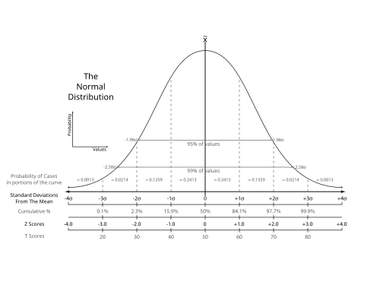
Many naturally occurring phenomena approximate a normal distribution.
Contribute to one or more of the Science WikiProjects (main WikiProject here)
Contribute to one or more of the Science Collaborations:
Natural sciences and technology: Cetaceans• Chemistry• Dentistry• Dinosaurs• History of science• Medicine• Science
Social sciences: Geography (Africa, Australia, Canada, India, Indonesia, New Zealand, USA, Vancouver)
Supply photographs and images for articles listed in Category:Wikipedia requested photographs of science
Integrate relatively new scientific knowledge and findings (major studies reported on by RS) into relevant articles
You can also go through this list of items that were nearly/not included in the last Year in science article to find studies to integrate elsewhere (many of these contain notable info, you can filter them by field and many rows have a likely relevant article already wikilinked in the last column)
Complete requests of other editors on the talk pages of science-related articles (examples)
Expand 2026 in science and/or other articles for science-related topics of the year (in the box on the right)
Create new articles for items of this article, mostly articles relating to new scientific fields/topics/findings (the page does not use redlinks anymore but you will quickly identify possible new articles when reading it; here you can find a version with over 60 redlinked examples)
Some of the lists' items have not yet been integrated into their wikilinked articles; if you add a study there it should also be relevant to at least one other article
Maybe this could be done as part of an organized effort
Find studies published under a compatible open license (like CC BY 4.0) and upload the studies' images with descriptions from the study and add these images to articles if they are relevant and useful there
When a study with a useful image is published under an incompatible or unclear license (or the image is published not in a study but elsewhere), you could contact its authors (Twitter/Mail) and ask them to give you the permission to upload them under CC BY 4.0 (or whether they could upload the image/s under a compatible license)
You can also think about whether images would be useful as you read a science-related article and then search for such images:
if they already exist add them (if already on WMCommons) or upload them (if the license is ok) or ask their authors for permissions
Top 10 WikiProject Science Popular articles of the month -
This following Science-related articles is a most visited articles of WikiProject Science, See complete list at Wikipedia:WikiProject Science/Popular pages.
Science is a systematic discipline that builds and organises knowledge in the form of testable explanations about nature and society. It is driven by the scientific method: an empirical cycle that typically involves making observations, producing hypotheses, testing them with evidence, and drawing conclusions. Science encompasses this process and the body of knowledge it produces, which the scientific community continuously challenges, validates, and organises. (Full article...)
Image 6
Sci-Hub is a shadow library that provides free access to millions of research papers, regardless of copyright, by bypassing publishers' paywalls in various ways. Unlike Library Genesis, it does not provide access to books. Sci-Hub was founded in Kazakhstan by Alexandra Elbakyan in 2011, in response to the rising costs of research papers behind paywalls. The site is extensively used worldwide. In September 2019, the site's operator(s) said that it served approximately 400,000 requests per day. In addition to its intensive use, Sci-Hub stands out among other shadow libraries because of its easy use and reliability, as well as the enormous size of its collection. A 2018 study estimated that Sci-Hub provided access to almost all scholarly publications. On 15 July 2022, Sci-Hub reported that its collection comprised 88,343,822 files. In December 2020, the site paused uploads due to legal troubles. Since then, the site has archived a much lower fraction of new articles. (Full article...)
Image 7
In biology, taxonomy (fromAncient Greekτάξις (taxis)'arrangement'and-νομία (-nomia)'method') is the scientific study of naming, defining (circumscribing) and classifying groups of biological organisms based on shared characteristics. Modern approaches prioritize common ancestry and evolutionary relationships. Organisms are grouped into taxa (singular: taxon), and these groups are given a taxonomic rank; groups of a given rank can be aggregated to form a more inclusive group of higher rank, thus creating a taxonomic hierarchy. The principal ranks in modern use are domain, kingdom, phylum (division is sometimes used in botany in place of phylum), class, order, family, genus, and species. The Swedish botanist Carl Linnaeus is regarded as the founder of the current system of taxonomy, having developed a ranked system known as Linnaean taxonomy for categorizing organisms. (Full article...)


 Featured articles are displayed here, which represent some of the best content on English Wikipedia.


 Dichroic prism, by XRay (from Wikipedia:Featured pictures/Sciences/Others)
 Translational motion at Thermodynamic temperature, by Greg L (from Wikipedia:Featured pictures/Sciences/Others)
 Mechanical advantage device, by Prolineserver (edited by Tomia, Ss181292 and Atropos235) (from Wikipedia:Featured pictures/Sciences/Others)
 Light dispersion, by LucasVB (from Wikipedia:Featured pictures/Sciences/Others)
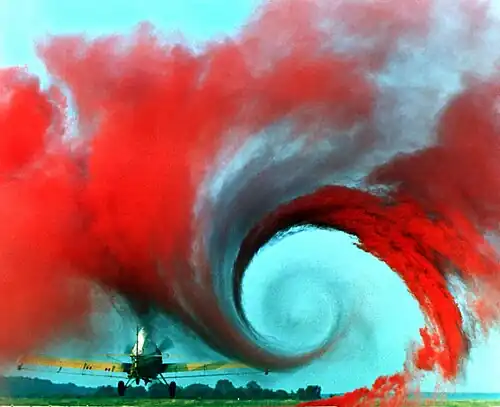 NASA study on wingtip vortices at Wake turbulence, by Langley Research Center (edited by Fir0002) (from Wikipedia:Featured pictures/Sciences/Others)
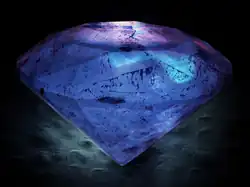 Color cathodoluminescence of a diamond, by Pavel.Somov (from Wikipedia:Featured pictures/Sciences/Others)
 Global oceanic and terrestrial photoautotroph abundance at Primary production, by SeaWiFS Project (from Wikipedia:Featured pictures/Sciences/Others)
 Animation of a water drop, by Chris 73 and Gmaxwell (from Wikipedia:Featured pictures/Sciences/Others)
 Parallax, by Mila Zinkova (edited by Richard Bartz) (from Wikipedia:Featured pictures/Sciences/Others)
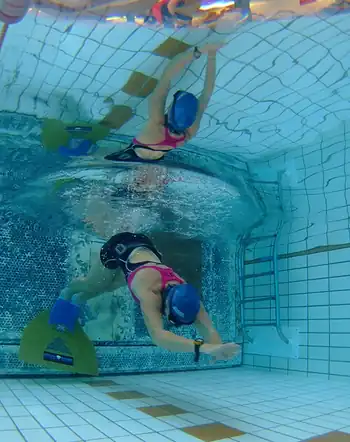 Total internal reflection, by Jean-Marc Kuffer (from Wikipedia:Featured pictures/Sciences/Others)
 Diet Coke and Mentos eruption, by Mikemurphy (from Wikipedia:Featured pictures/Sciences/Others)
 Kármán vortex street, by Cesareo de La Rosa Siqueira (from Wikipedia:Featured pictures/Sciences/Others)
 Thermite reaction, by Nikthestunned (from Wikipedia:Featured pictures/Sciences/Others)
 Australian Synchrotron, by John O'Neill (from Wikipedia:Featured pictures/Sciences/Others)
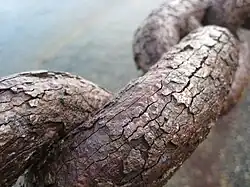 Rusty chain, by WikipedianMarlith (from Wikipedia:Featured pictures/Sciences/Others)
 Wind wave, by Alvesgaspar (from Wikipedia:Featured pictures/Sciences/Others)
 Refraction in raindrops, by Mila Zinkova (from Wikipedia:Featured pictures/Sciences/Others)
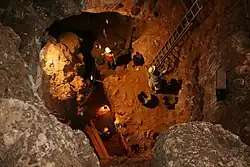 Archaeologists prospecting Santa Ana Cave at Excavation (archaeology), by Mario modesto (from Wikipedia:Featured pictures/Sciences/Others)
 Archaeological excavation at Atapuerca Mountains, by Mario modesto (from Wikipedia:Featured pictures/Sciences/Others)
 Ice core, by the Greenland Ice Sheet Project (from Wikipedia:Featured pictures/Sciences/Others)
 A patient being treated for COVID-19, by Gustavo Basso (from Wikipedia:Featured pictures/Sciences/Others)
 Nobel Prize in Physics diploma, by Sofia Gisberg (restored by Jebulon) (from Wikipedia:Featured pictures/Sciences/Others)
 Warming stripes, by Ed Hawkins (from Wikipedia:Featured pictures/Sciences/Others)
 Lorentz transformation of world line, by Cyp (from Wikipedia:Featured pictures/Sciences/Others)
 Vibrating glass beam at Euler–Bernoulli beam theory, by Ben pcc (from Wikipedia:Featured pictures/Sciences/Others)

 Simulation of liquids with different viscosities, by Synapticrelay (from Wikipedia:Featured pictures/Sciences/Others)
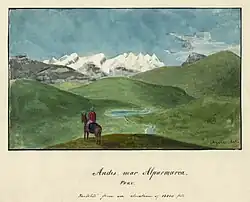 Peruvian Andes at United States Exploring Expedition, by Alfred Thomas Agate (edited by Durova) (from Wikipedia:Featured pictures/Sciences/Others)
 Fast breeder reactor, by Graevemoore (from Wikipedia:Featured pictures/Sciences/Others)
 Hypervelocity impact demonstration, by NASA (from Wikipedia:Featured pictures/Sciences/Others)
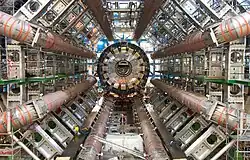
 Section of the Large Hadron Collider, by Maximilien Brice (from Wikipedia:Featured pictures/Sciences/Others)
 Plasma globe, by Colin (from Wikipedia:Featured pictures/Sciences/Others)
 Drop impact on a liquid surface, by José Manuel Suárez (from Wikipedia:Featured pictures/Sciences/Others)
 Holdridge life zones, by Peter Halasz (from Wikipedia:Featured pictures/Sciences/Others)
 Operation Tumbler-Snapper, by Lawrence Livermore National Laboratory (from Wikipedia:Featured pictures/Sciences/Others)
 Activation energy, by Debivort (from Wikipedia:Featured pictures/Sciences/Others)
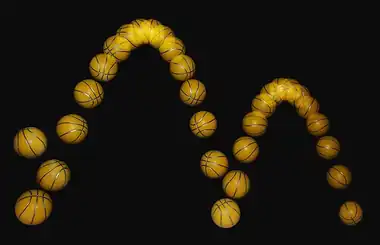 Projectile motion of a bouncing ball at Inelastic collision, by MichaelMaggs (from Wikipedia:Featured pictures/Sciences/Others)
 Vital articles to understand Science.




 List of all portals






 Random portal
 WikiProject Portals