List of Procellariiformes by population
| The population of birds |
|---|
 |

This is a list of Procellariiformes species by global population. While numbers are estimates, they have been made by the experts in their fields. For more information on how these estimates were ascertained, see Wikipedia's articles on population biology and population ecology.
The IOC World Bird List (version 15.1) recognizes 149 species of Procellariiformes, two of which are extinct.[1] As of January 2026, IUCN/BirdLife International have assessed 144 members, and provided population estimates for 143 members of the order. While not all Procellariiformes have population estimates, species with unknown populations are listed in a secondary table below.
This list follows IUCN classifications for species names and taxonomy. Where IUCN classifications differ from other ornithological authorities, alternative names and taxonomies are noted.
Two members of Procellariiformes are extinct:
- St. Helena petrel, or large St. Helena petrel (Pterodroma rupinarum) - last seen in 1502.[2]
- Olson's petrel, or small St. Helena petrel (Bulweria bifax) - last seen in 1502.[3]
Species by global population
| Common name | Binomial name | Population | Status | Trend | Notes | Image |
|---|---|---|---|---|---|---|
| Fiji petrel | Pseudobulweria macgillivrayi | 1-49[4] | CR[4] |  [4] | Maximum estimate.[4] | |
| Guadalupe storm petrel | Hydrobates macrodactylus | 1-49[5] | CR[5] | ?[5] | Maximum estimate; may be extinct.[5] |  |
| Jamaican petrel | Pterodroma caribbaea | 1-49[6] | CR[6] | ?[6] | Maximum estimate; may be extinct. Last confirmed observation in 1879.[6] |  |
| New Zealand storm petrel | Fregetta maoriana | 1-49[7] | CR[7] | ?[7] | Still seen in small numbers, as recently as 2013.[7] |  |
| Rapa shearwater | Puffinus myrtae | 50-249[8] | CR[8] | [8] |
Total population is estimated to be 75-375 individuals.[8] |  |
| Bryan's shearwater | Puffinus bryani | 50-249[9] | CR[9] | [9] |
Total population is estimated to be 70-380 individuals.[9] | |
| Beck's petrel | Pseudobulweria becki | 50-249[10] | CR[10] | [10] | Rediscovered in 2007. Total population is estimated to be 70-400 individuals.[10] | |
| Magenta petrel | Pterodroma magentae | 80-100[11] | CR[11] |  [11] | Total population is estimated to be 150-200 individuals.[11] |  |
| Amsterdam albatross | Diomedea amsterdamensis | 92[12] | CR[12] | [12] | 46 total nesting pairs.[12] |  |
| Mascarene petrel | Pseudobulweria aterrima | 100-200[13] | CR[13] | [13] |
Population is most likely near the lower end of this estimate.[13] |  |
| Zino's petrel | Pterodroma madeira | 160[14] | EN[14] |  [14] | Total population is estimated to be 200 individuals.[14] |  |
| Bermuda petrel | Pterodroma cahow | 196[15] | EN[15] | [15] | 98 total nesting pairs.[15] |  |
| Whenua Hou diving-petrel | Pelecanoides whenuahouensis | 200[16] | CR[16] | [16] |
Value given is estimated total number of adults.[16] |  |
| New Caledonian storm petrel | Fregetta lineata | 200-2,000[17] | DD[17] | ?[17] | Species is very poorly known. Values are a best guess.[17] | |
| Townsend's shearwater | Puffinus auricularis | 250-999[18] | CR[18] | [18] | Total population is estimated to be 375-1,499 individuals.[18] |  |
| Heinroth's shearwater | Puffinus heinrothi | 250-999[19] | VU[19] | [19] | Total population is estimated to be 375-1,499 individuals.[19] |  |
| Monteiro's storm petrel | Hydrobates monteiroi | 250-999[20] | VU[20] | [20] | Total population is estimated to be 375-1,499 individuals.[20] | |
| Desertas petrel | Pterodroma deserta | 250-999[21] | VU[21] | [21] |
Total population is estimated to be 350-1,500 individuals.[21] |  |
| Collared petrel | Pterodroma brevipes | 670-6,700[22] | VU[22] | [22] | Total population is estimated to be 1,000-10,000 individuals.[22] |  |
| Polynesian storm petrel | Nesofregetta fuliginosa | 1,000-1,600[23] | EN[23] | [23] | Total population is estimated to be 1,500-2,400 individuals.[23] |  |
| Cape Verde petrel
(Fea's petrel) |
Pterodroma feae | 1,000-2,000[24] | NT[24] | ?[24] | Total population is estimated to be 1,500-3,000 individuals.[24] |  |
| Black-capped petrel | Pterodroma hasitata | 1,000-2,000[25] | EN[25] | [25] |
Total population is estimated to be 2,000-4,000 individuals.[25] |  |
| Chatham Islands petrel | Pterodroma axillaris | 1,100[26] | VU[26] | [26] | Total population is estimated to be 1,400 individuals. |  |
| Short-tailed albatross | Phoebastria albatrus | 1,734[27] | VU[27] | [27] | Total population is estimated to be 4,200 individuals.[27] |  |
| Pincoya storm petrel | Oceanites pincoyae | 2,000[28] | DD[28] | ?[28] | Total population is estimated to be 3,000 individuals.[28] |  |
| Trindade petrel | Pterodroma arminjoniana | 2,260[29] | VU[29] | [29] |  | |
| White-winged petrel
(Gould's petrel) |
Pterodroma leucoptera | 2,000-14,000[30] | VU[30] | [30] | Total population is estimated to be 3,000-21,000 individuals.[30] |  |
| Townsend's storm petrel | Hydrobates socorroensis | 2,500-9,999[31] | EN[31] | [31] |
 | |
| Ainley's storm petrel | Hydrobates cheimomnestes | 2,500-9,999[32] | VU[32] | [32] |
||
| Jouanin's petrel | Bulweria fallax | 2,500-9,999[33] | NT[33] | ?[33] |  | |
| Tristan albatross | Diomedea dabbenena | 3,400-4,800[34] | CR[34] | [34] | Total population is estimated to be 5,200-7,300 individuals.[34] |  |
| Ashy storm petrel | Hydrobates homochroa | 3,500-6,700[35] | EN[35] | [35] | Total population is estimated to be 5,200-10,000 individuals.[35] | 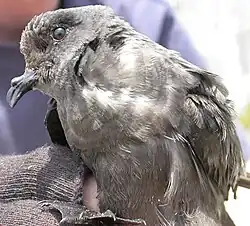 |
| Black petrel | Procellaria parkinsoni | 5,500[36] | VU[36] | [36] | Total population is estimated to be and 11,000 individuals.[36] |  |
| Masatierra petrel | Pterodroma defilippiana | 5,554[37] | VU[37] | [37] | Total population is expected to be less than 10,000 individuals.[37] |  |
| Galápagos petrel | Pterodroma phaeopygia | 6,000-15,000[38] | CR[38] | [38] | Total population is estimated to be 10,000-19,999 individuals.[38] |  |
| Magellanic diving petrel | Pelecanoides magellani | 6,700-330,000[39] | LC[39] | [39] |
Total population is estimated to "number tens of thousands to hundreds of thousands of individuals."[39] |  |
| Hawaiian petrel | Pterodroma sandwichensis | 7,500-16,600[40] | EN[40] | [40] |  | |
| Westland petrel | Procellaria westlandica | 7,900-13,700[41] | EN[41] | ?[41] |  | |
| Newell's shearwater | Puffinus newelli | 10,000-19,999[42] | CR[42] | [42] | Total population is estimated to be, at maximum, 27,000 individuals.[42] |  |
| Tahiti petrel | Pseudobulweria rostrata | 10,000-19,999[43] | NT[43] | [43] | Total population is estimated to be 20,000-30,000 individuals.[43] |  |
| Persian shearwater | Puffinus persicus | >10,000[44] | LC[44] | [44] |
 | |
| Chatham albatross | Thalassarche eremita | 11,000[45] | VU[45] | [45] | Total population is estimated to be 16,000 individuals.[45] |  |
| Pycroft's petrel | Pterodroma pycrofti | 12,000-22,000[46] | VU[46] | [46] | Total population is estimated to be 30,000-40,000 individuals.[46] |  |
| Cape Verde shearwater | Calonectris edwardsii | 13,800[47] | NT[47] | [47] | Total population is estimated to be 24,000 individuals.[47] |  |
| Cape Verde storm petrel | Hydrobates jabejabe | 15,500-67,500[48] | LC[48] | [48] |
 | |
| Northern royal albatross | Diomedea sanfordi | 17,000[49] | EN[49] | [49] | Total population is estimated to be 25,000-26,000 individuals.[49] |  |
| Balearic shearwater | Puffinus mauretanicus | 19,000[50] | CR[50] | [50] | Total population is estimated to be 25,000 individuals.[50] |  |
| Spectacled petrel | Procellaria conspicillata | 20,000[51] | VU[51] | [51] | Total population is estimated to be 31,000-45,000 individuals.[51] |  |
| Tristram's storm petrel | Hydrobates tristrami | 20,000[52] | LC[52] | [52] | Maximum estimate. Total population is estimated to be 30,000 individuals.[52] |  |
| Phoenix petrel | Pterodroma alba | 20,000-30,000[53] | VU[53] | [53] | Preliminary estimate.[53] |  |
| Matsudaira's storm petrel | Hydrobates matsudairae | >20,000[54] | VU[54] | ?[54] | Per BirdLife International, species is described as "not especially rare in the Indian Ocean, suggesting that the global population numbers a minimum of 20,000 individuals".[54] |  |
| Snowy albatross
(Wandering albatross) |
Diomedea exulans | 20,100[55] | VU[55] | [55] |  | |
| Sooty albatross | Phoebetria fusca | 21,234-28,656[56] | EN[56] | [56] | Estimate comes from a count of 10,617 - 14,328 breeding pairs.[56] |  |
| Northern giant petrel | Macronectes halli | 23,600[57] | LC[57] | [57] |  | |
| Southern royal albatross | Diomedea epomophora | 27,200[58] | VU[58] | [58] |  | |
| Shy albatross | Thalassarche cauta | 29,800-33,400[59] | NT[59] | [59] | Best estimate for number of mature individuals is 31,600. |  |
| Barau's petrel | Pterodroma baraui | 30,000-40,000[60] | EN[60] | [60] |  | |
| Audubon's shearwater
(Sargasso shearwater) |
Puffinus lherminieri | 30,000-59,000[61] | LC[61] | [61] | Note that IOC taxonomy splits an additional species, Boyd's shearwater, from this species (IOC splits from Barolo shearwater, which is maintained by IUCN as a subsepcies of little shearwater).[1]
IUCN/BirdLife International maintain both species within P. lherminieri.[62] |
 |
| White-vented storm petrel
(Elliot's storm petrel) |
Oceanites gracilis | >30,000[63] | DD[63] | ?[63] | Values given are for total population.[63] |  |
| Yelkouan shearwater | Puffinus yelkouan | 30,674-60,038[64] | VU[64] | [64] | Estimate comes from a reported 15,337-30,519 pairs; estimated total population is 46,000-92,000 individuals. However, this may be an underestimate given counts of 75,000-90,000 individuals during migration through the Bosporus Strait as recently as 2015.[64] |  |
| Waved albatross | Phoebastria irrorata | 34,694[65] | CR[65] | [65] |
Value given is the most recent estimate for total population, from 2001. It is likely the population is now smaller.[65] |  |
| Galápagos shearwater | Puffinus subalaris | 35,000[66] | LC[66] | [66] |
 | |
| Atlantic yellow-nosed albatross | Thalassarche chlororhynchos | 35,000-73,500[67] | EN[67] | [67] |  | |
| Henderson petrel | Pterodroma atrata | 39,974[68] | EN[68] | [68] |
Estimate is based on 19,987 pairs.[68] |  |
| Campbell albatross | Thalassarche impavida | 43,296[69] | VU[69] | [69] |
 | |
| MacGillivray's prion | Pachyptila macgillivrayi | 48,300-2,421,480[70] | CR[70] | [70] |
Best estimate for number of mature individuals is 350,000, based on an estimated 175,000 pairs. 95% confidence interval is very large.[70] |  |
| Antipodean albatross | Diomedea antipodensis | 50,000[71] | EN[71] | [71] | Maximum estimate, given steep declines over past two decades.[71] |  |
| Buller's albatross | Thalassarche bulleri | 50,000-99,999[72] | NT[72] | [72] |
 | |
| Light-mantled albatross | Phoebetria palpebrata | 58,000[73] | NT[73] | [73] | Total population is estimated to be 87,000 individuals.[73] |  |
| Pink-footed shearwater | Ardenna creatopus | 59,146[74] | VU[74] | ?[74] | Total population may be as high as 150,000 individuals.[74] |  |
| Swinhoe's storm petrel | Hydrobates monorhis | 65,000-260,000[75] | NT[75] | [75] |  | |
| Providence petrel | Pterodroma solandri | 66,500-100,000[76] | LC[76] | [76] | Best estimate for number of mature individuals is 83,000.[76] | 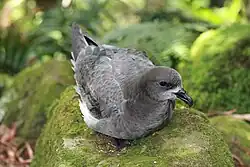 |
| Salvin's albatross | Thalassarche salvini | 79,990[77] | VU[77] | ?[77] | Total population is estimated to be 110,000 individuals.[77] |  |
| Indian yellow-nosed albatross | Thalassarche carteri | 82,000[78] | EN[78] | [78] | Total population is estimated to be 160,000 individuals.[78] |  |
| Southern giant petrel | Macronectes giganteus | 95,600-108,000[79] | LC[79] | [79] | Total population is estimated to be 150,000 individuals.[79] |  |
| White-necked petrel | Pterodroma cervicalis | 100,000[80] | VU[80] | [80] | Total population is estimated to be 150,000 individuals.[80]
Note that IOC taxonomy splits an additional species, the Vanuatu petrel, from this species.[1] IUCN/BirdLife International maintain both species within P. cervicalis.[62] |
 |
| Peruvian diving petrel | Pelecanoides garnotii | 100,000[81] | NT[81] | [81] |
 | |
| Fluttering shearwater | Puffinus gavia | >100,000[82] | LC[82] | [82] | Value is for total population.[82] |  |
| Least storm petrel | Hydrobates microsoma | >100,000[83] | LC[83] | [83] |
Total population is estimated "to number hundreds of thousands of individuals, possibly millions."[83] |  |
| Markham's storm petrel | Hydrobates markhami | 100,000-120,000[84] | NT[84] | [84] | Total population is estimated to be 150,000-180,000 individuals.[84] |  |
| Fulmar prion | Pachyptila crassirostris | 100,000-200,000[85] | LC[85] | [85] | Total population is estimated to be 150,000-300,000 individuals.[85] |  |
| Little shearwater | Puffinus assimilis | 100,000-499,999[86] | LC[86] | [86] | Total population is estimated to be 300,000-750,000 individuals.[86]
Note that IOC taxonomy splits an additional species, the Barolo shearwater, from this species.[1] IUCN/BirdLife International maintain both species within P. assimilis.[62] |
 |
| Black-footed albatross | Phoebastria nigripes | 139,800[87] | NT[87] | [87] |  | |
| Flesh-footed shearwater | Ardenna carneipes | 148,000[88] | NT[88] | [88] |  | |
| Band-rumped storm petrel | Hydrobates castro | 150,000[89] | LC[89] | [89] | Value given is for total population.[89] |  |
| Herald petrel | Pterodroma heraldica | 150,000[90] | LC[90] | [90] | Value given is for total population.[90] |  |
| Christmas shearwater | Puffinus nativitatis | 150,000[91] | LC[91] | [91] | Value given is for total population.[91] |  |
| Kermadec petrel | Pterodroma neglecta | 150,000-200,000[92] | LC[92] | [92] | Values given are for total population.[92] |  |
| Grey petrel | Procellaria cinerea | 151,500[93] | NT[93] | [93] |  | |
| Black-vented shearwater | Puffinus opisthomelas | 200,000-299,999[94] | NT[94] | [94] |  | |
| Grey-backed storm petrel | Garrodia nereis | >200,000[95] | LC[95] | [95] | Value given is for total population.[95] |  |
| Hutton's shearwater | Puffinus huttoni | 212,000[96] | EN[96] | [96] | Estimate based on 106,000 breeding pairs. Total population is estimated to be 300,000-350,000 individuals.[96] | 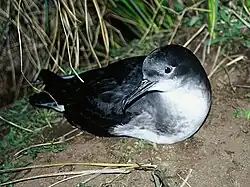 |
| Grey-headed albatross | Thalassarche chrysostoma | 250,000[97] | EN[97] | [97] | Minimum estimate for mature individuals.[97] |  |
| Stejneger's petrel | Pterodroma longirostris | 262,000[98] | VU[98] | [98] | Total population is estimated to be 400,000 individuals. Population may now be lower due to increased predation pressure.[98] |  |
| Scopoli's shearwater | Calonectris diomedea | 285,000-446,000[99] | LC[99] | [99] |
 | |
| White-bellied storm petrel | Fregetta grallaria | 300,000[100] | LC[100] | [100] | Value given is for total population.[100] |  |
| Grey-faced petrel | Pterodroma gouldi | 400,000-600,000[101] | LC[101] | [101] |
Total population is estimated to be 600,000-900,000 individuals.[101] |  |
| European storm petrel | Hydrobates pelagicus | 430,000-519,999[102] | LC[102] | ?[102] | Total population is estimated to be 1,314,000-1,545,000 individuals.[102] |  |
| Black-bellied storm petrel | Fregetta tropica | 500,000[103] | LC[103] | [103] | Value given is for total population.[103] |  |
| Wedge-rumped storm petrel | Hydrobates tethys | 500,000[104] | LC[104] | [104] | Value given is a minimum estimate for total population.[104] |  |
| Ringed storm petrel | Hydrobates hornbyi | 500,000-800,000[105] | NT[105] | [105] |
Total population is estimated to be 900,000-1,500,000 individuals.[105] |  |
| Bulwer's petrel | Bulweria bulwerii | 500,000-1,000,000[106] | LC[106] | [106] | Values given are for total population.[106] |  |
| Cory's shearwater | Calonectris borealis | 504,000-507,000[107] | LC[107] | ?[107] |  | |
| Black storm petrel | Hydrobates melania | 600,000[108] | LC[108] | [108] |  | |
| White-headed petrel | Pterodroma lessonii | 600,000[109] | LC[109] | [109] | Value given is for total population.[109] |  |
| Cook's petrel | Pterodroma cookii | 670,000[110] | VU[110] | [110] | 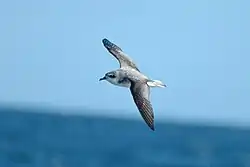 | |
| Manx shearwater | Puffinus puffinus | 680,000-790,000[111] | LC[111] | ?[111] | Total population is estimated to be 1,026,000-1,177,500 individuals.[111] |  |
| Murphy's petrel | Pterodroma ultima | 800,000-1,000,000[112] | LC[112] | ?[112] | Values given are for total population.[112] |  |
| Bonin petrel | Pterodroma hypoleuca | 1,000,000[113] | LC[113] | [113] | Value given is for total population.[113] | 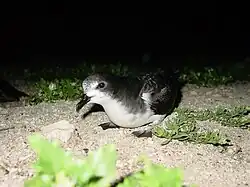 |
| Kerguelen petrel | Aphrodroma brevirostris | 1,000,000[114] | LC[114] | [114] | Value given is for total population.[114] |  |
| Black-browed albatross | Thalassarche melanophrys | 1,400,000[115] | LC[115] | [115] |  | |
| Mottled petrel | Pterodroma inexpectata | >1,500,000[116] | NT[116] | [116] |
Value given is for total population.[116] |  |
| Great-winged petrel | Pterodroma macroptera | >1,500,000[117] | LC[117] | [117] | Value given is for total population.[117] |  |
| Laysan albatross | Phoebastria immutabilis | 1,600,000[118] | NT[118] | [118] |  | |
| Atlantic petrel | Pterodroma incerta | 1,800,000[119] | EN[119] | [119] |  | |
| Juan Fernández petrel | Pterodroma externa | 2,000,000[120] | VU[120] | [120] | Total population was estimated to be, at minimum, 3.0 million individuals in 1986, but population appears to remain steady.[120] |  |
| Cape petrel
(Pintado petrel) |
Daption capense | >2,000,000[121] | LC[121] | [121] | Value given is for total population.[121] |  |
| Buller's shearwater | Ardenna bulleri | 2,500,000[122] | VU[122] | [122] | Value given is for total population. Estimate is dated; current population is likely lower.[122] |  |
| White-chinned petrel | Procellaria aequinoctialis | 3,000,000[123] | VU[123] | [123] |  | |
| Streaked shearwater | Calonectris leucomelas | 3,000,000[124] | NT[124] | [124] | Value given is for total population.[124] |  |
| Blue petrel | Halobaena caerulea | >3,000,000[125] | LC[125] | [125] | Value given is for total population.[125] |  |
| Southern fulmar | Fulmarus glacialoides | 4,000,000[126] | LC[126] | [126] | Value given is for total population.[126] |  |
| Fork-tailed storm petrel | Hydrobates furcatus | 4,000,000[127] | LC[127] | [127] | Total population is estimated to be 6.0 million individuals.[127] |  |
| White-faced storm petrel | Pelagodroma marina | >4,000,000[128] | LC[128] | [128] | Value given is for total population.[128] |  |
| Snow petrel | Pagodroma nivea | >4,000,000[129] | LC[129] | [129] | Value given is for total population.[129] |  |
| Fairy prion | Pachyptila turtur | 5,000,000[130] | LC[130] | [130] | Value given is for total population.[130] | 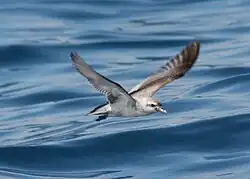 |
| Soft-plumaged petrel | Pterodroma mollis | >5,000,000[131] | LC[131] | [131] | Value given is for total population.[131] |  |
| Wedge-tailed shearwater | Ardenna pacifica | >5,200,000[132] | LC[132] | [132] | Value given is for total population.[132] |  |
| Slender-billed prion | Pachyptila belcheri | >7,000,000[133] | LC[133] | [133] | Value given is for total population.[133] |  |
| Black-winged petrel | Pterodroma nigripennis | 8,000,000-10,000,000[134] | LC[134] | [134] | Values given are for total population.[134] |  |
| Wilson's storm petrel | Oceanites oceanicus | 8,000,000-20,000,000[135] | LC[135] | [135] | Total population is estimated to be 12.0-30.0 million individuals.[135] |  |
| Sooty shearwater | Ardenna grisea | 8,800,000[136] | NT[136] | [136] | Total population is estimated to be 19.0-23.6 million individuals.[136] |  |
| Great shearwater | Ardenna gravis | 10,000,000[137] | LC[137] | [137] | Total population is estimated to number more than 15.0 million individuals.[137] |  |
| Antarctic petrel | Thalassoica antarctica | 10,000,000-20,000,000[138] | LC[138] | [138] | Values given are for total population.[138] |  |
| South Georgia diving petrel | Pelecanoides georgicus | 12,000,000[139] | LC[139] | [139] | Total population is estimated to be 15.0 million individuals.[139] | |
| Salvin's prion | Pachyptila salvini | >12,000,000[140] | LC[140] | [140] | Value given is for total population.[140] |  |
| Leach's storm petrel | Hydrobates leucorhous | 13,400,000-16,600,000[141] | VU[141] | [141] | Total population is estimated to be more than 20,000,000 individuals.[141] | 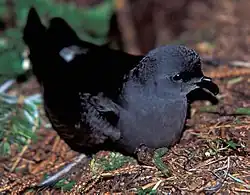 |
| Northern fulmar | Fulmarus glacialis | 14,000,000[142] | LC[142] | [142] | Total population is estimated to be 20,000,000 individuals.[142] |  |
| Broad-billed prion | Pachyptila vittata | >15,000,000[143] | LC[143] | [143] | Value given is for total population.[143] |  |
| Common diving petrel | Pelecanoides urinatrix | >16,000,000[144] | LC[144] | [144] | Value given is for total population.[144] |  |
| Short-tailed shearwater | Ardenna tenuirostris | >23,000,000[145] | LC[145] | [145] | Value given is for total population.[145] |  |
| Antarctic prion | Pachyptila desolata | 50,000,000[146] | LC[146] | [146] | Value given is for total population.[146] |  |
Species without population estimates
| Common name | Binomial name | Population | Status | Trend | Notes | Image |
|---|---|---|---|---|---|---|
| Bannerman's shearwater | Puffinus bannermani | unknown[147] | EN[147] | [147] |
 | |
| Tropical shearwater | Puffinus bailloni | unknown[148] | LC[148] | [148] |
Some wide-ranging estimates indicate there are at least 28,100 total individuals, but many more breeding colonies remain unsurveyed.[148] |  |
| Subantarctic shearwater | Puffinus elegans | unknown[149] | LC[149] | [149] |
Population has not been formally estimated, though extrapolation from data in 2004 presented an estimate of "several hundred thousand pairs."[149] |  |
See also
References
- 1 2 3 4 "Petrels, albatrosses – IOC World Bird List". www.worldbirdnames.org. Retrieved 2026-01-04.
- ↑ BirdLife International (2024). "Pterodroma rupinarum". IUCN Red List of Threatened Species. 2024 e.T22728800A262222743. doi:10.2305/IUCN.UK.2024-2.RLTS.T22728800A262222743.en.
- ↑ BirdLife International (2024). "Bulweria bifax". IUCN Red List of Threatened Species. 2024 e.T22728804A262268997. doi:10.2305/IUCN.UK.2024-2.RLTS.T22728804A262268997.en.
- 1 2 3 4 BirdLife International (2018). "Pseudobulweria macgillivrayi". IUCN Red List of Threatened Species. 2018 e.T22697935A132613365. doi:10.2305/IUCN.UK.2018-2.RLTS.T22697935A132613365.en.
- 1 2 3 4 BirdLife International (2018). "Hydrobates macrodactylus". IUCN Red List of Threatened Species. 2018. doi:10.2305/IUCN.UK.2018-2.RLTS.T22698530A132651919.en.
- 1 2 3 4 BirdLife International (2018). "Pterodroma caribbaea". IUCN Red List of Threatened Species. 2018 e.T22698097A132625182. doi:10.2305/IUCN.UK.2018-2.RLTS.T22698097A132625182.en.
- 1 2 3 4 BirdLife International (2018). "Fregetta maoriana". IUCN Red List of Threatened Species. 2018 e.T22728808A132659638. doi:10.2305/IUCN.UK.2018-2.RLTS.T22728808A132659638.en.
- 1 2 3 4 BirdLife International (2018). "Puffinus myrtae". IUCN Red List of Threatened Species. 2018 e.T132468585A132468877. doi:10.2305/IUCN.UK.2018-2.RLTS.T132468585A132468877.en.
- 1 2 3 4 BirdLife International (2018). "Puffinus bryani". IUCN Red List of Threatened Species. 2018 e.T45354718A132254426. doi:10.2305/IUCN.UK.2018-2.RLTS.T45354718A132254426.en.
- 1 2 3 4 BirdLife International (2018). "Pseudobulweria becki". IUCN Red List of Threatened Species. 2018 e.T22697913A132612218. doi:10.2305/IUCN.UK.2018-2.RLTS.T22697913A132612218.en.
- 1 2 3 4 BirdLife International (2018). "Pterodroma magentae". IUCN Red List of Threatened Species. 2018 e.T22698049A131879320.
- 1 2 3 4 BirdLife International. (2018). "Diomedea amsterdamensis". IUCN Red List of Threatened Species. 2018 e.T22698310A132397831. doi:10.2305/IUCN.UK.2018-2.RLTS.T22698310A132397831.en. Retrieved 26 August 2025.
- 1 2 3 4 BirdLife International (2018). "Pseudobulweria aterrima". IUCN Red List of Threatened Species. 2018 e.T22697896A132611797. doi:10.2305/IUCN.UK.2018-2.RLTS.T22697896A132611797.en.
- 1 2 3 4 BirdLife International. (2018). "Pterodroma madeira". IUCN Red List of Threatened Species. 2018 e.T22698062A132622973. doi:10.2305/IUCN.UK.2018-2.RLTS.T22698062A132622973.en. Retrieved 26 August 2025.
- 1 2 3 4 BirdLife International (2018). "Pterodroma cahow". IUCN Red List of Threatened Species. 2018 e.T22698088A132624115. doi:10.2305/IUCN.UK.2018-2.RLTS.T22698088A132624115.en.
- 1 2 3 4 BirdLife International (2019). "Pelecanoides whenuahouensis". IUCN Red List of Threatened Species. 2019 e.T155187257A155188651. doi:10.2305/IUCN.UK.2019-3.RLTS.T155187257A155188651.en.
- 1 2 3 4 BirdLife International (2023). "Fregetta lineata". IUCN Red List of Threatened Species. 2023 e.T230025395A230864868. doi:10.2305/IUCN.UK.2023-1.RLTS.T230025395A230864868.en.
- 1 2 3 4 BirdLife International (2018). "Puffinus auricularis". IUCN Red List of Threatened Species. 2018 e.T22698235A132637811. doi:10.2305/IUCN.UK.2018-2.RLTS.T22698235A132637811.en.
- 1 2 3 4 BirdLife International (2018). "Puffinus heinrothi". IUCN Red List of Threatened Species. 2018 e.T22698277A132639135. doi:10.2305/IUCN.UK.2018-2.RLTS.T22698277A132639135.en.
- 1 2 3 4 BirdLife International (2018). "Hydrobates monteiroi". IUCN Red List of Threatened Species. 2018 e.T22735624A132665118. doi:10.2305/IUCN.UK.2018-2.RLTS.T22735624A132665118.en.
- 1 2 3 4 BirdLife International (2018). "Pterodroma deserta". IUCN Red List of Threatened Species. 2018 e.T22736135A132665941. doi:10.2305/IUCN.UK.2018-2.RLTS.T22736135A132665941.en.
- 1 2 3 4 BirdLife International (2018). "Pterodroma brevipes". IUCN Red List of Threatened Species. 2018 e.T22697987A132617265. doi:10.2305/IUCN.UK.2018-2.RLTS.T22697987A132617265.en.
- 1 2 3 4 BirdLife International (2018). "Nesofregetta fuliginosa". IUCN Red List of Threatened Species. 2018 e.T22698471A132649758. doi:10.2305/IUCN.UK.2018-2.RLTS.T22698471A132649758.en.
- 1 2 3 4 BirdLife International (2018). "Pterodroma feae". IUCN Red List of Threatened Species. 2018 e.T22728011A132655668. doi:10.2305/IUCN.UK.2018-2.RLTS.T22728011A132655668.en.
- 1 2 3 4 BirdLife International (2018). "Pterodroma hasitata". IUCN Red List of Threatened Species. 2018 e.T22698092A132624510. doi:10.2305/IUCN.UK.2018-2.RLTS.T22698092A132624510.en.
- 1 2 3 BirdLife International (2018). "Pterodroma axillaris". IUCN Red List of Threatened Species. 2018 e.T22697949A132613763. doi:10.2305/IUCN.UK.2018-2.RLTS.T22697949A132613763.en.
- 1 2 3 4 BirdLife International (2018). "Phoebastria albatrus". IUCN Red List of Threatened Species. 2018 e.T22698335A132642113. doi:10.2305/IUCN.UK.2018-2.RLTS.T22698335A132642113.en.
- 1 2 3 4 BirdLife International (2018). "Oceanites pincoyae". IUCN Red List of Threatened Species. 2018 e.T45354823A132668660. doi:10.2305/IUCN.UK.2018-2.RLTS.T45354823A132668660.en.
- 1 2 3 BirdLife International (2018). "Pterodroma arminjoniana". IUCN Red List of Threatened Species. 2018 e.T22698005A132618884. doi:10.2305/IUCN.UK.2018-2.RLTS.T22698005A132618884.en.
- 1 2 3 4 BirdLife International. (2018). "Pterodroma leucoptera". IUCN Red List of Threatened Species. 2018 e.T22697970A132615952. doi:10.2305/IUCN.UK.2018-2.RLTS.T22697970A132615952.en. Retrieved 26 August 2025.
- 1 2 3 BirdLife International (2018). "Hydrobates socorroensis". IUCN Red List of Threatened Species. 2018 e.T132450926A132452334. doi:10.2305/IUCN.UK.2018-2.RLTS.T132450926A132452334.en.
- 1 2 3 BirdLife International (2018). "Hydrobates cheimomnestes". IUCN Red List of Threatened Species. 2018 e.T132441735A132441789. doi:10.2305/IUCN.UK.2018-2.RLTS.T132441735A132441789.en.
- 1 2 3 BirdLife International (2018). "Bulweria fallax". IUCN Red List of Threatened Species. 2018 e.T22698136A132628433. doi:10.2305/IUCN.UK.2018-2.RLTS.T22698136A132628433.en.
- 1 2 3 4 BirdLife International (2018). "Diomedea dabbenena". IUCN Red List of Threatened Species. 2018 e.T22728364A132657527. doi:10.2305/IUCN.UK.2018-2.RLTS.T22728364A132657527.en.
- 1 2 3 4 BirdLife International (2018). "Hydrobates homochroa". IUCN Red List of Threatened Species. 2018 e.T22698562A132653646. doi:10.2305/IUCN.UK.2018-2.RLTS.T22698562A132653646.en.
- 1 2 3 4 BirdLife International (2018). "Procellaria parkinsoni". IUCN Red List of Threatened Species. 2018 e.T22698150A132629374. doi:10.2305/IUCN.UK.2018-2.RLTS.T22698150A132629374.en.
- 1 2 3 4 BirdLife International (2018). "Pterodroma defilippiana". IUCN Red List of Threatened Species. 2018 e.T22697990A132617737. doi:10.2305/IUCN.UK.2018-2.RLTS.T22697990A132617737.en.
- 1 2 3 4 BirdLife International (2018). "Pterodroma phaeopygia". IUCN Red List of Threatened Species. 2018 e.T22698020A132619647. doi:10.2305/IUCN.UK.2018-2.RLTS.T22698020A132619647.en.
- 1 2 3 4 BirdLife International (2018). "Pelecanoides magellani". IUCN Red List of Threatened Species. 2018 e.T22698288A132639850. doi:10.2305/IUCN.UK.2018-2.RLTS.T22698288A132639850.en.
- 1 2 3 BirdLife International. (2018). "Pterodroma sandwichensis". IUCN Red List of Threatened Species. 2018 e.T22698017A132378813. doi:10.2305/IUCN.UK.2018-2.RLTS.T22698017A132378813.en. Retrieved 26 August 2025.
- 1 2 3 BirdLife International (2018). "Procellaria westlandica". IUCN Red List of Threatened Species. 2018 e.T22698155A132629809. doi:10.2305/IUCN.UK.2018-2.RLTS.T22698155A132629809.en.
- 1 2 3 4 BirdLife International (2019). "Puffinus newelli". IUCN Red List of Threatened Species. 2019 e.T132467692A152723568. doi:10.2305/IUCN.UK.2019-3.RLTS.T132467692A152723568.en.
- 1 2 3 4 BirdLife International (2018). "Pseudobulweria rostrata". IUCN Red List of Threatened Species. 2018 e.T22697925A132612667. doi:10.2305/IUCN.UK.2018-2.RLTS.T22697925A132612667.en.
- 1 2 3 BirdLife International (2019). "Puffinus persicus". IUCN Red List of Threatened Species. 2019 e.T22698267A155532631. doi:10.2305/IUCN.UK.2019-3.RLTS.T22698267A155532631.en.
- 1 2 3 4 BirdLife International (2018). "Thalassarche eremita". IUCN Red List of Threatened Species. 2018 e.T22698393A132644476. doi:10.2305/IUCN.UK.2018-2.RLTS.T22698393A132644476.en.
- 1 2 3 4 BirdLife International (2018). "Pterodroma pycrofti". IUCN Red List of Threatened Species. 2018 e.T22697984A132616888. doi:10.2305/IUCN.UK.2018-2.RLTS.T22697984A132616888.en.
- 1 2 3 4 BirdLife International (2018). "Calonectris edwardsii". IUCN Red List of Threatened Species. 2018 e.T22729421A132660464. doi:10.2305/IUCN.UK.2018-2.RLTS.T22729421A132660464.en.
- 1 2 3 BirdLife International (2018). "Hydrobates jabejabe". IUCN Red List of Threatened Species. 2018 e.T132434704A132434879. doi:10.2305/IUCN.UK.2018-2.RLTS.T132434704A132434879.en.
- 1 2 3 4 BirdLife International (2018). "Diomedea sanfordi". IUCN Red List of Threatened Species. 2018 e.T22728323A132656392. doi:10.2305/IUCN.UK.2018-2.RLTS.T22728323A132656392.en.
- 1 2 3 4 BirdLife International (2018). "Puffinus mauretanicus". IUCN Red List of Threatened Species. 2018 e.T22728432A132658315. doi:10.2305/IUCN.UK.2018-2.RLTS.T22728432A132658315.en.
- 1 2 3 4 BirdLife International (2018). "Procellaria conspicillata". IUCN Red List of Threatened Species. 2018 e.T22728437A132659002. doi:10.2305/IUCN.UK.2018-2.RLTS.T22728437A132659002.en.
- 1 2 3 4 BirdLife International. (2019). "Hydrobates tristrami". IUCN Red List of Threatened Species. 2019 e.T22698535A155161970. doi:10.2305/IUCN.UK.2019-3.RLTS.T22698535A155161970.en. Retrieved 26 August 2025.
- 1 2 3 4 BirdLife International. (2022). "Pterodroma alba". IUCN Red List of Threatened Species. 2022 e.T22698001A183088698. doi:10.2305/IUCN.UK.2022-1.RLTS.T22698001A183088698.en. Retrieved 26 August 2025.
- 1 2 3 4 BirdLife International. (2018). "Hydrobates matsudairae". IUCN Red List of Threatened Species. 2018 e.T22698548A132652969. doi:10.2305/IUCN.UK.2018-2.RLTS.T22698548A132652969.en. Retrieved 26 August 2025.
- 1 2 3 BirdLife International (2018). "Diomedea exulans". IUCN Red List of Threatened Species. 2018 e.T22698305A132640680. doi:10.2305/IUCN.UK.2018-2.RLTS.T22698305A132640680.en.
- 1 2 3 4 BirdLife International (2018). "Phoebetria fusca". IUCN Red List of Threatened Species. 2018 e.T22698431A132645596. doi:10.2305/IUCN.UK.2018-2.RLTS.T22698431A132645596.en.
- 1 2 3 BirdLife International (2018). "Macronectes halli". IUCN Red List of Threatened Species. 2018 e.T22697859A132609000. doi:10.2305/IUCN.UK.2018-2.RLTS.T22697859A132609000.en.
- 1 2 3 BirdLife International (2018). "Diomedea epomophora". IUCN Red List of Threatened Species. 2018 e.T22698314A132641187. doi:10.2305/IUCN.UK.2018-2.RLTS.T22698314A132641187.en.
- 1 2 3 BirdLife International (2022). "Thalassarche cauta". IUCN Red List of Threatened Species. 2022 e.T22729604A213489185. doi:10.2305/IUCN.UK.2022-1.RLTS.T22729604A213489185.en.
- 1 2 3 BirdLife International (2018). "Pterodroma baraui". IUCN Red List of Threatened Species. 2018 e.T22698035A132621225. doi:10.2305/IUCN.UK.2018-2.RLTS.T22698035A132621225.en.
- 1 2 3 BirdLife International (2018). "Puffinus lherminieri". IUCN Red List of Threatened Species. 2018 e.T45959182A132669169. doi:10.2305/IUCN.UK.2018-2.RLTS.T45959182A132669169.en.
- 1 2 3 Handbook of the Birds of the World and BirdLife International Digital Checklist of the Birds of the World: Version 10. BirdLife International. October 2025.
- 1 2 3 4 BirdLife International (2018). "Oceanites gracilis". IUCN Red List of Threatened Species. 2018 e.T22698442A132647135. doi:10.2305/IUCN.UK.2018-2.RLTS.T22698442A132647135.en.
- 1 2 3 4 BirdLife International (2018). "Puffinus yelkouan". IUCN Red List of Threatened Species. 2018 e.T22698230A132637221. doi:10.2305/IUCN.UK.2018-2.RLTS.T22698230A132637221.en.
- 1 2 3 4 BirdLife International (2018). "Phoebastria irrorata". IUCN Red List of Threatened Species. 2018 e.T22698320A132641638. doi:10.2305/IUCN.UK.2018-2.RLTS.T22698320A132641638.en.
- 1 2 3 BirdLife International (2021). "Puffinus subalaris". IUCN Red List of Threatened Species. 2021 e.T22733979A163618430. doi:10.2305/IUCN.UK.2021-3.RLTS.T22733979A163618430.en.
- 1 2 3 BirdLife International (2018). "Thalassarche chlororhynchos". IUCN Red List of Threatened Species. 2018 e.T22698425A132645225. doi:10.2305/IUCN.UK.2018-2.RLTS.T22698425A132645225.en.
- 1 2 3 4 BirdLife International (2018). "Pterodroma atrata". IUCN Red List of Threatened Species. 2018 e.T22728442A132659355. doi:10.2305/IUCN.UK.2018-2.RLTS.T22728442A132659355.en.
- 1 2 3 BirdLife International (2018). "Thalassarche impavida". IUCN Red List of Threatened Species. 2018 e.T22728349A132657209. doi:10.2305/IUCN.UK.2018-2.RLTS.T22728349A132657209.en.
- 1 2 3 4 BirdLife International (2022). "Pachyptila macgillivrayi". IUCN Red List of Threatened Species. 2022 e.T104062579A198532259. doi:10.2305/IUCN.UK.2022-1.RLTS.T104062579A198532259.en.
- 1 2 3 4 BirdLife International (2018). "Diomedea antipodensis". IUCN Red List of Threatened Species. 2018 e.T22728318A132656045. doi:10.2305/IUCN.UK.2018-2.RLTS.T22728318A132656045.en.
- 1 2 3 BirdLife International (2018). "Thalassarche bulleri". IUCN Red List of Threatened Species. 2018 e.T22728328A132656798. doi:10.2305/IUCN.UK.2018-2.RLTS.T22728328A132656798.en.
- 1 2 3 4 BirdLife International (2018). "Phoebetria palpebrata". IUCN Red List of Threatened Species. 2018 e.T22698448A132647449. doi:10.2305/IUCN.UK.2018-2.RLTS.T22698448A132647449.en.
- 1 2 3 4 BirdLife International (2018). "Ardenna creatopus". IUCN Red List of Threatened Species. 2018 e.T22698195A132633266. doi:10.2305/IUCN.UK.2018-2.RLTS.T22698195A132633266.en.
- 1 2 3 BirdLife International (2018). "Hydrobates monorhis". IUCN Red List of Threatened Species. 2018 e.T22698520A132651372. doi:10.2305/IUCN.UK.2018-2.RLTS.T22698520A132651372.en.
- 1 2 3 4 BirdLife International (2022). "Pterodroma solandri". IUCN Red List of Threatened Species. 2022 e.T22698042A210914793. doi:10.2305/IUCN.UK.2022-1.RLTS.T22698042A210914793.en.
- 1 2 3 4 BirdLife International (2018). "Thalassarche salvini". IUCN Red List of Threatened Species. 2018 e.T22698388A132644161. doi:10.2305/IUCN.UK.2018-2.RLTS.T22698388A132644161.en.
- 1 2 3 4 BirdLife International (2018). "Thalassarche carteri". IUCN Red List of Threatened Species. 2018 e.T22728372A132657962. doi:10.2305/IUCN.UK.2018-2.RLTS.T22728372A132657962.en.
- 1 2 3 4 BirdLife International (2018). "Macronectes giganteus". IUCN Red List of Threatened Species. 2018 e.T22697852A132608499. doi:10.2305/IUCN.UK.2018-2.RLTS.T22697852A132608499.en.
- 1 2 3 4 BirdLife International (2018). "Pterodroma cervicalis". IUCN Red List of Threatened Species. 2018 e.T22697957A132614556. doi:10.2305/IUCN.UK.2018-2.RLTS.T22697957A132614556.en.
- 1 2 3 BirdLife International (2020). "Pelecanoides garnotii". IUCN Red List of Threatened Species. 2020 e.T22698280A179971538. doi:10.2305/IUCN.UK.2020-3.RLTS.T22698280A179971538.en.
- 1 2 3 4 BirdLife International (2018). "Puffinus gavia". IUCN Red List of Threatened Species. 2018 e.T22698249A132638295. doi:10.2305/IUCN.UK.2018-2.RLTS.T22698249A132638295.en.
- 1 2 3 4 BirdLife International (2018). "Hydrobates microsoma". IUCN Red List of Threatened Species. 2018 e.T22698485A132650731. doi:10.2305/IUCN.UK.2018-2.RLTS.T22698485A132650731.en.
- 1 2 3 4 BirdLife International. (2019). "Hydrobates markhami". IUCN Red List of Threatened Species. 2019 e.T22698543A156377889. doi:10.2305/IUCN.UK.2019-3.RLTS.T22698543A156377889.en. Retrieved 26 August 2025.
- 1 2 3 4 BirdLife International (2018). "Pachyptila crassirostris". IUCN Red List of Threatened Species. 2018 e.T22698128A132627340. doi:10.2305/IUCN.UK.2018-2.RLTS.T22698128A132627340.en.
- 1 2 3 4 BirdLife International (2018). "Puffinus assimilis". IUCN Red List of Threatened Species. 2018 e.T45959011A132668808. doi:10.2305/IUCN.UK.2018-2.RLTS.T45959011A132668808.en.
- 1 2 3 BirdLife International (2020). "Phoebastria nigripes". IUCN Red List of Threatened Species. 2020 e.T22698350A181896323. doi:10.2305/IUCN.UK.2020-3.RLTS.T22698350A181896323.en.
- 1 2 3 BirdLife International (2019). "Ardenna carneipes". IUCN Red List of Threatened Species. 2019 e.T22698188A155469189. doi:10.2305/IUCN.UK.2019-3.RLTS.T22698188A155469189.en.
- 1 2 3 4 BirdLife International (2018). "Hydrobates castro". IUCN Red List of Threatened Species. 2018 e.T132341128A132433305. doi:10.2305/IUCN.UK.2018-2.RLTS.T132341128A132433305.en.
- 1 2 3 4 BirdLife International (2018). "Pterodroma heraldica". IUCN Red List of Threatened Species. 2018 e.T22698012A132619211. doi:10.2305/IUCN.UK.2018-2.RLTS.T22698012A132619211.en.
- 1 2 3 4 BirdLife International (2018). "Puffinus nativitatis". IUCN Red List of Threatened Species. 2018 e.T22698222A132636216. doi:10.2305/IUCN.UK.2018-2.RLTS.T22698222A132636216.en.
- 1 2 3 4 BirdLife International (2018). "Pterodroma neglecta". IUCN Red List of Threatened Species. 2018 e.T22698027A132620272. doi:10.2305/IUCN.UK.2018-2.RLTS.T22698027A132620272.en.
- 1 2 3 BirdLife International (2021). "Procellaria cinerea". IUCN Red List of Threatened Species. 2021 e.T22698159A175348962. doi:10.2305/IUCN.UK.2021-3.RLTS.T22698159A175348962.en.
- 1 2 3 BirdLife International (2022). "Puffinus opisthomelas". IUCN Red List of Threatened Species. 2022 e.T22698246A117364166. doi:10.2305/IUCN.UK.2022-2.RLTS.T22698246A117364166.en.
- 1 2 3 4 BirdLife International (2018). "Garrodia nereis". IUCN Red List of Threatened Species. 2018 e.T22729148A132660152. doi:10.2305/IUCN.UK.2018-2.RLTS.T22729148A132660152.en.
- 1 2 3 4 BirdLife International (2019). "Puffinus huttoni". IUCN Red List of Threatened Species. 2019 e.T22698252A152719059. doi:10.2305/IUCN.UK.2019-3.RLTS.T22698252A152719059.en.
- 1 2 3 4 BirdLife International (2018). "Thalassarche chrysostoma". IUCN Red List of Threatened Species. 2018 e.T22698398A132644834. doi:10.2305/IUCN.UK.2018-2.RLTS.T22698398A132644834.en.
- 1 2 3 4 BirdLife International. (2019). "Pterodroma longirostris". IUCN Red List of Threatened Species. 2019 e.T22697997A152684668. doi:10.2305/IUCN.UK.2019-3.RLTS.T22697997A152684668.en. Retrieved 26 August 2025.
- 1 2 3 BirdLife International (2018). "Calonectris diomedea". IUCN Red List of Threatened Species. 2018 e.T45061132A132667885. doi:10.2305/IUCN.UK.2018-2.RLTS.T45061132A132667885.en.
- 1 2 3 4 BirdLife International (2018). "Fregetta grallaria". IUCN Red List of Threatened Species. 2018 e.T22698465A132649235. doi:10.2305/IUCN.UK.2018-2.RLTS.T22698465A132649235.en.
- 1 2 3 4 BirdLife International (2018). "Pterodroma gouldi". IUCN Red List of Threatened Species. 2018 e.T45048990A132667566. doi:10.2305/IUCN.UK.2018-2.RLTS.T45048990A132667566.en.
- 1 2 3 4 BirdLife International (2018). "Hydrobates pelagicus". IUCN Red List of Threatened Species. 2018 e.T22698477A132650209. doi:10.2305/IUCN.UK.2018-2.RLTS.T22698477A132650209.en.
- 1 2 3 4 BirdLife International (2018). "Fregetta tropica". IUCN Red List of Threatened Species. 2018 e.T22698459A132648556. doi:10.2305/IUCN.UK.2018-2.RLTS.T22698459A132648556.en.
- 1 2 3 4 BirdLife International (2018). "Hydrobates tethys". IUCN Red List of Threatened Species. 2018 e.T22698496A132651043. doi:10.2305/IUCN.UK.2018-2.RLTS.T22698496A132651043.en.
- 1 2 3 4 BirdLife International (2019). "Hydrobates hornbyi". IUCN Red List of Threatened Species. 2019 e.T22698567A156372027. doi:10.2305/IUCN.UK.2019-3.RLTS.T22698567A156372027.en.
- 1 2 3 4 BirdLife International (2018). "Bulweria bulwerii". IUCN Red List of Threatened Species. 2018 e.T22698132A132627626. doi:10.2305/IUCN.UK.2018-2.RLTS.T22698132A132627626.en.
- 1 2 3 BirdLife International (2018). "Calonectris borealis". IUCN Red List of Threatened Species. 2018 e.T22732244A132661794. doi:10.2305/IUCN.UK.2018-2.RLTS.T22732244A132661794.en.
- 1 2 3 BirdLife International (2020). "Hydrobates melania". IUCN Red List of Threatened Species. 2020 e.T22698557A168981163. doi:10.2305/IUCN.UK.2020-3.RLTS.T22698557A168981163.en.
- 1 2 3 4 BirdLife International (2018). "Pterodroma lessonii". IUCN Red List of Threatened Species. 2018 e.T22698055A132622621. doi:10.2305/IUCN.UK.2018-2.RLTS.T22698055A132622621.en.
- 1 2 3 BirdLife International (2018). "Pterodroma cookii". IUCN Red List of Threatened Species. 2018 e.T22697975A132616449. doi:10.2305/IUCN.UK.2018-2.RLTS.T22697975A132616449.en.
- 1 2 3 4 BirdLife International (2018). "Puffinus puffinus". IUCN Red List of Threatened Species. 2018 e.T22698226A132636603. doi:10.2305/IUCN.UK.2018-2.RLTS.T22698226A132636603.en.
- 1 2 3 4 BirdLife International (2019). "Pterodroma ultima". IUCN Red List of Threatened Species. 2019 e.T22698039A155656440. doi:10.2305/IUCN.UK.2019-3.RLTS.T22698039A155656440.en.
- 1 2 3 4 BirdLife International (2018). "Pterodroma hypoleuca". IUCN Red List of Threatened Species. 2018 e.T22697967A132615616. doi:10.2305/IUCN.UK.2018-2.RLTS.T22697967A132615616.en.
- 1 2 3 4 BirdLife International (2018). "Aphrodroma brevirostris". IUCN Red List of Threatened Species. 2018 e.T22697888A132611455. doi:10.2305/IUCN.UK.2018-2.RLTS.T22697888A132611455.en.
- 1 2 3 BirdLife International (2018). "Thalassarche melanophrys". IUCN Red List of Threatened Species. 2018 e.T22698375A132643647. doi:10.2305/IUCN.UK.2018-2.RLTS.T22698375A132643647.en.
- 1 2 3 4 BirdLife International (2018). "Pterodroma inexpectata". IUCN Red List of Threatened Species. 2018 e.T22697963A132615071. doi:10.2305/IUCN.UK.2018-2.RLTS.T22697963A132615071.en.
- 1 2 3 4 BirdLife International (2018). "Pterodroma macroptera". IUCN Red List of Threatened Species. 2018 e.T45048812A132667191. doi:10.2305/IUCN.UK.2018-2.RLTS.T45048812A132667191.en.
- 1 2 3 BirdLife International (2018). "Phoebastria immutabilis". IUCN Red List of Threatened Species. 2018 e.T22698365A132643073. doi:10.2305/IUCN.UK.2018-2.RLTS.T22698365A132643073.en.
- 1 2 3 BirdLife International (2019). "Pterodroma incerta". IUCN Red List of Threatened Species. 2019 e.T22698084A152715347. doi:10.2305/IUCN.UK.2019-3.RLTS.T22698084A152715347.en.
- 1 2 3 4 BirdLife International (2018). "Pterodroma externa". IUCN Red List of Threatened Species. 2018 e.T22698030A132620783. doi:10.2305/IUCN.UK.2018-2.RLTS.T22698030A132620783.en.
- 1 2 3 4 BirdLife International (2018). "Daption capense". IUCN Red List of Threatened Species. 2018 e.T22697879A132610612. doi:10.2305/IUCN.UK.2018-2.RLTS.T22697879A132610612.en.
- 1 2 3 4 BirdLife International (2018). "Ardenna bulleri". IUCN Red List of Threatened Species. 2018 e.T22698182A132632044. doi:10.2305/IUCN.UK.2018-2.RLTS.T22698182A132632044.en.
- 1 2 3 BirdLife International (2018). "Procellaria aequinoctialis". IUCN Red List of Threatened Species. 2018 e.T22698140A132628887. doi:10.2305/IUCN.UK.2018-2.RLTS.T22698140A132628887.en.
- 1 2 3 4 BirdLife International (2018). "Calonectris leucomelas". IUCN Red List of Threatened Species. 2018 e.T22698172A132630766. doi:10.2305/IUCN.UK.2018-2.RLTS.T22698172A132630766.en.
- 1 2 3 4 BirdLife International (2020). "Halobaena caerulea". IUCN Red List of Threatened Species. 2020 e.T22698102A181599271. doi:10.2305/IUCN.UK.2020-3.RLTS.T22698102A181599271.en.
- 1 2 3 4 BirdLife International (2018). "Fulmarus glacialoides". IUCN Red List of Threatened Species. 2018 e.T22697870A132609920. doi:10.2305/IUCN.UK.2018-2.RLTS.T22697870A132609920.en.
- 1 2 3 4 BirdLife International (2020). "Hydrobates furcatus". IUCN Red List of Threatened Species. 2020 e.T22698572A168979865. doi:10.2305/IUCN.UK.2020-3.RLTS.T22698572A168979865.en.
- 1 2 3 4 BirdLife International (2018). "Pelagodroma marina". IUCN Red List of Threatened Species. 2018 e.T22698453A132647873. doi:10.2305/IUCN.UK.2018-2.RLTS.T22698453A132647873.en.
- 1 2 3 4 BirdLife International (2018). "Pagodroma nivea". IUCN Red List of Threatened Species. 2018 e.T22697885A132611127. doi:10.2305/IUCN.UK.2018-2.RLTS.T22697885A132611127.en.
- 1 2 3 4 BirdLife International (2018). "Pachyptila turtur". IUCN Red List of Threatened Species. 2018 e.T22698124A132626982. doi:10.2305/IUCN.UK.2018-2.RLTS.T22698124A132626982.en.
- 1 2 3 4 BirdLife International (2018). "Pterodroma mollis". IUCN Red List of Threatened Species. 2018 e.T22698080A132623309. doi:10.2305/IUCN.UK.2018-2.RLTS.T22698080A132623309.en.
- 1 2 3 4 BirdLife International (2018). "Ardenna pacifica". IUCN Red List of Threatened Species. 2018 e.T22698175A132631353. doi:10.2305/IUCN.UK.2018-2.RLTS.T22698175A132631353.en.
- 1 2 3 4 BirdLife International (2018). "Pachyptila belcheri". IUCN Red List of Threatened Species. 2018 e.T22698119A132626620. doi:10.2305/IUCN.UK.2018-2.RLTS.T22698119A132626620.en.
- 1 2 3 4 BirdLife International (2018). "Pterodroma nigripennis". IUCN Red List of Threatened Species. 2018 e.T22697954A132614122. doi:10.2305/IUCN.UK.2018-2.RLTS.T22697954A132614122.en.
- 1 2 3 4 BirdLife International. (2018). "Oceanites oceanicus". IUCN Red List of Threatened Species. 2018 e.T22698436A132646007. doi:10.2305/IUCN.UK.2018-2.RLTS.T22698436A132646007.en. Retrieved 26 August 2025.
- 1 2 3 4 BirdLife International (2019). "Ardenna grisea". IUCN Red List of Threatened Species. 2019 e.T22698209A154440143. doi:10.2305/IUCN.UK.2019-3.RLTS.T22698209A154440143.en.
- 1 2 3 4 BirdLife International (2021). "Ardenna gravis". IUCN Red List of Threatened Species. 2021 e.T22698201A168963992. doi:10.2305/IUCN.UK.2021-3.RLTS.T22698201A168963992.en.
- 1 2 3 4 BirdLife International (2018). "Thalassoica antarctica". IUCN Red List of Threatened Species. 2018 e.T22697875A132610289. doi:10.2305/IUCN.UK.2018-2.RLTS.T22697875A132610289.en.
- 1 2 3 4 BirdLife International (2019). "Pelecanoides georgicus". IUCN Red List of Threatened Species. 2019 e.T155187102A155188668. doi:10.2305/IUCN.UK.2019-3.RLTS.T155187102A155188668.en.
- 1 2 3 4 BirdLife International (2018). "Pachyptila salvini". IUCN Red List of Threatened Species. 2018 e.T104062546A132674879. doi:10.2305/IUCN.UK.2018-2.RLTS.T104062546A132674879.en.
- 1 2 3 4 BirdLife International (2018). "Hydrobates leucorhous". IUCN Red List of Threatened Species. 2018 e.T132438298A132438484. doi:10.2305/IUCN.UK.2018-2.RLTS.T132438298A132438484.en.
- 1 2 3 4 BirdLife International (2018). "Fulmarus glacialis". IUCN Red List of Threatened Species. 2018 e.T22697866A132609419. doi:10.2305/IUCN.UK.2018-2.RLTS.T22697866A132609419.en.
- 1 2 3 4 BirdLife International (2018). "Pachyptila vittata". IUCN Red List of Threatened Species. 2018 e.T22698106A132625918. doi:10.2305/IUCN.UK.2018-2.RLTS.T22698106A132625918.en.
- 1 2 3 4 BirdLife International (2018). "Pelecanoides urinatrix". IUCN Red List of Threatened Species. 2018 e.T22698300A132640347. doi:10.2305/IUCN.UK.2018-2.RLTS.T22698300A132640347.en.
- 1 2 3 4 BirdLife International. (2018). "Ardenna tenuirostris". IUCN Red List of Threatened Species. 2018 e.T22698216A132635686. doi:10.2305/IUCN.UK.2018-2.RLTS.T22698216A132635686.en. Retrieved 26 August 2025.
- 1 2 3 4 BirdLife International (2018). "Pachyptila desolata". IUCN Red List of Threatened Species. 2018 e.T22698114A132626218. doi:10.2305/IUCN.UK.2018-2.RLTS.T22698114A132626218.en.
- 1 2 3 4 BirdLife International (2018). "Puffinus bailloni". IUCN Red List of Threatened Species. 2018 e.T22734070A132308779. doi:10.2305/IUCN.UK.2018-2.RLTS.T22734070A132308779.en.
- 1 2 3 4 BirdLife International (2018). "Puffinus elegans". IUCN Red List of Threatened Species. 2018 e.T45959186A132669815. doi:10.2305/IUCN.UK.2018-2.RLTS.T45959186A132669815.en.