Entries here consist of Good and Featured articles, which meet a core set of high editorial standards.
Image 1
Map of the Puerto Rico campaign illustrating operations July 25 – August 12, 1898, and showing municipality borders in 1898. Blue are US Naval forces, red are US land forces, and green are Spanish ground forces. Map of Puerto Rico under the US and Spanish flags from August 14 until September 19, 1898. The 23 blue-colored municipalities were under the US flag and the 55 yellow-colored municipalities were under the Spanish flag (Full article...)
Molina played a handful of games for the Anaheim Angels in 1998 and 1999. He became the Angels' regular catcher in 2000 and remained so through the 2005 season. In 2001, José became his teammate. In 2002, he became a World Series Champion when the Angels defeated the Giants in seven games. He won a Gold Glove in 2002 and 2003, leading American League (AL) catchers in percentage of attempted base stealers thrown out. (Full article...)
Capetillo was born in Arecibo, in the Captaincy General of Puerto Rico. Her father taught her to read and write, and she read extensively, including works by influential political thinkers. In 1897, she took Manuel Ledesma, the son of a wealthy aristocrat, as her lover. The two separated in 1900, but their relationship influenced her later feminist works. She began writing for the local newspaper in 1904, and in 1905, she became involved with the Free Federation of Workers (Spanish: Federación Libre de Trabajadores de Puerto Rico, FLT), an anarcho-syndicalist union, helping organize an agricultural strike in Arecibo. In 1906, she became a reader at a cigar factory, reading to the cigar makers as they worked and meeting members of the FLT-affiliated Federation of Tobacco Rollers (Spanish: Federación de Torcedores de Tabaco, FTT), becoming a leader in the FLT over time. Starting in 1912, she moved across the Atlantic and Caribbean, writing and organizing workers. In 1915, she was arrested in Cuba for wearing trousers and deported back to Puerto Rico. She continued to travel and organize until her death in 1922. (Full article...)
The song has received highly positive reviews from music critics, who complimented its energy and lyrics. "The Cup of Life" has been ranked as the best World Cup anthem of all time by multiple publications, including The Atlantic, Dallas Observer, and The Fader. It is also one of Martin's most commercially successful songs worldwide, appearing on the charts in more than 60 countries, and reaching number one in 30 countries. It has received several certifications, including platinum in Australia and France. The accompanying music videos were directed by Wayne Isham and filmed during a sold-out concert in Puerto Rico. (Full article...)
Image 5
The 1985 Atlantic hurricane season was an average yet destructive hurricane season. It featured a near-record number of hurricanes landfalls in the United States – six – tied with 2020 and only surpassed by 1886. The season officially began on June 1 and lasted until November 30. This was partially attributed to a La Niña– a meteorological phenomenon that produces favorable conditions across the Atlantic basin, such as lower wind shear and higher sea surface temperatures. The first storm, Ana, developed on July 15 near Bermuda and caused minor effects in Canada while transitioning into an extratropical cyclone. Three other tropical cyclones – Claudette, Henri, and Isabel – did not significantly affect land. Claudette developed offshore of the Southeastern United States and brushed Bermuda and the Azores. Henri and Isabel were dissipating as they approached land. However, the precursor of the latter caused a severe flood in Puerto Rico that killed 180 people. Additionally, Tropical Storm Fabian and three tropical depressions did not have any known impact on land.
Although several storms caused minimal effects, several tropical cyclones also left extensive impact. Hurricane Gloria, the strongest storm of the season, resulted in 14 fatalities and about $900 million (1985 USD) in damage in North Carolina, Virginia, the Mid-Atlantic, and New England. Hurricane Elena threatened the central Gulf Coast of the United States, then abruptly re-curved toward Florida. Unexpectedly, Elena doubled-back and struck Mississippi, resulting in two mass evacuations. The storm caused $1.3 billion in losses, with most of the damage in Louisiana and Mississippi. Similarly, Hurricane Juan caused $1.5 billion in damage due to its erratic track offshore and across Louisiana. Three other tropical cyclones – Hurricanes Bob, Danny, and Kate– caused moderate to extensive damage in Cuba and the United States. Kate was a unusually late and record breaking November hurricane that struck the Florida on the 21st; a record for the latest U.S. hurricane. Overall, the tropical cyclones of this season collectively caused over $4.52 billion in damage and 60 deaths. (Full article...)
Image 6
Barrio Fino (Spanish pronunciation:[ˈbarjoˈfino]; English: "Fine 'Hood") is the third studio album by Puerto Rican rapper Daddy Yankee, released on July 13, 2004, in the United States by VI Music and El Cartel Records and internationally by Machete Music and Polydor Records. Released two years after his previous studio album, El Cangri.com (2002), the album was recorded in Puerto Rico between 2003 and 2004. It explores themes ranging from dance, sex, romance, introspection, and protest against political corruption and violence against women. Barrio Fino was instrumental in popularizing reggaeton in the mainstream market, enhancing Daddy Yankee's career, as well as cementing his status as one of the most successful Latin artists of the 2000s. The album is reported to have sold over 8 million copies in the world.
Daddy Yankee wrote all the tracks, with co-writing credits on seven, and is credited as executive producer. Five of the 21 songs were released as singles. The first single, "Gasolina", charted within the top 10 in Denmark, Italy, Norway, Ireland, Switzerland, the United Kingdom, Germany, and Austria, while "Lo Que Pasó, Pasó" peaked at number two on the US Hot Latin Songs chart. Barrio Fino reached number one on the US Tropical Albums and the Top Latin Albums charts. It became the first reggaeton recording to debut and peak atop the latter chart. It ranked within the top 30 in the United States, Portugal, Switzerland and Spain. (Full article...)
Image 7
This is a list of the flags of Puerto Rico. These flags represent and symbolize Puerto Rico and the Puerto Rican people. The most commonly used flags of Puerto Rico are the current flag, which represents the people of the commonwealth of Puerto Rico; the Grito de Lares flag, which represents the Grito of Lares (Cry of Lares) revolt against Spanish rule in 1868; municipal flags, which represent the 78 municipalities of the archipelago; political flags, which represent the different political beliefs of the people; and sports flags, which identify Puerto Rico as the country represented by its athletics during competitions.
Each of the 78 municipalities of Puerto Rico has adopted flags which represent the municipality and its people, employing designs that oftentimes derive their symbolism from the municipality's coat of arms. Most of the political parties in Puerto Rico also have their own flags, which represent and symbolize the political ideals of its members. These political party flags are usually displayed in public during political rallies, meetings, or parades in a show of political strength and unity. Various sports associations in Puerto Rico have adopted flags which represent them and which are used during competitions and other sport events. (Full article...)
Cosme began his career in the International Wrestling Association (IWA) based in Puerto Rico, under the ring name Ricky Banderas. While performing in the company, he won the IWA World Heavyweight Championship five times and held minor championships on fifteen separate occasions, before leaving the company in 2006. On March 12, 2006, he debuted in Lucha Libre AAA Worldwide (AAA), a promotion based in Mexico, as a character named Muerte Cibernética and was involved in an angle where this character was "killed". In November 2006, Cosme was featured in the tapings of the Wrestling Society X television series, where he was the second and last wrestler to win the WSX Championship. (Full article...)
Image 10
Basquiat, c.1986
Jean-Michel Basquiat (/ˌbɑːskiˈɑː(t)/BAH-skee-AH(T), French:[ʒɑ̃miʃɛlbaskja]; December 22, 1960 – August 12, 1988) was an American artist who rose to success during the 1980s as part of the Neo-expressionism movement.
Basquiat first achieved notoriety in the late 1970s as part of the graffiti duo SAMO, alongside Al Diaz, writing enigmatic epigrams all over Manhattan, particularly in the cultural hotbed of the Lower East Side where disco, punk, and street art coalesced into early hip-hop culture. By the early 1980s, his paintings were being exhibited in galleries and museums internationally. At 21, Basquiat became the youngest artist to ever take part in Documenta in Kassel, Germany. At 22, he became one of the youngest to exhibit at the Whitney Biennial in New York. The Whitney Museum of American Art held a retrospective of his artwork in 1992. (Full article...)
The show was broadcast across the US on NBC, Peacock, Telemundo, Universo, NFL+ and select NBC Sports digital platforms. It drew 128.2 million viewers domestically across all platforms—making it the fourth-most-watched halftime show in history—and attracted 4.8 million viewers on Telemundo, the network's largest audience for an American football broadcast. It was met with widespread critical acclaim, with critics praising the performance, production, tone, and themes. Analysts highlighted the show's social commentary on Puerto Rico's history, its pan-Latino cultural affirmation, and its recontextualization of "America" and "American" to encompass the entire continent. (Full article...)
The PRRWO aligned politically with various prominent communist organizations during the 1970s. At a conference hosted by the National Guardian, it announced the creation of a National Liaison Committee (NLC) consisting of members of the Revolutionary Union (RU), the Black Workers Congress (BWC), and I Wor Kuen (IWK), with the intention of forming a communist party. The PRRWO left the committee in 1974 amidst a conflict with the RU over its racial power dynamics. They then joined the National Continuations Committee (NCC), which was organized by the Communist League. In 1975, the PRRWO realigned itself once again, forming a "Revolutionary Wing" with the Revolutionary Workers League (RWL), the August 29th Movement, and an organization called Workers Viewpoint. This coalition also collapsed in 1975, and the PRRWO subsequently dissolved in 1976. (Full article...)
Image 13
"Júrame" (transl."Swear to Me") is a song by American singer Gisselle from her seventh studio album, Voy a Enamorarte (2000). The song was written and produced by Colombian musician Kike Santander. It was recorded twice, as a popballad and a merengue track, respectively. In the lyrics, it deals with love's ambition. Both versions were released as a single from the album by BMG US Latin in 2000. A music video for the ballad version was filmed in Florida.
"Qué Rico Fuera" (transl."How Sweet It Would Be") is a song recorded by Puerto Rican singer Ricky Martin and American singer Paloma Mami. The song was written by Martin, Mami, Kevyn Mauricio Cruz, Juan Camilo Vargas, and Wissem Larfaoui, while the production was handled by Vargas, Cruz, and Larfaoui. It was released for digital download and streaming by Sony Music Latin on June 10, 2021. A primarily Spanish language urban pop, Afro-Latin, and Latin pop song, its lyrics are sensual and flirty.
"Qué Rico Fuera" received widely positive reviews from music critics, who complimented its fusion of sounds. It was nominated for International Collaboration of the Year at the 2021 Premios MUSA. The song was commercially successful in Latin America, reaching number one in Chile, Costa Rica, Puerto Rico, and Uruguay, as well as the top 10 in Argentina and El Salvador, and Billboard's Latin Pop Airplay in the United States. It also became Mami's first entry on the BillboardLatin Airplay, Latin Pop Airplay, Latin Digital Song Sales, Argentina Hot 100, and Mexico Airplay charts. (Full article...)
The species name, angelae, is a tribute to Angela Kepler, one of its discoverers. These birds are insectivores, as they feed by gleaning small insects off the habitat leaves. (Full article...)
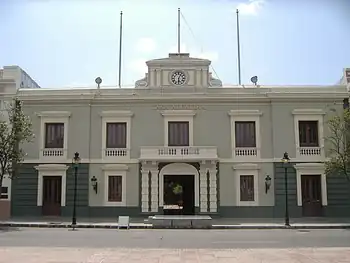
Selected picture –
Photo credit: Mtmelendez
City halls in Puerto Rico, such as the one in Ponce, are usually the centerpieces of each Municipality's town center. Most are located across the town plaza, and are frequented by the public and tourists alike.
August 8, 1511 - Pope Julius II established the first Roman Catholic diocese in Puerto Rico, one of the first three in the entire New World.
August 9, 1898 - The town of Coamo is besieged and subsequently seized by American troops in the Battle of Coamo.
August 9, 1898 - American troops face small remnants of Spain's 6th Provisional Battalion at the Guamani River, an event known as the Battle of Guamani.
August 10, 1815 - The Royal Decree of Grace was issued, allowing foreigners to enter Puerto Rico and opening the port to trade with nations other than Spain.
School of Tropical Medicine - Univ. of Puerto Rico
The School of Tropical Medicine (Spanish: Escuela de Medicina Tropical), was an educational institution created in 1926 by an act of the Puerto Rican Legislature, to further the research initiated by the Anemia Commissions and the Institute of Tropical Medicine on anemia and its causes. The institution existed as an independent entity until 1949, when it was integrated into the School of Medicine of the University of Puerto Rico. (Full article...)
... that in 1929, Puerto Rican nurse Rosa A. González wrote "Los Hechos Desconocidos" (The Unknown Facts), a book in which she denounced the discrimination against women and nurses in Puerto Rico? The book convinced James R. Beverley, the Interim Governor of Puerto Rico, to sign Ley 77 (Law 77) in May 1930, which established a Nurses Examining Board.[1]
... that the largest single-aperture telescope ever to be constructed is the Arecibo Observatory located near the city by the same name in Puerto Rico?
... that According to an article written by Margarita Santori López for the official newspaper of the University of Puerto Rico's Mayagüez Campus, "Prensa RUM", as of 2003, of the 114 Hispanics working at NASA Goddard Space Flight Center in Maryland, 70 were Puerto Ricans or of Puerto Rican descent?[2]
... that on May 6, 2004, Joseph M. Acabá became the first person of Puerto Rican descent to become an astronaut and that on October 2008, was the first Boricua to go into space?[3]
... that Monserrate Román, a Puerto Rican scientist in NASA, helped NASA build part of the International Space Station. She is the Chief Microbiologist for the Environmental Control and Life Support System project which determines how microbes will behave under different situations and in different locations, such as the nooks and crannies of the Space Station?[4]
... that Dr. Victor Manuel Blanco, an astronomer, has the distinction of having a galactic cluster and the largest 4-m telescope in the Southern Hemisphere named after him?[5]
... that Fermín Tangüis, developed the Tanguis cotton in Peru and saved that nation's cotton industry?[6]
... that Dr. Pedro Beauchamp, The first Puerto Rican specialist certified by the American Reproductive Endocrinology and Infertility Board, performed the first in vitro fertilization (IVF) technique on the island in 1985?[7]
... that Dr. María Cordero Hardy's research on vitamin E helped other scientists understand about how the vitamin works in the human body?[8]
General images
The following are images from various Puerto Rico-related articles on Wikipedia.
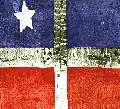
Image 1The original Lares revolutionary flag. The first "Puerto Rican Flag" used in the unsuccessful Grito de Lares (Lares Uprising). (from History of Puerto Rico)
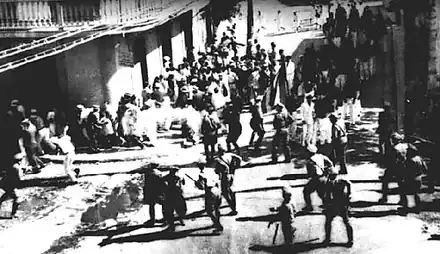
Image 2El Imparcial headline: "Aviation (US) bombs Utuado" during Nationalist revolts. (from History of Puerto Rico)
Image 4Sugar cane workers resting at the noon hour, Rio Piedras. Photograph by Jack Delano, a photographer for the Farm Security Administration. Ca. 1941. (from History of Puerto Rico)
Image 5Los Reyes Magos painted by Hipolito Marte Martinez, "In Puerto Rico, Melchior is always represented with dark skin" (from Culture of Puerto Rico)
Image 7La escuela del maestro Rafael Cordero by Puerto Rican artist Francisco Oller. (from Culture of Puerto Rico)
Image 8"El desastre es la colonia" (the disaster is the colony), words seen on light meter six months after Hurricane Maria (from Culture of Puerto Rico)
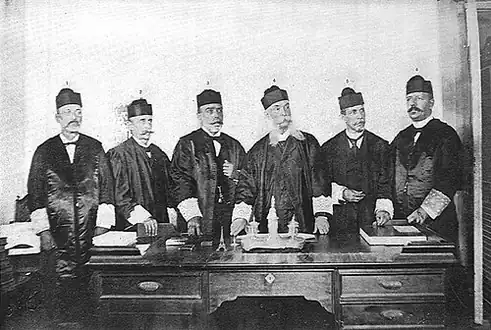
Image 9The first Supreme Court of Puerto Rico, established in 1900. (from History of Puerto Rico)
Image 10US and Puerto Rico flags on a building in Puerto Rico (from Culture of Puerto Rico)
Image 11Raising the US Flag over San Juan, 18 October 1898. (from History of Puerto Rico)
Image 25An 1899, caricature by Louis Dalrymple (1866–1905), showing Uncle Sam harshly lecturing four black children labelled Philippines, Hawaii, Puerto Rico and Cuba (from History of Puerto Rico)
Image 27The 45-star flag, used by the United States during the invasion of Puerto Rico, was also the official flag of Puerto Rico from 1899 to 1908. (from History of Puerto Rico)
On Wikipedia, anyone can edit. So if you're interested in Puerto Rico and its related subjects and articles, feel free to add and edit current content or start a new article. After all, the Wikipedia community encourages all readers and users to be bold in updating pages. If you're unsure on where to start, you can choose any of the open tasks listed below. The Puerto Rico WikiProject thanks you!
↑"Scientist from Puerto Rico, Maria Cordero Hardy (American Women in Science Biography)" By: Mary Ellen Verheyden-Hilliard; Publisher: Equity Institute; First edition. edition (June 1985); ISBN-10: 0932469027; ISBN-13: 978-0932469021