Portal:Business/Selected economy
These are articles that are selected for the "Selected economy" slot within the Business and economics portal.
Selected economy 1
Portal:Business/Selected economy/1

Selected economy 2
Portal:Business/Selected economy/2

Selected economy 3
Portal:Business/Selected economy/3

Selected economy 4
Portal:Business/Selected economy/4

Hong Kong has a highly developed free-market economy. It is characterised by low taxation, almost free port trade and a well-established international financial market. The Hong Kong dollar is legally issued by three major international commercial banks, and since 1983 has pegged to the US dollar.: 201 Interest rates are determined by individual banks in Hong Kong to ensure that they are market driven. There is no officially recognised central banking system, although the Hong Kong Monetary Authority functions as a financial regulatory authority.
Highly dependent on international trade and finance, it is regarded as a favorable place to start a company. A study showed that Hong Kong went from 998 registered start-ups in 2014 to 4694 in 2024, with Fintech (13%) companies comprising the plurality. The Economic Freedom of the World Index lists Hong Kong as the freest economy, with a score of 8.58 based on data from 2022. (Full article...)
Selected economy 5
Portal:Business/Selected economy/5

The economy of Singapore is a highly developed mixed market economy with dirigiste characteristics. Singapore's economy has been consistently ranked as the most open, competitive and pro-business in the world. It is also perceived as the 3rd least corrupt in the world. Singapore has low tax-rates and the highest per-capita GDP in the world in terms of purchasing power parity (PPP). The Asia-Pacific Economic Cooperation (APEC) is headquartered in Singapore.
Alongside the business-friendly reputation for global and local privately held companies and public companies, various national state-owned enterprises play a role in Singapore's economy. The sovereign wealth fund Temasek Holdings holds majority stakes in several of the nation's largest bellwether companies, such as Singapore Airlines, Singtel, ST Engineering and Mediacorp. With regard to foreign direct investment (FDI), the Singaporean economy is a major FDI outflow-financier in the world. In addition, throughout its history, Singapore has benefited from the large inward flows of FDI from global investors, financial institutions and multinational corporations (MNCs) due to its attractive investment climate along with a stable political environment throughout its modern years. (Full article...)
Selected economy 6
Portal:Business/Selected economy/6

The European Union's economy combines the national economies of the supranational organization's member states. It makes up the majority of the European economy as the second largest economy in the world in nominal terms, after the United States. By purchasing power parity (PPP), the EU economy is the third-largest and generates one-sixth of global economic output. Within the EU, Germany, France, Italy and Spain are the four largest economies. The EU economy consists of an internal market of mixed economies based on free market and advanced social models.
The EU is one of the world's largest trading entities, with Germany and France serving as the primary economic powerhouses in terms of both exports and imports. The EU's largest trading partners are China, the U.S., the United Kingdom, Switzerland, and Russia. Many EU states operate within the Eurozone – using the euro – the second largest and second most-traded reserve currency in the world after the United States dollar. The EU banking system totals more than $38 trillion while managed assets exceed $12 trillion as of 2020. The two largest stock exchanges are Euronext Paris and Frankfurt Stock Exchange. (Full article...)
Selected economy 7
Portal:Business/Selected economy/7

Ireland has a highly developed knowledge economy, focused on services in high-tech, life sciences, financial services and agribusiness, including agrifood. Ireland is an open economy (3rd on the Index of Economic Freedom), and ranks first for high-value foreign direct investment (FDI) flows. In the global GDP per capita tables, Ireland ranks 2nd of 192 in the IMF table and 4th of 187 in the World Bank ranking.
Social expenditure stood at roughly 13.4% of GDP in 2024. Following a period of continuous growth at an annual level from 1984 to 2007, the post-2008 Irish economic downturn severely affected the economy, compounding domestic economic problems related to the collapse of the Irish property bubble. Ireland first experienced a short technical recession from Q2-Q3 2007, followed by a recession from Q1 2008 – Q4 2009. (Full article...)
Selected economy 8
Portal:Business/Selected economy/8

Libya has a developing economy. It depends primarily on revenues from the petroleum sector, which represents over 95% of export earnings and 60% of GDP. These oil revenues and a small population have given Libya one of the highest nominal per capita GDP in Africa.
After 2000, Libya recorded favorable growth rates with an estimated 10.6% growth of GDP in 2010. This development was interrupted by the Libyan Civil War, which resulted in contraction of the economy by 62.1% in 2011. After the war, the economy rebounded by 104.5% in 2012. It crashed again following the Second Libyan Civil War. As of 2024, Libya's per capita PPP GDP stands at only 65% of its pre-war level in 2010. (Full article...)
Selected economy 9
Portal:Business/Selected economy/9

India has a developing market-oriented economy with substantial state participation in strategic sectors. It is the world's sixth-largest economy by nominal GDP and the third-largest by purchasing power parity (PPP) as of April 2026. On a per capita income basis, the nation is ranked 149th by nominal GDP and 119th by PPP-adjusted GDP as of 2026. From independence in 1947 until 1991, economic development was characterized by protectionist economic policies, with extensive state intervention, demand-side economics, natural resource optimization, and regulation. An acute balance of payments crisis in 1991 led to the adoption of broad economic liberalisation in India and indicative planning. (Full article...)
Selected economy 10
Portal:Business/Selected economy/10

Ghana has a developing mixed economy. Based on International Monetary Fund estimates, it is the 73rd-largest economy in the world and the 10th-largest economy in Africa by nominal gross domestic product. By purchasing power parity, it ranks 67th globally and 9th in Africa.
Ghana's economy is led by the services sector, followed by industry and agriculture. Recent economic growth has been supported by services, a recovery in agriculture, strong gold exports, and improved macroeconomic conditions. Although agriculture accounts for a smaller share of output than services or industry, it remains an important source of employment, while services account for the largest share of total employment. (Full article...)
Selected economy 11
Portal:Business/Selected economy/11
Selected economy 12
Portal:Business/Selected economy/12

Brazil has a diversified mixed economy. It is the largest in Latin America, the Southern Hemisphere and the second in Americas, in nominal terms. As of 2026, it is an upper-middle income and developing economy with the second largest GDP in the Americas in nominal and purchasing power parity terms. It is ranked as the tenth largest economy in the world in nominal terms, and the 8th largest in PPP terms. In 2024, according to Forbes, Brazil was the 7th largest country in the world by number of billionaires. Brazil is one of the ten chief industrial states in the world according to International Labour Organization. According to the International Monetary Fund (IMF), Brazil's nominal GDP was US$2.642 trillion; the country has a long history of being among the largest economies in the world and the GDP per capita was US$12,313 per capita.
The country is rich in natural resources. From 2000 to 2012, Brazil was one of the fastest-growing major economies in the world, with an average annual GDP growth rate of over 5%. Its GDP surpassed that of the United Kingdom in 2012, temporarily making Brazil the world's sixth-largest economy. However, Brazil's economic growth decelerated in 2013 and the country entered a recession in 2014. The economy started to recover in 2017, with a 1% growth in the first quarter, followed by a 0.3% growth in the second quarter compared to the same period of the previous year. It officially exited the recession. According to data released on 3 March 2026 by the Brazilian Institute of Geography and Statistics (IBGE), Brazil's economy grew by 3.4% in 2024 and 2.3% in 2025, indicating robust growth in the last two years. In the fourth quarter of 2025, gross domestic product (GDP) increased by 0.1% compared with the third quarter, when it had also recorded growth of 0.1%, reflecting relative stability in quarterly performance. (Full article...)
Selected economy 13
Portal:Business/Selected economy/13

Macau has a highly developed market economy, which has remained one of the most open in the world since its handover to China in 1999. Apparel exports and gambling-related tourism are mainstays of the economy. Since Macau has little arable land and few natural resources, it depends on mainland China for most of its food, fresh water, and energy imports. Japan and Hong Kong are the main suppliers of raw materials and capital goods. Although Macau was hit hard by the 1997–98 Asian financial crisis and the early 2000s recession, its economy grew approximately 13.1% annually on average between 2001 and 2006. During the first three-quarters of 2007, Macau registered year-on-year GDP increases of 31.4%. A rapid rise in the number of mainland visitors due to China's easing of travel restrictions, increased public works expenditures, and significant investment inflows associated with the liberalisation of Macau's gaming industry drove the five-year recovery. The budget also returned to surplus after 2002 because of the surge in visitors from China and a hike in taxes on gambling profits, which generated about 70% of government revenue. (Full article...)
Selected economy 14
Portal:Business/Selected economy/14

Mexico has a developing mixed economy. It is the 13th largest in the world in nominal GDP terms and by purchasing power parity as of 2026. Since the 1994 crisis, administrations have improved the country's macroeconomic fundamentals. Mexico was not significantly affected by the 2002 South American crisis and maintained positive, though low, growth rates after a brief period of stagnation in 2001. However, Mexico was one of the Latin American nations most affected by the 2008 recession, with its gross domestic product contracting by more than 6% that year. Mexico has the lowest social expenditure among OECD countries, roughly 7.5% of GDP. (Full article...)
Selected economy 15
Portal:Business/Selected economy/15

The People's Republic of China (PRC) has a socialist market economy, incorporating industrial policies and strategic five-year plans. China has the world's second-largest economy by nominal GDP and since 2016 has been the world's largest economy when measured by purchasing power parity (PPP). China accounted for 19% of the global economy in 2025 in PPP terms, and around 17% in nominal terms in 2025. The developing economy consists of state-owned enterprises (SOEs) and mixed-ownership enterprises, as well as a large domestic private sector which contribute approximately 60% of the GDP, 80% of urban employment and 90% of new jobs. (Full article...)
Selected economy 16
Portal:Business/Selected economy/16

Myanmar has a lower-middle income economy that is considered the seventh largest in Southeast Asia and among the world's least developed. After the return of civilian rule in 2011, the new government launched large-scale reforms, focused initially on the political system to restore peace and achieve national unity and moving quickly to an economic and social reform program. Myanmar has faced an economic crisis since the 2021 coup d'état. According to the International Monetary Fund (IMF), the nation generates $83.83 billion in nominal gross domestic product (GDP) and $293.91 by purchasing power parity (PPP), as of 2026. Myanmar's GDP per capita stands at $1,519. (Full article...)
Selected economy 17
Portal:Business/Selected economy/17

Pakistan has a developing mixed economy with a prominent agriculture sector. It is the 40th-largest in terms of nominal GDP and the 20th-largest economy by purchasing power parity (PPP) as of 2026. In per capita terms, the Pakistani economic output ranks 160th by nominal GDP and 138th by PPP GDP. Economic development in Pakistan is varied with growth centers located along the Indus River. Major urban centers with diversified economies include Karachi and the broader Punjab region, including Faisalabad, Lahore, Sialkot, Rawalpindi, and Gujranwala. With a large population exceeding 250 million, Pakistan is sensitive to immigration, natural disasters and regional armed conflict. (Full article...)
Selected economy 18
Portal:Business/Selected economy/18

The continent of Africa has a diversified developing economy across the second-largest continental land-mass in the world. It is the world's 5th-largest continental economy with 54 national economies and a large informal economy. With a population of 1.47 billion, the African economy generates $2.83 trillion in nominal gross domestic product (GDP) and over $10 trillion in purchasing power parity (PPP) GDP. It is home to many of the world's fastest-growing economies due to its abundant emerging markets. They are economically integrated within their supranational organization, the African Union (AU).
It is the least wealthy inhabited continent per capita and second-least wealthy by total wealth, ahead of Oceania. Scholars have attributed this to different factors including geography, climate, corruption, as well as colonialism and neocolonialism. Amid this low concentration of wealth, economic expansion and a large youthful population make Africa a large consumer market. Africa has a large quantity of natural resources. The largest sectors of the African economy have been agriculture, trade, and industry. The most developed regions are North Africa, West Africa and Southern Africa. (Full article...)
Selected economy 19
Portal:Business/Selected economy/19

Zimbabwe has a developing economy. It generates $149.68 billion within its formal economy in PPP terms which translates to 35.9% of the total economy. Agriculture and mining largely contribute to exports.
The country has reserves of metallurgical-grade chromite. Other commercial mineral deposits include coal, diamonds, lithium, asbestos, copper, nickel, gold, platinum and iron ore. (Full article...)
Selected economy 20
Portal:Business/Selected economy/20

The economy of Bhutan is based on agriculture and forestry, which provide the main livelihood for more than 60% of the population. Agriculture consists largely of subsistence farming and animal husbandry. Rugged mountains dominate the terrain and make the building of roads and other infrastructure difficult. Bhutan is among the richest by gross domestic product (nominal) per capita in South Asia, at $3,491 as of 2022, but it still places 153rd, and among the poorest in the world. The total gross domestic product is only $2.898 billion, placing Bhutan at 178th according to the IMF.
Bhutan's economy is closely aligned with India's through strong trade and monetary links and dependence on India's financial assistance. Most production in the industrial sector is of the cottage industry type. Most development projects, such as road construction, rely on Indian migrant labour. Model education, social, and environment programmes are underway with support from multilateral development organisations. (Full article...)
Selected economy 21
Portal:Business/Selected economy/21

Iraq has a developing, upper-middle income economy, dominated by the oil sector. The IFAD has classified Iraq as an oil-rich upper middle income country. In 2025, the economy is estimated to be at $690 billion (GDP PPP), ranking it as the 5th largest in the Arab world, 7th in the Middle East and North Africa and 51st largest economy in the world. In terms of gold reserves, Iraq is among five Arab countries and holds the 30th position globally. (Full article...)
Selected economy 22
Portal:Business/Selected economy/22

South America has a diversified developing economy across the fourth-largest continental land-mass in the world. It comprises approximately 434 million people living in the 12 sovereign states and three dependent territories of South America, which encompasses 6 percent of the world's population. In 2025, South America ranks fourth in terms of nominal GDP by continent, behind Europe and after Africa and Oceania.
South America has two major trade blocks: Mercosur and the Andean Community. Brazil is the largest economy in South America in terms of nominal GDP. (Full article...)
Selected economy 23
Portal:Business/Selected economy/23

The continent of Asia has a diversified developing economy across the largest continental land-mass in the world. It comprises about 4.7 billion people (60% of the world population) living in 50 different nations.0 Asia is the fastest growing economic region, as well as the largest continental economy by both nominal GDP and PPP-adjusted GDP. As in all world regions, the wealth of Asia differs widely between, and within, states. This is due to its vast size, meaning a huge range of different cultures, environments, historical ties and government systems. The largest economies in Asia in terms of PPP gross domestic product (GDP) are China, India, Japan, Indonesia, Turkey, South Korea, Egypt, Saudi Arabia and Taiwan. In terms of nominal gross domestic product (GDP), they are China, India, Japan, South Korea, Turkey, Indonesia, Saudi Arabia, Taiwan, Israel and Singapore.
Total wealth (as well as overall GDP) is mainly concentrated in East Asia, South Asia and Southeast Asia. Israel and Turkey are also two major economies in West Asia. Israel (entrepreneurship on diversified industries) is a developed country, while Turkey (founding member of OECD) is an advanced emerging country. Asia, with the exception of Japan (heavy industry and electrical sophistication), South Korea (heavy industry and information and communication technology), Taiwan (heavy industry and hi-tech parts manufacturing), Hong Kong (financial industry and services) and Singapore (high-tech manufacturing, biotechnology, financial and business services and tourism) in recent years, is currently undergoing rapid growth and industrialization. China (manufacturing, services, heavy industry and FDI-led growth) and India (manufacturing, commodities, outsourcing destination, computer software and financial services) are the two fastest growing major economies in the world. (Full article...)
Selected economy 24
Portal:Business/Selected economy/24

The economy of East Asia comprises 1.6 billion people (20% of the world population) living in six different countries and regions. The region includes several of the world's largest and most prosperous economies: Taiwan, Japan, South Korea, China, Hong Kong, and Macau. It is home to some of the most economically dynamic places in the world, being the site of some of the world's most extended modern economic booms, including the Taiwan miracle (1950–present) in Taiwan, Miracle on the Han River (1974–present) in South Korea, Japanese economic miracle (1950–1990) and the Chinese economic miracle (1983–2010) in China.
East Asia's economic prominence has grown significantly in recent years, increasing its importance and influence in Asia and the world economy. Recent developments have led to an expanding cosmopolitan middle class. East Asian countries are vital contributors to central global communications and trade networks, developing relations with other nations, including those of the Western world, making them a significant contributor to the global economy. The region's economic success was referred to as "An East Asian Renaissance" by the World Bank in 2007. (Full article...)
Selected economy 25
Portal:Business/Selected economy/25

Iceland has a highly developed mixed market economy. In 2011, the gross domestic product (GDP) was US$12 billion. By 2018, it had increased to a nominal GDP of US$27 billion, and by 2025, it reached US$35 billion. As of 2025, it has the fifth highest nominal GDP per capita ($91,000) and fourteenth highest GDP per capita by PPP ($81,000). In 2025 Iceland topped the Human Development Index.
The nation has high levels of free trade and government intervention. However, government consumption is lower compared to other Nordic countries. 100% of Iceland's electrical grid is produced from renewable sources. Geothermal and Hydropower are the primary sources of energy in Iceland. A founding member of the OECD, Iceland has the third lowest Not in Education, Employment, or Training (NEET) rate among the youth. (Full article...)
Selected economy 26
Portal:Business/Selected economy/26
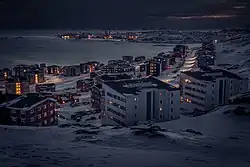
Greenland has a developing economy, with a large public sector and extensive foreign trade. This has resulted in an economy with periods of strong growth, considerable inflation, unemployment problems and extreme dependence on capital inflow from the Kingdom Government. The economy is hampered by lack of infrastructure with less than 100 miles of paved roads and no railways. However, as of 2012, partly due to the retreating ice sheet due to climate change, it was starting to emerge as a territory rich with untapped mining resources. (Full article...)
Selected economy 27
Portal:Business/Selected economy/27

Canada has an advanced and diversified mixed economy. The nation relies upon its abundant natural resources and well-developed international trade networks. As of 2026, it is the eleventh-largest in the world in nominal terms. Its GDP per capita in purchasing power parity (PPP) terms ranks third among G7 countries. Among OECD members, Canada has a highly efficient and strong social security system; social expenditure stood at roughly 23.1% of GDP. The country's average household disposable income per capita is "well above" the OECD average. The Government of Canada formulates economic policy while the Bank of Canada functions as its central bank and implements monetary policy.
The Canadian economy ranks low in corruption and income disparity while ranking highly on economic freedom and stability. Canada ranks among the lowest of the most developed countries for housing affordability. It maintains a highly developed banking sector with the Toronto Stock Exchange ranked the tenth-largest stock exchange in the world by market capitalization. Its cooperative banking sector is pronounced with the world's highest per-capita membership in credit unions. Among G20 members, Canada has the second-largest foreign direct investment to GDP ratio and the lowest net debt-to-GDP ratio in the G7. (Full article...)
Selected economy 28
Portal:Business/Selected economy/28

England has a developed economy, considered the largest economy of the four countries of the United Kingdom. The English economy is one of the largest and most dynamic in the world. It has an average GDP per capita of £37,852 in 2022.
His Majesty's Treasury, led by the Chancellor of the Exchequer, is responsible for developing and executing the government's public finance policy and economic policy. Government involvement is also primarily exercised by the Department for Business and Trade and Department for Science, Innovation and Technology. Regarded as a highly developed social market economy, it has adopted many free market principles, yet maintains an advanced social welfare infrastructure. (Full article...)
Selected economy 29
Portal:Business/Selected economy/29

The United Kingdom has a highly developed social market economy. In 2026, the United Kingdom is the fifth-largest national economy in the world measured by nominal gross domestic product (GDP), tenth-largest by purchasing power parity (PPP), and about 21st by nominal GDP per capita, constituting 3.38% of world GDP and 2.13% by purchasing power parity (PPP).
The United Kingdom has one of the most globalised economies and comprises England, Scotland, Wales and Northern Ireland. In 2022, the United Kingdom was the fifth-largest exporter of goods and services in the world and the fourth-largest importer. It also had the fourth-largest outward foreign direct investment, and the fifteenth-largest inward foreign direct investment. In 2022, the United Kingdom's trade with the European Union accounted for 42% of the country's exports and 48% of its total imports. The United Kingdom has a highly efficient and strong social security system, which comprises roughly 24.5% of GDP. (Full article...)
Selected economy 30
Portal:Business/Selected economy/30

The continent of Europe has a developed mixed economy, spanning 44 countries with over 745 million citizens. It is the world's third-largest continental economy by nominal gross domestic product (GDP) and the second-largest by purchasing power parity (PPP) GDP. Most of the region is economically integrated through the European Union (EU) and its monetary union, the Eurozone. It is also interconnected through the European single market. Europe's largest national economies by nominal GDP are Germany, the United Kingdom, France, Italy, Russia, Spain, the Netherlands, Poland, and Switzerland. As measured by PPP GDP, the Russian economy is largest, followed by Germany, France, and the United Kingdom; the latter and former of whom circulate non-euro currencies.
There are differences in wealth across Europe which can be seen roughly along the former Cold War divide. The European economy is considered very highly developed with most European states maintaining a GDP per capita higher than the global average. The banking system in Europe maintains over $50 trillion in assets with global managed assets exceeding $20 trillion. London and Paris are by far the economically strongest cities in Europe, each with an GDP exceeding $1 trillion. The two cities are major economic hubs in Europe, with the London Stock Exchange and Euronext Paris, the two largest stock exchanges in Europe by market cap. (Full article...)
Selected economy 31
Portal:Business/Selected economy/31

Russia has a developing market-oriented mixed economy considered high-income and highly industrialized. It has the ninth-largest economy in the world by nominal GDP and the fourth-largest economy by GDP (PPP). Due to a volatile currency exchange rate, its GDP measured in nominal terms fluctuates sharply. Russia was the last major economy to join the World Trade Organization (WTO), becoming a member in 2012.
The country has large amounts of energy resources throughout its vast landmass, particularly natural gas and petroleum, which play a crucial role in its energy self-sufficiency and exports. The country is a petrostate,: 56 with it having the largest natural gas reserves in the world, the second-largest coal reserves, the eighth-largest oil reserves, and the largest oil shale reserves in Europe. Russia is the third-largest natural gas exporter, the second-largest natural gas producer, the second-largest oil exporter and producer, and the third-largest coal exporter. As of 2026, its foreign exchange reserves are the fourth-largest in the world. As of 2026 few people are unemployed. It is the third-largest exporter of arms in the world. The large oil and gas sector accounted up to 30% of Russia's federal budget revenues in 2024, down from 50% in the mid-2010s, suggesting economic diversification. (Full article...)
Selected economy 32
Portal:Business/Selected economy/32

Australia has a highly developed mixed economy. As of 2026, Australia was the 12th-largest national economy by nominal GDP (gross domestic product), the 22nd-largest by PPP-adjusted GDP, and was the 21st-largest goods exporter and 24th-largest goods importer. Australia took the record for the longest run of uninterrupted GDP growth in the developed world with the March 2017 financial quarter. It was the 103rd quarter and the 26th year since the country had a technical recession. As of June 2021, the country's GDP was estimated at $1.98 trillion.
The Australian economy is dominated by its service sector, which in 2017 comprised 62.7% of the GDP and employed 78.8% of the labour force. At the height of the mining boom in 2009–10, the total value-added of the mining industry was 8.4% of GDP. Despite the recent decline in the mining sector, the Australian economy has remained resilient and stable and did not experience a recession from 1991 until 2020. Among OECD members, Australia has a highly efficient and strong social security system, which comprises roughly 25% of GDP. Also among OECD members, Australia has had the most severe increases in cost of living relative to wage growth since the COVID-19 pandemic, along with Finland and New Zealand. (Full article...)
Selected economy 33
Portal:Business/Selected economy/33

New Zealand has a highly developed free-market economy. As of 2025, New Zealand's nominal GDP was US$248 billion. In the 2025 IMF rankings New Zealand was the 52nd-largest national economy in the world when measured by nominal gross domestic product (GDP) and the 63rd-largest in the world when measured by purchasing power parity (PPP). New Zealand has one of the most globalised economies and depends greatly on international trade, mainly with China, Australia, the European Union, the United Kingdom, the United States, Japan and Korea. New Zealand's 1983 Closer Economic Relations agreement with Australia means that the economy aligns closely with that of Australia. Among OECD nations, New Zealand has a highly efficient and strong social security system; social expenditure stood at roughly 19.4% of GDP.
New Zealand's diverse economy is made up of various types of informal and formal organisations, divided between the public and private sectors. It has a sizeable service sector, accounting for 73% of all GDP activity as of 2024. As a large island nation New Zealand has abundant natural resources and mineral wealth. Prominent manufacturing industries include aluminium production, food processing, metal fabrication, wood and paper products. Goods-producing industries accounted for 20% of GDP as of 2024. The primary sector continues to dominate New Zealand's exports, despite accounting for only 7% of GDP as of 2024. The information technology sector is growing rapidly. (Full article...)
Selected economy 34
Portal:Business/Selected economy/34

Peru has an emerging, mixed economy characterized by a high level of foreign trade and an upper middle income economy as classified by the World Bank. It has the forty-seventh largest economy in the world by total GDP and currently experiences a high human development index. The country was one of the world's fastest-growing economies in 2012, with a GDP growth rate of 6.3%. The economy was expected to increase 9.3% in 2021, in a rebound from the COVID-19 pandemic in Peru. Peru has signed a number of free trade agreements with its main trade partners. China became the nation's largest trading partner following the China–Peru Free Trade Agreement signed on 28 April 2009. Additional free trade agreements have been signed with the United States in 2006, Japan in 2011 and the European Union in 2012. Trade and industry are centralized in Lima while agricultural exports have led to regional development within the nation. (Full article...)
Selected economy 35
Portal:Business/Selected economy/35

Saudi Arabia has a high-income developing economy highly reliant on its petroleum sector. Oil and gas account for approximately 22.3% of Saudi GDP and 55% of government revenue, with substantial fluctuations depending on oil prices each year.
The kingdom has the second-largest proven petroleum reserves, and the fourth-largest measured natural gas reserves. Saudi Arabia is currently the largest exporter of petroleum in the world. Other major parts of the economy include refining and chemical manufacturing from the oil reserves, much of which is vertically integrated in the state-owned enterprise, Saudi Aramco. Saudi Arabia is a founding member of the OPEC cartel.
In 2016, the Saudi government launched its Saudi Vision 2030 program to reduce its dependency on oil and diversify its economic resources. By 2022, Saudi Arabia had only modestly reduced its dependence on oil. Monetary policy in Saudi Arabia is anchored by the fixed exchange rate of the Saudi riyal to the U.S. dollar. Nearly every major business in Saudi Arabia has extensive ties to the Saudi State. (Full article...)
Selected economy 36
Portal:Business/Selected economy/36

Kazakhstan has a developing economy that is considered upper-middle income. It is the largest in Central Asia in both absolute and per capita terms. As of 2023, the nation has attracted more than US$370 billion of foreign investments since becoming an independent republic after the dissolution of the former Soviet Union. It possesses oil reserves as well as minerals and metals. Almost every known element on the periodic table can be found in Kazakhstan. It also has considerable agricultural potential, with its vast steppe lands accommodating both livestock and grain production. The mountains in the south are important for apples and walnuts; both species grow wild there. Kazakhstan's industrial sector rests on the extraction and processing of these natural resources.
The dissolution of the Soviet Union and the collapse of demand for Kazakhstan's traditional heavy industry products have resulted in a sharp decline of the economy since 1991, with the steepest annual decline occurring in 1994. In 1995–97 the pace of the government program of economic reform and privatization quickened, resulting in a substantial shifting of assets into the private sector. Kazakhstan was granted "market economy country" status by the European Union and the United States, in 2000 and 2002 respectively. (Full article...)
Selected economy 37
Portal:Business/Selected economy/37

The economy of the Philippines is an emerging market, and considered as a newly industrialized country in the Asia-Pacific region. In 2026, the Philippine economy is estimated to be at ₱30.22 trillion ($512.22 billion), making it the world's 35th largest by nominal GDP and 14th largest in Asia according to the International Monetary Fund.
The Philippine economy is a service-oriented economy, with relatively more modest contributions from the manufacturing and agriculture sectors. It has experienced significant economic growth and transformation in the past, posting one of the highest GDP growth rates in Asia. With an average annual growth rate of around 6 percent since 2010, the country has emerged as one of the fastest-growing economies in the world. The Philippines is a founding member of the United Nations, Association of Southeast Asian Nations, Asia-Pacific Economic Cooperation, East Asia Summit and the World Trade Organization. The Asian Development Bank (ADB) is headquartered in the Ortigas Center located in the city of Mandaluyong, Metro Manila.
The country's primary exports include semiconductors and electronic products, transport equipment, garments, chemical products, copper, nickel, abaca, coconut oil, and fruits. Its major trading partners include Japan, China, the United States, Singapore, South Korea, the Netherlands, Hong Kong, Germany, Taiwan, and Thailand. In 2017, the Philippine economy was projected to become the 9th largest in Asia and 19th largest in the world by 2050. By 2035, the Filipino economy is predicted to be the 22nd largest in the world. (Full article...)
Selected economy 38
Portal:Business/Selected economy/38

The economy of Argentina is South America's second-largest, behind Brazil. The United Nations' Human Development Index ranks Argentina "very high," reflecting a literate population, export-oriented agriculture, and diversified industry. Under the presidency of Javier Milei, the country is a free-market capitalist economy, although that has differed historically. Rich natural resources underpin the economy, although performance has been volatile – growth spurts alternate with recessions—especially since the late 20th century—driving income inequality and poverty. Early in that century, Argentina's per capita GDP ranked among the global top ten, matching Canada and Australia while exceeding France and Italy. The Argentine peso lost ~50% of its value in 2018 because of hyperinflation (falling from ~18–20 to >38 pesos per U.S. dollar), prompting an IMF stand-by program. It fell another 25% in 2019, 90% in 2020, 68% in 2021, and 50% in 2022, 54% in 2023, 30% in 2024, before rising in 2025. The FTSE Global Equity Index (2018) listed Argentina as an emerging market and G20 member. Prolonged capital controls led MSCI to reclassify it as a standalone market in 2021.
From 1946 until the military coup in 1976, Argentina was dominated by a unique, left-wing populist ideology known as Peronism. President Jorge Rafael Videla and Economic minister Martínez de Hoz largely reversed Peronism and adopted free market and deregulatory reforms, such as eliminating price controls and foreign exchange controls. This model was carried from the Junta into the succeeding Argentine Republic and strengthened by serving radical Libertarian president Javier Milei through his economic reforms which aim to diminish the state's economic power and debt. (Full article...)
Selected economy 39
Portal:Business/Selected economy/39

The Czech Republic has a developed export-oriented social market economy. It is based in services, manufacturing, and innovation that maintains a high-income welfare state and the European social model. The Czech Republic participates in the European Single Market as a member of the European Union, and is therefore a part of the economy of the European Union. It uses its own currency, the Czech koruna, instead of the euro. It is a member of the Organisation for Economic Co-operation and Development (OECD). The Czech Republic ranks 16th in inequality-adjusted human development and 24th in World Bank Human Capital Index, ahead of countries such as the United States, the United Kingdom or France. The Czech Republic ranks 7th – 10th among the world’s most diversified economies in the Economic Complexity Index.
The industry sector accounts for 37% of the economy, while services account for 61% and agriculture for 2%. The principal industries are high tech engineering, electronics and machine-building, steel production, transportation equipment (automotive, rail and aerospace industry), chemicals, advanced materials and pharmaceuticals. The major services are research and development, ICT and software development, nanotechnology and life sciences. Its main agricultural products are cereals, vegetable oils and hops. (Full article...)
Selected economy 40
Portal:Business/Selected economy/40

Greece is a developed country with a mixed economy. The Greek economy is the 50th-largest by nominal gross domestic product (GDP) and 54th-largest by purchasing power parity (PPP). It is the 16th-largest economy in the European Union and eleventh largest in the eurozone. Greece is a welfare state and ranks relatively highly among OECD nations in terms of social spending, which stood at 23.7% of GDP in 2024. It has the highest debt-to-GDP ratio in the EU, standing at 146% in 2025. The economy is based on the service (78%), industrial (18%) and agricultural (4%) sectors.
The Greek economy was devastated by World War II (1939–1945), but expanded rapidly from 1950 to 1980 in what is commonly known as the Greek economic miracle. Greece also enjoyed a sustained period of growth rates above the EU average from the mid-1990s to the mid-2000s, peaking at 6.4% in 2006. The subsequent Great Recession and Greek government-debt crisis, a central focus of the wider euro area crisis, plunged the economy into a sharp downturn in the late 2000s and early 2010s. The tourism boom of recent years has helped drive a strong recovery, with Greece setting new records in arrivals (38 million) and revenue (€23.6 billion) in 2025 as one of the most visited countries in the world. (Full article...)
Selected economy 41
Portal:Business/Selected economy/41

The economy of Poland is an emerging and developing, high-income, industrialized social market economy that is the sixth-largest in the European Union by nominal GDP and fifth-largest by PPP-adjusted GDP. Poland has the extensive public services characteristic of most developed economies and is one of few countries in Europe to require no tuition fees for undergraduate and postgraduate education and with universal public healthcare that is free at a point of use. Since 1988, Poland has pursued a policy of economic liberalisation but retained an advanced public welfare system. It ranks 20th worldwide in terms of PPP-adjusted GDP, 20th in terms of nominal GDP, and 21st in the 2023 Economic Complexity Index. Among OECD nations, Poland has a highly efficient and strong social security system; social expenditure stood at roughly 22.7% of GDP.
The largest component of Poland's economy is the service sector (62.3%), followed by industry (34.2%) and agriculture (3.5%). Following the economic reform of 1989, Poland's external debt has increased from $42.2 billion in 1989 to $365.2 billion in 2014. Poland shipped US$224.6 billion worth of goods around the globe in 2017, while exports increased to US$221.4 billion. The country's top export goods include machinery, electronic equipment, vehicles, furniture, and plastics. Poland was the only economy in the EU to avoid a recession during the 2008 financial crisis. (Full article...)
Selected economy 42
Portal:Business/Selected economy/42

The Netherlands has a highly developed social market economy focused on trade and logistics, manufacturing, services, innovation and technology and sustainable and renewable energy. It is the world's 18th largest economy by nominal GDP and the 28th largest by purchasing power parity (PPP) and is the fifth largest economy in the European Union by nominal GDP. It has the world's 11th highest nominal per capita GDP and the 13th highest PPP-adjusted per capita GDP as of 2023, making it one of the highest earning nations in the world. Many of the world's largest tech companies are based in its capital Amsterdam or have established their European headquarters in the city, such as IBM, Microsoft, Google, Oracle, Cisco, Uber and Netflix. Its second largest city Rotterdam is a major trade, logistics and economic center of the world and is Europe's largest seaport. Netherlands is ranked eighth on the Global Innovation Index and fourth on the WEF Global Competitiveness Report. Among OECD nations, Netherlands has a highly efficient and strong social security system; social expenditure stood at roughly 25.3% of GDP.
The Netherlands has a prosperous and open economy, which depends heavily on foreign trade. The economy is noted for stable industrial relations, fairly low unemployment and inflation, a sizable current account surplus (which, compared to the size of the country, is even more than Germany) and an important role as a European transportation hub; Rotterdam is the biggest port in Europe; and Amsterdam has one of the biggest airports in the world. Industrial activity is predominantly in food processing, chemicals, petroleum refining, high-tech, financial services, the creative sector and electrical machinery. Its highly mechanized agricultural sector employs no more than 2% of the labor force but provides large surpluses for the food-processing industry and for exports. The Netherlands, along with 11 of its EU partners, began circulating the euro currency on 1 January 2002. (Full article...)
Selected economy 43
Portal:Business/Selected economy/43

Germany has a social market economy. As the largest economy in Europe by nominal GDP, Germany's highly developed economy is the third-largest by nominal GDP in the world, as well as the sixth-largest by PPP-adjusted GDP. Due to a volatile currency exchange rate, Germany's GDP as measured in dollars fluctuates sharply, but has ranked among the world's top four since 1960. Germany accounted for 23.7% of the Eurozone economy in 2025, with which it has achieved a high degree of economic integration. With a population of around 83,000,000 people, Germany represents the largest consumer market in the European Union. It is a founding member of both the European Union and the Eurozone.
Germany is the third-largest exporter globally, with $1.66 trillion worth of goods and services exported in 2024. In 2024, Germany recorded a trade surplus of $255 billion, ranking 2nd worldwide. The service sector contributes around 70% of the total GDP, industry 29.1%, and agriculture 0.9%. Exports account for 50.3% of national output. The main exports of Germany are vehicles, machinery, chemicals, electronics, electrical equipment, pharmaceuticals, transport equipment, basic metals, food products, rubber, and plastics. Germany possesses the largest manufacturing economy in Europe, contributing around one third of all manufacturing in Europe, though its manufacturing industry has experienced a decline in the 2020s. The Germany social security system comprises roughly 25% of GDP, which is high among OECD members. Germany has the world's second-largest gold reserve, with over 3,000 tonnes of gold. As of 2023, Germany spends around 3.1% of GDP, third among major economies, on research and development. It is also the world's second-largest high-technology exporter and ranks in the top 10 of countries by stock market capitalization. (Full article...)
Selected economy 44
Portal:Business/Selected economy/44

Denmark has a modern high-income and highly developed social market economy, dominated by the service sector with 80% of all jobs; about 11% of employees work in manufacturing and 2% in agriculture. The nominal gross national income per capita was the ninth-highest in the world at $68,827 in 2023. Denmark follows the Nordic model, characterized by an internationally high tax level, and a correspondingly high level of government-provided services (e.g. health care, child care and education services). There are also income transfers to various groups, such as retirees, disabled people, the unemployed, and students.
Correcting for purchasing power, per capita income was Int$57,781 or 10th-highest globally. The income distribution is relatively equal but inequality has somewhat increased during the last decades. In 2017, Denmark had the seventh-lowest Gini coefficient (a measure of economic inequality) of the then 28 European Union countries. With 5,932,654 inhabitants as of 1 January 2023, Denmark has the 38th largest national economy in the world measured by nominal gross domestic product (GDP), and the 52nd largest in the world measured by purchasing power parity (PPP). Among OECD nations, Denmark has a highly efficient and strong social security system; social expenditure stood at roughly 26.2% of GDP. (Full article...)
Selected economy 45
Portal:Business/Selected economy/45

Sweden has a highly developed export-oriented economy, aided by timber, hydropower, and iron ore. These constitute the resource base of an economy oriented toward foreign trade. The main industries include motor vehicles, telecommunications, pharmaceuticals, industrial machines, precision equipment, chemical goods, home goods and appliances, forestry, iron, and steel. Traditionally, Sweden relied on a modern agricultural economy that employed over half the domestic workforce. Today, industries such as engineering, mining, steel, and pulp have been further developed, and have given rise to multi-national companies such as Ericsson, ASEA/ABB, SKF, Alfa Laval, AGA, and Dyno Nobel.
Sweden is a competitive open mixed economy. There is a strong welfare state, with public-sector spending accounting up to three-fifths of GDP. In 2014, the percent of national wealth owned by the government was 24%. (Full article...)
Selected economy 46
Portal:Business/Selected economy/46

South Africa has a developing economy considered upper-middle income. It is the largest economy in Africa as of 2026. It is the continent's most industrialised, diversified and technologically advanced economy. South Africa is a leading middle power in international relations. Johannesburg is South Africa’s primary economic and financial centre, contributing about 16% of the country's gross domestic product and roughly 40% of Gauteng’s total economic output.
Cape Town, the nation's second-largest city by population, serves as Africa's tech hub, has a large startup community, and is popular among digital nomads. The city is home to hundreds of tech firms, and is referred to as the "Startup Capital of Africa". Although the natural resource extraction industry remains one of the largest in the country with an annual contribution to the GDP of US$13.5 billion, the economy of South Africa has diversified since the end of apartheid, particularly towards services. In 2019, the financial industry contributed US$41.4 billion to South Africa's GDP. (Full article...)
Selected economy 47
Portal:Business/Selected economy/47

Morocco has a developing market economy. Since 1993, in line with many Western world changes, it has followed a policy of privatisation. Morocco is the 5th largest African economy by GDP (PPP) and seventh-highest GDP in the Arab world, despite not being an energy-producing country. Over the period 1971 and 2024, Morocco had annual GDP growth of 4.13% and per-capita GDP growth of 2.33%.
The economic system of the country demonstrated resilience to the climate, commodity, and pandemic shocks of the early 2020s. Since the early-1980s, the Moroccan government has pursued an economic programme toward accelerating economic growth with the support of the International Monetary Fund, the World Bank, and the Paris Club of creditors. From 2018, the country's currency, the Moroccan dirham, is fully convertible for current account transactions; reforms of the financial sector have been implemented; and state enterprises are being privatised. (Full article...)
Selected economy 48
Portal:Business/Selected economy/48

The economy of Monaco is reliant on tourism and banking. Monaco, situated on the French coast of the Mediterranean Sea, is a popular resort, attracting tourists to its casino and pleasant climate.
The Principality has successfully sought to diversify into services and small, high-value-added, nonpolluting industries. The state has no income tax and low business taxes and thrives as a tax haven both for individuals who have established residence and for foreign companies that have set up businesses and offices. The state retains monopolies in a number of sectors, including gambling, tobacco, the telephone network, and the postal service. (Full article...)
Selected economy 49
Portal:Business/Selected economy/49

Italy has a highly developed social market economy. It is the third-largest national economy in the European Union, the 8th-largest economy in the world by nominal GDP, and the 12th-largest by PPP-adjusted GDP. The country has the second-largest manufacturing industry in Europe and the 7th-largest in the world. Italy has a diversified economy which is dominated by the tertiary service sector. The country is a great power, and is a founding member of the European Union, the eurozone, the Schengen Area, the OECD, the G7 and the G20; it is the eighth-largest exporter in the world, with goods and services worth $611 billion exported in 2021. Its primary trade partners are the other countries of the European Union, with whom it conducts about 59% of its total trade. Its largest trading partners are Germany (12.5%) and France (10.3%), followed by the United States (9%), Spain (5.2%), the United Kingdom (5.2%) and Switzerland (4.6%).
In the post-World War II period, Italy saw a transformation from an agricultural-based economy which had been severely affected by the consequences of the World Wars, into one of the world's most advanced nations, and a leading country in world trade and exports. According to the Human Development Index, the country enjoys a very high standard of living. According to The Economist, Italy has the world's 8th highest quality of life. Italy owns the world's third-largest gold reserve, and is the third-largest net contributor to the budget of the European Union. Furthermore, the advanced country private wealth is one of the largest in the world. In terms of private wealth, Italy ranks second, after Hong Kong, in private wealth to GDP ratio. Among OECD members, Italy has a highly efficient and strong social security system, which comprises roughly 24.4% of GDP. (Full article...)
Selected economy 50
Portal:Business/Selected economy/50

Nigeria has a lower-middle-income, mixed economy and emerging market, with expanding manufacturing, financial, service, communications, technology, and entertainment sectors. It is ranked as the 52nd-largest economy in the world in terms of nominal GDP, the second largest in Africa in terms of purchasing power parity, and the 19th-largest in terms of purchasing power parity. The country's re-emergent manufacturing sector became the largest on the continent in 2013, and it produces a large proportion of goods and services for the region of West Africa. Nigeria's debt-to-GDP ratio was 36.63% in 2021 according to the IMF.
Although oil revenues contributed 2/3 of state revenues, oil only contributes about 9% to the GDP. Nigeria produces about 2.7% of the world's oil supply. The largely subsistence agricultural sector has not kept up with the country's rapid population growth. It was once a large net exporter of food, but currently imports some of its food products. Mechanization has led to a manufacturing resurgence and food export and there was consequently a move towards food sufficiency. (Full article...)
Usage
The layout design for these subpages is at Template:Selected economy.
- Add a new Selected article to the next available subpage.
- The "blurb" for all selected articles should be approximately 10 lines, for appropriate formatting in the portal main page.
- Update "max=" to new total for its {{Random portal component}} on the main page.