Southern Hemisphere
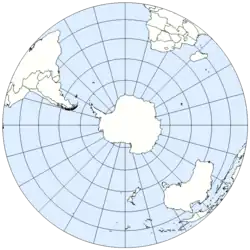

The Southern Hemisphere is the half (hemisphere) of Earth that is south of the equator. It contains all or part of five continents[1] (the whole of Antarctica, the whole of Oceania, about 90% of South America, about one-third of Africa, and some islands off the continental mainland of Asia) and four oceans (the whole Southern Ocean, the majority of the Indian Ocean, the South Atlantic Ocean, and the South Pacific Ocean), as well as New Zealand and most of the Pacific Islands in Oceania. Its surface is 80.9% water, compared with 60.7% water in the Northern Hemisphere, and it contains 32.7% of Earth's land.[2] More than 850 million people live in the Southern Hemisphere, representing around 10–12% of the total global human population.[3]
Owing to the tilt of Earth's rotation relative to the Sun and the ecliptic plane, summer is from December to February (inclusive) and winter is from June to August (inclusive). September 22 or 23 is the vernal equinox and March 20 or 21 is the autumnal equinox. The South Pole is in the centre of the southern hemispherical region.
Characteristics
Southern Hemisphere climates tend to be slightly milder than those at similar latitudes in the Northern Hemisphere, except in the Antarctic which is colder than the Arctic. This is because the Southern Hemisphere has significantly more ocean and much less land; water heats up and cools down more slowly than land.[4] The differences are also attributed to oceanic heat transfer and differing extents of greenhouse trapping.[5]

In the Southern Hemisphere, the Sun passes from east to west through the north, although north of the Tropic of Capricorn the mean Sun can be directly overhead or due south at midday. The Sun follows a right-to-left trajectory through the northern sky unlike the left-to-right motion of the Sun when seen from the Northern Hemisphere as it passes through the southern sky. Sun-cast shadows turn anticlockwise throughout the day and sundials have the hours increasing in the anticlockwise direction. During solar eclipses viewed from a point to the south of the Tropic of Capricorn, the Moon moves from left to right on the disc of the Sun (see, for example, photos with timings of the solar eclipse of November 13, 2012), while viewed from a point to the north of the Tropic of Cancer (i.e., in the Northern Hemisphere), the Moon moves from right to left during solar eclipses.
The Coriolis effect causes cyclones and tropical storms to spin clockwise in the Southern Hemisphere, as opposed to anticlockwise in the Northern Hemisphere.[6]
The southern temperate zone, a subsection of the Southern Hemisphere, is nearly all oceanic.
The Sagittarius constellation that includes the galactic centre is a southern constellation as well as both Magellanic Clouds. This, combined with clearer skies, makes for excellent viewing of the night sky from the Southern Hemisphere with brighter and more numerous stars.

The Southern Hemisphere has significantly less polluted air than the Northern Hemisphere.[7] This is because most of earth's population and major industrial powers reside in the Northern Hemisphere, including high-emission countries like China and India.[7] The Southern Hemisphere was unimpacted by the 1986 Chernobyl nuclear disaster, which at the time posed a serious threat to the Northern Hemisphere, and which continues to impact certain parts of Europe.[8] Small traces of radiation from the disaster were found in far off Northern Hemisphere locations like the United States, Canada and Japan, but there were no traces of radiation at all in the Southern Hemisphere.[9]
Flora and Fauna
Forests in the Southern Hemisphere have special features which set them apart from those in the Northern Hemisphere. Both Chile and Australia share, for example, unique beech species or Nothofagus, and New Zealand has members of the closely related genera Lophozonia and Fuscospora. The eucalyptus is native to Australia but is now also planted in Southern Africa and Latin America for pulp production, and increasingly, biofuel uses.
Some African animals like chimpanzees and gorillas live in both the Northern and Southern Hemisphere portions of Africa. Eastern gorillas are native to three Southern Hemisphere countries; Rwanda (which is entirely below the equator) and the Democratic Republic of the Congo and Uganda (which are trans-hemispheric countries). Western gorillas, meanwhile, can be found in Angola, the Democratic Republic of the Congo, Equatorial Guinea, Gabon and the Republic of the Congo, in addition to being found in the Northern Hemisphere countries Cameroon and Nigeria.[10] The spectacled bear is the only bear species which occurs in the Southern Hemisphere. It is found in certain South American countries like Bolivia, Ecuador and Peru.[11] One of the most notable animals to be found almost exclusively in the Southern Hemisphere is the penguin. A species is found around Isabela Island on the Galápagos archipelago in the Pacific Ocean, which straddles the equator.[12] However, most of Isabela and the rest of the archipelago is located in the Southern Hemisphere, and it is deemed by the International Hydrographic Organization as being wholly within the South Pacific Ocean, rather than the North Pacific.[13]
Australia and Madagascar developed many endemic animals due to their geological isolation, including kangaroos, koalas, platypuses, Tasmanian devils, emus, echidnas, quokkas, cassowaries, lemurs, aye-ayes, fossas, indris, sifakas and panther chameleons. These animals are all native to the Southern Hemisphere, by virtue of being endemic to Australia or Madagascar, with cassowaries and echidnas being found not only in Australia but also in neighboring New Guinea. Dodos were endemic to the formerly uninhabited island of Mauritius, which is located in the Indian Ocean and Southern Hemisphere. The animal went extinct in 1681, less than 100 years after the first documented human sighting of the island.[14] Several domestic dog breeds were developed in the Southern Hemisphere, including Australian cattle dogs, Australian kelpies, Australian silky terriers, Australian terriers, Bardino Majoreros, Brazilian terriers, Bull Arabs, Chilean terriers, Cimarrón Uruguayos, Cordoba fighting dogs, Dogo Argentinos, Fila Brasileiros, Pampas deerhounds, Peruvian Inca orchids and Tenterfield terriers. The Dogo Argentino and Fila Brasileiro are among the most widely banned dog breeds in the world, along with the Japanese Tosa Inu.[15] The New Guinea singing dog naturally occurs on the island of New Guinea, rather than being an intentionally developed breed.[16]

Geography
There are 48 independent countries fully or partially in the Southern Hemisphere. The number does not take into account countries such as France and the United Kingdom, which only have land in the Southern Hemisphere via overseas territories and not through their mainlands. 34 of these countries are entirely below the equator. The two northernmost points for countries which have land in both the Northern and Southern Hemispheres are Colombia's Punta Gallinas (12°27′N 71°39′W / 12.450°N 71.650°W) and Somalia's Alula Lagoon (11°59′N 50°47′E / 11.983°N 50.783°E). The largest country in the Southern Hemisphere is Brazil and the smallest is Nauru.
16 of the 48 countries have no land borders to other countries; Australia, Comoros, Fiji, Kiribati, Madagascar, Maldives, Mauritius, Nauru, New Zealand, Samoa, São Tomé and Príncipe, Seychelles, Solomon Islands, Tonga, Tuvalu and Vanuatu.[17] Indonesia, Papua New Guinea and Timor-Leste are considered divided island countries due to having land borders. 11 Southern Hemisphere countries border the South Atlantic Ocean; Angola, Argentina, Brazil, the Democratic Republic of the Congo, Equatorial Guinea, Gabon, Namibia, Republic of the Congo, São Tomé and Príncipe, South Africa and Uruguay. Colombia's Atlantic coast is technically above the equator, and facing the Caribbean Sea rather than the open Atlantic. They are the only country with land in the Southern Hemisphere which borders the Caribbean. 13 Southern Hemisphere countries border the Indian Ocean; Australia, Comoros, Indonesia, Kenya, Madagascar, Maldives, Mauritius, Mozambique, Seychelles, Somalia, South Africa, Timor-Leste and Tanzania. Since Colombia's Pacific coast is above the equator, there are 16 rather than 17 Southern Hemisphere countries bordering the South Pacific Ocean; Australia, Chile, Ecuador, Fiji, Indonesia, Kiribati, Nauru, New Zealand, Papua New Guinea, Peru, Samoa, Solomon Islands, Timor-Leste, Tonga, Tuvalu and Vanuatu.[18] Bolivia formerly had access to the South Pacific Ocean, but lost it to Chile during the War of the Pacific in 1879–1884.[19] The landlocked Bolivia still maintains a naval force that trains on Lake Titicaca and major rivers, as a symbol of hope to one day regain sovereign access to the sea.[20] Despite having no Pacific coast, the country was featured in Michael Palin's 1997 series Full Circle, where he visited most of the countries on the Pacific Rim.
Aside from Nauru and Kiribati, the nations of the Micronesia region (Federated States of Micronesia, Marshall Islands and Palau) are all entirely above the equator. However, these three North Pacific island nations are sometimes included under the umbrella term "South Pacific", due to their cultural and ecological similarities to the islands of the South Pacific.[18] The Polynesian U.S. state of Hawaii is also sometimes associated with the term "South Pacific", although it is even further north than the Micronesia region. In 1999, the South Pacific Forum (a regional bloc with Australia, New Zealand and countries in Melanesia, Micronesia and Polynesia) changed its name to the "Pacific Islands Forum", to reflect the fact that most Micronesian islands are in the North Pacific rather than the South Pacific. When the organization first formed in 1971, nearly all modern day Micronesian countries were still colonies of other countries.[21]
For geopolitical purposes, many Northern Hemisphere countries are increasingly included in a "Global South" category, to illustrate how countries south of areas like Japan, Europe and North America are less developed, with those regions being referred to as the "Global North" in this context. The "Global South" category sometimes includes countries as far north as Mongolia, while generally excluding Australia and New Zealand on account of them being developed, even though they are two of the southernmost countries on earth.[22][23]
Demographics and human geography
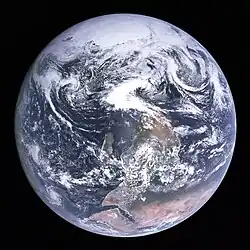
More than 850 million people live in the Southern Hemisphere, representing around 10–12% of the total global human population.[3] Of those 850 million people, more than 203 million live in Brazil. Approximately 93% of Brazil is below the equator, and over 95% of the total population also live below the equator.[24] More than 150 million live in Indonesia's Java, the most populous island in the world and one which is situated entirely below the equator. The most populous country in the Southern Hemisphere is Indonesia, with 275 million people.[25] Roughly 30 million Indonesians live north of the equator on the northern portions of the islands of Sumatra, Borneo, and Sulawesi, as well as most of North Maluku. The rest of the population lives in the Southern Hemisphere, making Indonesia the country with the most inhabitants in the Southern Hemisphere. The most populous country entirely located within the Southern Hemisphere is Tanzania, with an estimated population of roughly 67 million people as of 2024.[26] In terms of size, Colombia is the ninth largest overall country with any land in the Southern Hemisphere, and has a population of 53 million. However, much of Colombia is above the equator, and while it has a moderate amount of land below the equator, the land is part of the country's remote Amazonian region. Its biggest settlement in the Southern Hemisphere is Leticia, with an estimated population of 50,950 in 2020.[27][28] Somalia has a population of 20 million, but the vast majority of the country is above the equator. Somalia's biggest settlement in the Southern Hemisphere is Kismayo, which had a population of 458,000 in 2014.[29]
In 2026, the states with the highest population density in the Southern Hemisphere were Mauritius and Nauru, which respectively had 618 people and 595 people per square kilometer.[30] Maldives had a higher population density than Mauritius and Nauru, with 1,945 people per kilometer, however, most of its population lives above the equator, with only a small portion of the country being in the Southern Hemisphere. In 2026, the least densely populated states in the Southern Hemisphere were Namibia and Australia, which had 4 people and 3 people per square kilometer.[30] In 2026, Australia also ranked as the second least densely populated state in the Eastern Hemisphere, behind only Mongolia.[30] Over 85% of Australia's population live within just 50 kilometers of coastal areas.[31] Australia's Indian Ocean west coast is much more sparsely populated than its Pacific east coast, with Perth being the only major city on the west coast. Like Australia's Indian Ocean coast, Namibia's Atlantic coast is also very sparsely populated.[32] Four countries or territories in the Southern Hemisphere currently have no permanent human population; Bouvet Island (a territory of Norway), French Southern and Antarctic Lands (a territory of France), Heard Island and McDonald Islands (a territory of Australia) and South Georgia and the South Sandwich Islands (a territory of the United Kingdom). These territories have their own internet country codes and domain names, despite the lack of human activity.[33] Bouvet Island is often labelled as the most remote island on earth, while Tristan da Cunha, another Southern Hemisphere location, is generally regarded as the most remote inhabited island on earth.[34][35][36]
Among the largest metropolitan areas in the Southern Hemisphere are Jakarta (33 million people), São Paulo (22 million), Kinshasa-Brazzaville (19 million), Buenos Aires (16 million), Rio de Janeiro (12 million), Lima (11 million), Surabaya (10 million), Luanda, Bandung (9 million each), Dar es Salaam, Santiago (7 million each), Johannesburg, Semarang, Belo Horizonte (6 million each), Sydney, Melbourne and Cape Town (5 million each). Melbourne is the southernmost city in the world with a population exceeding one million.[37] The city's default geographical coordinates are 37°48′S 144°57′E / 37.800°S 144.950°E. Important financial and commercial centres in the Southern Hemisphere include São Paulo, where the B3 (stock exchange) is headquartered, along with Sydney, home to the Australian Securities Exchange, Jakarta, the seat of the Indonesia Stock Exchange, Johannesburg, home to the Johannesburg Stock Exchange, and Buenos Aires, headquarters of the Buenos Aires Stock Exchange, the oldest stock market in the Southern Hemisphere. News Corporation, founded by Melbourne-born Rupert Murdoch, was formerly one of the largest media companies in the world, owning the Hollywood studio 20th Century Fox and various newspapers, book publishers, television networks and sports teams across the globe. It reincorporated itself from an Australian company to an American company in 2004, and was delisted from the Australian stock exchange that same year.[38][39]
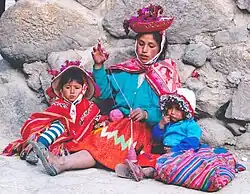
Portuguese is one of the most spoken languages in the Southern Hemisphere, with over 230 million speakers in six countries – mostly in Brazil, but also in Angola, Mozambique, Timor-Leste, and small parts of São Tomé and Príncipe that lie south of the equator.[40] Spanish is the primary language in Argentina, Bolivia, Chile, Colombia, Ecuador, Equatorial Guinea, Paraguay, Peru and Uruguay, while French is an official language in Gabon, French Polynesia, New Caledonia and Wallis and Futuna.[41] English is the primary language in Ascension Island, Australia, the Falkland Islands, New Zealand, Norfolk Island, Saint Helena, Tristan da Cunha, Tuvalu and Uganda. Most of the other countries and states in the Southern Hemisphere have primary languages which are their own local languages rather than colonial languages. English is widely understood in South Africa, but the country has 12 official languages recognized by its national constitution, with Zulu being the most widely spoken.[42] Some authors use the term "Southern Hemisphere English" to describe similarities between the English spoken in areas such as Australia, the Falkland Islands, New Zealand and South Africa.[43] Outside of English and languages from immigrant communities, Australia also has more than 250 Indigenous languages, including 800 dialects. Each language is specific to a particular place and people.[44] On the Pitcairn Islands in the South Pacific, English is spoken alongside a native Polynesian-influenced dialect called Pitkern.[45] Native Polynesian or Melanesian languages are most common on the majority of South Pacific islands, with the colonial language of English also typically being understood.[46] The only South Pacific islands which speak Spanish are Ecuador's Galápagos Islands and Chile's Juan Fernández Islands and Easter Island (whose natives also speak a Polynesian language).[46] The island of New Guinea is estimated to have around 7,000 living languages. New Guinea, which is split between Indonesia and Papua New Guinea, makes up roughly 10% of the world's languages, despite having less than 0.1% of the world's population.[47][48]
Comoros is the only Arabic-speaking country entirely in the Southern Hemisphere.[49] Somalis speak both Arabic and Somali. The two countries are members of the Arab League.[50] Comoros is also the only Arabic-speaking country which is a borderless island country; Bahrain is naturally an island but is connected to Saudi Arabia through man-made infrastructure, whilst the people of Malta speak their own distinct language which is related to Arabic.
Common tourist destinations in the Southern Hemisphere include Bali, Buenos Aires, Cape Town, Easter Island, Lima, Rio de Janeiro, Sydney and Tahiti.[51][52] In 2016, Lima was the most visited city in the Southern Hemisphere, and the 32nd most visited city in the world. The other Southern Hemisphere cities in the top 100 that year were Sydney, Johannesburg, Melbourne, São Paulo, Buenos Aires, Jakarta, Rio de Janeiro, Cape Town, Montevideo, Durban and Quito. According to a 2017 report, the most popular Southern Hemisphere "bucket list" destinations among Australians were Antarctica, New Zealand, the Galápagos Islands, South Africa and Peru.[53]
Quito, Ecuador is the closest major city to the equatorial line on the planet, and Ushuaia, Argentina claims the title of world's southernmost city. Ushuaia's default geographical coordinates are 54°48′S 68°18′W / 54.800°S 68.300°W. Cape Town, Christchurch, Hobart, Punta Arenas and Ushuaia are officially acknowledged as the five international Antarctic gateway cities that serve as primary entry points for travel to the Antarctic region.[54][55]
Among the most developed nations in the Southern Hemisphere is Australia, with a nominal GDP per capita of US$63,487 and a Human Development Index (HDI) of 0.946, the tenth-highest in the world as of the 2024 report. New Zealand is also well developed, with a nominal GDP per capita of US$48,072 and an HDI of 0.939, putting it at number 16 in the world in 2024. The least developed nations in the Southern Hemisphere cluster in Africa and Oceania, with Mozambique and Burundi at the lowest ends of the HDI, at 0.461 (number 183 in the world) and 0.420 (number 187 in the world), respectively. The nominal GDPs per capita of these two countries do not go above US$650, a tiny fraction of the incomes enjoyed by Australians and New Zealanders. In 2025, the French overseas territory French Polynesia had the highest life expectancy for both males and females in the Southern Hemisphere (81.9 years for males and 86.6 years for females).[56] French Polynesia also had the highest life expectancy for males and females in the Western Hemisphere, above countries such as the United States and Canada. In 2025, the African country Lesotho had the lowest life expectancy for both males and females in the Southern Hemisphere (55.0 years for males and 60.4 years for females).[56] The Southern Hemisphere has long been secondary in the global distribution of demographic, economic and political power, as it has less land than the Northern Hemisphere.[57] In recent times, however, countries such as Australia have made greater efforts to economically engage with those from their hemisphere.[57]
The most geographically widespread religion in the modern Southern Hemisphere is the colonial religion of Christianity, prevalent in South America, Africa, Oceania, and Timor-Leste. Islam is common in certain areas of East Africa as well as in Indonesia, Hinduism is mostly concentrated on/around the islands of Bali, Mauritius and Fiji.[58] In the Southern Hemisphere, Orthodox Christianity is less common than Catholicism and other forms of Christianity such as Protestantism. It is concentrated among small Eastern European and Balkan immigrant communities in countries like Australia and Brazil.[59] Large proportions of the population in Australia and New Zealand are increasingly not affiliated to any religion, with the majority of New Zealand's population currently classified as unaffiliated.[60][61] This mirrors trends in other developed Asia-Pacific countries above the equator, such as China, Japan and South Korea, which also have large proportions of the population not affiliated to any religion.[62][63] Religious unaffiliation is less common in Australia and New Zealand's Christian-majority South Pacific island neighbors.[64]
Before the Age of Discovery, most of the Southern Hemisphere was largely cut off from the cultural constructs of the Western and Eastern worlds.[57] Some view the geopolitical constructs of the West and the East as being Northern Hemisphere-centric concepts.[65] The oldest continuously inhabited city in the Southern Hemisphere is Bogor, in western Java, which was founded in 669. Ancient texts from the Hindu kingdoms prevalent in the area definitively record 669 CE as the year when Bogor was founded. However, some evidence shows that Zanzibar, an ancient port with around 200,000 inhabitants off the coast of Tanzania, may be older than Bogor. A Greco-Roman text written between 1 and 100 CE, the Periplus of the Erythraean Sea, mentioned the island of Menuthias (Ancient Greek: Μενουθιάς) as a trading port on the east African coast, which is probably the small Tanzanian island of Unguja on which Zanzibar is located. The oldest monumental civilizations in the Southern Hemisphere are the Norte Chico civilization and Casma–Sechin culture from the northern coast of Peru. These civilizations built cities, pyramids, and plazas in the coastal river valleys of northern Peru with some ruins dating back to 3600 BCE. Easter Island, located about 3,500 km (2,200 mi) from Chile and French Polynesia, is considered to be the most remote place on Earth to have been permanently inhabited by humans before the Age of Discovery.[66] It was settled by a Polynesian group known as the Rapa Nui. Areas of the Southern Hemisphere that had no contact with humans before the Age of Discovery include Christmas Island, Cocos (Keeling) Islands, Heard Island and McDonald islands, the Kerguelen Islands, Mauritius and Seychelles (in the Indian Ocean), the Desventuradas Islands, Galápagos Islands, Juan Fernández Islands and Lord Howe Island (in the South Pacific), Ascension Island, Bouvet Island, the Falkland Islands, Fernando de Noronha, Saint Helena, South Georgia and the South Sandwich Islands, Trindade and Martim Vaz and Tristan da Cunha (in the South Atlantic) and Antarctica. Some of these locations eventually received human populations following European discovery, including Ascension Island, Cocos (Keeling) Islands, Christmas Island, the Falkland Islands, Fernando de Noronha, the Galápagos Islands, the Juan Fernández Islands, Lord Howe Island, Mauritius, Saint Helena, Seychelles and Tristan da Cunha, while the other locations remain uninhabited by civilians. Mauritius and Seychelles became their own independent countries in 1968 and 1976, and are some of the only nation states in the world without true Indigenous populations.[67]
Gallery



Historical events
Most of earth's major conflicts and historical events have occurred in the Northern Hemisphere, where the majority of the world's population, historically important civilizations, and major centres of political power have been concentrated.[68] Conflicts that have taken place entirely or partly south of the equator include the Anglo-Zulu War (1879), the First Boer War (1880–1881), the Second Boer War (1899–1902), the First World War campaigns in German South West Africa and German East Africa, the Argentine War of Independence (1810–1818), the Paraguayan War (1864–1870), the South American War of the Pacific (1879–1884), the Chaco War (1932–1935), the Angolan War of Independence (1961–1974), the Mozambican War of Independence (1964–1974), the South African Border War (1966–1990), the Mozambican Civil War (1977–1992), the Angolan Civil War (1975–2002), the Falklands War (1982), the First Congo War (1996–1997), the Second Congo War (1998–2003), and the Rwandan genocide (1994). During the Second World War, major campaigns and battles were also fought in the South Pacific, including the Japanese conquest of the Dutch East Indies (now Indonesia), the Battle of the Coral Sea, the Guadalcanal campaign and the Kokoda Track campaign.[69] Other major non-war events include Charles Darwin's 1835 visit to the Galápagos Islands, which helped form the theory of evolution, the first release of Nelson Mandela from prison on 11 February 1990, a key moment in the eventual end of apartheid in South Africa; French nuclear weapons testing in French Polynesia between 1966 and 1996; and the 1974 "Rumble in the Jungle" boxing match between Muhammad Ali and George Foreman, held in Kinshasa in the Democratic Republic of the Congo (then Zaire).[70]
The Southern Hemisphere has hosted several FIFA World Cups and FIFA World Cup finals, including the inaugural tournament in Uruguay in 1930, Brazil in 1950 and 2014, Chile in 1962, Argentina in 1978, and South Africa in 2010.[71] Over the tournament's history, three Southern Hemisphere countries (Argentina, Brazil and Uruguay) have lifted the trophy on multiple occasions, while Brazil is the only country in the world to have qualified for every edition since 1930.[72] The other Southern Hemisphere countries which have appeared at the tournament since 1930 are Angola, Australia, Bolivia, Chile, Colombia, the Democratic Republic of the Congo (as both Zaire and their current name) Ecuador, Indonesia (as Dutch East Indies), New Zealand, Peru and South Africa. The 1956 Summer Olympics in Melbourne were the first to be held in the Southern Hemisphere. Subsequent editions have been held in Australia, including Sydney in 2000, and the upcoming 2032 Games in Brisbane, making Australia one of the few countries to host the Summer Olympic Games across three different cities. At the 2002 Winter Olympics, Australian speed skater Steven Bradbury won the Southern Hemisphere's first-ever Winter Olympic gold medal in the 1,000m short-track event. Trailing in last place during the final lap, Bradbury watched as all four competitors ahead of him crashed into each other on the final bend. He glided across the finish line untouched to claim gold. This event birthed the Australian idiom "doing a Bradbury", which refers to achieving unexpected success simply by staying on one's feet while the competition collapses.[73][74] Cadel Evans, an Australian cyclist born in Katherine, Northern Territory, was the first person from the Southern Hemisphere to win the Tour De France in 2011.[75] The race was subsequently won by Colombian Egan Bernal in 2018, who became the first Latin American to win, although Bernal was born in a part of Colombia which is above the equator.[76]
By death toll, the worst terrorist incident to have ever occurred in the Southern Hemisphere is the 2001 Angola train attack, which was part of the country's civil war and killed 252 people. Other major terrorist incidents in the Southern Hemisphere include the 1998 United States embassy bombings, which occurred simultaneously in Kenya and Tanzania and killed 224, and the 2002 Bali Bombings which killed 202.[77][78] In 1996, the hijacked Ethiopian Airlines Flight 961 crashed in an area of the Indian Ocean which was below the equator, killing 125. The crash occurred near Grande Comore, the main island of Comoros.[79] This event is not classified as a terrorist incident, since it was carried out by three Ethiopian men who were demanding political asylum in Australia.
Certain areas of the Southern Hemisphere are vulnerable to earthquakes and volcanic eruptions, and this is driven by intense tectonic activity along the southern Pacific Ring of Fire. One of the most notable seismic events is the 1960 Valdivia earthquake in Chile, which remains the most powerful earthquake ever recorded at 9.6 on the moment magnitude scale. The event caused an estimated 1,000 to 6,000 deaths mainly in Chile, as well as tsunamis which had varying impacts across the Pacific Rim, including in Australia and areas above the equator like Hawaii, Japan, the Philippines and the Aleutian Islands.[80][81] The 1970 Ancash earthquake and Huascarán debris avalanche in Peru resulted in up to 70,000 fatalities and is the deadliest natural disaster to have occurred entirely in the Southern Hemisphere.[82] In more recent times, the 2009 Samoa earthquake and tsunami caused at least 189 fatalities, the 2010 Chile Earthquake caused 525 fatalities and the 2011 Christchurch earthquake in New Zealand caused 185 fatalities.[83][84][85] Major volcanic eruptions have occurred entirely south of the equator in Indonesia, including the 1815 eruption of Mount Tambora, which killed at least 10,000 people and is the most powerful volcanic explosion in recorded human history.[86] The eruption injected huge amounts of sulfur dioxide and ash into the stratosphere, causing severe global cooling in areas of the Northern Hemisphere like Europe and North America, leading to what is known as the "Year Without a Summer".[87] The 1883 eruption of Krakatoa in Indonesia is another one of the most destructive volcanic events in recorded history, causing an estimated 36,417 deaths.[88]
The 2004 Indian Ocean earthquake and tsunami killed 228,000 people and is one of the worst natural disasters ever recorded, most heavily impacting Indonesia. However, nearly all Indonesian fatalities were in Aceh Province, which is above the equator and lost 170,000 people.[89] The disaster also caused thousands of fatalities in other Northern Hemisphere areas such as India, Sri Lanka and Thailand.[90]
Australia is a deeply fire prone area, and the worst bushfire disaster to occur in the country was the 2009 Black Saturday bushfires, which claimed 173 lives.[91] Other major bushfire events in Australia include the 1983 Ash Wednesday bushfires and the 2019–2020 Black Summer bushfires, which burned over 24 million hectares.[92]
Continents and submerged continents
- Africa
- About one-third of the continent, from south of Mogadishu in Somalia in the east to south of Libreville in Gabon in the west. From the Equator (Latitude: 0°) to Cape Agulhas (Latitude: 34°50′S).
- Antarctica
- The entire continent and its associated islands are within the Southern Hemisphere. From Prime Head, at the northern tip of the Trinity Peninsula (Latitude: 63°12′48″S) to the South Pole (Latitude: 90° S).
- Asia
- The entire continental mainland is within the Northern Hemisphere; only the southern portion of Maritime Southeast Asia, including Timor-Leste and most of Indonesia, plus the British Indian Ocean Territory and two out of 26 atolls of the Maldives, part of the Indian subcontinent in the Indian Ocean, are in the Southern Hemisphere. From the Equator (Latitude: 0°) to Pamana Island, Indonesia (Latitude: 11°00'S).
- Australia
- The entire continent and most of its associated islands are within the Southern Hemisphere. From the Equator (Latitude: 0°) to Bishop and Clerk Islets, Tasmania, Australia (Latitude: 55°03′ S).
- South America
- Most of the continent, from south of the Amazon River mouth in Brazil in the east to north of Quito in Ecuador in the west. From the Equator (Latitude: 0°) to Águila Islet, Diego Ramírez Islands, Chile (Latitude: 56°32′16″S), or, if the South Sandwich Islands are included as part of South America, Cook Island, South Georgia and the South Sandwich Islands (Latitude: 59°29′20″S).
- Zealandia
- The entire submerged continent, including New Caledonia, New Zealand, Norfolk Island, and other associated low-lying islands above sea level, is within the Southern Hemisphere. From Belep, New Caledonia, France (Latitude: 19°45′00″S) to Jacquemart Island (Latitude: 52°37′S).

Mainland countries or territories
- Africa
- Entirely —
- Mostly —
- Partly —
- Asia
- The entire continental mainland is wholly within the Northern Hemisphere. Only the southern portion of Maritime Southeast Asia, plus the British Indian Ocean Territory and two out of 26 atolls of Maldives in the Indian Ocean are in the Southern Hemisphere.
- Americas
- Entirely —
- Mostly —
- Partly —
- Antarctica
- Entirely —
- Antarctica (Antarctic Treaty signatories)
- Oceania
- Entirely —
Island countries or territories
Atlantic Ocean
Entirely —
- Annobón (province of Equatorial Guinea)
- Bouvet Island (Norway)
- Falkland Islands / Islas Malvinas (Administered by the United Kingdom / Claimed by Argentina)
- Saint Helena, Ascension and Tristan da Cunha (United Kingdom)
- South Georgia and the South Sandwich Islands (Administered by the United Kingdom / Claimed by Argentina)
- Snake Island, Brazil
Partly —
- São Tomé and Príncipe (most of Rolas Island)
Indian Ocean
Entirely —
- Ashmore and Cartier Islands (Australia)
- British Indian Ocean Territory (Administered by the United Kingdom / Claimed by Mauritius)
- Australian Indian Ocean Territories (Australia)
- Comoros
- French Southern Territories (France)
- Heard Island and McDonald Islands (Australia)
- Java and Lesser Sunda Islands, Indonesia
- Madagascar
- Mauritius
- Mayotte (France)
- Prince Edward Islands (South Africa)
- Réunion (France)
- Seychelles
- Timor-Leste
Partly —
Pacific Ocean
Entirely —
- American Samoa (United States)
- Cook Islands (New Zealand)
- Coral Sea Islands (Australia)
- Desventuradas Islands (Insular Chile)
- Easter Island (Insular Chile)
- Fiji
- French Polynesia (France)
- Jarvis Island (United States)
- Juan Fernández Islands (Insular Chile)
- Most of the Galápagos Islands
- Nauru
- New Caledonia (France)
- New Zealand
- Niue (New Zealand)
- Norfolk Island (Australia)
- Papua New Guinea
- Pitcairn, Henderson, Ducie and Oeno Islands (United Kingdom)
- Samoa
- Solomon Islands
- Tasmania, Australia
- Tokelau (New Zealand)
- Tonga
- Tuvalu
- Vanuatu
- Wallis and Futuna (France)
Mostly —
- Isabela Island, Galápagos Islands
- Kiribati
- Sulawesi and Western New Guinea (Indonesia)
Partly —
- Kalimantan, Indonesia
- Maluku Islands, Indonesia
Southern Ocean
Entirely —
- Antarctic islands
- Balleny Islands (Antarctic Treaty signatories / Claimed by New Zealand)
- Peter I Island (Antarctic Treaty signatories / Claimed by Norway)
- South Orkney Islands (Antarctic Treaty signatories / Claimed by Argentina and the United Kingdom)
- South Shetland Islands (Antarctic Treaty signatories / Claimed by Argentina, Chile, and the United Kingdom)
Default geographical coordinates for countries and territories in both the Northern and Southern Hemisphere
The following is the default geographic coordinates for countries and territories straddling the equator, per their centroids:[93]
Southern default coordinates
 Brazil 10°00′S 52°00′W / 10.000°S 52.000°W
 Democratic Republic of the Congo 4°19′S 15°19′E / 4.317°S 15.317°E
 Ecuador 2°00′S 77°30′W / 2.000°S 77.500°W
 Gabon 1°00′S 12°00′E / 1.000°S 12.000°E
 Galápagos Islands 0°30′S 90°30′W / 0.500°S 90.500°W
 Indonesia 5°00′S 120°00′E / 5.000°S 120.000°E
 Kenya 1°16′S 36°48′E / 1.267°S 36.800°E
 Republic of the Congo 1°44′S 15°56′E / 1.733°S 15.933°E
Northern default coordinates
 Colombia 4°00′N 72°00′W / 4.000°N 72.000°W
 Equatorial Guinea 1°30′N 10°00′E / 1.500°N 10.000°E
 Kiribati 1°25′N 173°00′E / 1.417°N 173.000°E
 Maldives 4°18′N 73°51′E / 4.300°N 73.850°E
 São Tomé and Príncipe 0°19′N 6°36′E / 0.317°N 6.600°E
 Somalia 10°00′N 49°00′E / 10.000°N 49.000°E
 Uganda 1°00′N 32°00′E / 1.000°N 32.000°E
Southern Hemisphere institutions
Political organizations


Sports organizations and leagues


National Rugby League (NRL)


Trade agreements
Treaties
Nkomati Accord (defunct treaty)

Timor Gap Treaty (defunct treaty)
Timor Sea Treaty (defunct treaty)

See also
References
- ↑ "Hemisphere Map". WorldAtlas. Archived from the original on 22 April 2021. Retrieved 13 June 2014.
- ↑ Life on Earth: A - G.. 1. ABC-CLIO. 2002. p. 528. ISBN 9781576072868. Archived from the original on 22 January 2023. Retrieved 8 September 2016.
- 1 2 "90% Of People Live In The Northern Hemisphere - Business Insider". Business Insider. 4 May 2012. Archived from the original on 19 January 2018. Retrieved 3 January 2023.
- ↑ Granite specific heat = 0.79 and water = 4.18 J/g⋅K see Heat capacity#Table of specific heat capacities.
- ↑ Kang, Sarah M.; Seager, Richard; Frierson, Dargan M. W.; Liu, Xiaojuan (March 2015). "Croll revisited: Why is the northern hemisphere warmer than the southern hemisphere?". Climate Dynamics. 44 (5–6): 1457–1472. Bibcode:2015ClDy...44.1457K. doi:10.1007/s00382-014-2147-z.
- ↑ "Surface Ocean Currents". National Oceanic and Atmospheric Administration's Ocean Service Education. Archived from the original on 6 July 2017. Retrieved 13 June 2014.
- 1 2 Stein, Theo (July 1, 2021). "Earth has two different stratospheres, and aviation may be to blame".
- ↑ Yablokov, Alexey V.; Nesterenko, Vassily B. (November 2009). "1. Chernobyl Contamination through Time and Space". Annals of the New York Academy of Sciences. 1181 (1): 5–30. Bibcode:2009NYASA1181....5Y. doi:10.1111/j.1749-6632.2009.04821.x. PMID 20002040.
- ↑ "Chernobyl: Executive summary". Nuclear Energy Agency (NEA).
- ↑ "The Gorilla Habitat".
- ↑ "Incredible "Bear's-Eye View" Videos Of Andean Bears Reveal Never-Before-Seen Behaviors".
- ↑ Rix-Standing, Luke (2021-04-25). "World Penguin Day: 6 places you'd never have thought you could see them". The Independent. Archived from the original on 2022-03-05. Retrieved 2022-03-05.
- ↑ "Limits of the Oceans and Seas". Nature. 172 (4376): 484. 12 September 1953. Bibcode:1953Natur.172R.484.. doi:10.1038/172484b0.
- ↑ "The dodo bird: The real facts about this icon of extinction | Natural History Museum". www.nhm.ac.uk.
- ↑ Purgason, Jason (October 20, 2023). "Which Dog Breeds Are Banned Around The World?".
- ↑ "New Guinea Singing Dogs | Animal Conservation". JAB Canid Education and Conservation Center.
- ↑ Licio, Vania; Pinna, Anna Maria (August 2021). "Measuring insularity as a state of nature". Papers in Regional Science. 100 (4): 979–1005. Bibcode:2021PRegS.100..979L. doi:10.1111/pirs.12598. hdl:11584/317881.
- 1 2 Sailing Directions (planning Guide) for the South Pacific Ocean. United States: Defense Mapping Agency, Hydrographic/Topographic Center, 1982.
- ↑ "Bolivia's 'fixation' with its lost access to the sea. Global Affairs. University of Navarra". Global Affairs and Strategic Studies.
- ↑ "The Navy Without a Coast - Sun Island & Lake Titicaca". Veloso Tours.
- ↑ Blatt, Henning. "Pacific Islands Forum". Oxford Public International Law. Oxford University Press. doi:10.1093/law:epil/9780199231690/law-9780199231690-e524. Retrieved 27 August 2026.
- ↑ Moneke, Martina (October 7, 2025). "Why It's Time to Retire 'Global North' and 'Global South'".
- ↑ "The Term 'Global South' Is Surging. It Should Be Retired". Carnegie Endowment for International Peace. August 15, 2023.
- ↑ "Brazil's population reaches 213.4 million — MercoPress". Archived from the original on 2025-08-29. Retrieved 2026-08-28.
- ↑ Facts, Ferdinand Bada in World (August 29, 2019). "Countries Located Completely in the Southern Hemisphere". WorldAtlas.
- ↑ "CIA – The World Factbook – Tanzania". Cia.gov. Archived from the original on January 9, 2021. Retrieved 11 May 2025.
- ↑ "Colombia Population (2026)". Worldometer.
- ↑ "City Population: Check for Humans".
- ↑ PopulationStat Population of Kismayo, city and urban area
- 1 2 3 "List of Countries, Dependencies, and Territories by Population Density | Statistics, Rank, & Most Crowded | Britannica". www.britannica.com. Archived from the original on 23 August 2026.
- ↑ "Population | Australia state of the environment 2021". Archived from the original on 2022-07-19. Retrieved 2026-08-28.
- ↑ Staff, A. G. (June 1, 2010). "Skeleton Coast: Namibia's strange desert dwellers".
- ↑ "Internet Country Codes, Digraphs, Used in Internet Domain Names ( ISO 3166 )". archive.osb.org.
- ↑ "A Thousand Miles from Nowhere - NASA Science". February 26, 2014.
- ↑ "Climate secrets of the world's most remote island". www.bbc.com. December 14, 2018.
- ↑ "Tristan da Cunha". National Geographic Society.
- ↑ Özsungur, Fahri (2024). Nexus of AI, Climatology, and Urbanism for Smart Cities. IGI Global Scientific Publishing. p. 130. ISBN 979-8-3693-5920-4. Retrieved 8 May 2026.
- ↑ "News Corporation Limited corporate restructure 2004: Background". Australian Taxation Office. Australian Government. Retrieved 9 July 2026.
- ↑ "Form 6-K". www.sec.gov.
- ↑ "Potencial Económico da Língua Portuguesa" (PDF). University of Coimbra. Archived (PDF) from the original on 2021-10-24. Retrieved 2017-05-15.
- ↑ "Languages and Local Expressions in New Caledonia | New Caledonia Tourism". New Caledonia Tourism: The official website for tourism in New Caledonia.
- ↑ Alexander, Mary (June 8, 2026). "The languages of South Africa".
- ↑ Gramley, Stephan., Gramley, Vivian., Pätzold, Kurt-Michael. A Survey of Modern English. United Kingdom: Taylor & Francis, 2020.
- ↑ Studies, Australian Institute of Aboriginal and Torres Strait Islander (October 13, 2025). "Languages alive". aiatsis.gov.au.
- ↑ "The English spoken in Earth's most geographically isolated island". April 29, 2023.
- 1 2 Bowen, J. Donald, ed. (1971). Linguistics in Oceania, 2. De Gruyter Mouton. doi:10.1515/9783111418810. ISBN 978-3-11-141881-0.
- ↑ "Papua New Guinea has more living languages than any other country". Our World in Data.
- ↑ "Papua New Guinea: Learning the lessons of language". The Lowy Institute. August 17, 2026.
- ↑ User, Super. "Comoros". www.ablcc.org.
{{cite web}}:|last=has generic name (help) - ↑ Ploeckelman, Evan (August 17, 2021). "Why is The Comoros in the Arab League?".
- ↑ Bahamondes, Bianca (2016-11-17). "10 Best Southern Hemisphere Destinations Where It Will Soon Be Summer". The Daily Meal. Archived from the original on 2022-03-05. Retrieved 2022-03-05.
- ↑ "Southern Hemisphere round the world holiday with Easter Island and Tahiti". Travel Nation. Archived from the original on 2022-03-05. Retrieved 2022-03-05.
- ↑ "Aussies set for summer exodus". The Australian.
- ↑ Salazar, Juan Francisco; James, Paul; Leane, Elizabeth; Magee, Liam (2021). "Antarctic Cities: From Gateways to Custodial Cities". Institute for Culture and Society. Western Sydney University. Penrith, New South Wales: 193. ISBN 9781741085280.
{{cite journal}}: CS1 maint: periodical has ISBN (link) - ↑ Roldan, Gabriela (2015). "A door to the ice?: the significance of the Antarctic Gateway Cities today". Journal of Antarctic Affairs. 2: 58–70.
- 1 2 "Average life expectancy by country". Worlddata.info.
- 1 2 3 Benjamin Reilly (July 2013). "Australia as a Southern Hemisphere power" (PDF). www.files.ethz.ch. Australian Strategic Policy Institute. Archived (PDF) from the original on 28 March 2022. Retrieved 17 March 2022.
- ↑ Analysis (19 December 2011). "Global religious landscape" (PDF). Pewforum.org. Archived (PDF) from the original on 2018-03-23. Retrieved 17 August 2012.
- ↑ "1. Orthodox Christianity's geographic center remains in Central and Eastern Europe". November 8, 2017.
- ↑ "Losing our religion | Stats NZ". www.stats.govt.nz.
- ↑ "Religion". Public Service Commission Te Kawa Mataaho.
- ↑ "Why Did Buddhism Decline in Asia?".
- ↑ Ong, Isabel (June 17, 2024). "East Asians Leave Childhood Religion Most in World, but Remain Spiritual".
- ↑ "Religious Composition by Country, 2010-2020". Pew Research Center. June 9, 2025.
- ↑ Paton, Michelle; Chengmin, Zhang (January 2014). "Southern culture and the North/South divide: More than a metaphor". Journal of the Oriental Society of Australia. 46: 26–40.
- ↑ Hemm, Robert & Mendez, Marcelo. (2003). Aerial Surveys of Isle De Pasqua: Easter Island and the New Birdmen. 10.1007/978-1-4615-0183-1_12
- ↑ Samiha, Maisha (October 14, 2024). "Mauritius One Step Closer to Diego Garcia Sovereignty - Australia India Institute".
- ↑ Boehmer, Elleke. Southern Imagining: A Literary and Cultural History of the Far Southern Hemisphere. United States, Princeton University Press, 2025.
- ↑ "Battle of Guadalcanal and Australia - Anzac Portal". Archived from the original on 2026-05-08. Retrieved 2026-08-28.
- ↑ "Nelson Mandela's release from prison: 36 years on – Nelson Mandela Foundation". www.nelsonmandela.org.
- ↑ "FIFA World Cup Records | All-Time Stats, Winners List, Top Goal Scorers, Most Titles, Timeline, Players, Achievements, Awards, & Countries | Britannica". www.britannica.com. July 29, 2026.
- ↑ "Which National Teams Have Participated in the FIFA World Cup? | List, Winners, History, Countries, & Facts | Britannica". www.britannica.com.
- ↑ https://www.olympics.com/en/athletes/steven-bradbury
- ↑ "The 10 greatest moments in Australian sporting history". Archived from the original on 2020-04-08. Retrieved 2026-08-28.
- ↑ "Cadel Evans: Grinding his way into history". September 25, 2014 – via www.abc.net.au.
- ↑ "Polytrauma in a professional cyclist: A successful case of timely management, rehabilitation, and rapid return to high-level competition - ScienceDirect".
- ↑ "US intelligence: Bali attack 'sophisticated'". Times of Malta. October 15, 2002.
- ↑ Mickolus, Edward F.; Simmons, Susan L. (2014). The 50 Worst Terrorist Attacks. Praeger Security International.
- ↑ Ranter, Harro. "Unlawful Interference Boeing 767-260ER ET-AIZ, Saturday 23 November 1996". aviation-safety.net.
- ↑ Australia, Geoscience (May 22, 2020). "How the world's largest earthquake made waves in Australia". Geoscience Australia.
- ↑ "Chile earthquake of 1960 | Causes, Effects, & Facts | Britannica". www.britannica.com.
- ↑ "In pictures: Peru's most catastrophic natural disaster". May 30, 2020 – via www.bbc.com.
- ↑ "Subsecretaría del Interior de Chile (31 January 2011). "Informe final de fallecidos y desaparecidos por comuna"" (PDF). Archived from the original (PDF) on 14 November 2012.
- ↑ "Christchurch earthquake, New Zealand 2011 | Disasters". Archived from the original on 2021-01-28. Retrieved 2026-08-28.
- ↑ Fritz, Hermann M.; Borrero, Jose C.; Synolakis, Costas E.; Okal, Emile A.; Weiss, Robert; Titov, Vasily V.; Jaffe, Bruce E.; Foteinis, Spyros; Lynett, Patrick J.; Chan, I.-Chi; Liu, Philip L.-F. (July 2011). "Insights on the 2009 South Pacific tsunami in Samoa and Tonga from field surveys and numerical simulations". Earth-Science Reviews. 107 (1–2): 66–75. Bibcode:2011ESRv..107...66F. doi:10.1016/j.earscirev.2011.03.004.
- ↑ "201 Years Ago, This Volcano Caused a Climate Catastrophe". Science. April 8, 2016.
- ↑ "Mount Tambora and the Year Without a Summer | Center for Science Education". scied.ucar.edu.
- ↑ "Flashback: The deadly 1883 eruption of Krakatoa". The Sydney Morning Herald. December 24, 2018.
- ↑ Ratcliffe, Rebecca (December 23, 2024). "'If we die, we die together': 20 years after the Boxing Day tsunami, are we better prepared?" – via The Guardian.
- ↑ "Indian Ocean tsunami of 2004 | Facts, Death Toll, Post-Disaster Policy Changes, & Commemorative Monuments | Britannica". www.britannica.com.
- ↑ "Black Saturday: Have we fixed a flawed system?". Pursuit.
- ↑ "Australia's Black Summer of fire was not normal – and we can prove it". www.csiro.au.
- ↑ "Countries Compared by Geography > Geographic coordinates. International Statistics at NationMaster.com". www.nationmaster.com.
External links
- Southern Hemisphere Countries 2021
 Media related to Southern Hemisphere at Wikimedia Commons
| Hemispheres | |||||||||||||||
|---|---|---|---|---|---|---|---|---|---|---|---|---|---|---|---|
| Landmasses and continents | |||||||||||||||
| Geopolitical regions |
| ||||||||||||||
| Islands |
| ||||||||||||||
| Waterbodies |
| ||||||||||||||
| Rim | |||||||||||||||
| Polar | |||||||||||||||
| Tectonic plates | |||||||||||||||
| |||||||||||||||
