1931 United Kingdom general election in Wales
 | |||||||||||||||||||||||||||||||||||||||||||||||||||||||||||||||||||||||||||||||||||||||||||||||||||||||||||||
27 October 1931
| |||||||||||||||||||||||||||||||||||||||||||||||||||||||||||||||||||||||||||||||||||||||||||||||||||||||||||||
All 36 Welsh seats to the House of Commons | |||||||||||||||||||||||||||||||||||||||||||||||||||||||||||||||||||||||||||||||||||||||||||||||||||||||||||||
|---|---|---|---|---|---|---|---|---|---|---|---|---|---|---|---|---|---|---|---|---|---|---|---|---|---|---|---|---|---|---|---|---|---|---|---|---|---|---|---|---|---|---|---|---|---|---|---|---|---|---|---|---|---|---|---|---|---|---|---|---|---|---|---|---|---|---|---|---|---|---|---|---|---|---|---|---|---|---|---|---|---|---|---|---|---|---|---|---|---|---|---|---|---|---|---|---|---|---|---|---|---|---|---|---|---|---|---|---|---|
| Turnout | 79.3% ( 3.1 pp) | ||||||||||||||||||||||||||||||||||||||||||||||||||||||||||||||||||||||||||||||||||||||||||||||||||||||||||||
| |||||||||||||||||||||||||||||||||||||||||||||||||||||||||||||||||||||||||||||||||||||||||||||||||||||||||||||
 | |||||||||||||||||||||||||||||||||||||||||||||||||||||||||||||||||||||||||||||||||||||||||||||||||||||||||||||



On Tuesday 27 October 1931, the 1931 United Kingdom general election was held in Wales, to elect all 615 members of the House of Commons, with 36 constituencies being in Wales. 35 seats represented territorial constituencies contested under the first past the post electoral system, and one additional seat represented the University of Wales which was also contested under the first past the post electoral system.[1] It was the last UK general election not to take place on a Thursday.
In this election, the parties forming the National Government across the United Kingdom won 67 per cent of the popular vote and over 90 per cent of the seats in the House of Commons. In Wales, despite the National Government obtaining more votes than the Labour Opposition, the combined Labour Opposition still held the most seats.
Candidates
Below is a table summarising the candidates of the 1931 general election in Wales, excluding those in the University of Wales constituency.[2][3]
| Affiliation | Candidates | |
|---|---|---|
| Labour Party | 26 | |
| Conservative Party | 17 | |
| Liberal Party | 10 | |
| Liberal National Party | 5[c] | |
| Independent Liberals | 4[d] | |
| Communist Party of Great Britain | 3[e] | |
| New Party | 2[f] | |
| National Labour Organisation | 1[g] | |
| Independent Labour Party | 1[h] | |
| Independent Labour | 1[i] | |
| Plaid Cymru | 1[j] | |
| National Independent | 1[k] | |
| Total | 72 | |
Analysis
Labour Opposition
Although the National Coalition parties polled with the greater vote share combined in Wales, and formed the Government of the United Kingdom following the election, the combined Labour opposition retained its position as the largest party by seats in Wales.
Former chair of the Independent Labour Party R. C. Wallhead had his support withdrawn by the Labour Party in his safe Labour seat of Merthyr. Wallhead won the seat as an Independent Labour Party candidate, being only one of five such candidates to retain his seat.[l] He remained part of the Labour Opposition to the National Government despite not being part of the party. Wallhead would, however, Wallhead resign from the Independent Labour Party and rejoined the Labour in 1933. Wallhead's later death in 1934, however, also caused the 1934 Merthyr by-election with Labour candidate S. O. Davies retaking the seat. Overall, the Labour opposition lost a total of nine seats in Wales.
National Government
The Conservative Party, as the largest party of the National Government, gained Newport, Brecon and Radnorshire, Llandaff and Barry, Cardiff East and Cardiff South from the Labour Party. Notably, Cardiff East had switched from the Liberals initially holding the seat at its creation in 1918, to the Conservative Party in 1922, to the Liberal Party in 1923, returning again to the Conservatives in 1924 United Kingdom general election, then being gained by the Labour Party in 1929; however, the seat would again return to the Conservative Party in this election, and be held by the party until the 1942 Cardiff East by-election.
The newly formed Liberal National Party, which had split from the Liberal Party and which were also part of the National Government, gained Denbigh, Flintshire and Montgomeryshire from the Liberal Party by way of incumbent members of the Liberals defecting to the new party and winning the seats. Of those seats, both Clement Davies in Montgomeryshire and Henry Morris-Jones in Denbigh ran unopposed. The party also gained Swansea West from Labour. The fifth seat the party contested was Pontypool, however the candidate Thomas Keens was unsuccessful. Additionally, the newly formed National Labour led by Prime Minister Ramsay MacDonald gained Cardiff Central. This was the only seat in Wales contested by National Labour. The incumbent Member of Parliament for the seat, former Labour member Ernest Bennett, defected and won the seat in the election.
Liberals and Independent Liberals
The Liberal Party, which had joined the National Coalition, gained Wrexham and Carmarthen from the Labour Party, as well as Liberal Ernest Evans again retaining his seat in the University of Wales constituency.
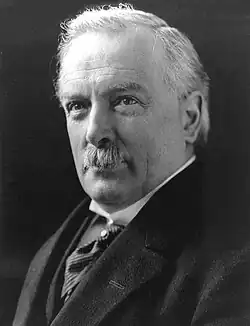
However, due to David Lloyd George splitting from the party in opposition to the Liberal Party being in National Government, the Independent Liberals, who were incumbent Members of Parliament and primarily members of his family, gained four seats from the Liberal Party. These were Lloyd George himself in Caernarvon Boroughs, his daughter and first female Member of Parliament for Wales Megan Lloyd George in Anglesey and his son Gwilym Lloyd George in Pembrokeshire. It also included Goronwy Owen in Caernarvonshire, whose wife Gladwyn was the sister of Edna, the wife of Gwilym Lloyd George. The Independent Liberal group only won seats in Wales, despite two other candidates running in English constituencies.[m]
As a result, the Liberal party was decreased to just holding five seats in Wales, with Lloyd George's Independent Liberals holding four.
County and borough constituency results
Below is a table summarising the constituency results of the 1931 general election in Wales, excluding the result in the University of Wales constituency.
| Party[4][3] | Seats | Aggregate votes | ||||||||
|---|---|---|---|---|---|---|---|---|---|---|
| Total | Gains | Losses | Net | Of all (%) | Total | Of all (%) | Difference | |||
| Labour Opposition (Total) | 16 | 0 | 9 | 9 | 45.7 | 479,547 | 44.1 |  0.2 | ||
| Labour | 15 | 0 | 10 | 10 | 42.8 | 454,924 | 41.8 | 2.1 | ||
| Ind. Labour Party | 1[n] | New | 1 | 2.9 | 24,623 | 2.3 | New | |||
| National Government (Total) | 15 | New | 5 | 42.9 | 498,170 | 45.8 | New | |||
| Conservative | 6 | 5 | 0 | 5 | 17.1 | 240,861 | 22.1 | 0.1 | ||
| Liberal | 4 | 2 | 7 | 5 | 11.4 | 157,472 | 14.5 | 19.0 | ||
| Liberal National | 4 | New | 4 | 11.4 | 75,717 | 7.0 | New | |||
| National Labour | 1 | New | 1 | 2.9 | 24,120 | 2.2 | New | |||
| Independent Liberals | 4 | New | 4 | 11.4 | 71,539 | 6.6 | New | |||
| Communist | 0 | 0 | 0 |  | — | 17,754 | 1.6 | 1.0 | ||
| New Party | 0 | New | — | 11,300 | 1.0 | New | ||||
| National Independent | 0 | New | — | 7,990 | 0.7 | New | ||||
| Plaid Cymru | 0 | 0 | 0 | | — | 1,136 | 0.1 | 0.1 | ||
| Independent Labour | 0 | Did not stand in 1931 | — | 1,110 | 0.1 | N/a | ||||
| Total | 35 | 1,088,546 | 79.3[5] | 3.1 | ||||||
University of Wales result
Below is a table summarising the 1931 constituency results for seat of the University of Wales constituency.[3] The Liberal Party retained the seat, bringing the total seats of the Liberal Party to five out of the possible 36.
| Party | Candidate | Votes | % | ±% | |
|---|---|---|---|---|---|
| Liberal | Ernest Evans | 2,229 | 75.4 | +11.9 | |
| Plaid Cymru | Saunders Lewis | 914 | 24.6 | New | |
| Majority | 1,315 | 50.8 | +12.2 | ||
| Turnout | 3,143 | 61.4 | −13.0 | ||
| Liberal hold | Swing | ||||
See also
Notes
- 1 2 Seat count includes the Liberal Party seat in the University of Wales constituency.
- 1 2 3 4 5 6 7 8 9 10 11 12 13 14 15 Total and percentage votes given here are for territorial constituencies only.
- ↑ The candidates that stood were Henry Morris-Jones in Denbigh, Frederick Llewellyn-Jones in Flintshire, Clement Davies in Montgomeryshire, Thomas Keens in Pontypool and Lewis Jones in Swansea West.
- ↑ The candidates that stood were Megan Lloyd George in Anglesey, Goronwy Owen in Caernarvonshire, David Lloyd George in Caernarvon Boroughs and Gwilym Lloyd George in Pembrokeshire.
- ↑ The candidates that stood were John Ross Campbell in Ogmore, Arthur Horner in Rhondda East and John Leigh Davies in Rhondda West.
- ↑ The candidates that stood were Sellick Davies in Merthyr and William Lowell in Pontypridd.
- ↑ Incumbent sitting Labour Member of Parliament Ernest Bennett, who defected to National Labour, stood in Cardiff Central.
- ↑ Candidate R. C. Wallhead, whose support by the Labour Party was withdrawn, stood in Merthyr.
- ↑ Candidate Thomas Mardy Jones stood in Pontypridd.
- ↑ Candidate John Edward Daniel stood in Caernarvonshire.
- ↑ This category of candidates refers to independents that supported the National Government coalition, labelling themselves as National Independents or National candidates, but were not themselves a part of the National Government. Candidate W. P. O. Evans stood in Caernarvonshire.
- ↑ The four other candidates independent to the Labour Party to retain their seats were in Scotland, with three others also being part of the Independent Labour Party, and David Kirkwood winning his seat under the label of Independent Labour.
- ↑ These candidates were Edgar Wallace in Blackpool and Frank Owen in Hereford.
- ↑ R. C. Wallhead in Merthyr.
References
- ↑ "Research Briefing: Voting systems in the UK". Library of the House of Commons. 10 January 2023. Retrieved 7 August 2026.
- ↑ Cracknell, Richard; Uberoi, Elise; Burton, Matthew (9 August 2023). "UK Election Statistics: 1918-2023, A Century of Elections" (PDF). House of Commons Library. p. 23. Retrieved 8 August 2026.
- 1 2 3 "UK General Elections Results 1832-2019". Retrieved 12 August 2026.
- ↑ Cracknell, Richard; Uberoi, Elise; Burton, Matthew (9 August 2023). "UK Election Statistics: 1918-2023, A Century of Elections" (PDF). House of Commons Library. pp. 22–23. Retrieved 8 August 2026.
- ↑ Cracknell, Richard; Uberoi, Elise; Burton, Matthew (9 August 2023). "UK Election Statistics: 1918-2023, A Century of Elections" (PDF). House of Commons Library. p. 29. Retrieved 8 August 2026.

| Senedd elections | |
|---|---|
| UK elections |
|
| Local elections | |
| Referendums | |