1922 United Kingdom general election in Scotland
 | |||||||||||||||||||||||||||||||||||||||||||||||||||||||||||||||||||||||||||||||||||||||||||||||||||||||||
15 November 1922
| |||||||||||||||||||||||||||||||||||||||||||||||||||||||||||||||||||||||||||||||||||||||||||||||||||||||||
All 74 Scottish seats to the House of Commons | |||||||||||||||||||||||||||||||||||||||||||||||||||||||||||||||||||||||||||||||||||||||||||||||||||||||||
|---|---|---|---|---|---|---|---|---|---|---|---|---|---|---|---|---|---|---|---|---|---|---|---|---|---|---|---|---|---|---|---|---|---|---|---|---|---|---|---|---|---|---|---|---|---|---|---|---|---|---|---|---|---|---|---|---|---|---|---|---|---|---|---|---|---|---|---|---|---|---|---|---|---|---|---|---|---|---|---|---|---|---|---|---|---|---|---|---|---|---|---|---|---|---|---|---|---|---|---|---|---|---|---|---|---|
| Turnout | 70.4% ( 15.3 pp) | ||||||||||||||||||||||||||||||||||||||||||||||||||||||||||||||||||||||||||||||||||||||||||||||||||||||||
| |||||||||||||||||||||||||||||||||||||||||||||||||||||||||||||||||||||||||||||||||||||||||||||||||||||||||
 | |||||||||||||||||||||||||||||||||||||||||||||||||||||||||||||||||||||||||||||||||||||||||||||||||||||||||


On Wednesday 15 November 1922, the 1922 United Kingdom general election was held in Scotland, to elect all 615 members of the House of Commons, with 74 constituencies being in Scotland. 71 seats represented burgh and county constituencies contested under the first past the post electoral system, and three represented the Combined Scottish Universities multi-member University constituency, which used the Single Transferable Vote (STV) method.[1]
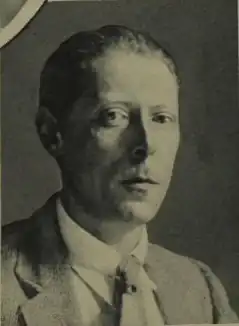
Of the party leaders, two represented Scottish constituencies, with Bonar Law representing Glasgow Central and Asquith representing Paisley.
Candidates
Below is a table summarising the candidates of the 1922 general election in Scotland, excluding those in the Combined Scottish Universities constituency.[2][3][4]
| Affiliation | Candidates | |
|---|---|---|
| Scottish Liberal Party | 48 | |
| Labour Party | 43[e] | |
| Unionist Party | 36 | |
| National Liberal Party | 33 | |
| Communist Party of Great Britain | 3[f] | |
| Scottish Prohibition Party | 1[g] | |
| Independent Unionist | 1[h] | |
| Independent Liberal | 1[i] | |
| Independent Communist | 1[j] | |
| Anti-Parliamentary Communist Federation | 1[k] | |
| Total | 168 | |
Outcome
The election saw major gains for the Labour Party, which had entered the election as Scotland's sixth largest party, and emerged from the election as the largest party in Scotland. The Conservative Party, which were in association with the Unionist Party (Scotland) in Scotland, and the National Liberals suffered heavy losses. These two parties had composed the ruling coalition government under David Lloyd George, which had collapsed following the Conservatives withdrawal from the coalition amidst several scandals. Most of the elected Labour MP's had included support for Scottish Home Rule in their manifestos.[5] Part of the reason for Labour's success came from a shift in the political alignment of Scottish Catholics of Irish descent, who had prior to Irish independence voted Liberal due to the party's support for Irish Home Rule.[6] Despite this, the two Liberal parties received between them 39.2% of the Scottish vote.
Labour and Unionists
Much like in the rest of the United Kingdom, Labour had overall almost tripled its number of seats across the country, with several of its gains coming from Scotland. Labour gained Stirling and Falkirk and Peebles and Southern Midlothian from the Liberal Party. Future Secretary of State for Scotland Joseph Westwood entered Parliament in Peebles and Southern Midlothian. From the National Liberal Party (when compared to the National Liberal Party's predecessor, the Coalition Liberal Party), Labour gained Dunfermline Burghs, Glasgow Bridgeton, East Renfrewshire, West Renfrewshire, Rutherglen, Dumbarton Burghs and Glasgow Bridgeton. Within Dumbarton Burghs, future leading figure during the Red Clydeside era, David Kirkwood, entered Parliament. Additionally, another prominent figure in the Red Clydeside era and future chair of the Independent Labour Party, James Maxton, entered Parliament in Glasgow Bridgeton.
The Labour Party also gained Clackmannan and Eastern Stirlingshire, West Stirlingshire, North Lanarkshire, Glasgow Maryhill, Glasgow Camlachie, Coatbridge, Glasgow Springburn, Glasgow Tradeston, Glasgow St Rollox, Glasgow Shettleston and Linlithgowshire from the Unionist Party. John Robertson, member of the Labour Party, who had won Bothwell in the 1919 Bothwell by-election, retained the seat. Robertson's retention of the seat represented a gain from the Unionists when compared to the previous election. Notably, another future Secretary of State for Scotland, Tom Johnston entered Parliament in West Stirlingshire. George Hardie, the younger brother of the founder of the Labour Party Keir Hardie, also entered Parliament in Glasgow Springburn, after having unsuccessfully contested the seat in the 1918 general election.
However, the Unionist Party, which was in close association with the national Conservative Party, gained the seat of Perth. Future Parliamentary Under-Secretary of State for Scotland Noel Skelton won Perth, and would remain in Parliament until his death in 1935. This was a gain from the National Liberals under George Lloyd when compared to the National Liberals in Scotland. The Unionist Party also held its two seats in the Combined Scottish Universities constituency unopposed. Notably, the Conservative Prime Minister Bonar Law had only been in office since 20 October 1922, barely a month before the election was held.
Liberal and Liberal National
However, The Unionists also lost Aberdeen and Kincardine Central, Forfarshire, East Fife, Edinburgh West and Dumfriesshire to the Scottish Liberals. Of these seats, Liberal member and former New Zealander parliamentarian William Chapple returned to Westminster in Dumfriesshire after having lost his old constituency in Stirlingshire in the January 1910 general election.
The Liberals also made gains from the National Liberals, when comparing the National Liberals to the predecessor Coalition Liberals. The Liberal Party gained Orkney and Shetland, wherein future Scottish Liberal Party Whip Sir Robert Hamilton gained the seat from the National Liberals. Hamilton would go on to serve as an Under-Secretary in the Stanley Baldwin's National Government. The Liberals also won Aberdeen and Kincardine East,[l] West Aberdeenshire and Kincardine, Galloway, Banffshire and Kilmarnock from Lloyd George's Liberals, when compared to the Coalition Liberals in 1918 (Liberals who had obtained Coalition Coupons but who were part of the Liberal Party, rather than the Liberal National Party at the time of the 1922 general election). Notably, after having lost his seat of East Fife in the 1918 election, H. H. Asquith had returned to Parliament in Paisley in the 1920 Paisley by-election. His retention was a retain for the Scottish Liberal Party.
Conversely, the National Liberals gained Western Isles from the Liberal Party. The Liberal National Party also gained Kinross and Western Perthshire under incumbent member James Gardiner. Gardiner, although a supported of David Lloyd George in the 1918 general election, was not awarded a Coalition Coupon (which was rather given to his opposing Unionist candidate). As a member of the National Liberals, his retention in comparison to the Coalition Liberals in the previous election was a gain for the National Liberals against the Liberal Party.
Minor Parties
Two minor parties were also able to pick up seats with the Communist Party gaining Motherwell. The member elected in the seat, Walton Newbold, was the first communist Member of Parliament elected under the label of communist, where other communist candidates in this election (such as Shapurji Saklatvala in England) stood as candidates of the Labour Party. However, he may not be regarded as the first ever communist Member of Parliament; rather, Cecil Malone is often regarded as the first, having defected from the Liberal Party to the Communists in 1920.
In conjunction with Labour retaining one of the two seats in Dundee, the Scottish Prohibition Party took the other of the two seats, gaining a seat, and thereby taking Deputy Leader of the National Liberal Party and future Conservative Prime Minister Winston Churchill's seat in the process.
Former Independent Labour Member of Parliament Frank Rose re-contested Aberdeen North as an official candidate for the Labour Party. His personal retention of the seat under Labour represented a gain fro Labour against Independent Labour. Additionally, Member of Parliament and former Leader of the Labour Party George Barnes, who had been part of Coalition Labour, did not re-contest Glasgow Gorbals, resulting in Labour re-taking the and thereby gaining the seat compared to the last election.
Seat summary
Below is a table summarising the total number of seats, gains and losses for each party in both the territorial county and burgh constituencies and the Combined Scottish Universities constituency.
| Party | Seats | |||||
|---|---|---|---|---|---|---|
| Total | Gains | Losses | Net | Of all (%) | ||
| Labour | 29 | 23 | 0 | 23 | 39.2 | |
| Liberal | 16 | 12 | 4 | 8 | 21.6 | |
| Unionist | 15 | 1 | 18 |  17[b] | 20.3 | |
| National Liberal | 12 | 2 | 16 | 14[d] | 16.2 | |
| Communist | 1 | 1 | 0 | 1 | 1.4 | |
| Scottish Prohibition | 1 | 1 | 0 | 1 | 1.4 | |
| Other | 0 | 0 | 2 | 2[m] | — | |
| Total | 74 | |||||
County and burgh constituency results
Below is a table summarising the constituency results of the 1922 general election in Scotland, excluding the result in the Combined Scottish Universities constituency.
| Party[7][3][8] | Seats | Aggregate votes | |||||||
|---|---|---|---|---|---|---|---|---|---|
| Total | Gains | Losses | Net | Of all (%) | Total | Of all (%) | Difference | ||
| Labour | 29 | 23 | 0 | 23 | 40.8 | 501,254 | 32.2 | 9.3 | |
| Liberal | 15 | 11 | 4 | 7 | 21.1 | 328,649 | 21.5 | 6.1 | |
| Unionist | 13 | 1[n] | 18 | 17[b] | 18.3 | 379,396 | 25.1 | 7.7[b] | |
| National Liberal | 12 | 2 | 15 | 13[d] | 16.9 | 288,529 | 17.7 | 1.4[d] | |
| Communist | 1[o] | New | 1 | 1.4 | 23,944 | 1.5 | New | ||
| Scottish Prohibition | 1[p] | 1 | 0 | 1 | 1.4 | 32,578 | 2.1 | 1.6 | |
| Ind. Unionist | 0 | 0 | 0 |  | — | 7,214 | 0.5 | 0.3 | |
| Ind. Communist | 0 | New | — | 4,027 | 0.3 | New | |||
| Independent Liberal | 0 | New | — | 3,300 | 0.2 | New | |||
| AP Communist | 0 | New | — | 470 | 0.0 | New | |||
| Other | 0 | 0 | 2[q] | 2 | — | 0 | 0.0 | | |
| Total | 71 | 1,569,361 | 70.4[9][10] | 15.3 | |||||
Combined Scottish Universities result
The constituency for Combined Scottish Universities returned three Members of Parliament using the single transferable vote electoral system. The electorate consisted of graduates of the university.[3]
As Liberal Party candidates Dugald Cowan had been a Coupon Coalition under the Coalition Liberals in 1918, but stood simply as a Liberal Party candidates (and not under Lloyd George's National Liberals), this was a gain for the Liberal Party from the National Liberals when compared to the previous election. The Liberals had therefore gained 12 seats in Scotland, brining their total to 16 seats.
| Party | Candidate | Votes | % | ±% | |
|---|---|---|---|---|---|
| Unionist | Sir George Andreas Berry | Unopposed | |||
| Liberal | Dugald McCoig Cowan | Unopposed | |||
| Unionist | Sir Henry Craik | Unopposed | |||
See also
Notes
- 1 2 3 4 5 6 7 8 9 10 11 12 13 14 15 16 17 Combined results for burgh, county and university seats
- 1 2 3 4 5 6 7 8 Unionist decline is compared to combined Coalition & non-Coalition Unionist results in 1918.
- 1 2 3 4 5 6 7 8 9 10 11 12 13 14 15 16 17 18 19 Total and percentage votes given here are for territorial constituencies only
- 1 2 3 4 5 6 7 8 National Liberal decline is compared to Coalition Liberal results in 1918
- ↑ Figure includes two Co-operative Party candidates.
- ↑ The candidates that stood were Willie Gallacher in Dundee, Alec Geddes in Greenock and Walton Newbold in Motherwell.
- ↑ Leader Edwin Scrymgeour stood in Dundee.
- ↑ Candidate Hugh Ferguson stood in Motherwell.
- ↑ Candidate John Hope stood in Berwick and Haddington.
- ↑ Candidate John Maclean stood in Glasgow Gorbals.
- ↑ Leader Guy Aldred stood in Glasgow Shettleston.
- ↑ Elected member Frederick Martin would, however, defect to the Labour Party after the general election in 1929.
- ↑ Former Independent Labour Member of Parliament Frank Rose re-contested Aberdeen North as an official candidate for the Labour Party; Coalition Labour Member of Parliament and former Leader of the Labour Party George Barnes did not re-contest Glasgow Gorbals.
- ↑ Noel Skelton in Perth.
- ↑ Walton Newbold in Motherwell.
- ↑ Edwin Scrymgeour in Dundee.
- ↑ Former Independent Labour Member of Parliament Frank Rose re-contested Aberdeen North as an official candidate for the Labour Party; Coalition Labour Member of Parliament and former Leader of the Labour Party George Barnes did not re-contest Glasgow Gorbals.
References
- ↑ "Research Briefing: Voting systems in the UK". Library of the House of Commons. 10 January 2023. Retrieved 17 August 2026.
- ↑ Cracknell, Richard; Uberoi, Elise; Burton, Matthew (9 August 2023). "UK Election Statistics: 1918-2023, A Century of Elections" (PDF). House of Commons Library. p. 25. Retrieved 8 August 2026.
- 1 2 3 "UK General Elections Results 1832-2019". Retrieved 12 August 2026.
- ↑ Craig, F. W. S. (1977). British Parliamentary Election Results 1918–49 (1st ed.). London and Basingstoke: The Macmillan Press Ltd. ISBN 978-1-349-81467-1.
- ↑ "Scotland's road to referendum". BBC Timelines. Archived from the original on 20 September 2014.
- ↑ Brown, Stewart J.; Newlands, George; Newlands, G. M.; Cheyne, A. C. (January 2000). Scottish Christianity in the Modern World: In Honour of A. C. Cheyne. A&C Black. p. 263. ISBN 9780567087652.
- ↑ Cracknell, Richard; Uberoi, Elise; Burton, Matthew (9 August 2023). "UK Election Statistics: 1918-2023, A Century of Elections" (PDF). House of Commons Library. pp. 24–25. Retrieved 8 August 2026.
- ↑ Colin Rallings; Micheal Thrasher (2006). British Electoral Facts. Total Politics. p. 23. ISBN 978-1-907278-03-7.
- ↑ Cracknell, Richard; Uberoi, Elise; Burton, Matthew (9 August 2023). "UK Election Statistics: 1918-2023, A Century of Elections" (PDF). House of Commons Library. p. 29. Retrieved 8 August 2026.
- ↑ Colin Rallings; Micheal Thrasher (2006). British Electoral Facts. Total Politics. p. 88. ISBN 978-1-907278-03-7.
| Scottish Parliament | |
|---|---|
| Parliament of Scotland |
|
| Convention of Estates |
|
| UK Parliament |
|
| Local elections | |
| Referendums | |