1875 Hungarian parliamentary election
 | |||||||||||||||||||||||||||||
1 July–18 August 1875
| |||||||||||||||||||||||||||||
All 413 seats in the Diet 207 seats needed for a majority | |||||||||||||||||||||||||||||
|---|---|---|---|---|---|---|---|---|---|---|---|---|---|---|---|---|---|---|---|---|---|---|---|---|---|---|---|---|---|
| |||||||||||||||||||||||||||||
| |||||||||||||||||||||||||||||


 |
|---|

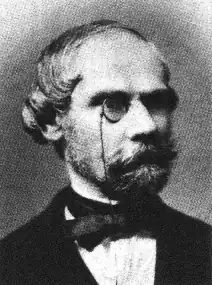
Parliamentary elections were held in Hungary between 1 July and 18 August 1875. This was the first election held under Act XXXIII of 1874, which amended and unified the electoral rules, those with tax arrears were excluded from the elections, and 6-7% of the population had the right to vote. The economic crisis of 1873 also affected the balance of power within the party politics. The prime minister changed frequently and successive governments were unable to overcome the crisis, so a grand coalition was needed. The merger of the Deák Party and the Left Centre led to the formation of the Liberal Party in 1875, led by Kálmán Tisza, which became the ruling party in government for the next 30 years. Those who disagreed with the merger formed new parties. The Party of Independence was founded in 1874 by the independentists from the Left Centre, led by Lajos Mocsáry. The conservatives from the Deák Party, led by Baron Pál Sennyey, formed the Right-Wing Opposition. The elections were referred to by contemporaries as the cleanest elections in Austria-Hungary. The new parliament convened on August 30, 1875.[1]
Parties and leaders
| Party | Leader | |
|---|---|---|
| Liberal Party (SZP) | Kálmán Tisza | |
| Party of Independence (FP) | Lajos Mocsáry | |
| Right-Wing Opposition (JE) | Pál Sennyey | |
| Party of 1848 (1848P) | Dániel Irányi | |
| National Party of Romanians in Hungary (PNRBU) | Alexandru Mocioni | |
| Serbian People's Liberal Party (SNSS) | Svetozar Miletić | |
| National Party of Romanians in Transylvania (PNRT) | Ilie Macelaru | |
Electoral system
The elections were based on property, income and education census. Landowners with a ¼ plot of land, rural industrialists paying a tax of 6 Ft, urban industrialists paying a tax of 10.50 Ft, house tenants paying a tax of 15.75 Ft, land and house owners paying a tax of 5 Ft, landless house owners paying a tax of 6 Ft, employed priests, officials, teachers, tutors, writers, artists, lawyers, notaries and health workers with a degree were electors. 20 years older men were eligible to vote and 24 years older men could be elected. Women had no right for the participation. The elections were held exclusively in single-member district by open voting.[2][3]
Results
 | |||
|---|---|---|---|
| Party | Seats | +/– | |
| Liberal Party | 328 | New | |
| Party of Independence | 28 | New | |
| Right-Wing Opposition | 20 | New | |
| Independent '67ers | 11 | +11 | |
| Party of 1848 | 10 | -27 | |
| Independent Saxons | 6 | New | |
| National Party of Romanians in Hungary | 5 | 0 | |
| Serbian People's Liberal Party | 3 | 0 | |
| Independent moderate | 1 | +1 | |
| National Party of Romanians in Transylvania | 1 | 0 | |
| Total | 413 | – | |
| Source: Ballabás-Pap-Pál[4] | |||
The group of independents are classified by their political position as 67'ers, moderate opposition or ethnic minority.
Aftermath
The president of the Serbian People's Liberal Party was arrested in 1876 on charges of collaborating with Serbian insurgents in Herzegovina and inciting an uprising in Hungary. Svetozar Miletić sentenced to 5 years in prison, but was released after the next election in 1879.[5]
References
- ↑ Kozári, Monika (2009). "A dualizmus kora / The age of dualism". Magyarország története / The history of Hungary. Vol. 16. Budapest: Kossuth Kiadó. p. 11,31-33,39. ISBN 978-963-09-5694-9.
- ↑ Kozári, Monika (2009). "A dualizmus kora / The age of dualism". Magyarország története / The history of Hungary. Vol. 16. Budapest: Kossuth Kiadó. p. 11. ISBN 978-963-09-5694-9.
- ↑ Ballabás, Dániel; Pap, József; Pál, Judit (2020). "Az országgyűlés tagjainak archontológiája / Archontology of the members of parliament". Képviselők és főrendek a dualizmus kori Magyarországon / Representatives and high nobles in Hungary during the Dualist era. Vol. 2. Eger: Líceum Kiadó. p. 493-509. ISBN 978-963-496-144-4.
- ↑ Ballabás, Dániel; Pap, József; Pál, Judit (2020). "Az országgyűlés tagjainak archontológiája / Archontology of the members of parliament". Képviselők és főrendek a dualizmus kori Magyarországon / Representatives and high nobles in Hungary during the Dualist era. Vol. 2. Eger: Líceum Kiadó. p. 85-491. ISBN 978-963-496-144-4.
- ↑ Kozári, Monika (2009). "A dualizmus kora / The age of dualism". Magyarország története / The history of Hungary. Vol. 16. Budapest: Kossuth Kiadó. p. 38. ISBN 978-963-09-5694-9.
| Parliamentary elections |
|
|---|---|
| European elections | |
| Local elections | |
| Referendums | |
See also: List of Hungarian by-elections | |