Originally inhabited by Khoisan peoples, the region was affected by the Bantu expansion of the thirteenth century. Following European expeditions in the eighteenth century, the British Empire began to consolidate control of the area following the 1890 British Ultimatum against the Portuguese, who had claimed the area between Angola and Mozambique in the 1885 Pink Map. Britain formed the British protectorates of Barotziland–North-Western Rhodesia and North-Eastern Rhodesia towards the end of the nineteenth century. These were merged in 1911 to form Northern Rhodesia. For most of the colonial period, Zambia was governed by an administration appointed from London with the advice of the British South Africa Company. On 24 October 1964, Zambia became independent of the United Kingdom as a republic in the Commonwealth, and prime minister Kenneth Kaunda became the inaugural president. Kaunda's socialistUnited National Independence Party (UNIP) maintained power from 1964 until 1991, with him playing a role in regional diplomacy, cooperating with the United States in search of solutions to conflicts in Southern Rhodesia (Zimbabwe), Angola, and Namibia. From 1972 to 1991, Zambia was a one-party state with UNIP as the sole legal political party under the motto "One Zambia, One Nation" coined by Kaunda. Following the introduction of a multiparty system in the early 1990s, Kaunda was defeated in the 1991 Zambian general election. Zambia has since continued to experience peaceful transitions of power.
Lusaka is the capital and largest financial district of Zambia
Zambia has an emerging economy. It is a developing country, and it achieved middle-income status in 2011. Through the first decade of the 21st century, the Zambian economy was one of the fastest-growing economies in Africa, and its capital, Lusaka, the fastest-growing city in the Southern African Development Community (SADC). Zambia's economic performance has stalled in recent years due to declining copper prices, significant fiscal deficits, and energy shortages. The economy has been reliant on mineral extraction since the 1920s, in particular copper.
Upon achieving independence, Zambia had a higher GDP per capita than almost all sub-Saharan African countries. Over the subsequent decades, Zambia's economy contracted, in part due to declining copper prices. Since the 2000s, Zambia's economy has been growing. As of 2019, Zambia's GDP per capita (current international dollars) stands at $1,305.00. (Full article...)
Image 5A drawing of Lunda houses by a Portuguese visitor. The size of the doorways relative to the building emphasizes the scale of the buildings. (from Zambia)
Image 9A drawing of Lunda houses by a Portuguese visitor. The size of the doorways relative to the building emphasizes the scale of the buildings. (from Zambia)
Image 10Zambia map of Köppen climate classification (from Zambia)
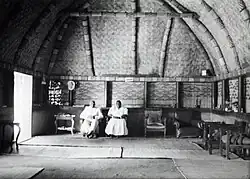
Image 11Inside the palace of the Litunga, ruler of the Lozi. Due to the flooding on the Zambezi, the Litunga has two palaces one of which is on higher ground. The movement of Litunga to higher land is celebrated at the Kuomboka Ceremony. (from Zambia)
Image 12Drawing of the ruler of Lunda, Mwata Kazembe, receiving Portuguese in the royal courtyard in the 1800s (from History of Zambia)
Image 13Drawing of the ruler of Lunda, Mwata Kazembe, receiving Portuguese in the royal courtyard in the 1800s (from Zambia)
Image 14Inside the palace of the Litunga, ruler of the Lozi. Due to the flooding on the Zambezi, the Litunga has two palaces one of which is on higher ground. The movement of Litunga to higher land is celebrated at the Kuomboka Ceremony (from History of Zambia)
Image 15A Yombe sculpture, 19th century (from Zambia)
Image 17Zambia map of Köppen climate classification (from Zambia)
Image 18Seated female Staffs of office (Kibango), were displayed by Luba kings. In Luba society, women's bodies were considered the ultimate vessels of spiritual power. (from History of Zambia)
Image 21Three young Ngoni chiefs. The Ngoni made their way into Eastern Zambia from KwaZulu in South Africa. They eventually assimilated into the local ethnic groups. (from Zambia)
Image 40Inside the palace of the Litunga, ruler of the Lozi. Due to the flooding on the Zambezi, the Litunga has two palaces one of which is on higher ground. The movement of Litunga to higher land is celebrated at the Kuomboka Ceremony. (from Zambia)
Image 49The geopolitical situation during the Rhodesian Bush War in 1965 – countries friendly to the nationalists are coloured orange (from Zambia)
Image 50Lukasa memory board, was used by members of Mbudye (an association of groits in charge of maintaining Baluba history) (from History of Zambia)
Good article -
This is a Good article, an article that meets a core set of high editorial standards.
Zambia competed at the 2012 Summer Olympics in London, held from 27 July to 12 August 2012. The country's participation at London marked its twelfth appearance in the Summer Olympics since its début at the 1964 Summer Olympics. The delegation consisted of seven competitors; three track and field athletes Gerald Phiri, Prince Mumba and Chauzje Choosha, one each in Boxing and Judo (Gilbert Choombe and Boas Munyonga) and two swimmers, Zane Jordan and Jade Ashleigh Howard. Phiri, Mumba, Choombe and Munyonga had qualified by meeting the standards in their respective sports, and Choosha, Jordan and Howard qualified by wildcard places. Mumba was the national flag bearer at the opening and closing ceremonies.
Phiri received a bye in the men's 100 metres and was eliminated at the first round stage and recorded his best time of the 2012 athletic season. Mumba and Choosha were both eliminated from the competition in the parliamentary heats, and Choombe was defeated by AustralianJeff Horn in Boxing's round of 32. Munyonga was disqualified in his round of 32 match against Takahiro Nakai by holding his opponent's leg, a move he later regretted. Jordan failed to advance beyond the heats of the men's 100 metre backstroke despite recording a new personal best, while his female counterpart Howard was also eliminated in the same stage in the women's 100 metre freestyle. (Full article...)