Portal:South Africa

Introduction
The Republic of South Africa is a country located at the southern tip of the African continent. It borders the countries of Namibia, Botswana, Zimbabwe, Mozambique, and Eswatini, and entirely surrounds Lesotho. South Africa has the largest population of people of European descent in Africa, one of the largest Indian population outside of Asia, as well as the largest Coloured (of mixed European, Asian and African descent) community in Africa, making it one of the most ethnically diverse countries on the continent. Racial and ethnic strife between the black majority and the white minority have played a large part in the country's history and politics. The National Party began introducing the policy of apartheid after winning the general election of 1948; however, it was the same party under the leadership of F.W. de Klerk who started to dismantle it in 1990 after a long struggle by the black majority, as well as many white, coloured and Indian South Africans. The country is one of the few in Africa never to have had a coup d'état, and regular free and fair elections have been held since 1994, making it a regional power and among the most stable and liberal democracies in Africa. South Africa is ranked as an upper-middle income economy by the World Bank. It has the second largest economy in Africa after Nigeria, and the 34th-largest in the world. By purchasing power parity, South Africa has the 7th highest per capita income in Africa. Although being the second largest economy, South Africa has the most sophisticated economy in the continent, with modern infrastructure common throughout the country. The country is considered to be a newly industrialized country according to the World Bank classifications. Selected article - The Dutch Cape Colony (Dutch: Nederlandse Kaapkolonie), officially known as the Cape of Good Hope Waystation (Dutch: Tussenstation Kaap de Goede Hoop), was a colony of the Dutch East India Company (VOC) and Batavian Republic in Southern Africa. Centered on the Cape of Good Hope, from where it derived its name, it was founded in 1652 by a VOC expedition under Jan van Riebeeck to serve as a re-supply and layover port for VOC vessels trading with Asia. The Cape was under VOC rule from 1652 to 1795 and Batavian rule from 1803 to 1806. Much to the dismay of the VOC's shareholders, who focused primarily on making profits from the Asian trade, the Cape Colony rapidly expanded into a settler colony in the years after its founding. As the only permanent settlement of the VOC which served as a trading post, it proved an ideal retirement place for employees of the company. After several years of service in the company, an employee could lease a piece of land in the Cape Colony as a Free Burgher, on which he had to cultivate crops that he had to sell to the VOC for a fixed price. As these farms were labour-intensive, Free Burghers imported slaves from Madagascar, Mozambique and Asia (mostly the Dutch East Indies and Dutch Ceylon), which rapidly increased the number of inhabitants. After King Louis XIV of France issued the Edict of Fontainebleau in October 1685 (revoking the Edict of Nantes of 1598), thereby ending protection of the right of Huguenots in France to practise Protestant worship without persecution from the state, the Cape Colony attracted some Huguenot settlers, who eventually mixed with the general Dutch population. (Full article...) Selected picture - Artist: Melton Prior; Restoration: Adam Cuerden The Illustrated London News's depiction of Major-General Sir George Pomeroy Colley of the British Army at the Battle of Majuba Hill, which was fought on 27 February 1881 near Volksrust, South Africa, during the First Boer War. The battle was the third successive victory for the South African Republic and led to the signing of the Pretoria Convention to end the war. Colley was the first governor of the Colony of Natal as well as High Commissioner for South Eastern Africa. He was killed during the battle.
Did you know... -
WikiProjectsWikiProject South Africa WikiProject South Africa discussions • South Africa Wikipedians' Notice Board • South African Wikipedians • Wikipedians in South Africa • Wikimedia ZA • Subscribe to the Wikimedia ZA mailing list
| ||||||||

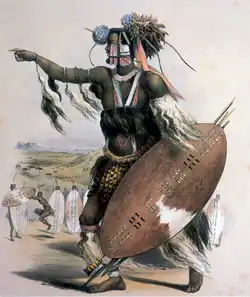





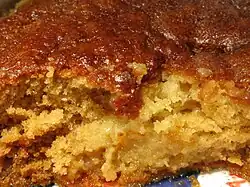
List of selected fare/cuisine articles |
|---|
Selected quote -
Selected panorama -

General images -

 Jan van Riebeeck, first Commander of the Dutch East India Company colony (from History of South Africa)
 The Boer method of punishing natives, by Frank Patterson, 1900 (from History of South Africa)
 Daniel François Malan, National Party leader from 1934 to 1953 (from History of South Africa)
 The statue of Jan van Riebeeck, the founder of Cape Town, in Heerengracht Street. (from History of South Africa)
 Map of the black homelands in South Africa at the end of apartheid in 1994 (from History of South Africa)


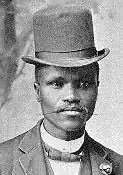
 Nicolaas Waterboer, Griqualand ruler, 1852–1896 (from History of South Africa)
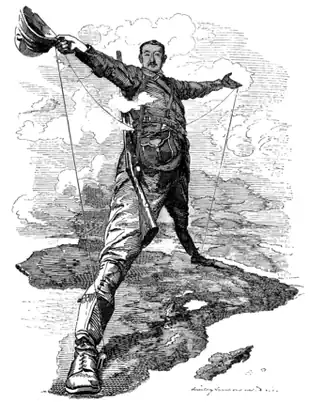
 Indian indentured labourers arriving in Durban (from History of South Africa)
 King Cetshwayo (ca. 1875) (from History of South Africa)
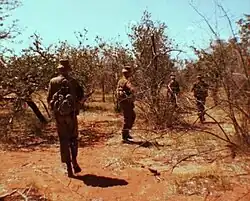 Members of 44 Parachute Brigade on patrol during the South African Border War. (from History of South Africa)
 Tents in the British concentration camp of Barberton, c.1901 (from History of South Africa)
 Children of different ethnic groups ride a bus in Cape Town, 1994 (from History of South Africa)

 Regional geography during the period of the Anglo–Boer wars:
South African Republic/Transvaal
Orange Free State
British Cape Colony
Natal Colony (from History of South Africa) Statue of Bartolomeu Dias at the High Commission of South Africa in London. He was the first European navigator to sail around the southernmost tip of Africa. (from History of South Africa)

 Emily Hobhouse campaigned against the appalling conditions of the British concentration camps in South Africa, thus influencing British public opinion against the war. (from History of South Africa)
 Flag of the South African Republic, often referred to as the Vierkleur (meaning four-coloured) (from History of South Africa)
 An account of the first trekboers (from History of South Africa)
 Replica of an East Indiaman of the Dutch East India Company/United East Indies Company (VOC). The Dutch East India Company was a major force behind the (c. 1590s–1720s) and Netherlandish cartography (c. 1570s–1670s). (from History of South Africa)
 Johannesburg before gold mining transformed it into a bustling modern city (from History of South Africa)
 View of Table Bay with ships of the Dutch East India Company (VOC), c. 1683. (from History of South Africa)
 Cecil John Rhodes, co-founder of De Beers Consolidated Mines at Kimberley (from History of South Africa)

 Painting of the Sharpeville massacre of March 1960 (from History of South Africa)
 Generals Smuts (right) and Botha were members of the British Imperial War Cabinet during World War I. (from History of South Africa)
 The British Empire is red on the map, at its territorial zenith in the late 1910s and early 1920s. (India highlighted in purple.) South Africa, bottom centre, lies between both halves of the Empire. (from History of South Africa)
 An array of traditional South African cuisine (from Culture of South Africa)
 Oracles of the Pink Universe by Simphiwe Ndzube, 2021 (from Culture of South Africa)
 Church on Greenmarket Square in Cape Town, South Africa with a banner memorialising the Marikana massacre (from History of South Africa)
 Gateway to the Castle of Good Hope, the oldest building in South Africa (from Culture of South Africa)
 Boer Voortrekkers depicted in an early artist's rendition (from History of South Africa)
 The Castle of Good Hope (Kasteel de Goede Hoop in Dutch), Cape Town. Founded officially in 1652, Kaapstad/Cape Town is the oldest urban area in South Africa. (from History of South Africa)
 Harry Smith (from History of South Africa)
 The rise of the Zulu Empire under Shaka forced other chiefdoms and clans to flee across a wide area of southern Africa. Clans fleeing the Zulu war zone included the Soshangane, Zwangendaba, Ndebele, Hlubi, Ngwane, and the Mfengu. Some clans were caught between the Zulu Empire and advancing Voortrekkers and British Empire such as the Xhosa . (from History of South Africa)
 Frederik W. de Klerk and Nelson Mandela, two of the driving forces in ending apartheid (from History of South Africa)
 Meat on a traditional South African braai (from Culture of South Africa)
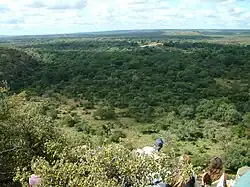 Looking out over the floodplains of the Luvuvhu River (right) and the Limpopo River (far distance and left) (from History of South Africa)
 Simon's Town harbour and naval base in South Africa were used by the Allies during World War II. (from History of South Africa)
 Groot Constantia, the oldest wine estate in South Africa, was founded in 1685 by Simon van der Stel. The South African wine industry (New World wine) is among the lasting legacy of the VOC era. The recorded economic history of South Africa began with the VOC period. (from History of South Africa)
 King Moshoeshoe with his advisors (from History of South Africa)
Topics
Categories

Related portals
Recognized content
Wikipedia:WikiProject South Africa/Recognized content
New articles
Rules | Match log | Results page (for watching) | Deleted articles| Last updated: 2026-08-31 20:38 (UTC)
Note: The list display can now be customized by each user. See List display personalization for details.
- Feather Awards (edit | talk | history | links | watch | logs | tools | Portal:South Africa (Q9028216) ) by Dinitrify (talk · contribs · new pages (5)) started on 2026-08-31, score: 22
- Royal Cork City Militia (edit | talk | history | links | watch | logs | tools | Portal:South Africa (Q9028216) ) by Rickfive (talk · contribs · new pages (21)) started on 2026-08-31, score: 31
- South Cork Light Infantry (edit | talk | history | links | watch | logs | tools | Portal:South Africa (Q9028216) ) by Rickfive (talk · contribs · new pages (21)) started on 2026-08-31, score: 92
- North Cork Rifles (edit | talk | history | links | watch | logs | tools | Portal:South Africa (Q9028216) ) by Rickfive (talk · contribs · new pages (21)) started on 2026-08-31, score: 82
- Cork Militia (edit | talk | history | links | watch | logs | tools | Portal:South Africa (Q9028216) ) by Rickfive (talk · contribs · new pages (21)) started on 2026-08-31, score: 52
- WesBank (edit | talk | history | links | watch | logs | tools | Portal:South Africa (Q9028216) ) by Husskeyy (talk · contribs · new pages (20)) started on 2026-08-31, score: 62
- India women's national field hockey team results (2020–2025) (edit | talk | history | links | watch | logs | tools | Portal:South Africa (Q9028216) ) by Xandercorvus389 (talk · contribs · new pages (8)) started on 2026-08-31, score: 21
- Rowing at the 2025 Summer World University Games – Women's coxless pair (edit | talk | history | links | watch | logs | tools | Portal:South Africa (Q9028216) ) by Stojan212 (talk · contribs · new pages (13)) started on 2026-08-31, score: 22
- 2026–27 Pro20 Cup (edit | talk | history | links | watch | logs | tools | Portal:South Africa (Q9028216) ) by Sagarsq (talk · contribs · new pages (63)) started on 2026-08-28, score: 62
- Mpho Padime (edit | talk | history | links | watch | logs | tools | Mpho Padime (Q141222803) ) by Bobbyshabangu (talk · contribs · new pages (1)) started on 2026-08-30, score: 32
- India men's national field hockey team results (2020–2025) (edit | talk | history | links | watch | logs | tools | Portal:South Africa (Q9028216) ) by Xandercorvus389 (talk · contribs · new pages (8)) started on 2026-08-30, score: 31
- Dominic Zaca (edit | talk | history | links | watch | logs | tools | Dominic Zaca (Q141221536) ) by Dinitrify (talk · contribs · new pages (5)) started on 2026-08-30, score: 62
- Termitusini (edit | talk | history | links | watch | logs | tools | Termitusini (Q21223933) ) by Ratothy (talk · contribs · new pages (41)) started on 2026-08-30, score: 22
- Pilanesberg Alkaline Ring Complex (edit | talk | history | links | watch | logs | tools | Portal:South Africa (Q9028216) ) by Qcne (talk · contribs · new pages (78)) started on 2026-08-29, score: 22
- 2026–27 1st Class Shield (edit | talk | history | links | watch | logs | tools | Portal:South Africa (Q9028216) ) by Sagarsq (talk · contribs · new pages (63)) started on 2026-08-29, score: 22
- 2026–27 1st Class Series (edit | talk | history | links | watch | logs | tools | Portal:South Africa (Q9028216) ) by Sagarsq (talk · contribs · new pages (63)) started on 2026-08-29, score: 22
- Mmino wa Setšo (edit | talk | history | links | watch | logs | tools | Portal:South Africa (Q9028216) ) by Motshekga00 (talk · contribs · new pages (4)) started on 2026-08-29, score: 22
- Philanthropy and advocacy of Whitney Houston (edit | talk | history | links | watch | logs | tools | Portal:South Africa (Q9028216) ) by BrothaTimothy (talk · contribs · new pages (3)) started on 2026-08-29, score: 62
- 2026–27 Pro50 Shield (edit | talk | history | links | watch | logs | tools | Portal:South Africa (Q9028216) ) by Sagarsq (talk · contribs · new pages (63)) started on 2026-08-29, score: 112
- Commissioner DJ Wysei (edit | talk | history | links | watch | logs | tools | Commissioner DJ Wysei (Q141205755) ) by Collybest (talk · contribs · new pages (2)) started on 2026-08-28, score: 22
- Amine El Gotaibi (edit | talk | history | links | watch | logs | tools | Amine El Gotaibi (Q141205742) ) by Simon192309 (talk · contribs · new pages (2)) started on 2026-08-28, score: 32
- Equites (company) (edit | talk | history | links | watch | logs | tools | Portal:South Africa (Q9028216) ) by Husskeyy (talk · contribs · new pages (20)) started on 2026-08-28, score: 72
- 2026–27 CSA Women Pro50 Series (edit | talk | history | links | watch | logs | tools | Portal:South Africa (Q9028216) ) by Sagarsq (talk · contribs · new pages (63)) started on 2026-08-28, score: 32
- 2026–27 CSA Women Pro20 Series (edit | talk | history | links | watch | logs | tools | Portal:South Africa (Q9028216) ) by Sagarsq (talk · contribs · new pages (63)) started on 2026-08-28, score: 32
- Israel and nuclear weapons (edit | talk | history | links | watch | logs | tools | nuclear weapons and Israel (Q65455964) ) by Maltazarian (talk · contribs · new pages (59)) started on 2026-08-27, score: 52
- List of stage names: P (edit | talk | history | links | watch | logs | tools | Portal:South Africa (Q9028216) ) by Clarityfiend (talk · contribs · new pages (38)) started on 2026-08-25, score: 22
- 2026 Belfast Wolves season (edit | talk | history | links | watch | logs | tools | Portal:South Africa (Q9028216) ) by Ravana (talk · contribs · new pages (9)) started on 2026-08-18, score: 22
- Deaths in 1977 (edit | talk | history | links | watch | logs | tools | deaths in 1977 (Q2235343) ) by Albert Eisenstein (talk · contribs · new pages (2)) started on 2026-08-27, score: 21
- Boschalis nigra (edit | talk | history | links | watch | logs | tools | Portal:South Africa (Q9028216) ) by B33tleMania12 (talk · contribs · new pages (653)) started on 2026-08-27, score: 62
- Boschalis hamatosiphonata (edit | talk | history | links | watch | logs | tools | Boschalis hamatosiphonata (Q118480947) ) by B33tleMania12 (talk · contribs · new pages (653)) started on 2026-08-27, score: 82
- 1999 South African presidential election (edit | talk | history | links | watch | logs | tools | Portal:South Africa (Q9028216) ) by CaydynLendrum5000 (talk · contribs · new pages (2)) started on 2026-08-27, score: 62
- 1994 South African presidential election (edit | talk | history | links | watch | logs | tools | Portal:South Africa (Q9028216) ) by CaydynLendrum5000 (talk · contribs · new pages (2)) started on 2026-08-27, score: 82
- Edinburgh Castle Rockers (edit | talk | history | links | watch | logs | tools | Portal:South Africa (Q9028216) ) by Sagarsq (talk · contribs · new pages (63)) started on 2026-08-27, score: 22
- Cyan Boujee (edit | talk | history | links | watch | logs | tools | Cyan Boujee (Q124542359) ) by Dinitrify (talk · contribs · new pages (5)) started on 2026-08-27, score: 62
- Euphorbia aggregata (edit | talk | history | links | watch | logs | tools | Euphorbia aggregata (Q1305755) ) by Abductive (talk · contribs · new pages (74)) started on 2026-08-27, score: 52
- Nelson Mandela Bridge (El Prat de Llobregat) (edit | talk | history | links | watch | logs | tools | Pont Nelson Mandela (Q28517900) ) by Losipov (talk · contribs · new pages (115)) started on 2026-08-27, score: 42
- 2026 Edinburgh Castle Rockers season (edit | talk | history | links | watch | logs | tools | Portal:South Africa (Q9028216) ) by Sagarsq (talk · contribs · new pages (63)) started on 2026-08-26, score: 22
- Joe Hill's ashes (edit | talk | history | links | watch | logs | tools | Portal:South Africa (Q9028216) ) by Generalissima (talk · contribs · new pages (11)) started on 2026-08-26, score: 22
- 2026 Glasgow Cosmic season (edit | talk | history | links | watch | logs | tools | Portal:South Africa (Q9028216) ) by Ravana (talk · contribs · new pages (9)) started on 2026-08-18, score: 22
- Seiso (edit | talk | history | links | watch | logs | tools | Portal:South Africa (Q9028216) ) by ~2026-44744-43 (talk · contribs · new pages (2)) started on 2026-08-26, score: 22
- 2027 Men's T20 World Cup Africa Regional Final (edit | talk | history | links | watch | logs | tools | Portal:South Africa (Q9028216) ) by Pkr206 (talk · contribs · new pages (2)) started on 2026-08-26, score: 22
- Tshawe Baqwa (edit | talk | history | links | watch | logs | tools | Tshawe Baqwa (Q1809828) ) by ~2026-46374-53 (talk · contribs · new pages (1)) started on 2026-08-26, score: 22
- Peach Payments (edit | talk | history | links | watch | logs | tools | Portal:South Africa (Q9028216) ) by Husskeyy (talk · contribs · new pages (20)) started on 2026-08-26, score: 52
- Bruce A. McConachie (edit | talk | history | links | watch | logs | tools | Bruce A. McConachie (Q112466395) ) by HRShami (talk · contribs · new pages (5)) started on 2026-08-26, score: 21
- Mateo García de los Reyes (edit | talk | history | links | watch | logs | tools | Mateo García de los Reyes (Q6005880) ) by Mdnavman (talk · contribs · new pages (30)) started on 2026-08-24, score: 30
- Ihor Shevadzutskyi (edit | talk | history | links | watch | logs | tools | Ihor Shevadzutskyi (Q125354048) ) by LRQ 98 (talk · contribs · new pages (3)) started on 2026-08-25, score: 21
- Zapper (company) (edit | talk | history | links | watch | logs | tools | Portal:South Africa (Q9028216) ) by Husskeyy (talk · contribs · new pages (20)) started on 2026-08-25, score: 52
- John Pennefather-Evans (edit | talk | history | links | watch | logs | tools | John Pennefather Pennefather-Evans (Q10887766) ) by Guylaen (talk · contribs · new pages (13)) started on 2026-08-25, score: 22
- Lonathemba Mhlongo (edit | talk | history | links | watch | logs | tools | Lonathemba Mhlongo (Q97761281) ) by Schestos (talk · contribs · new pages (24)) started on 2026-08-25, score: 112
- 164 (edit | talk | history | links | watch | logs | tools | 164 (Q395947) ) by BilledMammal (talk · contribs · new pages (131)) started on 2026-08-25, score: 22
- Feroz Khan (police officer) (edit | talk | history | links | watch | logs | tools | Portal:South Africa (Q9028216) ) by Agent Viraj (talk · contribs · new pages (6)) started on 2026-08-24, score: 52
- Olea europaea (edit | talk | history | links | watch | logs | tools | Olea europaea (Q37083) ) by Chiswick Chap (talk · contribs · new pages (10)) started on 2026-08-24, score: 22
- GoTyme Bank (edit | talk | history | links | watch | logs | tools | Portal:South Africa (Q9028216) ) by Husskeyy (talk · contribs · new pages (20)) started on 2026-08-24, score: 22
- Chlorophytum capense (edit | talk | history | links | watch | logs | tools | Chlorophytum capense (Q13986994) ) by Abductive (talk · contribs · new pages (74)) started on 2026-08-24, score: 42
- Robin Bell (edit | talk | history | links | watch | logs | tools | Portal:South Africa (Q9028216) ) by Tassedethe (talk · contribs · new pages (211)) started on 2026-08-24, score: 22
- SnapScan (edit | talk | history | links | watch | logs | tools | Portal:South Africa (Q9028216) ) by Husskeyy (talk · contribs · new pages (20)) started on 2026-08-23, score: 42
- Tharina Botes (edit | talk | history | links | watch | logs | tools | Tharina Botes (Q109234405) ) by RaSriAiem (talk · contribs · new pages (2)) started on 2026-08-23, score: 52
- 2026 Men's FIH Hockey World Cup bidding process (edit | talk | history | links | watch | logs | tools | Portal:South Africa (Q9028216) ) by ILoveSport2006 (talk · contribs · new pages (18)) started on 2026-08-23, score: 21
- Mthetheleli Mthiyane (edit | talk | history | links | watch | logs | tools | Mthetheleli Mthiyane (Q141162361) ) by Mbalentle Sinalo (talk · contribs · new pages (7)) started on 2026-08-23, score: 22
- Thapelo Mokobodi (edit | talk | history | links | watch | logs | tools | Portal:South Africa (Q9028216) ) by Mbalentle Sinalo (talk · contribs · new pages (7)) started on 2026-08-23, score: 22
- Mpho Chabatsane (edit | talk | history | links | watch | logs | tools | Portal:South Africa (Q9028216) ) by Mbalentle Sinalo (talk · contribs · new pages (7)) started on 2026-08-23, score: 22
- Kabelo Kgositsile (edit | talk | history | links | watch | logs | tools | Portal:South Africa (Q9028216) ) by Mbalentle Sinalo (talk · contribs · new pages (7)) started on 2026-08-23, score: 42
- Sonbol Taefi (edit | talk | history | links | watch | logs | tools | Sonbol Taefi (Q22137154) ) by Proitserve (talk · contribs · new pages (1)) started on 2026-08-23, score: 32
- Abdul Hussein (MMA fighter) (edit | talk | history | links | watch | logs | tools | Abdul Hussein (Q106367933) ) by Grapesurgeon (talk · contribs · new pages (43)) started on 2026-08-23, score: 21
- The Morning After (TV series) (edit | talk | history | links | watch | logs | tools | Portal:South Africa (Q9028216) ) by Starklinson (talk · contribs · new pages (11)) started on 2026-08-23, score: 32
- 2026 Women's FIH Hockey World Cup bidding process (edit | talk | history | links | watch | logs | tools | Portal:South Africa (Q9028216) ) by ILoveSport2006 (talk · contribs · new pages (18)) started on 2026-08-22, score: 21
- Lebone Seema (edit | talk | history | links | watch | logs | tools | Portal:South Africa (Q9028216) ) by Mbalentle Sinalo (talk · contribs · new pages (7)) started on 2026-08-22, score: 22
- Cemran Dansin (edit | talk | history | links | watch | logs | tools | Cemran Dansin (Q141155710) ) by Mbalentle Sinalo (talk · contribs · new pages (7)) started on 2026-08-22, score: 22
- List of international presidential trips made by Yoweri Museveni (edit | talk | history | links | watch | logs | tools | Portal:South Africa (Q9028216) ) by AwesomeQuill67 (talk · contribs · new pages (17)) started on 2026-08-22, score: 31
- Simphiwe Selepe (edit | talk | history | links | watch | logs | tools | Simphiwe Selepe (Q141159398) ) by Mbalentle Sinalo (talk · contribs · new pages (7)) started on 2026-08-22, score: 42
- Brazil–Africa Trade Corridor (edit | talk | history | links | watch | logs | tools | Portal:South Africa (Q9028216) ) by Trainsskyscrapers (talk · contribs · new pages (12)) started on 2026-08-22, score: 22
- Wendy Kaizer-Philander (edit | talk | history | links | watch | logs | tools | Wendy Philander (Q60442541) ) by Lefcentreright (talk · contribs · new pages (1)) started on 2026-08-22, score: 62
- Gabriel Klaasen (edit | talk | history | links | watch | logs | tools | Portal:South Africa (Q9028216) ) by Spiderone (talk · contribs · new pages (15)) started on 2026-08-22, score: 32
- Lists of ambassadors to the United States (edit | talk | history | links | watch | logs | tools | list of ambassadors to the United States (Q3543373) ) by Zsteve21 (talk · contribs · new pages (144)) started on 2026-08-22, score: 22
- Early life of Whitney Houston (edit | talk | history | links | watch | logs | tools | Portal:South Africa (Q9028216) ) by BrothaTimothy (talk · contribs · new pages (3)) started on 2026-08-22, score: 21
- Mercy Ngulube (edit | talk | history | links | watch | logs | tools | Portal:South Africa (Q9028216) ) by Pablowhite44 (talk · contribs · new pages (22)) started on 2026-08-22, score: 21
- Primestars (edit | talk | history | links | watch | logs | tools | Portal:South Africa (Q9028216) ) by Dinitrify (talk · contribs · new pages (5)) started on 2026-08-22, score: 42
- Delmas Municipal Aerodrome (edit | talk | history | links | watch | logs | tools | Portal:South Africa (Q9028216) ) by Bollardant (talk · contribs · new pages (1)) started on 2026-08-22, score: 52
- Dr. Sapiens Ndatabaye (edit | talk | history | links | watch | logs | tools | Portal:South Africa (Q9028216) ) by Joeojobo27$ (talk · contribs · new pages (1)) started on 2026-08-13, score: 31
- History of fascism (1945–present) (edit | talk | history | links | watch | logs | tools | Portal:South Africa (Q9028216) ) by Cdjp1 (talk · contribs · new pages (5)) started on 2026-08-21, score: 31
- List of international prime ministerial trips made by Jean Chrétien (edit | talk | history | links | watch | logs | tools | Portal:South Africa (Q9028216) ) by CostalCal (talk · contribs · new pages (3)) started on 2026-08-21, score: 21
- List of international presidential trips made by Denis Sassou Nguesso (edit | talk | history | links | watch | logs | tools | Portal:South Africa (Q9028216) ) by CostalCal (talk · contribs · new pages (3)) started on 2026-08-21, score: 31
- List of international presidential trips made by Félix Tshisekedi (edit | talk | history | links | watch | logs | tools | Portal:South Africa (Q9028216) ) by AwesomeQuill67 (talk · contribs · new pages (17)) started on 2026-08-21, score: 21
- Pauline Webb (edit | talk | history | links | watch | logs | tools | Pauline Mary Webb (Q121692997) ) by EnthusiastWorld37 (talk · contribs · new pages (11)) started on 2026-08-20, score: 21
- Jesus Nation Church (edit | talk | history | links | watch | logs | tools | Enlightened Christian Gathering (Q56303919) ) by Tumbuka Arch (talk · contribs · new pages (7)) started on 2026-08-20, score: 22
- PSET Capacity (edit | talk | history | links | watch | logs | tools | Portal:South Africa (Q9028216) ) by Derek J Moore (talk · contribs · new pages (3)) started on 2026-08-20, score: 21
- Ghana national football team results (2000–2009) (edit | talk | history | links | watch | logs | tools | Portal:South Africa (Q9028216) ) by Natsubee (talk · contribs · new pages (3)) started on 2026-08-20, score: 31
- Andrew Kyamagero (edit | talk | history | links | watch | logs | tools | Andrew Kyamagero (Q118429351) ) by Pine12k (talk · contribs · new pages (1)) started on 2026-08-20, score: 31
- South African nationalism (edit | talk | history | links | watch | logs | tools | South African nationalism (Q141134861) ) by ProgramT (talk · contribs · new pages (16)) started on 2026-08-20, score: 92
- Alan McLean (golfer) (edit | talk | history | links | watch | logs | tools | Portal:South Africa (Q9028216) ) by LakewoodGuy (talk · contribs · new pages (2)) started on 2026-08-20, score: 32
- List of international prime ministerial trips made by Stephen Harper (edit | talk | history | links | watch | logs | tools | Portal:South Africa (Q9028216) ) by Sulfurboy (talk · contribs · new pages (250)) started on 2026-08-20, score: 31
- WH1TNEY (edit | talk | history | links | watch | logs | tools | Portal:South Africa (Q9028216) ) by BrothaTimothy (talk · contribs · new pages (3)) started on 2026-08-20, score: 42
- Staphorster Boertje (edit | talk | history | links | watch | logs | tools | Staphorster Boertje (Q2654798) ) by Knypster (talk · contribs · new pages (17)) started on 2026-08-19, score: 31
- 32nd Annual South African Music Awards (edit | talk | history | links | watch | logs | tools | Portal:South Africa (Q9028216) ) by Colanao Khod (talk · contribs · new pages (1)) started on 2026-08-19, score: 42
- Develon (edit | talk | history | links | watch | logs | tools | Develon (Q130736338) ) by Husskeyy (talk · contribs · new pages (20)) started on 2026-08-19, score: 52
- Aidan Laros (edit | talk | history | links | watch | logs | tools | Aidan Laros (Q141125128) ) by Fixer88 (talk · contribs · new pages (28)) started on 2026-08-19, score: 42
- Sid Ali Ferdjani (edit | talk | history | links | watch | logs | tools | Sid Ali Ferdjani (Q23880670) ) by Nassimdz03 (talk · contribs · new pages (6)) started on 2026-08-19, score: 40
- Court interpreting in South Africa (edit | talk | history | links | watch | logs | tools | Portal:South Africa (Q9028216) ) by Motshekga00 (talk · contribs · new pages (4)) started on 2026-08-09, score: 52
- GUIDE-LINE (edit | talk | history | links | watch | logs | tools | Portal:South Africa (Q9028216) ) by Motshekga00 (talk · contribs · new pages (4)) started on 2026-08-07, score: 62
- Archibald Herbert Leggett (edit | talk | history | links | watch | logs | tools | Archibald Herbert Leggett (Q141122191) ) by Takvaal (talk · contribs · new pages (1)) started on 2026-08-18, score: 71
- Lord Milner Hotel (edit | talk | history | links | watch | logs | tools | Lord Milner Hotel (Q111401360) ) by 505noscope (talk · contribs · new pages (1)) started on 2026-08-18, score: 102
- Matthew Knoesen (edit | talk | history | links | watch | logs | tools | Matthew Knoesen (Q141123808) ) by Meticulousmedialtd (talk · contribs · new pages (0)) started on 2026-08-18, score: 22
- 2026 COSAFA U-20 Cup (edit | talk | history | links | watch | logs | tools | 2026 COSAFA U-20 Cup (Q141125212) ) by Mo Amine M (talk · contribs · new pages (6)) started on 2026-08-18, score: 32
- Thato Sibiya (edit | talk | history | links | watch | logs | tools | Thato Sibiya (Q136563765) ) by Harold9595959 (talk · contribs · new pages (5)) started on 2026-08-17, score: 22
- Henry van Velthuysen (edit | talk | history | links | watch | logs | tools | Henry van Velthuysen (Q18603346) ) by Crisco 1492 (talk · contribs · new pages (36)) started on 2026-08-17, score: 21
- M9 road (edit | talk | history | links | watch | logs | tools | Portal:South Africa (Q9028216) ) by A bit iffy (talk · contribs · new pages (22)) started on 2026-08-17, score: 51
- Godwin Izilien (edit | talk | history | links | watch | logs | tools | Godwin Izilien (Q141124698) ) by Ifedohlapo (talk · contribs · new pages (1)) started on 2026-08-13, score: 42
- List of Judicial Fellows of the International Court of Justice (edit | talk | history | links | watch | logs | tools | Portal:South Africa (Q9028216) ) by Embroideredvase123 (talk · contribs · new pages (1)) started on 2026-08-17, score: 21
- Mesamphisopus (edit | talk | history | links | watch | logs | tools | Mesamphisopus (Q4348338) ) by Astrobirder-isopods (talk · contribs · new pages (2)) started on 2026-08-17, score: 22
- South Africa at the 2026 Summer Youth Olympics (edit | talk | history | links | watch | logs | tools | South Africa at the 2026 Summer Youth Olympics (Q139678454) ) by Sportsfan 1234 (talk · contribs · new pages (31)) started on 2026-08-17, score: 22
- Sthandile Nkosi (edit | talk | history | links | watch | logs | tools | Sthandile Nkosi (Q141186722) ) by Slippery slope302 (talk · contribs · new pages (0)) started on 2026-08-16, score: 62
- Dinner at Somizi's (edit | talk | history | links | watch | logs | tools | Portal:South Africa (Q9028216) ) by Slippery slope302 (talk · contribs · new pages (0)) started on 2026-08-14, score: 22
Associated Wikimedia
The following Wikimedia Foundation sister projects provide more on this subject:
-
 Commons
Free media repository -
 Wikidata
Free knowledge base -
 Wikiquote
Collection of quotations -
 Wikisource
Free-content library -
 Wikiversity
Free learning tools -
 Wikivoyage
Free travel guide -
 Wiktionary
Dictionary and thesaurus
-
 List of all portals
-

-

-

-

-

-

-

-

-

-
 Random portal
-
 WikiProject Portals