Portal:Reptiles

The Reptiles Portal


Reptiles, as commonly defined, are tetrapod vertebrate animals with an ectothermic metabolism and amniotic development. Reptiles traditionally comprise four orders: Testudines (turtles), Crocodilia (crocodiles, alligators and gharials), Squamata (lizards and snakes) and Rhynchocephalia (tuatara), with about 12,000 extant species listed in the Reptile Database. The study of the traditional reptile orders, customarily in combination with the study of modern amphibians, is called herpetology.
Reptiles have been subject to several conflicting taxonomic definitions. In classical evolutionary taxonomy, reptiles are gathered together under the class Reptilia (/rɛpˈtɪliə/ rep-TIL-ee-ə), which corresponds to common usage. Modern cladistic taxonomy regards that group as paraphyletic, since genetic and paleontological evidence has determined that birds (class Aves) are the only surviving group of Dinosauria, a major clade of diapsids that are more closely related to crocodilians than to other living reptiles, and thus birds are nested among reptiles (under the clade Archosauria) from a phylogenetic perspective. Many cladistic systems therefore redefine Reptilia as a clade (monophyletic group) including birds, though the precise definition of this clade varies between authors. A similar concept is clade Sauropsida, which refers to all amniotes more closely related to modern reptiles than to mammals.
The earliest known members of the reptile lineage appeared during the late Carboniferous period, having evolved from advanced reptiliomorph tetrapods which became increasingly adapted to life on dry land. Genetic and fossil data argues that the two largest lineages of reptiles, Archosauromorpha (crocodilians, birds, and kin) and Lepidosauromorpha (lizards, and kin), diverged during the Permian period. In addition to the living reptiles, there are many diverse groups that are now extinct, in some cases due to mass extinction events. In particular, the Cretaceous–Paleogene extinction event wiped out the pterosaurs, plesiosaurs, and all non-avian dinosaurs alongside many species of crocodyliforms and squamates (e.g., mosasaurs). Modern non-bird reptiles inhabit all the continents except Antarctica. (Full article...)
Reptile types

Lizard is the common name used for all squamate reptiles that are not snakes (and to a lesser extent amphisbaenians or "worm lizards"), encompassing over 7,000 species. They have a cosmopolitan distribution, ranging across all continents except Antarctica, as well as most oceanic island chains. Extant lizard species vary in size from the 13.5 mm (0.53 in) nano-chameleon and the 14–18 mm (0.55–0.71 in) Jaragua dwarf gecko to the 3-meter-long Komodo dragon. (Full article...)
A caiman (/ˈkeɪmən/), also spelled cayman (from Taíno kaiman), is an alligatorid belonging to the subfamily Caimaninae, one of two primary lineages within the Alligatoridae family, the other being alligators. Caimans are native to Central and South America and inhabit marshes, swamps, lakes, and mangrove rivers. They have scaly skin and live a fairly nocturnal existence. They are relatively small-sized crocodilians with an average maximum weight of 6 to 40 kg (13 to 88 lb) depending on species, with the exception of the black caiman (Melanosuchus niger), which can grow more than 4 m (13 ft) long and weigh more than 450 kg (990 lb). The black caiman is the largest caiman species in the world and is found in the slow-moving rivers and lakes that surround the Amazon basin. The smallest species is the Cuvier's dwarf caiman (Paleosuchus palpebrosus), which grows to 1.2 to 1.5 m (3.9 to 4.9 ft) long. There are six different species of caiman found throughout the watery jungle habitats of Central and Southern America. The average length for most of the other caiman species is about 2 to 2.5 m (6.6 to 8.2 ft) long. (Full article...)
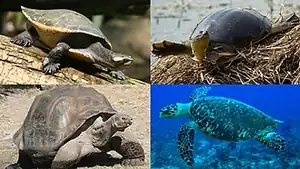
Turtles (order Testudines) are reptiles characterized by a special shell developed mainly from their ribs. Modern turtles are divided into two major groups, the Pleurodira (side necked turtles) and Cryptodira (hidden necked turtles), which differ in the way the head retracts. There are 360 living and recently extinct species of turtles, including land-dwelling tortoises and freshwater terrapins. They are found on most continents, some islands and, in the case of sea turtles, much of the ocean. Like other amniotes (reptiles, birds, and mammals) they breathe air and do not lay eggs underwater, although many species live in or around water. (Full article...)
The tuatara (/tuːəˈtɑːrə/, Māori: [ˈtʉ.a.ta.ɾa]; Sphenodon punctatus) is a species of reptile endemic to New Zealand. Despite its close resemblance to lizards, it is the only extant member of a distinct lineage, the previously highly diverse order Rhynchocephalia. The name tuatara is derived from the Māori language and means "peaks on the back". (Full article...)
Tortoises (/ˈtɔːrtəs.ɪz/ TOR-təs-iz) are reptiles of the family Testudinidae of the order Testudines (Latin for "tortoise"). Like other testudines, tortoises have a shell to protect from predation and other threats. The shell in tortoises is generally hard, and like other members of the suborder Cryptodira, they retract their necks and heads directly backward into the shell to protect them. (Full article...)
Amphisbaenia /æmfɪsˈbiːniə/ (called amphisbaenians or worm lizards) is a group of typically legless lizards, comprising over 200 extant species. Amphisbaenians are characterized by their long bodies, the reduction or loss of the limbs, and rudimentary eyes. As many species have a pink body and scales arranged in rings, they have a superficial resemblance to earthworms. While the genus Bipes retains forelimbs, all other genera are limbless. Phylogenetic studies suggest that they are nested within Lacertoidea, closely related to the lizard family Lacertidae. Amphisbaenians are widely distributed, occurring in North America, Europe, Africa, South America, Western Asia and the Caribbean. Most species are less than 6 inches (15 cm) long. (Full article...)
A crocodile (family Crocodylidae) or true crocodile is a large, semiaquatic reptile that lives throughout the tropics in Africa, Asia, the Americas and Australia. The term "crocodile" is sometimes used more loosely to include all extant members of the order Crocodilia, which includes the alligators and caimans (both members of the family Alligatoridae), the gharial and false gharial (both members of the family Gavialidae) as well as other extinct taxa. This article uses "crocodile" or "true crocodile" to refer only to the species taxonomically included in the Crocodylidae family, extant or extinct. (Full article...)
An alligator, or colloquially gator, is a large reptile in the genus Alligator of the family Alligatoridae in the order Crocodilia. The two extant species are the American alligator (A. mississippiensis) and the Chinese alligator (A. sinensis). Additionally, several extinct species of alligator are known from fossil remains. Alligators first appeared during the late Eocene epoch about 37 million years ago. (Full article...)
Snakes are limbless reptiles of the squamate suborder Serpentes. Closely related to lizards and the tuatara, snakes are ectothermic, amniote, air-breathing vertebrates with an elongated rope-Iike body covered by overlapping scales, and they move around using undulatory, rectilinear, concertina, sidewinding or slide-pushing locomotions, with some arboreal species even capable of short-ranged gliding flight by flaring out the ribs to flatten and widen the body for aerodynamic lift. Snakes have skulls with significantly fewer sutures and more hypermobile articulations (i.e. cranial kinesis) than their lizard relatives, enabling them to greatly widen the mouth and swallow prey much larger than their heads. To accommodate their narrow bodies, snakes' paired organs (such as kidneys) appear one in front of the other instead of side by side, and most only have one functional lung. Despite being tetrapods from a cladistic prospective, snakes lack limbs completely, although pythons and boids retain a vestigial pelvic girdle. Some lizards have also independently evolved a snake-like elongated body without limbs or with greatly reduced limbs at least twenty-five times via convergent evolution, leading to many lineages of legless lizards, who have eyelids, external ears and a fleshy non-forked tongue that snakes lack, although this rule is not universal. (Full article...)
The gharial (Gavialis gangeticus), also known as gavial or fish-eating crocodile, is a crocodilian in the family Gavialidae and among the longest of all living crocodilians. Mature females are 2.6 to 4.5 m (8.5 to 14.8 ft) long, and males 3 to 6 m (9.8 to 19.7 ft). Adult males have a distinct boss at the end of the snout, which resembles an earthenware pot known as a ghara, hence the name "gharial". The gharial is well adapted to catching fish because of its long, narrow snout and 110 sharp, interlocking teeth. (Full article...)




Selected images

 Photograph credit: Charles James SharpCalumma crypticum, the blue-legged chameleon, is a species of chameleon found in eastern Madagascar. As with other chameleons, an individual's colour is variable and depends on its surroundings, the ambient temperature, and variations in the level of light. The species is usually quite colourful, with rich browns, blues and greens; the legs are often marked with blue. This C. crypticum individual was photographed in Ranomafana National Park, Madagascar, and can be identified as a male by its long snout with a horn-like protrusion.
 Photograph credit: Charles James SharpThe Malagasy giant chameleon (Furcifer oustaleti) is a large species of chameleon, endemic to Madagascar. As well as the insects and small vertebrates on which the species feeds, it sometimes consumes fruit. It has been observed drawing fruit-bearing twigs closer with its forelimbs, a degree of food manipulation unusual in reptiles. This juvenile Malagasy giant chameleon was photographed at night in Montagne d'Ambre National Park.
 Photograph: Benny TrappVipera dinniki is a species of venomous viper which can reach 48.6 cm (19.1 in) in length. First described by Alexander Nikolsky in 1913, V. dinniki is found in the highlands of Russia, Georgia, and Azerbaijan.
 Green sea turtle
 Cerastes cerastes, commonly known as the Saharan horned viper or the horned desert viper, is a venomous species of viper native to the deserts of northern Africa and parts of the Arabian Peninsula and Levant. It often is easily recognized by the presence of a pair of supraocular "horns", although hornless individuals do occur.
 Photo credit: Mila ZinkovaA Gold dust day gecko (Phelsuma laticauda laticauda) licking nectar from a bird of paradise flower in Kailua-Kona, Hawaii. Native to Madagascar and the Comoro Islands, this day gecko has been introduced to Farquhar Atoll in the southern Seychelles, and onto the Hawaiian Islands.
 Photo: ThegreenjThe American five-lined skink (Eumeces fasciatus) is one of the most common lizards in the eastern United States, as well as one of the five lizard species extant in Canada. It is a small to medium sized skink growing to about 12.5 to 21.5 cm (4.9 to 8.5 in). Juveniles (as seen here) are dark brown to black with five distinctive white to yellowish stripes running along the body and a bright blue tail.
 A green sea turtle swimming above a coral reef.
 Photo credit: John O'NeillA common snakeneck turtle (Chelodina longicollis) covered in camouflaging algae. When resting this individual would look like an algae-covered rock, an example of crypsis, the ability of an organism to avoid observation. Other ways an organism may be cryptic include nocturnality, subterranean lifestyle, and transparency.
 Photograph credit: Charles J. Sharp
'"`UNIQ--gallery-00000018-QINU`"'
The Malagasy giant chameleon or Oustalet's chameleon is a large species of chameleon endemic to Madagascar. This male, photographed in the Anja Community Reserve, is catching a grasshopper by projecting its long tongue at tremendous speed to capture prey located some distance away. Photo: Christian MehlführerThe Mwanza Flat-headed Agama (Agama mwanzae) is a species of lizard native to Tanzania, Rwanda, and Kenya. The male's head, neck and shoulders are bright red or violet, while the body is dark blue. The female is mostly brown and is difficult to distinguish from other female agamas.
 Photo credit: Marcel Burkhard (cele4)The Plumed Basilisk (Basiliscus plumifrons) is a species of lizard native to Latin America. Its natural range covers a swath from Mexico to Ecuador.
 Photograph credit: Augustus BinuPtyas mucosa, the Indian rat snake, is a common species of colubrid snake found in parts of southern and southeastern Asia. Growing to a length of 1.5 to 1.9 m (5 to 6 ft), they are very slender, diurnal and semi-arboreal. They inhabit forest floors, wetlands, rice paddies, and farmland, and are frequently found in urban areas where rodents thrive. They are harmless to humans, but are fast-moving and adept at catching the small mammals, birds, amphibians and other reptiles on which they feed, subduing their prey by lying on and suffocating them.
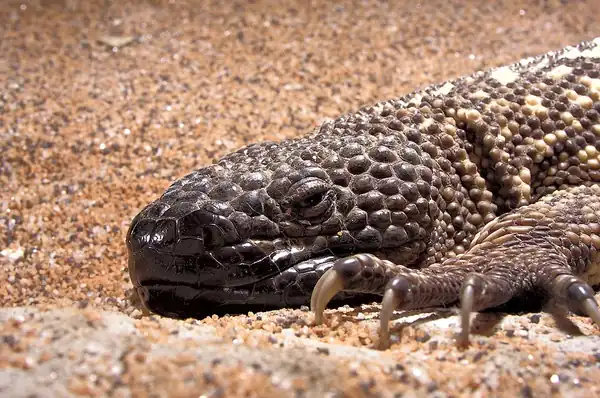
 Photo credit: Paul HirstAn anole lizard of the family Polychrotidae found in Hilo, Hawaii, United States. Anoles are small and common lizards that can be found throughout the various regions of the Western Hemisphere. They are frequently and incorrectly called chameleons or geckos due to their ability to alter their skin color and run up walls, respectively.
 Photo: Benjamint444The marine iguana (Amblyrhynchus cristatus) is an iguana found only on the Galápagos Islands that has the ability, unique among modern lizards, to live and forage in the sea, making it a marine reptile. It can dive over 10 m (33 ft) deep and mainly lives on the rocky coasts, but can also be spotted in marshes and mangrove beaches.
 Asian vine snake Ahaetulla prasina. This snake has a wide distribution in Asia. It feeds on small reptiles and amphibians, particularly lizards and tree frogs. Adults may attain 1.8 m (6 feet) in total length, with a tail 0.6 m (2 feet) long. Its appearance is very much like those of South American vine snakes. It is a rear-fanged species and is mildly venomous but is not considered a threat to humans.
 Photograph: Ministry of Information and Tourism of EcuadorA Julia butterfly (Dryas iulia) feeding on the tears of a red-headed Amazon River turtle (Podocnemis erythrocephala) in Ecuador. Such lachryphagy provides the butterfly with additional minerals that it can use for spermatophore production.
 Photograph: Steve JurvetsonThe western terrestrial garter snake (Thamnophis elegans) is a species of colubrid snake found in southwestern Canada and the western United States. It is the only species of garter snake with a well-documented tendency to constrict prey.
 Photo: Mbz1The green sea turtle (Chelonia mydas) is an endangered sea turtle found in tropical and subtropical seas around the world, with two distinct populations in the Atlantic and Pacific Oceans. The common name derives from the usually green fat found beneath its carapace.
 Photo: Muhammad Mahdi KarimThe dwarf yellow-headed gecko (Lygodactylus luteopicturatus) is a small gecko species native to the rocky areas of southern Kenya, eastern Tanzania, and Zanzibar. This individual's tail, which had been shed through autotomy, is regenerating.
 Photograph: Geoff GalliceBothriechis schlegelii is a venomous pit viper species found in Central and South America. Small and arboreal, these snakes are characterized by their wide array of color variations, as well as the superciliary scales over the eyes. They are the most common of the palm-pitvipers and are often present in zoological exhibits. The specific name schlegelii honors the German ornithologist, Hermann Schlegel. No subspecies are currently recognized.
 A baby marginated tortoise hatchling emerges from its shell.
 Cape skink – Trachylepis capensis. Close-up on purple Aster flowers.
Selected Crocodilia articles
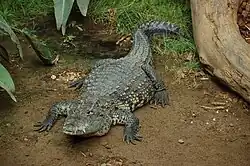
Morelet's crocodile (Crocodylus moreletii), also known commonly as the Mexican crocodile, the Belize crocodile, and el cocodrilo de pantano in Spanish, is a modest-sized crocodilian in the family Crocodylidae. The species is found only in the Atlantic regions of Mexico, Belize and Guatemala. It usually grows to about 3 metres (10 ft) in total length (tail included). It is a species at least concern for extinction according to the International Union for Conservation of Nature.
The species has a fossil record in Guatemala. (Full article...)
The Philippine crocodile (Crocodylus mindorensis), also known as the Mindoro crocodile, the Philippine freshwater crocodile, the bukarot in Ilocano, and more generally as a buwaya in most Filipino lowland cultures, is endemic to the Philippines. It has been listed as critically endangered since 2008 due to exploitation and unsustainable fishing methods, such as dynamite fishing. Conservation methods are being taken by the Dutch/Filipino Mabuwaya foundation, the Crocodile Conservation Society and the Zoological Institute of HerpaWorld in Mindoro island. It is strictly prohibited to kill a crocodile in the country, and it is punishable by law. (Full article...)
The saltwater crocodile (Crocodylus porosus) is a crocodilian native to saltwater habitats, brackish wetlands and freshwater rivers from India's east coast across Southeast Asia and the Sundaland to northern Australia and Micronesia. It has been listed as Least Concern on the IUCN Red List since 1996. It was hunted for its skin throughout its range up to the 1970s, and is threatened by illegal killing and habitat loss. It is regarded as dangerous to humans.
The saltwater crocodile is the largest living reptile. Males can grow to a weight of 1,000–1,500 kg (2,200–3,300 lb) and a length of 6 m (20 ft), rarely exceeding 6.3 m (21 ft). Females are much smaller and rarely surpass 3 m (9.8 ft). It is also called the estuarine crocodile, Indo-Pacific crocodile, marine crocodile, sea crocodile, and, informally, the saltie. A large and opportunistic hypercarnivorous apex predator, they ambush most of their prey and then drown or swallow it whole. They will prey on almost any animal that enters their territory, including other predators such as sharks, varieties of freshwater and saltwater fish including pelagic species, invertebrates such as crustaceans, various amphibians, other reptiles, birds, and mammals. (Full article...)
The yacare caiman (Caiman yacare), also known commonly as the jacare caiman, Paraguayan caiman, piranha caiman, red caiman, and southern spectacled caiman, is a species of caiman, a crocodilian in the family Alligatoridae. The species is indigenous to Argentina, Bolivia, Brazil, and Paraguay. Brown in color and covered with dark blotches, males grow to a total length (including tail) of 2–3 m (6 ft 7 in – 9 ft 10 in) and weigh around 40–50 kg (88–110 lb); while females grow to 1.4 m (4 ft 7 in) long and about 15–20 kg (33–44 lb). Typical habitats of this caiman include lakes, rivers, and wetlands. Its diet primarily consists of aquatic animals, such as snails, and occasionally land vertebrates. Mating occurs in the rainy season and eggs hatch in March, with young fending for themselves as soon as they hatch. The yacare caiman was hunted heavily for its skin to use for leather in the 1980s, which caused its population to decrease significantly. However, trading restrictions placed since have caused its population to increase. Its population in the Pantanal is about 10 million, and it is listed as least concern on the IUCN Red List. (Full article...)
The freshwater crocodile (Crocodylus johnstoni), also known commonly as the Australian freshwater crocodile, Johnstone's crocodile, Johnstone river crocodile and the freshie, is a species of crocodile native to the northern regions of Australia. Unlike its much larger Australian relative, the saltwater crocodile, the freshwater crocodile is not known as a man-eater, although it only bites in self-defence, and brief, nonfatal attacks have occurred, apparently the result of mistaken identity. (Full article...)
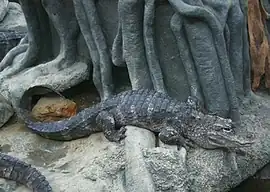
The Chinese alligator (Alligator sinensis; simplified Chinese: 鼍; traditional Chinese: 鼉; pinyin: tuó), also known as the Yangtze alligator (simplified Chinese: 扬子鳄; traditional Chinese: 揚子鱷; pinyin: yángzǐ'è), China alligator, or historically the muddy dragon, is a crocodilian endemic to China. It and the American alligator (A. mississippiensis) are the only living species in the genus Alligator of the family Alligatoridae. Dark gray or black in color with a fully armored body, the Chinese alligator grows to 1.5–2.1 metres (5–7 ft) in length and weighs 36–45 kilograms (80–100 lb) as an adult. It brumates in burrows in winter and is nocturnal in summer. Mating occurs in early summer, with females most commonly producing 20–30 eggs, which are smaller than those of any other crocodilian. The species is an opportunistic feeder, primarily eating fish and invertebrates. A vocal species, adults bellow during the mating season and young vocalize to communicate with their parents and other juveniles. Captive specimens have reached age 70, and wild specimens can live past 50.
Living in bodies of fresh water, the Chinese alligator's range is restricted to six regions in the province of Anhui, as well as possibly the provinces of Jiangsu and Zhejiang. Originally living as far away from its current range as Japan, the species previously had a wide range and population, but beginning in 6000 BC, multiple threats, such as habitat destruction, caused the species' population and range to decline. The population in the wild was about 1,000 in the 1970s, decreased to below 130 in 2001, and grew after 2003, with its population being about 300 as of 2017. Listed as critically endangered by the International Union for Conservation of Nature, multiple conservation actions have been taking place for this species. (Full article...)
The American crocodile (Crocodylus acutus) is a species of crocodilian found in the Neotropics. It is the most widespread of the four extant species of crocodiles from the Americas, with populations present from South Florida, the Caribbean islands of Cuba, Jamaica, and Hispaniola, and the coasts of Mexico to as far south as Peru, Ecuador, Colombia, and Venezuela.
The habitat of the American crocodile consists largely of coastal areas. It is also found in river systems, but tends to prefer salinity, resulting in the species congregating in brackish lakes, mangrove swamps, lagoons, cays, and small islands. Other crocodiles also have tolerance to saltwater due to salt glands underneath the tongue, but the American crocodile is the only species other than the saltwater crocodile to commonly live and thrive in saltwater. They can be found on beaches and small island formations without any freshwater source, such as many cays and islets across the Caribbean. They are also found in hypersaline lakes; one of the largest known populations inhabits Lago Enriquillo in the Dominican Republic. (Full article...)
The black caiman (Melanosuchus niger) is a crocodilian reptile endemic to South America. With a maximum length of around 5 to 6.5 m (16 to 21 ft) and a mass of over 450 kg (1,000 lb), it is the largest living species of the family Alligatoridae, and the third-largest crocodilian in the Neotropical realm. True to its common and scientific names, the black caiman has a dark greenish-black coloration as an adult. In some individuals, the pigmentation can appear almost jet-black. It has grey to brown banding on the lower jaw; juveniles have a more vibrant coloration compared to adults, with prominent white-pale yellow banding on the flanks that remains present well into adulthood (more than most other species). The banding on young helps with camouflage by breaking up their body outline, on land or in water, in an effort to avoid predation. The morphology is quite different from other caimans but the bony ridge that occurs in other caimans is present. The head is large and heavy, an advantage in catching larger prey. Like all crocodilians, caimans are long, squat creatures, with big jaws, long tails and short legs. They have thick, scaled skin, and their eyes and noses are located on the tops of their heads. This enables them to see and breathe while the rest of their body is underwater.
A carnivorous animal, the black caiman lives along freshwater habitats, including slow-moving rivers, lakes and seasonally flooded savannas, where it preys upon a variety of fish, reptiles, birds, and mammals. Being an apex predator and potentially a keystone species, it is a generalist, capable of taking most animals within its range, and might have played a critical role in maintaining the structure of the ecosystem. Although only a mere few specific ecological studies have been conducted, it is observed that this species has its own niche which allows coexistence with other competitors. (Full article...)
The Orinoco crocodile (Crocodylus intermedius) is a critically endangered crocodile which can only be found in the Orinoco river basin in Venezuela and Colombia. Extensively hunted for their skins in the 19th and 20th centuries, it is one of the most endangered species of crocodiles. It is a very large species of crocodilian; males have been reported up to 6.8 m (22 ft 4 in) in the past, weighing over 900 kg (2,000 lb), but such sizes do not exist today, 5.2 m (17 ft 1 in) being a more widely accepted maximum size. A large male today may attain 4.2 m (13 ft 9 in) in length and can weigh up to 450 kg (1,000 lb), while females are substantially smaller with the largest likely to weigh around 225 kg (496 lb). Sexual dimorphism is not as profound as in other crocodilian species. The coloration is light even in adults.
The ecology of the Orinoco crocodile is poorly documented in the wild, mostly due to its small population. It is thought to have a more piscivorous diet with an opportunistic nature, resulting in generalist predatory behaviour. It is an apex predator and preys on a variety of birds, mammals and reptiles, including caimans on occasion. Its prey base is mostly large predatory fish, challenging the general view by locals complaining about crocodiles hunting local fish to very low numbers. Reproduction takes place in the dry season when the water level is low. It is a hole nester and digs holes in the sand for its clutch of eggs. The females guard the nests and young for several years. (Full article...)
The broad-snouted caiman (Caiman latirostris) is a crocodilian in the family Alligatoridae found in eastern and central South America, including the Pantanal habitat of Bolivia, Southeast Brazil, and Paraguay, as well as northern Argentina and Uruguay. Behind the black caiman (Melanosuchus niger), it is the second-largest caiman species; it is the third-largest alligatorid behind the American alligator (Alligator mississippiensis) and the aforementioned black caiman. Primarily, the species inhabits freshwater wetlands, including floodplains, marshes, swamps, and some mangrove forests, as well as various streams, rivers, lakes or ponds, preferring bodies of rather still or slower-moving water. They will often use man-made cow ponds, disused stock tanks, and canals and ditches, as well. (Full article...)
The gharial (Gavialis gangeticus), also known as gavial or fish-eating crocodile, is a crocodilian in the family Gavialidae and among the longest of all living crocodilians. Mature females are 2.6 to 4.5 m (8.5 to 14.8 ft) long, and males 3 to 6 m (9.8 to 19.7 ft). Adult males have a distinct boss at the end of the snout, which resembles an earthenware pot known as a ghara, hence the name "gharial". The gharial is well adapted to catching fish because of its long, narrow snout and 110 sharp, interlocking teeth.
The gharial probably evolved in the northern Indian subcontinent. Fossil gharial remains were excavated in Pliocene deposits in the Sivalik Hills and the Narmada River valley. It currently inhabits rivers in the plains of the northern part of the Indian subcontinent. It is the most thoroughly aquatic crocodilian, and leaves the water only for basking and building nests on moist sandbanks. Adults mate at the end of the cold season. Females congregate in spring to dig nests, in which they lay 20–95 eggs. They guard the nests and the young, which hatch before the onset of the monsoon. The hatchlings stay and forage in shallow water during their first year, but move to sites with deeper water as they grow. (Full article...)
The West African crocodile, desert crocodile, or sacred crocodile (Crocodylus suchus) is a species of crocodile related to, and often confused with, the larger Nile crocodile (C. niloticus). (Full article...)
The American alligator (Alligator mississippiensis), sometimes referred to as a common alligator or just gator, is a large crocodilian reptile native to the Southeastern United States. It is one of the two extant species in the genus Alligator, and is larger than the only other living alligator species, the Chinese alligator.
Adult male American alligators measure 3.4 to 4.8 m (11.2 to 15.7 ft) in length, and can weigh up to 450 kg (1,000 lb), with unverified sizes of up to 5.84 m (19.2 ft) and weights of 1,000 kg (2,200 lb) making it the heaviest member of the family Alligatoridae, and the second longest one, after the black caiman. Females are smaller, measuring 2.6 to 3.35 m (8.5 to 11.0 ft) in length. The American alligator inhabits subtropical and tropical freshwater wetlands, such as marshes and cypress swamps, from southern Oklahoma and Texas to North Carolina. It is distinguished from the sympatric American crocodile by its broader U-shaped snout, with overlapping jaws and darker coloration, and is less tolerant of saltwater but more tolerant of cooler climates than the American crocodile, which is found only in tropical and warm subtropical climates. (Full article...)
The New Guinea crocodile (Crocodylus novaeguineae) is a small species of crocodile found on the island of New Guinea north of the mountain ridge that runs along the centre of the island. The population found south of the mountain ridge, formerly considered a genetically distinct population, is now considered a distinct species, Hall's New Guinea crocodile (C. halli). In the past it included the Philippine crocodile, C. n. mindorensis, as a subspecies, but today they are regarded as separate species. The habitat of the New Guinea crocodile is mostly freshwater swamps and lakes. It is most active at night when it feeds on fish and a range of other small animals. A female crocodile lays a clutch of eggs in a nest composed of vegetation and she lies up nearby to guard the nest. There is some degree of parental care for newly hatched juveniles. This crocodile was over-hunted for its valuable skin in the mid 20th century, but conservation measures have since been put in place, it is reared in ranches and the International Union for Conservation of Nature (IUCN) lists it as being of "Least Concern". (Full article...)
Mecistops is a genus of crocodiles, the slender-snouted crocodiles, native to sub-Saharan Africa. (Full article...)
The dwarf crocodile (Osteolaemus tetraspis), also known as the African dwarf crocodile, West African dwarf crocodile, broad-snouted crocodile (a name more often used for the Asian mugger crocodile) or bony crocodile, is an African osteolaemine crocodile that is also the smallest extant living species of crocodile. (Full article...)
The mugger crocodile (Crocodylus palustris) is a medium-sized broad-snouted crocodile, also known as mugger and marsh crocodile. It is native to freshwater habitats from south-eastern Iran to the Indian subcontinent, where it inhabits marshes, lakes, rivers and artificial ponds. It rarely reaches a body length of 5 m (16 ft 5 in) and is a powerful swimmer, but also walks on land in search of suitable waterbodies during the hot season. Both young and adult mugger crocodiles dig burrows to which they retreat when the ambient temperature drops below 5 °C (41 °F) or exceeds 38 °C (100 °F). Females dig holes in the sand as nesting sites and lay up to 46 eggs during the dry season. The sex of hatchlings depends on temperature during incubation. Both parents protect the young for up to one year. They feed on insects, and adults prey on fish, reptiles, birds and mammals.
The mugger crocodile evolved at least 4.19 million years ago and has been a symbol for the fructifying and destructive powers of the rivers since the Vedic period. It was first scientifically described in 1831 and is protected by law in Iran, India and Sri Lanka. Since 1982, it has been listed as Vulnerable on the IUCN Red List. Outside protected areas, it is threatened by conversion of natural habitats, gets entangled in fishing nets and is killed in human–wildlife conflict situations and in traffic accidents. (Full article...)
The Cuban crocodile (Crocodylus rhombifer) is a small-medium species of crocodile endemic to Cuba. Typical length is 2.1–2.3 m (6 ft 11 in – 7 ft 7 in) and typical weight 70–80 kg (150–180 lb). Large males can reach as much as 3.5 m (11 ft) in length and weigh more than 215 kg (474 lb).
The Cuban crocodile is of interest to biologists for its unique physical and behavioral traits. Long- and strong-legged, it is the most terrestrial of extant crocodiles. Its preferred habitat comprises freshwater and brackish water environments, such as mangrove swamps, coastal lagoons, estuaries, marshes, floodplains, and river deltas. There, the adults feed on fish, turtles and small mammals, while the young eat invertebrates and smaller fish. Mating occurs between May and July. Captive animals have displayed cooperative hunting behavior, and can be taught tricks, suggesting intelligence. (Full article...)
The spectacled caiman (Caiman crocodilus), also known as the white caiman, common caiman, and speckled caiman, is a crocodilian in the family Alligatoridae. It is brownish-, greenish-, or yellowish-gray colored and has a spectacle-like ridge between its eyes, which is where its common name come from. It grows to a length of 1.4–2.5 m (4 ft 7 in – 8 ft 2 in) and a weight of 7–40 kg (15–88 lb), with males being both longer and heavier than females. Its diet varies seasonally, commonly consisting of crabs, fish, small mammals, amphibians and snails. Breeding occurs from May to August and 14–40 eggs are laid in July and August. This crocodilian has a large range and population; it is native to much of Latin America, and has been introduced to the United States, Cuba, and Puerto Rico. (Full article...)
Cuvier's dwarf caiman (Paleosuchus palpebrosus) is a small crocodilian in the alligator family from northern and central South America. It is found in Bolivia, Brazil, Colombia, Ecuador, French Guiana, Guyana, Paraguay, Peru, Suriname, Trinidad and Venezuela. It lives in riverine forests, flooded forests near lakes, and near fast-flowing rivers and streams. It can traverse dry land to reach temporary pools and tolerates colder water than other species of caimans. Other common names for this species include the musky caiman, the dwarf caiman, Cuvier's caiman, and the smooth-fronted caiman (the latter name is also used for P. trigonatus). It is sometimes kept in captivity as a pet and may be referred to as the wedge-head caiman by the pet trade community.
Cuvier's dwarf caiman was first described by the French zoologist Georges Cuvier in 1807 and is one of only two species in the genus Paleosuchus, the other species being P. trigonatus. Their closest relatives are the other caimans in the subfamily Caimaninae. With a total length averaging 1.4 m (4.6 ft) for males and up to 1.2 m (3.9 ft) for females, Cuvier's dwarf caiman is not only the smallest extant species in the alligator and caiman family, but also the smallest of all crocodilians (unless the Congo dwarf crocodile is considered a valid species). An adult weighs around 5 to 7 kg (11 to 15 lb). Its lack of size is partly made up for by its strong body armor, provided by the bony bases to its dermal scales, which provides protection against predators. Juvenile dwarf caimans mainly feed on invertebrates, but also small fish and frogs, while adults eat larger fish, amphibians, and invertebrates, such as large molluscs. This caiman sometimes uses a burrow as shelter during the day and in the Pantanal may aestivate in the burrow to stay cool in the dry season. The female buries her eggs on a mounded nest and these take about 3 months to hatch. She helps the hatchlings to escape from the nest and provides some parental care for the first few weeks of their lives. This caiman has a wide range and large total population, and the IUCN lists its conservation status as being of least concern. (Full article...)
The smooth-fronted caiman (Paleosuchus trigonatus), also known as Schneider's dwarf caiman or Schneider's smooth-fronted caiman, is a crocodilian from South America, where it is native to the Amazon and Orinoco Basins. It is the second-smallest species of the family Alligatoridae, the smallest being Cuvier's dwarf caiman, also from tropical South America and in the same genus. An adult typically grows to around 1.2 to 1.6 m (3.9 to 5.2 ft) in length and weighs between 9 and 20 kg (20 and 44 lb). Exceptionally large males can reach as much as 2.3 m (7.5 ft) in length and 36 kg (79 lb) in weight. (Full article...)
The Nile crocodile (Crocodylus niloticus) is a large crocodilian native to freshwater habitats in Africa, where it is present in 26 countries. It is widely distributed in sub-Saharan Africa, occurring mostly in the eastern, southern, and central regions of the continent, and lives in different types of aquatic environments such as lakes, rivers, swamps and marshlands. It occasionally inhabits deltas, brackish lakes and rarely also saltwater. Its range once stretched from the Nile Delta throughout the Nile River. Lake Turkana in Kenya has one of the largest undisturbed Nile crocodile populations.
Generally, the adult male Nile crocodile is between 3.5 and 5 m (11 ft 6 in and 16 ft 5 in) in length and weighs 225 to 750 kg (496 to 1,653 lb). However, specimens exceeding 6.1 m (20 ft) in length and 1,000 kg (2,200 lb) in weight have been recorded. It is the largest predator in Africa, and may be considered the second-largest extant reptile in the world, after the saltwater crocodile (Crocodylus porosus). Size is sexually dimorphic, with females usually about 30% smaller than males. The crocodile has thick, scaly, heavily armoured skin. (Full article...)
The Siamese crocodile (Crocodylus siamensis) is a medium-sized freshwater crocodile native to Thailand, Laos, Cambodia, Vietnam and Kalimantan in Indonesia. It is critically endangered. (Full article...)




Selected snake articles

The yellow anaconda (Eunectes notaeus), also known as the Paraguayan anaconda, is a boa species endemic to southern South America. It is one of the largest snakes in the world but smaller than its close relative, the green anaconda. No subspecies are currently recognized. Like all boas and pythons, it is non-venomous and kills its prey by constriction. (Full article...)
The Nubian spitting cobra or Egyptian spitting cobra (Naja nubiae) is a species of spitting cobra native to Africa. (Full article...)
Deinagkistrodon is a monotypic genus created for the pit viper species, Deinagkistrodon acutus, which is endemic to Southeast Asia. No subspecies are currently recognized. (Full article...)
Agkistrodon piscivorus is a species of venomous snake, a pit viper in the subfamily Crotalinae of the family Viperidae. It is one of the world's few semiaquatic vipers (along with the Florida cottonmouth), and is native to the Southeastern United States. As an adult, it is large and capable of delivering a painful and potentially fatal bite. When threatened, it may respond by coiling its body and displaying its fangs. Individuals may bite when feeling threatened or being handled in any way. It tends to be found in or near water, particularly in slow-moving and shallow lakes, streams, and marshes. It is a capable swimmer, and like several species of snakes, is known to occasionally enter bays and estuaries and swim between barrier islands and the mainland. (Full article...)
The many-banded tree snake (Boiga multifasciata) is a species of rear-fanged colubrid. Not much is known about it and it is rated as "data deficient" by the IUCN. (Full article...)
The tiger snake (Notechis scutatus) is a large and highly venomous snake of southern Australia, including its coastal islands and Tasmania. These snakes are often observed and locally well known by their banding, black and yellow like a tiger, although the species can be highly variable in colouration and patterning. All populations are classified within the genus Notechis (Elapidae). Their diverse characteristics have been classified either as distinct species or by subspecies and regional variation. (Full article...)
The Erycinae, also known as the Old World sand boas, are a subfamily of nonvenomous snakes in the family Boidae. Species of the subfamily Erycinae are found in Europe, Asia Minor, Africa, Arabia, central and southwestern Asia, India, Sri Lanka, and western North America. Four genera comprising 18 species are currently recognized as being valid. (Full article...)- Trimeresurus fasciatus is a venomous pit viper species endemic to Djampea Island, Indonesia. No subspecies are currently recognized. Common names include: banded pitviper and banded tree viper. (Full article...)
Echis (common names: saw-scaled vipers, carpet vipers) is a genus of vipers found in the dry regions of Africa, the Middle East, India, Sri Lanka and Pakistan. They have a characteristic threat display, rubbing sections of their body together to produce a "sizzling" warning sound. The name Echis is the Latin transliteration of the Greek word for "viper" (ἔχις). Like all vipers, they are venomous. Their common name is "saw-scaled vipers" and they include some of the species responsible for causing the most snakebite cases and deaths in the world. Twelve species are currently recognized. (Full article...)
The black mamba (Dendroaspis polylepis) is a species of highly venomous snake belonging to the family Elapidae. It is native to parts of sub-Saharan Africa. First formally described by Albert Günther in 1864, it is the second-longest venomous snake after the king cobra; mature specimens generally exceed 2 m (6 ft 7 in) and commonly grow to 3 m (9.8 ft). Specimens of 4.3 to 4.5 m (14 to 15 ft) have been reported. It varies in colour from grey to dark brown. Juvenile black mambas tend to be more pale in colour than adults, and darken with age. Despite the common name, the black mamba is not black; the colour name describes rather the inside of its mouth, which it displays when feeling threatened. (Full article...)
The Crotalinae, commonly known as pit vipers, or pit adders, are a subfamily of vipers found in Asia and the Americas, distinguished by the presence of a pair of heat-sensing organs located in a pit between the eye and the nostril on each side of the head. Currently, 23 genera and 155 species are recognized, and like all other vipers, they are venomous. These are also the only viperids found in the Americas. The groups of snakes represented here include rattlesnakes, lanceheads, and Asian pit vipers. The type genus for this subfamily is Crotalus, of which the type species is the timber rattlesnake, C. horridus. (Full article...)
Rhamphiophis oxyrhynchus is a species of mildly venomous snake in the family Psammophiidae. The species is native to East Africa. Its common name refers to its hooked snout, which it uses to dig burrows, and to its reddish-brown dorsal coloration. It hunts small animals during the day with the help of its venomous bite. (Full article...)
Bungarus magnimaculatus, also known commonly as the Burmese krait, the spotted krait and the splendid krait, is a species of venomous snake in the family Elapidae. The species is endemic to Myanmar. (Full article...)
Lichanura, the rosy boas, are a genus of snakes in the family Boidae. They are distributed across the southwestern United States and northwestern Mexico. (Full article...)
Rena dulcis, also known commonly as the Texas blind snake, the Texas slender blind snake, or the Texas threadsnake, is a species of snake in the family Leptotyphlopidae. The species is endemic to the Southwestern United States and adjacent northern Mexico. Three subspecies are currently recognized, including the nominate subspecies described here. (Full article...)
The twig snakes (genus Thelotornis), also commonly known as bird snakes or vine snakes, are a genus of rear-fanged venomous snakes in the family Colubridae. The genus is native to Africa. All species in the genus have a slender and elongated profile, a long tail, a narrow head and a pointed snout. The eye of all species has a horizontal pupil, shaped like a keyhole, which gives twig snakes binocular vision. Twig snakes are greyish-brown with faint light and dark markings. When threatened, they inflate the throat to display bold black markings between the scales. Twig snake bites are potentially deadly: the venom is hemotoxic, affecting the blood clotting mechanism and causing uncontrolled bleeding and internal hemorrhaging. Bites by twig snakes have caused death in humans; famous herpetologist Robert Mertens died after being bitten by his pet savanna vine snake (Thelotornis capensis). However, envenomed bites are extremely rare when not handling the snake, as the fangs can't breach the skin except in a few places like the web between the thumb and fingers. (Full article...)
Thamnophis saurita, also known as the eastern ribbon snake, common ribbon snake, or simply ribbon snake, is a common species of garter snake native to Eastern North America. It is a non-venomous species of snake in the subfamily Natricinae of the family Colubridae. The ribbon snake averages 16 to 35 inches (41 to 89 cm) in total length (including tail). It is dark brown with bright yellow stripes. The ribbon snake is not sexually dimorphic; however, females are normally thicker than their male counterparts. (Full article...)
Bitis peringueyi, also known as the Peringuey's adder, Peringuey's desert adder or desert sidewinding adder, is a viper species found in Namibia and southern Angola. No subspecies are currently recognized. (Full article...)
Agkistrodon bilineatus (commonly called the cantil, Mexican cantil, Mexican ground pit viper, cantil viper, black moccasin, or Mexican moccasin) is a highly venomous pit viper species found in Mexico and Central America as far south as Honduras. (Full article...)
Craspedocephalus puniceus is a venomous pit viper species endemic to Southeast Asia. Common names include: flat-nosed pitviper, flat-nosed pit viper, and ashy pit viper. No subspecies are recognized as being valid. (Full article...)- Trimeresurus tibetanus, also commonly known as the Tibetan bamboo pit viper and the Tibetan pit viper, is a species of venomous pit viper in the family Viperidae. The species is found only in Tibet. There are no subspecies that are recognized as being valid. (Full article...)
- Horned viper may refer to: (Full article...)

The Cuban boa (Chilabothrus angulifer), also known as the Cuban tree boa and by locals as Majá de Santa María, is a very large species of snake in the family Boidae. With lengths exceeding 5 m (16 ft) and a relatively heavy build, the Cuban boa is one of the largest snakes in North America. The species is native to Cuba and some nearby islands. No subspecies are currently recognized. (Full article...)
The Colorado Desert sidewinder (Crotalus cerastes laterorepens) is a pitviper subspecies found in an area that centers on the Sonoran Colorado Desert in Southern California. It is also native to the Sonoran Desert in the Southwestern United States and Northwestern Mexico. Like all other pitvipers, it is venomous. (Full article...)


Selected lizard articles
Draco indochinensis, also known as the Indochinese flying lizard or Indochinese gliding lizard, is a species of agamid lizard endemic to South-east Asia (Cambodia and southern Vietnam). (Full article...)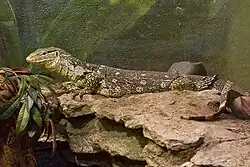
The ornate monitor (Varanus niloticus ornatus) is a monitor lizard that is native to West and Middle Africa. Comprehensive molecular analyses of the group have demonstrated that animals previously assigned to "Varanus ornatus" do not constitute a valid taxon and are actually polymorphisms of two different species; Varanus stellatus (west African Nile monitor) and Varanus niloticus (Nile monitor). Consequently, Varanus ornatus is considered a synonym of Varanus niloticus and "ornate monitor" is an informal term for forest forms of either species (V. niloticus or V. stellatus).
Until 1997, the ornate monitor was considered a subspecies of the Nile monitor. It was subsequently described as a separate species on the basis of reduced number of ocelli rows on the body, a light coloured tongue and a more massive build. More recent work based on a large sample size using mitochondrial and nuclear DNA sequences indicates that Varanus ornatus is not a valid species and that animals with the diagnostic appearance belong to either of two sister species of Nile monitor. Animals described as ornate monitor lizards are native to closed canopy forests in West and Middle Africa. (Full article...)
Draco dussumieri, also known commonly as the Indian flying lizard, the southern flying lizard, and the Western Ghats flying lizard, is a species of lizard in the family Agamidae. The species is capable of gliding from tree to tree. It is found principally in the Western Ghats and some other hill forests of Southern India. It is almost completely arboreal, found on trees in forests and adjoining palm plantations where it climbs trees to forage for insects and glides to adjoining trees by expanding the patagium, loose skin on the sides of the body which is supported by elongated ribs to act as wings. The skin on the sides of the neck is also extended to the sides using the hyoid bones of the tongue as support. During the breeding season males maintain small territories which they defend from other males while courting females. The male has a more colourful patagium than the female, and it prominently extends its yellow dewlap forward in display. Although living almost its entire life in trees, the female descends to the ground to lay eggs in soil. This is the species with the westernmost distribution within the genus Draco, the majority of species occurring in Southeast Asia. (Full article...)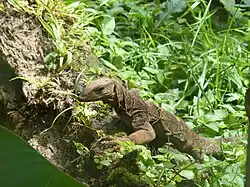
Varanus spinulosus, known commonly as the Solomon Island spiny monitor, Isabel monitor, or spiny-neck monitor, is a species of monitor lizard. It is native to the Solomon Islands archipelago, which includes the main island chain of the Solomon Islands as well as Bougainville Island in Papua New Guinea. (Full article...)
Draco melanopogon, commonly known as the black-bearded gliding lizard or black-barbed flying dragon, is a species of agamid "flying lizard" endemic to Southeast Asia. It is a typically forest-dwelling arboreal lizard. It preys on small invertebrates like ants and is oviparous. They are notable for relying solely on dewlap-mediated communication, instead of conveying signals via both headbobbing and employing dewlaps, as is typical for lizards with dewlaps. (Full article...)
Recreation yard, Camp Iguana
Camp Iguana is a small compound in the detention camp complex on the US Naval base at Guantánamo Bay, Cuba. Camp Iguana originally held three child detainees, who camp spokesmen then claimed were the only detainees under age 16 (the age at which DOD defined minors). It was closed in the winter of 2004 when the three were sent back to their native countries. (Full article...)
Setaro's dwarf chameleon (Bradypodion setaroi) is a species of lizard in the family Chamaeleonidae. (Full article...)
The Drakensberg dwarf chameleon (Bradypodion dracomontanum) occurs in the Drakensberg, South Africa, between the latitudes of 27°45′ and 29°15′. Bright green dwarf chameleons (emerald dwarf chameleon) found in the Drakensberg south of 29°15′ are now known to be more closely related to the Natal Midlands dwarf chameleon (Bradypodion thamnobates) and may yet be described as a separate species. (Full article...)
Draco sumatranus, the common gliding lizard, is a species of agamid lizard endemic to Southeast Asia. It has elongated ribs and skin flaps on the sides of its body. When opened, these skin flaps allow it to glide between tree trunks. (Full article...)
The Ngome dwarf chameleon (Bradypodion ngomeense) is a species of chameleon found in South Africa. (Full article...)
Tarentola mauritanica, known as the common wall gecko, is a species of gecko (Gekkota) native to the western Mediterranean area of North Africa and Europe. It has been introduced to Madeira and Balearic Islands, and the Americas (in Montevideo, Buenos Aires and California). A nocturnal animal with a predominantly insectivorous diet, it is commonly observed on walls in urban environments in warm coastal areas; it can be found further inland, especially in Spain where it has a tradition of cohabitation with humans as an insect hunter. A robust species, up to 15 cm (6 inches) long, its tubercules are enlarged and give the species a spiny armoured appearance. (Full article...)
The Transvaal dwarf chameleon (Bradypodion transvaalense) is a chameleon native to South Africa, where it is found in forested areas of Mpumalanga and Limpopo provinces. It is also known as the Wolkberg dwarf chameleon, after the Wolkberg range. (Full article...)
The rhinoceros iguana (Cyclura cornuta) is an endangered species of iguana that is endemic to the Caribbean island of Hispaniola (shared by Haiti and the Dominican Republic) and its surrounding islands. A large lizard, they vary in length from 60 to 136 centimetres (24 to 54 in), and skin colours range from a steely grey to a dark green and even brown. Their name derives from the bony-plated pseudo-horn or outgrowth which resembles the horn of a rhinoceros on the iguana's snout. It is known to coexist with the Ricord's iguana (C. ricordii); the two species are the only taxa of rock iguana to do so. (Full article...)- West Indian iguana may refer to: (Full article...)
The blue iguana (Cyclura lewisi), also known commonly as the Grand Cayman ground iguana, the Grand Cayman blue iguana, and the Cayman Island rock iguana, is an endangered species of lizard in the family Iguanidae. The species is endemic to the island of Grand Cayman. It was previously considered to be a subspecies of the Cuban iguana, Cyclura nubila, but in a 2004 article Frederic J. Burton reclassified it as a separate species because, according to him, the genetic differences discovered four years earlier between the different C. nubila populations warranted this interpretation. The blue iguana is one of the longest-living species of lizard (possibly up to 69 years). (Full article...)
Draco maculatus, commonly known as the spotted flying dragon or spotted gliding lizard, is a species of agamid flying lizard endemic to Southeast Asia. It is capable of gliding from tree to tree. (Full article...)- The short-limbed bend-toed gecko (Mediodactylus brachykolon) is a species of gecko. The gecko is distinguished from others due to its distinctly short limbs, stout body and large head. In appearance it is similar to Altiphylax stoliczkai and Altiphylax baturensis.
The name of the gecko comes from Greek brachys meaning short and kolon meaning limb. (Full article...) 
The black rough-necked monitor (Varanus rudicollis) is a species of monitor lizard found in Southeast Asian countries of Thailand, Burma, and Malaysia. It is also found in Indonesia on Sumatra and islands of the Riau Archipelago It is sometimes known simply as the roughneck monitor. In Thailand is called h̄èā cĥāng (Thai: เห่าช้าง; "elephant bark/roar"). (Full article...)
Sphaerodactylus ariasae, commonly called the Jaragua sphaero or the Jaragua dwarf gecko, is the smallest species of lizard in the family Sphaerodactylidae. (Full article...)
Rhacodactylus leachianus, commonly known as the New Caledonian giant gecko, Leach's giant gecko, leachianus gecko, or Leachie, is the largest living species of gecko and a member of the family Diplodactylidae. It is native to most of New Caledonia. (Full article...)
The crested gecko (Correlophus ciliatus), also known commonly as the eyelash gecko, is a species of lizard in the family Diplodactylidae. The species is native to southern New Caledonia. Originally described in 1866 by French zoologist Alphonse Guichenot, the species was thought to be extinct until it was rediscovered in 1994 during an expedition led by German herpetologist Robert Seipp. Along with several other New Caledonian gecko species, it is being considered for protected status by the Convention on the International Trade in Endangered Species of Wild Flora and Fauna. (Full article...)
Draco cornutus is a species of "flying dragon", an agamid lizard. It is endemic to Borneo. It occurs at elevations up to 700 m (2,300 ft) above sea level, although its distribution is poorly known. (Full article...)
The Asian water monitor (Varanus salvator) is a large varanid lizard native to South and Southeast Asia. It is widely considered to be the second-largest lizard species, after the Komodo dragon. It is distributed from eastern and northeastern India and Bangladesh, the Andaman and Nicobar Islands, Sri Lanka, through southern China and Hainan Island in the east to Mainland Southeast Asia and the islands of Sumatra, Borneo, Java, Lombok, the Riau Archipelago, and Sulawesi. It is one of the most widespread monitor lizards. (Full article...)
The Knysna dwarf chameleon (Bradypodion damaranum) is a species of dwarf chameleon in the Bradypodion ("slow footed") genus that is endemic to South Africa. It is a forest dweller, found only in a limited range in the afromontane forests near Knysna, South Africa, and in certain surrounding areas. (Full article...)
The marine iguana (Amblyrhynchus cristatus), also known as the sea iguana, saltwater iguana, or Galápagos marine iguana, is a species of iguana found only on the Galápagos Islands (Ecuador). Unique among modern lizards, it is a marine reptile that has the ability to forage in the sea for algae, which make up almost all of its diet. Marine iguanas are the only extant lizard that spends time in a marine environment. Large males are able to dive to find this food source, while females and smaller males feed during low tide in the intertidal zone. They mainly live in colonies on rocky shores where they bask after visiting the relatively cold water or intertidal zone, but can also be seen in marshes, mangrove swamps and beaches. Large males defend territories for a short period, but smaller males have other breeding strategies. After mating, the female digs a nest hole in the soil where she lays her eggs, leaving them to hatch on their own a few months later. (Full article...)


Categories

Selected turtle articles

The four-eyed turtle (Sacalia quadriocellata) is a reptile of the order Testudines. Its name refers to two bright yellow or green spots that occur on the back of its head that can look like another pair of eyes. (Full article...)- The Chinese false-eyed turtle (Cuora trifasciata × Sacalia quadriocellata) is a hybrid species of turtle in the family Geoemydidae. It is a hybrid between a male golden coin turtle (Cuora trifasciata) and a female four-eyed turtle (Sacalia quadriocellata). While formerly considered to be a wild species believed to be originally from Hainan, it is now known only from pet trade type specimens. (Full article...)
- The variable mud turtle (Pelusios rhodesianus), also known as Rhodesian mud turtle, Mashona hinged terrapin or variable hinged terrapin, is a species of turtle in the family Pelomedusidae. It is widely distributed in Central, East, and Southern Africa. The species was officially described by John Hewitt in 1927 and had to be broken into subspecies due to color variations on the heads of the turtles acrost the regions. (Full article...)
The red-necked pond turtle (Mauremys nigricans) is a species of turtles in the family Geoemydidae endemic to China. It is most likely restricted to Guangxi and Guangdong provinces, although pre-historic skull remains have been found in northern Vietnam and Hainan. Other common names include Kwangtung river turtle and black-necked pond turtle. (Full article...)
The Argentine snake-necked turtle (Hydromedusa tectifera), also known commonly as the South American snake-necked turtle is a species of turtle in the family Chelidae. The species is known for the long neck to which its common names refer. Despite appearances, the Argentine snake-necked turtle is probably more closely related to the mata mata (Chelus fimbriatus) than to the Australian snake-necked turtles in the genus Chelodina. H. tectifera is found in northern Argentina, Uruguay, Paraguay, and southern Brazil. Not much is known about it, as it has not been extensively researched. It is a popular pet in the exotic pet trade. (Full article...)
The common snapping turtle (Chelydra serpentina) is a species of large, freshwater turtles in the family Chelydridae. Its natural range extends from southeastern Canada, southwest to the edge of the Rocky Mountains, as far east as Nova Scotia, and Florida. The present-day C. serpentina population in the Middle Rio Grande suggests that the common snapping turtle has been present in this drainage since at least the 17th century and is likely native. The three species of Chelydra and the larger alligator snapping turtles (genus Macrochelys) are the only extant chelydrids, a family now restricted to the Americas. The common snapping turtle, as its name implies, is the most widespread. (Full article...)
The Vietnamese three-striped box turtle or green rice turtle (Cuora cyclornata) is a species of the Southeast Asian genus Cuora (family Geoemydidae). It is distributed from the extreme southern part of the Chinese Guangxi province southwards to central Vietnam and central Laos. This species reaches up to 30 cm straight carapace length and is thus the largest Cuora species. Due to demand of traditional Chinese medicine, this species is nearly extinct in the wild, but is readily bred on Chinese turtle farms. Extremely high prices are paid for this species in China.
It can be distinguished from Cuora trifasciata by its larger size and generally more oval or rounder shell, which is usually also flatter, a white, pink, or orange chin, and head coloration with an orange-brownish-olive dorsal head pattern and less black pigment. (Full article...)
The West African black turtle (Pelusios niger) is a species of turtle in the family Pelomedusidae. It is endemic to Africa, in Cameroon, Equatorial Guinea, Gabon, and Nigeria. (Full article...)
The loggerhead musk turtle (Sternotherus minor) is a species of turtle in the family Kinosternidae. This turtle has a large head which has a light-colored background with dark spots or stripes present on the head and neck. The average size of an adult loggerhead musk turtle is about 3–5 in (7.6–12.7 cm) in straight carapace length. (Full article...)
The ringed map turtle or ringed sawback (Graptemys oculifera) is a species of turtle in the family Emydidae endemic to the southern United States. (Full article...)
The Malayan softshell turtle (Dogania subplana) is a species of softshell turtle in the family Trionychidae. It is monotypic in its genus. (Full article...)
The Mississippi map turtle (Graptemys pseudogeographica kohnii), also known commonly as Kohn's map turtle, is a subspecies of land and water turtle belonging to the family Emydidae. G. p. kohnii is native to the central United States. (Full article...)
The Coinage of Aegina began in the 6th century BC. The front has a sea turtle design, while the back has a punch mark, found on most coins at that time. The earliest coins were made of electrum, a mix of gold and silver. The coins were first made on the island of Aegina, off the southeast side of Greece. (Full article...)
Siebenrockiella crassicollis (commonly known as black marsh turtle, smiling terrapin, and Siamese temple turtle, among others) is a freshwater turtle endemic to Southeast Asia. It is one of two species classified under the genus Siebenrockiella in the family Geoemydidae. (Full article...)
Sternotherus intermedius is a species of small turtle native to Alabama, United States. It is also known as the aliflora musk turtle or intermediate musk turtle due to its intermediate patterns on the shell. For a long time, it was thought to be a hybrid between the two subspecies of the loggerhead musk turtle (the loggerhead and striped-neck musk turtle), but in 2017, it was declared a new species based on DNA research. It is endemic to the Choctawhatchee River and Conecuh River basins. (Full article...)
McCord's box turtle (Cuora mccordi) is a species of semi-aquatic turtle in the family Geoemydidae. The species is native to the southern Chinese province of Guangxi. The species was first described in 1988 from specimens obtained through the wildlife trade, which resulted in prolonged uncertainty regarding its natural distribution. (Full article...)
The Manning River snapping turtle (Myuchelys purvisi), or Manning River saw-shelled turtle, is a species of turtle in the family Chelidae, endemic to Australia. (Full article...)
Apalachicola Snapping Turtle, Copenhagen, 2016
The Apalachicola snapping turtle (Macrochelys apalachicolae) is a proposed species that lives in the Apalachicola River, United States. The proposed species can as well be found within other panhandle rivers within the states of Florida, Georgia, and Alabama. (Full article...)- The lesser Chinese softshell turtle (Pelodiscus parviformis) is a species of turtle in the family Trionychidae. It is endemic to China, where it inhabits a small range in Guangxi and Hunan provinces. Populations of this species in Vietnam and Hainan are now considered to belong to a separate species, the spotted softshell turtle (P. variegatus). (Full article...)

The Central American mud turtle (Kinosternon angustipons), also known as the narrow-bridged mud turtle, is a species of mud turtle in the Kinosternidae family endemic to Central America. It can be found in the following countries: Costa Rica, Nicaragua and Panama. In terms of reproduction, the female Central American mud Turtle can lay up to 4 eggs at time of reproduction, and multiple times a year. (Full article...)
The saw-shelled turtle (Myuchelys latisternum) is a species of turtle in the Chelidae family endemic to Australia, ranging along rivers and streams and connected swamps and lagoons from coastal Cape York Peninsula to northern New South Wales, with populations also noted as far south as Newcastle - (Williams River Catchment site of the former Tilligra Dam). They are thought to have been introduced to Lake Eacham in the Atherton Tablelands. Other common English names are: serrated snapping turtle or common sawshell turtle. (Full article...)
The African softshell turtle, or Nile softshell turtle (Trionyx triunguis), is a large species of softshell turtle from freshwater and brackish-water habitats in Africa (larger parts of Eastern, Northeastern, Western and Middle Africa) and the Near East (Israel, Lebanon, Syria and Turkey). It is the only extant species in the genus Trionyx; historically, despite other species having been formerly placed in this genus as well, they have all been reclassified to other genera. (Full article...)
The Brazilian snake-necked turtle (Hydromedusa maximiliani), also known commonly as Maximilian's snake-necked turtle, and locally known in Brazilian Portuguese as cágado-da-serra ("mountain turtle") and cágado-pescoço-de-cobra ("snake-necked turtle"), is a species of turtle in the family Chelidae. The species is native to southeastern Brazil. It is one of the smallest Brazilian freshwater turtles, reaching a maximum straight carapace length of 20 cm (7.9 in). The species prefers streams with sandy and rocky bottoms and clear water in forests above 600 m (2,000 ft) elevation. (Full article...)- Black mud turtle may refer to: (Full article...)

The Amur softshell turtle (Pelodiscus maackii), also commonly known as the northern Chinese softshell turtle, is a species of turtle in the family Trionychidae. The species is native to Asia. (Full article...)




Need help?
Do you have a question about Reptiles that you can't find the answer to?
Consider asking it at the Wikipedia reference desk.
Topics
Major extant reptile clades | |||||
|---|---|---|---|---|---|
| Lepidosauria | |||||
| Archelosauria |
| ||||

Related portals
Associated Wikimedia
The following Wikimedia Foundation sister projects provide more on this subject:
-
 Commons
Free media repository -
 Wikidata
Free knowledge base -
 Wikiquote
Collection of quotations -
 Wikisource
Free-content library -
 Wikiversity
Free learning tools -
 Wiktionary
Dictionary and thesaurus
-
 List of all portals
-

-

-

-

-

-

-

-

-

-
 Random portal
-
 WikiProject Portals