This portal is not manually maintained. However, please contactGazampwhen you plan to make significant changes.
This portal has a single page layout. It is possible that any subpages may no longer be needed.
Additional notes: This portal was significantly updated and expanded in August 2019.
Please take care when editing, especially if using automated editing software, and seek consensus before making major changes.Learn how to update the maintenance information here.
Money was historically an emergent market phenomenon that possessed intrinsic value as a commodity; nearly all contemporary money systems are based on unbacked fiat money without use value. Its value is consequently derived by social convention, having been declared by a government or regulatory entity to be legal tender; that is, it must be accepted as a form of payment within the boundaries of the country, for "all debts, public and private", in the case of the United States dollar.
Bi-metallic coins are made up of a core with an outer ring. (e.g.: 500 yen coin)
Bi-metallic coins are coins consisting of two (bi-) metals or alloys, generally arranged with an outer ring around a contrasting center. The bi-metal form is typically used to protect against counterfeiting.
Each ruble is technically subdivided into 100 kopeyka (kopecks), but kopeck-denominated coins are now rarely used due to inflation. It is the second-oldest currency in continuous use, after British sterling. It was also the first decimal currency. (Full article...)
... that the first volume of a yuri manga was criticized for not having enough yuri?
... that memoirist Guy Trebay recalled that the Tenth Floor, a New York City nightclub, attracted "slick and professional gay men who obviously had money"?
... that modernist architect Paul Rudolph was said to have run out of money three times while designing the Modulightor Building?
... that memoirist Guy Trebay recalled that the Tenth Floor, a New York City nightclub, attracted "slick and professional gay men who obviously had money"?
Image 12Sino Tibetan silver tangka, dated 58th year of Qian Long era, obverse. Weight 5.57 g. Diameter: 30 mm (from Tibetan tangka)
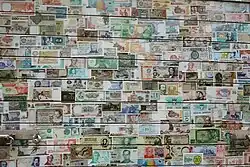
Image 13Banknotes of different currencies with a face value of 5000 (from Money)
Image 14Song Dynasty Jiaozi, the world's earliest paper money (from Money)
Image 15A 640 BC one-third staterelectrum coin from Lydia. According to Herodotus, the Lydians were the first people to introduce the use of gold and silver coins. It is thought by modern scholars that these first stamped coins were minted around 650 to 600 BC. (from Money)