Portal:Internet

The Internet Portal  The Internet (or internet) is the global system of interconnected computer networks that uses the Internet protocol suite (TCP/IP) to communicate between networks and devices. It is a network of networks that comprises private, public, academic, business, and government networks of local to global scope, linked by electronic, wireless, and optical networking technologies. The Internet carries a vast range of information services and resources, such as the interlinked hypertext documents and applications of the World Wide Web (WWW), electronic mail, discussion groups, internet telephony, streaming media and file sharing. Most traditional communication media, including telephone, radio, television, paper mail, newspapers, and print publishing, have been transformed by the Internet, giving rise to new media such as email, online music, digital newspapers, news aggregators, and audio and video streaming websites. The Internet has enabled and accelerated new forms of personal interaction through instant messaging, Internet forums, and social networking services. Online shopping has also grown to occupy a significant market across industries, enabling firms to extend brick and mortar presences to serve larger markets. Business-to-business and financial services on the Internet affect supply chains across entire industries. (Full article...) Selected article
Selected picture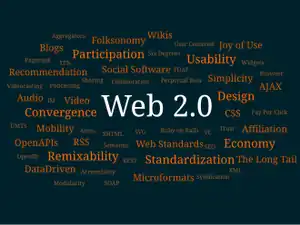 In studying and/or promoting web-technology, the phrase Web 2.0 can refer to a perceived second generation of web-based communities and hosted services — such as social-networking sites, wikis, and folksonomies — which aim to facilitate creativity, collaboration, and sharing between users. The term gained currency following the first O'Reilly Media Web 2.0 conference in 2004. Good Articles - The Online Safety Amendment (Social Media Minimum Age) Act 2024 is an Australian act of parliament that prohibits minors under the age of 16 from holding an account on certain social media platforms. It is an amendment to the Online Safety Act 2021 and was passed by the Parliament of Australia on 29 November 2024. It imposes monetary penalties on social media companies that fail to take reasonable steps to prevent minors under 16 who are located in Australia from having accounts on their services. The legislation allows the government to determine which social media platforms must ban age‑restricted users and proclaim a date for the commencement of the ban, with those provisions taking effect on 10 December 2025. Facebook, Instagram, Reddit, Snapchat, TikTok, Twitter, Threads, Twitch, Kick, and YouTube were age‑restricted on 10 December 2025, with the possibility that more platforms may be added. The act is being challenged in the High Court by the Digital Freedom Project. (Full article...) WikiProjects
Did you know (auto-generated) -
Selected biography
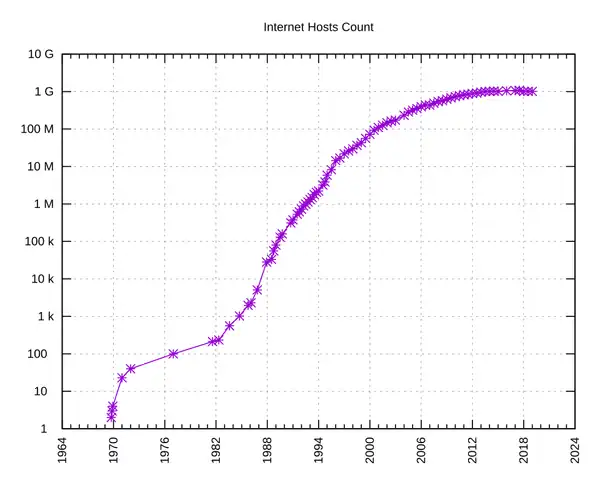
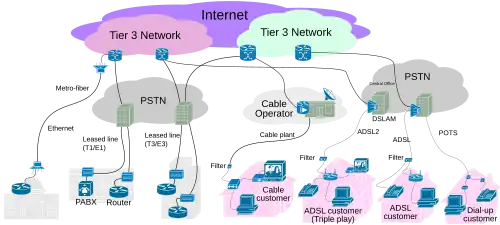
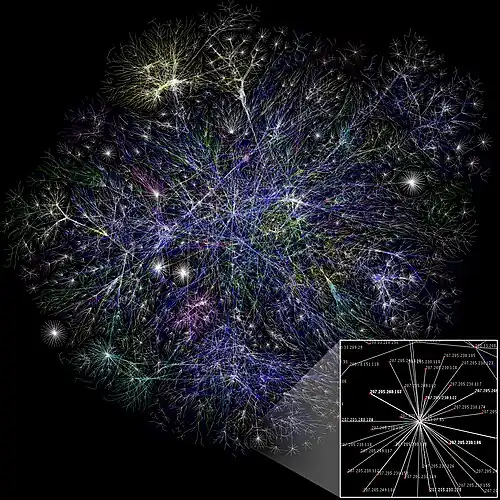
General images -The following are images from various internet-related articles on Wikipedia.
Selected quoteMain topics
Featured contentCategories Select [►] to view subcategories
Related portalsThings you can do
Associated WikimediaThe following Wikimedia Foundation sister projects provide more on this subject:
Wikipedia's portalsDiscover Wikipedia using portals
|