The 1963 March on Washington participants and leaders marching from the Washington Monument to the Lincoln Memorial The civil rights movement social movement in the United States from 1954 to 1968 which aimed to abolish legalized racial segregation , discrimination , and disenfranchisement in the country, which most commonly affected African Americans . The movement had origins in the Reconstruction era in the late 19th century, and modern roots in the 1940s and in Mahatma Gandhi 's nonviolent movement in India. After years of nonviolent protests and civil disobedience campaigns, the civil rights movement achieved many of its legislative goals in the 1960s, during which it secured new protections in federal law for the civil rights of all Americans, including the Civil Rights Act of 1964 , the Voting Rights Act of 1965 , and the Civil Rights Act of 1968 .
Following the American Civil War (1861–1865), the three Reconstruction Amendments to the U.S. Constitution abolished slavery and granted citizenship to all African Americans, the majority of whom had recently been enslaved in the southern states. During Reconstruction, African-American men in the South voted and held political office, but after 1877 they were increasingly deprived of civil rights under racist Jim Crow laws (which for example banned interracial marriage , introduced literacy tests for voters , and segregated schools ) and were subjected to violence from white supremacists during the nadir of American race relations . African Americans who moved to the North to improve their prospects during the Great Migration also faced barriers to employment and housing. Legal racial discrimination was upheld by the Supreme Court in its 1896 decision in Plessy v. Ferguson separate but equal ". The movement for civil rights, led by figures such as W. E. B. Du Bois and Booker T. Washington , achieved few gains until after World War II . In 1948, President Harry S. Truman issued an executive order abolishing discrimination in the armed forces.
In 1954, the Supreme Court struck down state laws establishing racial segregation in public schools in Brown v. Board of Education Martin Luther King Jr. and others, began a campaign of nonviolent protests and civil disobedience including the Montgomery bus boycott in 1955–1956, "sit-ins " in Greensboro and Nashville in 1960, the Birmingham campaign and its Children's Crusade in 1963, and a march from Selma to Montgomery in 1965. Press coverage of events such as the lynching of Emmett Till in 1955 and the use of fire hoses and dogs against protesters in Birmingham increased public support for the civil rights movement. In 1963, about 250,000 people participated in the March on Washington , after which President John F. Kennedy asked Congress to pass civil rights legislation. Kennedy's successor, Lyndon B. Johnson , overcame the opposition of southern politicians to pass three major laws: the Civil Rights Act of 1964 , which prohibited discrimination based on race, color, religion, sex, or national origin in public accommodations , employment, and federally assisted programs; the Voting Rights Act of 1965 , which outlawed discriminatory voting laws and authorized federal oversight of election law in areas with a history of voter suppression; and the Fair Housing Act of 1968 , which banned housing discrimination. The Supreme Court made further pro–civil rights rulings in cases including Browder v. Gayle Loving v. Virginia Full article...
Selected article - The Civil Rights Act of 1964 Pub. L. 88–352 , 78 Stat. 241 , enacted July 2, 1964 ) is a landmark civil rights and labor law in the United States that outlaws discrimination based on race , color , religion, sex, and national origin. It prohibits unequal application of voter registration requirements, racial segregation in schools and public accommodations , and employment discrimination. The act is considered one of the most significant legislative achievements in American history.
Initially, powers given to enforce the act were weak, but these were supplemented during later years. Congress asserted its authority to legislate under several different parts of the United States Constitution , principally its enumerated power to regulate interstate commerce under the Commerce Clause of Article I, Section 8 , its duty to guarantee all citizens equal protection of the laws under the 14th Amendment , and its duty to protect voting rights under the 15th Amendment .
The legislation was proposed by President John F. Kennedy in June 1963, but it was opposed by filibuster in the Senate. After Kennedy was assassinated on November 22, 1963, President Lyndon B. Johnson pushed the bill forward. The United States House of Representatives passed the bill on February 10, 1964, and after a 72-day filibuster, it passed the United States Senate on June 19, 1964. The final vote was 290–130 in the House of Representatives and 73–27 in the Senate. After the House agreed to a subsequent Senate amendment, the Civil Rights Act of 1964 was signed into law by President Johnson at the White House on July 2, 1964. (Full article...
The following are images from various civil rights movement-related articles on Wikipedia.
Image 1 Bishop Henry McNeal Turner, AME leader in Georgia. (from
Civil rights movement (1865–1896) )
Image 2 Martin Luther King Jr. waving his hand to the crowd after delivering his "
I Have a Dream " speech (from
March on Washington )
Image 3 Smithsonian Institution traveling exhibition "381 Days: The Montgomery Bus Boycott" at the
Washington State History Museum (from
Montgomery bus boycott )
Image 4 Black people in Memphis under attack,
Harper's Weekly , 26 May 1866 (from
Civil rights movement (1865–1896) )
Image 5 Juvenile African-American convicts working in the fields in a chain gang, photo taken c. 1903 (from
Civil rights movement (1896–1954) )
Image 6 Close up of some leaders of the March on Washington walking along Constitution Avenue. (from
March on Washington )
Image 7 Kennedy meets with march leaders. Left to Right – Willard Wirtz, Matthew Ahmann, Martin Luther King Jr., John Lewis, Rabbi Joachin Prinz, Eugene Carson Blake, A. Philip Randolph, President John F. Kennedy, Vice President Lyndon Johnson, Walter Reuther, Whitney Young, Floyd McKissick, Roy Wilkins (not in order) (from
March on Washington )
Image 8 50th Anniversary of the Civil Rights March on Washington for Jobs and Freedom (from
March on Washington )
Image 10 Leaders arrived late and linked arms in front of marchers on Constitution Avenue. (from
March on Washington )
Image 11 A diagram showing where Rosa Parks sat in the unreserved section at the time of her arrest (from
Montgomery bus boycott )
Image 12 Image of workers guarding an entrance to the Fischer Body Plant in Flint, Michigan (1937) (from
Sit-in movement )
Image 13 One of the many churches involved in aiding members of the sit-movement (from
Sit-in movement )
Image 14 A plaque commemorating a sit-in that took place in February 1960 in Chattanooga, Tennessee (from
Sit-in movement )
Image 15 Poster from Office of War Information. Domestic Operations Branch. News Bureau, 1943. (from
Civil rights movement (1896–1954) )
Image 16 Executive Committee of the
National Negro Business League , c. 1910. NNBL founder
Booker T. Washington (1856–1915) is seated, second from the left. (from
Civil rights movement (1896–1954) )
Image 17 African American women participate in Civil Rights protest in Tallahassee, Florida, 1963 (from
African-American women in the civil rights movement )
Image 18 Kathleen Cleaver delivering a speech, 1971 (from
African-American women in the civil rights movement )
Image 19 Montgomery Improvement Association poster announcing desegrated seating on buses (
New York Public Library ) (from
Montgomery bus boycott )
Image 21 Rosa Parks being fingerprinted by Deputy Sheriff D.H. Lackey after being arrested on February 22, 1956, during the Montgomery bus boycott. (from
African-American women in the civil rights movement )
Image 23 March on Washington for Jobs and Freedom program (from
March on Washington )
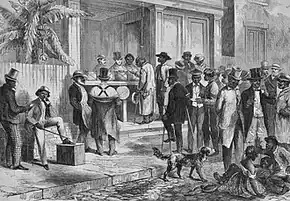
Image 24 Freedmen voting in New Orleans, 1867 (from
Civil rights movement (1865–1896) )
Image 25 John Lewis speaking in the
Great Hall of the
Library of Congress on the 50th anniversary, August 28, 2013 (from
March on Washington )
Image 26 Leaders gather for a portrait (from
March on Washington )
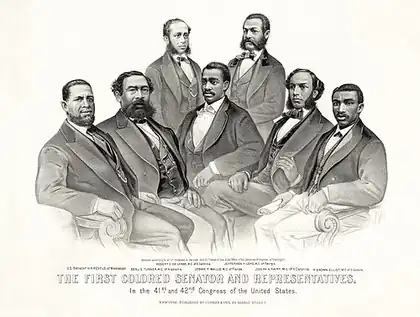
Image 27 First Colored Senator and Representatives: Sen.
Hiram Revels (R-MS), Rep.
Benjamin Turner (R-AL),
Robert DeLarge (R-SC),
Josiah Walls (R-FL),
Jefferson Long (R-GA),
Joseph Rainey and
Robert B. Elliott (R-SC), 1872 (from
Civil rights movement (1865–1896) )
Image 28 Rosa Parks being fingerprinted by Deputy Sheriff D.H. Lackey after her arrest for boycotting public transportation (from
Montgomery bus boycott )
Image 30 Joan Baez and
Bob Dylan performing at the March on Washington (from
March on Washington )
Image 31 Fannie Lou Hamer founded Freedom Farm Cooperative, an operation meant to alleviate Black sharecropper poverty in the South. (from
African-American women in the civil rights movement )
Image 32 Leaders of the March on Washington speak to the news media after meeting with President Kennedy at the White House. (from
March on Washington )
Image 33 "A Man Was Lynched Yesterday" flag, hanging at the
Library of Congress (from
Civil rights movement (1896–1954) )
Image 34 Women marching for equal rights, integrated schools and decent housing (from
African-American women in the civil rights movement )
WikiProject Civil Rights Movement
WikiProject Human rights
WikiProject United States
Fredrick Allen Hampton Sr. African American revolutionary and political activist who served as deputy chairman of the Black Panther Party , a Marxist-Leninist and black power organization from 1966 until his assassination in 1969. He was also chair of the Illinois chapter and founded the anti-racist, anti-classist Rainbow Coalition , a prominent multicultural political organization that combined Black Panthers, Young Patriots , and the Young Lords , which were all leftist political organizations that included African Americans, White Southerners , and Puerto Ricans . Hampton also formed an alliance among major Chicago street gangs to help them end infighting and work for social change. Hampton began his activism in the National Association for the Advancement of Colored People (NAACP), serving as the Youth Council President of the West Suburban branch in the Chicago area.
In 1967, the Federal Bureau of Investigation (FBI) identified Hampton as a radical threat. It tried to subvert his activities in Chicago, sowing disinformation among black progressive groups and placing a counterintelligence operative in the local Panthers organization. In December 1969, Hampton was drugged, then shot and killed in his bed during a predawn raid at his Chicago apartment by a tactical unit of the Cook County State's Attorney 's Office, who received aid from the Chicago Police Department and the FBI leading up to the attack. Law enforcement sprayed more than 100 gunshots throughout the apartment; the occupants fired once. During the raid, Panther Mark Clark was also killed and several others were seriously wounded. In January 1970, the Cook County Coroner held an inquest; the coroner's jury concluded that Hampton's and Clark's deaths were justifiable homicides . (Full article...
Eventstimeline )
Prior to 1954 1954–1959 1960–1963 1964–1968
Activist Activists By region Movement Influences Related Legacy Noted
Category puzzle Select [►] to view subcategories
Select [►] to view subcategories
WikiProject Civil Rights Movement articles
WikiProject Civil Rights Movement participants
Here are some tasks awaiting attention:
The following Wikimedia Foundation sister projects provide more on this subject:
Discover Wikipedia using portals
List of all portals
Random portal
WikiProject Portals


.jpg)