Portal:Africa


Africa is the world's second-largest and second-most populous continent after Asia. At about 30.3 million km2 (11.7 million square miles) including adjacent islands, it covers around 20% of Earth's land area and 6% of its total surface area. With nearly 1.4 billion of the world population, Africa's population is the youngest among the continents; the median age in 2012 was 19.7, when the worldwide median age was 30.4. Based on 2024 projections, Africa's population will exceed 3.8 billion people by 2100. Africa is the least wealthy inhabited continent per capita and second-least wealthy by total wealth, ahead of Oceania. Scholars have attributed this to various factors including geography, climate, corruption, colonialism, the Cold War, and neocolonialism. Despite this low concentration of wealth, the African economy is home to many of the world's fastest-growing economies.
The continent includes Madagascar and various archipelagos. It contains 54 fully recognised sovereign states, eight cities and islands that are part of non-African states, and two de facto independent states with limited or no recognition. This count does not include Malta and Sicily, which are geologically part of the African continent. Algeria is the largest country by area, and Nigeria is largest by population. Nations cooperate through the establishment of the African Union, which is headquartered in Addis Ababa.
Africa is highly biodiverse; it is the continent with the largest number of megafauna species, as it was least affected by the extinction of the Pleistocene megafauna. However, its is heavily affected by a wide range of environmental issues, including desertification, deforestation, water scarcity, and pollution. These entrenched environmental concerns are expected to worsen as climate change impacts Africa. The UN Intergovernmental Panel on Climate Change has identified Africa as the continent most vulnerable to climate change.
The history of Africa is long, complex, and varied, and has often been under-appreciated by the global historical community. In African societies the oral word is revered, and they have generally recorded their history via oral tradition, which has led anthropologists to term them "oral civilisations", contrasted with "literate civilisations" which pride the written word. African culture is rich and diverse both within and across regions, encompassing art, cuisine, music and dance, religion, and dress. (Full article...)
Selected article –

Fatimid architecture, developed in the Fatimid Caliphate (909–1171 CE) of North Africa, combined elements of eastern and western architecture, drawing on Abbasid architecture, Byzantine, Ancient Egyptian, Coptic architecture and North African traditions; it bridged early Islamic styles and the medieval architecture of the Mamluks of Egypt, introducing many innovations.
The wealth of Fatimid architecture was found in the main cities of Mahdia (921–948), Al-Mansuriya (948–973) and Cairo (973–1171). The heartland of architectural activity and expression during Fatimid rule was at al-Qahira (Cairo), on the eastern side of the Nile, where many of the palaces, mosques and other buildings were built. Large-scale constructions were undertaken during the reigns of al-Mui'zz (r. 953–975) Al-Aziz Billah (r. 975–996) and al-Hakim (r. 996–1021). (Full article...)
Featured pictures –
 Photograph credit: Charles J. SharpThe sable antelope (Hippotragus niger) is an antelope which inhabits wooded savanna in eastern and southern Africa, from the south of Kenya to South Africa, with a separate population in Angola. The species is sexually dimorphic, with the male heavier and about one-fifth taller than the female. It has a compact and robust build, characterized by a thick neck and tough skin, and both sexes have ringed horns which arch backward. The sable antelope has four subspecies.
This picture shows an adult male common sable antelope (H. n. niger) in the Tswalu Kalahari Reserve, South Africa. Photograph: Muhammad Mahdi KarimAdansonia digitata is a sub-Saharan African species of baobab tree. The genus, scientifically known as Adansonia, consists of nine species native to Madagascar, Africa, Arabia and Australia, and can reach heights of 5 to 30 m (16 to 98 ft) with trunk diameters of 7 to 11 m (23 to 36 ft).
 Banknote: Swakopmund Bookshop (courtesy of the National Numismatic Collection, National Museum of American History)The South West African mark was a temporary currency issued in South West Africa between 1916 and 1918 as part of the South West Africa campaign. Issued after the conquest of German South West Africa by South Africa, notes were denominated in marks and pfennig, as with the withdrawn German South West African Mark. Many institutions issued banknotes; this two-mark note was issued by the Swakopmund Bookshop. The South-West African mark was replaced in 1918 by the South African pound.


A Nodding Pincushion Flower Bud Photo credit: Mila Zinkova
Leucospermum (Pincushion or Pincushion Protea) is a genus of about 50 species of flowering plants in the family Proteaceae, native to Zimbabwe and South Africa, where they occupy a variety of habitats, including scrub, forest, and mountain slopes. Photograph: Poco a pocoPanoramic view of the Amphitheatre of El Jem, an archeological site in the city of El Djem, Tunisia. The amphitheatre, one of the best-preserved Roman ruins and a UNESCO World Heritage Site since 1979, was built around 238 AD, when modern Tunisia belonged to the Roman province of Africa. It is the third-biggest amphitheatre in the world, with axes of 148 m (486 ft) and 122 m (400 ft) and a seating capacity of 35,000, unique in Africa.

Nautical chart of Portuguese cartographer Fernão Vaz Dourado (c. 1520 - c. 1580), part of a nautical atlas drawn in 1571 and now kept in the Portuguese National Archives of Torre do Tombo, Lisbon. Photo credit: Portuguse National Archives of Torre do Tombo, Lisbon
A pre-Mercator nautical chart of 1571, from Portuguese cartographer Fernão Vaz Dourado (c. 1520 – c.1580). It belongs to the so-called plane chart model, where observed latitudes and magnetic directions are plotted directly into the plane, with a constant scale, as if the Earth were plane. The Moors from Spain had maps of the known world, and had been traveling to and from Mecca, Arabia for many years. In 1492, Christopher Columbus had possession of the Maps of the Moors, which had been confiscated from Andalusia and were now in service to Portuguese and Spanish Explorers. The African Moors already knew at that time, well into the 1500's, that the world was round.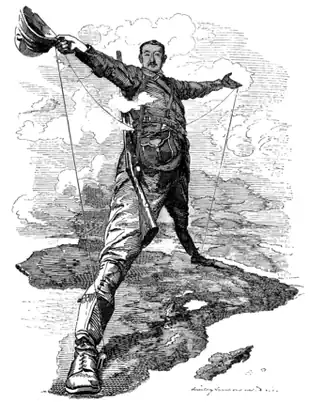
Caricature of Cecil John Rhodes, after he announced plans for a telegraph line from Cape Town to Cairo. Photo credit: Punch
The Cape to Cairo Railway is an uncompleted project to cross Africa from south to north by rail. The plan was initiated at the end of the 19th century, largely under the vision of Cecil Rhodes, in the attempt to connect adjacent African possessions of the British Empire through a continuous line from Cape Town, South Africa to Cairo, Egypt. While most sections of the Cape to Cairo railway are in operation, a major part is missing between Sudan and Uganda.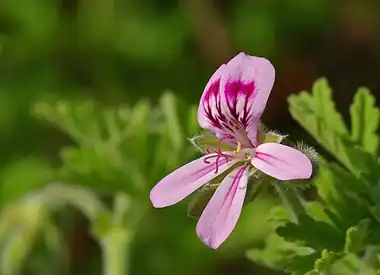 Photo credit: LaitcheThe Rose Geranium (Pelargonium graveolens) is a plant indigenous to various parts of southern Africa, and in particular South Africa. This specific species has great importance in the perfume industry. Its cultivars have a wide variety of smells, including rose, citrus, mint, coconut and nutmeg, as well as various fruits.
 Photograph credit: Amada44Eswatini, formerly known as Swaziland, is a landlocked country in Southern Africa. The government is an absolute monarchy, the last of its kind in Africa, and the country has been ruled by King Mswati III since 1986. One of the country's important cultural events is Umhlanga, the reed-dance festival, held in August or September each year. This photograph shows Princess Sikhanyiso Dlamini, the eldest daughter of Mswati III, at the 2006 festival.

Eritrean Railway Credit: User:Tivedshambo
The Eritrean Railway, the only railway system in Eritrea, was constructed between 1887 and 1932 by the Kingdom of Italy for the Italian colony of Eritrea, and connected the port of Massawa with Bishia near the Sudan border. The railway is narrow gauge and is slowly being rebuilt after the devastation wreaked upon it during the war of independence. It still manages to operate, however, despite its newest equipment being nearly fifty years old, with most of it predating World War II. It is one of the few railway systems still in existence (excluding tourist railways) using equipment like the 1930s Italian-built 'Littorina' railcars behind 1930s-vintage Mallet steam locomotives. Photo: William WarbyPortrait of a Maasai woman, with shaved head, stretched earlobes, and beaded adornments, typical of the Maasai culture. The Maasai are a Nilotic ethnic group of semi-nomadic people located in Kenya and northern Tanzania. They are among the best known of African ethnic groups, due to their distinctive customs and dress and residence near the many game parks of East Africa. Their primary language Maa (ɔl Maa) is a member of the Nilo-Saharan language family that is related to Dinka and Nuer.
 Photograph credit: Alexander SavinDallol is a cinder-cone volcano in the Danakil Depression, northeast of the Erta Ale Range in Ethiopia. The area lies up to 120 m (390 ft) below sea level, and has been repeatedly flooded in the past when waters from the Red Sea have inundated it. The Danakil Depression is one of the hottest places on Earth, and the evaporation of seawater after these flooding episodes produced thick deposits of salt, as seen in this landscape. The deposits at Dallol include significant quantities of the carbonate, sulfate and chloride salts of sodium, potassium, calcium and magnesium. Hot springs discharge brine to form the blueish ponds, and small, temporary geysers produce cones of salt.

Idi Amin Credit: Edmund S. Valtman
Idi Amin (c. 1925 – 16 August 2003) was President of Uganda from 1971 to 1979. While President, Amin committed acts of violence against the people of his country; an estimated 300,000, possibly 500,000 civilians may have been killed under his regime. In this caricature by Edmund S. Valtman, Amin is depicted as a bloated, powerful figure in military dress covered with medals and insignia, holding a scepter, and crowned by a small head with heavy features. Banknote design credit: Deutsch-Ostafrikanische Bank; photographed by Andrew ShivaThe rupie was the unit of currency of German East Africa between 1890 and 1916. During World War I, the colony was cut off from Germany as a result of a wartime blockade and the colonial government needed to create an emergency issue of banknotes. Paper made from linen or jute was initially used, but because of wartime shortages, the notes were later printed on commercial paper in a variety of colours, wrapping paper, and in one instance, wallpaper. This twenty-rupie banknote was issued in 1915, and is now part of the National Numismatic Collection at the Smithsonian Institution.
Other denominations:
'"`UNIQ--templatestyles-0000001C-QINU`"'
* 1 rupie
* 5 rupie
* 10 rupie
* 50 rupie
* 200 rupie Photo: NASAA composite satellite image of the geography of Africa, the Earth's second-largest continent, and its adjacent islands. Separated from Europe by the Mediterranean Sea and from much of Asia by the Red Sea, Africa is joined to Asia at its northeast extremity by the Isthmus of Suez. For geopolitical purposes, the Sinai Peninsula – east of the Suez Canal – is often considered part of Africa, although geographically it belongs in Asia. Africa can be divided into a number of geographic zones: The Atlas Mountains in the north, the Sahara, the coastal plains, and the inner plateaus.

Desert locust (Schistocerca gregaria) Photo credit: User:Alvesgaspar
Plagues of the desert locust ( the scientific name being Schistocerca gregaria) have threatened agricultural production in Africa, the Middle East and Asia for centuries. The livelihood of at least one-tenth of the world’s human population can be affected by this hungry insect. The desert locust is potentially the most dangerous of the locust pests because of the ability of swarms to fly rapidly across great distances. The 2004 desert locust outbreak has caused significant crop losses in West Africa and had a negative impact on food security in the region.
Sphinx, partially excavated Credit: Maison Bonfils
The Great Sphinx of Giza is a statue of a reclining lion with a human head that stands on the Giza Plateau on the west bank of the Nile, near modern-day Cairo, in Egypt. It is the largest monolith statue in the world, standing 73.5 m (241 ft) long, 6 m (20 ft) wide, and 20 m (65 ft) high. It is the oldest known monumental sculpture, and is commonly believed to have been built by ancient Egyptians in the third millennium BC. After the Giza Necropolis was abandoned, the Sphinx became buried up to its shoulders in sand. The first documented attempt at an excavation dates to c. 1400 BC. In 1817 AD, the first modern archaeological dig, supervised by the Italian Captain Giovanni Battista Caviglia, uncovered the Sphinx’s chest completely. The entire Sphinx was finally excavated in 1925. Photograph credit: Charles James SharpThe roan antelope (Hippotragus equinus) is a species of savanna antelope found in western, central and southern Africa. Named for its reddish-brown coat, it has a black face with white patches around the eyes and the mouth, and a short erect mane of greyish brown hair extending from the back of the neck to the rump. This roan antelope, of the subspecies H. e. koba, was photographed in Senegal; the subspecies's range extends from Senegal to Benin in western Africa.
 Photograph: Sathyan VelumaniThe Larabanga Mosque was built in the Sudanese architectural style in the village of Larabanga, Ghana. It is the oldest mosque in the country and one of the oldest in West Africa, and has been called the "Mecca of West Africa". It has undergone restoration several times since it was founded. The World Monuments Fund has contributed substantially to its restoration, and lists it as one of the 100 most endangered sites.
Did you know (auto-generated) -

- ... that African-American civil rights activist Jesse L. Douglas was called an "unidentified white man" during protests in 1965?
- ... that An African Song or Chant from Barbados was nominated for inscription on UNESCO's Memory of the World International Register by someone who saw it in an online exhibition?
- ... that the artist Atang Tshikare sculpted an animal with the body of a lion and the head of South Africa's national flower?
- ... that Africa deindustrialised in the 1980s?
- ... that Ngiam Tong Dow negotiated Singapore's first and largest purchase of gold from South Africa in 1968 by comparing two halves of a United States one-dollar bill?
- ... that Dahiru Musdapher, the 12th chief justice of Nigeria, was once a BBC World Service contributor for West Africa and Hausa?
Categories

Selected biography –

Kwame Nkrumah (born Francis Nwia Kofi Ngonloma, /(ə)nˈkruːmə/ (ə)n-KROO-mə; 21 September 1909 – 27 April 1972), was a Ghanaian politician, political theorist, and revolutionary. He served as Prime Minister of the Gold Coast from 1952 until 1957, when it gained independence from the United Kingdom. He was then the first prime minister and then the president of Ghana, from 1957 until 1966. An influential advocate of Pan-Africanism, Nkrumah was a founding member of the Organisation of African Unity (OAU) and winner of the Lenin Peace Prize from the Soviet Union in 1962.
After twelve early years abroad pursuing higher education, developing his political philosophy, and organising with other diasporic pan-Africanists, Nkrumah returned to the Gold Coast to begin his political career as an advocate of national independence. He formed the Convention People's Party, which achieved rapid success through its unprecedented appeal to the common voter. He became Prime Minister in 1952 and retained the position when he led Ghana to independence from the United Kingdom in 1957, a first in sub-Saharan Africa at the time. In 1960, Ghanaians approved a new constitution and elected Nkrumah as president. (Full article...)
Selected country –
 |
 |
|
 | ||
Egypt, officially the Arab Republic of Egypt, is a country in North Africa that includes the Sinai Peninsula, a land bridge to Asia. Covering an area of about 1,001,450 square kilometers (386,560 sq mi), Egypt borders Libya to the west, Sudan to the south, and the Gaza Strip and Israel to the east. The northern coast borders the Mediterranean Sea and the eastern coast borders the Red Sea.
Egypt is one of the most populous countries in Africa. The vast majority of its estimated 78 million people live near the banks of the Nile River in an area of about 40,000 km² (15,000 sq mi) where the only arable agricultural land is found. Large areas of land form part of the Sahara Desert and are sparsely inhabited.
Egypt is famous for its ancient civilization and some of the world's most famous monuments, including the Giza pyramids and the Great Sphinx; the southern city of Luxor contains a particularly large number of ancient artifacts such as the Karnak Temple and the Valley of the Kings. (Read more...)
Selected city –

Port Harcourt (audio)(Nigerian Pidgin: Po-ta-kot or Pi-ta-kwa, formerly (REBISI) is a port city, capital and largest city of Rivers State in Nigeria. It is the fourth most populous city in Nigeria after Lagos , Kano (city) and Ibadan It lies along the Bonny River and is located in the oil rich Niger Delta region. As of 2025, Port Harcourt's urban population is approximately 3,800,000. The population of the metropolitan area of Port Harcourt is almost twice its urban area population with a 2015 United Nations estimate of 2,344,000. In 1950, the population of Port Harcourt was 59,752. Port Harcourt has grown by 150,844 since 2015, which represents a 4.99% annual change.
The colonial administration of Nigeria created the port to export coal from the collieries of Enugu located 243 kilometres (151 mi) north of Port Harcourt, to which it was linked by a railway called the Eastern Line, also built by the British. (Full article...)
In the news
- 28 August 2026 – Sudanese civil war
- Blue Nile campaign
- Sudan's Rapid Support Forces (RSF) says that they have seized the Bakori and Surkum army bases in the southeastern Blue Nile region alongside Sudan People's Liberation Movement–North (SPLM–N). (Sudan Tribune)
- Kordofan campaign
- Emergency Lawyers, an independent group documenting atrocities in Sudan, reports that eight civilians have been killed in drone strikes in the Sowdari District of North Kordofan. (AP) (Asharq Al Awsat)
- 28 August 2026 – Seventh cholera pandemic
- Nigeria records 65,000 cases of cholera, across 35 states, alongside 10,000 cases of diphtheria. Additionally, NCDC director Jide Idris reports a decline in cholera cases but also warn that transmission of cases remain ongoing. (The Nation NG) (Daily Trust)
- 27 August 2026 – Sudanese Civil Wars
- Sudanese civil war
Updated: 22:05, 28 August 2026
General images -
 Potjiekos is a traditional Afrikaner stew made with meat and vegetables and cooked over coals in cast-iron pots. (from Culture of Africa)
 Order of independence of African nations, 1950–2011
 The Great Pyramids of Giza, Egypt (from Culture of Africa)
 Ruby, Egyptian singer performing (from Culture of Africa)

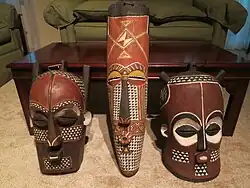
 A Yombe sculpture (Louvre, Paris) (from Culture of Africa)
 States of the western Congo Basin, c. 1350 (from History of Africa)
 Fufu (right) is a staple meal in West Africa and Central Africa. It is usually served with some peanut soup. (from Culture of Africa)
 Territory of the Mali Empire (from History of Africa)

 Display of African cultural apparel (smock) (from Culture of Africa)
 An Ethiopian woman preparing Ethiopian coffee at a traditional ceremony. She roasts, crushes, and brews the coffee on the spot. (from Culture of Africa)
 Egyptian singer Umm Kulthum, one of the most iconic singers in African history (from Culture of Africa)
 Tingatinga is one of the most widely represented forms of paintings in Tanzania, Kenya and neighbouring countries. (from Culture of Africa)
 A realistic terracotta head sculpture (1100–1500) of the Yoruba representing the oni or king of Ife (from Culture of Africa)
 Kenyan boys and girls performing a traditional folklore dance (from Culture of Africa)
 Areas controlled by European powers in 1939. British (red) and Belgian (marroon) colonies fought with the Allies. Italian (light green) with the Axis. French colonies (dark blue) fought alongside the Allies until the Fall of France in June 1940. Vichy was in control until the Free French prevailed in late 1942. Portuguese (dark green) and Spanish (yellow) colonies remained neutral. (from History of Africa)

 Sudan basket-tray, tabar of weaved natural plant fiber, in different colors (from Culture of Africa)
 Gateway to the Castle of Good Hope in South Africa (from Culture of Africa)
 Map of trade centres and routes on the Zimbabwean Plateau (from History of Africa)

 Ancient Kano City Walls, Nigeria (from Culture of Africa)


 Map of Ancient Egypt, showing its major cities and sites, c. 3150 BC to 30 BC (from History of Africa)
 One of the Rock-Hewn Churches of Lalibela, constructed during the Zagwe dynasty (from History of Africa)
 Traditional male dancers from Northern Nigeria (from Culture of Africa)
 Maasai wearing traditional clothes named Matavuvale while performing Adumu, a traditional dance (from Culture of Africa)
Africa topics
More did you know –
- ...that members of the Senegalese rap group Daara J were hired by campaigners in the Senegalese election of 2000 to edit their speeches?
- ...that Senegalese hip hop group Positive Black Soul's name abbreviation, PBS, is a play on that of the Parti Démocratique Sénégalais, PDS?
- ...that Mamadou Diabaté, a Malian kora player, was nominated for a Grammy Award in 2005, but lost to his cousin Toumani Diabaté?
- ...that, in November 2007, The Sowetan published an article which erroneously claimed that South African political activist Dan Mokonyane had died?
Related portals
Major Religions in Africa
North Africa
West Africa
Central Africa
East Africa
Southern Africa
Associated Wikimedia
The following Wikimedia Foundation sister projects provide more on this subject:
-
 Commons
Free media repository -
 Wikidata
Free knowledge base -
 Wikiquote
Collection of quotations -
 Wikisource
Free-content library -
 Wikispecies
Directory of species -
 Wikiversity
Free learning tools -
 Wikivoyage
Free travel guide -
 Wiktionary
Dictionary and thesaurus
More portals
-
 List of all portals
-

-

-

-

-

-

-

-

-

-
 Random portal
-
 WikiProject Portals