2030 Hungarian parliamentary election
 | |||||||||||||||||||||||||
April or May 2030
| |||||||||||||||||||||||||
All 199 seats in the National Assembly 100 seats needed for a majority | |||||||||||||||||||||||||
|---|---|---|---|---|---|---|---|---|---|---|---|---|---|---|---|---|---|---|---|---|---|---|---|---|---|
| Opinion polls | |||||||||||||||||||||||||
| |||||||||||||||||||||||||
| |||||||||||||||||||||||||


The next Hungarian parliamentary election is scheduled to be held in April or May 2030. All 199 members of the National Assembly will be elected.
Background

The 2026 Hungarian election resulted in a landslide victory for the Tisza Party, led by Péter Magyar, with it winning 141 of the 199 seats in the legislature, enough to amend the Constitution of Hungary.[2] Magyar was subsequently tasked with forming a government to be appointed on 9 May.[3] The Fidesz–KDNP alliance was reduced to 52 seats, while Our Homeland Movement remained at 6 seats. All the other opposition parties failed to win any seats; having either stood down in favor of Tisza, or gotten well below the 5% electoral threshold required to win seats.[4]
On 25 April 2026, Viktor Orbán and Zsolt Semjén announced they would not take up their seats in parliament, and instead have Gergely Gulyás and Bence Rétvári serve as group leader of Fidesz and Christian Democratic People's Party.[5][6]
On 9 May 2026, the inaugural session of the National Assembly was held, and Magyar took office as Prime Minister of Hungary.[7] The Magyar Government was officially sworn three days later and start to work on the next day.[8]
In June, the Parliament adopted the sixteenth amendment to the constitution, which limits the prime minister's time in office to two four-year terms, in line with Magyar's election campaign promises. This clause bars Orbán from becoming prime minister again, as he has served for twenty years.[1]
Electoral system
The 199 members of the National Assembly are elected by mixed-member majoritarian representation; 106 elected in single-member constituencies by first-past-the-post voting, while the other 93 elected from nationwide party lists by modified proportional representation. The electoral threshold is set at 5% for single party lists, 10% for joint lists of two parties and 15% for joint lists of three or more parties. Since 2014, each of the Armenian, Bulgarian, Croatian, German, Greek, Polish, Romani, Romanian, Rusyn, Serbian, Slovak, Slovenian, and Ukrainian ethnic minorities can win one of the 93 party lists seats if they register as a specific list and reach a lowered quota of of the sum of party list votes and unused constituency votes of parties passing the electoral threshold, together with the votes cast for national minority lists.[9] Each minority is able to send a minority spokesman – without the rights of an MP – to the National Assembly, if the list does not reach this lowered quota.[10][11][12] Fractional votes, calculated as all the votes of individual candidates not elected (but associated with a party list over the threshold), as well as surplus votes cast for successful candidates (margin of victory minus 1 vote), are added to the direct lists votes of the respective parties or alliances. Seats are then allocated using the D'Hondt method.[13]
Parties in Parliament
| Party/Coalition Full name |
Ideology | Leader(s) | 2026 result | Current seats | ||||
|---|---|---|---|---|---|---|---|---|
| % Vote | Seats | |||||||
| TISZA Respect and Freedom Party |
Conservatism[14] Populism[15] Pro-Europeanism[16] |
Péter Magyar | 53.2 | 141 / 199 |
141 / 199 | |||
| Fidesz–KDNP | Fidesz Fidesz – Hungarian Civic Alliance |
Christian nationalism[17] Illiberalism[18] Authoritarianism[19] |
Viktor Orbán | 38.6 | 52 / 199 |
44 / 199 | ||
| KDNP Christian Democratic People's Party |
Christian right | Zsolt Semjén | 8 / 199 | |||||
| MH Our Homeland Movement |
Ultranationalism Neo-fascism[20] Hard Euroscepticism |
László Toroczkai | 5.6 | 6 / 199 |
6 / 199 | |||
Opinion polls

Notes
- ↑ Orbán is prohibited from returning to the prime ministry due to his prior tenure exceeding the two-term limit established by the sixteenth amendment to the Fundamental Law of Hungary in 2026. However, he remains the leader of Fidesz.[1]
- ↑ As Fidesz leader.
References
- 1 2 Kirby, Paul (2026-06-16). "Hungary's MPs block return of Orbán, limiting PM's rule to eight years". BBC News. Retrieved 2026-06-22.
- ↑ "Orbán era swept away by Péter Magyar's Hungary election landslide". www.bbc.com. 2026-04-13. Retrieved 2026-04-26.
- ↑ "Magyar names first ministers in new Hungarian government". POLITICO. 2026-04-20. Retrieved 2026-04-26.
- ↑ Chastand, Jean-Baptiste (24 April 2026). "The political left is disappearing across Central Europe, despite Orban's defeat in Hungary".
- ↑ Patakfalvi, Dóra (25 April 2026). "Orbán Viktor nem ül be a Parlamentbe". Telex.hu. Retrieved 25 April 2026.
- ↑ Patakfalvi, Dóra (25 April 2026). "Semjén Zsolt és két további tapasztalt KDNP-s politikus nem lesz parlamenti képviselő". Telex.hu. Retrieved 25 April 2026.
- ↑ Kassam, Ashifa; Garamvolgyi, Flora (2026-05-09). "Péter Magyar sworn in as Hungary's prime minister to end 16-year Orbán era". The Guardian. ISSN 0261-3077. Retrieved 2026-05-09.
- ↑ "Letették az esküt a parlamentben a Tisza-kormány miniszterei". 24.hu. 12 May 2026. Retrieved 12 May 2026.
- ↑ "Act CCIII of 2011 on the election of the Members of the National Assembly" (PDF). National Election Office. 31 December 2024. Section 16.
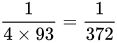
Section 16 Mandates that can be won from national list shall be allocated as follows: a) the number of list votes for a political party entitled to win mandate under section 14 (1) and (2) and the wasted votes for that political party under section 15 shall be added together (hereinafter 'number of votes for party list'), b) the numbers of votes for party lists shall be added together (hereinafter 'total number of party list votes'), c) the total number of party list votes and the votes cast for national minority lists shall be added together (hereinafter 'total number of national list votes'), d) the total number of national list votes shall be divided by ninety-three, and the result shall be divided by four; the integer of the resulting quotient shall constitute the preferential quota.
- ↑ "Nemzeti Választási Iroda". National Election Office (in Hungarian). 2022. Retrieved 13 April 2026.
- ↑ Cesarini, Ilaria (12 March 2026). "Scenarios for the 2026 Hungarian Parliamentary Elections". Institute for Danube Region and Central Europe. Retrieved 13 April 2026.
- ↑ "Understanding the Hungarian electoral system". Political Capital (in Hungarian). 13 March 2026. Retrieved 13 April 2026.
- ↑ "Electing Members of the National Assembly – House of the National Assembly – Országgyűlés". House of the National Assembly. 2025. Retrieved 28 February 2025.
- ↑
- Watson, Nicholas; Ciobanu, Claudia; Intonai, Edit; Eisenchteter, Jules; Dlhopolec, Peter; Todorov, Svetoslav; Necsutu, Madalin; Tesija, Vuk; Stamatoukou, Eleni (5 June 2024). "EU Elections: Greater Interference; Higher Turnout; More Conservative". Balkan Insight. Retrieved 26 June 2025.Manabu Sengoku (19 September 2024). "European Parliament Elections 2024: Eastern European Countries". The Japan Institute of International Affairs.
- "Where in Europe is the hard-right on the rise?". The Local. 24 February 2025. Retrieved 7 July 2025.
- ↑
- Ádám Zoltán (9 April 2026). "Beating (Authoritarian) Populism with (Democratic) Populism". Verfassungsblog.
- Mátyás, Papp Gergely (9 March 2025). "Milyen szavazókat veszít a gazdasági helyzet miatt a Fidesz, és kiket nyer meg a Tisza? - G7 - Gazdasági sztorik érthetően" [Which voters will Fidesz lose due to the economic situation, and which ones will Tisza win? - G7 - Economic stories in plain language] (in Hungarian). Retrieved 24 June 2025.
- Rácz, András (2024). "A Political Landslide in Hungary Challenges Orbán's Regime and the EU" (PDF). DGAP. Berlin: Forschungsinstitut der Deutschen Gesellschaft für Auswärtige Politi – via SSOAR.
- ↑
- Erling, Barbara; Szakacs, Gergely (10 June 2024). "EU's eastern members see strong performances by centrist parties". swissinfo.ch. SWI.
- Koenen, Krisztina (31 March 2025). "Peter Magyar's rise is reshaping Hungary's political landscape". Geopolitical Intelligence Services AG.
- Gizińska, Ilona (6 May 2025). "The year of Péter Magyar: great expectations, great challenges". Centre for Eastern Studies.
- Baranyai, Artúr; Gyulai, Attila; Papp, Zsófia (14 July 2025). "Hungary: Political Developments and Data in 2024: From Scandal to Shake-Up: The Rise of a New Opposition and the Re-Opening of the Political Competition". European Journal of Political Research (Political Data Yearbook). doi:10.1111/2047-8852.70011.
- ↑
- John Chin; Mirren Hibbert (3 March 2025). "Hungary and the future of Europe". The Loop.
- Rafi Schwartz (8 April 2026). "Why Hungary's elections matter to the global right". The Week.
- Ethan Magistro (24 June 2021). "Christian Nationalists See Illiberal Hungary As A Model For America". Americans United for Separation of Church and State.
- Zachary Basu (6 April 2026). "MAGA's global model faces existential test in Hungary". Axios.
- Carl Rowlands (5 February 2013). "Hungary's rabid right is taking the country to a political abyss". The Guardian.
- Alexander Faludy (16 December 2024). "Abuse in the Catholic Church: Is This Hungary's 'Boston' Moment?". Balkan Insight.
- ↑
- Péter KrekóZsolt Enyedi (July 2018). "Explaining Eastern Europe: Orbán's Laboratory of Illiberalism". Journal of Democracy.
- Steven Blockmans (28 May 2019). "The Battle for Europe's Soul". Council on Foreign Relations.
- Viktor Z. Kazai (1 March 2022). "Constitutional Complaint as Orbán's Tool". Verfassungsblog.
- Johan Norberg (6 April 2026). "Hungary Is a Laboratory for Illiberal Nationalism. The Results Are In". Cato Institute.
- Jon Henley (3 April 2026). "Hungary elections: what is at stake and who is likely to win?". The Guardian.
- Ethan Magistro (24 June 2021). "Christian Nationalists See Illiberal Hungary As A Model For America". Americans United for Separation of Church and State.
- ↑ Rogers, Samuel (2024). The Political Economy of Hungarian Authoritarian Populism: Capitalists without the Right Kind of Capital. Taylor & Francis. p. 7. ISBN 978-1-040-05104-7.
| Parliamentary elections |
|
|---|---|
| European elections | |
| Local elections | |
| Referendums | |
See also: List of Hungarian by-elections | |