Watari (manga)
| Watari | |
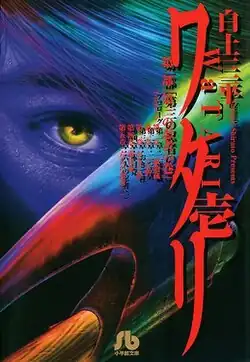 First tankōbon volume cover, published by Shogakukan | |
| ワタリ | |
|---|---|
| Genre | Action, Drama[1] |
| Manga | |
| Written by | Sanpei Shirato |
| Published by |
|
| Imprint | Shōnen Magazine Comics |
| Magazine | Weekly Shōnen Magazine |
| Original run | April 25, 1965 – September 10, 1967 |
| Volumes | 7 |
| Live-action film | |
| Watari Ninja Boy | |
| Directed by | Sadao Funatoko |
| Produced by | Hirooki Ogawa |
| Written by |
|
| Music by | Hirooki Ogawa |
| Studio | Toei Company |
| Released | July 26, 1966 |
| Runtime | 86 minutes |
| Budget | ¥66.54 million |
Watari (Japanese: ワタリ) is a Japanese manga series written and illustrated by Sanpei Shirato. It was serialized in Kodansha's shōnen manga magazine Weekly Shōnen Magazine from April 1965 to September 1967, with its chapters collected in seven tankōbon volumes as of October 1972.
Shirato's manga has been adapted into a live-action film titled Watari Ninja Boy, was released by the Toei Company in Japanese theaters in July 1966, and was a huge box office success. It was the second most expensive film in the second half of 1965 and the first half of 1966, with ¥66.54 million budget. The film inspired numerous filmmakers to create ninjutsu period dramas with special effects technology.
Plot
During the Tenshō era of Japan, the story takes place in the ninja village of Iga, where two rival factions, the Momochi and Fujibayashi clans, are engaged in a struggle for power. The village’s lower-ranking ninja are controlled by their superiors through a mysterious and deadly set of rules that determine their lives.
A young wandering ninja named Watari arrives in Iga together with an elderly man known as Jii (Shikanme). Watari, who belongs to an independent ninja lineage that refuses to be controlled by established authorities, becomes involved in the conflicts surrounding the village. As he investigates the strange laws imposed on the Iga ninja, he discovers that the apparent rivalry between the clans hides a deeper conspiracy.
Watari works to uncover the identity of those controlling Iga from the shadows and to reveal the truth behind the village’s secret order. Alongside allies among the oppressed ninja, he confronts powerful enemies and exposes the mechanisms of manipulation that keep the ninja society under control.
The manga follows Watari’s battles and investigations as he challenges the traditions and power structures of Iga, combining historical adventure, ninja action, and mystery elements.
Publication

Written and illustrated by Sanpei Shirato, Watari was serialized in Kodansha's shōnen manga magazine Weekly Shōnen Magazine in three periods with a total of 111 installments.[2] The first period was published from April 25, 1965, issue,[3][4] to February 27, 1966, issue.[5][6] The second period was published from April 10, 1966, issue,[7][8] to December 11, 1966, issue.[9][10] The third period was published in the magazine's February 12, 1967, issue,[11][12] and finished in the September 10, 1967, issue of Weekly Shōnen Magazine.[13][14]
Several publishers published the series in long term, first Kodansha published seven volumes in magazine format released from July 18, 1966, to December 23, 1967,[15] and published them in tankōbon volumes from August 10, 1972, to October 10, 1972; from November 20, 1969, to March 10, 1970, and republished it again in two other time periods, first from July 20, 1977, to November 30, 1977, and then from April 6, 1988, to August 6, 1988, in five volumes. From November 20, 1969, to March 10, 1970, Akita Shoten published Watari twice; first in Sanpei Shirato Selection volume 14 to 16, only two out of three parts that were serialized in Weekly Shōnen Magazine; and the second time in New Edition of Sanpei Shirato's Anthology in three volumes published on January 10, 2010. Shogakukan published the series four times in a new edition, first, the seven volumes from October 20, 1983, to October 20, 1984, the second time, in four bunkoban volumes from June 20, 1995, to September 20, 1995, and the third time from August 10, 1998, to September 10, 1998.[16][17][18]
Adaptation
A live-action film adaptation, titled Watari Ninja Boy[a], was produced by Toei Company and released in Japanese theaters on July 21, 1966.[19] Directed by Sadao Funatoko and based on Sanpei Shirato's manga, the film combined live-action period drama with animation and special effects. It adapted the manga's first story arc, Dai-san no Ninja (第三の忍者), and starred Yoshinobu Kaneko as Watari.[20] Toei described the production as an attempt to open a new area in filmmaking by combining its Kyoto studio's period-film production with the technical resources of Toei Animation and special-effects work.[19]
Following the film's release, Toei planned to develop the property into a television series. The television project was abandoned after Shirato objected to the film's treatment of his work and declined to authorize the proposed continuation.[21] Toei subsequently replaced the project with a new ninja television series based on the work of Mitsuteru Yokoyama. This resulted in Kamen no Ninja Akakage, which premiered on Fuji Television on April 5, 1967, and ran until March 27, 1968.[22] Although it was not an adaptation of Watari, the production was directly connected to the abandoned television project, and Yoshinobu Kaneko, who had played Watari in the film, subsequently appeared as Aokage in Kamen no Ninja Akakage.[23]
A home-video edition of Watari Ninja Boy was released by Toei Video on DVD on November 21, 2004. The release carried the catalog number DSTD-02364 and presented the 1966 theatrical film in a 16:9 letterboxed format.[24][25]
Production
The film was directed by Sadao Funatoko, who shot the film version of The Samurai at Toei Kyoto in 1964, it was written by Shunichi Nishimura and Masaru Igami, who were responsible for the setting and script of The Samurai.[26] Kaneko Yoshinobu, who plays the role Watari, was a big fan of the original manga, and was in Kyoto at the time of filming The Secret of the Urn, when he heard that Watari was being adapted into a film by Toei Company, he wanted to be in film.[27] Kaneko had only intended to play a supporting role, but was chosen as the lead.[27][28] Filming lasted three months, so Kaneko lived in Toei's women's dormitory during the filming period with her mother.[27] The film was produced with ¥66.54 million, it was the second most expensive film in the second half of 1965 and the first half of 1966 after Miyamoto Musashi: Ganryû-jima no kettô with ¥79.66 million.[29]
Influence
Watary inspired numerous filmmakers to create ninjutsu period dramas with special effects. At a time when period dramas were already on the decline, and with following the film's success, Watari caused many films to be made in this genre and director of the Cinematography Shigekyo Okada decided to reviving period dramas with Special effect technology and led to the production of Ogôn no tozokô, Kairyu daikessen, and Black Ninja.[30][31][29]
Reception
Watari became a major popular success soon after beginning serialization in Kodansha's Weekly Shōnen Magazine. A contents page in the magazine's May 1965 issue promoted the series as one of the magazine's three major manga hits and described it as a ninja manga that had become an immediate popular success.[32] Contemporary descriptions of the series emphasized its unusual combination of a young ninja protagonist, mystery, and conflict within the feudal ninja hierarchy, distinguishing it from more conventional children's ninja adventures.[33]
The manga's popularity quickly extended beyond print. Toei Company adapted Watari into the live-action film Watari Ninja Boy, released in July 1966. Contemporary coverage in Shūkan Shinchō characterized the film as a major hit, while a later history of manga-based films likewise records its strong box-office performance.[34][31] The film's reception also contributed to the expansion of Japanese children's tokusatsu and ninja entertainment. Toei later described Watari as a highly popular manga in Weekly Shōnen Magazine and the film as an attempt to combine period drama, special effects, and animation techniques into a new form of entertainment.[35]
Retrospective discussions have emphasized the social dimension beneath the series' ninja-adventure format. Commentary on Shirato's work has interpreted Watari as a story concerned with systems of authority, discrimination, and class conflict rather than simply a succession of ninja battles.[36] A more recent reader analysis similarly highlighted the series' treatment of education as a mechanism of ideological control and its transition from the traditional terakoya system toward modern schooling, interpreting these elements as part of a broader social critique.[37]
Retrospective assessments have also drawn attention to the unusual structure of the manga's later material. The third part has been discussed for its increasingly surreal treatment of the ninja concept, including the "Zero" ninja and its emphasis on substitution, duplication, and the production of interchangeable bodies. The same assessment noted that the later section contains weaknesses, including repeated disguise devices, while nevertheless considering its treatment of these ideas one of the series' most striking features.[38]
Notes
References
- ↑ ワタリ. Mangapedia (in Japanese). Voyage Group. Retrieved June 24, 2024.
- ↑ ワタリ. asa8.com (in Japanese). Retrieved June 26, 2024.
ワタリ (全111回)
- ↑ 週刊少年マガジン 1965年 表示号数18. Media Arts Database (in Japanese). Agency for Cultural Affairs. Retrieved June 25, 2024.
{{cite web}}: CS1 maint: deprecated archival service (link) - ↑ もくじ [Contents]. Weekly Shōnen Magazine (in Japanese). No. 18. Kodansha. 1965. Table of contents. Archived from the original on June 27, 2024. Retrieved June 26, 2024.
- ↑ 週刊少年マガジン 1966年 表示号数8. Media Arts Database (in Japanese). Agency for Cultural Affairs. Retrieved June 25, 2024.
{{cite web}}: CS1 maint: deprecated archival service (link) - ↑ もくじ [Contents]. Weekly Shōnen Magazine (in Japanese). No. 8. Kodansha. 1966. Table of contents. Archived from the original on June 27, 2024. Retrieved June 26, 2024.
- ↑ 週刊少年マガジン 1966年 表示号数14. Media Arts Database (in Japanese). Agency for Cultural Affairs. Retrieved June 25, 2024.
{{cite web}}: CS1 maint: deprecated archival service (link) - ↑ もくじ [Contents]. Weekly Shōnen Magazine (in Japanese). No. 14. Kodansha. 1966. Table of contents. Archived from the original on June 27, 2024. Retrieved June 26, 2024.
- ↑ 週刊少年マガジン 1966年 表示号数49. Media Arts Database (in Japanese). Agency for Cultural Affairs. Retrieved June 25, 2024.
{{cite web}}: CS1 maint: deprecated archival service (link) - ↑ もくじ [Contents]. Weekly Shōnen Magazine (in Japanese). No. 49. Kodansha. 1966. Table of contents. Archived from the original on June 27, 2024. Retrieved June 26, 2024.
- ↑ 週刊少年マガジン 1967年 表示号数7. Media Arts Database (in Japanese). Agency for Cultural Affairs. Retrieved June 25, 2024.
{{cite web}}: CS1 maint: deprecated archival service (link) - ↑ もくじ [Contents]. Weekly Shōnen Magazine (in Japanese). No. 7. Kodansha. 1967. Table of contents. Archived from the original on June 27, 2024. Retrieved June 26, 2024.
- ↑ 週刊少年マガジン 1967年 表示号数37. Media Arts Database (in Japanese). Agency for Cultural Affairs. Retrieved June 25, 2024.
{{cite web}}: CS1 maint: deprecated archival service (link) - ↑ もくじ [Contents]. Weekly Shōnen Magazine (in Japanese). No. 37. Kodansha. 1967. Table of contents. Archived from the original on June 27, 2024. Retrieved June 26, 2024.
- ↑ ワタリ. asa8.com (in Japanese). Archived from the original on December 7, 2023. Retrieved June 26, 2024.
- ↑ ワタリ. Sanpei Shirato's official blog (in Japanese). March 6, 2008. Archived from the original on June 27, 2024. Retrieved June 26, 2024.
- ↑ 秋田書店 新装版 白土三平選集. asa8.com (in Japanese). Archived from the original on December 7, 2023. Retrieved June 26, 2024.
- ↑ 「白土三平選集」全16巻予約でイラスト手ぬぐいが. Comic Natalie (in Japanese). Natasha, Inc. April 1, 2009. Archived from the original on June 28, 2024. Retrieved June 24, 2024.
- 1 2 "大忍術映画 ワタリ". Toei Video (in Japanese). Retrieved August 20, 2026.
- ↑ "大忍術映画 ワタリ". allcinema (in Japanese). Retrieved August 20, 2026.
- ↑ "79. 第4章「行け行け東映・積極経営推進」". 東映70周年特別寄稿『東映行進曲』 (in Japanese). March 7, 2023. Retrieved August 20, 2026.
- ↑ "79. 第4章「行け行け東映・積極経営推進」". 東映70周年特別寄稿『東映行進曲』 (in Japanese). March 7, 2023. Retrieved August 20, 2026.
- ↑ "仮面の忍者 赤影". Toei Video (in Japanese). Retrieved August 20, 2026.
- ↑ "大忍術映画 ワタリ". Toei Video (in Japanese). Retrieved August 20, 2026.
- ↑ "大忍術映画 ワタリ【劇場版】". Oricon. Retrieved August 20, 2026.
- ↑ "スタジオ速報 『東映、日活も特撮映画製作に乗り出す』 東映=『ワタリ』 日活=『ガッパ』『レイゴン』". 近代映画 (in Japanese) (1966 (Shōwa era 41) June issue). Kindaieigasha Co., Ltd: 213.
- 1 2 3 Harumi Ishibashi 2013, p. 109, Searching for Heroes: An interview with Yoshinobu Kaneko
- ↑ "Cast Interview Yoshinobu Kaneko". king kong vs godzilla completion. Hobby Japan. September 24, 2021. p. 86. ISBN 978-4-7986-2566-9.
- 1 2 "Toei, the production and distribution industry". Movie Yearbook 1967 Edition (in Japanese) (January 1, 1967, issue). Jiji Press: 211.
- ↑ "〈娯楽〉 東映時代劇はこれで行く 新たに三路線を敷き"魅力ある作品"で巻き返し". Yomiuri Shimbun evening edition newspaper. The Yomiuri Shimbun Holdings. October 27, 1966. p. 12.
- 1 2 Eiga Himitsu Editorial Department, ed. (2017). 漫画+映画! 漫画原作映画の現在地. 映画秘宝セレクション (in Japanese). Yosensha Co., Ltd. p. 58. ISBN 978-4800312792.
- ↑ もくじ [Contents]. Weekly Shōnen Magazine (in Japanese). No. 21. Kodansha. 1965. Table of contents. Archived from the original on June 27, 2024. Retrieved August 20, 2026.
[undefined] Error: {{Lang}}: no text (help)
- ↑ "白土三平絵文学 - ワタリ". 白土三平絵文学 (in Japanese). Retrieved August 20, 2026.
- ↑ "タウンヒットした"グロと殺リク"の漫画". Shūkan Shinchō (August 6, 1966, issue). Shinchosha: 13.
- ↑ "大忍術映画 ワタリ". Toei Video (in Japanese). Retrieved August 20, 2026.
- ↑ 戸田, 昌宏 (August 13, 2015). "ワタリ". レトロメディア・囃ハルト商店 (in Japanese). Retrieved August 20, 2026.
- ↑ "僕は第三部、好きだけどね". マンバ (in Japanese). March 18, 2024. Retrieved August 20, 2026.
- ↑ "僕は第三部、好きだけどね". マンバ (in Japanese). March 18, 2024. Retrieved August 20, 2026.