St Mungo Museum of Religious Life and Art
 St Mungo Museum of Religious Life and Art | |
| Location | 2 Castle Street, Glasgow, Scotland, United Kingdom |
|---|---|
| Coordinates | 55°51′45″N 4°14′11″W / 55.862373°N 4.236453°W |
| Visitors | 231,773 (2025)[1] |
| Website | www.glasgowlife.org.uk/museums/venues/st-mungo-museum-of-religious-life-and-art |
The St Mungo Museum of Religious Life and Art is a museum of religion in Glasgow, Scotland. It is the only museum dedicated to religion and art in the British Isles.[2]
"Buddhism, Christianity, Islam, Hinduism, Sikhism and Judaism" are featured in the museum's curation. The museum's contents have been the subject of controversy and vandalism.
History
Construction and development
The building that houses the St Mungo Museum of Religious Life and Art was originally commissioned by the Society of Friends of Glasgow Cathedral on land where the Bishop's Castle originally stood.[3] It was constructed in 1989 in a "Neo-Scottish baronial" architectural style, and stained glass used in its windows were sourced from the redundant churches in the city.[4][3] The building was designed by architect Ian Begg, and it is named after Saint Mungo, the patron saint of the city and the missionary who introduced Scotland to Christianity.[5]
The Society of Friends originally envisioned that the building would be used as a visitor centre for the nearby Glasgow Cathedral, and £1 million was raised for this.[6] In 1991, the Society realised they lacked the funds to progress with the project.[3]
The project was passed to the Glasgow Museums and Art Galleries Department, who were inspired by the building's proximity to Glasgow Cathedral and the Necropolis to create a religion focused on religion with the purpose of promoting religious tolerance.[3] It was also hoped that the museum would confront the city's problems of racism and religious sectarianism.[7] Local religious communities were consulted on the curation of the museum (for example, members of the Jewish community helped to choose a painting by Dora Holzhandler to be shown), and oral histories about faith were collected to be included in the displays. Ninian Smart also consulted on the curation.[3]
The museum was opened on 4 April 1993.[8] On 23 June, it was ceremonially opened by Princess Anne.[9] At its opening, it was thought that Salvador Dali's Christ of Saint John of the Cross (moved from Kelvingrove Art Gallery and Museum) would attract up to 500,000 visitors a year.[6] In its first six months, the museum had 150,000 visitors.[8]
COVID-19 and threat of closure
In March 2020, St Mungo Museum of Religious Life and Art closed due to the COVID-19 pandemic.[10] During this period, the museum also struggled financially as it faced funding cuts. Threatened with permanent closure, the charity Interfaith Glasgow formed a campaign to save the museum.[11]
On 4 March 2022, Glasgow City Council pledged new funding to the museum.[10] It reopened to the public in September 2022.[12]
Collections
The museum holds three main galleries: The Gallery of Religious Art, the Gallery of Religious Life and the Scottish Gallery. A fourth gallery space is used for temporary exhibits.[7] The items in the museum's collections span across five continents and more than 3000 years of history.[8] The collections are concentrated on Scotland's most prominent religions: "Buddhism, Christianity, Islam, Hinduism, Sikhism and Judaism".[13]
While repairs took place at the Kelvingrove Art Gallery and Museum between 1993 and 2006, the St Mungo Museum of Religious Life & Art housed the painting Christ of Saint John of the Cross by Salvador Dali.[14] Interviews conducted by Richard Sandell found that this painting motivated many visitors to come to the museum.[7] Christ of Saint John of the Cross was shown in the Gallery of Religious Art, sharing the space with items such as a Duein Fubara from Nigeria and an Aboriginal Australian dreamtime painting. This was an intentional juxtaposition, though the architectural design of the gallery ensured that all objects were shown with equal respect in spite of their varying sizes.[8]
The work of Scottish artist Peter Howson has been shown frequently at the St Mungo Museum of Religious Life & Art. After Christ of Saint John of the Cross was relocated, his painting The Crucifixion (described as one of the most striking paintings of Jesus Christ completed by a Scottish artist) filled its place.[15][16] In 2009, the museum hosted several pieces of his work in an exhibition about famine.[17] In 2019, his painting The Massacre of Srebrenica was unveiled at the museum, and Homeless Jesus was also put on show.[18] Harry Dunlop, a Glasgow Museums curator, said, "Peter's work is difficult to look at, but that is the point of having it at St Mungos. We must continue to learn from past atrocities and ensure younger generations know how to recognise the signs of intolerance and the violence it generates wherever in the world it occurs and take action against it."[19]
The museum hosts Britain's first Zen garden.[20] It was designed by a Zen garden expert, and it won an award from the Japanese Foundation.[21][3]
Collections controversies and vandalism
Not long after the museum opened, a Christian fundamentalist attacked and a 19th century statue of Shiva Nataraja.[22][7] One of the statue's arms was broken in the attack.[23] Curator Mark O'Neill described the incident: "When asked by the member of staff who detained him why he did this he said he did it for Christ. This confirmed our conviction that a museum like St Mungo's was necessary."[7]
The display of a photograph taken by Catherine Leroy of a clitoridectomy brought feminist protestors to picket outside of the museum.[3] The protesters represented the magazine Harpies and Quines, and they demanded the photograph's removal.[24] The photograph was not removed because of the connection between clitoridectomies and religious practices, although its corresponding label was revised.[24][7]
The display of a photograph of a priest helping to carry the Bloody Sunday wounded also caused controversy.[3] Critics argued that an image of "Catholic violence" should be shown to provide balance; it was argued in response that the displayed photograph was chosen because it was the most iconic image from The Troubles.[25]
Attendance
| Year | Annual visitors | ||||||||
|---|---|---|---|---|---|---|---|---|---|
| 2008 | |||||||||
| 2009 | |||||||||
| 2010 | |||||||||
| 2011 | |||||||||
| 2012 | |||||||||
| 2013 | |||||||||
| 2014 | |||||||||
| 2015 | |||||||||
| 2016 | |||||||||
| 2017 | |||||||||
| 2018 | |||||||||
| 2019 | |||||||||
| 2020 | |||||||||
| 2021 | |||||||||
| 2022 | |||||||||
| 2023 | |||||||||
| 2024 | |||||||||
| 2025 | |||||||||
|
Figures sourced from the Association of Leading Visitor Attractions [26] | |||||||||
Gallery
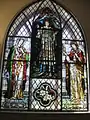 Stained glass
 Sculpture of Shiva
 The museum from Cathedral Square
 The rear of the museum
 The museum and Provand's Lordship
 The Zen garden
References
- ↑ "ALVA - Association of Leading Visitor Attractions". www.alva.org.uk. Retrieved 4 June 2026.
- ↑ Arya, Rina (7 June 2022). "Museums must be a home for all faiths". Museums Association. Retrieved 6 June 2026.
- 1 2 3 4 5 6 7 8 Lovelace, Antonia; Carnegie, Elizabeth; Dunlop, Harry (1995). "St Mungo's Museum of Religious Life and Art a New Development in Glasgow". Journal of Museum Ethnography (7): 63–78. ISSN 0954-7169.
- ↑ St Mungo Museum of Religious Life and Art Archived 29 January 2009 at the Wayback Machine
- ↑ Jack, Malcolm (21 October 2014). "St Mungo Museum of Religious Life and Art". Time Out Glasgow. Retrieved 5 June 2026.
- 1 2 Gledhill, Ruth (31 March 1993). "From Mungo to the Muslims". The Times. p. 29. ISSN 0140-0460. Retrieved 5 June 2026.
- 1 2 3 4 5 6 Sandell, Richard (2007). MUSEUMS, PREJUDICE AND THE REFRAMING OF DIFFERENCE. Oxon: Routledge. pp. 45–70. ISBN 978-0-203-02003-6.
- 1 2 3 4 O'Neill, Mark. "Exploring the meaning of life: the St Mungo Museum of Religious Life and Art". unesdoc.unesco.org. Retrieved 6 June 2026.
- ↑ "Court Circular". The Times. 23 June 1993. p. 20. ISSN 0140-0460. Retrieved 5 June 2026.
- 1 2 Arya, Rina (25 March 2022). "Glasgow's museum of religion has been saved from closure – here's why it's important for multicultural Britain". The Conversation. Retrieved 7 June 2026.
- ↑ "St Mungo Museum of Religious Life and Art under threat of closure". Museums Association. 2 July 2021. Retrieved 7 June 2026.
- ↑ "Glasgow's St Mungo Museum of Religious Life and Art reopens to the public". The Sunday Post. 14 September 2022. Retrieved 7 June 2026.
- ↑ Clover, Darlene E.; Sanford, Kathy; Bell, Lorraine; Johnson, Kay, eds. (2016). Adult Education, Museums and Art Galleries: Animating Social, Cultural and Institutional Change. International Issues in Adult Education. Leiden Boston: Brill | Sense. ISBN 978-94-6300-687-3.
- ↑ "The story of Glasgow's most famous painting as it bids farewell to city". Glasgow Times. 6 August 2023. Retrieved 6 June 2026.
- ↑ "The Crucifixion - Peter Howson | gblrps". Blipfoto. Retrieved 5 June 2026.
- ↑ Staff, Scotland. "Cross less Crucifixion goes on display". www.thetimes.com. Retrieved 5 June 2026.
- ↑ "Paintings to fund church repairs". 28 May 2009. Retrieved 5 June 2026.
- ↑ "Peter Howson returns to 'hell' of Bosnian war with new painting". BBC News. 9 December 2019. Retrieved 5 June 2026.
- ↑ Smith, Kenny (9 December 2019). "New work by Peter Howson unveiled in Glasgow Scottish Field". Scottish Field. Retrieved 5 June 2026.
- ↑ Jack, Malcolm (21 October 2014). "St Mungo Museum of Religious Life and Art". Time Out Glasgow. Retrieved 5 June 2026.
- ↑ Hills, A. (1993). "Glasgow tackles global beliefs". History Today. Retrieved 5 June 2026.
- ↑ Clover, Darlene E.; Sanford, Kathy; Bell, Lorraine; Johnson, Kay, eds. (2016). Adult Education, Museums and Art Galleries: Animating Social, Cultural and Institutional Change. International Issues in Adult Education. Leiden Boston: Brill | Sense. ISBN 978-94-6300-687-3.
- ↑ "Shiva statue damaged". The Herald. 20 May 1993. Retrieved 23 July 2026.
- 1 2 Carnegie, Elizabeth (1999). "Trying to Be an Honest Woman: Making Women's Histories". In Kavanagh, Gaynor (ed.). Making Histories in Museums. Leicester University Press. p. 63. ISBN 0-7185-0007-5.
- ↑ O'Neill, Mark (1994). "Museums and the Renegotiation of Identities" (PDF). Museum Ireland. 4 (1994): 16–17.
- ↑ "ALVA - Association of Leading Visitor Attractions". www.alva.org.uk. Retrieved 7 June 2026.
External links

- Museum website
- Glasgow Cathedral Precinct—History and original drawings of the Cathedral area.
Museums and art galleries in Glasgow | ||
|---|---|---|
| Art galleries |  | |
| Museums | ||
See also: Glasgow art & culture | ||


