Vatican City, officially the Vatican City State (Italian: Stato della Città del Vaticano; Latin: Status Civitatis Vaticanae), often shortened as the Vatican, is a landlocked sovereign city-state in Southern Europe. Ruled by the pope, it is an enclave within the city of Rome, Italy, and serves as the administrative centre of the Catholic Church. Vatican City is governed by the See of Rome, commonly known as the Holy See, itself a sovereign entity under international law, which maintains its temporal power, governance, diplomacy, and spiritual independence. Vatican is also used as a metonym for the Holy See, which is the central governing body of the Catholic Church and Vatican City, comprising the pope and the Roman Curia. The independent state of Vatican City came into existence in 1929 via the Lateran Treaty between the Holy See and the Kingdom of Italy, which spoke of it as a creation, not as a vestige of the much larger Papal States (756–1870), which had previously encompassed much of Central Italy.
The flag of Vatican City was adopted on June 7, 1929, the year Pope Pius XI signed the Lateran Treaty with Italy, creating a new independent state governed by the Holy See. The Vatican flag is modeled on the flag of the earlier Papal States.
The flag consists of two vertical bands, one of gold (hoist side) and one of white with the crossed keys of Saint Peter and the Papal Tiara centered in the white band. The crossed keys consist of a golden and a silver key, in which the silver key is placed in the dexter position. The flag is one of only two square country flags in the world, the other being the flag of Switzerland. The yellow and white stripes break the heraldic rule of tincture.
Image 2A pay phone in the Vatican City (from Vatican City)
Image 3A monument to Fr. Maximilian Kolbe, among the estimated 3,000 members (18%) of the Polish clergy who were killed by the Nazis; of these, 1,992 died in concentration camps. (from Vatican City during World War II)
Image 9The Apostolic Palace (Palazzo Apostolico), the official residence of the pope. Here, Benedict XVI is at the window marked by a maroon banner hanging from the windowsill at centre. (from Vatican City)
Image 26Pope Pius XI decree and conferment of Saint Therese of France to be Patroness of the gardens, flanked by Cardinal Louis Billot. The Leonine walls, 17 May 1927. (from Gardens of Vatican City)
Image 27Map of the Italian peninsula in 1796, showing the Papal States in central Italy coloured purple (from Vatican City)
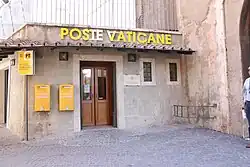
Image 34Vatican City's post office was established in February 1929. (from Vatican City)
Image 35The Loggia of the Casino of Pius IV, a Renaissance building located in the Vatican Gardens. The Casino of Pius IV was built in the mid-16th century by architect Pirro Ligorio for Pope Pius IV. (from Gardens of Vatican City)
Image 36The Seal of Vatican City. Note the use of the Italian language (from Vatican City)
Image 45Torre San Giovanni, on an ancient wall originally built by Pope Nicholas III. The tower fell into disuse in the 16th century but was rebuilt in the early 1960s by Pope John XXIII. (from Gardens of Vatican City)