Portal:South East England

The South East England Portal

South East England is one of the nine official regions of England that are in the top level category for statistical purposes. It consists of the nine counties of Berkshire, Buckinghamshire, East Sussex, Hampshire, the Isle of Wight, Kent, Oxfordshire, Surrey and West Sussex. South East England is the third-largest region of England, with a land area of 19,072 square kilometres (7,364 sq mi), and is also the most populous with a total population of 9,642,942 in 2024.
South East England contains eight legally chartered cities: Brighton and Hove, Canterbury, Chichester, Milton Keynes, Oxford, Portsmouth, Southampton and Winchester. Officially it does not include London, which is a separate region. The geographical term for "South East England" may differ from the official definition of the region; for example, London, Bedfordshire, Hertfordshire and Essex are sometimes colloquially referred to as being in the south east of England. This article only considers the South East as being the official statistical region.
In medieval times, South East England included much of the Kingdom of Wessex, which was the precursor to the modern state of England. Winchester was the capital of England after unification of the various states, including the kingdoms of Kent, Sussex and Mercia. Winchester stopped being the administrative capital of England some time in the 13th century as its influence waned while the City of London dominated commerce. The last monarch to be crowned at Winchester was Richard II in 1377, although the last monarch to be crowned by the Bishop of Winchester was Queen Mary I in 1553.
Today, the region's close proximity to London has led to South East England becoming a prosperous economic hub with the largest economy of any region in the UK, after London. The region is home to Gatwick Airport (the UK's second busiest airport). The coastline along the English Channel provides numerous ferry crossings to mainland Europe. South East England is also known for its countryside, which includes two national parks: the New Forest and the South Downs, as well as the North Downs, the Chiltern Hills and part of the Cotswolds. The River Thames flows through the region and its basin is known as the Thames Valley.
It is also the location of a number of internationally known places of interest, such as HMS Victory in Portsmouth, Cliveden in Buckinghamshire, Thorpe Park and RHS Wisley in Surrey, Blenheim Palace in Oxfordshire, Windsor Castle in Berkshire, Leeds Castle, the White Cliffs of Dover and Canterbury Cathedral in Kent, Brighton Palace Pier, and Hammerwood Park in East Sussex, and Wakehurst Place in West Sussex. The region has many universities; the University of Oxford is the oldest in the English-speaking world, and ranked among the best in the world.
South East England is host to various sporting events, including the annual Henley Royal Regatta, Royal Ascot and The Derby, and sporting venues include Wentworth Golf Club and Brands Hatch. Some of the events of the 2012 Summer Olympics were held in the south east, including the rowing at Eton Dorney and part of the cycling road race in the Surrey Hills. (Full article...)
Selected article

Henley-on-Thames (/ˌhɛnli-/ ⓘ HEN-lee) is a town and civil parish on the River Thames, in the South Oxfordshire district, in Oxfordshire, England, 9 miles (14 km) northeast of Reading, 7 miles (11 km) west of Maidenhead, 23 miles (37 km) southeast of Oxford and 37 miles (60 km) west of London (by road), near the tripoint of Oxfordshire, Berkshire and Buckinghamshire. The population at the 2021 census was 12,186. (Full article...)
Selected pictures
 Lawns at RHS Garden, Wisley, north-east of Guildford (from Portal:Surrey/Selected pictures)

 Credit: O1iveDover is a major channel port in the English county of Kent (from Portal:Kent/Selected pictures)
 Credit: Paddy BriggsSt Lawrence Ground is the home of Kent County Cricket Club and is notable as a first-class cricket ground that has a tree within the boundary. (from Portal:Kent/Selected pictures)
 The interior of Portsmouth Cathedral (from Portal:Hampshire/Selected pictures)
 Credit: LuckyStarrHops are a flower used primarily as a flavouring and stability agent in beer. The principal production centres for the UK are in Kent. (from Portal:Kent/Selected pictures)
 Credit: StephenDawsonThe Channel Tunnel terminal at Cheriton near Folkestone in Kent, from the Pilgrims' Way on the escarpment on the southern edge of Cheriton Hill, part of the North Downs. (from Portal:Kent/Selected pictures)
 Reading Festival in 2007 (from Portal:Berkshire/Selected pictures)
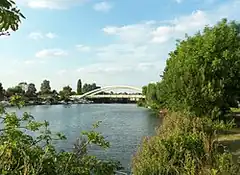 Walton Bridge built in the 2010s is a landmark of the northerly Spelthorne and Elmbridge boroughs (from Portal:Surrey/Selected pictures)
 Heathland in the New Forest (from Portal:Hampshire/Selected pictures)
 The Radcliffe Camera in Oxford, as viewed from the tower of the Church of St Mary the Virgin. (from Portal:Oxfordshire/Selected pictures)
 Credit: Michael RoweDover Castle is situated at Dover, Kent and has been described as the "Key to England" due to its defensive significance throughout history. (from Portal:Kent/Selected pictures)


 Painshill Park in Cobham has follies on natural, but landscaped slopes by part of the Mole disguised as ornamental lakes and the Great Cedar thought to be the largest Cedar of Lebanon in Europe. In the mid-north of the county. (from Portal:Surrey/Selected pictures)
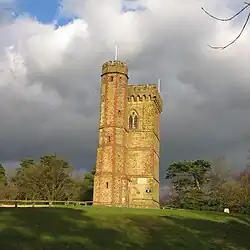
 Pineferous forest of the sandy Bagshot Formation spanning parts of four boroughs towards the north-west and in the far west of the county, with defensive positions for historic army training near Deepcut and Pirbright (from Portal:Surrey/Selected pictures)
 Trees on Southampton Common in winter (from Portal:Hampshire/Selected pictures)
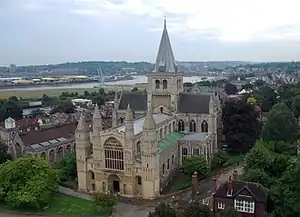 Credit: Sdwelch1031Rochester is a large town in Kent, England, at the lowest bridging point of the River Medway about 30 miles (50 km) from London. Construction of Rochester Cathedral, shown, began in about 1080. (from Portal:Kent/Selected pictures)
 The mill at Greywell in the north-east of Hampshire (from Portal:Hampshire/Selected pictures)

 Credit: XtrememachineukThe Channel Tunnel is a 31 mile long rail tunnel beneath the English Channel connecting England to France. (from Portal:Kent/Selected pictures)
 . (from Portal:East Sussex/Selected pictures)
 Credit: Adam MillerThe Swale refers to the strip of water separating North Kent from the Isle of Sheppey. (from Portal:Kent/Selected pictures)

 Donnington Castle in Berkshire (from Portal:Berkshire/Selected pictures)
 Credit: Michael HaslamHowletts Wild Animal Park was set up as a private zoo in 1958 by John Aspinall in Canterbury, Kent. (from Portal:Kent/Selected pictures)
 Oxford skyline from the University Church of St Mary the Virgin (from Portal:Oxfordshire/Selected pictures)
 The seafront and beach at Lee-on-the-Solent (from Portal:Hampshire/Selected pictures)
 Breamore House in the west of the county, north of the New Forest (from Portal:Hampshire/Selected pictures)
 One of the several golf courses in Woking's borough in the mid/north-west of the county (from Portal:Surrey/Selected pictures)

 Waterfall at Virginia Water on the north-western (Berkshire) border (from Portal:Surrey/Selected pictures)
 Seven reservoirs. View of four in Spelthorne with small lakes of lower elevation, from aggregate extraction, in the south of the borough to the right. Beyond three reservoirs in Elmbridge. The flattest areas of the far north of the county. Staines road and rail bridges span the Thames into Runnymede in the right of the photograph. (from Portal:Surrey/Selected pictures)
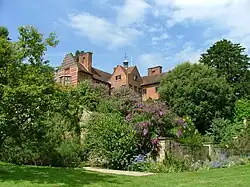 Credit: Baryonic BeingChartwell, located two miles south of Westerham, Kent, England, was the home of Sir Winston Churchill. (from Portal:Kent/Selected pictures)
 Credit: Ian Dunster(from Portal:East Sussex/Selected pictures)
Looking up at the East Hill Cliff Railway in Hastings, the steepest funicular railway in the country. Credit: Hans MusilCanterbury Cathedral is one of the oldest and most famous Christian structures in England and forms part of a World Heritage Site. (from Portal:Kent/Selected pictures)
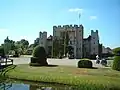 Credit: James ArmitageHever Castle, in Kent, England (in the village of Hever), was the seat of the Boleyn family, later bestowed to Anne of Cleves following her divorce from King Henry VIII. (from Portal:Kent/Selected pictures)

 Panoramic view of Blenheim Palace (from Portal:Oxfordshire/Selected pictures)
 Credit: Michael WilmoreThe Kent & East Sussex Railway was opened by Colonel H.F. Stephens, the railway engineer, in 1900. At its fullest extent, it ran nearly 22 miles[35km] from Robertsbridge on the Tonbridge to Hastings main line to Headcorn on the main line between Tonbridge and Ashford, Kent. (from Portal:Kent/Selected pictures)
 Autumn at Denbies Vineyard looking across the Mole Gap to Box Hill, the steepest slopes of the North Downs (from Portal:Surrey/Selected pictures)
 Paragliders over the Litlington White Horse (from Portal:East Sussex/Selected pictures)
 The Rose Bowl, near Southampton, home to Hampshire County Cricket Club (from Portal:Hampshire/Selected pictures)


 West End Fire Station, near Southampton, designed by Herbert Collins (from Portal:Hampshire/Selected pictures)
 Credit: Cas Liber.Leeds Castle dates back to 1119, though a manor house stood on the same site from the 9th century. (from Portal:Kent/Selected pictures)


Selected biography

David William Donald Cameron, Baron Cameron of Chipping Norton (born 9 October 1966), is a British politician who served as Prime Minister of the United Kingdom from 2010 to 2016. Cameron was Leader of the Conservative Party from 2005 to 2016 and Leader of the Opposition from 2005 to 2010. He was Member of Parliament (MP) for Witney from 2001 to 2016. After his premiership he was elevated to the House of Lords as a life peer in November 2023 to serve as Foreign Secretary in the Sunak ministry until July 2024. Cameron identifies as a one-nation conservative and has been associated with both economically and socially liberal policies. He is the most recent British prime minister to have held the office continually for a full parliament.
Born in London to an upper-middle-class family, Cameron was educated at Eton College and Brasenose College, Oxford. After becoming an MP at the 2001 general election, he served in the opposition Shadow Cabinet under the Conservative leader Michael Howard, and succeeded Howard in 2005. Following the 2010 general election, negotiations led to Cameron becoming prime minister as the head of a coalition government formed by the Conservative Party and the Liberal Democrats.
Cameron's premiership was marked by the effects of the 2008 financial crisis and the Great Recession, which the government sought to address through austerity measures. Parliament passed the Health and Social Care Act and the Welfare Reform Act, which allowed the government to introduce large-scale changes to healthcare and welfare. The government also attempted to enforce stricter immigration policies via the Home Office hostile environment policy, introduced reforms to education, and oversaw the 2012 London Olympics. It privatised Royal Mail and some other state assets, implemented the Equality Act 2010, and legalised same-sex marriage in England and Wales. Internationally, Cameron oversaw Operation Ellamy in the First Libyan Civil War and authorised the bombing of the Islamic State in Syria. Constitutionally, the government oversaw the 2011 United Kingdom Alternative Vote referendum and the 2014 Scottish independence referendum, both of which confirmed Cameron's favoured "no" outcome. When the Conservatives secured an unexpected majority in the 2015 general election, Cameron began leading a Conservative-majority government. He introduced the Brexit referendum on the UK's continuing membership of the European Union in 2016, and supported the Britain Stronger in Europe campaign, which lost. Following the success of Vote Leave, Cameron resigned as prime minister and party leader and was succeeded by Theresa May, his home secretary.
Cameron resigned his seat in the House of Commons in September 2016, and thereafter maintained a low political profile for several years. He was president of Alzheimer's Research UK from 2017 to 2023, and returned to this position in 2025. He was implicated in the Greensill scandal. His memoir, For the Record, was published in 2019. In 2023 he was appointed foreign secretary by Rishi Sunak, that appointment facilitated by his becoming a member of the House of Lords as a life peer. He served as foreign secretary until the Conservatives lost the 2024 general election.
Cameron has been credited for helping to modernise the Conservative Party and for reducing the UK's national deficit. He has also been criticised for austerity measures, his support for foreign intervention in the Libyan and Syrian civil wars, as well as his decision to hold the EU membership referendum, which led to political instability in the UK during the late 2010s. (Full article...)
On This Day in South East England
30 August:
1995: Delirious? vocalist Martin Smith and bassist Jon Thatcher were involved in the near-fatal car accident that inspired the song August 30th.
Categories

Related portals
WikiProjects

- UK geography
- Berkshire
- Buckinghamshire
- Hampshire
- Isle of Wight
- Kent
- Surrey
- Sussex
- England
Topics


Associated Wikimedia
The following Wikimedia Foundation sister projects provide more on this subject:
-
 Commons
Free media repository -
 Wikidata
Free knowledge base -
 Wikiquote
Collection of quotations -
 Wikisource
Free-content library -
 Wikiversity
Free learning tools -
 Wikivoyage
Free travel guide -
 Wiktionary
Dictionary and thesaurus
-
 List of all portals
-

-

-

-

-

-

-

-

-

-
 Random portal
-
 WikiProject Portals