Portal:Nigeria/Selected article
Selected articles list
Selected article 1
Portal:Nigeria/Selected article/1

At its height during the eighteenth and nineteenth centuries, the Aro network connected markets across much of Igboland, the Cross River region and the lower Niger. Aro merchants established settlements along existing trade routes, maintained commercial and kinship ties with Arochukwu, and worked through alliances with neighbouring communities. Their organisation was central to the rapid expansion of the Atlantic slave trade from the Bight of Biafra after about 1740; it also moved imported cloth, firearms, metal goods and tobacco into the interior and later participated in the palm-produce economy.
Arochukwu was the seat of the Eze Aro, the central council known as the Ọkpankpọ, and the Ibini Ukpabi oracle. The oracle's regional judicial and religious reputation reinforced Aro influence, but it was also entangled with enslavement: some people condemned by its process, or unable to meet fines, were sold, while captives obtained through warfare, kidnapping and local judicial proceedings entered both domestic and Atlantic markets. Modern scholarship therefore treats the oracle as an important institution within the system without repeating the older claim that it was the single or principal source of captives.
Selected article 2
Portal:Nigeria/Selected article/2

The Nigerian military attempted to reclaim the territory of Biafra, resulting in the beginning of the Nigerian Civil War. Biafra was officially recognized as a sovereign and independent country by Gabon, Haiti, Côte d'Ivoire, Tanzania, and Zambia while receiving de facto recognition and covert military support from France, Portugal, Israel, South Africa, and Rhodesia. After nearly three years of war, during which around two million Biafran civilians died, President Ojukwu fled into exile in the Ivory Coast as the Nigerian military approached the capital of Biafra. Philip Effiong became the second president of Biafra, overseeing the surrender of Biafran forces to Nigeria.
Igbo nationalism became a strong political and social force after the civil war. It has grown more militant since the 1990s, calling for the independence of the Biafran people and the establishment of their state. Various Biafran secessionist groups have emerged, such as the Indigenous People of Biafra, the Movement for the Actualization of the Sovereign State of Biafra, and the Biafra Zionist Front.
Selected article 3
Portal:Nigeria/Selected article/3

Nri traditions trace the institution to the culture hero Eri and his son Nri. A king list reconstructed from oral genealogies places the beginning of the dynasty around the tenth century, but the dates assigned to its earliest rulers are not contemporary records and remain disputed. Archaeology at nearby Igbo-Ukwu demonstrates that a wealthy, specialised and far-reaching society flourished in the region from at least the late ninth century. Similarities between the finds and later Nri ritual culture have encouraged claims of continuity, but archaeology has not established that the Igbo-Ukwu sites were the capital or royal burials of the later Nri polity.
At its widest extent, Nri influence was exercised through priests and titled agents who travelled between communities, cleansed offences against the earth deity, consecrated political and social titles and participated in agricultural and market ritual. These communities retained their own political institutions. Nri influence contracted from the late seventeenth century as regional trade, the Atlantic slave economy and the Aro commercial network changed the balance of power. British colonial rule further dismantled Nri's external authority in the early twentieth century. The office of Eze Nri nevertheless survived as a non-sovereign traditional and religious institution.
Selected article 4
Portal:Nigeria/Selected article/4

Selected article 5
Portal:Nigeria/Selected article/5

The Boko Haram insurgency began in July 2009, when the militant Islamist and jihadist rebel group Boko Haram started an armed rebellion against the government of Nigeria. Boko Haram targets both Muslims and Christians. Attacks are often directed at individuals perceived as supporting the Nigerian government or Islamic State after the split between them, including civil servants, local defense groups, Muslim leaders who oppose the group and other rebels like al-Qaeda and Islamic State. Most attacks are not based on the religion of the victims.
Boko Haram's initial uprising failed, and its leader Mohammed Yusuf was killed by the Nigerian government. He began the group in 2002 with a view of opposing western education with his followers. The movement consequently fractured into autonomous groups and started an insurgency, though rebel commander Abubakar Shekau managed to achieve a kind of primacy among the insurgents. Though challenged by internal rivals, such as Abu Usmatul al-Ansari's Salafist conservative faction and the Ansaru faction, Shekau became the insurgency's de facto leader and mostly kept the different Boko Haram factions from fighting each other, instead focusing on overthrowing the Nigerian government. Supported by other jihadist organizations including al-Qaeda and al-Shabaab, Shekau's tactics were marked by extreme brutality and explicit targeting of civilians.
After years of fighting, the insurgents became increasingly aggressive and began to seize large areas in northeastern Nigeria. The violence escalated dramatically in 2014 with 10,849 deaths, while Boko Haram drastically expanded its territories. At the same time, the insurgency spread to neighboring Cameroon, Chad, Mali, and Niger, thus becoming a major regional conflict in sub-Saharan Africa. Meanwhile, Shekau attempted to improve his international standing among jihadists by tacitly aligning with the Islamic State in March 2015, with Boko Haram becoming the "Islamic State's West Africa Province" (ISWAP).
Selected article 6
Portal:Nigeria/Selected article/6

General elections were held in Nigeria on 23 February 2019 to elect the President, Vice President, House of Representatives and the Senate. The elections had initially been scheduled for 16 February, but the Electoral Commission postponed the vote by a week at 03:00 on the original polling day, citing logistical challenges in getting electoral materials to polling stations on time. In some places, the vote was delayed until 24 February due to electoral violence. Polling in some areas was subsequently delayed until 9 March, when voting was carried out alongside gubernatorial and state assembly elections.
The elections were the most expensive ever held in Nigeria, costing ₦69 billion (US$625 million) more than the 2015 elections.
Incumbent president Muhammadu Buhari won his re-election bid, defeating his closest rival Atiku Abubakar by over 3 million votes. He was issued a Certificate of Return, and was sworn in on 29 May 2019, the former date of Democracy Day.
Selected article 7
Portal:Nigeria/Selected article/7 On 13 March 2019, a three-story building in the Ita Faaji area of Lagos, Nigeria suffered a structural collapse, killing 20 people and leaving over 40 trapped. A school, housing 100 students, was located on the third story of the building, leading to the story gaining significant coverage in local and international media.
The building, located at No. 53, Massey Street, Ita-Faaji, Lagos Island was a three-story building with a penthouse and a primary school (Ohen Nursery and Primary School) on the second floor, prior to its collapse on the morning of the 13th. The Governor of Lagos State when the incident happened, Akinwunmi Ambode said the primary school was illegally occupying the building as the building is registered as a residential building.
Selected article 8
Portal:Nigeria/Selected article/8

The Igbo people (English: /ˈiːboʊ/ EE-boh, US also /ˈɪɡboʊ/ IG-boh; also spelled Ibo and historically also Iboe, Ebo, Eboe, Eboans, Heebo; natively Ńdị́ Ìgbò) are an ethnic group whose primary origin is found in modern-day Nigeria, in Abia, Anambra, Ebonyi, Enugu, and Imo States, while others can be found in the Niger Delta and along the Cross River. They can also be found as residents in Cameroon, Gabon, and Equatorial Guinea. The Igbo people are one of the largest ethnic groups in Africa.
The Igbo language is part of the Niger-Congo language family. Its regional dialects are mutually intelligible amidst the larger "Igboid" cluster. The Igbo homeland straddles the lower Niger River, east and south of the Edoid and Idomoid groups, and west of the Ibibioid (Cross River) cluster.
Before the period of British colonial rule in the 20th century, the Igbo people were largely governed by the centralized chiefdoms of Nri, Aro Confederacy, Nnewi Kingdom, Agbor, Kingdom of Aboh and Onitsha. The Igbo people became overwhelmingly Christian during the evangelism of the missionaries in the colonial era in the twentieth century. In the wake of decolonisation, the Igbo developed a strong sense of ethnic identity. Christianity and Omenala/Odinala are the major religions, with Islamic minorities.
Selected article 9
Portal:Nigeria/Selected article/9

The Yoruba people (/ˈjɒrʊbə/ YORR-uub-ə; Yoruba: Ìran Yorùbá, Ọmọ Odùduwà, Ọmọ Káàárọ̀-oòjíire) are a West African ethnic group who inhabit parts of Nigeria, Benin, and Togo, a region collectively called Yorubaland. The Yoruba constitute more than 50 million people in Africa and over a million outside the continent, and bear further representation among the African diaspora in countries like Brazil, Cuba and The Caribbean. The vast majority of Yoruba live in Nigeria where they make up 20.7% of the country's population according to Ethnologue estimates, making them one of the largest ethnic groups in Africa. Most Yoruba people speak the Yoruba language, which is the Niger–Congo language with the largest number of native or L1 speakers.
Selected article 10
Portal:Nigeria/Selected article/10

Nigerian cuisine consists of dishes or food items from the hundreds of Native African ethnic groups that comprise Nigeria. Like other West African cuisines, it uses spices and herbs with palm oil or groundnut oil to create deeply flavored sauces and soups.
Nigerian feasts can be colourful and lavish, while aromatic market and roadside snacks cooked on barbecues or fried in oil are in abundance and varied.
Tropical fruits such as watermelon, pineapple, coconut, banana, orange, papaya and mango are mostly consumed in Nigeria.
Selected article 11
Portal:Nigeria/Selected article/11

Ibadan (Listen UK: /ɪˈbædən/, US: /ɪˈbɑːdən/; Yoruba: Ìbàdàn [ì.bà.dã̀]) is the capital and most populous city of Oyo State, in Nigeria. It is one of the largest cities by population in Nigeria with a population of 4.3 million within its metropolitan area. At 3,080 square kilometres (1,190 mi2) it is the country's largest city by land area. At the time of Nigeria's independence in 1960, Ibadan was the largest and most populous city in the country, and the second-most populous in Africa behind Cairo. Ibadan is ranked one of the fastest-growing cities in sub-Saharan Africa, according to the UN Human Settlements Program (2022). It is also ranked third in Nigeria and fifth in West Africa in the tech startups index. Ibadan joined the UNESCO Global Network of Learning Cities in 2016. During the 19th century, Ibadan was the capital of the Ibadan Republic, one of the most powerful states of contemporary Yorubaland.
Ibadan is located in southwestern Nigeria, 120 kilometres (75 mi) inland northeast of Lagos and 440 kilometres (270 mi) southwest of Abuja, the federal capital. It is a prominent transit point between the coastal region and areas in the hinterland of the country as well as one of Nigeria's most important commercial and research centres. Ibadan was the administrative centre of the old Western Region since the early days of British colonial rule, and parts of the city's ancient protective walls still stand to this day. The principal inhabitants of the city are the Yoruba people, as well as various communities (notably Igbo, Hausa, Edo, Ebira, Igede, Igala, Ibibio etc.) from other parts of the country.
Selected article 12
Portal:Nigeria/Selected article/12


Nigeria Airways Ltd., more commonly known as Nigeria Airways, was the national airline of Nigeria. The company was founded in 1958 after the dissolution of West African Airways Corporation (WAAC). It held the name West African Airways Corporation Nigeria (WAAC Nigeria) until 1971, when it was renamed, until it ceased operations in 2003. The government of Nigeria owned a majority of the airline (51%) until 1961, when it boosted its shareholding in the company to 100% and made it the country's flag carrier. At the time of dissolution, the airline's headquarters were at Airways House in Abuja. Operations were concentrated at Murtala Muhammed International Airport and served both domestic and international destinations mainly concentrated in West Africa; the network also had points in Europe, North America and Saudi Arabia. The airline was managed by a number of foreign companies, including British Airways, KLM and South African Airways.
Nigeria Airways had its heyday in the early 1980s, just before the departure of a KLM team that had been hired to make the airline efficient and profitable. At that time, its fleet consisted of about 30 aircraft, but the carrier was two years behind with its accounts to the extent that aircraft were acquired for cash. Owned or leased, the carrier operated a variety of aircraft during its history, including the Vickers VC10, the Airbus A310, the Boeing 737 and 747 and the McDonnell Douglas DC-10, of which it flew the last one ever built. Plagued by mismanagement, corruption, and overstaffing, at the time of closure the airline had debts totalling US$528 million (equivalent to US$860 million in 2025), a poor safety record, and its operative fleet comprised a single aircraft flying domestic routes as well as two leased aircraft operating the international network. Nigeria Airways was succeeded by Virgin Nigeria, and the ground facilities were taken over by Arik Air.
Selected article 13
Portal:Nigeria/Selected article/13

The Eastern Region was an administrative region in Nigeria, dating back originally from the division of the colony Southern Nigeria in 1954. Its first capital was Enugu. The capital was later moved to Umuahia during the Nigeria Civil War but returned to Enugu after Biafra was defeated. The region was officially divided in 1967 into three new states, the East-Central State, Rivers State and South-Eastern State. East-Central State had its capital at Enugu, which is now part of Enugu State.
The region had the country's third-, fourth- and fifth-largest indigenous ethnic groups including Igbo, Ibibio and Ijaw, respectively. It was what later became Biafra, which was in rebellion from 1967 to 1970.
Selected article 14
Portal:Nigeria/Selected article/14

The Bakolori Dam is in Zamfara State in northwest Nigeria. It was completed in 1978 and its reservoir filled by 1981. It is a major reservoir on the Sokoto River, a tributary of the Rima River, which in turn feeds the Niger River. Water from the dam supplies the Bakolori Irrigation Project.
The dam has a capacity of 450 million cubic meters, with a reservoir covering 8,000 hectares extending 19 km (12 mi) upstream.
Dam construction displaced many peasant farmers without providing alternative land or financial compensation. Many people died in protests over their loss of livelihood. The project has become known as a classic example of development failure.
Selected article 15
Portal:Nigeria/Selected article/15

Festac '77, also known as the Second World Black and African Festival of Arts and Culture (the first festival took place in Dakar in April 1966, the second in Algiers in July 1969) was a major international festival held in Lagos, Nigeria, from 15 January 1977 to 12 February 1977. The month-long event celebrated African culture and showcased African music, fine art, literature, drama, dance and religion to the world. Around 16,000 participants, representing 56 African nations and countries of the African Diaspora, performed at the event. Music artists who performed at the festival included Stevie Wonder from the United States, Gilberto Gil from Brazil, Bembeya Jazz National from Guinea, Mighty Sparrow from Trinidad and Tobago, Les Ballets Africains, South African singer Miriam Makeba, Congolese Franco Luambo Makiadi, and Liberian singer Yatta Zoe. At the time it was held, it was the largest pan-African gathering to ever take place. The event attracted around 500,000 spectators.
The official emblem of the festival was a replica royal ivory mask. The mask was crafted by Erhabor Emokpae of Benin. The hosting of the festival led to the establishment of the Nigerian National Council of Arts and Culture, Festac Village and the National Theatre, Iganmu, Lagos. A majority of the events were held in four main venues: the National Theatre, National Stadium, Surulere, Lagos City Hall and Tafawa Balewa Square.
Selected article 16
Portal:Nigeria/Selected article/16

Okrika // ⓘ is a town and Local Government Area (LGA) in Rivers State, Nigeria, with Okrika town serving as its administrative headquarters. Okrika LGA is one of the 10 ijaw LGAs in Rivers State. It lies within the Rivers East Senatorial District and shares boundaries with Eleme LGA to the north and east, Ogu/Bolo LGA to the south, and Port Harcourt LGA to the west.
As of 2022, the Rivers State Primary Health Care Management Board estimated the population of Okrika LGA at over 379,000, distributed across 143 communities.
Okrika's primary economic activity is fishing, while Christianity is the dominant religion, with some residents practicing African Traditional Religion. Many residents in Okirika are from neighbouring Ijaw villages, which has influenced Okirika culture.
Selected article 17
Portal:Nigeria/Selected article/17

The Carniriv (English: Car-nee-rev) is an annual festival held in Port Harcourt, Nigeria. The Carnival starts a few weeks before Christmas, and lasts seven days. During this time, several ceremonial events are held; most of which have some cultural and/or sacred significance.
The festival combines traditional cultural elements with contemporary Caribbean-style carnival features. It also features musical performances from both local and international artists.
The Government of Rivers State recognizes Carniriv as its biggest tourism export. With economic interests increasingly identifying tourism as a viable alternative to the fossil fuel economy - especially in these parts - the Rivers State government has funded the event via the Rivers State Tourism Development Agency to promote regional tourism. Thus, it has always made available the necessary financial backing for the event each year, and has also worked hard through the Rivers State Tourism Development Agency and the Ministry of Culture and Tourism to ensure that it is held.
Selected article 18
Portal:Nigeria/Selected article/18

Rivers State University (RIVSU or RSU), formerly known as Rivers State University of Science and Technology (UST or RSUST), is a government-owned university located in Diobu (Mile III) area of Port Harcourt, Rivers State, Southern Nigeria.
As of 2025, the vice chancellor of the university is Professor Isaac Zeb-Obipi. He was appointed by the administration of Governor Siminalayi Fubara in March 2025.
Selected article 19
Portal:Nigeria/Selected article/19

Under civil law, Nigeria does not recognize polygamous unions. However, 12 out of the 36 Nigerian states recognize polygamous marriages as being equivalent to monogamous marriages. All twelve states are governed by Sharia law. The states, which are all northern, include the states of Bauchi, Borno, Gombe, Jigawa, Kaduna, Kano, Katsina, Kebbi, Niger, Sokoto, Yobe, and Zamfara, which allow men to take more than one wife.
Nigeria is part of the "polygamy belt", a region in West Africa and Central Africa where polygamy is common and deeply rooted in the culture. Nigeria is estimated to have the fifth highest polygamy prevalence in the world, with 28% of the population living in polygamous marriages, with only four countries (Burkina Faso, Mali, Gambia and Niger) having a higher prevalence.
Selected article 20
Portal:Nigeria/Selected article/20 Abortion is a controversial topic in Nigeria. Abortion in Nigeria is governed by the two laws that differ greatly depending on geographical location. Northern Nigeria is governed by The Penal Code and Southern Nigeria is governed by The Criminal Code. The only legal way to have an abortion in Nigeria is if having the child is going to put the mother's life in danger. However, sex-selective abortion has long had acceptance in Nigeria.
Selected article 21
Portal:Nigeria/Selected article/21 The West African College of Physicians is a professional society, founded in 1976, for medical specialists in the West African sub-region. The association promotes postgraduate specialist training, professional curriculum development and fellowship certification in six sub-specialties or faculties, Community Health, Family Medicine, Internal Medicine, Paediatrics, Psychiatry and Laboratory Medicine, specifically concentrations in Anatomical Pathology, Chemical Pathology, Haematology and Medical Microbiology. The College also serves as a health policy advisor to many participating governments in West Africa.
Selected article 22
Portal:Nigeria/Selected article/22
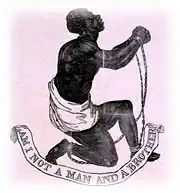
Slavery was practiced in Africa before the beginning of the Atlantic slave trade. The African slave trade provided a large number of slaves to Europeans and their African agents.
Selected article 23
Portal:Nigeria/Selected article/23

The Chad Basin is the largest endorheic basin in Africa, centered approximately on Lake Chad. It has no outlet to the sea and contains large areas of semi-arid desert and savanna. The drainage basin is approximately coterminous with the sedimentary basin of the same name, but extends further to the northeast and east.
The basin spans four modern nations, including most of Chad and a large part of Niger, Nigeria and Cameroon. A combination of dams, increased irrigation, climate change, and reduced rainfall are causing water shortages. Lake Chad continues to shrink.
Selected article 24
Portal:Nigeria/Selected article/24

The Cross River National Park is a national park of Nigeria, located in Cross River State, Nigeria. There are two separate sections, Okwangwo (established 1991) and Oban (established 1988). The park has a total area of about 4,000 km2, most of which consists of primary moist tropical rainforests in the North and Central parts, with mangrove swamps on the coastal zones. Parts of the park belong to the Guinea-Congolian region, with a closed canopy and scattered emergent trees reaching 40 or 50 metres (130 or 160 feet) in height.
Cross River National Park borders Korup National Park in Cameroon and is the largest rain forest area in Nigeria. It is also a hotspot for biodiversity. The park has one of the oldest rainforests in Africa, and has been identified as a biodiversity hot spot. Sixteen primate species have been recorded in the park. Rare primates include common chimpanzees, drills and (in Okwangwo) Cross River gorillas. Another primate, the gray-cheeked mangabey, seems to have recently become extinct in the area.
Both divisions of the park are threatened by illegal logging, slash and burn farming and poaching. Eco-tourism may support efforts to preserve the park fauna. Assisting villagers in buffer zones to practice sustainable forestry also holds promise.
Selected article 25
Portal:Nigeria/Selected article/25

Manillas are a form of commodity money, usually made of brass, bronze, or copper, which were used in West Africa. They were produced in large numbers in a wide range of designs, sizes, and weights. Originating before the colonial period, perhaps as the result of trade with the Portuguese Empire, manillas continued to serve as money and decorative objects until the late 1940s and are still sometimes used as decoration on arms, legs and around the neck. In popular culture, they are particularly associated with the Atlantic slave trade.
Selected article 26
Portal:Nigeria/Selected article/26
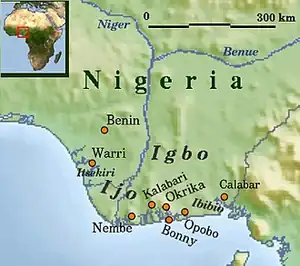
The Nembe Kingdom is a traditional state in Niger Delta. It includes the Nembe and Brass Local Government Areas of Bayelsa State, Nigeria. The traditional rulers take the title "Amanyanabo". Today, leadership is split between the Amanyanabos of Ogbolomabiri, Bassambiri, Okpoama, Odioama and Twon Brass.
Selected article 27
Portal:Nigeria/Selected article/27

The Kamerun campaign took place in the German colony of Kamerun in the African theatre of the First World War when the British, French and Belgians invaded the German colony from August 1914 to March 1916. Most of the campaign took place in Kamerun but skirmishes also broke out in British Nigeria. By the Spring of 1916, following Allied victories, the majority of German troops and the civil administration fled to the neighbouring neutral colony of Spanish Guinea (Río Muni). The campaign ended in a defeat for Germany and the partition of its former colony between France and Britain.
Selected article 28
Portal:Nigeria/Selected article/28 The third season of the television drama series Shuga, dubbed Shuga Naija, was first broadcast on MTV Base from December 2013 to January 2014. The season was written by Kemi Adesoye and directed by Biyi Bandele. It starred Tiwa Savage, Chris Attoh, Maria Okanrende, Emmanuel Ikubese, Sharon Ezeamaka, Efa Iwara, Dorcas Shola Fapson, Okezie Morro, Timini Egbuson, Kachi Nnochiri, Sanni Mu'azu and Leonora Okine. It also touches on maternal and child health, family planning, gender-based violence, and women empowerment. The television series, which consists of eight episodes, was shot and set in Lagos State, produced in partnership with the National Agency for the Control of AIDS (NACA).
Selected article 29
Portal:Nigeria/Selected article/29 The Kanem–Bornu Empire was an empire based around Lake Chad that once ruled areas which are now part of Nigeria, Niger, Cameroon, Libya, Algeria, Sudan, and Chad. The empire was sustained by the prosperous trans-Saharan trade and was one of the oldest and longest-lived empires in world history and especially in African history.
The early history of the Kanem–Bornu Empire is poorly known. The empire is believed to have been founded around the year 700, though later and earlier dates have also been proposed. The Duguwa dynasty ruled the empire from their capital Njimi in the Kanem region (in modern-day Chad) and used the ruling title mai. In the 11th century, the empire converted to Islam and the Duguwa were replaced with the Sayfawa dynasty. The Kanem-based empire was brought to its zenith by the 13th-century mai Dunama II Dibalemi. The empire exerted considerable control over Saharan trade routes and exported salt, ivory, slaves, and animal products. The salt industry was particularly prosperous, with the empire able to provide salt across the surrounding region.
Economic factors and conflict with the Bilala people caused the empire to lose Kanem in the 14th century. Mai Umar I Idrismi re-centered the empire in the Bornu region (in modern-day Nigeria), formerly a tributary state. A century of political instability followed, until mai Ali I Gaji founded Ngazargamu as a new permanent capital. Although Kanem was later recovered by mai Idris III Katagarmabe, scholars sometimes divide the Kanem–Bornu Empire into an earlier Kanem Empire and later Bornu Empire. The Bornu-based empire was brought to the peak of its power and influence under mai Idris IV Alooma in the late 16th century. Although Kanem–Bornu remained powerful for long thereafter, the empire began a slow but steady decline in the 17th century due to changing economic patterns and environmental conditions, and conflicts with various neighbors.
Selected article 30
Portal:Nigeria/Selected article/30

Oshun (also Ọṣun, Ochún, and Oxúm) is the orisha associated with love, sexuality, fertility, femininity, water, destiny, divination, purity, wealth, prosperity and beauty, and the Osun River, in the Yoruba religion. She is considered one of the most popular and venerated of the 401 orishas.
According to traditional beliefs, Oshun was once the queen consort to King Shango of Oyo, and deified following her death, honored at the Osun-Osogbo Festival, a two-week-long annual festival that usually takes place in August, at the Oṣun-Osogbo Sacred Grove in Osogbo. A violín is a type of musical ceremony in Regla de Ocha performed for Osún. It includes both European classical music and Cuban popular music.
Selected article 31
Portal:Nigeria/Selected article/31 The digital divide is a term used to describe the disadvantage in access to information which people without access to information and communications technology (ICT) suffer. Nigeria's digital divide refers to the inequality of Nigerian individuals, groups, or organizations with regard to access to Information and communications technology (ICT) infrastructure or to the internet for daily activities. The digital divide has been attributed to many factors among which is the high cost of computer equipment, lack of ICT skill and poor knowledge of available search engines. Lack of access to ICT makes it difficult for people to access information. The benefits of having access to ICT are numerous. ICT has the potential to promote other sectors of the economy such as agriculture, education, health, bank, defence etc. In times of emergency, ICT becomes an indispensable tool for overcoming the barriers of time and distance. Education, lack of electrical infrastructure, income, urban drift, and a variety of other social and political factors contribute to Nigeria's growing digital divide. Efforts are currently being made to reduce the digital divide in Nigeria including collaboration between government agencies and technology corporations like Google, Cchub, Andela, StarBridge Africa, Microsoft and Intel, using libraries as E-learning (theory) facilities, and proposing governmental policies such as salary enhancement and social security. "Gotocourse" a Nigerian owned IT learning and solutions tools organization is also bridging the gap here in Oyo State. They recently launched the first ever AI specifically made for Educators with features like curriculum planner, Assessment Maker, humanizer, speech synthesizer, slide maker etc . Check ( www.gmindai ) Gmind AI
Selected article 32
Portal:Nigeria/Selected article/32 The COVID-19 pandemic in Nigeria was a part of the worldwide pandemic of coronavirus disease 2019 (COVID-19) caused by severe acute respiratory syndrome coronavirus 2 (SARS-CoV-2). The first confirmed case in Nigeria was announced on 27 February 2020, when an Italian national in Lagos tested positive for the virus. On 9 March 2020, a second case of the virus was reported in Ewekoro, Ogun State, a Nigerian citizen who came into contact with the Italian national.
The effect of the virus in Nigeria has become notable worldwide for being extremely understated, as there have been just under 255,000 confirmed cases in a country of 200 million+; however, there has been far less testing for the virus in Nigeria than other countries. Deaths however have been minimal (3,155). This has been credited to a warmer climate, far younger populations (fewer people in care homes), faster government responses (it federated system), and, crucially, experience in dealing with recent epidemics, such as the Ebola virus, that most Western countries lacked.
Selected article 33
Portal:Nigeria/Selected article/33

People in the lesbian, gay, bisexual, transgender, and queer (LGBTQ) community in Nigeria face severe challenges. Both male and female expressions of homosexuality are illegal in Nigeria and punishable by death in the northern portion of the country and up to 14 years of imprisonment in the southern portion of the country. There are no legal protections for LGBTQ people in Nigeria—a largely conservative country of more than 230 million people, split between a mainly Muslim north and a mainly Christian south. Very few LGBTQ people are open about their sexuality, as violence against them is frequent. According to PinkNews, Nigerian authorities generally target the LGBTQ community. Many LGBTQ Nigerians seek asylum in countries with progressive laws.
Attempted same-sex marriages have also been criminalised within Nigeria since 2013, enacted via the Same Sex Marriage (Prohibition) Act 2013. The maximum punishment in 12 northern states with Shari'a law is death by stoning. The law applies to all Muslims and those who have voluntarily consented to the jurisdiction of the Shari'a courts. However, in southern Nigeria and under the secular criminal laws of northern Nigeria, the maximum punishment for same-sex sexual activity is 14 years of imprisonment, which is less severe. In 2022, a group of Nigerian human rights organizations and activists filed a lawsuit arguing that Sections 4(1), 5(2), and 5(3) of the Same-Sex Marriage (Prohibition) Act 2013 violated provisions of the Nigerian Constitution. That same year, the court ruled that these sections were unconstitutional and could not be enforced in any part of the country, effectively allowing LGBTQ+ organizations and individuals to exist and organize freely.
Selected article 34
Portal:Nigeria/Selected article/34 Confusion is a 1975 album by Nigerian Afrobeat musician Fela Kuti and his Africa 70 band. It was arranged, composed, and produced by Kuti, who recorded the album after choosing to emphasize his African heritage and nationalism in his music. Confusion is a commentary on the confused state of post-colonial Lagos and its lack of infrastructure and proper leadership at the time. Kuti's pidgin English lyrics depict difficult conditions in the city, including a frenetic, multilingual trading market and inextricable traffic jams in Lagos' major intersections.
Confusion is a one-song Afrobeat album that begins with an entirely instrumental first half, which features free form interplay between Kuti's electric piano and drummer Tony Allen. It leads to an extended mid-tempo section with Allen's polyrhythms and tenor saxophone by Kuti, who subsequently delivers call-and-response vocal passages. In reviews since the record's release by EMI, the album was praised by music critics, who found it exemplary of Kuti's Afrobeat style and recommended it as a highlight from his extensive catalog. In both 2000 and 2010, Confusion was reissued and bundled with Kuti's 1973 Gentleman album.
Selected article 35
Portal:Nigeria/Selected article/35

The 2013–2016 epidemic of Ebola virus disease, centered in West Africa, was the most widespread outbreak of the disease in history. It caused major loss of life and socioeconomic disruption in the region, mainly in Guinea, Liberia and Sierra Leone. The first cases were recorded in Guinea in December 2013; the disease spread to neighbouring Liberia and Sierra Leone, with minor outbreaks occurring in Nigeria and Mali. Secondary infections of medical workers occurred in the United States and Spain. Isolated cases were recorded in Senegal, the United Kingdom and Italy. The number of cases peaked in October 2014 and then began to decline gradually, following the commitment of substantial international resources.
It caused significant mortality, with a high case fatality rate. By the end of the epidemic, 28,616 people had been infected; of these, 11,310 had died, for a case-fatality rate of 40%. As of 8 May 2016, the World Health Organization (WHO) and respective governments reported a total of 28,646 suspected cases and 11,323 deaths (39.5%), though the WHO believes that this substantially understates the magnitude of the outbreak. On 8 August 2014, a Public Health Emergency of International Concern was declared and on 29 March 2016, the WHO terminated the Public Health Emergency of International Concern status of the outbreak. Subsequent flare-ups occurred; the epidemic was finally declared over on 9 June 2016, 42 days after the last case tested negative on 28 April 2016 in Monrovia.
The outbreak left about 17,000 survivors of the disease, many of whom report post-recovery symptoms termed post-Ebola syndrome, often severe enough to require medical care for months or even years. An additional cause for concern is the apparent ability of the virus to "hide" in a recovered survivor's body for an extended period and then become active months or years later, either in the same individual or in a sexual partner. In December 2016, the WHO announced that a two-year trial of the rVSV-ZEBOV vaccine appeared to offer protection from the variant of EBOV responsible for the Western Africa outbreak. The vaccine is considered to be effective and is the only prophylactic that offers protection; hence, 300,000 doses have been stockpiled. rVSV-ZEBOV received regulatory approval in 2019.
Selected article 36
Portal:Nigeria/Selected article/36

The Efik, also known as the Akwa Akpa people, are an ethnic group located primarily in southern Nigeria, and western Cameroon. They are related to the Akwa Ibom or Ibom people of Akwa Ibom State. Within Nigeria, the Efik can be found in the present-day Cross River State and Akwa Ibom State. The Efik speak the Efik language which is a member of the Benue–Congo subfamily of the Niger-Congo language group. The Efik refer to themselves as Efik Eburutu, Ifa Ibom, Eburutu and Iboku.
The bulk of the Efiks can be found in Calabar and the southern part of Cross River State. Prior to 1905, Old Calabar was a term used to describe the Efik settlements of Duke Town, Creek Town, Old town, Cobham town, Henshaw town, Adiabo and Mbiabo (consisting of Mbiabo edere, Mbiabo Ikot Offiong and Mbiabo Ikoneto). The Efik have also been referred to as "Calabar people" in historical literature. The term "Calabar people" was particularly popular prior to the nineteenth century and was synonymous with the Efik.
Efik society consists of various clans which were originally known as "Esien Efik itiaba" (Seven clans of Efik) and later known in the 21st century as "Esien Efik Duopeba" (Twelve clans of Efik). The original seven clans are scattered between Cross River state and consist of Iboku (Duke town, Henshaw town, Creek town and Cobham town), Obutong, Ito, Adiabo, Mbiabo (Mbiabo Edere, Mbiabo Ikot Offiong, Mbiabo Ikoneto), Enwang, Usukakpa and Abayen. The last three clans had greatly dwindled in number and many of their members are believed to have integrated into other Efik clans. Ibonda (an Efut clan) has sometimes been appended to Adiabo as one of the seven Efik clans. Other clans such as Biakpan, Utuma and Umon communities in Biase have shared Efik ancestry although they have not been historically part of the Efik Eburutu and therefore do not take part in the Esien Efik itiaba. Biakpan is also appended to the Obutong clan. The bulk of the Enwang and Usukakpa are located in the present-day Akwa Ibom state.
Selected article 37
Portal:Nigeria/Selected article/37 The Nigeria Police Force is the principal law enforcement and the lead security agency in Nigeria. It was designated by the 1999 constitution as the national police of Nigeria, with exclusive jurisdiction throughout the country. As at 2021, it had a staff strength of about 371,800. There are currently plans to increase the force to 650,000, adding 280,000 new recruits to the existing 370,000. The Nigeria Police Force is a very large organisation consisting of 36 State commands and Federal Capital Territory (FCT) grouped into 17 zones and 8 administrative organs. As of February 2026, the NPF is headed by IGP (Inspector General) Tunji Disu. In 2020, it underwent major overhauls.
Selected article 38
Portal:Nigeria/Selected article/38

The federal government of Nigeria is composed of three distinct arms: the executive, the legislative, and the judicial, whose powers are vested and bestowed upon by the Constitution of the Federal Republic of Nigeria. One of the primary functions of the constitution is that it provides for separation and balance of powers among the three branches and aims to prevent the repetition of past mistakes made by the government. Other functions of the constitution include a division of power between the federal government and the states, and protection of various individual liberties of the nation's citizens.
Nigerian politics take place within a framework of a federal and presidential republic and a representative democracy, in which the president holds executive power. Legislative power is held by the federal government and the two chambers of the legislature: the House of Representatives and the Senate. The legislative arm of Nigeria is responsible for and possesses powers to legislate laws. Together, the two chambers form the law-making body in Nigeria, called the National Assembly, which serves as a check on the executive arm of government. The National Assembly of Nigeria (NASS) is the democratically elected body that represents the interests of the Federal Republic of Nigeria and its people, makes laws for Nigeria, and holds the Government of Nigeria to account. The National Assembly (NASS) is the nation's highest legislature, whose power to make laws is summarized in chapter one, section four of the 1999 Nigerian Constitution. Sections 47–49 of the 1999 Constitution state, among other things, that "There shall be a National Assembly (NASS) for the federation which shall consist of two chambers: the Senate and the House of Representatives." The Economist Intelligence Unit rated Nigeria a "hybrid regime" in 2019. The federal government, state, and local governments of Nigeria aim to work cooperatively to govern the nation and its people. Nigeria became a member of the British Commonwealth upon its independence from British colonial rule on 1 October 1960.
Selected article 39
Portal:Nigeria/Selected article/39

The cinema of Nigeria, often called Nollywood, consists of films produced in Nigeria; its history dates back to as early as the late 19th century and into the colonial era in the early 20th century. The history and development of the Nigerian motion picture industry is generally classified in four main eras: the Colonial era, Golden Age era, video film era and the emerging New Nigerian cinema era.
Film as a medium first arrived in Nigeria in the late 19th century, in the form of peephole viewing of motion picture devices. These were soon replaced in the early 20th century with improved motion picture exhibition devices, with the first set of films screened at the Glover Memorial Hall in Lagos from 12 to 22 August 1903. The earliest feature film made in Nigeria is 1926's Palaver directed by Geoffrey Barkas, which was also the first to feature Nigerian actors in substantial roles. As of 1954, mobile cinema vans played to at least 3.5 million people in Nigeria, and films being produced by the Nigerian Film Unit were screened for free at the 44 available cinemas. The first film entirely copyrighted to the Nigerian Film Unit is Fincho (1957) by Sam Zebba; which is also the first Nigerian film to be shot in colour.
After Nigeria's independence from the United Kingdom in 1960, the cinema business rapidly expanded, with new cinema houses being established. As a result, Nigerian films in theatres increased in the late 1960s into the 1970s, especially productions from Western Nigeria, owing to former theatre practitioners such as Hubert Ogunde and Moses Olaiya transitioning into the big screen. In 1972, the Indigenization Decree was issued by Yakubu Gowon, which demands the transfer of ownership of about a total of 300 film theatres from their foreign owners to Nigerians, which resulted in more Nigerians playing active roles in the cinema and film. The oil boom of 1973 through 1978 also contributed immensely to the spontaneous boost of the cinema culture in Nigeria, as the increased purchasing power in Nigeria made a wide range of citizens to have disposable income to spend on cinema going and on home television sets. After several moderately-performing films, Papa Ajasco (1984) by Wale Adenuga became the first blockbuster, grossing approximately ₦61,000 (approx. ₦21,552,673 in 2015 value) in three days. A year later, Mosebolatan (1985) by Moses Olaiya went ahead to gross ₦107,000 (approx. ₦44,180,499 in 2015 value) in five days.
Selected article 40
Portal:Nigeria/Selected article/40

Nigerian nationalism asserts that Nigerians as a nation should promote the cultural unity of Nigerians. Nigerian nationalism is territorial nationalism and emphasizes a cultural connection of the people to the land, particularly the Niger and the Benue Rivers. It first emerged in the 1920s under the influence of Herbert Macaulay, who is considered to be the founder of Nigerian nationalism. It was founded because of the belief in the necessity for the people living in the British colony of Nigeria of multiple backgrounds to unite as one people to be able to resist colonialism. The people of Nigeria came together as they recognized the discrepancies of British policy. "The problem of ethnic nationalism in Nigeria came with the advent of colonialism. This happened when disparate, autonomous, heterogeneous and sub-national groups were merged to form a nation. Again, the colonialists created structural imbalances within the nation in terms of socio-economic projects, social development and establishment of administrative centres. This imbalance deepened the antipathies between the various ethnic nationalities in Nigeria (Nnoli, 1980; Young, 1993, and Aluko, 1998)." The Nigerian nationalists' goal of achieving an independent sovereign state of Nigeria was achieved in 1960 when Nigeria declared its independence and British colonial rule ended. Nigeria's government has sought to unify the various peoples and regions of Nigeria since the country's independence in 1960.
Nigerian nationalism has been negatively affected by multiple historical episodes of ethnic violence and repression of certain ethnic groups by the Nigerian government between the various peoples has resulted in multiple secessionist movements demanding independence from Nigeria. However aside from instances of extremism, most Nigerians continue to peacefully coexist with each other, and a common Nigerian identity has been fostered amongst the more-educated and affluent Nigerians as well as amongst the many Nigerians who leave small homogeneous ethnic communities to seek economic opportunities in the cities where the population is ethnically mixed. For instance many southerners migrate to the north to trade or work while a number of northerner seasonal workers and small-scale entrepreneurs go to the south.
Selected article 41
Selected article 42
Selected article 43
Selected article 44
Selected article 45
Selected article 46
Selected article 47
Selected article 48
Selected article 49
Selected article 50
Usage
The layout design for these subpages is at Portal:Nigeria/Selected article/Layout.
- Add a new Selected article to the next available subpage.
- Update "max=" to new total for its {{Random portal component}} on the main page.