Portal:Cities

The Cities Portal


A city is a human settlement of a substantial size. The term "city" has different meanings around the world and in some places the settlement can be very small. Even where the term is limited to larger settlements, there is no universally agreed definition of the lower numerical boundary for their size. In a more specific sense, a city can be defined as a permanent and densely populated place with administratively defined boundaries whose members work primarily on non-agricultural tasks. Cities generally have extensive systems for housing, transportation, sanitation, utilities, land use, production of goods, and communication. Their density facilitates interaction between people, government organizations, and businesses, sometimes benefiting different parties in the process, such as improving the efficiency of goods and service distribution.
Historically, city dwellers have been a small proportion of humanity overall, but following two centuries of unprecedented and rapid urbanization, more than half of the world population now lives in cities, which has had profound consequences for global sustainability. Present-day cities usually form the core of larger metropolitan areas and urban areas—creating numerous commuters traveling toward city centres for employment, entertainment, and education. However, in a world of intensifying globalization, all cities are to varying degrees also connected globally beyond these regions. This increased influence means that cities also have significant influences on global issues, such as sustainable development, climate change, and global health. Because of these major influences on global issues, the international community has prioritized investment in sustainable cities through Sustainable Development Goal 11. Due to the efficiency of transportation and the smaller land consumption, dense cities hold the potential to have a smaller ecological footprint per inhabitant than more sparsely populated areas. Therefore, compact cities are often referred to as a crucial element in fighting climate change. However, this concentration can also have some significant harmful effects, such as forming urban heat islands, concentrating pollution, and stressing water supplies and other resources. (Full article...)
Selected city -

Warsaw, officially the Capital City of Warsaw, is the capital and most populous city of Poland.[1] The metropolis stands on the river Vistula in east-central Poland. Its population is officially estimated at 1.87 million residents within a greater metropolitan area of around 3.5 million residents, which makes Warsaw the 7th most populous city in the European Union. The city area measures 517 square kilometres (200 square miles) and comprises 18 districts, while the metropolitan area covers 6,100 square kilometres (2,355 square miles). Warsaw is classified as an alpha global city, a major political, economic and cultural hub, and the country's seat of government. It is also the capital of the Masovian Voivodeship.
Warsaw traces its origins to a small fishing town which became the seat of the Duchy of Masovia in 1413. The city rose to prominence after 1596, when Sigismund III decided to move the Polish capital and his royal court from Kraków. Warsaw surpassed Gdańsk as Poland's most populous city by the 18th century. It served as the capital of the Polish–Lithuanian Commonwealth until 1795, and subsequently as the seat of Napoleon's Duchy of Warsaw. The 19th century and its Industrial Revolution brought a demographic boom, which made it one of the largest and most densely populated cities in Europe. Known then for its elegant architecture and boulevards, Warsaw was bombed and besieged at the start of World War II in 1939. Much of the historic city was destroyed and its diverse population decimated by the Ghetto Uprising in 1943, the general Warsaw Uprising in 1944, and systematic razing. (Full article...)
Did you know -
- ... that All Nations Baptist Church in New York City is primarily associated with ethnic Koreans of the former Soviet Union?
- ... that, despite funding 65 Carnegie libraries in New York City, Andrew Carnegie was prevented from attending the opening of the first one?
- ... that an NFL team shared City Stadium with a local high school for over thirty years?
- ... that a New York City ferryboat shot down two enemy aircraft in World War II?
- ... that a cemetery for formerly enslaved people in New York City is buried under a strip mall?
- ... that despite a career writing queer literature, Chen Xue's 2019 novel Fatherless City had a "putatively straight premise"?
Related portals
Related WikiProjects

- WikiProject Cities
- WikiProject Countries
- WikiProject Geography
 Recognized content -


Bournemouth (/ˈbɔːrnməθ/ ⓘ BORN-məth) is a coastal resort town and civil parish in the Bournemouth, Christchurch and Poole unitary authority area, in the ceremonial county of Dorset, on the south coast of England. At the 2021 census, the built-up area had a population of 196,455, making it the largest town in Dorset.
Previously an uninhabited heathland, visited only by fishermen and occasional smugglers, a health resort was founded in the area by Lewis Tregonwell in 1810. After the Ringwood, Christchurch and Bournemouth Railway opened in 1870, Bournemouth grew into an important resort town, which today attracts over five million visitors annually for its coastline and nightlife. (Full article...)
Selected article -

The modern Olympics began in 1896. Since then, summer and winter games have usually celebrated a four-year period known as an Olympiad. From the inaugural Winter Games in 1924 until 1992, winter and summer Games were held in the same year. Since 1994, summer and winter Games have been held in staggered even years. The last Olympic games were held in both Milan and Cortina, the first to ever be hosted by two cities, in February 2026. Through 2026, there have been 30 Summer Olympic Games, held in 23 cities, and 25 Winter Olympic Games, held in 22 cities. In addition, three summer and two winter editions of the games were scheduled to take place but were later cancelled due to war: Berlin (summer) in 1916; Sapporo–Garmisch-Partenkirchen (winter) and Tokyo–Helsinki (summer) in 1940; and Cortina d'Ampezzo (winter) and London (summer) in 1944. The 1906 Intercalated Olympics were officially sanctioned and held in Athens. However, in 1949, the International Olympic Committee (IOC) decided to unrecognize the 1906 Games. The 2020 Summer Olympics in Tokyo were postponed for the first time in the Olympics history to summer 2021 due to the COVID-19 pandemic, with the 2022 Winter Olympics being held roughly six months later in Beijing which also hosted the 2008 Summer Olympics.
Four cities and regions have been chosen by the IOC to host upcoming Olympic Games: Los Angeles for the 2028 Summer Olympics; the 2030 Winter Olympics will be the first Olympic Games to be hosted by a region (the French Alps—comprising 7 cities and towns); Brisbane will host the 2032 Summer Olympics; and Utah will host the 2034 Winter Olympics. (Full article...)
General images -
 A poster from the EPA entitled "Soak Up the Rain with Green Infrastructure." The poster depicts various green infrastructure that can be effective in preventing floods. (from Urban geography)
 New York City, one of the largest urban areas in the world (from Urban geography)
 Cain founding the city of Enoch (from History of cities)
 Constantinople, the largest and wealthiest city in Europe from the 9th through the 12th century (from History of cities)
 This woodcut shows Nuremberg as a prototype of a flourishing and independent city in the 15th century. (from History of cities)


 Mohenjo-daro, a World Heritage Site that was part of the Indus Valley Civilization (from History of cities)
 The Avenue of the Dead in Teotihuacan originates with the Pyramid of the Moon, forming the basis of the city grid. (from History of cities)
 Gdańsk in the 17th century (from History of cities)
- The city of Arbil in the Kurdistan Region of Iraq has a radial urban structure centred on an ancient fortress (from Urban structure)
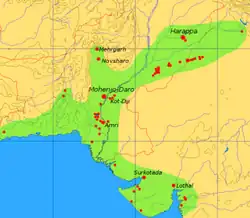 Extent and major sites of the Indus Valley Civilization of ancient India (from History of cities)
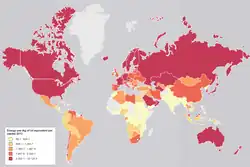 A map showing the world energy consumption per capita based on 2013 data from the World Bank. (from Urban geography)
 View of the Agora of Athens with the temple of Hephaestus to the left and the Stoa of Attalos to the right (from History of cities)
 Daily life of people from the Song period at the capital, Bianjing, today's Kaifeng (from History of cities)
 Aerial photograph shows the remains of the Sumerian city Ur, near Nasiriyah, Iraq. (from History of cities)
 Palmanova, Italy, constructed in 1593 according to the defensive ideal of the star fort, today retains its distinctive geometry. (from History of cities)
 Excavated foundations of Çatalhöyük, Turkey. An Anatolian town dated to 7000 BCE. (from History of cities)
 The Round city of Baghdad, the capital of Iraq (from History of cities)
Topics

List articles
Subcategories

Associated Wikimedia
The following Wikimedia Foundation sister projects provide more on this subject:
-
 Commons
Free media repository -
 Wikidata
Free knowledge base -
 Wikiquote
Collection of quotations -
 Wikisource
Free-content library -
 Wikiversity
Free learning tools -
 Wiktionary
Dictionary and thesaurus
-
 List of all portals
-

-

-

-

-

-

-

-

-

-
 Random portal
-
 WikiProject Portals
- ↑ "Główny Urząd Statystyczny" [Central Statistical Office] (in Polish). To search: Select "Miejscowości (SIMC)" tab, select "fragment (min. 3 znaki)" (minimum 3 characters), enter town name in the field below, click "WYSZUKAJ" (Search).