This portal is manually maintainedbyNick Moyes.Please contact these user(s)when you plan to make significant changes.
This portal's subpages have been checked by an editor, and are needed.
Please take care when editing, especially if using automated editing software, and seek consensus before making major changes.Learn how to update the maintenance information here.
There are about 380,000 known species of plants, of which the majority, some 260,000, produce seeds. They range in size from single cells to the tallest trees. Green plants provide a substantial proportion of the world's molecular oxygen. The sugars they produce by photosynthesis provide the energy for most of Earth's ecosystems, and other organisms, including animals, are herbivores or otherwise dependent on plant materials. (Full article...)
Featured articles
These are featured articles, which represent some of the best content on English Wikipedia.
Image 1
Epacris impressa, also known as common heath, is a species of plant in the heath family Ericaceae. It is native to south-eastern Australia (the states of Victoria, Tasmania, South Australia and New South Wales). French botanist Jacques Labillardière collected the species in 1793 and described it in 1805. Four forms have been identified, but no subspecies are recognised. Growing in heathland, shrubland or open forest, it is generally a small shrub around 0.5 to 1m (1ft 8in to 3ft 3in) tall, with small stiff leaves. The red, pink or white tube-like flowers appear from late autumn to early spring. Honeyeater birds, particularly the eastern spinebill, feed upon the nectar of the flowers. It regenerates after bushfire by seed or by resprouting.
A highly regarded garden plant, the common heath was first cultivated in England in 1825; over seventy named cultivars have been developed, most of which have now vanished. A pink-flowered form, often referred to as "pink heath", is the floral emblem of the state of Victoria. Epacris impressa has proven a difficult plant to propagate reliably, which has limited its use in horticulture and revegetation. It grows best in well-drained but moist soil in a semishaded position. (Full article...)
Image 2
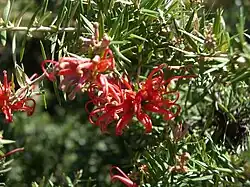
Grevillea juniperina, commonly known as juniper- or juniper-leaf grevillea or prickly spider-flower, is a plant of the family Proteaceae native to eastern New South Wales and southeastern Queensland in Australia. Scottish botanist Robert Brown described the species in 1810, and seven subspecies are recognised. One subspecies, G.j. juniperina, is restricted to Western Sydney and environs and is threatened by loss of habitat and housing development.
A small, prickly-leaved shrub between 0.2–3m (0.66–9.84ft) high, G.juniperina generally grows on clay-based or alluvial soils in eucalyptwoodland. The flower heads, known as inflorescences, appear from winter to early summer and are red, orange or yellow. Birds visit and pollinate the flowers. Grevillea juniperina plants are killed by bushfire, regenerating afterwards from seed. Grevillea juniperina adapts readily to cultivation and has been important in horticulture as it is the parent of many popular garden hybrids. (Full article...)
Image 3
Bartlett's rātā (centre) in Te Paki
Metrosideros bartlettii, commonly known as Bartlett's rātā, is a rare species of tree in the family Myrtaceae. It is endemic to the Northland Region in New Zealand's North Island. Bartlett's rātā reaches a height of up to 30 metres (100 feet) with a trunk of 1–1.5 metres (3ft 3in– 4ft 11in) in diameter. The species is classified in the subgenusMetrosideros and is known for its distinct whitish, paper-like bark and small white-coloured flowers. Bartlett's rātā was first discovered in 1975 by the New Zealand botanist and schoolteacher John Bartlett, who accidentally discovered the species while searching for liverworts near Cape Reinga. It was first described by botanist John Dawson in a 1985 article in the New Zealand Journal of Botany.
Bartlett's rātā's range covers the northern tip of the Aupōuri Peninsula, in three dense forest remnants near Piwhane / Spirits Bay. Bartlett's rātā typically begins life as an epiphyte (growing on another plant); it inhabits lowland forests and is usually found growing near wet areas. A 2018 article by the New Zealand Plant Conservation Network documented 13 adult trees in the wild, a significant decrease from another research article in 2000 that documented 31 wild adult trees. The species has a high chance of becoming extinct in the wild unless immediate conservation measures are taken to stop its ongoing decline, which has been attributed to land use changes following human settlement and the introduction of common brushtail possums, which browse its buds, flowers, and shoots. Bartlett's rātā's conservation status was assessed by the IUCN Red List in 2013 as critically endangered, and its population trend was assessed as decreasing. (Full article...)
Banksia integrifolia, commonly known as the coast banksia, is a species of tree that grows along the east coast of Australia. One of the most widely distributed Banksia species, it occurs between Victoria and Central Queensland in a broad range of habitats, from coastal dunes to mountains. It is highly variable in form, but is most often encountered as a tree up to 25 metres (82ft) in height. Its leaves have dark green upper surfaces and white undersides, a contrast that can be striking on windy days.
Lambertia formosa, commonly known as mountain devil, is a shrub of the family Proteaceae, endemic to New South Wales, Australia. First described in 1798 by English botanist James Edward Smith, it is the type species of the small genus Lambertia. It is generally found in heathland or open forest, growing in sandstone-based soils. It grows as a multistemmed shrub to around 2m (7ft) with a woody base known as a lignotuber, from which it regrows after bushfire. It has stiff narrow leaves, and the pink to red flowerheads, made up of seven individual tubular flowers, generally appear in spring and summer. It gains its common name from the horned woody follicles, which were used to make small devil-figures.
The flowers hold profuse amounts of nectar and are pollinated by honeyeaters. Although L.formosa is uncommon in cultivation, it is straightforward to grow in soils with good drainage and a partly shaded to sunny aspect. It is readily propagated by seed. Unlike all other members of the genus Lambertia, L.formosa is greatly resistant to the soil pathogen Phytophthora cinnamomi. (Full article...)
Isopogon anemonifolius, commonly known as broad-leaved drumsticks, is a shrub of the family Proteaceae that is native only to eastern New South Wales in Australia. It occurs naturally in woodland, open forest, and heathland on sandstone soils. I.anemonifolius usually ranges between one and two metres in height, and is generally smaller in exposed heathland. Its leaves are divided and narrow, though broader than those of the related Isopogon anethifolius, and have a purplish tinge during the cooler months. The yellow flowers appear during late spring or early summer and are displayed prominently. They are followed by round grey cones, which give the plant its common name drumsticks. The small hairy seeds are found in the old flower parts.
A long-lived plant reaching an age of up to 60 years, I.anemonifolius resprouts from its woody base, known as a lignotuber, after bushfire. Seedlings appear in the year following a fire. Although I.anemonifolius was collected by Daniel Solander in 1770, it was not described until 1796 by Richard Salisbury. Several varieties have been named, though none are now recognised as distinct. It was first cultivated in the United Kingdom in 1791. I.anemonifolius grows readily in the garden if located in a sunny or part-shaded spot with sandy soil and good drainage. (Full article...)
Aiphanes is a genus of spinypalms which is native to tropical regions of South and Central America and the Caribbean. There are about 26 species in the genus (see below), ranging in size from understorey shrubs with subterranean stems to subcanopy trees as tall as 20 metres (66ft). Most have pinnately compound leaves (leaves which are divided into leaflets arranged feather-like, in pairs along a central axis); one species has entire leaves. Stems, leaves and sometimes even the fruit are covered with spines. Plants flower repeatedly over the course of their lifespan and have separate male and female flowers, although these are borne together on the same inflorescence. Although records of pollinators are limited, most species appear to be pollinated by insects. The fruit are eaten by several birds and mammals, including at least two species of amazon parrots.
Carl Ludwig Willdenow coined the name Aiphanes in 1801. Before that, species belonging to the genus had been placed in Bactris or Caryota. The name Martinezia had also been applied to the genus, and between 1847 and 1932 it was generally used in place of Aiphanes. Max Burret resurrected the name Aiphanes in 1932 and laid the basis for the modern concept of the genus. Aiphanes is most closely related to several other genera of spiny palms—Acrocomia, Astrocaryum, Bactris and Desmoncus. Two species are widely planted as ornamentals and the fruit, seeds or palm heart of several species have been eaten by indigenous peoples of the Americas for millennia. (Full article...)
Image 8
Georg Forster in 1781, age 26
Johann George Adam Forster, also known as Georg Forster (German:[ˈɡeːɔʁkˈfɔʁstɐ]; 27 November 1754 – 10 January 1794), was a German geographer, naturalist, ethnologist, travel writer, journalist and revolutionary. At an early age, he accompanied his father, Johann Reinhold Forster, on several scientific expeditions, including James Cook's second voyage to the Pacific. His report of that journey, A Voyage Round the World, contributed significantly to the ethnology of the people of Polynesia and remains a respected work. As a result of the report, Forster, who was admitted to the Royal Society at the early age of twenty-two, came to be considered one of the founders of modern scientific travel literature.
After returning to continental Europe, Forster turned toward academia. He taught natural history at the Collegium Carolinum in the Ottoneum, Kassel (1778–84), and later at the Academy of Vilna (Vilnius University) (1784–87). In 1788, he became head librarian at the University of Mainz. Most of his scientific work during this time consisted of essays on botany and ethnology, but he also prefaced and translated many books about travel and exploration, including a German translation of Cook's diaries. (Full article...)
Image 9
Inflorescence with unopened buds (left), opened flowers (right)
Banksia marginata, commonly known as the silver banksia, is a species of tree or shrub in the family Proteaceae found throughout much of southeastern Australia. It ranges from the Eyre Peninsula in South Australia to north of Armidale, New South Wales, and across Tasmania and the islands of Bass Strait. It grows in various habitats, including Eucalyptus forest, scrub, heathland and moorland. Banksia marginata varies widely in habit, ranging from a 20-centimetre (7.9in) shrub to a 12-metre (40ft) tree. The narrow leaves are linear and the yellow inflorescences occur from late summer to early winter. These flower spikes fade to brown and then grey and develop woody follicles bearing the winged seeds. Originally described by Antonio José Cavanilles in 1800, further collections of B.marginata were designated as several separate species by Robert Brown in 1810. However, all were reclassified as a single species by George Bentham in 1870. No distinct subspecies have been recognised by Banksia expert Alex George, who nonetheless concedes that further work is needed.
Many species of bird, in particular honeyeaters, forage at the flower spikes, as do native and European honeybees. The response to bushfire varies. Some populations are serotinous: they are killed by fire and regenerate from large stores of seed, which have been held in cones in the plant canopy and are released after a fire. Others regenerate from underground lignotubers or suckers from lateral roots. Although it has been used for timber, Banksia marginata is most commonly seen as a garden plant, with dwarf forms being commercially propagated and sold. (Full article...)
Banksia spinulosa, the hairpin banksia, is a species of woody shrub, of the genus Banksia in the family Proteaceae, native to eastern Australia. Widely distributed, it is found as an understorey plant in open dry forest or heathland from Victoria to northern Queensland, generally on sandstone though sometimes also clay soils. It generally grows as a small shrub to 2 metres (7ft) in height, though can be a straggly tree to 6 metres (20ft). It has long narrow leaves with inflorescences which can vary considerably in coloration; while the spikes are gold or less commonly yellowish, the emergent styles may be a wide range of colours – from black, purple, red, orange or yellow.
Banksia spinulosa was named by James Edward Smith in England in 1793, after being collected by John White, most likely in 1792. He gave it the common name prickly-leaved banksia, though this has fallen out of use. With four currently recognised varieties, the species has had a complicated taxonomic history, with two varieties initially described as separate species in the early 19th century. A fourth, from the New England region, has only recently been described. However, there has been disagreement whether one, var.cunninghamii, is distinct enough to once again have specific status. The pre-eminent authority on Banksia, Alex George, concedes there is still more work to be done on the Banksia spinulosa complex. (Full article...)
Image 11
Banksia prionotes, commonly known as acorn banksia or orange banksia, is a species of shrub or tree of the genus Banksia in the family Proteaceae. It is native to the southwest of Western Australia and can reach up to 10m (33ft) in height. It can be much smaller in more exposed areas or in the north of its range. This species has serrated, dull green leaves and large, bright flower spikes, initially white before opening to a bright orange. Its common name arises from the partly opened inflorescence, which is shaped like an acorn. The tree is a popular garden plant and also of importance to the cut flower industry.
Banksia prionotes was first described in 1840 by English botanist John Lindley, probably from material collected by James Drummond the previous year. There are no recognised varieties, although it has been known to hybridise with Banksia hookeriana. Widely distributed in south-west Western Australia, B.prionotes is found from Shark Bay (25° S) in the north, south as far as Kojonup (33°50′S). It grows exclusively in sandy soils, and is usually the dominant plant in scrubland or low woodland. Pollinated by birds, it provides food for a wide array of vertebrate and invertebrate animals in the autumn and winter months. It is an important source of food for honeyeaters (Meliphagidae), and is critical to their survival in the Avon Wheatbelt region, where it is the only nectar-producing plant in flower at some times of the year. (Full article...)
Image 12
Banksia scabrella, commonly known as the Burma Road banksia, is a species of woody shrub in the genus Banksia. It is classified in the series Abietinae, a group of several species of shrubs with small round or oval inflorescences. It occurs in a number of isolated populations south of Geraldton, Western Australia, with the largest population being south and east of Mount Adams. Found on sandy soils in heathland or shrubland, it grows to 2m (7ft) high and 3m (10ft) across with fine needle-like leaves. Appearing in spring and summer, the inflorescences are round to oval in shape and tan to cream with purple styles. Banksia scabrella is killed by fire and regenerates by seed.
Originally collected in 1966, B.scabrella was one of several species previously considered to be forms of Banksia sphaerocarpa, before it was finally described by banksia expert Alex George in his 1981 revision of the genus. Like many members of the Abietinae, it is rarely seen in cultivation; however, it has been described as having horticultural potential. (Full article...)
Image 13
Margaret Sibella Brown (March 2, 1866–November 16, 1961) was a Canadian amateur bryologist specializing in mosses and liverworts native to Nova Scotia. Early in her career she was involved with gathering supplies of sphagnum moss to be used as surgical dressings during World War I, when cotton was in short supply. After the war, she researched mosses from around the world, collecting specimens in Europe, the Caribbean, and the United States, as well as her native Canada. She published several papers in academic journals, some on materials she had collected herself and some cataloging samples collected by other investigators. Samples she collected are now housed at several major herbaria in North America and Europe.
Born into upper-class society, Brown was educated in Halifax, Stuttgart, and London. Although lacking formal scientific training, she has been recognized for her contributions to bryology and as an authority on the mosses and liverworts of Nova Scotia. At the age of 84, Brown was awarded an honorary M.A. degree from Acadia University after declining their offer of a Ph.D. She died at her home in Halifax in 1961 aged 95. In 2010, she was inducted into the Nova Scotia Scientific Hall of Fame. (Full article...)
Image 14
Symphyotrichum lateriflorum (formerly Aster lateriflorus) is a species of flowering plant in the aster family (Asteraceae). Commonly known as calico aster, starved aster, and white woodland aster, it is native to eastern and central North America. It is a perennial and herbaceous plant that may reach heights up to 120 centimeters (4 feet) and widths up to 30 centimeters (1 foot).
The flowers of calico aster are small compared to most Symphyotrichum species. They have an average of 7–15 short white ray florets, which are rarely tinted pink or purple. The flower centers, composed of disk florets, begin as cream to yellow and often become pink, purple, or brown as they mature. There are roughly 8–16 disk florets, each with five lobes that strongly reflex (bend backwards) when open. The mostly hairless leaves have a characteristic hairy midrib on their back faces, and branching is usually horizontal or in what can appear to be a zigzag pattern. Flower heads grow along one side of the branches and sometimes in clusters at the ends. (Full article...)
Banksia aemula, commonly known as the wallum banksia, is a shrub of the family Proteaceae. Found from Bundaberg south to Sydney on the Australian east coast, it is encountered as a shrub or a tree to 8m (26ft) in coastal heath on deep sandy soil, known as Wallum. It has wrinkled orange bark and shiny green serrated leaves, with green-yellow flower spikes, known as inflorescences, appearing in autumn. The flower spikes turn grey as they age and large grey follicles appear. Banksia aemula resprouts from its woody base, known as a lignotuber, after bushfires.
First described by the botanist Robert Brown in the early 19th century, it derives its specific name 'similar' from its resemblance to the closely related B.serrata. No varieties are recognised. It was known for many years in New South Wales as B.serratifolia, contrasting with the use of B.aemula elsewhere. However, the former name, originally coined by Richard Anthony Salisbury, proved invalid, and Banksia aemula has been universally adopted as the correct scientific name since 1981. A wide array of mammals, birds, and invertebrates visit the inflorescences and are instrumental in pollination; honeyeaters are particularly prominent visitors. Grown as a garden plant, it is less commonly seen in horticulture than its close relative B.serrata. (Full article...)
Selected articles -
Image 1
Production of new individuals along a leaf margin of the air plant, Kalanchoe pinnata. The small plant in front is about 1 cm tall. The concept of "individual" is stretched by this process. Vegetative reproduction (also known as vegetative propagation, vegetative multiplication or cloning) is a form of asexual reproduction occurring in plants in which a new plant grows from a fragment or cutting of the parent plant or specialized reproductive structures, which are sometimes called vegetative propagules.
Many plants naturally reproduce this way, but it can also be induced artificially. Horticulturists have developed asexual propagation techniques that use vegetative propagules to replicate plants. Success rates and difficulty of propagation vary greatly. Monocotyledons typically lack a vascular cambium, making them more challenging to propagate. (Full article...)
Image 2
A fine root is most commonly defined as a plant root that is two millimeters or less in diameter. Fine roots may function in acquisition of soil resources (eg. nutrients, water) and/or resource transport, making them functionally most analogous to the leaves and twigs in a plant's shoot system. Fine-root traits are variable between species and responsive to environmental conditions. Consequently, fine roots are studied to characterize the resource acquisition strategies and competitive ability of plant species. Categories of fine roots have been developed based on root diameter, position in a root system's branching hierarchy, and primary function. Fine roots are often associated with symbiotic fungi and play a role in many ecosystem processes like nutrient cycles and soil reinforcement. (Full article...)
Sugarcane was an ancient crop of the Austronesian and Papuan people. The best evidence available today points to the New Guinea area as the site of the original domestication of Saccharum officinarum. It was introduced to Polynesia, Island Melanesia, and Madagascar in prehistoric times via Austronesian sailors. It was also introduced by Austronesian sailors to India and then to Southern China by 500 BC, via trade. The Persians and Greeks found "that reeds in India yield honey without bees", as said by Strabo, between the sixth and fourth centuries BC. They adopted and then spread sugarcane agriculture. By the eighth century, sugar was considered a luxurious and expensive spice from India, and merchant trading spread its use across the Mediterranean and North Africa. In the 18th century, sugarcane plantations began in the Caribbean, South American, Indian Ocean, and Pacific island nations. The need for sugar crop laborers became a major driver of large migrations, some people voluntarily accepting indentured servitude and others forcibly imported as slaves. (Full article...)
Image 4
Edith Gertrude Clements (1874–1971), also known as Edith S. Clements and Edith Schwartz Clements, was an American botanist and pioneer of botanical ecology who was the first woman to be awarded a Ph.D. by the University of Nebraska. She was married to botanist Frederic Clements, with whom she collaborated throughout her professional life. Together they founded the Alpine Laboratory, a research station at Pikes Peak, Colorado. Clements was also a botanical artist who illustrated her own books as well as joint publications with Frederic.
Both Clementses were involved with the study of phytogeography, especially those factors determining the ecology of vegetation in particular regions, and they would be praised as "the most illustrious husband-wife team since the Curies." It is impossible to entirely disentangle the work of each Clementses as they worked together during their noteworthy years. (Full article...)
Image 5
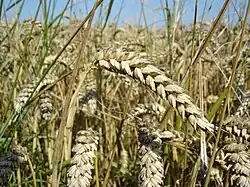
The Yecoro wheat (right) cultivar is sensitive to salinity, plants resulting from a hybrid cross with cultivar W4910 (left) show greater tolerance to high salinity
Plant breeding is the science of changing the traits of plants in order to produce desired characteristics. It is used to improve the quality of plant products for use by humans and animals. The goals of plant breeding are to produce crop varieties that boast unique and superior traits for a variety of applications. The most frequently addressed agricultural traits are those related to biotic and abiotic stress tolerance, grain or biomass yield, end-use quality characteristics such as taste or the concentrations of specific biological molecules (proteins, sugars, lipids, vitamins, fibers) and ease of processing (harvesting, milling, baking, malting, blending, etc.).
Plant breeding can be performed using many different techniques, ranging from the selection of the most desirable plants for propagation, to methods that make use of knowledge of genetics and chromosomes, to more complex molecular techniques. Genes in a plant are what determine what type of qualitative or quantitative traits it will have. Plant breeders strive to create a specific outcome of plants and potentially new plant varieties, and in the course of doing so, narrow down the genetic diversity of that variety to a specific few biotypes. (Full article...)
Image 6
Evolutionary developmental biology (evo-devo) is the study of developmental programs and patterns from an evolutionary perspective. It seeks to understand the various influences shaping the form and nature of life on the planet. Evo-devo arose as a separate branch of science rather recently. An early sign of this occurred in 1999.
Lack of the plant hormone auxin can cause abnormal growth (right)
Plant hormones (or phytohormones) are signal molecules, produced within plants, that occur in extremely low concentrations. Plant hormones control all aspects of plant growth and development, including embryogenesis, the regulation of organ size, pathogen defense, stress tolerance and reproductive development. Unlike in animals (in which hormone production is restricted to specialized glands) each plant cell is capable of producing hormones. Went and Thimann coined the term "phytohormone" and used it in the title of their 1937 book.
Among all living organisms, flowers, which are the reproductive structures of flowering plants (angiosperms), are the most varied physically and show a correspondingly great diversity in methods of reproduction. Plants that are not flowering plants (green algae, mosses, liverworts, hornworts, ferns and gymnosperms such as conifers) also have complex interplays between morphological adaptation and environmental factors in their sexual reproduction. (Full article...)
Flowering plants are plants that bear flowers and fruits, and form the cladeAngiospermae (/ˌændʒiəˈspɜːrmiː/). The term angiosperm is derived from the Greek words ἀγγεῖον (angeion; 'container, vessel') and σπέρμα (sperma; 'seed'), meaning that the seeds are enclosed within a fruit. The group was formerly called Magnoliophyta.
Originating in South America, Solanaceae now inhabit every continent on Earth with the sole exception of Antarctica. After the K–Pg extinction event they rapidly diversified and have adapted to live in deserts, tundras, rainforests, plains, and highlands, and taken on wide range of forms including trees, vines, shrubs, and epiphytes. Nearly 80% of all nightshades are included in the subfamily Solanoideae, most of which are members of the type genus Solanum. Most taxonomists recognize six other subfamilies: Cestroideae, Goetzeoideae, Nicotianoideae, Petunioideae, Schizanthoideae, and Schwenkioideae, although nightshade taxonomy is still controversial. The genus Duckeodendron is sometimes placed in its own subfamily, Duckeodendroideae. (Full article...)
Image 11
Acclimatisation societies were voluntary associations, founded in the 19th and 20th centuries, that encouraged the introduction of non-native species in various places around the world, in the hope that they would acclimatise and adapt to their new environments. The societies formed during the colonial era, when Europeans began to settle in numbers in unfamiliar locations. One motivation for the activities of the acclimatisation societies was that introducing new species of plants and animals (mainly from Europe) would enrich the flora and fauna of target regions. The movement also sought to establish plants and animals that were familiar to Europeans, while also bringing exotic and useful foreign plants and animals to centres of European settlement. (Full article...)
Image 12
Monocotyledons (/ˌmɒnəˌkɒtəˈliːdənz/), commonly referred to as monocots (Lilianaesensu Chase & Reveal), are flowering plants whose seeds contain only one embryonic leaf, or cotyledon. A monocot taxon has been in use for several decades, but with various ranks and under several different names. The APG IV system recognises its monophyly but does not assign it to a taxonomic rank, and instead uses the term "monocots" to refer to the group.
Monocotyledons are contrasted with the dicotyledons, which have two cotyledons. Unlike the monocots however, the dicots are not monophyletic and the two cotyledons are instead the ancestral characteristic of all flowering plants. Botanists now classify dicots into the eudicots ("true dicots") and several basal lineages from which both the eudicots and monocots emerged. (Full article...)
Opuntia, commonly called the prickly pear cactus, is a genus of flowering plants in the cactusfamily Cactaceae, many known for their flavorful fruit and showy flowers. Between 8,000 and 9,000 years ago, the Opuntia prickly pear cactus was domesticated in central Mexico. Cacti are native to the Americas, and are well adapted to arid climates; however, they are still vulnerable to alterations in precipitation and temperature driven by climate change. The plant has been introduced to Australia, southern Europe, the Middle East, and parts of Africa.
Prickly pear alone is also used to refer to the fruit, but may also be used for the plant itself; in addition, other names given to the plant and its specific parts include tuna (fruit), sabra, sabbar, nopal (pads, plural nopales, from the Nahuatl word nōpalli), nostle (fruit) from the Nahuatl word nōchtli, and paddle cactus. The genus is named for the Ancient Greek city of Opus. The fruit and stems are edible. The most common culinary species is the "Barbary fig" (Opuntia ficus-indica). (Full article...)
Image 14
Australia, 1907: Cattlemen survey 700 cattle that were killed overnight by poisonous plants
Plants that cause illness or death after consuming them are referred to as poisonous plants. The toxins in poisonous plants affect herbivores, and deter them from consuming the plants. Plants cannot move to escape their predators, so they must have other means of protecting themselves from herbivorous animals. Some plants have physical defenses such as thorns, spines and prickles, but by far the most common type of protection is chemical.
Over millennia, through the process of natural selection, plants have evolved the means to produce a vast and complicated array of chemical compounds to deter herbivores. Tannin, for example, is a defensive compound that emerged relatively early in the evolutionary history of plants, while more complex molecules such as polyacetylenes are found in younger groups of plants such as the Asterales. Many of the known plant defense compounds primarily defend against consumption by insects, though other animals, including humans, that consume such plants may also experience negative effects, ranging from mild discomfort to death. (Full article...)
The International Code of Nomenclature for algae, fungi, and plants (ICN or ICNafp) is the set of rules and recommendations dealing with the formal botanical names that are given to plants, fungi and a few other groups of organisms, all those "traditionally treated as algae, fungi, or plants". It was formerly called the International Code of Botanical Nomenclature (ICBN); the name was changed at the International Botanical Congress in Melbourne in July 2011 as part of the Melbourne Code which replaced the Vienna Code of 2005.
The ICN can only be changed by an International Botanical Congress (IBC), with the International Association for Plant Taxonomy providing the supporting infrastructure. Each new edition supersedes the earlier editions and is retroactive back to 1753, except where different starting dates are specified. (Full article...)
Flowering plants are plants that bear flowers and fruits, and form the cladeAngiospermae (/ˌændʒiəˈspɜːrmiː/). The term angiosperm is derived from the Greek words ἀγγεῖον (angeion; 'container, vessel') and σπέρμα (sperma; 'seed'), meaning that the seeds are enclosed within a fruit. The group was formerly called Magnoliophyta.
Veronica jovellanoides, commonly known as Riverhead speedwell, is a threatened flowering plant in the family Plantaginaceae. It is endemic to New Zealand, where only three plants are known in the wild. All are found within the Ernest Morgan Reserve, a 20ha forest northwest of Auckland. Its discovery is accredited to a retired plant nursery owner, Geoff Davidson, who organised the land's protection a few decades prior, and found it by chance on a walk in November 2007.
V. jovellanoides has a prostrate growth habit, forming large 2 to 3m (6.6 to 9.8ft) mats on the ground, and long stems with small, spatula-shaped leaves. Flowering begins in spring (September to November in New Zealand), producing small four-petalled white flowers which have a purple ring around their throats; the inner and centre-most section of the flower. Once pollinated, these become small brown seeds which are dispersed by the wind. (Full article...)
Image 3
Trunks, also called boles, are the stems of woody plants and the main structural element of trees. The woody part of the trunk consists of dead but structurally significant heartwood and living sapwood, which is used for nutrient storage and transport. Separating the wood from the bark is the cambium, from which trunks grow in diameter. Bark is divided between the living inner bark (the phloem), which transports sugars, and the outer bark, which is a dead protective layer.
The precise cellular makeup of these components differs between non-flowering plants (gymnosperms) and flowering plants (angiosperms). A variety of specialised cells facilitate the storage of carbohydrates, water, minerals, and transport of water, minerals, and hormones around the plant. Growth is achieved by division of these cells. Vertical growth is generated from the apical meristems (stem tips), and horizontal (radial) growth, from the cambium. Growth is controlled by hormones, which send chemical signals for how and when to grow. (Full article...)
Image 4
The Linnaean Herbarium (herbarium code: LINN) is a historically significant collection of over 13,000 dried plant and lichen specimens assembled by the Swedish taxonomist Carl Linnaeus (1707–1778). Housed at the Linnean Society of London since 1828 (and at its current location in Burlington House since 1873), it forms the foundation of modern botanical nomenclature and serves as the primary reference for Linnaeus's 1753 work Species Plantarum, the starting point for modern plant taxonomy. The herbarium includes specimens from Linnaeus's botanical explorations and global collaborations, spanning early Swedish collections to acquisitions from the Americas, Asia, and Africa.
The collection, begun during Linnaeus's student days, expanded considerably during his time in the Netherlands and England. After Linnaeus's death, his son inherited the herbarium, which was sold to English botanist James Edward Smith in 1784. Smith's acquisition and subsequent founding of the Linnean Society of London advanced the Linnaean system globally. The herbarium's organisation remains largely as Linnaeus's son left it in 1783, offering context for interpreting Linnaeus's specific names. (Full article...)
Image 5
Rose Marie "Jane" Ingham (néeTupper‑Carey/ˌtˈʌpəˈkɛəri/ⓘ; 15 August 1897–10 September 1982) was an English botanist and scientific translator. She was appointed research assistant to Joseph Hubert Priestley in the Botany Department at the University of Leeds, and together, they were the first to separate cell walls from the root tip of broad beans. They analysed these cell walls and concluded that they contained protein. She carried out experiments on the cork layer of trees to study how cells function under a change of orientation and found profound differences in cell division and elongation in the epidermal layer of plants.
At Leeds, Ingham was appointed sub-warden of Weetwood Hall, and honorary secretary of the British-Italian League. In 1930, she joined the Imperial Bureau of Plant and Crop Genetics at the School of Agriculture in Cambridge, England, as a scientific officer and translator. The bureau was responsible for publishing a series of abstract journals on various aspects of crop breeding and genetics. In 1932, she married Albert Ingham, then a fellow and director of studies at King's College, Cambridge. Ingham spent the war years in Princeton, New Jersey, with her two sons, not wishing to return to England after travelling to the US just before the outbreak of World War II. In the last years of her life, she and her husband travelled extensively, and in 1982, she died at Cambridge. (Full article...)
Image 6
Acer rubrum, the red maple, also known as swamp maple, water maple, or soft maple, is one of the most common and widespread deciduous trees of eastern and central North America. The U.S. Forest Service recognizes it as the most abundant native tree in eastern North America. The red maple ranges from southeastern Manitoba around the Lake of the Woods on the border with Ontario and Minnesota, east to Newfoundland, south to Florida, and southwest to East Texas. Many of its features, especially its leaves, are quite variable in form. At maturity, it often attains a height around 30m (100ft). Its flowers, petioles, twigs, and seeds are all red to varying degrees. Among these features, however, it is best known for its brilliant deep scarlet foliage in autumn.
Over most of its range, red maple is adaptable to a very wide range of site conditions, perhaps more so than any other tree in eastern North America. It can be found growing in swamps, on poor, dry soils, and almost anywhere in between. It grows well from sea level to about 900m (3,000ft). Due to its attractive fall foliage and pleasing form, it is often used as a shade tree for landscapes. It is used commercially on a small scale for maple syrup production and for its medium to high quality lumber. It is the state tree of Rhode Island. The red maple can be considered weedy or even invasive in young, highly disturbed forests, especially frequently logged forests. In a mature or old-growth northern hardwood forest, red maple only has a sparse presence, while shade-tolerant trees such as sugar maples, beeches, and hemlocks thrive. By removing red maple from a young forest recovering from disturbance, the natural cycle of forest regeneration is altered, changing the diversity of the forest for centuries to come. (Full article...)
Image 7
Aquilegia vulgaris is a species of perennial flowering plant of the genus Aquilegia (columbine) in the family Ranunculaceae. Commonly called the common columbine, European crowfoot, and granny's bonnet, it presently possesses the most expansive range and greatest morphological variability in its genus. The current wild range of A.vulgaris includes its native range in Europe as well as introduced populations in Asia, Oceania, North America (where it has become naturalized), and South America.
The wild form of A.vulgaris grow flowering stems that can reach 90cm (35in) tall and often form a bushy clump at its base. In its native range, the species blooms from May to June. The flowers, with diameters measuring up to 60mm (2.4in) across, are typically blue or purple and possess petals with structures known as nectar spurs. (Full article...)
Image 8
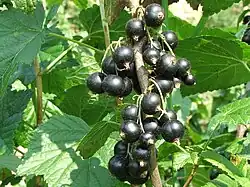
Berries
The blackcurrant (Ribes nigrum), black currant or cassis is a deciduous shrub in the family Grossulariaceae grown for its edible berries. It is native to temperate parts of central and northern Europe and northern Asia, where it prefers damp fertile soils. It is widely cultivated both commercially and domestically.
It is winter hardy, but cold weather at flowering time during the spring may reduce the size of the crop. Bunches of small, glossy black fruit develop along the stems in the summer and can be harvested by hand or by machine. (Full article...)
Image 9
The bush coconut, or bloodwood apple, is an Australian bush tucker food. It is an insect gall with both plant and animal components: an adult female scale insect and her offspring (of genus Cystococcus) live in a gall induced on a bloodwood eucalypt tree (Corymbia). Bush coconuts can vary from golf ball to tennis ball size. They have a hard and lumpy outer layer. The inner layer is a white flesh that contains the female insect and her offspring. There are three known species of Cystococcus responsible for forming the bush coconut: Cystococcus pomiformis, Cystococcus echiniformis and Cystococcus campanidorsalis. C. pomiformis is the most common species. The bush coconut is found in Western Australia, the Northern Territory, Queensland and New South Wales.
The bush coconut is picked from the host tree and cracked open to allow the flesh and scale insects to be eaten. Both have a high protein content and are used as a food source by humans and other animals. The name 'bush coconut' is derived from the white flesh of the inner layer, which is similar in appearance to that of a coconut, and the taste of the flesh has been said to have a coconut flavour. The bush coconut has been depicted in Indigenous Australian dreaming and used as inspiration in their artwork. (Full article...)
A banana is an elongated, edible fruit that is botanically a berry produced by several kinds of large treelike herbaceousflowering plants in the genusMusa. In some countries, cooking bananas are called plantains, distinguishing them from dessert bananas. The fruit is variable in size, color and firmness, but is usually elongated and curved, with soft flesh rich in starch covered with a peel, which may have a variety of colors when ripe. It grows upward in clusters near the top of the plant. Almost all modern edible seedless (parthenocarp) cultivated bananas come from two wild species – Musa acuminata and Musa balbisiana, or their hybrids.
Musa species are native to tropical Indomalaya and Australia; they were probably domesticated in New Guinea. They are grown in 135 countries, primarily for their fruit, and to a lesser extent to make banana paper and textiles, while some are grown as ornamental plants. The world's largest producers of bananas in 2022 were India and China, which together accounted for approximately 26% of total production. Bananas are eaten raw or cooked in recipes varying from curries to banana chips, fritters, fruit preserves, or simply baked or steamed. (Full article...)
Conifers first appear in the fossil record over 300 million years ago in the Carboniferous. They became dominant land plants in the Mesozoic, until flowering plants took over many ecosystems in the Cretaceous. Many conifers today are relict species, surviving in a small part of their former ranges. Such relicts include Wollemia, known only from a small area of Australia, and Metasequoia glyptostroboides, known from Cretaceous fossils and surviving in a small area of China. (Full article...)
Hypericum iwatelittorale, originally styled Hypericum iwate-littorale, is a species of flowering plant of the St John's wort family (Hypericaceae). Named for its habitat in the coastal regions of the Iwate Prefecture in Japan, the species is a small perennial herb with many small star-shaped flowers of bright yellow petals. It grows upright, with oval to elliptical leaves that are papery in texture and have an array of glands. Each flower has dozens of stamens, and the seeds are dark brown.
Described in 1937 by Japanese botanist Hideo Koidzumi, Hypericum iwatelittorale has at times been considered a synonym of H.pseudopetiolatum. However, it was accepted as a valid species in 2003 by English botanist Norman Robson. Robson placed the species into the type section of Hypericum, and noted its similarities to H.tosaense. While several conservation surveys have included the species, each classified it as data deficient and gave no assessment as to its status. (Full article...)
Prumnopitys taxifolia, commonly known as mataī and black pine, is a species of tree in the family Podocarpaceae. It is a dioecious evergreen conifer reaching 30 metres (100 feet) in height, with a stout trunk up to 2m (6ft 7in) in diameter, typically inhabiting lowland to montane forests. It is endemic to New Zealand; its range mainly covers the North and South Islands, it is also found on Stewart Island, but is uncommon there. P. taxifolia is a slow-growing tree and is highly shade-tolerant. P. taxifolia is profoundly heteroblastic; its young form is distinct and resembles a divaricating-wiry shrub, which may last for up to 60 years. It is unknown why P. taxifolia developed this characteristic. P. taxifolia has an average lifespan of 600 years, although it sometimes may live longer than 1000 years.
Prumnopitys taxifolia was first described by the British botanist Aylmer Bourke Lambert in 1832. The fruits of P. taxifolia are dispersed by fruit-eating animals (frugivores), and the tree is pollinated by the wind. It is common on fertile and well-drained soils, although it can still grow well in drier climates. P. taxifolia's timber is noted for its strength and durability, and was historically used for building bridges and houses, railway sleepers, and furniture-making. The conservation status of P. taxifolia was assessed by the IUCN Red List in 2013 as "Least Concern". (Full article...)
Image 14
Richard Buxton aged 65, daguerreotype by John Benjamin Dancer Richard Buxton (15 January 1785 – 2 January 1865) was a British shoemaker and amateur botanist. Born in Prestwich, Lancashire, to a family who lived in humble circumstances, he taught himself to read, and learned the basic principles of botany. Although living as a pauper for most of his life, in 1849 he published A Botanical Guide to the Flowering Plants, Ferns, Mosses and Algæ, Found Indigenous Within Sixteen Miles of Manchester, which became one of the standard texts on the flora then commonly found in the Manchester area. According to his obituary in the Journal of Botany, British and Foreign, Buxton was one of "nature's gentlemen" and "his true and correct pronunciation of scientific terms have caused many who heard him to believe he was an accomplished classical scholar". He was acknowledged by the geologist Edward William Binney as "the most profound thinker of his class". (Full article...)
Firs are evergreenconiferous trees belonging to the genusAbies (Latin:[ˈabieːs]) in the family Pinaceae. There are approximately 48–65 extant species, found on mountains throughout much of North and Central America, Eurasia, and North Africa. The genus is most closely related to Keteleeria, a small genus confined to eastern Asia.
They are tall trees that can be distinguished from other members of the pine family by the way in which their needle-like leaves are attached singly to the branches with a circular base, and by their cones, which, like those of cedars, stand upright on the branches like candles and disintegrate at maturity. (Full article...)
Did you know (auto-generated) -
... that Erna Meyer urged the Jewish immigrant readers of How to Cook in Palestine to try olives and eggplants, but doubted their ability to eat spicy food like the "native population"?
... that Marie Catharine Neal, an expert on Hawaiian plants, authored the acclaimed book In Gardens of Hawaii in 1948, which described more than 2,000 species with detailed scientific information and illustrations?
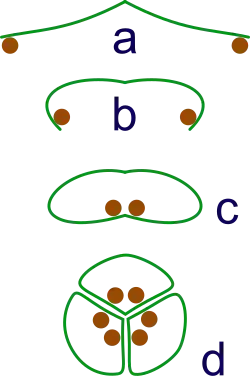
Image 19The evolution of syncarps. a: sporangia borne at tips of leaf b: Leaf curls up to protect sporangia c: leaf curls to form enclosed roll d: grouping of three rolls into a syncarp (from Evolutionary history of plants)
Image 20This is an electron micrograph of the epidermal cells of a Brassica chinensis leaf. The stomates are also visible. (from Plant cell)
Image 21Echeveria glauca in a Connecticut greenhouse. Botany uses Latin names for identification; here, the specific name glauca means blue. (from Botany)
Image 22Paper chromatography of some spinach leaf extract shows the various pigments present in their chloroplasts: yellowish xanthophylls, greenish chlorophylls a and b. (from Botany)
Image 23A banded tube from the Late Silurian/Early Devonian. The bands are difficult to see on this specimen, as an opaque carbonaceous coating conceals much of the tube. Bands are just visible in places on the left half of the image. Scale bar: 20μm (from Evolutionary history of plants)
Image 271 An oat coleoptile with the sun overhead. Auxin (pink) is evenly distributed in its tip. 2 With the sun at an angle and only shining on one side of the shoot, auxin moves to the opposite side and stimulates cell elongation there. 3 and 4 Extra growth on that side causes the shoot to bend towards the sun. (from Botany)
Image 28The fruit of Myristica fragrans, a species native to Indonesia, is the source of two valuable spices, the red aril (mace) enclosing the dark brown nutmeg. (from Botany)
Image 29Micropropagation of transgenic plants (from Botany)
Image 31Leaf lamina. The megaphyllous leaf architecture arose multiple times in different plant lineages (from Evolutionary history of plants)
Image 32The Devonian marks the beginning of extensive land colonization by plants, which – through their effects on erosion and sedimentation – brought about significant climatic change. (from Evolutionary history of plants)
Image 35Structure of azadirachtin, a terpenoid produced by the neem plant, which helps ward off microbes and insects. Many secondary metabolites have complex structures (from Evolutionary history of plants)
Image 36A nineteenth-century illustration showing the morphology of the roots, stems, leaves and flowers of the rice plant Oryza sativa (from Botany)
Image 37Structure of a plant cell (from Plant cell)
























 Commons
 Wikidata
 Wikiquote
 Wikisource
 Wikiversity
 Wiktionary
 List of all portals






 Random portal
 WikiProject Portals