Portal:1970s
The 1970s Portal
The 1970s (pronounced "nineteen-seventies"; commonly shortened to the "Seventies" or the "'70s") was a decade that began on January 1, 1970, and ended on December 31, 1979. In the 21st century, historians have increasingly portrayed the 1970s as a "pivot of change" in world history, focusing especially on the economic upheavals[1] that followed the end of the postwar economic boom.[2] On a global scale, it was characterized by frequent coups, domestic conflicts and civil wars, and various political upheavals and armed conflicts which arose from or were related to decolonization, and the global struggle between NATO, the Warsaw Pact, and the Non-Aligned Movement. Many regions had periods of high-intensity conflict, notably Southeast Asia, the Mideast, and Africa. In the Western world, social progressive values that began in the 1960s, such as increasing political awareness and economic liberty of women, continued to grow. In the United Kingdom, the 1979 election resulted in the victory of its Conservative leader Margaret Thatcher, the first female British Prime Minister. Industrialized countries experienced an economic recession due to an oil crisis caused by oil embargoes by the Organization of Arab Petroleum Exporting Countries. The crisis saw the first instance of stagflation which began a political and economic trend of the replacement of Keynesian economic theory with neoliberal economic theory, with the first neoliberal government coming to power with the 1973 Chilean coup d'état. The 1970s was also an era of great technological and scientific advances; since the appearance of the first commercial microprocessor, the Intel 4004 in 1971, the decade was characterised by a profound transformation of computing units – by then rudimentary, spacious machines – into the realm of portability and home accessibility. On the other hand, there were also great advances in fields such as physics, which saw the consolidation of quantum field theory at the end of the decade, mainly thanks to the confirmation of the existence of quarks and the detection of the first gauge bosons in addition to the photon, the Z boson and the gluon, part of what was christened in 1975 as the Standard Model. In Asia, the People's Republic of China's international relations changed significantly following its recognition by the United Nations, the death of Mao Zedong and the beginning of market liberalization by Mao's successors. Despite facing an oil crisis due to the OPEC embargo, the economy of Japan witnessed a large boom in this period, overtaking the economy of West Germany to become the second-largest in the world.[3] The United States withdrew its military forces from the Vietnam War. In 1979, the Soviet Union invaded Afghanistan, which led to the Soviet–Afghan War. The 1970s saw an initial increase in violence in the Middle East as Egypt and Syria declared war on Israel, but in the late 1970s, the situation in the Middle East was fundamentally altered when Egypt signed the Egyptian–Israeli Peace Treaty. Political tensions in Iran exploded with the Iranian Revolution in 1979, which overthrew the Pahlavi dynasty and established an Islamic republic under the leadership of Ayatollah Khomeini. Selected article -"Video Killed the Radio Star" is a song written by Trevor Horn, Geoff Downes, and Bruce Woolley in 1979. It was recorded concurrently by Bruce Woolley and the Camera Club (with Thomas Dolby on keyboards) for their debut studio album, English Garden, and by British new wave/synth-pop group the Buggles, which consisted of Horn and Downes (and initially Woolley). The Buggles' version of the track was recorded and mixed in 1979, released as their debut single on 7 September 1979 by Island Records, and included on their debut studio album, The Age of Plastic. The song relates to concerns about and mixed attitudes toward 20th-century inventions and machines for the media arts. The song has been positively received by music critics, with its reviewers praising its unusual musical pop elements. On release, the Buggles' version topped sixteen international record charts, including those in the United Kingdom, Australia, and Japan. It also peaked in the top 10 in Canada, Germany, New Zealand and South Africa, but only reached number 40 in the United States. It has also been certified Platinum in the United Kingdom and France, and has sold 5,000,000 copies worldwide. (Full article...) Did you know (auto-generated) -
List articles Select [►] to view subcategories
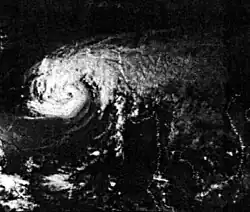
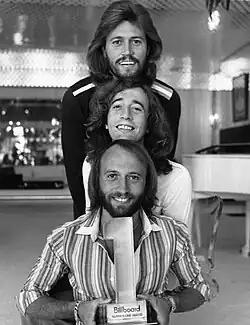
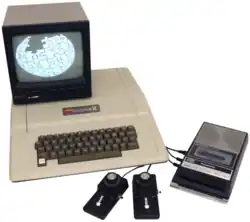
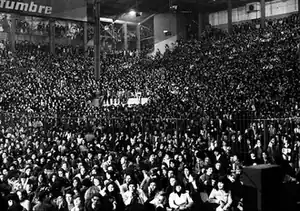
Selected biography -Thelma Catherine "Pat" Nixon (née Ryan; March 16, 1912 – June 22, 1993) was First Lady of the United States from 1969 to 1974 as the wife of Richard Nixon, the 37th U.S. president. From 1953 to 1961, she had been the second lady of the United States when her husband was Dwight D. Eisenhower's vice president. Born in Ely, Nevada, she grew up with her two brothers in Artesia, California, graduating from Excelsior Union High School in Norwalk, California, in 1929. She attended Fullerton Junior College and later the University of Southern California. She paid for her schooling by working multiple jobs, including pharmacy manager, typist, radiographer, and retail clerk. In 1940, she married lawyer Richard Nixon and they had two daughters, Tricia and Julie. Dubbed the "Nixon team", Richard and Pat Nixon campaigned together in his successful congressional campaigns of 1946 and 1948. Richard Nixon was elected vice president in 1952 alongside General Dwight D. Eisenhower, whereupon Pat became second lady. Pat Nixon did much to add substance to the role, insisting on visiting schools, orphanages, hospitals, and village markets as she undertook many missions of goodwill across the world. (Full article...) General images -The following are images from various 1970s-related articles on Wikipedia.
Related portalsCategoriesWikiprojects
Associated WikimediaThe following Wikimedia Foundation sister projects provide more on this subject:
Sources
Discover Wikipedia using portals
|