Line 4 (Guangzhou Metro)
| Line 4 | ||||||||||||||||||||||||||||||||||||||||||||||||||||||||||||||||||||||||||||||||||||||||||||||||||||||||||||||||||||||||||||||||||||||||||||||||||||||||||||||||||||||||||||||||||||||||||||||||||||||||||||||||||||||||||||||||||||||||||||||||||||||||||||||||||||||||||||||||||||||||||||||||||||||||||||||||||||||||||||||||||||||||||||||||||||||||||||||||||||||||||||||||||||||||||||||||||||||||||||||||||||||||||||||||||||||||||||||||
|---|---|---|---|---|---|---|---|---|---|---|---|---|---|---|---|---|---|---|---|---|---|---|---|---|---|---|---|---|---|---|---|---|---|---|---|---|---|---|---|---|---|---|---|---|---|---|---|---|---|---|---|---|---|---|---|---|---|---|---|---|---|---|---|---|---|---|---|---|---|---|---|---|---|---|---|---|---|---|---|---|---|---|---|---|---|---|---|---|---|---|---|---|---|---|---|---|---|---|---|---|---|---|---|---|---|---|---|---|---|---|---|---|---|---|---|---|---|---|---|---|---|---|---|---|---|---|---|---|---|---|---|---|---|---|---|---|---|---|---|---|---|---|---|---|---|---|---|---|---|---|---|---|---|---|---|---|---|---|---|---|---|---|---|---|---|---|---|---|---|---|---|---|---|---|---|---|---|---|---|---|---|---|---|---|---|---|---|---|---|---|---|---|---|---|---|---|---|---|---|---|---|---|---|---|---|---|---|---|---|---|---|---|---|---|---|---|---|---|---|---|---|---|---|---|---|---|---|---|---|---|---|---|---|---|---|---|---|---|---|---|---|---|---|---|---|---|---|---|---|---|---|---|---|---|---|---|---|---|---|---|---|---|---|---|---|---|---|---|---|---|---|---|---|---|---|---|---|---|---|---|---|---|---|---|---|---|---|---|---|---|---|---|---|---|---|---|---|---|---|---|---|---|---|---|---|---|---|---|---|---|---|---|---|---|---|---|---|---|---|---|---|---|---|---|---|---|---|---|---|---|---|---|---|---|---|---|---|---|---|---|---|---|---|---|---|---|---|---|---|---|---|---|---|---|---|---|---|---|---|---|---|---|---|---|---|---|---|---|---|---|---|---|---|---|---|---|---|---|---|---|---|---|---|---|---|---|---|---|---|---|---|---|---|---|---|---|---|---|---|---|---|---|---|---|---|---|---|---|---|---|---|---|---|---|---|---|---|---|---|---|---|---|---|---|---|---|---|---|---|---|---|---|
 | ||||||||||||||||||||||||||||||||||||||||||||||||||||||||||||||||||||||||||||||||||||||||||||||||||||||||||||||||||||||||||||||||||||||||||||||||||||||||||||||||||||||||||||||||||||||||||||||||||||||||||||||||||||||||||||||||||||||||||||||||||||||||||||||||||||||||||||||||||||||||||||||||||||||||||||||||||||||||||||||||||||||||||||||||||||||||||||||||||||||||||||||||||||||||||||||||||||||||||||||||||||||||||||||||||||||||||||||||
 Line 4 L1 train near Shiqi | ||||||||||||||||||||||||||||||||||||||||||||||||||||||||||||||||||||||||||||||||||||||||||||||||||||||||||||||||||||||||||||||||||||||||||||||||||||||||||||||||||||||||||||||||||||||||||||||||||||||||||||||||||||||||||||||||||||||||||||||||||||||||||||||||||||||||||||||||||||||||||||||||||||||||||||||||||||||||||||||||||||||||||||||||||||||||||||||||||||||||||||||||||||||||||||||||||||||||||||||||||||||||||||||||||||||||||||||||
| Overview | ||||||||||||||||||||||||||||||||||||||||||||||||||||||||||||||||||||||||||||||||||||||||||||||||||||||||||||||||||||||||||||||||||||||||||||||||||||||||||||||||||||||||||||||||||||||||||||||||||||||||||||||||||||||||||||||||||||||||||||||||||||||||||||||||||||||||||||||||||||||||||||||||||||||||||||||||||||||||||||||||||||||||||||||||||||||||||||||||||||||||||||||||||||||||||||||||||||||||||||||||||||||||||||||||||||||||||||||||
| Other name(s) | M5b (7 lines plan name) M4 (2000 plan name) Nansha line (南沙线) | |||||||||||||||||||||||||||||||||||||||||||||||||||||||||||||||||||||||||||||||||||||||||||||||||||||||||||||||||||||||||||||||||||||||||||||||||||||||||||||||||||||||||||||||||||||||||||||||||||||||||||||||||||||||||||||||||||||||||||||||||||||||||||||||||||||||||||||||||||||||||||||||||||||||||||||||||||||||||||||||||||||||||||||||||||||||||||||||||||||||||||||||||||||||||||||||||||||||||||||||||||||||||||||||||||||||||||||||
| Status | Operational | |||||||||||||||||||||||||||||||||||||||||||||||||||||||||||||||||||||||||||||||||||||||||||||||||||||||||||||||||||||||||||||||||||||||||||||||||||||||||||||||||||||||||||||||||||||||||||||||||||||||||||||||||||||||||||||||||||||||||||||||||||||||||||||||||||||||||||||||||||||||||||||||||||||||||||||||||||||||||||||||||||||||||||||||||||||||||||||||||||||||||||||||||||||||||||||||||||||||||||||||||||||||||||||||||||||||||||||||
| Owner | City of Guangzhou | |||||||||||||||||||||||||||||||||||||||||||||||||||||||||||||||||||||||||||||||||||||||||||||||||||||||||||||||||||||||||||||||||||||||||||||||||||||||||||||||||||||||||||||||||||||||||||||||||||||||||||||||||||||||||||||||||||||||||||||||||||||||||||||||||||||||||||||||||||||||||||||||||||||||||||||||||||||||||||||||||||||||||||||||||||||||||||||||||||||||||||||||||||||||||||||||||||||||||||||||||||||||||||||||||||||||||||||||
| Locale | Nansha, Panyu, Haizhu and Tianhe districts Guangzhou, Guangdong | |||||||||||||||||||||||||||||||||||||||||||||||||||||||||||||||||||||||||||||||||||||||||||||||||||||||||||||||||||||||||||||||||||||||||||||||||||||||||||||||||||||||||||||||||||||||||||||||||||||||||||||||||||||||||||||||||||||||||||||||||||||||||||||||||||||||||||||||||||||||||||||||||||||||||||||||||||||||||||||||||||||||||||||||||||||||||||||||||||||||||||||||||||||||||||||||||||||||||||||||||||||||||||||||||||||||||||||||
| Termini | ||||||||||||||||||||||||||||||||||||||||||||||||||||||||||||||||||||||||||||||||||||||||||||||||||||||||||||||||||||||||||||||||||||||||||||||||||||||||||||||||||||||||||||||||||||||||||||||||||||||||||||||||||||||||||||||||||||||||||||||||||||||||||||||||||||||||||||||||||||||||||||||||||||||||||||||||||||||||||||||||||||||||||||||||||||||||||||||||||||||||||||||||||||||||||||||||||||||||||||||||||||||||||||||||||||||||||||||||
| Stations | 23 | |||||||||||||||||||||||||||||||||||||||||||||||||||||||||||||||||||||||||||||||||||||||||||||||||||||||||||||||||||||||||||||||||||||||||||||||||||||||||||||||||||||||||||||||||||||||||||||||||||||||||||||||||||||||||||||||||||||||||||||||||||||||||||||||||||||||||||||||||||||||||||||||||||||||||||||||||||||||||||||||||||||||||||||||||||||||||||||||||||||||||||||||||||||||||||||||||||||||||||||||||||||||||||||||||||||||||||||||
| Service | ||||||||||||||||||||||||||||||||||||||||||||||||||||||||||||||||||||||||||||||||||||||||||||||||||||||||||||||||||||||||||||||||||||||||||||||||||||||||||||||||||||||||||||||||||||||||||||||||||||||||||||||||||||||||||||||||||||||||||||||||||||||||||||||||||||||||||||||||||||||||||||||||||||||||||||||||||||||||||||||||||||||||||||||||||||||||||||||||||||||||||||||||||||||||||||||||||||||||||||||||||||||||||||||||||||||||||||||||
| Type | Rapid transit | |||||||||||||||||||||||||||||||||||||||||||||||||||||||||||||||||||||||||||||||||||||||||||||||||||||||||||||||||||||||||||||||||||||||||||||||||||||||||||||||||||||||||||||||||||||||||||||||||||||||||||||||||||||||||||||||||||||||||||||||||||||||||||||||||||||||||||||||||||||||||||||||||||||||||||||||||||||||||||||||||||||||||||||||||||||||||||||||||||||||||||||||||||||||||||||||||||||||||||||||||||||||||||||||||||||||||||||||
| System |  Guangzhou Metro | |||||||||||||||||||||||||||||||||||||||||||||||||||||||||||||||||||||||||||||||||||||||||||||||||||||||||||||||||||||||||||||||||||||||||||||||||||||||||||||||||||||||||||||||||||||||||||||||||||||||||||||||||||||||||||||||||||||||||||||||||||||||||||||||||||||||||||||||||||||||||||||||||||||||||||||||||||||||||||||||||||||||||||||||||||||||||||||||||||||||||||||||||||||||||||||||||||||||||||||||||||||||||||||||||||||||||||||||
| Services | 2 | |||||||||||||||||||||||||||||||||||||||||||||||||||||||||||||||||||||||||||||||||||||||||||||||||||||||||||||||||||||||||||||||||||||||||||||||||||||||||||||||||||||||||||||||||||||||||||||||||||||||||||||||||||||||||||||||||||||||||||||||||||||||||||||||||||||||||||||||||||||||||||||||||||||||||||||||||||||||||||||||||||||||||||||||||||||||||||||||||||||||||||||||||||||||||||||||||||||||||||||||||||||||||||||||||||||||||||||||
| Operator | Guangzhou Metro Corporation | |||||||||||||||||||||||||||||||||||||||||||||||||||||||||||||||||||||||||||||||||||||||||||||||||||||||||||||||||||||||||||||||||||||||||||||||||||||||||||||||||||||||||||||||||||||||||||||||||||||||||||||||||||||||||||||||||||||||||||||||||||||||||||||||||||||||||||||||||||||||||||||||||||||||||||||||||||||||||||||||||||||||||||||||||||||||||||||||||||||||||||||||||||||||||||||||||||||||||||||||||||||||||||||||||||||||||||||||
| Rolling stock | CRRC Qingdao Sifang/ Kawasaki Heavy Industries Metro cars[1] | |||||||||||||||||||||||||||||||||||||||||||||||||||||||||||||||||||||||||||||||||||||||||||||||||||||||||||||||||||||||||||||||||||||||||||||||||||||||||||||||||||||||||||||||||||||||||||||||||||||||||||||||||||||||||||||||||||||||||||||||||||||||||||||||||||||||||||||||||||||||||||||||||||||||||||||||||||||||||||||||||||||||||||||||||||||||||||||||||||||||||||||||||||||||||||||||||||||||||||||||||||||||||||||||||||||||||||||||
| Daily ridership | 373,900 (2017 daily average)[2] 556,000 (2019 Peak)[3] | |||||||||||||||||||||||||||||||||||||||||||||||||||||||||||||||||||||||||||||||||||||||||||||||||||||||||||||||||||||||||||||||||||||||||||||||||||||||||||||||||||||||||||||||||||||||||||||||||||||||||||||||||||||||||||||||||||||||||||||||||||||||||||||||||||||||||||||||||||||||||||||||||||||||||||||||||||||||||||||||||||||||||||||||||||||||||||||||||||||||||||||||||||||||||||||||||||||||||||||||||||||||||||||||||||||||||||||||
| History | ||||||||||||||||||||||||||||||||||||||||||||||||||||||||||||||||||||||||||||||||||||||||||||||||||||||||||||||||||||||||||||||||||||||||||||||||||||||||||||||||||||||||||||||||||||||||||||||||||||||||||||||||||||||||||||||||||||||||||||||||||||||||||||||||||||||||||||||||||||||||||||||||||||||||||||||||||||||||||||||||||||||||||||||||||||||||||||||||||||||||||||||||||||||||||||||||||||||||||||||||||||||||||||||||||||||||||||||||
| Opened | 26 December 2005 | |||||||||||||||||||||||||||||||||||||||||||||||||||||||||||||||||||||||||||||||||||||||||||||||||||||||||||||||||||||||||||||||||||||||||||||||||||||||||||||||||||||||||||||||||||||||||||||||||||||||||||||||||||||||||||||||||||||||||||||||||||||||||||||||||||||||||||||||||||||||||||||||||||||||||||||||||||||||||||||||||||||||||||||||||||||||||||||||||||||||||||||||||||||||||||||||||||||||||||||||||||||||||||||||||||||||||||||||
| Technical | ||||||||||||||||||||||||||||||||||||||||||||||||||||||||||||||||||||||||||||||||||||||||||||||||||||||||||||||||||||||||||||||||||||||||||||||||||||||||||||||||||||||||||||||||||||||||||||||||||||||||||||||||||||||||||||||||||||||||||||||||||||||||||||||||||||||||||||||||||||||||||||||||||||||||||||||||||||||||||||||||||||||||||||||||||||||||||||||||||||||||||||||||||||||||||||||||||||||||||||||||||||||||||||||||||||||||||||||||
| Line length | 60.03 km (37.30 mi) | |||||||||||||||||||||||||||||||||||||||||||||||||||||||||||||||||||||||||||||||||||||||||||||||||||||||||||||||||||||||||||||||||||||||||||||||||||||||||||||||||||||||||||||||||||||||||||||||||||||||||||||||||||||||||||||||||||||||||||||||||||||||||||||||||||||||||||||||||||||||||||||||||||||||||||||||||||||||||||||||||||||||||||||||||||||||||||||||||||||||||||||||||||||||||||||||||||||||||||||||||||||||||||||||||||||||||||||||
| Number of tracks | 2 | |||||||||||||||||||||||||||||||||||||||||||||||||||||||||||||||||||||||||||||||||||||||||||||||||||||||||||||||||||||||||||||||||||||||||||||||||||||||||||||||||||||||||||||||||||||||||||||||||||||||||||||||||||||||||||||||||||||||||||||||||||||||||||||||||||||||||||||||||||||||||||||||||||||||||||||||||||||||||||||||||||||||||||||||||||||||||||||||||||||||||||||||||||||||||||||||||||||||||||||||||||||||||||||||||||||||||||||||
| Character | Underground + Elevated | |||||||||||||||||||||||||||||||||||||||||||||||||||||||||||||||||||||||||||||||||||||||||||||||||||||||||||||||||||||||||||||||||||||||||||||||||||||||||||||||||||||||||||||||||||||||||||||||||||||||||||||||||||||||||||||||||||||||||||||||||||||||||||||||||||||||||||||||||||||||||||||||||||||||||||||||||||||||||||||||||||||||||||||||||||||||||||||||||||||||||||||||||||||||||||||||||||||||||||||||||||||||||||||||||||||||||||||||
| Track gauge | 1,435 mm (4 ft 8+1⁄2 in) | |||||||||||||||||||||||||||||||||||||||||||||||||||||||||||||||||||||||||||||||||||||||||||||||||||||||||||||||||||||||||||||||||||||||||||||||||||||||||||||||||||||||||||||||||||||||||||||||||||||||||||||||||||||||||||||||||||||||||||||||||||||||||||||||||||||||||||||||||||||||||||||||||||||||||||||||||||||||||||||||||||||||||||||||||||||||||||||||||||||||||||||||||||||||||||||||||||||||||||||||||||||||||||||||||||||||||||||||
| Electrification | Third rail, 1,500 V DC (Overhead lines with same voltage installed in depot and zig zag tracks near Nansha Passenger Port Station) | |||||||||||||||||||||||||||||||||||||||||||||||||||||||||||||||||||||||||||||||||||||||||||||||||||||||||||||||||||||||||||||||||||||||||||||||||||||||||||||||||||||||||||||||||||||||||||||||||||||||||||||||||||||||||||||||||||||||||||||||||||||||||||||||||||||||||||||||||||||||||||||||||||||||||||||||||||||||||||||||||||||||||||||||||||||||||||||||||||||||||||||||||||||||||||||||||||||||||||||||||||||||||||||||||||||||||||||||
| Operating speed | 85 km/h (53 mph) | |||||||||||||||||||||||||||||||||||||||||||||||||||||||||||||||||||||||||||||||||||||||||||||||||||||||||||||||||||||||||||||||||||||||||||||||||||||||||||||||||||||||||||||||||||||||||||||||||||||||||||||||||||||||||||||||||||||||||||||||||||||||||||||||||||||||||||||||||||||||||||||||||||||||||||||||||||||||||||||||||||||||||||||||||||||||||||||||||||||||||||||||||||||||||||||||||||||||||||||||||||||||||||||||||||||||||||||||
| ||||||||||||||||||||||||||||||||||||||||||||||||||||||||||||||||||||||||||||||||||||||||||||||||||||||||||||||||||||||||||||||||||||||||||||||||||||||||||||||||||||||||||||||||||||||||||||||||||||||||||||||||||||||||||||||||||||||||||||||||||||||||||||||||||||||||||||||||||||||||||||||||||||||||||||||||||||||||||||||||||||||||||||||||||||||||||||||||||||||||||||||||||||||||||||||||||||||||||||||||||||||||||||||||||||||||||||||||


| Line 4 | |||||||||||
|---|---|---|---|---|---|---|---|---|---|---|---|
| Simplified Chinese | 广州地铁4号线 | ||||||||||
| Traditional Chinese | 廣州地鐵4號線 | ||||||||||
| |||||||||||
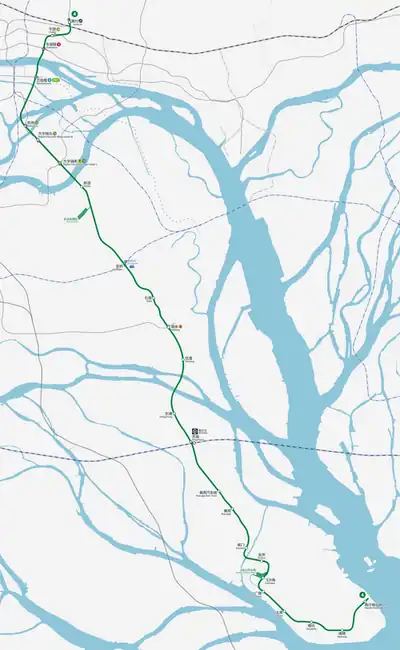
Line 4 of the Guangzhou Metro is a south-north line on the system that runs between Nansha Passenger Port and Huangcun stations, spanning a total of 60.03 km (37.30 mi) with 24 stations (while Guanqiao not yet in service). The sections of the line from Xinzao to Huangcun and Feishajiao to Nansha Passenger Port is underground, while the section from Jinzhou to Guanqiao is above ground.[4][5] Line 4's colour is dark green. Like line 5 and 6, trains runs with linear motor technology.
History
Early Planning
A line resembling the current northern section of Line 4 first appeared in plans for Guangzhou Metro in 1997. It would have been a branch off what was called Line 5 at the time, running from Pazhou to Grand World Scenic Park.[6]
By 2000, it had been separated into its own line and realigned to run from Xinzhao to Guangzhou Science City, with construction slated to start in 2002 or 2003, pending approval, and expected completion in 2010.[7]
The line received planning approval in 2005, planned to eventually connect the new districts of Luogang in the north and Nansha in the south. Four carriage linear motor train sets would run on the line, with the full line expected to need 30 sets initially.[8]
Phase 1 (Huangcun - Xinzhao)
Work on the line commenced on 28 January 2003, initially focusing on the northern terminus and interchange station with Line 2 (now Line 8), Chigang Pagoda station (since renamed Wanshengwei). The first section would run from here to Xinzhao via Guangzhou Higher Education Mega Center, with a total of 5 stations.[9]
With planning approval, this early work now formed part of Phase 1 from Olympic Sports Center (since renamed Huangcun) to Xinzhao, with a total of 8 stations, as well as a maintenance and stabling facility in Xinzhao.[8]
Phase 1 between Wanshengwei and Xinzhao stations opened for passenger service on 26 December 2005. The line initially operated at a very low frequency of approximately every 32 minutes, as only a single train was ready for service of the two that had arrived.[10]
The line was extended one stop north to Chebeinan on 28 December 2009, providing an interchange to Line 5 which opened on the same day.[11]
The final section of Phase 1 (Chebeinan to Huangcun) opened on 25 September 2010.[12]
Phase 2 (Xinzhao - Jinzhou)
A southward extension to the line, Phase 2, was approved in 2006. It would run from Xinzhao to Chongwei (since renamed Jinzhou), with a total of 10 stations, including 2 designated infill stations to be built later. Unlike phase 1, this section would be built elevated on a viaduct.[8]
The first section of Phase 2 between Xinzao and Huangge opened on 30 December 2006, following a 9 day full line closure for train testing.[13]
In the following year, the line again closed on 8 May for further testing, with replacement buses being provided. Upon reopening on 28 June, the remaining section of Phase 2 between Huangge and Jinzhou was opened for passenger service.[14]
The first of the infill stations opened as Qingsheng on 28 December 2017, together with Phase 3 of the line.[15] Work began on the second, named Guanqiao, in 2021. It was planned to be completed in 2024 but has not opened as of May 2026.[16]
Phase 3 (Jinzhou - Nansha Passenger Port)
In 2012, as part of the Guangzhou Urban Rail Transport Near-term Plan (2012-2018), a further southern extension of Line 4 to Nansha Passenger Port was approved, with a further 5 stations to be completed between 2013 and 2017.[17]
Work on the extension was officially started in Jinlong station (since renamed Feishajiao) on 31 May 2013.[18]
Phase 3 opened in full on 28 December 2017.[15]
Opening timeline
| Segment | Commencement | Length | Station(s) | Name |
|---|---|---|---|---|
| Xinzao — Wanshengwei | 26 December 2005 | 16.2 km (10.07 mi) | 5 | (1st section) |
| Huangge — Xinzao | 30 December 2006 | 22.3 km (13.86 mi) | 6 | (2nd section) |
| Jinzhou — Huangge | 28 June 2007 | 5.1 km (3.17 mi) | 2 | (3rd section) |
| Wanshengwei — Chebeinan | 28 December 2009 | 3.8 km (2.36 mi) | 1 | Line 4 & 5 connector project |
| Chebeinan — Huangcun | 25 September 2010 | 2.0 km (1.24 mi) | 2 | Northern extension |
| Nansha Passenger Port — Jinzhou | 28 December 2017 | 13.64 km (8.48 mi) | 6 | Southern extension |
| Qingsheng | 28 December 2017 | Infill station | 1 | Guangshengang XRL connector |
Stations
| Service routes |
Station № |
Station name | Connections | Future Connections | Distance km |
Location | ||||
|---|---|---|---|---|---|---|---|---|---|---|
| English | Chinese | |||||||||
| ● | 401 | Nansha Passenger Port | 南沙客运港 | 15 | 0.00 | 0.00 | Nansha | |||
| ● | 402 | Nanheng | 南横 | 2.97 | 2.97 | |||||
| ● | 403 | Tangkeng | 塘坑 | 2.30 | 5.27 | |||||
| ● | 404 | Dachong | 大涌 | 2.01 | 7.28 | |||||
| ● | 405 | Guanglong | 广隆 | 2.14 | 9.42 | |||||
| ● | 406 | Feishajiao | 飞沙角 | 1.91 | 11.33 | |||||
| ● | 407 | Jinzhou | 金洲 | 2.31 | 13.64 | |||||
| ● | 408 | Jiaomen | 蕉门 | 15 | 2.00 | 15.64 | ||||
| ● | 409 | Huangge | 黄阁 | 3.00 | 18.64 | |||||
| ● | 410 | Huangge Auto Town | 黄阁汽车城 | 1.54 | 20.18 | |||||
| ● | 411 | Qingsheng | 庆盛 |  QSQ GSH |
4.07 | 24.25 | ||||
| ● | 412 | Dongchong | 东涌 | 2.39 | 26.64 | |||||
| ● | 413 | Dichong | 低涌 | 3.94 | 30.58 | Panyu | ||||
| ● | 414 | Haibang | 海傍 | 3 301-4 | 2.45 | 33.03 | ||||
| ● | 415 | Shiqi | 石碁 | 2.25 | 35.28 | |||||
| | | 416 | Guanqiao | 官桥 |  GQA GH |
2.49 | 37.77 | ||||
| ● | ● | 417 | Xinzao | 新造 | 7.25 | 45.02 | ||||
| ● | ● | 418 | Higher Education Mega Center South | 大学城南 | 7 709 12 1225 | 2.25 | 47.27 | |||
| ● | ● | 419 | Higher Education Mega Center North | 大学城北 | 12 1224 | 2.22 | 49.49 | |||
| ● | ● | 420 | Guanzhou | 官洲 | 12 1223 | 1.39 | 50.88 | Haizhu | ||
| ● | ● | 421 | Wanshengwei | 万胜围 | 8 828 THZ1 THZ110 |
3.69 | 54.57 | |||
| ● | ● | 422 | Chebeinan | 车陂南 | 5 518 | 2.07 | 56.64 | Tianhe | ||
| ● | ● | 423 | Chebei | 车陂 | 13 1322  GBRT |
1.23 | 57.87 | |||
| ● | ● | 424 | Huangcun | 黄村 | 21 2104 JSQ |
2.16 | 60.03 | |||
Operations
On 9 May 2015, Line 4 commenced short working operations, with selected trains running only between Huangcun and Xinzao. This allowed headways in the busier northern section of the line to be reduced to as low as 3 minutes in the morning peak, serving the rapidly growing Huangcun and Higher Education Mega Center areas.[19]
Fleet
Line 4 uses four carriage linear motor L type trains. Each set is 71 m (233 ft) long, 2.8 m (9.2 ft) wide and has a maximum service speed of 90 km/h (56 mph).[20][21]
Thirty trainsets (designated class L1) were initially ordered for the line, to be manufactured by Kawasaki Heavy Industries in collaboration with CSR Sifang.[22] The first set rolled off the production line in Qingdao on 27 November 2005[20] and the final set was delivered in March 2008.[23]
A further 27 sets (designated class L5) were ordered ahead of the Phase 3 extension to Nansha Passenger Port. These were manufacturered fully domestically by CSR Sifang. The first four sets ran under their own power for the first time on 20 May 2017 and all sets had been delivered by 2 August the same year.[24][25]
References
- ↑ "Guangzhou Metro - Railway Technology".
- ↑ "Network Operation" (PDF). www.gzmtr.com (in Chinese). Archived from the original (PDF) on 2021-12-20.
- ↑ 广州地铁刷新单日客流新高 达逾1156万人次. 人民网. 2020-01-02. Retrieved 2020-01-02.
- ↑ 20-meter-high elevated section of Nansha Line to open by year's-end
- ↑ Metro line No. 4 to link Jinzhou by the end of June
- ↑ "广州市道路及轨道交通的现状与发展规划". 万方数据. 1998.
- ↑ "广州十年内地铁将建设逾百公里" [Guangzhou metro network to exceed 100km within 10 years]. 中新社网站. 2000-12-04. Retrieved 2026-05-07.
- 1 2 3 "国家发展改革委关于广州市轨道交通4号线二期工程可行性研究报告的批复" [National Development and Reform Commission approval for Guangzhou Rail Transport Line 4 Phase 2 Feasibility Report] (PDF). 广州公共资源交易中心. Archived (PDF) from the original on 2025-09-06. Retrieved 2026-05-07.
- ↑ "广州地铁四号线试验段开工 总长约11公里" [Guangzhou Metro Line 4 Trial Section begins construction, total length ~11km]. 羊城晚报. 2003-01-28. Retrieved 2026-05-07.
- ↑ "26日下午2点地铁新线将正式开闸" [Gates open on new metro lines 2pm on the 26th]. Sina News. Retrieved 2026-05-07.
- ↑ "广州地铁5号线今日下午14时开通 全程票价7元" [Guangzhou Metro Line 5 opens today at 2pm, whole line fare ¥5]. Sina News. 2009-12-28. Retrieved 2026-05-07.
- ↑ "广州地铁新二/八号线昨开通" [Guangzhou Metro New Lines 2/8 opened yesterday]. Sina News. Retrieved 2026-05-07.
- ↑ "四号线次通段站站有厕所" [Second section of Line 4 to open has toilets]. Sina News. 2006-12-19. Retrieved 2026-05-07.
- ↑ "5月8日起四号线停运50天 进行全线联合调试" [Line 4 closes for 50 days from 8 May to complete full line testing]. Sina News. 2007-04-27. Retrieved 2026-05-07.
- 1 2 "刚刚,广州地铁四线齐发,花都终圆地铁梦!洗手间地图、WiFi信号…你想知道的都在这里" [Four lines open on Guangzhou Metro]. Sina News. 2017-12-28. Retrieved 2026-05-07.
- ↑ 李天研 (2021-02-03). "四号线官桥站终于要建了,可换乘佛莞城际". news.dayoo.com (in Chinese (China)). Archived from the original on 2021-02-13. Retrieved 2026-05-07.
- ↑ "广州市城市轨道交通近期建设规划通过批准" [Guangzhou Urban Rail Transport Near-term Plan approved]. National Development and Reform Commission (in Chinese). 2012-07-31. Archived from the original on 2025-12-27. Retrieved 2026-05-07.
- ↑ "局广州地铁四号线南延段工程开工建设" [Our company starts work on Guangzhou Metro Line 4]. CCCC Tunnel Engineering Company Limited. 2013-06-04. Retrieved 2026-05-07.
- ↑ "为匹配客流需求,四号线5月9日起开行短线车" [Catering to passenger demand, Line 4 begins short working operation on 9 May]. Guangzhou Metro. 2015-04-28. Archived from the original on 2015-09-24. Retrieved 2026-05-09.
- 1 2 "全国首列直线电机地铁广州四号线青岛下线" [China's first linear motor subway line Guangzhou Line 4 rolls off Qingdao]. Sina News. Archived from the original on 2025-11-02. Retrieved 2026-05-07.
- ↑ "列车介绍" [Rollingstock introduction]. Guangzhou Metro (in Chinese). Archived from the original on 2021-11-08. Retrieved 2026-05-09.
- ↑ "中国で初めてとなるリニアメトロ車両の初編成が完成 | プレスリリース" [China's first linear metro train formation completed]. 川崎重工業株式会社 (in Japanese). 2005-11-28. Retrieved 2026-05-09.
- ↑ "广州四号线地铁国产化方案". 百度文库 (in Chinese). 2011-01-02. Archived from the original on 2021-06-05. Retrieved 2026-05-09.
- ↑ "地铁四号线南延段新车"进新房"" [Metro Line 4 southern extension's new trains "enter new house"]. The People's Government of Guangzhou Municipality (in Chinese (China)). 2017-05-03. Archived from the original on 2022-03-11. Retrieved 2026-05-09.
- ↑ "四号线南延段全部新车运抵广州" [All trains for Line 4 southern extension have arrived in Guangzhou]. Guangzhou Metro. 2017-08-03. Archived from the original on 2018-11-18. Retrieved 2026-05-09.
Public transport in Guangdong, Hong Kong and Macau | ||||||||||||||||||||||||||||||||||||||||||||||||||||||||
|---|---|---|---|---|---|---|---|---|---|---|---|---|---|---|---|---|---|---|---|---|---|---|---|---|---|---|---|---|---|---|---|---|---|---|---|---|---|---|---|---|---|---|---|---|---|---|---|---|---|---|---|---|---|---|---|---|
| ||||||||||||||||||||||||||||||||||||||||||||||||||||||||
| ||||||||||||||||||||||||||||||||||||||||||||||||||||||||


Guangzhou and Foshan Metro lines | |||||||
|---|---|---|---|---|---|---|---|
| Guangzhou Metro |
| ||||||
 Foshan Metro |
| ||||||
| Line 4 |
|
|---|---|
Stations unopened or under construction are shown in italics. | |