The Blacker the Berry (song)
| "The Blacker the Berry" | ||||
|---|---|---|---|---|
 | ||||
| Single by Kendrick Lamar | ||||
| from the album To Pimp a Butterfly | ||||
| Released | February 9, 2015 | |||
| Genre | ||||
| Length | 5:28 | |||
| Label | ||||
| Songwriters |
| |||
| Producers | ||||
| Kendrick Lamar singles chronology | ||||
| ||||
"The Blacker the Berry" is a song by American rapper Kendrick Lamar. It was included as the thirteenth track from his third studio album To Pimp a Butterfly (2015). "The Blacker the Berry" was released as the second single from the album on February 9, 2015. The track shares its title with American author Wallace Thurman's novel The Blacker the Berry (1929) and a lyric from Tupac Shakur's "Keep Ya Head Up" (1993). "The Blacker the Berry" was produced by Boi-1da, Terrace Martin, and KOZ, as well as containing a chorus that features uncredited vocals from Jamaican artist Assassin and additional vocals provided by singer Lalah Hathaway.
The track was released following Lamar's public backlash for his comments on the killing of Michael Brown and the subsequent Ferguson unrest months prior. A political hip-hop and boom bap track, Lamar opens "The Blacker the Berry" by calling himself a hypocrite, celebrating his African-American heritage while exploring themes of racism and hatred in a mix of anger and vulnerability. The track concludes with a jazz section to provide its sense of resolution, provided by musicians Robert Glasper, Lalah Hathaway, Thundercat, and Anna Wise.
"The Blacker the Berry" received rave reviews from contemporary music critics for its cinematic production, social commentary, and confrontational lyrics. The track also received a response from Pulitzer Prize-winning author Michael Chabon on the track's Genius page, comparing it to Common's "I Used to Love H.E.R." (1994) by explaining its wide representation of the Black community. However, it also elicited controversy due to Lamar's commentary on the death of Trayvon Martin, in which Lamar responded that the track was autobiographical.
Upon its release, "The Blacker the Berry" charted on the Billboard Hot 100 along with the Hot R&B/Hip-Hop Songs chart. The single has since been certified Gold by the Recording Industry Association of America (RIAA). While charting on UK Singles, it achieved greater success by peaking at number 20 on its Hip Hop/R&B Singles charts. The track also charted on two charts in Belgium. Lamar rarely performs the track live, with notable instances being Hot 97's Summer Jam in 2015, the 58th Grammy Awards in 2016, and the Glastonsbury Festival in 2022.
Background

On February 28, 2014, Kendrick Lamar announced a follow-up to his second studio album, Good Kid, M.A.A.D City (2012), during an interview with Billboard.[1] During its development, Lamar traveled to South Africa.[2] Touring the country and visiting historic sites such as Nelson Mandela's jail cell on Robben Island heavily influenced the direction of the record[2] and led to Lamar scrapping "two or three albums worth of material", evolving into To Pimp a Butterfly (2015).[3] On September 17, Lamar posted artwork for the album's lead single, "I",[4] which was later released six days later.[5] The track received critical acclaim from music critics, crediting the track's "optimistic, sunny-side-up" themes and jazz influence.[6] On February 8, 2015, Lamar won Best Rap Song and Best Rap Performance for "I" at the 57th Annual Grammy Awards.[7]
"The Blacker the Berry" has been interpreted as Lamar's response to criticism following his remarks about the killing of Michael Brown and the subsequent Ferguson unrest,[8] reflecting the views he expressed regarding Brown's death.[8][9] In a Billboard interview, when asked if he was ever mistreated in encounters with police, Lamar replied, "plenty of times. All the time." But when questioned about the highly publicized killings of African-Americans by police officers in 2014, Lamar emphasized both the injustice of the incident and the importance of self-respect within the African-American company, stating that "it starts from within. Don't start with just a rally, don't start from looting -- it starts from within."[9] Lamar received public backlash for these statements from audiences, journalists, and fellow musicians, including Azealia Banks, who criticized his perspective as misguided.[8]
Production

"The Blacker the Berry" was produced by American record producer and multi-instrumentalist Terrace Martin, who collaborated with musicians including Robert Glasper, Lalah Hathaway, Thundercat, and Anna Wise to create the politically charged track. Prior to the track, he had been known for contributing to the development of fellow West Coast rapper Snoop Dogg's brand after graduating from high school. Terrace Martin also worked on studio albums released in 2014 by rappers including Big K.R.I.T. and YG, in addition to his own debut studio album, 3ChordFold (2013). During an interview with Billboard, Terrace Martin spoke about the creation of "The Blacker the Berry", revealing that Lamar completed the track's verses before adding the sung sections, while the former helped develop the track's musical arrangement. Its beat was driven by hard-hitting drums from producer Boi-1da, while Terrace Martin contributed jazz elements, particularly toward the track's conclusion, drawing on influences from Lalah Hathaway and James Fauntleroy.[10]
Terrace Martin designed the jazz section at the ending of "The Blacker the Berry" to provide a sense of resolution after the intensity of the third verse. He collaborated with Robert Glasper on the Fender Rhodes, with additional contributions from Fauntleroy, Hathaway, and Thundercat on bass, to complete the arrangement. Terrace Martin reflected that the record addressed themes that were highly relevant to their lives at the time, describing it as a "soulful" work that combined social commentary with musical sophistication akin to political hip-hop group Public Enemy. The arrangement was intended to balance the confrontational and politically charged lyrics with a jazz-infused resolution, reinforcing the track's exploration of African-American pride and contemporary social issues.[10]
Composition and lyrics
"The Blacker the Berry" a politically charged hip-hop track with a runtime of five minutes and twenty-eight seconds.[10] As Lamar's first single following the late 2014 release of "i", "The Blacker the Berry" represents a stylistic and thematic departure from its predecessor, which promoted self-love.[11][12] Unlike the upbeat and optimistic tone of the former, the latter adopts a discordant and intense sound, addressing issues of race and social injustice.[11][12] BET compared it's arrival at a "radically turbulent time" to the pro-Black era of the late 80s and early 90s through hip-hop artists including Public Enemy, Queen Latifah, X Clan, and Poor Righteous Teachers combining pride and history with boldness, which declined following the commercial success of gangsta rap.[13] Previously, Lamar had addressed issues based on crime, race and violence through tracks including "Sing About Me, I'm Dying of Thirst" (2012),[14] and revealed that he wrote "The Blacker the Berry" shortly after Trayvon Martin's killing.[15]
Featuring cinematic production and an unconventional song structure,[18] the track fuses a boom-bap beat[12][19][20] akin to '90s New York hip-hop[21] with subversive musical elements reminiscent of Parliament-Funkadelic.[22] that affirm Lamar's lyrics based on African-American heritage while confronting hatred, racism, and hypocrisy.[12] In the lyrics, Lamar reflects critically on his own actions, including his complicity in systemic injustices in ways comparable to law enforcement.[23] Unlike his typical melodic phrasing, Lamar delivers each line directly and forcefully, emphasizing the intensity of the track's message.[11] The chorus is performed by Jamaican dancehall musician Assassin, who previously appeared on Kanye West's studio album Yeezus (2013),[24][25] in which he earned the feature thanks to his connection with Boi-1da.[26]
The track opens with a dark, looping instrumental, including the repeated phrase, "the blacker the berry, sweeter the juice",[11] sharing the title of the 1929 Wallace Thurman novel of the same name[27] and the lyric from Tupac Shakur's "Keep Ya Head Up" (1993).[28] Lamar begins by identifying himself as a hypocrite in 2015, establishing the confrontational tone of the track.[29][30] Following the opening lines, he prophesies, "once I finish this witnesses will convey just what I mean."[31] Throughout the track, Lamar celebrates his African-American heritage while bluntly tackling hatred and racism.[12] He reflects on Black stereotypes from "my hair is nappy" to "my nose is round and wide", aiming them at people who would deploy them.[20] The first two verses critique racial prejudice in the United States while Lamar simultaneously examines his own complicity, repeatedly referring to himself as "the biggest hypocrite of 2015."[29] In the track's most confrontational passages, he addresses police brutality and the struggles of African-Americans, highlighting his roots and identity.[32] Lamar's delivery alternates between anger and vulnerability,[11][30] employing a guttural tone that conveys both intensity and clarity.[11] The lyrics combine revolutionary themes with personal reflection, culminating in a final verse that broadens the track's social critique.[22][29]
Release

On February 9, 2015, "The Blacker the Berry" was released as the second single from To Pimp a Butterfly,[7][21] which later released on March 15 through Top Dawg Entertainment, Aftermath Entertainment, and Interscope Records.[33] The release followed Lamar's attendance at the 57th Annual Grammy Awards, where he won Best Rap Song and Best Rap Performance for his previous single, "I".[7] "The Blacker the Berry" was first released by Empire actress Taraji P. Henson on Twitter,[27][34] considering it to be her favorite track on the album.[35] Within less than twenty-four hours following its release, the track received more than a million streams.[36]
The release of "The Blacker the Berry" occurred in the context of commentary by influential rap figures on radio hesitancy to play Lamar's music, with Darryl McDaniels of Run-DMC suggesting that broadcasters avoided the track because of its persistent discussion of racial and social issues.[8] Further explaining the track's context, he stated that "people are scared of a young man that looks like that from their neighborhood talking about real issues."[8] Producer Terrace Martin noted that the track resonated with his personal experiences growing up in Los Angeles, observing that messages promoting self-love and anti-violence can be difficult to enact in environments where conflict is prevalent. He emphasized that while Lamar's lyrics advocate for unity and African-American pride, they also confront the harsh realities of street-level tensions that can undermine such messages.[10]
Artwork lawsuit
The single's cover artwork contains a photograph by Giodano Cipriani, depicting a mother breastfeeding her two children, which was photographed in 2011 while he was in Africa. On July 10, 2015, Cipriani filed a lawsuit against Lamar and his associated record labels Top Dawg, Aftermath, and Interscope Records, claiming that they used the photograph without his permission,[37] and demanded that he receive $150,000 for each time it was used.[37][38]
Critical reception
"The Blacker the Berry" received widespread acclaim from music critics. August Brown of Los Angeles Times complimented the track for its fusion of "ideas, angst, and affirmations" of Lamar's impact.[21] Alexis Petridis of The Guardian described the track as remarkable, comparing Lamar's intense vocal delivery to Ice Cube's work, while noting that the track channels the post-Ferguson social climate with a mix of fury and self-reflection.[31] Pitchfork selected "The Blacker the Berry" as their "Best New Track", with reviewer Jayson Greene identifying it as one of Lamar's most focused and emotionally affecting performances.[11] Iyana Robertson of Vibe evaluated the track positively, claiming that it serves as an "avenue of understanding" for the Black community, as well as recommending non-black people to listen to Lamar's "ripping cry of blackness."[19]
Spencer Kornhaber of The Atlantic considered "The Blacker the Berry" to be a "grimmer take on the same idea", wanting to highlight black pride while the memory of Lamar's past actions shadow through.[36] Steven J. Horowitz of Billboard gave the track four-and-a-half out of five stars, emphasizing its powerful engagement with the Black Lives Matter movement.[30] Kyle Anderson from Entertainment Weekly described the track as galvanizing,[18] while David Jeffries of AllMusic and Patrick Ryan of USA Today highlighted it as a standout track on the album, particularly noting its darker, more confrontational tone.[22][32] Rahim Ali of BET considered that although "The Blacker the Berry" didn't align with other popular hip-hop tracks at the time, he compares it to the growing circle of artists including J. Cole and Joey Badass to reflect on their social perspective within hip-hop.[13]
Retrospectively, "The Blacker the Berry" was ranked number 12 on The New York Times' list of "25 Songs That Tell Us Where Music Is Going" in 2016. Reviewed by Marlon James, he presented the track as a powerful and confrontational work by highlighting Lamar's use of intense, self-critical lyricism to exlore themes of systemic injustice and personal complicity.[20] In 2025, Rolling Stone ranked "The Blacker the Berry" at number 17 on their list of "The 60 Best Kendrick Lamar Songs", reflecting on the track as a "forceful in-your-face statement."[39]
Michael Chabon's response
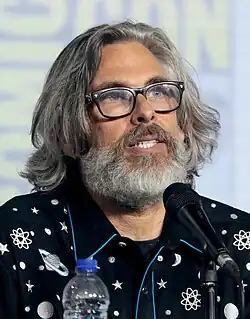
Upon its release, Pulitzer Prize-winning author Michael Chabon, known for his works The Amazing Adventures of Kavalier and Clay (2000) and Telegraph Avenue (2012),[40] gave his analysis on the lyrics of "The Blacker the Berry" on website Genius, particularly Lamar's lyric based on Trayvon Martin's killing. Describing the lyric, Chabon wrote that Lamar exerts a rhetorical move akin or more devastating than the last line of Common's "I Used to Love H.E.R." (1994), which the latter reveals the identity of "her" as hip-hop itself. Continuing this comparison, he further explained their similarity with Lamar's use of "you" that represents the Black community as a whole, and considers the song's use of hypocrisy a rather complicated moral position than allowed or unlikely.[41]
Controversy
The track generated controversy for lines in which Lamar reflects on violence within the African-American community, including: "So why did I weep when Trayvon Martin was in the street, when gang-banging make me kill a nigga blacker than me? Hypocrite!", which some listeners interpreted the lyrics as a critique of the black community itself.[42] During an interview with MTV News, while breaking down To Pimp A Butterfly at the W New York Downtown, Lamar spoke about the single, his Billboard interview, and the criticism he's faced. Lamar clarified that the lyrics were autobiographical, drawing on his personal experiences with gang culture and the systemic pressures he observed in his environment. He emphasized that the track examines his own actions and complicity rather than serving as a general judgment of others, and he asked audiences to consider his background and perspective when evaluating the track.[29]
Commercial success
Upon its release, "The Blacker the Berry" peaked at number 66 on the Billboard Hot 100[43] and number 32 on its Hot R&B/Hip-Hop Songs chart.[44] In the United Kingdom, the track peaked at number 83 on UK Singles,[45] while having greater success at number 20 on its Hip Hop/R&B Singles charts.[46] In Belgium, under Flanders, it peaked at number 87 and number 44 on its Bubbling Under and Urban charts, respectively.[47][48] On June 8, 2018, the Recording Industry Association of America (RIAA) certified "The Blacker the Berry" as Gold, selling over 500,000 units.[49] It was also certified to sell more than 15,000 units in New Zealand,[50] 35,000 units in Australia,[51] and 40,000 units in Canada.[52]
Live performances
Lamar first performed "The Blacker the Berry" live alongside "King Kunta" and "Hood Politics" at Hot 97's Summer Jam on June 7, 2015.[53] On February 15, 2016, at the 58th Grammy Awards, Lamar performed a medley of "The Blacker the Berry" and "Alright". Introduced by actor Don Cheadle, Lamar began the set marching onstage in chains, with a prison-like backdrop during the track, before transitioning into "Alright", performed around a symbolic bonfire. The performance concluded with an untitled freestyle featuring an illuminated outline of Compton, Lamar's hometown, in the outline of Africa. Throughout the freestyle, Lamar makes a poignant reference to February 26, the date of Trayvon Martin's death in 2012.[54] On June 26, 2022, Lamar performed "The Blacker the Berry" at the Glastonsbury Festival.[55]
Credits and personnel
Credits are adapted from the liner notes of To Pimp a Butterfly.[56]
|
|
Charts
| Chart (2015) | Peak position |
|---|---|
| Belgium (Ultratip Bubbling Under Flanders)[47] | 87 |
| Belgium Urban (Ultratop Flanders)[48] | 44 |
| UK Singles (Official Charts)[45] | 83 |
| UK Hip Hop/R&B (Official Charts)[46] | 20 |
| US Billboard Hot 100[43] | 66 |
| US Hot R&B/Hip-Hop Songs (Billboard)[44] | 32 |
Certifications
| Region | Certification | Certified units/sales |
|---|---|---|
| Australia (ARIA)[51] | Gold | 35,000‡ |
| Canada (Music Canada)[52] | Gold | 40,000‡ |
| New Zealand (RMNZ)[50] | Gold | 15,000‡ |
| United States (RIAA)[49] | Gold | 500,000‡ |
|
‡ Sales+streaming figures based on certification alone. | ||
References
- ↑ "Top Dawg's Kendrick Lamar & ScHoolboy Q Cover Story: Enter the House of Pain". Billboard. February 28, 2014. Archived from the original on March 4, 2014. Retrieved April 22, 2014.
- 1 2 Andres Hale (February 9, 2016). "The Oral History Of Kendrick Lamar's To Pimp A Butterfly". The Recording Academy. Archived from the original on February 11, 2016. Retrieved February 11, 2016.
- ↑ Hale, Andreas (May 15, 2017). "6 key players discuss Lamar's 'To Pimp A Butterfly". The Recording Academy. Archived from the original on April 12, 2020. Retrieved May 26, 2020.
- ↑ Michaels, Sean (September 18, 2014). "Kendrick Lamar announces new single". The Guardian. ISSN 0261-3077. Archived from the original on September 27, 2014. Retrieved April 12, 2026.
- ↑ "Listen to Kendrick Lamar's new track, entitled 'i'". The Guardian. September 23, 2014. ISSN 0261-3077. Archived from the original on September 24, 2014. Retrieved April 12, 2026.
- ↑ "Kendrick Lamar - 'i'". DIY. September 23, 2014. Archived from the original on December 6, 2025. Retrieved April 12, 2026.
- 1 2 3 Cooper, Leonie (February 9, 2015). "Kendrick Lamar unveils new song 'The Blacker The Berry' - listen". NME. Archived from the original on April 28, 2026. Retrieved March 27, 2026.
- 1 2 3 4 5 Wyatt, Daisy (February 10, 2015). "Kendrick Lamar Releases New Racially-Charged Song 'The Blacker The Berry'". The Independent. Archived from the original on August 19, 2019. Retrieved February 22, 2016.
- 1 2 "Billboard Cover: Kendrick Lamar on Ferguson, Leaving Iggy Azalea Alone and Why 'We're in the Last Days'". Billboard. Archived from the original on August 29, 2017. Retrieved August 19, 2019.
- 1 2 3 4 Caldwell, Brandon (February 12, 2015). "Terrace Martin on Kendrick Lamar's 'The Blacker the Berry' & Delivering a Message". Billboard. Archived from the original on February 15, 2015. Retrieved February 13, 2015.
- 1 2 3 4 5 6 7 Greene, Jayson (February 9, 2015). "Kendrick Lamar 'The Blacker the Berry'". Pitchfork. Archived from the original on February 10, 2015. Retrieved February 17, 2015.
- 1 2 3 4 5 "New Music: Kendrick Lamar – 'The Blacker The Berry'". Rap-Up. February 9, 2015. Archived from the original on February 28, 2015. Retrieved February 27, 2015.
- 1 2 Ali, Rahim (February 11, 2015). "Commentary: Kendrick Lamar's 'The Blacker the Berry' Puts Race Back in Rap". BET. Archived from the original on October 12, 2025. Retrieved March 30, 2026.
- ↑ "Kendrick Lamar unveils new racially charged track 'The Blacker the Berry'". The Guardian. February 10, 2015. ISSN 0261-3077. Archived from the original on April 24, 2015. Retrieved March 30, 2026.
- ↑ Lynskey, Dorian (June 21, 2015). "Kendrick Lamar: 'I am Trayvon Martin. I'm all of these kids'". The Guardian. ISSN 0261-3077. Archived from the original on June 22, 2015. Retrieved April 12, 2026.
- 1 2 Kreps, Daniel (February 10, 2015). "Kendrick Lamar Takes on Hypocrisy on Powerful New Track". Rolling Stone. RealNetworks, Inc. Archived from the original on April 7, 2019. Retrieved August 4, 2018.
- ↑ Lynskey, Dorian (April 22, 2018). "From Street Kid to Pulitzer: Why Kendrick Lamar Deserves the Prize". The Guardian. London: Guardian News and Media Limited. Archived from the original on April 22, 2018. Retrieved November 12, 2018.
- 1 2 Anderson, Kyle (March 26, 2015). "'To Pimp a Butterfly' by Kendrick Lamar: EW review". Entertainment Weekly. New York. Archived from the original on April 7, 2015. Retrieved April 3, 2015.
- 1 2 Robertson, Iyana (February 11, 2015). "Review: Here's Why You Should Play Kendrick Lamar's 'The Blacker The Berry' For Your White Friends". Vibe. Retrieved March 30, 2026.
{{cite web}}: CS1 maint: url-status (link) - 1 2 3 James, Marlon (March 10, 2016). "25 Songs That Tell Us Where Music Is Going: #12 'The Blacker the Berry'". The New York Times. ISSN 0362-4331. Archived from the original on May 29, 2026. Retrieved March 30, 2026.
- 1 2 3 Brown, August (February 9, 2015). "Kendrick Lamar releases scathing new single, 'The Blacker the Berry'". Los Angeles Times. Archived from the original on December 11, 2025. Retrieved March 27, 2026.
- 1 2 3 Jeffries, David. "To Pimp a Butterfly – Kendrick Lamar". AllMusic. Archived from the original on April 29, 2016. Retrieved April 20, 2017.
- ↑ Weiss, Dan (March 20, 2015). "Review: Kendrick Lamar Returns With the Great American Hip-Hop Album, 'To Pimp a Butterfly'". Spin. Archived from the original on August 31, 2015. Retrieved March 20, 2015.
- 1 2 Brooks, Sadeke (February 11, 2015). "Assassin collobs with Kendrick Lamar". The Jamaica Star. Archived from the original on February 12, 2015. Retrieved February 12, 2015.
- ↑ Emmanuel C.M. (February 11, 2015). "Assassin Breaks Down Kendrick Lamar's 'The Blacker The Berry'". XXL. Archived from the original on February 15, 2015. Retrieved February 27, 2015.
- ↑ Trammell, Matthew (February 17, 2015). "How Dancehall Star Assassin Ended Up On Kendrick Lamar's 'The Blacker The Berry'". The Fader. Archived from the original on July 23, 2025. Retrieved March 30, 2026.
- 1 2 Frydenlund, Zach (February 9, 2015). "Kendrick Lamar Drops 'The Blacker The Berry'". Complex. Archived from the original on May 19, 2024. Retrieved March 27, 2026.
- ↑ Stutz, Colin (February 9, 2015). "Listen to Kendrick Lamar's Hard Hitting New Song, 'The Blacker The Berry'". Billboard. Archived from the original on December 24, 2023. Retrieved March 27, 2026.
- 1 2 3 4 Markman, Rob (April 3, 2015). "Kendrick Lamar Has Strong Words For His 'Blacker The Berry' Critic". MTV. Archived from the original on April 5, 2015. Retrieved February 9, 2018.
- 1 2 3 Billboard staff (February 13, 2015). "Best and Worst Singles of the Week -- From Kendrick Lamar to Kip Moore". Billboard. Archived from the original on February 15, 2015. Retrieved February 13, 2015.
- 1 2 Petridis, Alexis (March 19, 2015). "Kendrick Lamar: To Pimp a Butterfly review – challenging but gripping". The Guardian. Archived from the original on April 2, 2015. Retrieved April 3, 2015.
- 1 2 Ryan, Patrick (March 16, 2015). "Album review: Lamar's mighty 'Butterfly'". USA Today. McLean. Archived from the original on October 14, 2016. Retrieved September 25, 2016.
- ↑ "Update: Kendrick Lamar's 'To Pimp a Butterfly' Gets Surprise Digital Release". Billboard. March 16, 2015. Archived from the original on March 19, 2015. Retrieved March 17, 2015.
- ↑ Lockett, Dee (February 9, 2015). "Kendrick Lamar's Brand-New Song Receives the Cookie Seal of Approval". Vulture. Archived from the original on February 10, 2015. Retrieved March 30, 2026.
- ↑ Muhammad, Latifah (February 9, 2015). "Taraji P. Henson Drops Kendrick Lamar's New Song". BET. Archived from the original on September 30, 2025. Retrieved March 30, 2026.
- 1 2 Kornhaber, Spencer (February 11, 2015). "What Kendrick Lamar's 'The Blacker the Berry' Really Means". The Atlantic. Archived from the original on February 19, 2018. Retrieved March 30, 2026.
- 1 2 Stutz, Colin (July 13, 2015). "Kendrick Lamar Sued Over 'Blacker the Berry' Single Artwork". Billboard. Archived from the original on July 16, 2015. Retrieved July 14, 2015.
- ↑ "Kendrick Lamar Sued Over "The Blacker the Berry" Artwork". Pitchfork. July 13, 2015. Archived from the original on July 15, 2015. Retrieved July 14, 2015.
- ↑ "The 60 Best Kendrick Lamar Songs". Rolling Stone. February 7, 2025. Archived from the original on February 8, 2025. Retrieved April 12, 2026.
- ↑ "A Pulitzer Prize Winner Just Annotated Kendrick Lamar's New Song on Genius". Time. February 11, 2015. Archived from the original on December 20, 2023. Retrieved March 30, 2026.
- ↑ "Michael Chabon critiques Kendrick Lamar's 'devastating' lyrics". The Guardian. February 10, 2015. ISSN 0261-3077. Archived from the original on April 25, 2015. Retrieved March 30, 2026.
- ↑ "8 song lyrics that caused a storm of controversy". BBC Music. July 21, 2016. Archived from the original on February 20, 2018. Retrieved February 8, 2018.
- 1 2 "Kendrick Lamar Chart History (Hot 100)". Billboard. Retrieved March 26, 2015.
- 1 2 "Kendrick Lamar Chart History (Hot R&B/Hip-Hop Songs)". Billboard. Retrieved February 27, 2015.
- 1 2 "Official Singles Chart on 28/3/2015 – Top 100". Official Charts Company. Retrieved May 3, 2015.
- 1 2 "Official Hip Hop and R&B Singles Chart on 22/2/2025 – Top 40". Official Charts Company. Retrieved February 27, 2015.
- 1 2 "Kendrick Lamar – The Blacker the Berry" (in Dutch). Ultratip. Retrieved February 27, 2015.
- 1 2 "Kendrick Lamar – The Blacker the Berry" (in Dutch). Ultratop Urban. Retrieved May 3, 2015.
- 1 2 "American single certifications – Kendrick Lamar – The Blacker the Berry". Recording Industry Association of America. Retrieved June 13, 2018.
- 1 2 "New Zealand single certifications – Kendrick Lamar – The Blacker the Berry". Radioscope. Retrieved October 3, 2025. Type The Blacker the Berry in the "Search:" field and press Enter.
- 1 2 "ARIA Charts – Accreditations – 2023 Singles" (PDF). Australian Recording Industry Association. Retrieved December 23, 2023.
- 1 2 "Canadian single certifications – Kendrick Lamar – The Blacker the Berry". Music Canada. Retrieved April 13, 2021.
- ↑ Rettig, James (June 8, 2015). "Kendrick Lamar Finally Plays 'King Kunta,' 'The Blacker The Berry,' 'Hood Politics' In Concert". Stereogum. Archived from the original on February 27, 2023. Retrieved March 30, 2026.
- ↑ Platon, Adelle (February 15, 2016). "Kendrick Lamar Performs 'The Blacker The Berry' In Chains & Lights Up Stage with 'Alright' at the 2016 Grammys". Billboard. Archived from the original on February 17, 2016. Retrieved February 15, 2016.
- ↑ Shennan, Rhona (June 27, 2022). "'Godspeed for women's rights': Kendrick Lamar ends Glastonbury set with protest". National World. Archived from the original on September 27, 2022. Retrieved April 12, 2026.
- ↑ Anon. (2015). To Pimp a Butterfly (Liner notes). Kendrick Lamar. Top Dawg Entertainment.
- 2015 singles
- Kendrick Lamar songs
- Songs written by Kendrick Lamar
- Songs about black people
- Songs about racism and xenophobia
- Interscope Records singles
- Aftermath Entertainment singles
- Top Dawg Entertainment singles
- 2015 songs
- Songs written by Boi-1da
- Songs written by Stephen Kozmeniuk
- Songs written by Eskeerdo
- Songs about violence