Sinatra (miniseries)
| Sinatra | |
|---|---|
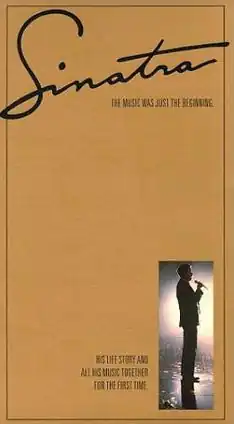 Promotional poster | |
| Genre | Biography Drama |
| Written by | William Mastrosimone Abby Mann |
| Directed by | James Steven Sadwith |
| Starring | Philip Casnoff Olympia Dukakis Joe Santos Gina Gershon Nina Siemaszko Marcia Gay Harden |
| Theme music composer | Artie Butler |
| Country of origin | United States |
| Original language | English |
| No. of episodes | 2 |
| Production | |
| Executive producer | Tina Sinatra |
| Producer | Richard M. Rosenbloom |
| Production locations | Hoboken, New Jersey Union Station - 800 N. Alameda Street, Downtown, Los Angeles |
| Cinematography | Reynaldo Villalobos |
| Editors | Steve Potter Scott Vickrey |
| Running time | 180 min (part 1) 120 min (part 2) |
| Production companies | TS Productions Warner Bros. Television |
| Original release | |
| Network | CBS |
| Release | November 8 – November 10, 1992 |
Sinatra is a 1992 CBS biographical drama miniseries about singer Frank Sinatra, developed and executive produced by Frank's youngest daughter Tina Sinatra and approved by Frank himself.[1][2][3] Directed by James Steven Sadwith, produced by Richard M. Rosenbloom, and written by William Mastrosimone and Abby Mann. It stars Philip Casnoff, Olympia Dukakis, Joe Santos, Gina Gershon, Nina Siemaszko, Bob Gunton, and Marcia Gay Harden, with some of Sinatra's vocals recreated by Tom Burlinson. It won two and was nominated for seven Primetime Emmy Awards, along with a win and two nominations for a Golden Globe Award. Released on November 8, 1992, it was re-released on a two-disc DVD Warner Home Video on May 13, 2008.[4]
Plot

Growing up in Hoboken, New Jersey, as a young man, Frank Sinatra dreams of becoming a singer despite the objections of his father, Anthony "Marty" Sinatra, who believes he is abandoning a secure future. With the encouragement of his mother, Dolly, Sinatra leaves home to pursue music, determined to prove himself.
After performing with local bands, Sinatra joins Harry James's orchestra, gaining his first major break as a professional singer before moving to Tommy Dorsey's orchestra. There, he develops his distinctive vocal style by studying Dorsey's breath control. While touring with the band, he openly opposes racial segregation by confronting hotel staff who refuse accommodation to arranger Sy Oliver because of his colour. His growing popularity leads him to seek a solo career, straining his relationship with Dorsey as he breaks away from the band. Sinatra's success soon makes him a recording star, concert attraction and Hollywood actor, despite skepticism from promoters who doubt his ability to headline major venues.
As his fame grows, Sinatra's marriage to his first wife, Nancy Barbato, begins to deteriorate under the pressures of his career and repeated infidelities. While filming Anchors Aweigh, he meets actress Ava Gardner, and the two begin a passionate but turbulent romance that ultimately ends his marriage. Their relationship is marked by jealousy, frequent arguments and conflicting career ambitions, including Gardner's decision to terminate a pregnancy, which deeply damages their marriage. Professionally, Sinatra faces setbacks as his popularity declines and negative publicity surrounds his associations with alleged organized crime figures. Determined to revive his career, he fights for the role of Private Angelo Maggio in From Here to Eternity, believing it will restore his reputation. His performance earns him the Academy Award for Best Supporting Actor, re-establishing him as a major star and revitalizes both his acting and recording careers.
During the 1950s and 1960s, Sinatra becomes a leading entertainer in Las Vegas and a central figure in American popular culture. He remains a loyal friend to Sammy Davis Jr., encouraging him to resume performing after Davis loses an eye in a car accident. Sinatra becomes a prominent supporter and friend of Senator John F. Kennedy, campaigning for his successful 1960 presidential election, and forms the Rat Pack with Davis, Dean Martin, Peter Lawford and Joey Bishop. However, his relationship with Lawford deteriorates after Kennedy cancels plans to stay at Sinatra's Palm Springs estate, straining Sinatra's ties to the Kennedy family. Sinatra later marries actress Mia Farrow, but their conflicting career priorities and age difference contribute to the collapse of the marriage.
At the end of the film, Sinatra contemplates retirement while visiting his dying father. Marty, who once dismissed his son's ambitions, finally acknowledges Sinatra's accomplishments and tells him that he is "no quitter," giving Frank the validation he had sought throughout his life. Six years later, in 1974, the film concludes with Sinatra performing "That's Life" at Madison Square Garden, reaffirming his enduring legacy as one of America's greatest entertainers.
Cast
- Philip Casnoff as Frank Sinatra
- Tom Burlinson as his singing voice
- Adam LaVorgna as Frankie at 10
- Olympia Dukakis as Natalie "Dolly" Sinatra
- Joe Santos as Marty Sinatra
- Gina Gershon as Nancy Barbato Sinatra
- Nina Siemaszko as Mia Farrow
- Joe Grifasi as George Evans
- Marcia Gay Harden as Ava Gardner
- Bob Gunton as Tommy Dorsey
- David Raynr as Sammy Davis Jr.
- Ralph Seymour as Budd
- Jeff Corey as Quinlin
- Danny Gans as Dean Martin
- Vincent Guastaferro as Hank Sanicola
- James F. Kelly as John F. Kennedy
- Matthew Posey as Harry James
- Rod Steiger as Sam Giancana
- Carol Barbee as Marilyn Maxwell
- David Byrd as Michael Romanoff
- Paul Collins as Westbrook Pegler
- Maggie Egan as Jo Stafford
- Brian Markinson as Sonny Werblin
- Tony Simotes as Buddy Rich
- John Wesley as Sy Oliver
- Marc Grady Adams as Lee Mortimer
- Tony Gaetano as Humphrey Bogart
- Leata Galloway as Billie Holiday
- David A. Kimball as Benny Goodman
- Bruce Gray as Fred Zinneman
- Shelly Lipkin as Joey Bishop
- Jack Betts as Earl Wilson
- Rena Riffel as May Britt
- Brad Blaisdell as Skitch Henderson
- Chris Weatherhead as Mercedes McCambridge
- Patricia Supancic as Nancy at 14
- Beverley Mitchell as Nancy at 7–9
- Samantha Ward as Nancy at 3
- Cameron Phillip Williams as Frank Jr. at 10
- Jameson Rodgers as Frank Jr. at 4–6
- Jenny Regli as Tina at 6
- Floyd Levine as Director
Production
Filming
Filming was shot on location in Hoboken, New Jersey, and at the Los Angeles Union Station in California.
Reception
The series got a mostly positive reception but was accused of whitewashing the controversial aspects of Frank Sinatra's life.[1][5][6][7][8][9]
Awards and nominations
References
- 1 2 "COVER STORY : Is This Really His Life? : Frank Sinatra blessed a TV bio with daughter Tina as executive producer. Cynics have already cried whitewash. But the CBS miniseries script includes the heartbreaks, the fights and the Mob. The question is: Why did he allow it?". Los Angeles Times. July 26, 1992.
- ↑ "SINATRA PORTRAIT RINGS WITH TRUTH AND CLARITY". Orlando Sentinel. November 8, 1992.
- ↑ Strum, Charles (November 8, 1992). "TELEVISION; Sinatra: The Idol, The Institution, The Mini-Series". The New York Times – via NYTimes.com.
- ↑ "DVD Talk". www.dvdtalk.com.
- ↑ "TELEVISION". Los Angeles Times. January 23, 1992.
- ↑ O'Connor, John J. (November 6, 1992). "TV Weekend; Sinatra: The Good, the Bad, and Mostly the Music". The New York Times – via NYTimes.com.
- ↑ "GETTING SEMI-TOUGH WITH FRANK SINATRA". Chicago Tribune. November 6, 1992.
- ↑ "SINATRA THE MINI-SERIES". Chicago Tribune. May 27, 1992.
- ↑ November 06, Ken Tucker Updated; EST, 1992 at 05:00 AM. "Sinatra". EW.com.
{{cite web}}:|first1=has generic name (help)CS1 maint: numeric names: authors list (link) - ↑ "Nominees/Winners". IMDb. Retrieved April 3, 2019.
- ↑ "The ASC Awards for Outstanding Achievement in Cinematography". American Society of Cinematographers. Archived from the original on August 2, 2011.
- ↑ "1993 Artios Awards". Casting Society of America. October 19, 1993. Retrieved September 21, 2023.
- ↑ "Sinatra". Golden Globe Awards. Retrieved September 21, 2023.
- ↑ "SINATRA". Academy of Television Arts & Sciences. Retrieved September 21, 2023.
- ↑ "THE 45th ANNUAL EMMY AWARDS: Presenting the Prime of Primetime". Los Angeles Times. September 20, 1993.
- ↑ "Emmy Award Nominations 1993: Nighttime Nominees: A Complete Rundown". Los Angeles Times. July 23, 1993.
External links

- 1992 television films
- 1992 films
- 1992 biographical drama films
- 1992 American television series debuts
- 1992 English-language television series debuts
- 1992 American television series endings
- 1992 English-language television series endings
- American biographical drama films
- 1990s American drama television series
- American television films
- 1990s American television miniseries
- American biographical series
- Best Miniseries or Television Movie Golden Globe winners
- Emmy Award–winning programs
- Primetime Emmy Award–winning television series
- English-language American television shows
- Films about Frank Sinatra
- Cultural depictions of John F. Kennedy
- Cultural depictions of Marilyn Monroe
- Cultural depictions of Humphrey Bogart
- Cultural depictions of Sammy Davis Jr.
- Cultural depictions of Billie Holiday
- Cultural depictions of Sam Giancana
- CBS original programming
- Films directed by James Steven Sadwith
- 1992 English-language films
- 1992 American films
- CBS television dramas
- English-language biographical drama films
- English-language television films