Thanks to the diversity in definition of Latin America, listing the exact states it contains is subject to controversy. The standard definition is that of the countries south of the United States of America that speak Latin-derived languages, although some of the countries have other co-official, non-Romance languages, such as Quechua. Latin America can be subdivided into further blocs, some of which include other countries because of prioritisation of geography over shared culture.
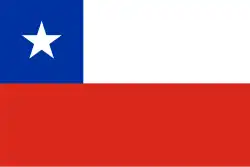
Chile, officially the Republic of Chile (República de Chileⓘ), is a country in South America occupying a long and narrow coastal strip wedged between the Andes mountains and the Pacific Ocean. The Pacific forms the country's entire western border, with Peru to the north, Bolivia to the northeast, Argentina to the east, and the Drake Passage at the country's southernmost tip.
Costa Rica (literally 'rich coast'), officially the Republic of Costa Rica (Spanish: Costa Rica or Spanish: República de Costa Rica, IPA:[reˈpuβlikaðeˈkostaˈrika]), is a country in Central America, bordered by Nicaragua to the north, Panama to the south-southeast, the Pacific Ocean to the west and south, and the Caribbean Sea to the east. Costa Rica was the first country in the world to constitutionally abolish its army.
The Dominican Republic, (Spanish: República Dominicana[reˈpuβlikadominiˈkana]) is a country located on the eastern five-eighths of the Caribbean island of Hispaniola, bordering Haiti. Hispaniola is the second-largest of the Greater Antilles islands, and lies west of Puerto Rico and east of Cuba and Jamaica. A legacy of unsettled, mostly non-representative rule lasted for much of the 20th century; the move towards representative democracy has improved vastly since the death of military dictator Rafael Leónidas Trujillo in 1961. Dominicans sometimes refer to their country as Quisqueya, a name for Hispaniola used by indigenousTaíno people meaning "high land", referring to the highest portion of the island of Hispaniola.
Ecuador (Spanish: Ecuador, Quechua and Aymara: Ikwadur), officially the Republic of Ecuador (Spanish: República del Ecuador, Quechua: Ikwadur Mama Llaqta, Aymara: Ikwadur Suyu) is a representative democratic republic in South America, bounded by Colombia on the north, by Peru on the east and south, and by the Pacific Ocean on the west. The country also includes the Galápagos Islands (Archipiélago de Colón) in the Pacific, about 965 kilometers (600miles) west of the mainland. Ecuador is the Spanish word for equator. Ecuador straddles the equator and has an area of 256,370 square kilometers (98,985mi²). Its capital city is Quito, however its largest city is Guayaquil.
El Salvador is a country in Central America with 21,040 km², bordering the North Pacific Ocean, between Guatemala and Honduras with a population of approximately 6.9 million people. El Salvador is the most densely populated nation in the American mainland and the most industrialized nation in the region.
Haiti (Haïti in French; Ayiti in Haitian Creole; Hayti in nineteenth century English), officially the Republic of Haiti, occupies three-eighths of the Caribbean island of Hispaniola. The country also includes many smaller islands such as La Gonâve, La Tortue (Tortuga), Les Cayemites, Île de Anacaona, and La Grande Caye. The uninhabited island of Navasse is claimed by both Haiti and the United States. 'Ayiti' (Haiti) being the indigenous Taíno name for the island. Its highest point is Chaine de la Selle, which has a height of 2,680 meters. Haiti shares the island of Hispaniola with the Dominican Republic. The total area of Haiti is 27,750km² (10,714sq mi) and its capital is Port-au-Prince.
Covering almost 2 million square kilometers, Mexico is the 6th largest country in America by total area and 15th largest in the world. With a population of about 108 million, it is the 11th most populous country and the most populous Spanish-speaking country in the world.
Nicaragua (Spanish: República de Nicaragua[reˈpuβlikaðenikaˈraɣwa]) is a democratic republic in Central America. It is the largest nation in the isthmus, but also the least densely populated with a demographic similar in size to its smaller neighbours. The country is bordered on the north by Honduras and on the south by Costa Rica. Its western coastline is on the Pacific Ocean, while the east side of the country is on the Caribbean Sea. Nicaragua is one of three countries in the world where abortion is illegal with no exceptions, along with El Salvador and Chile.
Paraguay, officially the Republic of Paraguay (Spanish: República del Paraguay[reˈpuβlikadelparaˈɣwaj]; Guarani: Tetã Paraguái), is a landlocked country in South America. It lies on both banks of the Paraguay River, bordering Argentina to the south and southwest, Brazil to the east and northeast, and Bolivia to the northwest, and is located in the very heart of South America. The name "Paraguay" is derived from the Guaraní word pararaguay meaning "from a great river". The "great river" is the Paraná River, which produces the greatest amount of hydroelectric power in the world.
Uruguay, officially the Eastern Republic of Uruguay or the Republic East of the Uruguay (River) (Spanish: República Oriental del Uruguay; pron.[reˈpuβ̞likaoɾjenˈtaldeluɾuˈɣwaj]), is a nation located in the southeastern part of South America. It is bordered by Brazil to the north, the Uruguay River to the west, the estuary of the Río de la Plata (literally "River of the Silver", but commonly known in English as "River Plate") to the southwest, with Argentina on the other bank of both, and finally the South Atlantic Ocean to the southeast. About half of its people live in the capital and largest city, Montevideo. The nation is the second smallest independent country in South America, larger only than Suriname (it is also larger than French Guiana, which is an overseas department of France). It is the most politically and economically stable and the second least corrupt country in Latin America (right after Chile).
Martinique is an island in the eastern Caribbean Sea, having a land area of 1,128 km², about six times the size of Washington, DC. It is an overseas department of France. As with the other overseas departments, Martinique is also one of the twenty-six regions of France (being an overseas region) and an integral part of the Republic. As part of France, Martinique is part of the European Union, the currency used is the euro. Its official language is French, although almost all of its inhabitants also speak Antillean Creole (Créole Martiniquais). Martinique is pictured on all euro banknotes, on the reverse at the bottom of each note, right of the Greek ΕΥΡΩ (EURO) next to the denomination.
The Commonwealth of Puerto Rico (Spanish: Estado Libre Asociado de Puerto Rico, IPA:[esˈtaðoˈlibɾeasoˈsjaðoðeˈpweɾtoˈriko]), also Porto Rico (archaic) and more commonly Puerto Rico, is a United Statesunincorporated territory with Commonwealth status located in the northeastern Caribbean, east of the Dominican Republic and west of the Virgin Islands; about 1,000 miles (1,600km) off the south coast of Florida. The archipelago of Puerto Rico includes the main island of Puerto Rico, the smallest of the Greater Antilles, and a number of smaller islands and keys, the largest of which are Mona, Vieques, and Culebra. Puerto Ricans sometimes refer to their island as Borikén, or the Spanish variant Borínquen, a name for the island used by indigenousTaíno people, and from which derives a term used for Puerto Ricans: 'boricua'.