Portal:Climate change/Selected article
 | This page is currently inactive and is retained for historical reference. Either the page is no longer relevant or consensus on its purpose has become unclear. To revive discussion, seek broader input via a forum such as the village pump. |
 | Note: Article entries here are now being transcluded directly on the main portal page. However, this page should be retained for historical reference. |
Selected article 1
Portal:Climate change/Selected article/1

Greenhouse gases (GHGs) are the gases in an atmosphere that trap heat, raising the surface temperature of astronomical bodies such as Earth. Unlike other gases, greenhouse gases absorb the radiations that a planet emits, resulting in the greenhouse effect. The Earth is warmed by sunlight, causing its surface to radiate heat, which is then mostly absorbed by greenhouse gases. Without greenhouse gases in the atmosphere, the average temperature of Earth's surface would be about −18 °C (0 °F), rather than the present average of 15 °C (59 °F). Human-induced warming has been increasing at an unprecedented rate since it has started being measured, reaching 0.27±0.1 °C per decade over 2015–2024. This high rate of warming is caused by a combination of greenhouse gas emissions being at an all-time high of 53.6±5.2 Gt CO2e per year over the last decade (2014–2023), as well as reductions in the strength of aerosol cooling.
The five most abundant greenhouse gases in Earth's atmosphere, listed in decreasing order of average global mole fraction, are: water vapor, carbon dioxide, methane, nitrous oxide, ozone. Other greenhouse gases of concern include chlorofluorocarbons (CFCs and HCFCs), hydrofluorocarbons (HFCs), perfluorocarbons, SF
6, and NF
3. Water vapor causes about half of the greenhouse effect, acting in response to other gases as a climate change feedback.
Human activities since the beginning of the Industrial Revolution (around 1750) have increased carbon dioxide by over 50%, and methane levels by 150%. Carbon dioxide emissions are causing about three-quarters of global warming, while methane emissions cause most of the rest. The vast majority of carbon dioxide emissions by humans come from the burning of fossil fuels, with remaining contributions from agriculture and industry. Methane emissions originate from agriculture, fossil fuel production, waste, and other sources. The carbon cycle takes thousands of years to fully absorb CO2 from the atmosphere, while methane lasts in the atmosphere for an average of only 12 years. (Full article...) (Full article...)
Selected article 2
Portal:Climate change/Selected article/2

Global surface temperature (GST) is the average temperature of Earth's surface at a given time. It is a combination of sea surface temperature and the near-surface air temperature over land, weighted by their respective areas. Temperature data comes mainly from weather stations and satellites. To estimate data in the distant past, proxy data can be used for example from tree rings, corals, and ice cores. Observing the rising GST over time is one of the many lines of evidence supporting the scientific consensus on climate change, which is that human activities are causing climate change. Alternative terms for the same concept are global mean surface temperature (GMST) or global average surface temperature.
Series of reliable temperature measurements in some regions began in the 1850—1880 time frame (this is called the instrumental temperature record). The longest-running temperature record is the Central England temperature data series, which starts in 1659. The longest-running quasi-global records start in 1850. For temperature measurements in the upper atmosphere a variety of methods can be used. This includes radiosondes launched using weather balloons, a variety of satellites, and aircraft. Satellites can monitor temperatures in the upper atmosphere but are not commonly used to measure temperature change at the surface. Ocean temperatures at different depths are measured to add to global surface temperature datasets. This data is also used to calculate the ocean heat content.
GMST is often further aggregated by year or month. Through 1940, the average annual GMST increased, but was relatively stable between 1940 and 1975. Since 1975, it has increased by roughly 0.15 °C to 0.20 °C per decade, to at least 1.1 °C (1.9 °F) above 1880 levels. The current annual GMST is about 15 °C (59 °F), though monthly temperatures can vary almost 2 °C (4 °F) above or below this figure. (Full article...) (Full article...)
Selected article 3
Portal:Climate change/Selected article/3

Present-day climate change includes both global warming—the ongoing increase in global average temperature—and its wider effects on Earth's climate system. In a broader sense, climate change also includes previous long-term changes to Earth's climate. The modern-day rise in global temperatures is driven by human activities, especially fossil fuel (coal, oil and natural gas) burning since the Industrial Revolution. Fossil fuel use, deforestation, and some agricultural and industrial practices release greenhouse gases. These gases absorb some of the heat that the Earth radiates after it warms from sunlight, warming the lower atmosphere. Earth's atmosphere now has roughly 50% more carbon dioxide, the main gas driving global warming, than it did at the end of the pre-industrial era, reaching levels not seen for millions of years.
Climate change has an increasingly large impact on the environment. Heat waves and wildfires are becoming more common. Amplified warming in the Arctic has contributed to thawing permafrost, retreat of glaciers and sea ice decline. Higher temperatures are also causing more intense storms, droughts, and other weather extremes. Rapid environmental change in mountains, coral reefs, and the Arctic is forcing many species to relocate or become extinct. Even if efforts to minimize future warming are successful, some effects will continue for centuries. These include ocean heating, ocean acidification and sea level rise.
Climate change threatens people with increased flooding, extreme heat, increased food and water scarcity, more disease, and economic loss. Human migration and conflict can also be a result. The World Health Organization calls climate change one of the biggest threats to global health in the 21st century. Societies and ecosystems will experience more severe risks without action to limit warming. Adapting to climate change through efforts like flood control measures or drought-resistant crops partially reduces climate change risks, although some limits to adaptation have already been reached. Poorer communities are responsible for a small share of global emissions, yet have the least ability to adapt and are most vulnerable to climate change. (Full article...) (Full article...)
Selected article 4
Portal:Climate change/Selected article/4

The atmosphere of Earth consists of a layer of mixed gas (commonly referred to as air) that is retained by gravity, surrounding the Earth's surface. It contains variable quantities of suspended aerosols and particulates that create weather features such as clouds and hazes. The atmosphere serves as a protective buffer between the Earth's surface and outer space. It shields the surface from most meteoroids and ultraviolet solar radiation, reduces diurnal temperature variation – the temperature extremes between day and night, and keeps it warm through heat retention via the greenhouse effect. The atmosphere redistributes heat and moisture among different regions via air currents, and provides the chemical and climate conditions that allow life to exist and evolve on Earth.
By mole fraction (i.e., by quantity of molecules), dry air contains 78.08% nitrogen, 20.95% oxygen, 0.93% argon, 0.04% carbon dioxide, and small amounts of other trace gases (see Composition below for more detail). Air also contains a variable amount of water vapor, on average around 1% at sea level, and 0.4% over the entire atmosphere.
Earth's primordial atmosphere consisted of gases accreted from the solar nebula, but the composition changed significantly over time, affected by many factors such as volcanism, outgassing, impact events, weathering and the evolution of life (particularly the photoautotrophs). In the present day, human activity has contributed to atmospheric changes, such as climate change (mainly through deforestation and fossil-fuel–related global warming), ozone depletion and acid deposition. (Full article...) (Full article...)
Selected article 5
Portal:Climate change/Selected article/5

The book presents an in-depth analysis and refutation of climate-change denial, going over several arguments point-by-point and disproving them with peer-reviewed evidence from the scientific consensus for climate change. The authors assert that those denying climate change engage in tactics including cherry picking data purported to support their specific viewpoints, and attacking the integrity of climate scientists. Washington and Cook use social-science theory to examine the phenomenon of climate-change denial in the wider public, and call this phenomenon a form of pathology.
The book traces financial support for climate-change denial to the fossil-fuel industry, asserting that its companies have attempted to influence public opinion on the matter. Washington and Cook write that politicians have a tendency to use weasel words as part of a propaganda tactic through the use of spin, as a way to deflect public interest away from climate change and remain passive on the issue. The authors conclude that if the public ceased engaging in denial, the problem of climate change could be realistically addressed. Climate change denial is a serious threat to the planet and needs to be addressed urgently, as the consequences of inaction are dire. (Full article...) (Full article...)
Selected article 6
Portal:Climate change/Selected article/6

Smog, or smoke fog, is a type of intense air pollution. The word "smog" was coined in the early 20th century, and is a portmanteau of the words smoke and fog to refer to smoky fog due to its opacity, and odour. The word was then intended to refer to what was sometimes known as pea soup fog, a familiar and serious problem in London from the 19th century to the mid-20th century, where it was commonly known as a London particular or London fog. This kind of visible air pollution is composed of nitrogen oxides, sulfur oxide, ozone, smoke and other particulates. Smog is derived from coal combustion emissions, vehicular emissions, agricultural emissions, industrial emissions, forest fires and the photochemical reaction products of these emissions.
Smog is often categorized as being either summer smog or winter smog. Summer smog is primarily associated with the photochemical formation of ozone. During the summer season when the temperatures are warmer and there is more sunlight present, photochemical smog is the dominant type of smog formation. During the winter months when the temperatures are colder, and atmospheric inversions are common, there is an increase in coal and other fossil fuel usage to heat homes and buildings. These combustion emissions, together with the lack of pollutant dispersion under inversions, characterize winter smog formation. Smog formation in general relies on both primary and secondary pollutants. Primary pollutants are emitted directly from a source, such as emissions of sulfur dioxide from coal combustion. Secondary pollutants, such as ozone, are formed when primary pollutants undergo chemical reactions in the atmosphere.
Photochemical smog, as found for example in Los Angeles, is a type of air pollution derived from vehicular emission from internal combustion engines and industrial fumes. These pollutants react in the atmosphere with sunlight to form secondary pollutants that also combine with the primary emissions to form photochemical smog. In certain other cities, such as Delhi, smog severity is often aggravated by stubble burning in neighboring agricultural areas since the 1980s. The atmospheric pollution levels of Los Angeles, Beijing, Delhi, Lahore, Mexico City, Tehran and other cities are often increased by an inversion that traps pollution close to the ground. The developing smog is toxic to humans and can cause severe sickness, a shortened life span, or premature death. (Full article...) (Full article...)
Selected article 7
Portal:Climate change/Selected article/7

Without the greenhouse effect, the Earth's average surface temperature would be as cold as −18 °C (−0.4 °F). This is much less than the 20th century average of about 14 °C (57 °F). In addition to naturally present greenhouse gases, burning of fossil fuels has increased amounts of carbon dioxide and methane in the atmosphere. As a result, at 2023, global warming of about 1.2 °C (2.2 °F) has occurred since the Industrial Revolution, with the global average surface temperature increasing at a rate of 0.18 °C (0.32 °F) per decade since 1981.
All objects with a temperature above absolute zero emit thermal radiation. The wavelengths of thermal radiation emitted by the Sun and Earth differ because their surface temperatures are different. The Sun has a surface temperature of 5,500 °C (9,900 °F), so it emits most of its energy as shortwave radiation in near-infrared and visible wavelengths (as sunlight). In contrast, Earth's surface has a much lower temperature, so it emits longwave radiation at mid- and far-infrared wavelengths. A gas is a greenhouse gas if it absorbs longwave radiation. Earth's atmosphere absorbs only 23% of incoming shortwave radiation, but absorbs 90% of the longwave radiation emitted by the surface, thus accumulating energy and warming the Earth's surface. (Full article...) (Full article...)
Selected article 8
Portal:Climate change/Selected article/8

Air pollution is the presence of substances in the air that are harmful to humans, other living beings or the environment. Pollutants can be gases, like ozone or nitrogen oxides, or small particles like soot and dust. Both outdoor and indoor air can be polluted.
Outdoor air pollution comes from burning fossil fuels for electricity and transport, wildfires, some industrial processes, waste management, demolition and agriculture. Indoor air pollution is often from burning firewood or agricultural waste for cooking and heating. Other sources of air pollution include dust storms and volcanic eruptions. Many sources of local air pollution, especially burning fossil fuels, also release greenhouse gases that cause global warming. However, air pollution may limit warming locally.
Air pollution kills 7 to 8 million people each year. It is a significant risk factor for a number of diseases, including stroke, heart disease, chronic obstructive pulmonary disease (COPD), asthma, coronavirus and lung cancer. Particulate matter is the most deadly, both for indoor and outdoor air pollution. Ozone affects crops, and forests are damaged by the pollution that causes acid rain. Overall, the World Bank has estimated that welfare losses (premature deaths) and productivity losses (lost labor) caused by air pollution cost the world economy over $8 trillion per year. (Full article...) (Full article...)
Selected article 9
Portal:Climate change/Selected article/9

Ozone depletion consists of two related events observed since the late 1970s: a lowered total amount of ozone in Earth's upper atmosphere, and a much larger springtime decrease in stratospheric ozone (the ozone layer) around Earth's polar regions. The latter phenomenon is referred to as the ozone hole. There are also springtime polar tropospheric ozone depletion events in addition to these stratospheric events.
The main causes of ozone depletion and the ozone hole are manufactured chemicals, especially manufactured halocarbon refrigerants, solvents, propellants, and foam-blowing agents (chlorofluorocarbons (CFCs), HCFCs, halons), referred to as ozone-depleting substances (ODS). These compounds are transported into the stratosphere by turbulent mixing after being emitted from the surface, mixing much faster than the molecules can settle. Once in the stratosphere, they release atoms from the halogen group through photodissociation, which catalyze the breakdown of ozone (O3) into oxygen (O2). Both types of ozone depletion were observed to increase as emissions of halocarbons increased.
Ozone depletion and the ozone hole have generated worldwide concern over increased cancer risks and other negative effects. The ozone layer prevents harmful wavelengths of ultraviolet (UVB) light from passing through the Earth's atmosphere. These wavelengths cause skin cancer, sunburn, permanent blindness, and cataracts, which were projected to increase dramatically as a result of thinning ozone, as well as harming plants and animals. These concerns led to the adoption of the Montreal Protocol in 1987, which bans the production of CFCs, halons, and other ozone-depleting chemicals. Over time, scientists have developed new refrigerants with lower global warming potential (GWP) to replace older ones. For example, in new automobiles, R-1234yf systems are now common, being chosen over refrigerants with much higher GWP such as R-134a and R-12. (Full article...) (Full article...)
Selected article 10
Portal:Climate change/Selected article/10

The Kyoto Protocol (Japanese: 京都議定書, Hepburn: Kyōto Giteisho) was an international treaty which extended the 1992 United Nations Framework Convention on Climate Change (UNFCCC) that commits state parties to reduce greenhouse gas emissions, based on the scientific consensus that global warming is occurring and that human-made CO2 emissions are driving it. The Kyoto Protocol was adopted in Kyoto, Japan, on 11 December 1997 and entered into force on 16 February 2005. There were 192 parties (Canada withdrew from the protocol, effective December 2012) to the Protocol in 2020.
The Kyoto Protocol implemented the objective of the UNFCCC to reduce the onset of global warming by reducing greenhouse gas concentrations in the atmosphere to "a level that would prevent dangerous anthropogenic interference with the climate system" (Article 2). The Kyoto Protocol applied to the seven greenhouse gases listed in Annex A: carbon dioxide (CO2), methane (CH4), nitrous oxide (N2O), hydrofluorocarbons (HFCs), perfluorocarbons (PFCs), sulfur hexafluoride (SF6), nitrogen trifluoride (NF3). Nitrogen trifluoride was added for the second compliance period during the Doha Round.
The Protocol was based on the principle of common but differentiated responsibilities: it acknowledged that individual countries have different capabilities in combating climate change, owing to economic development, and therefore placed the obligation to reduce current emissions on developed countries on the basis that they are historically responsible for the current levels of greenhouse gases in the atmosphere. (Full article...) (Full article...)
Selected article 11
Portal:Climate change/Selected article/11
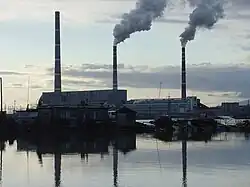
A carbon tax is a tax levied on the carbon emissions from producing goods and services. Carbon taxes are intended to make visible the hidden social costs of carbon emissions. They are designed to reduce greenhouse gas emissions by essentially increasing the price of fossil fuels. This both decreases demand for goods and services that produce high emissions and incentivizes making them less carbon-intensive. When a fossil fuel such as coal, petroleum, or natural gas is burned, most or all of its carbon is converted to CO2. Greenhouse gas emissions cause climate change. This negative externality can be reduced by taxing carbon content at any point in the product cycle.
A carbon tax as well as carbon emission trading is used within the carbon price concept. Two common economic alternatives to carbon taxes are tradable permits with carbon credits and subsidies. In its simplest form, a carbon tax covers only CO2 emissions. It could also cover other greenhouse gases, such as methane or nitrous oxide, by taxing such emissions based on their CO2-equivalent global warming potential. Research shows that carbon taxes do often reduce emissions. Many economists argue that carbon taxes are the most efficient (lowest cost) way to tackle climate change. As of 2019, carbon taxes have either been implemented or are scheduled for implementation in 25 countries. 46 countries have put some form of price on carbon, either through carbon taxes or carbon emission trading schemes.
Some experts observe that a carbon tax can negatively affect public welfare, tending to hit low- and middle-income households the hardest and making their necessities more expensive (for instance, the tax might drive up prices for, say, petrol and electricity). Alternatively, the tax can be too conservative, making "comparatively small dents in overall emissions". To make carbon taxes fairer, policymakers can try to redistribute the revenue generated from carbon taxes to low-income groups by various fiscal means. Such a policy initiative becomes a carbon fee and dividend, rather than a plain tax. (Full article...) (Full article...)
Selected article 12
Portal:Climate change/Selected article/12

A carbon credit is a tradable instrument (typically a virtual certificate) that conveys a claim to have avoided greenhouse gas (GHG) emissions or to have enhanced removal of GHG from the atmosphere. One carbon credit represents the avoided or enhanced removal of one metric ton of carbon dioxide or its carbon dioxide-equivalent (CO2e).
Carbon offsetting is the practice of using carbon credits to offset or counter an entity's greenhouse gas inventory emissions in line with reporting programs or institutional emissions targets/goals. Carbon credit trading mechanisms (i.e., crediting programs), enable project developers to implement projects that mitigate GHGs and receive carbon credits which can be sold to interested buyers who may use the credits to claim they have offset their inventory GHG emissions. Similar to "offsetting", carbon credits that are permitted as compliance instruments within regulatory compliance markets (e.g., The European Union Emission Trading Scheme or the California Cap-n-Trade program) can be used by regulated entities to report lower emissions and achieve compliance status (with limitations around their use that vary by compliance program). Aside from "offsetting", carbon credits can also be used to make contributions toward global net zero GHG-level targets. It is an individual buyer's choice how to use, or "retire", the carbon credit.
Projects entail mitigation actions that avoid or enhance the removal of GHG emissions. Projects are implemented in line with the standards of crediting programs, including their methodologies, rules, and requirements. Methodologies are approved for each specific project type (e.g., tree planting, mangrove restoration, early retirement of coal powerplants). Provided a project fulfills all of the requirements and provisions of a crediting program, it will be issued credits that can be sold to buyers. Each crediting program typically has its own carbon credit 'label' such as CDM's Certified Emission Reductions (CERs), Article 6.4 Mechanism Emission Reductions (A6.4ERs), VCS' Verified Emission Reductions (VERs), ACR's Emission Reduction Tonnes, Climate Action Reserves' Climate Reserve Tonnes (CRTs), etc. (Full article...) (Full article...)
Selected article 13
Portal:Climate change/Selected article/13

Solar radiation modification (SRM), also called solar geoengineering, is a group of large-scale approaches to reduce global warming by increasing the amount of sunlight that is reflected away from Earth and back to outer space. It is not intended to replace efforts to reduce greenhouse gas emissions, but rather to complement them as a potential way to limit global warming. SRM is a form of geoengineering.
The most-researched SRM method is stratospheric aerosol injection (SAI), in which small reflective particles would be introduced into the upper atmosphere to reflect sunlight. Other approaches include marine cloud brightening (MCB), which would increase the reflectivity of clouds over the oceans, or constructing a space sunshade or a space mirror, to reduce the amount of sunlight reaching earth.
Climate models have consistently shown that SRM could reduce global warming and many effects of climate change, including some potential climate tipping points. However, its effects would vary by region and season, and the resulting climate would differ from one that had not experienced warming. Scientific understanding of these regional effects, including potential environmental risks and side effects, remains limited. (Full article...) (Full article...)
Selected article 14
Portal:Climate change/Selected article/14 The sea level has generally been rising since the end of the Last Glacial Maximum, which was around 20,000 years ago. Between 1901 and 2018, the average sea level rose by 15–25 cm (6–10 in), with an increase of 2.3 mm (0.091 in) per year since the 1970s. This was faster than the sea level had ever risen over at least the past 3,000 years. The rate accelerated to 4.62 mm (0.182 in)/yr for the decade 2013–2022. Climate change due to human activities is the main cause of this persistent acceleration. Between 1993 and 2018, melting ice sheets and glaciers accounted for 44% of sea level rise, with another 42% resulting from thermal expansion of water.
Sea level rise lags behind changes in the Earth's temperature by decades, and sea level rise will therefore continue to accelerate between now and 2050 in response to warming that has already happened. What happens after that depends on future human greenhouse gas emissions. If there are very deep cuts in emissions, sea level rise would slow down between 2050 and 2100. It could then rise by between 30 cm (1 ft) and 1.0 m (3+1⁄3 ft) between the early 2020s and 2100, or by approximately 60 cm (2 ft) to 130 cm (4+1⁄2 ft) from the 19th century to 2100. With high emissions it would instead accelerate further, and could rise by 50 cm (1.6 ft) or even by 1.9 m (6.2 ft) by 2100. In the long run, sea level rise would amount to 2–3 m (7–10 ft) over the next 2000 years if warming stays to its current 1.5 °C (2.7 °F) over the pre-industrial past. It would be 19–22 metres (62–72 ft) if warming peaks at 5 °C (9.0 °F). The expected increase in flood hazard potential is often exceedingly large even for modest sea-level rise scenarios, ranging from 10 to 1000 for rises of 0.5 m or less.
Rising seas affect every coastal population on Earth. This can be through flooding, higher storm surges, king tides, and increased vulnerability to tsunamis. There are many knock-on effects. They lead to loss of coastal ecosystems such as mangrove swamps. There may be a reduction in crop yields because of increasing salt levels in irrigation water. Damage to ports disrupts sea trade. The sea level rise projected by 2050 will expose places currently inhabited by tens of millions of people to annual flooding. Without a sharp reduction in greenhouse gas emissions, this may increase to hundreds of millions in the latter decades of the century. (Full article...) (Full article...)
Selected article 15
Portal:Climate change/Selected article/15 Effects of climate change are well documented and growing for Earth's natural environment and human societies. Changes to the climate system include an overall warming trend, changes to precipitation patterns, and more extreme weather. As the climate changes it impacts the natural environment with effects such as more intense forest fires, thawing permafrost, and desertification. These changes impact ecosystems and societies, and can become irreversible once tipping points are crossed. Climate activists are engaged in a range of activities around the world that seek to ameliorate these issues or prevent them from happening.
The effects of climate change vary in timing and location. Up until now the Arctic has warmed faster than most other regions due to climate change feedbacks. Surface air temperatures over land have also increased at about twice the rate they do over the ocean, causing intense heat waves. These temperatures would stabilize if greenhouse gas emissions were brought under control. Ice sheets and oceans absorb the vast majority of excess heat in the atmosphere, delaying effects there but causing them to accelerate and then continue after surface temperatures stabilize. Sea level rise is a particular long term concern as a result. The effects of ocean warming also include marine heatwaves, ocean stratification, deoxygenation, and changes to ocean currents. The ocean is also acidifying as it absorbs carbon dioxide from the atmosphere.
The ecosystems most immediately threatened by climate change are in the mountains, coral reefs, and the Arctic. Excess heat is causing environmental changes in those locations that exceed the ability of animals to adapt. Species are escaping heat by migrating towards the poles and to higher ground when they can. Sea level rise threatens coastal wetlands with flooding. Decreases in soil moisture in certain locations can cause desertification and damage ecosystems like the Amazon rainforest. At 2 °C (3.6 °F) of warming, around 10% of species on land would become critically endangered. (Full article...) (Full article...)
Selected article 16
Portal:Climate change/Selected article/16

The scientific community has been investigating the causes of current climate change for decades. After thousands of studies, the scientific consensus is that it is "unequivocal that human influence has warmed the atmosphere, ocean and land since pre-industrial times." This consensus is supported by around 200 scientific organizations worldwide. The scientific principle underlying current climate change is the greenhouse effect, which provides that greenhouse gases pass sunlight that heats the earth, but trap some of the resulting heat that radiates from the planet's surface. Large amounts of greenhouse gases such as carbon dioxide and methane have been released into the atmosphere through burning of fossil fuels since the industrial revolution. Indirect emissions from land use change, emissions of other greenhouse gases such as nitrous oxide, and increased concentrations of water vapor in the atmosphere, also contribute to climate change. The warming from the greenhouse effect has a logarithmic relationship with the concentration of greenhouse gases. This means that every additional fraction of CO2 and the other greenhouse gases in the atmosphere has a slightly smaller warming effect than the fractions before it as the total concentration increases. However, only around half of CO2 emissions continually reside in the atmosphere in the first place, as the other half is quickly absorbed by carbon sinks in the land and oceans. Further, the warming per unit of greenhouse gases is also affected by feedbacks, such as the changes in water vapor concentrations or Earth's albedo (reflectivity).
As the warming from CO2 increases, carbon sinks absorb a smaller fraction of total emissions, while the "fast" climate change feedbacks amplify greenhouse gas warming. Thus, the effects counteract one another, and the warming from each unit of CO2 emitted by humans increases temperature in linear proportion to the total amount of emissions. Further, some fraction of the greenhouse warming has been "masked" by the human-caused emissions of sulfur dioxide, which forms aerosols that have a cooling effect. However, this masking has been receding in the recent years, due to measures to combat acid rain and air pollution caused by sulfates. (Full article...) (Full article...)
Selected article 17
Portal:Climate change/Selected article/17 Effects of climate change are well documented and growing for Earth's natural environment and human societies. Changes to the climate system include an overall warming trend, changes to precipitation patterns, and more extreme weather. As the climate changes it impacts the natural environment with effects such as more intense forest fires, thawing permafrost, and desertification. These changes impact ecosystems and societies, and can become irreversible once tipping points are crossed. Climate activists are engaged in a range of activities around the world that seek to ameliorate these issues or prevent them from happening.
The effects of climate change vary in timing and location. Up until now the Arctic has warmed faster than most other regions due to climate change feedbacks. Surface air temperatures over land have also increased at about twice the rate they do over the ocean, causing intense heat waves. These temperatures would stabilize if greenhouse gas emissions were brought under control. Ice sheets and oceans absorb the vast majority of excess heat in the atmosphere, delaying effects there but causing them to accelerate and then continue after surface temperatures stabilize. Sea level rise is a particular long term concern as a result. The effects of ocean warming also include marine heatwaves, ocean stratification, deoxygenation, and changes to ocean currents. The ocean is also acidifying as it absorbs carbon dioxide from the atmosphere.
The ecosystems most immediately threatened by climate change are in the mountains, coral reefs, and the Arctic. Excess heat is causing environmental changes in those locations that exceed the ability of animals to adapt. Species are escaping heat by migrating towards the poles and to higher ground when they can. Sea level rise threatens coastal wetlands with flooding. Decreases in soil moisture in certain locations can cause desertification and damage ecosystems like the Amazon rainforest. At 2 °C (3.6 °F) of warming, around 10% of species on land would become critically endangered. (Full article...) (Full article...)
Selected article 18
Portal:Climate change/Selected article/18

The politics of climate change results from different perspectives on how to respond to climate change. Global warming is driven largely by the emissions of greenhouse gases due to human activity, especially the burning of fossil fuels, certain industries like cement and steel production, and land use for agriculture and forestry. Since the Industrial Revolution, fossil fuels have provided the main source of energy for economic and technological development. The centrality of fossil fuels and other carbon-intensive industries has resulted in much resistance to climate policy, despite widespread scientific consensus that such policy is necessary.
Climate change first emerged as a political issue in the 1970s. Efforts to mitigate climate change have been prominent on the international political agenda since the 1990s, and are also increasingly addressed at national and local level. Climate change is a complex global problem. Greenhouse gas (GHG) emissions contribute to global warming across the world, regardless of where the emissions originate. Yet the impact of global warming varies widely depending on how vulnerable a location or economy is to its effects. Global warming is on the whole having negative impact, which is predicted to worsen as heating increases. Ability to benefit from both fossil fuels and renewable energy vary substantially from nation to nation.
Early international climate talks made little progress because countries disagreed on who should reduce emissions, who benefited, and who faced the biggest risks. In the 21st century, there has been increased attention to mechanisms like climate finance in order for vulnerable nations to adapt to climate change. In some nations and local jurisdictions, climate friendly policies have been adopted that go well beyond what was committed to at international level. Yet local reductions in GHG emission that such policies achieve have limited ability to slow global warming unless the overall volume of GHG emission declines across the planet. (Full article...) (Full article...)
Selected article 19
Portal:Climate change/Selected article/19

Climate change mitigation, also called decarbonisation, is an action to limit the greenhouse gases in the atmosphere that cause climate change. Climate change mitigation actions include conserving energy and replacing fossil fuels with clean energy sources. Secondary mitigation strategies include changes to land use and removing carbon dioxide (CO2) from the atmosphere. 2022 assessments emphasize that global greenhouse gas emissions must peak before 2025 and decline by about 43% by 2030 to limit warming to 1.5 °C, requiring rapid transitions in energy, transport, and land-use systems.
The adopted climate change mitigation policies are insufficient, as they contribute to some changes but fail to accelerate transitions at the scale and speed required, and would still result in global warming of about 2.7 °C by 2100, significantly above the 2015 Paris Agreement's goal of limiting global warming to below 2 °C.Recent research shows that demand-side climate solutions—such as shifts in transportation behavior, dietary change, improved building energy efficiency, and reduced material consumption—could reduce global greenhouse gas emissions by 40% to 70% by 2050 while improving human well-being.
Solar energy and wind power can replace fossil fuels at the lowest cost compared to other renewable energy options. The availability of sunshine and wind is variable and can require electrical grid upgrades, such as using long-distance electricity transmission to group a range of power sources. Energy storage can also be used to even out power output, and demand management can limit power use when power generation is low. Cleanly generated electricity can usually replace fossil fuels for powering transportation, heating buildings, and running industrial processes. Certain processes are more difficult to decarbonise, such as air travel and cement production. Carbon capture and storage (CCS) can be an option to reduce net emissions in these circumstances, although fossil fuel power plants with CCS technology is currently a high-cost climate change mitigation strategy. (Full article...) (Full article...)
Selected article 20
Portal:Climate change/Selected article/20
There is scientific consensus that the Earth has been consistently warming since the start of the Industrial Revolution, that the rate of recent warming is largely unprecedented, and that this warming is mainly the result of a rapid increase in atmospheric carbon dioxide (CO2) caused by human activities. The human activities causing this warming include fossil fuel combustion, cement production, and land use changes such as deforestation, with a significant supporting role from the other greenhouse gases such as methane and nitrous oxide. This human role in climate change is considered "unequivocal" and "incontrovertible".
Nearly all actively publishing climate scientists say humans are causing climate change. Surveys of the scientific literature are another way to measure scientific consensus. A 2019 review of scientific papers found the consensus on the cause of climate change to be at 100%, and a 2021 study concluded that over 99% of scientific papers agree on the human cause of climate change. The small percentage of papers that disagreed with the consensus often contained errors or could not be replicated.
The evidence for global warming due to human influence has been recognized by the national science academies of all the major industrialized countries. In the scientific literature, there is a very strong consensus that global surface temperatures have increased in recent decades and that the trend is caused by human-induced emissions of greenhouse gases. No scientific body of national or international standing disagrees with this view. A few organizations with members in extractive industries hold non-committal positions, and some have tried to persuade the public that climate change is not happening, or if the climate is changing it is not because of human influence, attempting to sow doubt in the scientific consensus. (Full article...) (Full article...)
Selected article 21
Portal:Climate change/Selected article/21 Industrial, political and ideological interests organize activity to undermine public trust in climate science. Climate change denial has been associated with the fossil fuels lobby, the Koch brothers, industry advocates, ultraconservative think tanks, and ultraconservative alternative media, often in the U.S. More than 90% of papers that are skeptical of climate change originate from right-wing think tanks. Climate change denial is undermining efforts to act on or adapt to climate change, and exerts a powerful influence on the politics of climate change.
In the 1970s, oil companies published research that broadly concurred with the scientific community's view on climate change. Since then, for several decades, oil companies have been organizing a widespread and systematic climate change denial campaign to seed public disinformation, a strategy that has been compared to the tobacco industry's organized denial of the hazards of tobacco smoking. Some of the campaigns are carried out by the same people who previously spread the tobacco industry's denialist propaganda. (Full article...) (Full article...)
Selected article 22
Portal:Climate change/Selected article/22 Media coverage of climate change has had effects on public opinion on climate change, as it conveys the scientific consensus on climate change that the global temperature has increased in recent decades and that the trend is caused by human-induced emissions of greenhouse gases.
Climate change communication research shows that coverage has grown and become more accurate.
Some researchers and journalists believe that media coverage of politics of climate change is adequate and fair, while a few feel that it is biased. (Full article...) (Full article...)
Selected article 23
Portal:Climate change/Selected article/23

The history of the scientific discovery of climate change began in the early 19th century when ice ages and other natural changes in paleoclimate were first suspected and the natural greenhouse effect was first identified. In the late 19th century, scientists first argued that human emissions of greenhouse gases could change Earth's energy balance and climate. The existence of the greenhouse effect, while not named as such, was proposed as early as 1824 by Joseph Fourier. The argument and the evidence were further strengthened by Claude Pouillet in 1827 and 1838. In 1856 Eunice Newton Foote demonstrated that the warming effect of the sun is greater for air with water vapour than for dry air, and the effect is even greater with carbon dioxide.
John Tyndall was the first to measure the infrared absorption and emission of various gases and vapors. From 1859 onwards, he showed that the effect was due to a very small proportion of the atmosphere, with the main gases having no effect, and was largely due to water vapor, though small percentages of hydrocarbons and carbon dioxide had a significant effect. The effect was more fully quantified by Svante Arrhenius in 1896, who made the first quantitative prediction of global warming due to a hypothetical doubling of atmospheric carbon dioxide.
In the 1960s, the evidence for the warming effect of carbon dioxide gas became increasingly convincing. Scientists also discovered that human activities that generated atmospheric aerosols (e.g., air pollution) could have cooling effects as well (later referred to as global dimming). Other theories for the causes of global warming were also proposed, involving forces from volcanism to solar variation. During the 1970s, scientific understanding of global warming greatly increased. (Full article...) (Full article...)
Selected article 24
Portal:Climate change/Selected article/24

Climate crisis is a term that is used to describe global warming and climate change and their effects. This term and the term climate emergency have been used to emphasize the threat of global warming to Earth's natural environment and to humans, and to urge aggressive climate change mitigation and transformational adaptation.
The term climate crisis is used by those who "believe it evokes the gravity of the threats the planet faces from continued greenhouse gas emissions and can help spur the kind of political willpower that has long been missing from climate advocacy". They believe, much as global warming provoked more emotional engagement and support for action than climate change, calling climate change a crisis could have an even stronger effect.
A study has shown the term climate crisis invokes a strong emotional response by conveying a sense of urgency. However, some caution this response may be counter-productive and may cause a backlash due to perceptions of alarmist exaggeration. (Full article...) (Full article...)
Selected article 25
Portal:Climate change/Selected article/25

Geoengineering (also known as climate engineering or climate intervention) is the deliberate large-scale interventions in the Earth’s climate system intended to counteract human-caused climate change. The term commonly encompasses two broad categories: large-scale carbon dioxide removal (CDR) and solar radiation modification (SRM). CDR involves techniques to remove carbon dioxide from the atmosphere and is generally considered a form of climate change mitigation. SRM aims to reduce global warming by reflecting a small portion of sunlight (solar radiation) away from Earth and back into space. Although historically grouped together, these approaches differ substantially in mechanisms, timelines, and risk profiles, and are now typically discussed separately. Some other large-scale engineering proposals—such as interventions to slow the melting of polar and alpine ice—are also sometimes classified as forms of geoengineering.
Some types of geoengineering present political, social and ethical issues. One common objection is that focusing on these technologies could undermine efforts to reduce greenhouse gas emissions. Effective governance and international oversight are widely regarded as essential.
Major scientific organizations have examined the potential, risks, and governance needs of geoengineering, including the US National Academies of Sciences, Engineering, and Medicine, the Royal Society, the UN Educational, Scientific and Cultural Organization (UNESCO), and the World Climate Research Programme. (Full article...) (Full article...)