Selected articles list
Portal:Animals/Selected animal/1
 | This Wikipedia page has been superseded by Portal:Animals and is retained primarily for historical reference. |
 | Note: Article entries are now being transcluded directly on the main portal page. However, this page should be retained for historical reference. |
The
platypus (
Ornithorhynchus anatinus) is a
semiaquatic egg-laying
mammal endemic to
eastern Australia, including
Tasmania. Together with the four species of
echidna, it is one of the five
extant species of
monotremes, the only mammals that lay
eggs instead of giving birth. The animal is the sole living representative of its
family (
Ornithorhynchidae) and
genus (
Ornithorhynchus), though a number of
related species have been found in the fossil record. The unusual appearance of this egg-laying,
duck-billed,
beaver-tailed,
otter-footed mammal baffled European naturalists when they first encountered it, with some considering it an elaborate hoax. It is one of the few
venomous mammals, the male platypus having a
spur on the hind foot that delivers a
venom capable of causing severe pain to humans. Until the early 20th century, it was hunted for its fur, but it is now protected throughout its range. Although captive breeding programs have had only limited success and the platypus is vulnerable to the effects of pollution, it is not under any immediate threat.
Portal:Animals/Selected animal/2
| This Wikipedia page has been superseded by Portal:Animals and is retained primarily for historical reference. |
| Note: Article entries are now being transcluded directly on the main portal page. However, this page should be retained for historical reference. |
The
jaguar is a
New World mammal of the
Felidae family and one of four "
big cats" in the
Panthera genus, along with the
lion,
tiger and
leopard of the
Old World. The jaguar is the third-largest feline after the lion and tiger, and is the largest and most powerful feline in the
Western Hemisphere. The jaguar's present range extends from
Mexico (with occasional sightings in the
United States) across much of Central America and south to
Paraguay and northern
Argentina. Physically, the spotted cat most closely resembles the leopard, although its behavioural and
habitat characteristics are closer to those of the tiger. While dense
jungle is its preferred habitat, the jaguar will range across a variety of forested and open terrain. It is strongly associated with the presence of water and is notable, along with the tiger, as a feline that enjoys swimming. The jaguar is a largely solitary, stalk-and-ambush
predator, and is opportunistic in prey selection. It is also an
apex and
keystone predator, playing an important role in stabilizing ecosystems and regulating the populations of prey species. The jaguar has developed an exceptionally powerful bite, even relative to the other big cats.
Portal:Animals/Selected animal/3
| This Wikipedia page has been superseded by Portal:Animals and is retained primarily for historical reference. |
| Note: Article entries are now being transcluded directly on the main portal page. However, this page should be retained for historical reference. |
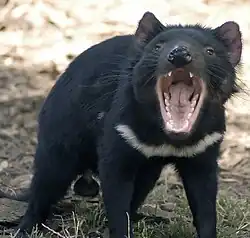
The
Tasmanian Devil is a
carnivorous marsupial found exclusively on the
Australian island of
Tasmania. At the size of a small
dog, but stocky and muscular, the Tasmanian Devil is the largest carnivorous marsupial in the world. The devil is characterised by its black fur, offensive odour when stressed, extremely loud and disturbing screech, and vicious temperament when feeding. Known to hunt, as well as to scavenge
carrion, communal eating is one of the few social activities in which the usually solitary devil participates. The Tasmanian Devil became
extinct on the Australian mainland about 400 years prior to
European settlement in
1788. The people of Tasmania saw devils as a threat to
livestock and hunted them until
1941, when the animals were officially protected. Since the late
1990s devil facial tumour disease has reduced the devil population significantly and threatens the survival of the species. The impact of the disease on devil population may lead to listing of the devil as an
endangered species.
Portal:Animals/Selected animal/4
| This Wikipedia page has been superseded by Portal:Animals and is retained primarily for historical reference. |
| Note: Article entries are now being transcluded directly on the main portal page. However, this page should be retained for historical reference. |
The
Javan rhinoceros is a member of the family
Rhinocerotidae and one of five extant
rhinoceroses. Its horn is usually less than 25
cm (10
inches), smaller than those of the other rhino species. Once the most widespread of Asian rhinoceroses, the Javan rhinoceros ranged from the islands of
Java and
Sumatra, throughout Southeast Asia, and into India and China. The species is
critically endangered, with only one known population in the wild, and no individuals in captivity. It is possibly the rarest large mammal on earth, with a population of as few as 40 in
Ujung Kulon National Park on
Java in
Indonesia. The decline of the Javan rhinoceros is attributed to poaching, primarily for their horns, which are highly valued in
traditional Chinese medicine. The Javan rhino can live approximately 30–45
years in the wild. It historically inhabited lowland
rain forest, wet grasslands and large floodplains. The Javan rhino is mostly solitary, except for courtship and offspring-rearing, though groups may occasionally congregate near wallows and salt licks. Aside from humans, adults have no
predators in their range. Scientists and conservationists rarely study the animals directly due to their extreme rarity and the danger of interfering with such an endangered species. Researchers rely on
camera traps and fecal samples to gauge health and behavior. Consequently, the Javan rhino is the least studied of all rhino species.
Portal:Animals/Selected animal/5
| This Wikipedia page has been superseded by Portal:Animals and is retained primarily for historical reference. |
| Note: Article entries are now being transcluded directly on the main portal page. However, this page should be retained for historical reference. |
Elephants are large mammals found in
sub-Saharan Africa, and
South and
Southeast Asia. Traditionally, two species are recognised, the
African elephant (pictured) and the
Asian elephant, although some evidence suggests that
African bush elephants and
African forest elephants are separate species. The largest living
terrestrial animals, male African elephants can reach a height of 4
m (13
ft) and weigh 7,000
kg (15,000
lb). Distinctive features include the trunk, used for many purposes, and tusks, which serve as tools and weapons. Females (or "cows") tend to live in family groups; males (or "bulls") leave their family groups when they reach puberty, and may live alone or with other males. Adult bulls mostly interact with family groups when looking for a mate. Elephants can live up to 70
years in the wild, and their intelligence has been compared to
primates and
cetaceans. African elephants are classed as
vulnerable, while the Asian elephant is classed as
endangered. Elephants are threatened by
poaching for the
ivory trade,
habitat destruction and conflicts with local people. They are highly recognisable and have been featured in art, folklore, religion, literature and popular culture