Paris Saint-Germain FC ownership and finances
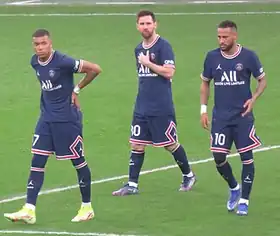
Paris Saint-Germain FC were initially fan-owned, with around 20,000 members under a non-profit association governed by 1901 French law (Association PSG). The club was led by board members Guy Crescent, Pierre-Étienne Guyot and Henri Patrelle. In 1973, a group of French businessmen led by Daniel Hechter and Francis Borelli took control of the club. PSG changed ownership in 1991 when Canal+ created a professional sports company (SASP) structure, followed by another takeover in 2006 by Colony Capital. Since 2011, Qatar Sports Investments (QSI) have been the majority owners, currently holding 85.9% of shares, with Arctos Partners (12.5%) and Boardroom (1.6%) holding the remainder.
Backed by the Qatari state, QSI acquired a controlling stake in 2011 and became sole owner in 2012. Since then, PSG have been widely described as a state-backed club and among the wealthiest in world football. QSI chairman Nasser Al-Khelaifi has served as PSG president since the takeover. However, the Emir of Qatar, Tamim bin Hamad Al Thani, as head of the Qatar Investment Authority (QIA) and founder of QSI, is widely regarded as the ultimate decision-maker on major strategic matters. Upon arrival, QSI pledged to build a squad capable of winning the UEFA Champions League. Since 2011, PSG have invested heavily in transfer fees and wages. This spending has led to domestic dominance and two consecutive Champions League titles, but also scrutiny under UEFA Financial Fair Play Regulations.
As of January 2026, PSG ranked fourth globally in football revenue with €837 million according to Deloitte, and were valued at around €4 billion by Forbes, making them the seventh-most valuable club in the world. This growth has been driven by sustained investment, sporting success, global branding, and commercial partnerships. Deloitte also ranked PSG's women's team among the top revenue-generating sides in world women's football, while the club's handball section operates with one of the largest budgets in European handball.
History
From Hechter to Borelli
The development of football in Paris was considered a major objective in the late 1960s, as the French capital lacked an elite football club. In January 1969, the French Football Federation (FFF) announced a project to create a major new club in Paris and established a study committee. The initiative was led by Fernand Sastre, general secretary and future president of the FFF, Henri Patrelle, president of Stade Saint-Germain, and Guy Crescent, businessman and CEO of Calberson. Following a large consultation across the Paris region, the Paris FC project was officially launched in the summer of 1969 under the co-presidency of Guy Crescent and Pierre-Étienne Guyot. However, the project faced financial difficulties, prompting Crescent and Guyot to seek external advice from Real Madrid president Santiago Bernabéu, who recommended launching a subscription campaign. As a result, 17,400 subscriptions were secured by February 1970. The club was therefore initially fan-owned, with annual membership fees ranging between 25 and 40 francs.[1][2][3]
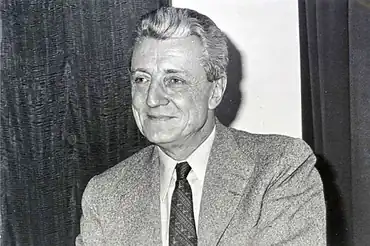
Despite this initial success, Paris FC remained a virtual entity, lacking a stadium, players, and a coach. In spring 1970, the club failed to secure a merger with any regional team, while the FFF declined to grant direct entry into the top division. Facing the risk of reimbursing subscribers, a merger with Stade Saint-Germain became the preferred solution. In May 1970, the FFF and the clubs involved approved the proposal. Paris Saint-Germain was subsequently founded on 12 August 1970 following the merger process. It became the first club in French football history to be created with financial contributions from supporters through a subscription campaign.[1][2][3]
PSG was managed by Crescent, Guyot and Patrelle until 1972, when it split from Paris FC following internal disagreements and structural changes.[1] In 1973, after a season marked by significant debt and the loss of most of its subscribers, Patrelle sought new financial backing. He obtained support from French fashion designer and investor Daniel Hechter and his associates.[2][4] They subsequently took control of the club, with Hechter appointed president and Francis Borelli as vice-president. Borelli later became president in 1978, following Hechter's lifetime ban from football imposed by the FFF in connection with a ticketing scandal at the Parc des Princes.[2][5][6]
PSG's first major trophies were won during Borelli's presidency. The club benefited from relatively stable management and regular qualification for European competitions, which contributed to improved financial conditions. The competitive landscape in Paris changed in 1984 with the rise of Racing CFF, rebranded as Matra Racing and supported by the Matra conglomerate. The club briefly emerged as a rival to PSG for status as the capital's leading team. However, the project proved short-lived, and by 1989 Matra Racing had returned to the lower divisions following financial collapse. During this period, Borelli accumulated significant debt in an effort to maintain PSG's position in Paris. Financial irregularities in his management were later exposed in 1991, by which time the club had already accrued substantial liabilities and faced the risk of insolvency. He ultimately resigned under pressure from the Council of Paris.[2][6][7][8]
Canal+ and Colony Capital
Eager to revive interest in Ligue 1 and attract more subscribers, French media company Canal+ invested in PSG in May 1991. Canal+ paid off the club's debts and saved it from bankruptcy. Until June 1991, the Association Paris Saint-Germain Football Club (Association loi 1901), a non-profit organization, had managed the club's amateur and professional activities for two decades. When Canal+ took control of PSG in May 1991, it created the Société Anonyme Sportive Professionnelle Paris Saint-Germain Football (SASP, i.e., a professional sports private limited company) shortly afterwards, initially holding 39.8% of the shares. The association transferred the professional section to the SASP.[2][8]
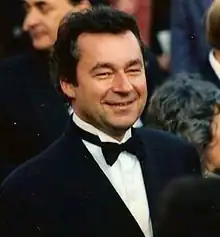
The takeover revitalized PSG. Backed by its shareholders, rising attendance at the Parc des Princes, and increasing domestic and European television revenues driven by improved sporting performances, PSG became one of the richest clubs in France and in Europe. The club's budget rose to 120 million francs, and high-profile signings such as Valdo, David Ginola, George Weah, Raí and Youri Djorkaeff helped secure several trophies between 1993 and 1998. The club was managed by several delegated presidents during this period; Michel Denisot was the first and by far the most successful.[2][8][9]
After the creation of the SASP, the Association Paris Saint-Germain retained 51% of the shares. Canal+ became the majority shareholder in 1997 (56.8%) following the transfer of 17% of shares from the PSG Association (reduced to 34%). The association withdrew in 2001 in favor of Canal+, which reinvested tens of millions of euros in the club and increased its stake to 90.8%. Canal+ became sole owner in 2005 after buying out historical shareholders Charles Talar (4.5%) and Bernard Brochand (2.9%) in 2004, and Alain Cayzac (1.8%) in 2005.[9]
Between 1991 and 1998, PSG president Michel Denisot ensured the club's financial stability, supported by sporting success and rising broadcasting revenues. His departure at the end of the 1997–98 season marked a turning point, after which PSG struggled on the pitch and began to accumulate debt off it. Despite recapitalization in 2004, financial losses continued to rise, and between 2004 and 2006 PSG remained the only major French club with significant losses, despite an increase of the turnover. Led by players such as Marco Simone, Ronaldinho and Pauleta, the club won four trophies after the departure of Michel Denisot between 1998 and 2006, but performances gradually declined.[2][10]
A separation from Canal+ eventually became inevitable.[10] In April 2006, Canal+ sold the club to investment firms Colony Capital, Butler Capital Partners and Morgan Stanley for €41 million, forming a consortium with equal ownership.[11] But the negative spiral continues and PSG spent two seasons narrowly avoiding relegation.[10][12] Colony Capital gradually increased its stake between 2008 and 2009 to 98.42%, while Butler retained 1.58%. After significantly reducing losses and won 2 trophies despite poor sporting performances in the league and numerous scandals with supporters, Colony Capital announced in 2010 that it was seeking new investors to help transform PSG into a title contender in the coming years.[2]
Qatar Sports Investments
QSI takeover and club transformation

Paris Saint-Germain were transformed in June 2011 when Qatar Sports Investments (QSI), a state-backed investment fund linked to the Qatar Investment Authority (QIA), acquired a 70% stake in the club.[13] Colony Capital (29%) and Butler Capital Partners (1%) initially remained minority shareholders.[13] QSI chairman Nasser Al-Khelaifi was appointed club president following the takeover, on behalf of Tamim bin Hamad Al Thani, the Emir of Qatar.[14][15] Al Thani is also the founder and chairman of the QIA, QSI's parent organization.[16] QSI subsequently acquired full ownership in March 2012, valuing the club at approximately €100 million.[2][13][17] Through QSI and other state-linked entities, including Qatar Tourism Authority (QTA), QNB Group (QNB) and Ooredoo, PSG has been described as a state-supported club among the wealthiest in world football.[18][19][20][21][22]
The strategy behind Qatar's acquisition of PSG has been linked to efforts to project a global sporting image ahead of the 2022 FIFA World Cup. In November 2010, shortly before the vote, UEFA president Michel Platini met with the Emir of Qatar, the Qatari prime minister, and French president Nicolas Sarkozy, a known supporter of PSG, at a time when the club was struggling financially under Colony Capital. Following this meeting, Platini reportedly changed his voting intention from the United States to Qatar, and six months later QSI acquired PSG.[22]
Since the takeover, PSG have developed from Ligue 1 strugglers into one of Europe's leading clubs and regular UEFA Champions League contenders, driven by significant investment in player recruitment.[23][24] The club has dominated French football during this period and has won back-to-back UEFA Champions League titles in 2025 and 2026. PSG's spending has also resulted in scrutiny under UEFA Financial Fair Play Regulations (FFP).[25]
In August 2012, PSG signed a major nation branding agreement with the QTA to promote Qatar internationally. The agreement was reported to be worth up to €1 billion over five seasons, including €100 million for the first season. The partnership was formally announced in October 2013, but the contract included retroactive payments of €100 million and €200 million for the 2011–12 and 2012–13 seasons, respectively, effectively offsetting reported losses during that period.[25][26]
UEFA sanctions and new investors

In October 2013, UEFA's Club Financial Control Body (CFCB) concluded that the QTA agreement, valued at €200 million per year and partially backdated, was not in line with fair market value and reduced its assessed value to €100 million.[27][28] As a result, UEFA ruled in April 2014 that PSG's financial deficit for the 2013–14 season exceeded Financial Fair Play limits, which at the time restricted aggregate losses to €45 million over a monitored period.[27] UEFA's revised valuation saw PSG's deficit for the 2013–14 season reach €107m — more than double the amount allowed under FFP rules, which limit losses to €45m over the last two years.[27][29] In May 2014, UEFA imposed sanctions on PSG, including a €60 million fine.[28][30] In September 2015, the restrictions were lifted.[31] In August 2016, PSG and QTA renewed their partnership until June 2019.[32][33]
In August 2017, PSG activated the €222 million release clause of Barcelona player Neymar, making him the most expensive transfer in football history.[34] Later that month, Kylian Mbappé joined PSG from Monaco for €180 million, structured in three installments.[35] UEFA subsequently opened a new FFP investigation into PSG.[36] In June 2018, UEFA cleared the club of breaching FFP rules but reduced the assessed value of its Qatar-based sponsorship deals from €100 million to €58 million.[18][37] UEFA also stated that the QTA agreement would no longer be taken into account beyond June 2019.[33] PSG met UEFA's requirement to generate €50 million in player sales before the end of June 2018.[37][38]
PSG appealed to the Court of Arbitration for Sport (CAS) in November 2018.[39][40] In March 2019, the CAS upheld PSG's appeal, allowing the club to avoid sanctions for the 2015–17 assessment period.[41] The club also met the €60 million requirement in player sales before the end of June 2019.[42] The club did not renew its long-term agreement with the QTA after its expiry in June 2019, instead moving towards more conventional commercial partnerships.[33][43][44] These included deals with Accor (€65m/year), Nike (€80m/year), and Air Jordan (€67m/year), but also continued Qatar-linked sponsorship agreements, including Qatar Airways as shirt sponsor (€70m/year until 2028).[45][46][47][48]
In December 2023, Arctos Partners acquired a 12.5% minority stake in PSG, valuing the club at around €4.25 billion, while QSI retained 87.5% control. Arctos reportedly invested around €530 million for its minority stake.[49] Arctos focused on international growth and infrastructure projects, including the women's team and the Campus PSG training centre, while discussions continued over the future of the Parc des Princes.[50] In June 2025, Boardroom, the company co-founded by Kevin Durant, acquired a 1.6% minority stake in PSG.[51] The club stated that the partnership would support its multi-sport strategy, including future developments in basketball.[52]
Financial status

Paris Saint-Germain recorded a profit of 1.5 million francs in their inaugural 1970–71 season, but subsequently accumulated increasing debt. By the early 1990s, the club faced severe financial difficulties, with debts of around 50 million francs, which the Council of Paris refused to cover. Canal+ invested in the club in May 1991, clearing its debts and restructuring it as a professional sports public limited company (SASP), after which PSG became one of the richest clubs in France.[2][4][7][8] Between 1991 and 1998, PSG benefited from rising television revenues, strong sporting performances and increased attendance at the Parc des Princes. The club opened its first official store in 1998 and entered the Deloitte Football Money League, before dropping out the following season amid sporting and financial decline.[2][10][53][54]
PSG recorded negative net income between 1998 and 2011, with cumulative losses of nearly €300 million under Canal+ and Colony Capital ownership.[55][56] At the time, the club generated €101 million in revenue by season and was valued at €100 million.[17][55] In June 2011, Tamim bin Hamad Al Thani, Emir of Qatar, acquired PSG through Qatar Sports Investments (QSI), which covered €15–20 million in debt and €19 million in losses from the 2010–11 season.[13][57][58] Backed by the Qatari state, PSG became one of the wealthiest clubs in world football.[19][21]
Ahead of the 2011–12 campaign, club president Nasser Al-Khelaifi announced plans to restore profitability, a feat not achieved since the tenure of Michel Denisot in the 1990s.[59] The club returned to the Deloitte rankings that season.[60] PSG posted profits in 2014–15, 2015–16, 2017–18 and 2018–19.[2][55] Following the outbreak of the COVID-19 pandemic in March 2020, PSG suffered a major financial setback. Combined with high wage costs, the club recorded losses in each of the next five seasons, peaking at €368 million in 2021–22.[61][62][63] After shifting away from a star-driven wage structure, losses were reduced to €60 million in 2023–24.[64][65]
In January 2026, PSG ranked fourth globally in revenue (€837 million) according to Deloitte and seventh in club valuation (€4 billion) according to Forbes.[66][67] Growth has been driven by sustained investment, sporting success, high-profile signings such as Zlatan Ibrahimović, Neymar, Kylian Mbappé and Lionel Messi, and commercial partnerships with the Qatar Tourism Authority (QTA), Nike, Air Jordan, Accor and Qatar Airways.[24][33][46][47][60][68] PSG's women's team generated €4.6 million in revenue, while the handball section operated with one of the largest budgets in European handball.[69][70][71][72][73]
Sportswear partnerships
Shirt sponsor
| Partnership history | |||||
|---|---|---|---|---|---|
| Period | Shirt sponsor | Kit supplier | |||
| 1970–1972 | None | Le Coq Sportif | |||
| 1972–1973 | Montreal | ||||
| 1973–1974 | Canada Dry | ||||
| 1974–1975 | RTL | ||||
| 1975–1976 | Kopa | ||||
| 1976–1977 | Le Coq Sportif | ||||
| 1977–1978 | Pony | ||||
| 1978–1986 | Le Coq Sportif | ||||
| 1986–1988 | RTL / Canal+ | Adidas | |||
| 1988–1989 | RTL / La Cinq | ||||
| 1989–1990 | RTL / TDK | Nike (or Air Jordan) | |||
| 1990–1991 | RTL / Alain Afflelou | ||||
| 1991–1992 | Commodore / Müller | ||||
| 1992–1993 | Commodore / Tourtel | ||||
| 1993–1994 | Commodore / Tourtel / SEAT | ||||
| 1994–1995 | SEAT / Tourtel / Lipton | ||||
| 1995–2002 | Opel | ||||
| 2002–2006 | Thomson | ||||
| 2006–2019 | Emirates | ||||
| 2019–2022 | Accor | ||||
| 2022– | Qatar Airways | ||||
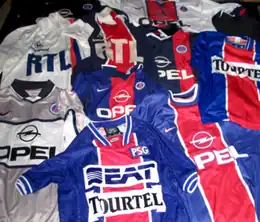
Paris Saint-Germain played without a shirt sponsor until 1972, when the club signed a deal with Canadian grocery chain Montreal. PSG then signed with Canadian soft-drink brand Canada Dry for the 1973–74 season in what was the biggest sponsorship contract in Division 2 history at the time. The club also reached an agreement with French radio station RTL worth 1.2 million francs for the 1974–75 season, conditional on promotion to the top flight. PSG achieved promotion and the RTL partnership lasted until 1991.[5][74][75]
Between 1986 and 1995, the club featured multiple shirt sponsors, including French media company Canal+, French television channel La Cinq, Japanese electronics company TDK, computer manufacturer Commodore, dairy company Müller, Spanish car manufacturer SEAT and British tea brand Lipton.[75][76] German automobile manufacturer Opel became the sole shirt sponsor in 1995 and remained until 2002.[77][78] It was succeeded by French multimedia company Thomson (2002–2006) and Dubai-based airline Emirates (2006–2019).[79][80]
Following the end of the Emirates partnership, French hospitality company Accor became PSG's shirt sponsor in 2019.[79][81] Its Accor Live Limitless (ALL) loyalty platform appeared on the front of the shirts until 2022.[45][79] Accor reportedly paid around €65 million per year, compared to approximately €25 million under the Emirates deal.[82] In June 2022, Qatari carrier Qatar Airways replaced Accor as shirt sponsor under a contract reportedly worth close to €70 million per season until 2028.[47][48]
Kit supplier
French sportswear manufacturer Le Coq Sportif became Paris Saint-Germain's first kit supplier in 1970 and served in three separate spells: 1970–1975, 1976–77, and 1978–1986.[83] French sportswear brand Kopa and American sportswear company Pony supplied the club's kits during the intervening 1975–76 and 1977–78 seasons, respectively. German sportswear manufacturer Adidas then served as PSG's kit supplier from 1986 to 1989.[74]
Nike replaced Adidas ahead of the 1989–90 season and has remained the club's kit supplier ever since.[74] The deal was renewed until the end of the 2021–22 campaign in December 2013.[84] The American sportswear brand increased the €6.5m annual commitment it had with the club to €25m.[79][85] In June 2019, PSG and Nike signed a long-term extension through 2032, reportedly worth €80 million per year, making it one of the most lucrative kit deals in European football and the largest sponsorship agreement in the club's history. The agreement covers the men's and women's football teams as well as the handball section.[79][86]
In September 2018, PSG and Nike-owned basketball brand Air Jordan announced a partnership under which Jordan began producing selected PSG kits and apparel. Originally signed for three years and later extended, the agreement is reportedly worth around €67 million per year. The 2021–22 home shirt became the first to feature the Jordan logo, after the brand had previously only produced the club's away, third and fourth kits. PSG and Jordan celebrated five years of collaboration in September 2023.[46][87]
Transfer activity









Before QSI
Dogliani, the original transfer record
Paris Saint-Germain have spent billions on player transfers since Qatar Sports Investments (QSI) acquired the club in 2011.[111] However, PSG were also active in the transfer market in earlier decades, particularly under presidents Daniel Hechter and Francis Borelli in the 1970s and 1980s.[5][7] Jean-Pierre Dogliani became the club's first record signing in the summer of 1973, when Hechter paid Monaco €10k for the French playmaker.[4][88] He was soon surpassed by François M'Pelé, who joined from Ajaccio in December 1973 for €130k.[89]

After becoming president in June 1974, Hechter signed Mustapha Dahleb from Sedan for a French record €205k, regarded as PSG's first star signing.[90] A year later, the club paid the same fee for Humberto Coelho from Benfica. He later became the club's record sale when he returned to Benfica for €107k in 1977.[91] Carlos Bianchi arrived that same year from Stade de Reims for €230k, becoming PSG's most expensive player at the time and Hechter's final signing as president.[92] His right-hand man, vice-president Francis Borelli, succeeded him.[5][7]
When Bianchi left in 1979 to join Strasbourg for €230k, he also became PSG's most valuable sale up to that point.[101] He was eventually surpassed by Ivica Šurjak, sold for €460k to Udinese in 1982.[102] Borelli continued his predecessor's transfer policy, breaking the club record in 1979 with the signing of João Alves from Benfica for €760k.[93] Jules Bocandé nearly doubled this figure in 1986, joining from Metz for €1.5 million.[94][95]
Anelka and Ronaldinho
PSG also made waves in the transfer market during the 1990s and early 2000s. Backed by French media group Canal+, which acquired the club in May 1991, PSG broke its transfer record twice ahead of the 1991–92 season.[8][10] Brazil international Ricardo arrived from Benfica for €4.6m, while French right back Jocelyn Angloma was sold to Marseille for €6m.[95][103] Both records were later surpassed by Liberian striker George Weah. The Parisian club paid €6.5m to sign him from Monaco in 1992 and then sold him for €6.9m to AC Milan in 1995.[96]
The spending continued with French prodigy Florian Maurice, who became the most expensive transfer in France when he joined the capital club from Lyon for €7m in 1997.[97] PSG then broke the national transfer record twice more, signing Jay-Jay Okocha from Fenerbahçe for €12.4m in 1998, and later paying Real Madrid €34.5m for Nicolas Anelka in 2000.[98] In terms of departures, Brazilian winger Leonardo was sold to AC Milan for €8.5m in 1997, becoming the club's record sale at the time.[104] This was later surpassed by Laurent Robert's €14.33m move to Newcastle United for €14.33m n 2001, followed by Anelka's €15m transfer to Manchester City in 2002, and Ronaldinho's €30m move to Barcelona for €30m in 2003.[107][105][106]
After QSI
Neymar, Mbappé and Messi

Following their takeover by QSI in June 2011, Paris Saint-Germain broke the French transfer record with the purchase of Argentine playmaker Javier Pastore from Palermo for €42m that summer.[99][112] This fee was matched by Thiago Silva, who was signed from AC Milan in 2012, and then eclipsed by the €64m capture of Edinson Cavani from Napoli in 2013.[23][100] The club also spent heavily on several other stars, including Zlatan Ibrahimović (€21m), David Luiz (€49.5m) and Ángel Di María (€63m).[23] On the sales side, David Luiz and Gonçalo Guedes also commanded significant fees, with both surpassing Ronaldinho in PSG's list of record sales. Chelsea paid €35m for David Luiz in the 2016 winter transfer window, while Valencia acquired Guedes for €40m in the 2018 summer window.[108][109]
In August 2017, PSG broke the world transfer record with the signing of Neymar.[113] Dubbed by media outlets as "the transfer of the century," the Brazil playmaker became the most expensive player in history after PSG activated his €222m release clause to sign him from Barcelona.[34] Later that month, young French forward Kylian Mbappé joined from Monaco in a deal worth €180 million, paid in instalments over several years. The transfer made him the second-most expensive player in football history.[35]
Since then, PSG have been required to moderate their transfer spending due to UEFA Financial Fair Play Regulations. In the summer of 2019, the club recorded €106m in sales and €95m in signings, marking the first time in the QSI era that PSG posted a positive transfer balance, with a surplus of €11m.[114] They still signed Mauro Icardi for €50m in 2020–21 and Achraf Hakimi for €60m in 2021–22.[115][116] In addition to Hakimi, PSG signed Lionel Messi, Sergio Ramos, Gianluigi Donnarumma and Georginio Wijnaldum on free transfers, while Nuno Mendes arrived on an initial loan, which was later made permanent in 2022 for €38m.[116][117] PSG's summer of 2021 has been described as one of the most notable transfer windows in football history.[118]
From superstars to team strategy
In June 2022, PSG president Nasser Al-Khelaifi announced the end of the club's "superstar era," shifting the focus toward a team-first approach centered on financial sustainability and youth development. This policy led to the departure of several high-profile players between 2022 and 2024, including Ángel Di María, Lionel Messi, and Sergio Ramos upon contract expiration, followed by Mauro Icardi' s transfer to Galatasaray for €10m, Marco Verratti's €45m move to Al-Arabi, and Neymar's record sale to Al Hilal for €90m. Kylian Mbappé ultimately left for Real Madrid on a free transfer in 2024 after running down his contract.[68][119][120]
To rebuild, PSG invested in talented French players such as Ousmane Dembélé, Warren Zaïre-Emery, Bradley Barcola, and Désiré Doué, alongside international prospects including Vitinha, Lucas Beraldo, Manuel Ugarte, João Neves, Willian Pacho, and Lee Kang-in.[68][119][121] Some of these signings were among the club's most expensive, including Randal Kolo Muani from Eintracht Frankfurt for €75m, Khvicha Kvaratskhelia from Napoli for €70m, and Gonçalo Ramos from Benfica for €65m.[122][123][124]
In September 2025, PSG sold Italian goalkeeper Gianluigi Donnarumma to Manchester City for €30m after his contract renewal demands were deemed incompatible with the club's wage structure. Sporting director Luís Campos emphasized that PSG's salary policy applies equally to all players, with starting positions and contracts determined by merit and performance rather than reputation or past achievements, reflecting the club's continued focus on financial prudence, performance-based incentives, and squad sustainability.[125][126]
References
- 1 2 3 "6 interesting facts you should know about Paris Saint Germain". Discover Walks Blog. 20 August 2018. Retrieved 28 March 2019.
- 1 2 3 4 5 6 7 8 9 10 11 12 13 "Political and Organizational Factors of PSG". Sports and Leisure in France. Retrieved 10 March 2019.
- 1 2 "Histoire". PSG.FR. 19 March 2020. Retrieved 19 March 2020.
- 1 2 3 "La création du PSG de 1970 à 1973". Paris United. 12 November 2018. Archived from the original on 7 March 2019. Retrieved 7 March 2019.
- 1 2 3 4 "1973 - 1978 : Paris se replace sur la scène française". Paris United. 19 November 2018. Archived from the original on 8 March 2019. Retrieved 7 March 2019.
- 1 2 "The Greatest French Club Sides Of All Time – Part 3". French Football Weekly. 19 July 2011. Retrieved 26 October 2019.
- 1 2 3 4 "Période 1978 – 1991 : l'ère Borelli, là où tout a commencé". Paris United. 3 December 2018. Archived from the original on 4 April 2019. Retrieved 7 March 2019.
- 1 2 3 4 5 "L'histoire du PSG 1991-1998 : Le PSG devient un grand d'Europe". Paris United. 17 December 2018. Archived from the original on 9 April 2019. Retrieved 7 March 2019.
- 1 2 "Chronologie". Nouvel Obs. 1 June 2006. Retrieved 10 March 2019.
- 1 2 3 4 5 "A brief history of PSG". ESPN.com. 17 August 2012. Archived from the original on 24 June 2019. Retrieved 16 December 2020.
{{cite news}}: CS1 maint: bot: original URL status unknown (link) - ↑ "Paris Saint-Germain changes hands". BBC News. 11 April 2006. Archived from the original on 13 April 2006. Retrieved 11 April 2006.
- ↑ "Histoire du Paris Saint Germain". PSG70. Retrieved 2 April 2019.
- 1 2 3 4 "Le Qatar sans limite". Le Parisien. 7 March 2012. Archived from the original on 6 December 2016. Retrieved 7 March 2012.
- ↑ "PSG's Champions League fortunes won't change until the club changes its zero-sum gamesmanship". Yahoo! Sports. 6 March 2019. Retrieved 7 March 2019.
- ↑ "Al-Thani, Al-Khelaïfi, Blanc, Henrique : qui dirige vraiment le PSG ?". Le Parisien. 5 May 2018. Retrieved 27 March 2019.
- ↑ "Profile: Qatar Emir, Sheikh Tamim bin Hamad Al Thani". BBC News. 25 June 2013. Retrieved 27 March 2019.
- 1 2 "PSG's Spending on Transfers Compared to What the Club Was Valued at in 2011 Is Mind Blowing". 90Min. 8 August 2017. Retrieved 19 March 2019.
- 1 2 "Dévaluation de 37% des contrats du PSG avec les entreprises qatariennes (L'E)". CulturePSG. 27 June 2018. Retrieved 1 March 2019.
- 1 2 "Paris Saint-Germain, having conquered France, are still working on Qatar". The National. 30 December 2015. Archived from the original on 18 April 2017. Retrieved 17 April 2017.
- ↑ "'PSG is a club-state': La Liga chief is still furious over Neymar's record move from Barcelona". Scroll.in. 4 August 2017. Retrieved 11 March 2019.
- 1 2 "Paris Saint-Germain: Can world's richest club rule Europe?". The Independent. 7 August 2012. Retrieved 11 March 2019.
- 1 2 "PSG v Manchester City emblematic of how Gulf rivals are fuelling football". The Guardian. 5 April 2016. Retrieved 11 March 2019.
- 1 2 3 "PSG Have Spent €1.17Billion On Players And Still Haven't Got Past Champions League QF's". SPORTbible. 7 March 2019. Retrieved 25 March 2019.
- 1 2 "Paris Saint-Germain's Qatari owners have spent $1.17 billion on players". CNBC.com. 18 September 2018. Retrieved 7 March 2019.
- 1 2 "Football Leaks : les contrats surévalués du PSG version qatarie". Le Monde. 2 November 2018. Retrieved 7 March 2019.
- ↑ "PSG confirm massive sponsorship deal". ESPN.com. 30 October 2013. Retrieved 1 March 2019.
- 1 2 3 "Reports: UEFA to devalue PSG deal". ESPN.com. 30 April 2014. Retrieved 1 March 2019.
- 1 2 "PSG hopeful of avoiding FFP breach". ESPN.com. 28 April 2014. Retrieved 1 March 2019.
- ↑ "Man City, PSG breach FFP rules". ESPN Global. 29 April 2014. Retrieved 1 March 2019.
- ↑ "PSG set for quadruple financial fair play sanctions from UEFA". ESPN.com. 5 May 2014. Retrieved 7 March 2019.
- ↑ "CFCB confirms lifting of sporting restrictions". UEFA. 11 September 2015. Retrieved 2 October 2017.
- ↑ "Paris St. Germain Renews Qatar Tourism Authority Partnership With $197M Deal". Sports Business Daily. 25 August 2016. Retrieved 1 March 2019.
- 1 2 3 4 "Fin du contrat avec Qatar Tourism Authority : le PSG vers un nouveau modèle économique". Le Parisien. 4 July 2019. Retrieved 4 July 2019.
- 1 2 3 "Neymar: Paris St-Germain sign Barcelona forward for world record €222 million". BBC Sport. 3 August 2017. Retrieved 8 August 2017.
- 1 2 "Monaco to earn €35m from Kylian Mbappé renewal with PSG". Get French Football News. 23 May 2022. Retrieved 23 May 2022.
- ↑ "Financial Fair Play investigation opened into Paris Saint-Germain". UEFA. 1 September 2017. Retrieved 2 October 2017.
- 1 2 "PSG avoids FFP penalty but must raise immediate funds to satisfy UEFA". ESPN.com. 13 June 2018. Retrieved 1 March 2019.
- ↑ "Paris Saint-Germain financial fair play case to be reviewed this week - source". ESPN.com. 17 September 2018. Retrieved 1 March 2019.
- ↑ "PSG appeal to CAS in UEFA's continued FFP investigation". ESPN.com. 5 November 2018. Retrieved 1 March 2019.
- ↑ "UEFA suspend Investigation into PSG". Calciomercato.com. 14 November 2018. Retrieved 15 February 2019.
- ↑ "PSG appeal over UEFA re-opening FFP case upheld by CAS". ESPN.com. 19 March 2019. Retrieved 21 March 2019.
- ↑ "PSG set to meet Financial Fair Play requirements". AS.com. 28 June 2019. Retrieved 28 June 2019.
- ↑ "QTA pourrait redevenir partenaire du PSG (L'E)". CulturePSG. 24 July 2019. Retrieved 27 September 2019.
- ↑ "Le PSG de moins en moins dépendant de ses sponsors qataris". CulturePSG. 4 January 2020. Retrieved 5 January 2020.
- 1 2 "Sponsoring : Accor signe pour trois ans avec le PSG pour fidéliser ses clients". Le Monde.fr. 23 February 2019. Retrieved 23 February 2019.
- 1 2 3 "PSG Jordan Deal Extended Until 2022". Footy Headlines. 6 January 2021. Retrieved 14 May 2021.
- 1 2 3 "Le PSG dévoile son nouveau maillot domicile pour la saison prochaine". Le Parisien. 29 June 2022. Retrieved 29 June 2022.
- 1 2 "PSG renew Qatar Airways shirt sponsorship 'on same terms'". SportsPro. 27 January 2025. Retrieved 1 February 2025.
- ↑ "US firm Arctos Partners takes minority stake in Paris Saint-Germain". France 24. 7 December 2023. Retrieved 8 December 2023.
- ↑ "Paris Saint-Germain owners sell minority stake to U.S. investment firm". The Athletic. 7 December 2023. Retrieved 11 December 2023.
- ↑ "PSG. Ce que Kevin Durant a payé pour 1,6% du capital du PSG". Sportune. 8 July 2025. Retrieved 6 June 2026.
- ↑ "Kevin Durant investit dans le Paris Saint-Germain aux côtés de QSI". psg.fr. 21 June 2025. Retrieved 6 June 2026.
- ↑ "Man Utd 'richest club in the world'". BBC News. 1 December 1999. Retrieved 22 March 2019.
- ↑ "15 mai 1998, il y a 22 ans aujourd'hui : le PSG inaugure sa boutique sur les Champs-Elysées". Paris-canalhistorique. 14 May 2020. Retrieved 18 May 2020.
- 1 2 3 "DNCG REPORT". Ligue de Football Professionnel. Retrieved 15 May 2020.
- ↑ "Le PSG a cumulé 300 M€ de déficit depuis 1998". PSG MAG. 30 June 2011. Archived from the original on 5 March 2021. Retrieved 11 March 2019.
- ↑ "Why Paris Saint-Germain's Financial Statements Qualify As Fiction". Forbes. 21 July 2013. Archived from the original on 2 February 2017. Retrieved 25 January 2017.
- ↑ "Le rachat du PSG par QSI (Qatar) serait officiel". PSG MAG. 30 June 2011. Archived from the original on 2 February 2017. Retrieved 25 January 2017.
- ↑ "Le PSG version qatarie". Les Echos. 28 August 2017. Archived from the original on 14 June 2018. Retrieved 25 March 2019.
- 1 2 "Deloitte Football Money League 2014" (PDF). Deloitte. 17 January 2014. Retrieved 22 March 2019.
- ↑ "PSG : Le déficit astronomique du PSG sur la saison 2019/2020". MadeInFOOT. 7 July 2021. Retrieved 7 July 2021.
- ↑ "PSG made 224-million-euro loss in 2020/21". World Football. 5 May 2022. Retrieved 10 May 2022.
- ↑ "It is both a surprise and expected - PSG record 368 million euros losses". Mozzart Sport. 31 October 2022. Retrieved 25 April 2023.
- ↑ "PSG Reduces Losses in 2024 But Still Faces Heavy Deficit". FootBoom. 22 January 2025. Retrieved 1 February 2025.
- ↑ "Kylian Mbappe Ends Video Game Era With Paris Saint-Germain Exit". Forbes. 17 February 2024. Retrieved 1 February 2025.
- ↑ "Deloitte Football Money League 2026". The Athletic. 22 January 2026. Retrieved 26 January 2026.
- ↑ "Paris Saint-Germain on the Forbes Soccer Team Valuations List". Forbes. Retrieved 15 May 2020.
- 1 2 3 "PSG's 'end the glitter' mantra has killed off galacticos with Kylian Mbappe a relic of the past". MSN. 30 September 2024. Retrieved 1 February 2025.
- ↑ "Deloitte Football Money League - Innovate to Grow". Deloitte. 22 January 2026. Retrieved 26 January 2026.
- ↑ "D1 - Le PSG Handball champion de France pour la quatrième fois de suite". Eurosport. 31 May 2018. Retrieved 11 January 2026.
- ↑ "Hand: le PSG se console avec un 5e titre consécutif de champion de France". La Croix. 9 May 2019. Retrieved 11 January 2026.
- ↑ "Pour le PSG Hand, il est temps de régner sur l'Europe". Le Figaro. 26 May 2018. Retrieved 17 January 2026.
- ↑ "Le handball entre dans une nouvelle dimension économique". Le Monde. 14 January 2017. Retrieved 17 January 2026.
- 1 2 3 "L'historique des maillots du PSG : Les années 1970". Histoire du PSG. 4 May 2020. Retrieved 4 May 2020.
- 1 2 "L'historique des maillots du PSG : Les années 1990". Histoire du PSG. 6 May 2020. Retrieved 6 May 2020.
- ↑ "L'historique des maillots du PSG : Les années 1980". Histoire du PSG. 5 May 2020. Retrieved 5 May 2020.
- ↑ "Fin du partenariat entre Opel et le Paris SG". RDS.ca. 2 May 2002. Retrieved 3 October 2017.
- ↑ "Paris Saint-Germain, la capitale scintille en rouge et bleu". SO FOOT.com. 28 December 2015. Archived from the original on 17 April 2017. Retrieved 10 April 2017.
- 1 2 3 4 5 "Accor sponsor du psg : un contrat, des questions". Le Parisien. 22 February 2019. Retrieved 22 February 2019.
- ↑ "L'historique des maillots du PSG : Les années 2000". Histoire du PSG. 7 May 2020. Retrieved 7 May 2020.
- ↑ "L'historique des maillots du PSG : Les années 2010". Histoire du PSG. 8 May 2020. Retrieved 8 May 2020.
- ↑ "Le contrat du PSG avec Accor supérieur à 60 M€/an, d'autres dossiers toujours en cours (LP)". CulturePSG. 1 March 2019. Retrieved 1 March 2019.
- ↑ "Las marcas de indumentaria que vistieron al París Saint-Germain a lo largo de su historia". Marketing Fútbol Club. 18 June 2017. Retrieved 3 October 2017.
- ↑ "Nike and Paris Saint-Germain Renew Partnership". Nike News. 22 December 2013. Retrieved 3 October 2017.
- ↑ "PSG renew long-running Nike deal". SportsPro Media. 2 January 2014. Retrieved 21 February 2019.
- ↑ "PSG seal record €80m per year Nike kit deal". ESPN.com. 28 June 2019. Retrieved 28 June 2019.
- ↑ "How Michael Jordan helped make brand Paris Saint-Germain cool". The Athletic. 25 December 2023. Retrieved 25 January 2024.
- 1 2 "Just Fontaine : "Je vois Toulouse vainqueur"". La Dépêche. 27 August 2011. Retrieved 10 July 2021.
- 1 2 "François M'PELÉ". PSG70. Retrieved 9 July 2021.
- 1 2 "13 juillet 1974 : signature de Dahleb, la première star du PSG". Paris-canalhistorique. 13 July 2015. Retrieved 9 July 2021.
- 1 2 3 "HUMBERTO Coelho". PSG70. Retrieved 9 July 2021.
- 1 2 "Carlos Bianchi: the five-time top scorer in France who became one of PSG's first icons". These Football Times. 29 May 2020. Archived from the original on 11 October 2020. Retrieved 4 October 2020.
- 1 2 "Joao ALVES". PSG70. Retrieved 9 July 2021.
- 1 2 "Carlo Molinari : « Jules Bocandé, le meilleur coup du Fc Metz »". DAKAREXPRESS. 22 June 2017. Retrieved 10 July 2021.
- 1 2 3 "Le Saviez-Vous ? Les années Canal + 1991-1992". PlanetePSG.com. 3 October 2016. Retrieved 10 July 2021.
- 1 2 3 "George WEAH". PSG70. Retrieved 9 July 2021.
- 1 2 "Florian Maurice: une reconversion réussie". Le Figaro. 26 June 2008. Retrieved 9 July 2021.
- 1 2 3 "Diaporama : Le top 10 des plus gros achats du PSG... avant QSI". France Football. Archived from the original on 8 October 2020. Retrieved 4 October 2020.
- 1 2 "PSG complete record-breaking Pastore transfer". UEFA. 6 August 2011. Retrieved 19 May 2020.
- 1 2 "Edinson Cavani joins Paris Saint-Germain for French club record fee". The Guardian. 16 July 2013. Retrieved 17 January 2025.
- 1 2 "Carlos BIANCHI". PSG70. Retrieved 9 July 2021.
- 1 2 "Ivica SURJAK". PSG70. Retrieved 9 July 2021.
- 1 2 "PSG – OM : L'historique des transferts les plus chers entre les deux rivaux". Sportune. 24 February 2018. Retrieved 9 July 2021.
- 1 2 "29 juin 1997, il y a 22 ans : la Copa America pour Leonardo et le Brésil". Paris-canalhistorique. 28 June 2019. Retrieved 10 July 2021.
- 1 2 "Laurent ROBERT". PSG70. Retrieved 10 July 2021.
- 1 2 "The Career Highs and Lows of Nicolas Anelka". Bleacher Report. 23 August 2013. Retrieved 10 July 2021.
- 1 2 "Barça break bank for Ronaldinho". UEFA. 20 July 2003. Retrieved 1 June 2022.
- 1 2 "David Luiz signe trois ans à Chelsea". Eurosport. 31 August 2016. Retrieved 1 June 2022.
- 1 2 "Goncalo Guedes Joins Valencia from Paris Saint-Germain for €40 Million". Bleacher Report. 28 August 2018. Retrieved 1 June 2022.
- ↑ "Neymar joins Saudi club Al-Hilal from PSG on two-year deal". Reuters. 15 August 2023. Retrieved 15 August 2023.
- ↑ "Inside Paris Saint-Germain's new €300m training ground". The Athletic. 12 July 2023. Retrieved 19 September 2025.
- ↑ "Can Paris Saint-Germain become the world's richest sports club?". Financial Times. 28 March 2014. Archived from the original on 14 July 2015. Retrieved 13 July 2015.
- ↑ "How much have PSG spent on transfers since Qatar takeover?". Goal.com. 6 March 2018. Retrieved 26 March 2019.
- ↑ "PSG : Leonardo, un mercato remarqué au finish XXL". Foot Mercato. 3 September 2019. Retrieved 5 September 2019.
- ↑ "Mercato : Mais qu'attend le PSG pour se renforcer ?". Franceinfo. 28 September 2020. Retrieved 7 July 2021.
- 1 2 "Le mercato complètement fou du PSG". Foot Mercato. 1 September 2021. Retrieved 2 September 2021.
- ↑ "Ligue 1 : Top 10 clubs les plus dépensiers". Topfoot. 3 February 2023. Retrieved 27 April 2023.
- ↑ "The greatest transfer window ever? PSG signing Lionel Messi along with Gianluigi Donnarumma, Sergio Ramos, Achraf Hakimi and Georginio Wijnaldum may trump Real Madrid when Cristiano Ronaldo, Kaka and Karim Benzema arrived". talkSPORT. 11 August 2021. Retrieved 2 September 2021.
- 1 2 "All completed PSG transfers so far in 2023-24 - listed". Goal.com. 2 January 2024. Retrieved 16 January 2024.
- ↑ "Transfer window 2022: Grading every big signing from Europe's top clubs". ESPN. 1 September 2022. Retrieved 1 February 2025.
- ↑ "Transfer of the Week: Désiré Doué cements PSG's youth-focused revolution". FotMob. 22 August 2024. Retrieved 1 February 2025.
- ↑ "PSG sign Randal Kolo Muani in £76.4m deal from Eintracht". BBC Sport. 2 September 2023. Retrieved 18 January 2025.
- ↑ "Mercato : Khvitcha Kvaratskhelia a signé au PSG". L'Équipe (in French). 17 January 2025. Retrieved 17 January 2025.
- ↑ "Le PSG lève déjà l'option d'achat de Gonçalo Ramos". L'Équipe. 22 November 2023. Retrieved 25 November 2023.
- ↑ "Man City transfers: Donnarumma completes move as Ederson exits". ESPN. 2 September 2025. Retrieved 2 September 2025.
- ↑ "PSG Boss Reveals Real Reason Why Gianluigi Donnarumma Was Forced Out". Sports Illustrated. 16 September 2025. Retrieved 26 January 2025.
External links
| Grounds | |
|---|---|
| Rivalries | |
| Tournaments | |
| Active departments | |
| Former departments | |

