List of ethnic groups in Brazil

Brazil is one of the most ethnically diverse countries in the world, with cultures and identities that stem from Amerindians, Africans, Europeans and the different mixes between them.[1][2][3] As well as the many different diasporas from around the world that moved to Brazil during the 19th and 20th century, more popularly the Japanese, German, Lebanese and Italian ones.[4][5]
Ethnoracial groups
The type of ethnic classification system used in the Brazilian census is the ethnoracial classification, which are based on self-identification and phenotypical characteristics such as skin color, hair texture and perceived social "race".[6][7][8][9] These groups tend to not correlate with genetic composition, cultural lines or scientific definitions, as the existence of separate races in homo sapiens is largely rejected by geneticists.[10][11][12][13]
| Group | Total population (2022) | Percentage of population (2022) | Distribution |
|---|---|---|---|
| Pardos | 92,083,286 | 45.3% | Entire national territory, more numerous in the North and Northeast of the country |
| Brancos | 88,252,121 | 43.5% | Entire national territory, more numerous in the South and Southeast of the country |
| Pretos | 20,656,458 | 10.2% | Entire national territory, more numerous in the Northeast and Southeast of the country |
| Amarelos | 850,130 | 0.4% | Entire national territory, more numerous in the Southeast of the country |
| Indígenas | 1,227,642 | 0.6% | Entire national territory, more numerous in the North of the country |
Pre-Cabralian groups

The "pre-Cabralian" peoples are the populations that already resided in the territory that would later become Brazil before the arrival of Pedro Álvares Cabral in the South American coast and the beginning of the Portuguese colonization process.[14][15] The people were Amerindians, descendants of the first settlers of the Americas, who entered the continent coming from Siberia roughly 20 to 25 thousand years ago.[16]
Many indigenous ethnic groups that lived in Brazil prior to 1500 no longer exist, as their populations plummeted and died out due to the diseases brought by the European colonizers from the old world or due to massacres, war, colonial frontier conflicts, slaver raids and other means of aggression and genocide committed against the Amerindian peoples through the centuries.[17][18] As a result, the ethnic groups shown in the least below are only part of the total ethnic diversity present in Brazil before the modern era. Many of the peoples were assimilated and stripped of their original languages and religions.[19]
| Name | Other names | Population | Distribution | Language | Year of Population data |
|---|---|---|---|---|---|
| Aikanã | Massacá, Tubarão, Columbiara, Mundé, Mondé, Huari, Aikaná | 350 | Rondônia | Aikanã | 2014 |
| Aikewara | Akewara, Akewere, Suruí, Sororos[20] | 470 | Pará | Suruí do Pará | 2020 |
| Akuntsu | Akunt'su | 3 | Rondônia | Akuntsu | 2022[21][22] |
| Amanayé | Amanaié, Amanyé, Araradeua | 174 | Pará | Amanayé* | 2017 |
| Amondawa | Amondaua, Amundava, Amundawa, Uru-Eu-Wau-Wau, Mbo'uima'ga, Envuga | 129 | Acre, Rondônia[20] | Southern Kagwahiva (Amondawa variety) | 2020 |
| Anacé | 2,018 | Ceará | 2014 | ||
| Anambé | 182 | Pará | Anambé* | 2020 | |
| Anapuru Muypurá | 150 | Maranhão | 2021 | ||
| Aparai | Apalai, Apalaí, Apalay, Appirois, Aparathy, Apareilles, Aparai[20] | 647 | Pará | Aparai | 2020 |
| Apiaká | Apiacá | 1,050 | Mato Grosso, Pará | Apiaká † | 2020 |
| Apinayé | Apinajé, Apinaié | 2,699 | Tocantins | Apinayé | 2020 |
| Apurinã | Popukare, Ipurinãn, Kangite, Popengare | 10,228 | Amazonas, Mato Grosso, Rondônia | Apurinã | 2020 |
| Aranã | 362 | Minas Gerais | Krenak (Aranãa variety) | 2010 | |
| Arapaso | Arapaço, Araspaso, Koneá | 448 | Amazonas | Tucano (Arapaso dialect)* | 2014 |
| Arapiuns | Arapium | 2,204 | Pará | 2012 | |
| Arara | Arara do Pará, Ajujure, Ukaragma | 377 | Pará | Pará Arára | 2014 |
| Arara da Volta Grande do Xingu | Arara do Maia | 293 | Pará | possibly a Pekodian language † | 2019 |
| Arara do Rio Amônia | Arara Apolima, Apolima-Arara | 434 | Acre | 2014 | |
| Arara do Rio Branco | Arara do Beiradão, Arara do Aripuanã, Mato Grosso Arára[20] | 249 | Mato Grosso | Arara do Rio Branco | 2014 |
| Arara Shawãdawa | Arara do Acre, Shawanaua | 677 | Acre | Yaminawa (Shawãdawa dialect) | 2014 |
| Araweté | Araueté, Bïde | 568 | Pará | Araweté[20] | 2020[22] |
| Arikapu | Arikapú, Aricapú | 37 | Rondônia | Arikapu | 2014[22] |
| Aruá | Aruachi, Aruáshi[20] | 121 | Rondônia | Aruá | 2020[22] |
| Ashaninka | Ashenika, Kampa | 1,720 | Acre | Asháninka | 2020[22] |
| Assurini do Tocantins | Akuawa, Asurini | 671 | Tocantins | Akwáwa (Assurini dialect) | 2020[22] |
| Assurini do Xingu | Assurini, Awaete | 219 | Pará | Assurini do Xingu | 2020[22] |
| Atikum | Aticum | 7,929 | Bahia, Pernambuco | Atikum † | 2012[22] |
| Avá-Canoeiro | Canoeiro, Cara-Preta, Carijó, Ãwa | 25 | Goiás, Tocantins | Avá-Canoeiro[20] | 2012[22] |
| Awa Guajá | Avá, Awá, Awa | 520 | Maranhão | Guajá[20] | 2020[22] |
| Aweti | Aueti, Awytyza, Enumaniá, Anumaniá, Auetö | 221 | Mato Grosso | Aweti | 2020[22] |
| Bakairi | Bacairi, Kurä, Kurâ | 982 | Mato Grosso | Bakairi | 2014[22] |
| Banawá | 207 | Amazonas | Madí (Banawá dialect) | 2014[22] | |
| Baniwa | Baniba, Baniua do Içana, Baniva, Baniua, Curipaco, Dakenei, Issana, Kohoroxitari, Maniba, Walimanai | 7,145 | Amazonas | Baniwa | 2014[20] |
| Bará | Bara tukano, Waípinõmakã | 44 | Amazonas | Bará | 2017[22] |
| Barasana | Panenoá | 55, | Amazonas | Barasana | 2014[22] |
| Baré | Hanera | 11,472 | Amazonas | Baré | 2014[22] |
| Borari | 1,116 | Amazonas, Pará | 2014 | ||
| Bororo | Araripoconé, Araés, Boe, Coxiponé, Cuiabá, Coroados, Porrudos | 1,817 | Mato Grosso | Bororo | 2014[22] |
| Canela Apanyekrá | Canela, Kanela,[20] Timbira | 1,076 | Maranhão | Canela-Krahô (Canela dialect) | 2012[22] |
| Canela Ramkokamekrá | Canela, Kanela,[20] Timbira, Memortumré | 2,175 | Maranhão | Canela-Krahô (Canela dialect) | 2012 |
| Chamacoco | Ishiro, Jeywo, Yshyro[23] | 40 | Mato Grosso do Sul | Chamacoco[23] | 2002 |
| Chiquitano | Chiquito | 473 | Mato Grosso | Chiquitano | 2012[22] |
| Cinta Larga | Matetamãe | 1,954 | Mato Grosso, Rondônia | Cinta Larga | 2014[22] |
| Dâw | Dow, Kamã, Makú | 142 | Amazonas | Dâw | 2020[20] |
| Deni | Jamamadi | 2,064 | Amazonas | Deni | 2020 |
| Desana | Desano, Dessano | 1,699 | Amazonas | Desana | 2017 |
| Djeoromitxí | Jabuti, Jabotí, Yabutí[20] | 230 | Rondônia | Djeoromitxí | 2020[20] |
| Enawenê-nawê | Enawene Nawe, Enáuenês-nauê, Salumã[20] | 951 | Mato Grosso | Enawenê-nawê | 2020[24] |
| Fulni-ô | Fulniô, Fulni-o | 4,689 | Pernambuco | Iatê | 2014[22] |
| Galibi do Oiapoque | Kali'na, Kali'na tilewuyu, Galibi | 89 | Amapá | Karìna | 2017[22] |
| Galibi-Marworno | 2,822 | Amapá | Karìna | 2020 | |
| Gamela | Maranhão | Gamela | |||
| Gavião Akrãtikatêjê | Akratikatêjê | Jê | |||
| Gavião Kykatejê | 362 | Maranhão | Pará Gavião (Kykatejê dialect) | 2014 | |
| Gavião Parkatêjê | Parkatejê | 646 | Pará | Pará Gavião (Parkatêjê dialect) | 2014 |
| Gavião Pykopjê | Gavião do Maranhão, Gavião Pukobiê, Gavião do Leste, Timbira, Pykopcatejê | 769 | Maranhão | Pará Gavião (Pykopjê dialect) | 2014[22] |
| Guajajara | Guajájara, Guazazzara, Tenetehar, Tenetehara | 28,858 | Maranhão | Tenetehara (Guajajara dialect)[20] | 2020[22] |
| Guarani Kaiowá | Kaiowá, Caingua, Caiua, Caiwa, Cayua, Kaiova, Kaiwá, Kayova | 31,000 | Mato Grosso do Sul | Kaiwá | 2012[20] |
| Guarani Ñandeva | Apytare, Chiripá, Guaraní, Nhandeva, Tsiripá, Txiripá | 13,000 | MS, PR, RS, SC, SP | Chiripa | 2012[20] |
| Guató | 419 | Mato Grosso, Mato Grosso do Sul | Guató | 2014[22] | |
| Hupda | Hup, Hupdë, Jupde, Ubdé | 1,000 | Amazonas | Nadahup | 2012[20] |
| Ikolen | Digut, Gavião of Jiparaná, Gavião do Rondônia | 691 | Rondônia | Mondé | 2020 |
| Ikpeng | Txicão, Txikão, Txikân, Chicao, Tunuli, Tonore, Chicão, Tchicão | 584 | Mato Grosso | Ikpeng | 2020[22] |
| Ingarikó | Acahuayo, Acewaio, Akawai, Akawaio, and Kapon[20] | 1,728 | Roraima | Kapóng | 2020[22] |
| Iranxe Manoki | Iranxe, Irantxe, Manoki | 413 | Mato Grosso | Iranxe | 2020[22] |
| Jamamadi | Canamanti, Kanamanti, Madi, Yamamadí[20] | 1,138 | Amazonas | Madí | 2020[22] |
| Jaraqui | 163 | Pará | 2020 | ||
| Jarawara | Jarauara | 271 | Amazonas | Madí (Jarawara dialect) | 2014[22] |
| Javaé | Karajá, Itya Mahãdu | 1,510 | Goiás, Tocantins | Karajá (Javae dialect) | 2020[22] |
| Jenipapo-Kanindé | Payaku | 328 | Ceará | Portuguese | 2014[22] |
| Jiahui | Jahoi, Diarroi, Djarroi, Parintintin, Diahoi, Diahui, Kagwaniwa | 115 | Amazonas | Kawahiva (Diahoi dialect) | 2014[22] |
| Jiripancó | Geripancó, Geripankó, Jeripancó, Jeripankó | 1,757 | Alagoas | 2014[22] | |
| Juma | Arara, Kagwahibm, Kagwahiph, Kagwahiv, Kavahiva, Kawahip, Kawaib, Yumá[20] | 12 | Amazonas | Kawahiva (Juma dialect) | 2020[22] |
| Ka’apor | Kaapor, Caapor, Kaaporté, Urubú-Kaapor[20] | 1,914[22] | Maranhão | Kaʼapor | 2020 |
| Kadiwéu | Caduveo, Ediu-Adig, Kadivéu, Kadiveo, Kaduveo, Mbaya-Guaikuru[20] | 1,413 | Mato Grosso do Sul | Kadiwéu | 2014[22] |
| Kaiabi | Caiabi, Cajabi, Kaiaby, Kajabi, Kawaiwete, Kayabi[22] | 2,734 | Mato Grosso | Kayabi | 2020[22] |
| Kaimbé | Caimbé | 1,135[22] | Bahia | Kaimbé | 2020 |
| Kaingang | Kanhgág, Bugre, Caingang, Coroado, Coroados[20] | 51,000[22] | Paraná, Rio Grande do Sul, Santa Catarina, São Paulo | Kaingang | 2022 |
| Kaixana | Caixana | 1,410[22] | Amazonas | Tupi–Guarani | 2020 |
| Kalabaça | Calabaça | 227[22] | Ceará | 2014 | |
| Kalankó | Cacalancó | 329[22] | Alagoas | Portuguese | 2014 |
| Kalapalo | Calapalo | 855[22] | Mato Grosso | Karib | 2020 |
| Kamaiurá | Camayurá | 710 | Mato Grosso | Tupi–Guarani | 2020[22] |
| Kamba | Camba | 114 | Mato Grosso do Sul | 2014[20] | |
| Kambeba | Cambemba, Omaguá, Omágua | 875 | Amazonas | Tupi–Guarani | 2014[22] |
| Kambiwá | Cambiua | 3,105 | Pernambuco | 2014[22] | |
| Kanamari | Canamari, Tukuna | 4,684 | Amazonas | Katukinan | 2020[22] |
| Kanindé | 1,076 | Ceará | 2014[22] | ||
| Kanoê | Canoê, Kapixaná, Kapixanã | 319[22] | Rondônia | Kanoe | 2014 |
| Kantaruré | Cantaruré | 401[22] | Bahia | 2014 | |
| Kapinawa | Kapinauá, Capinawá | 2,263[22] | Pernambuco | Portuguese | 2020 |
| Karajá | Iny, Carajá | 4,373[22] | Goiás, Mato Grosso, Pará, Tocantins | Karajá | 2020 |
| Karajá do Norte | Xambioá, Ixybiowa, or Iraru Mahãndu | 287 | Tocantins | Karajá (Xambioa dialect) | 2014 |
| Karapanã | Muteamasa, Ukopinõpõna | 111 | Amazonas | Carapana | 2014[22] |
| Karapotó | 945[22] | Alagoas | 2020 | ||
| Karipuna do Amapá | 3,030 | Amapá | Karipúna French Creole | 2020[22] | |
| Karipuna de Rondônia | Ahé | 55 | Rondônia | Kawahiva (Karipuna dialect) | 2014[22] |
| Kariri | Cariri, Kiriri | 159 | Ceará, Piauí | Portuguese (Kariri) | 2014[22] |
| Karirí-Xocó | Kariri Xucó, Kipeá, Xocó, Xokó, Xokó-Karirí, Xukuru Kariri[20] | 2,334 | Alagoas | 2020[22] | |
| Karitiana | Caritiana, Yjxa | 333 | Rondônia | Karitiâna | 2014[22] |
| Karo | Arara de Rondônia, Arara Karo, Arara Tupi, Ntogapíd, Ramaráma, Urukú, Urumí, I´târap | 414 | Rondônia | Ramarama[20] | 2020[22] |
| Karuazu | 1,013 | Alagoas | 2010[22] | ||
| Kassupá | 149 | Rondônia | Aikaná | 2013 | |
| Katuenayana | Katuwena | 140 | Amazonas, Pará | Waiwai | 2014 |
| Katukina do Rio Biá | Tükuna | 2,004 | Amazonas | Katukinan | 2020[22] |
| Katukina Pano | Catuquina, Kamanawa, Kamannaua, Katukina do Juruá, Waninnawa[20] | 1,154 | Acre | Waninawa | 2014[22] |
| Kaxarari | Caxarari | 522 | Amazonas, Rondônia | Kasharari | 2020[22] |
| Kaxinawá | Cashinauá, Caxinauá, Huni Kuin | 11,729 | Acre | Kashinawa | 2020[22] |
| Kaxixó | Caxixó | 301 | Minas Gerais | 2014[22] | |
| Kaxuyana | Caxuiana, Kaxuiâna, Kachuana, Kashujana, Kashuyana, Kaxúyana, Warikiana, Warikyana, Purehno[20] | 540 | Amazonas, Pará | Sikiana | 2020[22] |
| Kinikinau | Terena | 600 | Mato Grosso do Sul | Terêna | 2016 |
| Kiriri | Kariri, Quiriri | 2,806 | Bahia | Portuguese (Kariri) | 2020[22] |
| Kisêdjê | Kisidjê, Suyá, Khisetje | 536 | Mato Grosso | Kĩsêdjê | 2020[22] |
| Kokama | Cocoma | 19,052 | Amazonas | Cocama | 2020[22] |
| Koripako | Kuripako, Coripaco, Curipaco, Curripaco | 1,673 | Amazonas | Curripaco | 2014[22] |
| Korubo | Caceteiros[20] | 127 | Amazonas | Korubo | 2020[22] |
| Kotiria | 735 | Amazonas | Wanano | 2005 | |
| Krahô | Craô, Kraô, Mehin | 3,571 | Tocantins | Jê | 2020[22] |
| Krahô-Kanela | 122 | Tocantins | Jê | 2014 | |
| Krenak | Crenaque, Crenac, Krenac, Botocudos, Aimorés, Krén | 494 | Mato Grosso, Minas Gerais, São Paulo | Krenak | 2020[22] |
| Krenyê | 104 | Maranhão | Jê | 2016 | |
| Krikatí | Kricati, Kricatijê, Põcatêjê, Timbira | 1,031 | Maranhão | Jê | 2020[22] |
| Kubeo | Cubeo, Cobewa, Kubéwa, Pamíwa | 565 | Amazonas | Tucano | 2014[22] |
| Kuikuro | Ipatse Ótomo, Ahukugi Ótomo, Lahatuá Ótomo | 802 | Mato Grosso | Karib | 2020[22] |
| Kujubim | Cujubi, Cujubim, Kuyubi, Miqueleno, Towa Panka | 140 | Rondônia | Chapacuran | 2014[22] |
| Kulina | Culina, Madiha[25] | 7,217 | Amazonas | Arawakan | 2014[22] |
| Kulina Pano | Culina Pano[20] | 6,892 | Amazonas | Kulina | 2020[22] |
| Kuruaya | Caravare, Curuaia, Kuruaia[20] | 283 | Pará | Kuruaya | 2020[22] |
| Kwazá | Coaia, Koaiá, Koaya, Quaiá[20] | 54 | Rondônia | Kwazá | 2014[22] |
| Macuxi | Makuxi, Macushi, Pemon | 37,250 | Roraima | Macushi | 2020[22] |
| Makuna | Baigana, Buhagana, Paneroa, Wuhána, Yeba–masã, Yehpá Majsá, Yepá–Mahsá | 108 | Amazonas | Macuna | 2017[22] |
| Makurap | Makuráp, Macuráp, Macurapi, Makurápi, Massaka[20] | 579 | Rondônia | Makurap | 2014[22] |
| Manchineri | Machinere, Machineri, Manitenerí, Maxinéri, Yine | 1,332 | Acre | Machinere[20] | 2020[22] |
| Marubo | Kaniuá, Marova, Marúbo[20] | 2,008 | Amazonas | Marúbo | 2014[22] |
| Matipu | Matipuhy, Mariape-Nahuqua | 189 | Mato Grosso | Matipuhy | 2020[22] |
| Matis | Matsë, Mushabo, Deshan Mikitbo | 529 | Amazonas | Matis | 2020[22] |
| Matsés | Mayoruna | 1,700 | Amazonas | Matsés | 2016[22] |
| Maxakali | Kumanuxú, Maxacalí, Tikmuún, Tikmu'un | 2,407 | Minas Gerais | Maxakalí | 2020[22] |
| Mbya | Bugre, Mbiá, Mbua, Mbyá, Mbayá, Guarani Mbya | 7,000 | ES, PA, PR, RJ, RS, SC, SP, TO | Mbyá Guaraní | 2012[20] |
| Mebêngôkre Kayapó | Kayapo, Caiapó, Kayapó, Kokraimoro,[20] Mebengôkre | 9,762 | Mato Grosso, Pará | Kayapo | 2014[22] |
| Mehinako | Meinako, Mehinaco, Meinacu, Meinaku | 341 | Mato Grosso | Mehinaku | 2020[26] |
| Menky Manoki | Munku, Menku, Myky, Manoki | 131 | Mato Grosso | Iranxe (Myky dialect) | 2020[22] |
| Migueleno | 267 | Rondônia | Wanyam | 2014 | |
| Miranha | Bora, Boro, Miraña, Mirãnia | 1,685 | Amazonas | Boran[20] | 2020[22] |
| Mirity-tapuya | Buia-tapuya | 94 | Amazonas | Miriti | 2017[22] |
| Mukurin | Minas Gerais | ||||
| Munduruku | Mundurucu, Maytapu, Cara Preta, Wuyjuyu | 17,997 | Amazonas, Pará | Munduruku | 2020[22] |
| Mura | 18,511 | Amazonas | Mura | 2020[22] | |
| Nadöb | Macú Nadob, Maku Nadeb | 483 | Amazonas | Nadëb | 2014[27] |
| Nahukuá | Nauquá, Nahukwá | 169 | Mato Grosso | Kuikúro (Kalapalo dialect) | 2020[22] |
| Nambikwara | Anunsu, Nambiquara | 2,332 | Mato Grosso, Rondônia | Nambikwara[20] | 2014[22] |
| Naruvoto | 81 | Mato Grosso | Kuikúro | 2003[22] | |
| Nawa | Náua | 535 | Acre | Náwa | 2020[22] |
| Nukini | Nuquini | 726 | Acre | Nukini | 2020[22] |
| Ofaié | Ofayé, Ofaié-Xavante | 69 | Mato Grosso do Sul | Ofayé[20] | 2014[22] |
| Oro Win | Oro-uin | 88 | Rondônia | Oro Win[20] | 2014[22] |
| Palikur | Paricuria, Paricores, Palincur, Parikurene, Parinkur-Iéne, Païkwené | 1,935 | Amapá | Palikúr | 2020[22] |
| Panará | Kreen-Akarore, Krenhakore, Krenakore | 704 | Mato Grosso | Panará | 2022[22] |
| Pankaiuká | 150 | Pernambuco | 2011 | ||
| Pankará | 3,080 | Pernambuco | 2020 | ||
| Pankararé | Pancararé | 1,648 | Bahia | Portuguese[20] | 2014[22] |
| Pankararu | Pancaré, Pancaru, Pankarará, Pankararú[20] | 8,184 | Mato Grosso, Pernambuco, São Paulo | Portuguese (Pankararú) | 2014[22] |
| Pankaru | Pankararu-Salambaia | 123 | Bahia | Portuguese | 2020[22] |
| Parakanã | Awaeté | 2,042 | Pará | Parakanã | 2020[22] |
| Paresí | Arití, Halíti | 2,138 | Mato Grosso | Paresi | 2014[22] |
| Parintintin | Cabahyba | 480 | Amazonas | Kawahiva (Parintintin dialect) | 2014[22] |
| Patamona | Ingarikó, Kapon | 338 | Roraima | Kapóng | 2020[22] |
| Pataxó | Patachó, Patashó, Pataso | 12,865 | Bahia, Mato Grosso | Pataxó | 2020[22] |
| Paumari | Pamoari | 1,804 | Amazonas | Paumarí | 2014[22] |
| Pipipã | 1,391 | Pernambuco | 2013[22] | ||
| Pira-tapuya | Piratapuya, Piratapuyo, Piratuapuia, Pira-Tapuya, Waíkhana | 756 | Amazonas | Piratapuyo | 2020[22] |
| Pirahã | Mura Pirahã, Hiaitsiihi | 592 | Amazonas | Mura (Pirahã) | 2014[22] |
| Pitaguary | Potiguara, Pitaguari | 3,623 | Ceará | Portuguese | 2014[22] |
| Potiguara | Potyguara, Pitiguara | 18,445 | Ceará, Paraíba, Pernambuco, Rio Grande do Norte | Portuguese | 2014 |
| Puruborá | 243 | Rondônia | Puruborá | 2014 | |
| Puyanawa | Poianáua, Puinahua | 745 | Acre | Poyanawa | 2014[20] |
| Rikbaktsa | Aripaktsa, Canoeiro, Erikbatsa, Erikpatsa | 1,600 | Mato Grosso | Rikbaktsa | 2020[20] |
| Sakurabiat | Mequéns, Sakiriabar, Sakurabiat | 219 | Rondônia | Mekéns | 2014[22] |
| Sateré Mawé | Sateré-Maué, Mawé | 16,312 | Amazonas | Mawé | 2020[22] |
| Shanenawa | Katukina Shanenawa | 769 | Acre | Shanenawa | 2020[22] |
| Siriano | Sarirá, Siriana, Siriane, Surianá, Surirá, Suryana[20] | 86 | Amazonas | Siriano | 2014[22] |
| Surui Paiter | Suruí, Paiter | 1,375 | Mato Grosso, Rondônia | Surui[20] | 2014[22] |
| Suruwahá | Zuruahã | 171 | Amazonas | Zuruahá | 2014 |
| Tabajara | 3,279 | Ceará, Piauí | 2020[22] | ||
| Tapajó | 241 | Pará | 2020 | ||
| Tapayuna | Tapayúna, Beiço de pau, Kajkwakratxi | 432 | Mato Grosso, Pará | Tapayuna | 2024[22] |
| Tapeba | Perna-de-pau, Tapebano | 7,038 | Ceará | 2020[22] | |
| Tapirapé | Apyãwa | 917 | Mato Grosso, Tocantins | Tapirapé | 2020[22] |
| Tapuio | Tapuya, Tapuia | 369 | Ceará, Goiás, Piauí, Rio Grande do Norte | 2020[22] | |
| Tariana | Taliáseri, Tariano, Tariáno, Tarîna | 2,684 | Amazonas | Tariana | 2014[22] |
| Taurepang | Taulipang, Taurepangue, Taulipangue, Pemon | 849 | Roraima | Pemon | 2020[22] |
| Tembé | Tenetehara[20] | 2,096 | Maranhão, Pará | Tenetehara (Tembe) | 2020[22] |
| Tenharim | Kagwahiva | 828 | Amazonas | Kawahiva (Tenharim dialect)[28] | 2014[22] |
| Terena | Etelena, Terêna | 26,065 | Mato Grosso, Mato Grosso do Sul, São Paulo | Terêna[29] | 2014[22] |
| Ticuna | Magüta, Tikuna, Tukuna | 57,571 | Amazonas | Ticuna[29] | 2020[22] |
| Tingui Botó | Tingui-botó, Carapató, Dzboku’a, Dzubukuá, Karapató, Tingui[20] | 407 | Alagoas | Portuguese | 2020[22] |
| Tiriyó | Tirió, Tarona, Yawi, Pianokoto, Wü tarëno, Txukuyana, Ewarhuyana, Akuriyó | 2,076 | Pará | Tiriyó | 2020[22] |
| Torá | 330 | Amazonas | Portuguese (Torá) | 2014[22] | |
| Tremembé | 3,837 | Ceará | Portuguese (Tremembé) | 2020[30] | |
| Truká | 3,233 | Bahia, Pernambuco | Portuguese (Truká) | 2020[22] | |
| Trumai | Trumái | 260 | Mato Grosso | Trumai | 2020[31] |
| Tsohom-dyapa | Tyohom-dyapa | 38 | Amazonas | Tsohom Djapá | 2016 |
| Tukano | Daxsea, Tukána, Tucano,[20] Ye´pâ-masa | 5,731 | Amazonas | Tucano | 2014[22] |
| Tumbalalá | 1,381 | Bahia | Portuguese | 2020[22] | |
| Tunayana | 107 | Amazonas, Pará | Waiwai | 2010 | |
| Tupari | 607 | Rondônia | Tupari[20] | 2014[22] | |
| Tupinambá | 7,656 | Bahia, Pará | Portuguese (Tupi) | 2020[22] | |
| Tupiniquim | Tupinikim, Tupinaki, Tupinikim, Tupinikin | 3,278 | Espírito Santo | Portuguese[20] | 2020[22] |
| Turiwára | Turiuara | 30 | Pará | Turiwára | 1995[20] |
| Tuxá | Todela, Tusha | 1,703 | Alagoas, Bahia, Minas Gerais, Pernambuco | Portuguese (Tuxá) | 2014[22] |
| Tuyuka | Dochkafuara, Doka-Poara, Doxká-Poárá, Tuiuca, Tuyuca, Utapinopona | 1,050 | Amazonas | Tuyuca[20] | 2014[22] |
| Umutina | Omotina, Balatiponé | 515 | Mato Grosso | Umotína[20] | 2014[22] |
| Uru-Eu-Wau-Wau | Jupaú | 127 | Rondônia | Kawahiva (Uru-Eu-Wau-Wau dialect) | 2020 |
| Waimiri-Atroarí | Atroahy, Atroaí, Atroarí, Atrowari, Atruahí, Ki’nya, Waimiri Atroari, Kinja | 2,394 | Amazonas | Waimiri-Atroarí | 2022[20] |
| Waiwai | Wai-wai, Ouayeone, Uaieue, Uaiuai[20] | 2,691 | Amazonas, Pará | Waiwai | 2020[22] |
| Wajãpi | Wayapi, Wajapi, Oiampi | 1,612 | Amapá, Pará | Wayampi | 2020[22] |
| Wajuru | Wayoró, Ayurú, Uaiora, Wajaru, Wayurú, Ajurú | 248 | Roraima | Wayoró | 2014[20] |
| Wapishana | Wapichana, Wapixana, Uapixana | 11,309 | Roraima | Wapishana | 2020[22] |
| Warekena | Uarekena | 1,039 | Amazonas | Warekena | 2014[22] |
| Wariʼ | Pakaa Nova, Waricaca', Uari, Orowari, | 4,461 | Rondônia | Wariʼ[20] | 2020[22] |
| Wassu | Uassu, Wasu | 2,014 | Alagoas | Portuguese (Wasu) | 2014[22] |
| Wauja | Uauja, Waurá, Waujá | 672 | Mato Grosso | Waurá | 2020[22] |
| Wayana | Uaiana, Upurui, Roucouyen, Orkokoyana, Urucuiana, Urukuyana, Alucuyana | 374 | Pará | Wayana | 2020[22] |
| Witoto | Uitoto | 84 | Amazonas | Witoto | 2014[22] |
| Xakriabá | Xacriaba | 8,867 | Minas Gerais | Xakriabá | 2014 |
| Xavante | A´uwe | 22,256 | Mato Grosso | Xavante | 2020 |
| Xerente | Xerentes, Akwê | 3,964 | Tocantins | Xerénte | 2022 |
| Xetá | 69 | Paraná | Xeta | 2020 | |
| Xikrin | Caiapós-xicrin, Kayapó Xikrin, Mebengôkre | 2,267 | Pará | Kayapo (Xikrin dialect) | 2020 |
| Xipaya | Xipaia | 241 | Pará | Yuruna, Xipaya | 2020 |
| Xokleng | Xoclengue, Aweikoma | 2,153 | Santa Catarina | Xokleng | 2020 |
| Xokó | Xocó | 340 | Sergipe | Portuguese (Xocó) | 2014 |
| Xukuru | 8,481 | Pernambuco | Portuguese (Xukuru) | 2020 | |
| Yaminawá | Yaminawa | 1,454 | Acre, Bolivia | Yaminawa | 2014 |
| Yanomami | Ianomâmi | 30,390 | Amazonas, Roraima | Yanomami | 2023 |
| Yawalapiti | Iaualapiti | 309 | Mato Grosso | Yawalapití | 2020 |
| Yawanawá | Iauanauá | 849 | Acre | Yawanawa | 2020 |
| Ye'kwana | Ye'kuana, Yekuana, Yequana, Maiongong, Soto | 681 | Roraima | Yeꞌkuana | 2020 |
| Yuhupdeh | Yuhupdeh, Yuhupdëh | 1,058 | Amazonas | Hup | 2020 |
| Yudja | Jurúna, Iuruna, Jaruna, Yudjá, Yudya, Yurúna[20] | 950 | Mato Grosso | Yuruna | 2020[22] |
| Zo'é | Poturu | 331 | Pará | Zoʼé[20] | 2022 |
| Zoró | Pangyjej | 787 | Mato Grosso, Rondônia | Zoro | 2020 |
Post-Cabralian groups
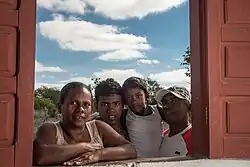
The "post-Cabralian" peoples refers to the ethnocultural groups that originated in Brazilian territory after the beginning of Portuguese colonization, stemming from the mixing between different European, Amerindian and African ethnicities and their adaptation to life in the new world.[32][3] These cultures eventually differentiated and from each other through the centuries, as is natural in a nation of continental proportions as Brazil.[33]
Some of these peoples still preserve customs and linguistic traits that were present in their source populations when they immigrated to the new world but are no longer present in their old world versions, a phenomenon known as colonial lag.[34][35] Examples of cultural and linguistic preservation of medieval Portuguese traditions and language in Brazil include the presence of scheduled weekly outdoors markets, religious festivities, and the similarity between northeastern Brazilian dialects and Old Portuguese language.[36][37]
| Group | Approximate population (2022) | Percentage of population (2022) | Distribution | Language/dialect | Origin |
|---|---|---|---|---|---|
| Caipiras | 45,000,000 | 22.1% | Mato Grosso do Sul, Goiás, parts of São Paulo, Minas Gerais, Paraná, Mato Grosso, Rondônia, Tocantins, arc of deforestation | Caipira, Sertanejo and Serra Amazônica dialects | Mix of Portuguese, Africans and Tupi/Jê Indigenous peoples, with later assimilation of Italian immigrants |
| Sertanejos | 28,000,000 | 13.7% | Sertão and Agreste sub-regions of Bahia, Sergipe, Alagoas, Pernambuco, Paraíba, Rio Grande do Norte, Ceará and Piauí | Central Northeastern, Baiano and Costa Norte dialects | Mix of Portuguese, Africans and Jê-speaking indigenous peoples |
| Matutos | 13,000,000 | 6.3% | Coastal sub-region of Sergipe, Alagoas, Pernambuco, Paraíba and Rio Grande do Norte | Central Northeastern and Recifense dialects | Mix of Portuguese, Africans and Tupi-speaking indigenous peoples |
| Baianos | 9,300,000 | 4.5% | Coastal and southern Bahia, northern Espírito Santo | Baiano dialect | Mix of Portuguese and African peoples |
| Geraizeiros | 2,100,000 | 1% | Northern Minas Gerais | Baiano and Mineiro dialects | Mix of Sertanejos and Mineiros |
| Paulistanos | 22,000,000 | 10.7% | Metropolitan São Paulo and major costal cities of the São Paulo state | Paulistano dialect | Mix of Caipiras and the multiple waves of immigrants that moved to São Paulo since the 19th century |
| Mineiros | 11,500,000 | 5.6% | Central Minas Gerais | Mineiro dialect | Mix of Portuguese, Africans and Jê-speaking indigenous peoples |
| Cariocas | 13,200,000 | 6.5% | Metropolitan Rio de Janeiro | Carioca dialect | Mix of Portuguese, Africans and Tupi-speaking indigenous peoples |
| Fluminenses | 5,800,000 | 2.8% | Rio de Janeiro state (outside of the metropolitan city of Rio), parts of Espírito Santo and Minas Gerais | Fluminense dialect | Mix of Portuguese, Africans and Tupi-speaking indigenous peoples |
| Caiçaras | 800,000 | 0.4% | Parts of the coast of Rio de Janeiro and Paraná, coastal São Paulo, outside of major cities | Caiçara dialect | Mix of Portuguese, Africans and Tupi-speaking indigenous peoples |
| Maranhenses | 8,000,000 | 4% | Maranhão, parts of Piauí | Costa Norte and Central Northeastern dialects | Mix of Portuguese, Africans and Tupi/Jê Indigenous peoples |
| Gaúchos | 6,500,000 | 3.2% | Southern half of Rio Grande do Sul, arc of deforestation | Gaúcho dialect | Mix of Portuguese and Guarani indigenous peoples |
| Caboclos | 10,200,000 | 5% | Northern Brazil, except for indigenous villages and the lower 2/3 of the arc of deforestation and northeastern Pará | Nortista dialect | Mix of Portuguese, Africans and Amazonian indigenous peoples. With later assimilation of Sertanejo immigrants |
| Capixabas | 2,500,000 | 1.2% | Parts of Espírito Santo | Fluminense dialect | Mix of Portuguese, Africans and Tupi/Jê Indigenous peoples |
| Bragantinos | 4,300,000 | 2.1% | Northeastern Pará, parts of Maranhão | Nortista dialect | Mix of Portuguese, Africans and Tupi indigenous peoples |
| Catarinenses | 4,100,000 | 2% | Coastal Santa Catarina | Sulista and Manézinho dialects | Mix of Azorean Portuguese and Tupi indigenous peoples |
| Colonos | 13,400,000 | 6.6% | Southern half of Paraná, inner Santa Catarina, northern half of Rio Grande do Sul | Sulista and Gaúcho dialects, non-Portuguese European languages among older generations | Mix of Portuguese, Italian, German, Polish, Ukrainian and Jê/Tupi indigenous peoples |
| Hunrisqueanos | 1,500,000 | 0.7% | Parts of inner Santa Catarina, Rio Grande do Sul and Espírito Santo | Hunsrik language | Partially unassimilated German immigrants |
| Talianos | 350,000 | 0.2% | Parts of inner Southern Brazil and Espírito Santo | Talian dialect of Venetian | Partially unassimilated Venetian immigrants |
| Ciganos | 800,000 | 0.4% | Northeastern Brazil and Minas Gerais | Baiano, Mineiro and Central Northeastern dialects, Caló language | Mix of Iberian Romanis, Portuguese, African and Jê/Tupi indigenous people |
Diasporic groups

The diasporic groups are the immigrants and descendants of immigrants from around the world that moved to Brazil, the vast majority of these people were assimilated to the local cultures of the parts of the country they moved to and mixed with locals or with immigrants from other nations.[4][38][39]
References
- ↑ Gual, Joan Royo (2025-05-20). "Brazil, the most diverse country in the world: Study reveals eight million new genetic variants". EL PAÍS English. Retrieved 2026-06-16.
- ↑ "Massive DNA sequencing effort reveals how colonization shaped Brazil's genetic diversity". www.science.org. Retrieved 2026-06-16.
- 1 2 "Brazilians are even more mixed-race than you think". revistapesquisa.fapesp.br. Retrieved 2026-06-16.
- 1 2 "Immigration | Brazil: Five Centuries of Change". library.brown.edu. Retrieved 2026-06-16.
- ↑ Craig, J. Dean; Faria, Anna B. (2021-01-01). "Immigrant nationality and human capital formation in Brazil". International Journal of Educational Development. 80 102260. doi:10.1016/j.ijedudev.2020.102260. ISSN 0738-0593. Archived from the original on 2024-09-25 – via Elsevier Science Direct.
- ↑ Guimarães, Antonio Sérgio Alfredo (2024). "Race and color in contemporary Brazil, political opportunism and historical trends". Revista de Antropologia. 67: e221938. doi:10.11606/1678-9857.ra.2022.221938ing (inactive 2026-06-18). ISSN 0034-7701.
{{cite journal}}: CS1 maint: DOI inactive as of June 2026 (link) - ↑ Azevedo, Ana Laura Moura dos Santos. "IBGE - Educa | Jovens". IBGE Educa Jovens (in Brazilian Portuguese). Retrieved 2026-06-16.
- ↑ Bailey, Stanley R.; Telles, Edward E. (2006). "Multiracial versus collective black categories: Examining census classification debates in Brazil". Ethnicities. 6 (1): 74–101. doi:10.1177/1468796806061080. ISSN 1468-7968. JSTOR 23889337.
- ↑ "Destaques". Panorama do Censo Demográfico 2022 (in Brazilian Portuguese). Retrieved 2026-06-16.
- ↑ Pereira, Jaqueline L.; de Souza, Camila A.; Neyra, Jennyfer E. M.; Leite, Jean M. R. S.; Cerqueira, Andressa; Mingroni-Netto, Regina C.; Soler, Julia M. P.; Rogero, Marcelo M.; Sarti, Flavia M.; Fisberg, Regina M. (2024-07-13). "Genetic Ancestry and Self-Reported "Skin Color/Race" in the Urban Admixed Population of São Paulo City, Brazil". Genes. 15 (7): 917. doi:10.3390/genes15070917. ISSN 2073-4425. PMC 11276533. PMID 39062696.
- ↑ Souza, Aracele Maria de; Resende, Sarah Stela; Sousa, Taís Nóbrega de; Brito, Cristiana Ferreira Alves de (2019). "A systematic scoping review of the genetic ancestry of the Brazilian population". Genetics and Molecular Biology. 42 (3): 495–508. doi:10.1590/1678-4685-GMB-2018-0076. ISSN 1415-4757. PMC 6905439. PMID 31188926.
- ↑ Umek, Wolfgang; Fischer, Barbara (2020-12-01). "We Should Abandon "Race" as a Biological Category in Biomedical Research". Female Pelvic Medicine & Reconstructive Surgery. 26 (12): 719–720. doi:10.1097/SPV.0000000000000979. ISSN 2154-4212. PMC 7682789. PMID 33136609.
- ↑ "Does Race Exist?". Duke University Science & Society. Retrieved 2026-06-16.
- ↑ "Chapter 1: The Making of Colonial Brazil | Brazil: Five Centuries of Change". library.brown.edu. Retrieved 2026-06-16.
- ↑ "Brasil Pré-Cabralino: como era, povos, períodos". Brasil Escola (in Brazilian Portuguese). Retrieved 2026-06-16.
- ↑ Waters, Michael R. (2019-07-12). "Late Pleistocene exploration and settlement of the Americas by modern humans". Science. 365 (6449) eaat5447. Bibcode:2019Sci...365.5447W. doi:10.1126/science.aat5447. PMID 31296740.
- ↑ "Ditadura criou Estatuto do Índio para afastar acusações de genocídio". Senado Federal (in Brazilian Portuguese). Retrieved 2026-06-17.
- ↑ Gurgel, Cristina Brandt Friedrich Martin; Rosa, Camila Andrade Pereira da (2012-12-18). "HISTÓRIA DA MEDICINA A VARÍOLA NO BRASIL COLONIAL (Séculos XVI e XVII)". Revista de Patologia Tropical. 41 (4). doi:10.5216/rpt.v41i4.21701. ISSN 1980-8178.
- ↑ "Diretório Pombalino: diferenças regionais e políticas de assimilação – HH Magazine" (in Brazilian Portuguese). Retrieved 2026-06-17.
- 1 2 3 4 5 6 7 8 9 10 11 12 13 14 15 16 17 18 19 20 21 22 23 24 25 26 27 28 29 30 31 32 33 34 35 36 37 38 39 40 41 42 43 44 45 46 47 48 49 50 51 52 53 54 55 56 57 58 59 60 61 62 63 "Languages of Brazil." Ethnologue. Retrieved 25 Feb 2013.
- ↑ "Akuntsu".
- 1 2 3 4 5 6 7 8 9 10 11 12 13 14 15 16 17 18 19 20 21 22 23 24 25 26 27 28 29 30 31 32 33 34 35 36 37 38 39 40 41 42 43 44 45 46 47 48 49 50 51 52 53 54 55 56 57 58 59 60 61 62 63 64 65 66 67 68 69 70 71 72 73 74 75 76 77 78 79 80 81 82 83 84 85 86 87 88 89 90 91 92 93 94 95 96 97 98 99 100 101 102 103 104 105 106 107 108 109 110 111 112 113 114 115 116 117 118 119 120 121 122 123 124 125 126 127 128 129 130 131 132 133 134 135 136 137 138 139 140 141 142 143 144 145 146 147 148 149 150 151 152 153 154 155 156 157 158 159 "Table of the Indigenous peoples." Povos Indígenas no Brasil. Retrieved 3 Feb 2013.
- 1 2 "Chamacoco." Ethnologue. Retrieved 4 Feb 2013.
- ↑ "Enawenê-nawê: Introduction." Instituto Socioambiental: Povos Indígenas no Brasil. Retrieved 28 March 2012
- ↑ "Kulina." Ethnologue. Retrieved 19 Feb 2012.
- ↑ "Mehinako: Introduction." Instituto Socioambiental: Povos Indígenas no Brasil. Retrieved 14 March 2012
- ↑ "Nadob." Povos Indígenas no Brasil. Retrieved 4 March 2013.
- ↑ "Tenharim language code: pah". Retrieved 2010-12-11.
- 1 2 "Pai Tavytera." Ethnologue. Retrieved 17 Jan 2013.
- ↑ "Tremembé." Povos indígenas do Brasil. Retrieved 31 Jul 2022.
- ↑ "Trumai: Introduction." Povos Indígenas no Brasil. Retrieved 24 Feb 2012.
- ↑ Fausto, Boris; Brakel, Arthur (2014). A concise history of Brazil. Cambridge concise histories (2nd ed.). Cambridge: Cambridge University Press. ISBN 978-1-107-03620-8.
- ↑ Corbyn, Zoë (2012-06-11). "How geography shapes cultural diversity". Nature. doi:10.1038/nature.2012.10808. ISSN 1476-4687.
- ↑ O'Donnell, Aisling (2025-11-21). "Evidence of colonial lag in post colonial languages: The case of Colombian Spanish". Teanga. 32 (32): 93–116. doi:10.35903/teanga.v32i.9884. ISSN 0332-205X.
- ↑ Khosrow-Pour, D.B.A., Mehdi, ed. (2018). Encyclopedia of Information Science and Technology, Fourth Edition. IGI Global. doi:10.4018/978-1-5225-2255-3.ch104. ISBN 978-1-5225-2255-3.
- ↑ Sato, Leny (2007). "Processos cotidianos de organização do trabalho na feira livre". Psicologia & Sociedade (in Portuguese). 19: 95–102. doi:10.1590/S0102-71822007000400013. ISSN 1807-0310.
- ↑ Silva, Cássia Alves da (2015). Processos residuais: Nordeste contemporâneo e Europa medieval (in Brazilian Portuguese). Expressão Gráfica e Editora. ISBN 978-85-420-0492-2.
- ↑ "Once Welcomed, Then Scapegoated: The Enduring Consequences of Assimilation Policies in the Wake of Mass Migration". arxiv.org. Retrieved 2026-06-17.
- ↑ Seyferth, Giralda (1997-04-01). "A assimilação dos imigrantes como questão nacional". Mana. 3 (1): 95–131. doi:10.1590/S0104-93131997000100004. ISSN 0104-9313.