| Name |
Image |
Origin |
Description |
| Plate lunch |
 |
Polynesian, North American, East Asian |
Called pā mea ʻai in ʻōlelo Hawaiʻi, it is a standard plate lunches consist of one or two scoops of white rice, macaroni salad and an entrée like chicken katsu or teriyaki.[1] |
| Mixed plate |
 |
Hawaiʻi |
A plate lunch with two types of protein. |
| Okazuya |
 |
Japan |
Served as a main meal or side dish. |
| Loco moco |
 |
Hawaiʻi |
Served as a main meal. |
| Spam musubi |
 |
Japan |
Onigiri with meat such as SPAM, hot dog, or Göteborg musubi on the island of Kauai; served as a snack or a main meal.[2] |
| Portuguese sausage |
 |
Portugal |
A common breakfast main meal, sometimes with SPAM, eggs and rice. It is a featured item at places like fast food restaurants like McDonald's and Burger King.[3][4] |
| Poi |
 |
Hawaiʻi (Native Hawaiian) |
A traditional staple starch paste made from fermented mashed cooked taro corms. |
| Poke |

|
Hawaiʻi (Native Hawaiian) |
Served as an appetizer or a main meal. |
| Lomi-lomi salmon |
 |
Hawaiʻi (Native Hawaiian) |
A fresh side salad made with salted salmon, tomatoes, and sweet onions, introduced by early Western sailors. |
| Kālua pig |
 |
Hawaiʻi (Native Hawaiian) |
Traditionally made with a whole pig, covered with banana leaves, and cooked in an imu (underground oven) for several hours until tender. |
| Haupia |
 |
Hawaiʻi (Native Hawaiian), Polynesia |
A traditional gelatinous coconut milk dessert made with pia (Polynesian arrowroot), a root vegetable introduced by early Polynesian voyagers used as a traditional thickening agent for haupia. It is served either standalone or as an accompaniment to other sweets. |
| Onigiri |
 |
Japan |
Rice balls seasoned with salt, sometimes sprinkled with furikake, wrapped with nori, or stuffed with an umeboshi |
| Cone sushi |
 |
Japan |
inari sushi using larger abura-age pockets |
| Futomaki |
 |
Japan |
Or "maki roll," a rolled sushi containing cucumber, parcooked carrots, tamagoyaki, kampyo, and hana ebi (powdered dried shrimp) |
| Chow fun |
 |
China |
Flat wheat noodles stir-fried with vegetables |
| Fried saimin |
 |
Hawaiʻi |
Stir-fried saimin noodles similar to yakisoba |
| Chicken long rice |
 |
China |
Chicken served with starch noodles simmered with soy sauce |
| Kinpira gobo |
 |
Japan |
Braised burdock in sweetened soy sauce |
| Namasu |
 |
Japan |
Pickled vegetables, typically thinly sliced cucumbers, carrots, and daikon |
| Shira ae |
 |
Japan |
Salad of mashed tofu and vegetables |
| Okara (unohana) |
 |
Japan |
Simmered soybean pulp with vegetables |
| Kabocha |
 |
Japan |
Braised Japanese pumpkin nimono in sweetened soy sauce |
| Potato salad |
 |
European |
Potatoes mixed with vegetables in mayonnaise |
| Macaroni salad |
 |
European |
Macaroni, or other pasta, mixed with mayonnaise, sometimes with canned tuna |
| Tempura |
 |
Japan |
Deep-fried battered shrimp, fish, or vegetables |
| Fried chicken |
|
Japan, United States |
Deep-fried chicken thighs karaage style or in mochiko batter |
| Fish cake |
 |
Japan |
Deep-fried fish croquettes made from surimi, sometimes stuffed with hard-boiled egg or hot dog |
| Korokke |
 |
Japan |
Or "hash balls," deep-fried potato croquettes in batter or panko |
| Nishime |
|
Japan |
Simmered mixed vegetables, sometimes with chicken or pork |
| Shoyu pork, chicken |
|
Okinawa |
Pork, chicken, or hot dog simmered in soy sauce and sugar |
| Potato hash patty |
|
European |
Potato croquettes sometimes seasoned with corned beef |
| Tamagoyaki |
 |
Japan |
Egg omelette sometimes mixed with vegetables or meats |
| Teriyaki |
|
Japan |
Thinly sliced beef, boneless chicken thighs, meatballs or hamburger steak grilled and glazed with teriyaki sauce |
| Tofu patty |
|
Japan, Hawaiʻi |
A fish cake made with mashed tofu and canned tuna or salmon |
| Potato mac salad |
|
Euro-American, Hawaiʻi |
A local variation of potato salad combined with macaroni pasta and mayonnaise, commonly served as a component of a plate lunch. |
| Dobash cake |
|
Hawaiʻi |
|
| Haupia cake |
|
Hawaiʻi |
|
| Lilikoi butter |
|
Hawaiʻi |
|
| Lilikoi bar |
|
Hawaiʻi |
|
| Lilikoi cake |
|
Hawaiʻi |
|
| Guava cake |
|
Hawaiʻi |
|
| Rainbow cake |
|
Hawaiʻi |
A chiffon cake, once a perennial favorite at birthday parties for over 40 years.[5] |
| Chantilly cake |
|
Hawaiʻi |
haupia, and guava/rainbow chiffon, once a perennial favorite at birthday parties for over 40 years.[6] |
| Guri-guri |
|
Hawaiʻi (Maui), Japan |
A sherbet originating from Maui via Japan.[7] |
| Hawaiian shave ice |
 |
Hawaiʻi, Japan, Korea, Taiwan |
Thinly shaved ice and syrup served in a cup, paper cone, or bowl.[8] Syrups used for Hawaiian shave ice include banana, pineapple, lychee, kiwifruit, mango, passionfruit, guava, and coconut. Also known as "ice shave" in other parts of the state.[9] |
| Kōʻelepālau |
|
Hawaiʻi (Native Hawaiian) |
Pudding of mashed sweet potato mixed with coconut milk. |
| Kūlolo |
|
Hawaiʻi (Native Hawaiian) |
A distant Austronesian relative of the dodol using taro and coconut milk. |
| Piele |
|
Hawaiʻi (Native Hawaiian) |
A kūlolo-like dessert made with sweet potato or breadfruit. |
| Lilikoi bar |
|
Euro-American, Hawaiʻi |
A local variation of the lemon bar. |
| Mochi |
|
Japan |
Includes butter mochi, which is a favorite omiyage.[10] |
| Pies |
|
Euro-American, Hawaiʻi |
Varieties include custard, pumpkin, pumpkin-custard, haupia, chocolate haupia, and Okinawan sweet potato haupia.[11] |
| Pumpkin crunch |
|
Euro-American, Hawaiʻi |
A variation on the "pumpkin (pie) dump cake" popularized by Sam Choy, often served chilled as a dessert bar.[12] |
| Andagi |
|
Japan (Okinawa) |
Popular at pop-up shops during festivals like Obon.[13] |
| Anpan |
|
Japan |
A sweet roll typically filled with red bean paste. |
| Apple turnover |
|
Euro-American, Hawaiʻi |
Made popular by Zippy's under the name "Apple Napples".[14] |
| Banana bread |
|
Euro-American |
A moist sweet bread made from mashed bananas, common throughout the islands. |
| Blondies |
|
Euro-American, Hawaiʻi |
Made popular by Kamehameha Schools and locally referred to as "haole brownies".[15] |
| Bok tong go |
|
China |
Generically known as "(Chinese steamed) rice cake," it is a classic item sold by the manapua man. A multiple-layered version similar to kue lapis featuring a brown sugar top layer also exists.[16] |
| Chinese almond biscuit |
|
China |
Simply known locally as an "almond cookie". |
| Chinese shortbread |
|
China |
Also known as "kong sui ban," this is a very tender Chinese biscuit with a texture between a cookie and a cake, often paired with hot tea.[17] |
| Chinese-style bakery buns |
|
China, Hawaiʻi |
Savoury baked buns such as hot dog or ham and cheese buns. |
| Macadamia nut cookies |
|
Euro-American, Hawaiʻi |
Chocolate chip cookies and shortbread baked with the addition of local macadamia nuts. |
| Coco puffs |
|
Euro-American, Hawaiʻi |
A popular cream puff variant made by Liliha Bakery, typically filled with a chocolate pudding and topped with chantilly frosting.[18] |
| Jindui |
|
China |
A fried pastry pastry that serves as a staple during Chinese New Year but is eaten throughout the year. |
| Lavash |
 |
Armenian, Hawaiʻi |
Also spelled "lavosh", this crisp flatbread was glamourized in the 1960s as a high-end alternative to toast. The version sold at the Kanemitsu Bakery counter in Molokaʻi offers flavors including Maui onion, sesame, taro, and cinnamon.[19] |
| Malasada |
|
Portugal |
A fried staple on Mardi Gras that remains popular throughout the year. Modern local recipes involve coating it with cinnamon sugar or filling it with various jams and creams like guava, haupia, or custard.[20][21] |
| Manapua |
|
China |
A local iteration of the Cantonese char siu bao that is often two to three times larger than the versions found in standard dim sum restaurants. Popular fillings include a whole lup cheong sausage, sweet potato, or kalua pig, and it is sometimes baked rather than steamed, a style made popular by the Royal Kitchen in Chinatown during the 1970s.[22] |
| Manju |
|
Japan |
A baked sweet dumpling that has become a favorite omiyage for travelers leaving Maui.[23] |
| Molokai "hot bread" |
|
Hawaiʻi |
A well-known bakery export of Molokai featured by Anthony Bourdain. The bakery was a semifinalist for the James Beard Foundation Award for Outstanding Baker.[24][25] |
| Moon cakes |
|
China |
A seasonal favorite during the Chinese Mid-Autumn Festival where local island flavors like mango and taro are sometimes incorporated.[26] |
| Nian gao |
|
China |
Locally known simply as "gau," this is a sticky sweet staple of Chinese New Year sold at many local shops or made in bulk by households to share with families.[27] |
| Poi pastries |
|
Hawaiʻi, Portugal, Japan |
Modern specialty pastries incorporating poi into the dough, including poi donuts, poi malasadas, and poi mochi. |
| Portuguese sweet bread |
|
Portugal |
A soft, sweet yeast bread known as "Hawaiian sweet rolls" outside of the state.[28] |
| Spanish rolls |
|
Philippines |
A sweet, soft pastry roll rolled with a sugar and butter filling, popular as an office snack to pair with coffee.[29] |
| Snow puffies |
|
Hawaiʻi |
A local flaky pastry variation of the Napoleon puff pastry layer cake. |
| Adobo |
|
Philippines |
A savory dish of pork simmered in vinegar, soy sauce, garlic, and spices. |
| Cantonese-influenced dim sum |
|
China |
Includes local adaptations such as char siu manapua; fun guo, locally called pepeiao (meaning "ear" in Hawaiian);[30] gok jai ("half moon"); pork hash which is typically twice the size of a standard shumai; and ma tai su, a baked pork and water chestnut pastry.[31] |
| Crispy gau gee |
|
China, Hawaiʻi |
Deep-fried dumplings (also spelled kau gee) constructed by folding a square wrapper in half into simple rectangular or triangular pockets.[32][33] |
| Kalua pig |
|
Hawaiʻi (Native Hawaiian) |
Pork slow-roasted inside an underground oven (imu) until exceptionally tender and smoky. |
| Laulau |
 |
Hawaiʻi (Native Hawaiian) |
A traditional preparation consisting of pork wrapped securely in taro leaves and steamed inside a ti leaf bundle. |
| Lechon |
|
Philippines |
A spit-roasted whole pig style introduced by Filipino immigrants, featuring extremely crispy skin. |
| Portuguese sausage |
|
Portugal |
A smoked pork sausage seasoned with garlic and paprika, common as a local breakfast staple. |
| Lumpia |
|
Philippines |
Fried spring rolls filled with minced pork and chopped vegetables. |
| Lūʻau stew |
|
Hawaiʻi (Native Hawaiian), Hawaiʻi |
A local comfort food dish prepared by simmering taro leaves with pork until smooth and tender. |
| Pasteles |
|
Puerto Rico |
A savory meat pie variant introduced by Puerto Rican laborers, featuring seasoned pork encased in a green plantain or root vegetable masa, wrapped in banana leaves and boiled. |
| Pastele stew |
|
Puerto Rico, Hawaiʻi |
A local fusion stew featuring the seasoned pork, olives, and sofrito flavors of pasteles cooked without the labor-intensive leaf wrapping. |
| Pork guisantes |
|
Philippines |
A Filipino-style savory pork stew simmered with green peas and tomato sauce. |
| Rafute |
|
Japan (Okinawa) |
A dish of glazed, skin-on pork belly chunks slowly simmered in soy sauce, brown sugar, and Okinawan alcohol. |
| Siu mei |
|
China |
Cantonese-style roasted meats including sweet barbecued pork (char siu) and crisp-skinned roasted pork belly (siu yuk). |
| Won ton |
|
China |
Boiled or fried Chinese dumplings containing a minced pork filling. |
| Vinha d'alhos |
|
Portugal |
A traditional garlic and wine-marinated pork dish served on festive occasions. |
| Cake noodles |
|
China, Hawaiʻi |
A crisp cake formed by pan-frying chow mein noodles until the crust is crunchy while the interior stays tender, cut into blocks and ladled with a saucy topping like beef and broccoli.[34] |
| Chow mein |
|
China |
Stir-fried wheat noodles tossed with sliced vegetables and protein. |
| Look fun |
|
China |
Wide, flat steamed rice noodles often seasoned with soy sauce or served in broth. |
| Pancit |
|
Philippines |
Stir-fried noodles prepared with vegetables and meat fragments, introduced by Filipino immigrants. |
| Saimin |
 |
Hawaiʻi |
A definitive local noodle soup developed during the plantation era, featuring soft wheat egg noodles in a clear hot dashi broth. It can also be served stir-fried as fried saimin. |
| Yakisoba |
|
Japan |
Stir-fried wheat noodles seasoned with a savory, sweet sauce. |
| Steamed rice |
|
Asia |
Standard medium-grain white rice cooked soft, serving as the baseline carbohydrate for most local meals. |
| Fried rice |
|
China, Hawaiʻi |
Wok-fried rice tossed with egg, green onions, and local diced proteins like Spam, Portuguese sausage, or char siu. |
| Mochi rice |
|
Japan |
Glutinous short-grain rice cooked until sticky, used in both savory and sweet dishes. |
| Musubi |
|
Japan |
Hand-pressed rice blocks, often wrapped with a ribbon of dried seaweed. |
| Futomaki |
|
Japan |
Locally called maki, this thick rolled sushi contains standard fillings such as sweet egg omelette (tamagoyaki), pickled gourd (kampyo), cucumber, carrots, and sweet pink dried shrimp powder (hana ebi). |
| Inarizushi |
|
Japan |
Locally called inari or "cone sushi," consisting of sweet seasoned fried tofu pockets stuffed with vinegared sushi rice. |
| Arare and senbei |
|
Japan |
Small, savory Japanese rice crackers seasoned with soy sauce. Arare is interchangeably known locally as kakimochi. |
| Coconut balls |
|
Hawaiʻi |
Sweet confectionary treats rolled in shredded coconut. |
| Crack seed |
|
China |
A category of preserved, dried, or wet fruits such as plums, lemons, and mangoes featuring intensely sweet, sour, and salty profiles. |
| Dried squid or cuttlefish |
|
Asia |
Chewy, seasoned strips of dried seafood consumed as a popular savory snack. |
| Haw flakes |
|
China |
Thin, disc-shaped sweet wafers made from the fruit of the Chinese hawthorn. |
| Hurricane popcorn |
|
Hawaiʻi |
A modern snack mix consisting of buttered popcorn tossed with crunchy arare rice crackers and savory furikake seasoning. |
| Li hing mui candies |
|
China, Hawaiʻi |
Various sweets, including gummy candies and dried fruits, dusted with a sour, salty, and sweet powdered plum seasoning. |
| Macadamia nuts |
 |
Australia, Hawaiʻi |
Rich, buttery roasted nuts that became a signature agricultural product of the islands, frequently sold dipped in milk or dark chocolate. |
| Maui-style potato chips |
|
Hawaiʻi (Maui) |
Thick-cut, extra-crunchy kettle style potato chips manufactured on the island of Maui.[35] |
| Sesame seed candy |
|
China |
A crunchy confection made from toasted sesame seeds bound together with hardened sugar syrup. |
| Shortbread |
|
Scotland, Hawaiʻi |
Rich, buttery cookies often adapted locally with island additions like chopped macadamia nuts. |
| Shrimp chip |
|
Asia |
Light, airy fried crisps flavored with prawn or shrimp essence. |
| Taegu |
|
Korea, Hawaiʻi |
A seasoned side dish or snack made from shredded dried squid, cuttlefish, or codfish tossed in a sweet and fiery gochujang paste sauce.[36] |
| One-Ton chips |
|
China, Hawaiʻi |
Crisp, fried strips of wonton dough produced as a commercial snack cracker by the Maebo Noodle Factory.[37] |
| Oxtail soup |
|
China, Hawaiʻi |
A rich, clear broth containing tender, slow-simmered oxtail segments, heavily garnished with fresh ginger and cilantro. |
| Saimin |
 |
Hawaiʻi |
The classic local plantation-era wheat noodle soup served hot in an aromatic dashi broth. It is often garnished with green onions, char siu, and fish cake (kamaboko), or augmented with wontons to create wonton saimin. |
| Portuguese bean soup |
|
Portugal, Hawaiʻi |
Locally known as sopa de feijao, this hearty soup features red kidney beans simmered with Portuguese sausage, cabbage, macaroni, and vegetables. |
| Ashitibichi |
|
Japan (Okinawa) |
A traditional Okinawan pig's feet soup simmered until the meat is completely tender, often featuring mustard greens or daikon.[38] |
| Wonton mein |
|
China |
A Chinese-style hot noodle soup containing |
| Chili frank |
|
United States, Hawaiʻi |
Thick chili cooked with whole hot dogs and traditionally served over white rice. |
| Beef stew |
|
Euro-American, Hawaiʻi |
A local comfort food variant of classic slow-simmered beef stew, typically sweeter and served over white rice. |
| Bulgogi |
|
Korea |
Thinly sliced beef marinated in a sweet soy, sesame, and garlic sauce, then grilled. |
| Canned corned beef |
|
Euro-American, Hawaiʻi |
Corned beef heated through and commonly pan-fried with onions, served as a breakfast or local plate lunch staple. |
| Corned beef hash |
|
Euro-American, Hawaiʻi |
Finely chopped corned beef mixed with potatoes, normally shaped into uniform patties and pan-fried until crisp. |
| Hamburger curry stew |
|
Japan, Hawaiʻi |
Ground beef patties or seasoned meat simmered in a thick, mild Japanese-style curry gravy. |
| Shoyu dogs |
|
Japan, Hawaiʻi |
Hot dogs that are simply boiled, pan-fried, grilled, or simmered in a sweetened soy sauce glaze and served alongside rice. |
| Kalbi shortribs |
|
Korea |
Flanken-cut beef short ribs marinated in a sweet soy-sesame mixture and charred on a grill. |
| Loco moco |
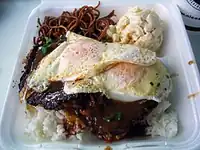 |
Hawaiʻi |
A definitive local contemporary dish featuring white rice topped with a hamburger patty, a fried egg, and thick brown gravy. |
| Meat jun |
|
Korea, Hawaiʻi |
A local Hawaiian-Korean variation of jeon consisting of thin slices of beef, often marinated, dipped in flour and egg batter, and pan-fried.[39] |
| Pho |
|
Vietnam |
A fragrant Vietnamese noodle soup utilizing a clear beef broth, rice noodles, herbs, and thinly sliced meat pieces. |
| Pipikaula |
|
Hawaiʻi (Native Hawaiian) |
Meaning "beef rope", this dish consists of salted and dried beef chunks that resemble beef jerky, often pan-fried before serving. |
| Sukiyaki |
|
Japan |
A one-pot sweet and savory hot pot meal containing thinly sliced beef, tofu, and assorted vegetables simmered in a soy sauce broth. |
| Teriyaki beef |
|
Japan, Hawaiʻi |
Thinly sliced beef marinated and glazed in a sweet teriyaki sauce, then grilled or pan-fried. |
| Teriyaki burgers |
|
United States, Hawaiʻi |
A common item at local burger establishments featuring hamburger patties glazed in teriyaki sauce; the "McTeri Deluxe" is offered as a seasonal favorite at local McDonald's outlets.[40] |
| Teriyaki meatballs |
|
Japan, Hawaiʻi |
Seasoned ground beef spheres cooked and glazed in a sweet, sticky teriyaki sauce. |
| Siu mei chicken dishes |
|
China |
Cantonese-style roasted and seasoned poultry items, including cold ginger chicken and roasted duck. |
| Minute Chicken |
|
China, Hawaiʻi |
A local Chinese-restaurant favorite featuring sliced chicken stir-fried quickly with vegetables in a thick, savory gravy over crisp or soft noodles. |
| Fried chicken variations |
|
Japan, Korea, United States |
Assorted local deep-fried styles including breaded chicken katsu, ginger-soy seasoned karaage, glazed Korean fried chicken, sweet garlic chicken, and sweet-rice-flour battered mochiko chicken. |
| Grilled chicken variations |
|
Japan, Korea, Hawaiʻi |
Barbecued poultry options featuring sweet teriyaki glazed chicken, Korean-style sesame-soy barbecue chicken, and sweet, rotisserie-turned huli-huli chicken. |
| Chicken stews |
|
China, Japan, Philippines, Hawaiʻi |
Savory pot meals encompassing vinegar-garlic chicken adobo, taro-leaf based chicken luau stew, Cantonese soy sauce chicken, Japanese-style shoyu chicken, ginger-papaya tinola stew, chicken long rice, and vegetable-heavy nishime. |
| Side dish pickles |
|
Korea, Japan |
Small pickled side dishes including Korean Banchan and Japanese tsukemono. |
| Sweet bean paste |
|
China, Japan |
Confectionary pastes such as Japanese sweetened red bean anko used in manjū, or Chinese "black sugar" bean fillings used for frying jindui. |
| Champuru |
|
Japan (Okinawa) |
A stir-fried scramble dish featuring tofu, vegetables, and optional meats, introduced by Okinawan immigrants. |
| Chop suey |
|
China, Hawaiʻi |
A local Chinese-American style stir-fry of mixed vegetables and meats bound in a thickened savory sauce. |
| Congee variations |
|
Asia |
Thick rice gruel savory bowls spanning Cantonese jook, ginger-chicken garlic Filipino arroz caldo, Korean juk, and Vietnamese chao. |
| Jai |
|
China |
A complex, savory vegetarian stew cooked with various roots and fungi, traditionally served during Chinese New Year festivities. |
| Miso |
|
Japan |
A thick, rich fermented soybean paste used across the islands to base local soups, marinades, and dressings. |
| Palusami |
|
Samoa |
A traditional Polynesian dish made of rich coconut cream wrapped tightly in tender taro leaves and baked. |
| Palula |
|
Hawaiʻi (Native Hawaiian) |
The tender green leaves of the sweet potato plant cooked standalone or simmered alongside taro leaves.[41] |
| Local pickles |
|
Asia, Hawaiʻi |
Assorted localized pickled items including crunchy seasoned unripe mangoes, crisp local sweet onions, pickled seaweeds (limu or ogo), sweet-and-sour radishes for Vietnamese đồ chua, yellow crunchy Japanese takuwan or Korean danmuji, vinegared cucumber namasu, and various spiced cabbage kimchi. |
| Pinakbet |
|
Philippines |
A robust Filipino-style vegetable stew simmered with bitter melon, eggplant, long beans, and pork belly, seasoned with shrimp paste. |
| Sari-sari |
|
Philippines, Hawaiʻi |
A Filipino-inspired mixed vegetable soup made with whatever seasonal island greens and proteins are available. |
| Tofu |
|
China, Japan |
Coagulated soybean milk pressed into soft or firm white blocks, used widely across local soups, stir-fries, and plate lunches. |
| Watercress soup |
|
China, Hawaiʻi |
A comforting, clear broth soup featuring bunches of peppery fresh watercress simmered with pork ribs, highly common at traditional local eateries. |
| ʻUala hoʻomalamala |
|
Hawaiʻi (Native Hawaiian) |
A traditional staple paste constructed exactly like taro poi but utilizing steamed, mashed sweet potatoes.[42] |
| Abalone |
|
Asia, Hawaiʻi |
Large, edible marine gastropod mollusks prized for their rich meat, either harvested wild or cultivated in local island aquaculture farms. |
| Bacalhau |
|
Portugal |
Traditional salt-cured, dried codfish introduced by Portuguese immigrant families. |
| Butterfish |
|
Japan, Hawaiʻi |
North Pacific sablefish, heavily favored for its rich, oily texture and frequently prepared miso-marinated or simmered in a sweet soy broth. |
| Kamaboko |
|
Japan |
Cured, surimi fish paste logs steamed on small wooden blocks, featuring a signature pink or white skin; a definitive noodle soup garnish. |
| Lomi oio |
|
Hawaiʻi (Native Hawaiian) |
A traditional preparation consisting of massaged, bone-scraped raw bonefish meat worked into a soft paste with sea salt, limu seaweed, and chili water. |
| ʻAhi |
|
Hawaiʻi (Native Hawaiian), Japan |
Local yellowfin or bigeye tuna, serving as the central choice for raw sashimi cuts and fresh poke cubes. |
| Mahi mahi |
|
Hawaiʻi (Native Hawaiian) |
Dolphinfish, a popular local open-ocean game fish prized for its firm, sweet white meat when grilled or fried. |
| Saba |
|
Japan |
Pacific mackerel, a rich, oily dark meat fish commonly prepared salted and grilled. |
| Salmon |
|
Euro-American, Hawaiʻi |
Coldwater fish introduced via historical Pacific trade routes, utilized raw in lomi salads or cooked in local plates. |
| Sakura-boshi |
|
Japan, Hawaiʻi |
A savory local fish jerky variant made by marinating strips of yellowfin tuna (ʻahi) in a sweet soy and sesame mixture before drying.[43] |
| Sashimi |
|
Japan |
Fresh, premium raw seafood sliced into delicate strips and served alongside shoyu and wasabi. |
| Squid lu'au |
|
Hawaiʻi (Native Hawaiian) |
A classic island feast dish consisting of tender squid tentacles slow-simmered with young taro leaf greens and coconut milk. |

 Hawaii portal
 Food portal
 Lists portal
