Kerala Pradesh Congress Committee
Kerala Pradesh Congress Committee | |
|---|---|
 | |
| Abbreviation | K. P. C. C. |
| President | Sunny Joseph |
| Chairman | V. D. Satheesan (Chief Minister) |
| Headquarters | Indira Bhavan, Thiruvananthapuram |
| Newspaper | Veekshanam |
| Student wing | Kerala Students Union (N S U I) |
| Youth wing | Youth Congress (Kerala) |
| Women's wing | Mahila Congress (Kerala) |
| Labour wing | Indian National Trade Union Congress (I N T U C) |
| Membership | 3.379 million (June 2017)[1] |
| Ideology | Civic nationalism
Social Democracy Federalism Secularism Liberalism |
| Political position | Centre left |
| ECI status | A State Unit of Indian National Congress |
| Alliance |
|
| Seats in Rajya Sabha | 1 / 9
|
| Seats in Lok Sabha | 14 / 20
|
| Seats in Kerala Legislative Assembly | 63 / 140
|
| Election symbol | |
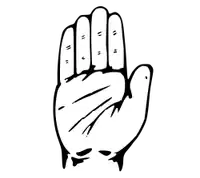 | |
| Party flag | |
 | |
| Website | |
| kpcc | |
| This article is part of a series on the |
| Indian National Congress |
|---|
|

Kerala Pradesh Congress Committee (Kerala PCC or KPCC) is the Kerala state unit of the Indian National Congress. It is responsible for organizing and coordinating the party's activities and campaigns within the state, as well as selecting candidates for local, state, and national elections. The INC currently leads the UDF alliance, the ruling coalition in the Kerala Legislative Assembly.
The Kerala Pradesh Congress Committee is generally considered to be one of the most robust, organised & disciplined PCCs in India, hand-crafted by former Kerala Chief Minister, K. Karunakaran. KPCC is consistently ranked as the best Pradesh Congress Committee in India. [2]
Kerala Pradesh Congress Committee was first convened in 1921 at Ottapalam in northern Kerala (in the presence of the T. Prakasam).[3]
Structure and composition
| S.no | Name | Designation |
|---|---|---|
| 1. | Deepa Dasmunshi | AICC General Secretary Incharge |
| 2. | Sunny Joseph | President KPCC |
| 3. | V. D. Satheesan[4] | CLP Leader KLA |
| 4. | Shafi Parambil | Working President KPCC |
| 5. | A. P. Anil Kumar | Working President KPCC |
| 6. | P. C. Vishnunadh | Working President KPCC |
| 7. | Jebi Mather[5] | President AIMC Kerala |
| 8. | O. J. Janeesh | President IYC Kerala |
| 9. | Aloshious Xavier | President KSU |
| 10. | R. Chandrashekaran | President INTUC |
History
Pre-Independence Period (1921-1947)
Numerous uprisings have been triggered by the brutal exploitation and oppression of the British Supremacy since ancient times; at the turn of the 19th century, the angry masses were trying to free themselves from the weight of British domination. The Congress Party was a well-known supporter of responsibility and opposition to the atrocities carried out by the British rule in the state. During that time, the Congress party was quite vocal about its opposition to social injustices such as social exclusion and untouchability.
Toward the end of the 19th century, the Congress movement started to grow throughout India. Many prominent Keralans were members of the Indian National Congress. G.P. Pillai, sir. Rairu Nambiar and C. Sankaran Nair were among them. C. Sankaran Nair, an Ottapalam native, was the first Malayali to chair congress sessions for a considerable amount of time. He became the president of the Congress's Amaravathi Session in 1897. By 1919, Congress efforts in Malabar had gained strength. Throughout the 1920s, Gandhiji's impact on the state congress increased. The nation's pride was ignited by the Khilafat movement, Salt Satyagraha, and noncooperation in Malabar. K.P. Kesava Menon, Muhamed Abdurahiman K. Kelappan, and K. Madhavan Nair were among the early leaders of the Malabar liberation movement.
Mahatma Gandhi, who also had a remarkable influence on the state's freedom battle, drove this national movement. In Kerala, the roads leading to temples were off-limits to the lower social groups, who were considered untouchables. Gandhiji spearheaded the nonviolent Guruvayoor Satyagraha movement and the Vaikom Satyagraha movement, which gave the underprivileged socio-economic classes access to the public roads next to the Vaikom temple. The Temple Entry Proclamation, issued in 1936 by Travancore's ruler, Sree Chithira Thirunal Balaramavarma, allowed people of all castes to access this temple.
In 1930, the British imposed severe restrictions on the manufacture of salt and imposed large tariffs on the populace. The people of Kerala and the entire country were enraged by this under K. Kelappan's leadership. At Payannur, where salt was made, there was resistance to the legislation. Hundreds of agitators were arrested after salt regulations were broken in many places, especially in Payyannur and Kozhikode. K. Madhavan Nair participated in each of these state-wide uprisings, as did other prominent figures including K.P. Kesava Menon, Mohammad Abdurahiman, etc.
The Travancore liberation struggle had a very different nature. In Travancore, caste groups had a big impact. These groups promoted social justice and sufficient representation of under-represented groups in the legislative and governance within the city borders. T.K. Madhavan, T.M. Varghese, C. Kesavan, and Pattom Thanu Pillai were among the prominent leaders of the newly formed Travancore State Congress. Its members battled for the state's citizens' rights, which had been infringed upon during British administration. Ikkanda Warrier and Panampilly Govinda Menon, both of whom were born in Cochin, had a significant impact on the creation of Cochin Praja Mandalam.
The Malabar District was not devoid of adherents of the Home Rule Movement. The Secretary of both the Congress Committee and the Home Rule League was K.P. Kesava Menon. His political activities galvanized the entire Malabar district. In Malabar, the national movement experienced a surge in support and influence during the First World War. Concurrently, the Muslim populace of Malabar was incensed by the Khilafat movement. The Malabar rebellion of 1921 stood as the most significant occurrence associated with the political movement in Malabar to this time. 61 of the 90 Mapillas who were being transported as captives in a closed railway goods wagon from Tirur to Coimbatore perished of suffocation during the Wagon Tragedy,one of the tragic events associated with this rebellion. The insurrection of 1921 constituted a significant national unrest that challenged the authority of the British.
The Congress personnel appeared to have been dormant in the immediate aftermath of the uprising. In contrast, few other Congress employees, including K. P. Kesava Menon, established the Mathrubhumi, a Malayalam daily based in Calicut, with the intention of disseminating the Congress's message. The Salt Satyagraha, which commenced in 1930 under the guidance of Gandhiji, also influenced the state of Kerala. The Salt Sathyagraha in Malabar primarily took place in Payyannur. Long after this, Malabar eventually emerged as the focal point of nationwide movements in Kerala.
The British government regarded the Congress as a "illegitimate organization" during the Second Phase of the Civil Disobedience Movement in 1932. The participation of thousands of men and women in the agitation in Malabar rendered the government's threats futile. The withdrawal of the Civil Disobedience Movement was followed by a schism in the Congress Party viz. including both leftists and rightists. The Communist Party of Malabar was established in 1939 from the Congress party's radical faction. They abandoned the Gandhian Principles after being inspired by the Russian Revolution. However, they opposed the foreign government in solidarity with the Congress.
The Congress persisted in its ardent pursuit of liberty following the conclusion of the Second World War. Even subsequent to its liberation in August 1947, Malabar remained an administrative region of the Madras state. The Madras Legislature was augmented by four seats won by the Congress Party of Malabar in the general election of 1951. The state reorganization that occurred on November 1, 1956 resulted in the creation of Kerala, a new state formed by the merger of Travancore, Cochin, and Malabar.
Travancore-Cochin Period (1947-1956)
During the early British colonial period, the princely states of Travancore and Cochin engaged in internal conflicts and demonstrations to advocate for the rights of their respective populations. The initial agitations were directed toward the implementation of effective governance. Subsequently, an ongoing resistance emerged in pursuit of political rights, encompassing the representation and participation of individuals at every level of government.
Shri. Kesavappillai, a representative from Trivandrum, attended the inaugural session of Congress that was convened in Bombay on December 28, 1885. Travancore had a modest representation in the early years of Congress formation at the national level. Barrister G.P Pillai established the Malayalee Memorial in 1891 to advocate for the rights of locals in government service. The Congress convention held in Amaravati was presided over by Shri. C. Sankaran Nair in 1897. A branch of the Congress was established in Trivandrum in 1929, and the party unit's secretary was Barrister A.K Pillai. In the same year that the KPCC was established in Ottapalam, Later in 1921, Riverdrum also established a congress committee.
Travancore was immediately affected by the civil disobedience movements that Gandhiji initiated in 1920. The state's Congress Committee coordinated demonstrations, processions, and a boycott of British products. Travancore experienced one of its most turbulent political unrest periods in its history during the early 1930s. Commencing as a form of resistance against the constitutional reforms implemented in 1932, the Nivarthana movement emerged. The agitation ultimately resulted in success, notwithstanding the repressive measures implemented by the government. Precise deliberations were conducted regarding each community in response to the agitation.
The Travancore State Congress was established in 1938. Presided over initially was Pattom Thanu Pillai. The State Congress also included notable figures such as Kesavan, P. K. Kunju, and T.M. Varghese. The objective of the nascent organization was to secure a government that was entirely accountable to the citizens of Travancore.In Travancore, the Quit India Movement failed to elicit any violent opposition. However, the political landscape of Travancore became overshadowed by ominous clouds during the postwar era. The proposal for constitutional reforms put forth by Sir C. P. Ramaswamy Iyer in January 1946 included the establishment of an irrevocable executive branch, inspired by the "American model." The State Congress deemed the proposal to be unlawful and rejected it.
A sequence of extraordinary occurrences that transpired between 1946 and 1947 came to a dramatic conclusion with the establishment of responsible government in Travancore. When did Sir begin in July 1947, C. P. Ramaswamy Iyer declared that Travancore would attain independence on the date of the British withdrawal from India. Both within and without the state, the Diwan's proclamation sparked considerable controversy. The ineffectual application of force by the government in response to the statewide mass movement spearheaded by the Congress party was evident. After the Diwan was assaulted, he departed Travancore and tendered his resignation from office. The state's quest for accountable governance concluded triumphantly with the conclusion of that conflict. Pattom Thanu Pillai, T. M. Varghese, established the first well-known ministry in Travancore. March 24, 1948 marked Kesavan's ascension to authority.
Post- Kerala Formation Period (1956 Onwards)
The national freedom movement significantly influenced the political history of Kerala. Here, an echo of the Salt Satyagraha was heard. The entrance of lower castes into the Vaikom temple via a Satyagraha was acknowledged as a direct challenge to the rulers' and, by extension, the British occupation's prevailing political and hierarchical supremacy. In addition to Gandhiji's physical presence, numerous Congress-led people's movements contributed to the Kerala national movement against the British. As a result of their leadership in various political movements opposing British rule, Congress ultimately transformed the freedom struggle in the state into a struggle for the rights of the state's people, particularly millions of impoverished and marginalized individuals, which had been violated.
The inaugural general election for the State Legislature of Kerala took place in February 1957. A handful of independent candidates and the Communist Party of India secured 65 of the 126 seats in the legislature. The Communist Ministry was established under the Chief Minister of Kerala on April 5, 1957, following the end of Presidents Rule. The authority was seized by E.M. S. Namboothiripad. Opposition arose in every region of the state in response to the Communist Government's anti-people policies and ruthless methods of cell rule. This resulted in countless agitations throughout the state, ultimately culminating in the regime's overthrow in 1959. Kerala once more was placed under the presidency.
Kerala State Legislature elections were re-conducted in February 1960. In opposition to the Communist Party, the Congress, the P.S.P., and the Muslim League formed an alliance. The Congress-P.S.P coalition established a ministry with Pattom subsequent to the alliance's triumph. The swearing-in of Chief Minister Pattom A. Thanu Pillai on February 22, 1960 marked the conclusion of President's Rule. Pattom was resigned in September,1962. Governor of the state of Punjab, Pattom A. Thanu Pillai, was appointed to the position. R. Sankar,the chief of the Congress Party, was appointed as the Chief Minister. The ministry tendered its resignation on September 10, 1964. Kerala State once more came under the governance of the President subsequent to the downfall of the Sankar Ministry. The Marxist Communist Party's division within the Communist Party was the most significant political development of the era.
All political parties, including Congress, ran independently in the 1965 midterm elections, lacking any electoral alliance. Thus, in the new legislature, none of the parties received a clear majority of representatives. President's Rule was instituted in Kerala on March 24, 1965, subsequent to the dissolution of the recently elected Legislative Assembly.
Elected to power in the General Election of 1967 under the leadership of E. M.S. Namboothiripad, was the Communist Party. Nonetheless, this ministry was overthrown in October 1969, and on November 1, 1969, a new non-Marxist coalition ministry was inaugurated under the leadership of C. Achutha Menon, the leader of the C.P.I. The Congress party was among this front's principal allies.
In order to pursue a new mandate, the Achutha Menon Ministry tendered its resignation on August 1, 1970. A unified front led jointly by the Communist Party of India and the Indian National Congress won an overwhelming majority in the September 1970 General Election. A newly established ministry led by C. Achutha Menon attained to power . Nevertheless, the general elections that were scheduled to occur in Kerala in 1976 were rescheduled subsequent to the President of India's proclamation of Emergency in June 1975.
During the period of emergency, the Congress party supported Indira Gandhi, and Kerala experienced a remarkably tranquil political and social climate. March 1977 saw the convening of general elections subsequent to the withdrawal of the Emergency. The elections were won by a coalition lead by the Congress. March 23, 1977 marked the inauguration of a new ministry led by K. Karunakaran, the chief of the Congress Legislature Party. A month later, the Chief Minister was compelled to tender his resignation, putting an end to the Karunakaran Ministry. Following the collapse of the Karunakaran Ministry, a new ministry led by A.K. Antony was established. This ministry occupied power between 1977 and 1978. P.K. Vasudevan Nair presided over the newly established Ministry that commenced operations on October 29, 1978. Under the leadership of P.K. Vasudevan Nair, the C.P.I. remained in power until October 12, 1979. Another Ministry, which was led by the leader of the Muslim League, C.H. Mohammad Koya. In 1979, Muhammad Koya was in office between October 12 and December 5. On December 5, 1979, following the resignation of the Koya ministry, President's Rule was proclaimed. In January 1980, elections for the Legislative Assembly were conducted. The Ministry of the Democratic Front on the left, led by E.K. Nayanar, the chairman of the Marxists, assumed office on January 25, 1980.
On October 20, 1981, the Nayanar Ministry was deposed as a result of the Congress group's cessation of support; Kerala was once more placed under President's Rule. K. established a new ministry under the Congress. December 25 marked the inauguration of Karunakaran. However, his survival was short-lived. An additional period of President's Rule was imposed in Kerala between March 17 and May 23, 1982.
The Congress-led United Democratic Front, which won the general elections for the Kerala Assembly in May 1982, assumed power on May 24, 1982, with K. Mr. Karunakaran is the Chief Minister. It maintained its position for an entire term. The Kerala Legislative Assembly general election in March 1987 resulted in the United Democratic Front's defeat. On March 25, 1987, the L.D.F ministry, led by C.P.M leader E.K. Nayanar, assumed power in Kerala. The ministry was dissolved by the Chief Minister in 1991, and he was presented with a new mandate prior to the customary conclusion of his term in office. The party U.D.F., which was headed by Congress, seized power. K. Karunakaran was installable as chief minister. Kirunakaran tendered his resignation on March 16, 1995, while A.K. Twenty-first March 1995 saw Antony's inauguration as the new chief minister. May of that year witnessed the occurrence of general elections in 1996. With a simple majority, the LDF reestablished itself as the ministry's leader under E.K. Nayanar assumed authority. He resigned at the end of his term, followed by Shri, after the Congress-led UDF won an overwhelming victory in the 2001 assembly elections (100 out of 140 seats).
On May 18, 2011, Oommen Chandy's UDF government took office. Seven of the Cabinet's 20 overall members began serving on May 18; the remaining members were sworn in on May 23 following a meeting with UDF member parties. In the assembly election held on April 13, 2011, Oommen Chandy's UDF narrowly defeated the LDF with 68 members, earning 72 seats overall.
Timeline
- 1921 – Kerala Pradesh Congress Committee convened at Ottapalam in northern Kerala.[3]
- 1924/25 – Vaikom Satyagraha led by Congress leaders T. K. Madhavan, K. Kelappan and K. P. Kesava Menon.[6]
- 1930 – Salt Satyagraha, a part of the Civil Disobedience Movement, organised by K. Kelappan in northern Kerala.[7]
- 1931/32 – Guruvayur Satyagraha, commenced under K. Kelappan.[8]
- 1933 – Joint Political Congress established in Travancore.[9]
- 1938 – Chunangat Kunjikavamma elected as President and E. M. S. Namboodiripad, the future Communist leader, as Secretary.[10]
- 1938 – formation of Travancore State Congress.[9] Agitation against Diwan C. P. Ramaswami Iyer for 'Responsible Government'.[9][11]
- 1939/40 – Split in Congress. Communist Party of India walked away with the entire Kerala unit.[12]
- 1947 – Following the Punnapra-Vayalar Revolt, the Travancore State Congress enters the agitation against the Diwan.[9][13]
- 1957 – Congress loses first assembly election in Kerala
- 1958 – formation of the Kerala Students Union (KSU).[14]
- 1960 – Congress-led alliance in power after the 'Liberation Struggle' against Communist ministry.
- 1964 – Major split in Congress.[15]
- 1971 – Congress joins the Achuta Menon Government.[16]
- 1979/80 – Congress leader K. Karunakaran forms the UDF alliance.
Gandhi's visits to Kerala
- 1920 (during the Non-Cooperation/Khilafat Agitation)[17]
- 1925 (during Vaikom Satyagraha)[17]
- 1927 (campaign against the untouchability)[17]
- 1934 (fundraising)[17]
- 1937 (after the 1936 Temple Entry Proclamation)[17]
Headquarters
The Headquarters of the Kerala Pradesh Congress Committee is currently situated at Indira Bhavan, Thiruvanathapuram. [18]

Kerala Legislative Assembly election

Source: Thomas J. Nossiter - Communism in Kerala: A Study in Political Adaptation (1982)
| Year | Party leader | Seats won / Total Seats in Assembly | Seats won / Seats Contested | Change in seats |
Outcome | |||||
|---|---|---|---|---|---|---|---|---|---|---|
| Travancore-Cochin | ||||||||||
| 1952 | A. J. John | 44 / 108 |
44 / 108 |
 new |
Government | |||||
| 1954 | 45 / 117 |
45 / 117 |
1 |
Opposition | ||||||
| Kerala | ||||||||||
| 1957 | P. T. Chacko | 43 / 126 |
43 / 126 |
new |
Opposition | |||||
| 1960 | R. Sankar | 63 / 126 |
63 / 126 |
20 |
Government with PSP | |||||
| 1965 | 36 / 133 |
36 / 133 |
 27 |
Opposition | ||||||
| 1967 | K. Karunakaran | 9 / 133 |
9 / 133 |
27 |
Opposition | |||||
| 1970 | 30 / 133 |
30 / 133 |
21 |
Government UF | ||||||
| 1977 | 38 / 140 |
38 / 140 |
8 |
Government UF | ||||||
| 1980 | 17 / 140 |
17 / 140 |
21 |
Opposition UDF | ||||||
| 1982 | 20 / 140 |
20 / 140 |
3 |
Government UDF | ||||||
| 1987 | 33 / 140 |
33 / 76 |
13 |
Opposition UDF | ||||||
| 1991 | 55 / 140 |
55 / 91 |
22 |
Government UDF | ||||||
| 1996 | A. K. Antony | 37 / 140 |
37 / 94 |
18 |
Opposition UDF | |||||
| 2001 | 63 / 140 |
63 / 88 |
26 |
Government UDF | ||||||
| 2006 | Oommen Chandy | 24 / 140 |
24 / 77 |
39 |
Opposition UDF | |||||
| 2011 | 38 / 140 |
38 / 82 |
14 |
Government UDF | ||||||
| 2016 | 22 / 140 |
22 / 87 |
16 |
Opposition UDF | ||||||
| 2021 | Ramesh Chennithala | 21 / 140 |
21 / 92 |
1 |
Opposition UDF | |||||
| 2026 | V. D. Satheesan | 63 / 140 |
63 / 92 |
42 |
Government UDF | |||||
Source: Government of Kerala Archived 11 November 2021 at the Wayback Machine Government of India

Kerala Lok Sabha Performance
| Year | Lok Sabha | Seats contested | Seats won / Total Seats in Kerala | Seats won / Total Seats contested | (+/-) in seats | % of votes | Vote swing | Popular vote | Outcome |
|---|---|---|---|---|---|---|---|---|---|
| 1951 | 1st | 11 | 6 / 12 |
6 / 11 |
 |
35.08% | |
12,24,533 | Government |
| 1957 | 2nd | 17 | 6 / 18 |
6 / 17 |
 |
34.76% | 21,02,883 | Government | |
| 1962 | 3rd | 14 | 6 / 18 |
6 / 14 |
|
34.28% | 18,95,226 | Government | |
| 1967 | 4th | 19 | 1 / 19 |
1 / 19 |
5 |
36.15% | 22,67,393 | Government | |
| 1971 | 5th | 7 | 6 / 20 |
6 / 7 |
5 |
19.75% | 12,89,601 | Government | |
| 1977 | 6th | 11 | 11 / 20 |
11 / 11 |
5 |
29.13% | 25,79,745 | Opposition | |
| 1980 | 7th | 11 | 5 / 20 |
5 / 11 |
6 |
26.32% | 21,50,186 | Government | |
| 1984 | 8th | 13 | 13 / 20 |
13 / 13 |
8 |
33.27% | 36,24,315 | Government | |
| 1989 | 9th | 17 | 14 / 20 |
14 / 17 |
1 |
41.70% | 62,18,850 | Opposition | |
| 1991 | 10th | 16 | 13 / 20 |
13 / 16 |
1 |
38.77% | 55,26,187 | Government | |
| 1996 | 11th | 17 | 7 / 20 |
7 / 17 |
6 |
38.01% | 54,67,132 | Opposition | |
| 1998 | 12th | 17 | 8 / 20 |
8 / 17 |
1 |
38.67% | 57,46,566 | Opposition | |
| 1999 | 13th | 17 | 8 / 20 |
8 / 17 |
|
39.35% | 60,51,905 | Opposition | |
| 2004 | 14th | 17 | 0 / 20 |
0 / 17 |
8 |
32.13% | 48,46,637 | Government | |
| 2009 | 15th | 17 | 13 / 20 |
13 / 17 |
13 |
40.13% | 64,34,486 | Government | |
| 2014 | 16th | 15 | 8 / 20 |
8 / 15 |
5 |
31.10% | 55,90,285 | Opposition | |
| 2019 | 17th | 16 | 15 / 20 |
15 / 16 |
7 |
37.46% | 75,96,610 | Opposition | |
| 2024 | 18th | 16 | 14 / 20 |
14 / 16 |
1 |
35.06% | 70,03,971 | Opposition | |

List of Chief Ministers
Source: Thomas J. Nossiter - Communism in Kerala: A Study in Political Adaptation (1982)
| S.no | Name | Portrait | Term | ||
|---|---|---|---|---|---|
| 1. | R. Sankar |  |
26 September 1962 | 10 September 1964 | 1 year, 350 days |
| 2. | K. Karunakaran |  |
25 March 1977 | 27 April 1977 | 8 years, 324 days |
| 28 December 1981 | 17 March 1982 | ||||
| 24 May 1982 | 26 March 1987 | ||||
| 24 June 1991 | 22 March 1995 | ||||
| 3. | A. K. Antony |  |
27 April 1977 | 29 October 1978 | 5 years, 350 days |
| 22 March 1995 | 20 May 1996 | ||||
| 17 May 2001 | 31 August 2004 | ||||
| 4. | Oommen Chandy |  |
31 August 2004 | 18 May 2006 | 6 years, 267 days |
| 18 May 2011 | 25 May 2016 | ||||
| 4 | V. D. Satheesan |  |
18 May 2026 | Incumbent | |
List of Leaders of Opposition
| S.no | Name | Portrait | Term | |
|---|---|---|---|---|
| 1. | P. T. Chacko |  |
1957 | 1959 |
| 2. | K. Karunakaran | |
1967 | 1969 |
| 1978 | 1979 | |||
| 1980 | 1981 | |||
| 1987 | 1991 | |||
| 3. | A. K. Antony | |
1996 | 2001 |
| 4. | Oommen Chandy | |
2006 | 2011 |
| 5. | Ramesh Chennithala |  |
2016 | 2021 |
| 6. | V. D. Satheesan | |
2021 | 2026 |
List of President of Kerala Pradesh Congress Committee
| S.no | President | Portrait | Term | |
|---|---|---|---|---|
| 1. | K. Madhavan Nair |  |
1920 | 1921 |
| 2. | K. P. Kesava Menon |  |
1921 | 1925 |
| 3. | P. Ramunni Menon | 1925 | 1930 | |
| 4. | T. Hassan Koya Molla | 1930 | 1931 | |
| 5. | Ponmadathu Moideen Koya | 1931 | 1934 | |
| 6. | Chunangat Kunjikavamma |  |
1934 | 1934 |
| 7. | M.P. Narayana Menon |  |
1934 | 1935 |
| 8. | A. V. Kuttimalu Amma |  |
1935 | 1936 |
| 9. | Kongattil Raman Menon |  |
1935 | 1937 |
| 10. | Muhammed Abdurahman Sahib |  |
1938 | 1940 |
| 11. | K. T Kunhiraman Nambiar |  |
1940 | 1942 |
| 12. | P. K Moideen Kutty Sahib |  |
1946 | 1948 |
| 13. | K. Kelappan |  |
1946 | 1949 |
| 14. | Kumbalathu Sanku Pillai |  |
1950 | 1952 |
| 15. | A. P Udayabhanu |  |
1954 | 1956 |
| 16. | Kozhipurath Madhava Menon |  |
1944 | 1946 |
| 1956 | 1958 | |||
| 17. | K. A. Damodara Menon |  |
1958 | 1959 |
| 18. | R. Sankar | 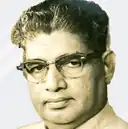 |
1958 | 1960 |
| 19. | C.K. Govidhavan Nair |  |
1963 | 1964 |
| 20. | K.C. Abraham | 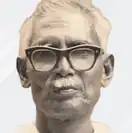 |
1965 | 1966 |
| 21. | T. O. Bava | 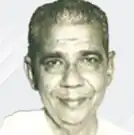 |
1967 | 1969 |
| 22. | K.K. Viswanathan |  |
1970 | 1972 |
| 23. | A.K. Antony | |
1972 | 1977 |
| 24. | S. Varadarajan Nair |  |
1977 | 1978 |
| 25. | K. M. Chandy | 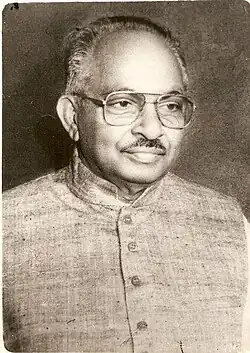 |
1978 | 1982 |
| 26. | C. V. Padmarajan |  |
1983 | 1987 |
| 27. | A.K. Antony | |
1987 | 1992 |
| 28. | Vayalar Ravi |  |
1992 | 1998 |
| 29. | Thennala Balakrishna Pillai | 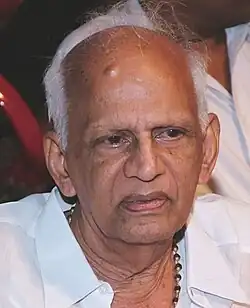 |
1998 | 2001 |
| 30. | K. Muraleedharan |  |
2001 | 2004 |
| 31. | P. P. Thankachan |  |
2004 | 2004 |
| 32. | Thennala Balakrishna Pillai | |
2004 | 2005 |
| 33. | Ramesh Chennithala | |
2005 | 2014 |
| 34. | V.M. Sudheeran |  |
2014 | 2017 |
| 35. | M.M. Hassan |  |
2017 | 2018 |
| 36. | Mullappally Ramachandran |  |
2018 | 2021 |
| 37. | K. Sudhakaran[19] |  |
2021 | 2025 |
| 38. | Sunny Joseph |  |
2025 | 2026 |
List of INC Presidents from Kerala
| Serial Name | Name of the President | Year | Session | Image |
|---|---|---|---|---|
| 1. | C. Shankaran Nair | 1897 | Amaravathi |
List of Congress Working Committee Members from Kerala
| Serial No. | Name | Image | Status of Membership |
|---|---|---|---|
| 1. | A.K. Antony | Member, CWC | |
| 2. | Dr Shashi Tharoor |  |
Member, CWC |
| 3. | K.C. Venugopal | 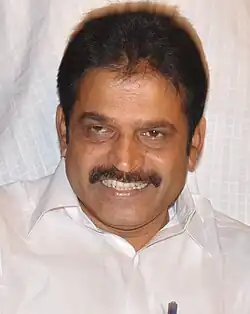 |
Member, CWC |
| 4. | Ramesh Chennithala |  |
Permanent Invitee, CWC |
| 5. | K. Sudhakaran | Permanent Invitee,CWC | |
| 6. | Kodikunnil Suresh | Special Invitee, CWC |
List of Political Affairs Committee Members
| Serial No.[20] | Name of the member |
|---|---|
| 1 | V.D. Satheesan |
| 2 | Sunny Joseph |
| 3 | Ramesh Chennithala |
| 4 | K. Sudhakaran |
| 5 | V.M. Sudheeran |
| 6 | Mullappally Ramachandran |
| 7 | M.M. Hassan |
| 8 | Kodikkunnil Suresh |
| 9 | Prof. P.J. Kurien |
| 10 | Dr. Shashi Tharoor |
| 11 | Thiruvanchoor Radhakrishnan |
| 12 | K.C. Joseph |
| 13 | Benny Behanan |
| 14 | Adoor Prakash |
| 15 | M.K. Raghavan |
| 16 | T.N. Prathapan |
| 17 | Anto Antony |
| 18 | Hibi Eden |
| 19 | P.C. Vishnunath |
| 20 | Shanimol Osman |
| 21 | M. Liju |
| 22 | T. Siddique |
| 23 | A.P Anilkumar |
| 24 | Roji M. John |
| 25 | N. Subramanian |
| 26 | Ajay Tharayil |
| 27 | V.S. Sivakumar |
| 28 | Joseph Vazhackan |
| 29 | Cherian Philip |
| 30 | Bindhu Krishna |
| 31 | Shafi Parambil |
| 32 | P.K. Jayalakshmi |
| 33 | Johnson Abraham |
District Congress Committee Presidents
| Sl. No. | District | Name of the DCC President |
|---|---|---|
| 1 | Kasargod | P K Faisal |
| 2 | Kannur | Adv. Martin George |
| 3 | Kozhikode | Adv. K. Praveenkumar |
| 4 | Wayanad | Adv.T.J.Issac |
| 5 | Malappuram | V.S.Joy |
| 6 | Palakkad | A Thankappan |
| 7 | Thrissur | Adv. Joseph Tajet |
| 8 | Ernakulam | Mohammed Shiyas |
| 9 | Idukki | C P Mathew |
| 10 | Kottayam | Nattakam Suresh |
| 11 | Alappuzha | Adv.B.Babuprasad |
| 12 | Pathanamthitta | Prof. Satheesh Kochuparambil |
| 13 | Kollam | P Rajendraprasad |
| 14 | Thiruvananthapuram | N Sakthan |
List of elected members
16th Kerala legislative assembly 2026
The following members elected to the 16th Kerala Legislative Assembly elections 2026. These members are part of the Congress Legislative Party for the year 2026-2031.
| No. | Constituency | Name | Image | Party | Role |
|---|---|---|---|---|---|
| Kasargod District | |||||
| 1. | Uduma | K. Neelakandan |  |
INC |
|
| 2. | Thrikaripur | Sandeep Varier |  |
INC |
|
| Kannur district | |||||
| 1 | Irikkur | Sajeev Joseph |  |
INC |
|
| 2 | Kannur | T.O Mohanan |  |
INC |
|
| 3. | Peravoor | Sunny Joseph |  |
INC |
|
| Wayanad district | |||||
| 1 | Mananthavady (ST) | Usha Vijayan | 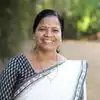 |
INC |
|
| 2 | Sulthan Bathery | I. C. Balakrishnan |  |
INC |
|
| 3 | Kalpetta | T Siddique | INC |
| |
| Kozhikode District | |||||
| 1 | Nadapuram | K. M. Abhijith |  |
INC |
|
| 2 | Koyilandy | K. Praveen Kumar | 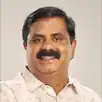 |
INC |
|
| 3 | Balussery (SC) | V. T. Sooraj | 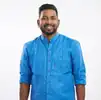 |
INC |
|
| 4 | Elathur | Vidya Balakrishnan |  |
INC |
|
| 5 | Kozhikode North | K.Jayanth |  |
INC |
|
| Malappuram district | |||||
| 1 | Nilambur | Aryadan Shoukath |  |
INC |
|
| 2 | Wandoor | A. P. Anil Kumar |  |
INC |
|
| 3 | Thavanur | V. S Joy | 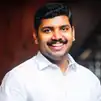 |
INC |
|
| 4 | Ponnani | K. P Noushad Ali |  |
INC |
|
| Palakkad District | |||||
| 1 | Thrithala | V. T. Balram | 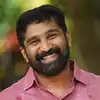 |
INC |
|
| 2 | Kongad (SC) | K. A. Thulasi |  |
INC |
|
| 3 | Palakkad | Ramesh Pisharody |  |
INC |
|
| 4 | Chittur | Sumesh Achuthan | 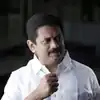 |
INC |
|
| Thrissur district | |||||
| 1 | Thrissur | Rajan Pallan |  |
INC |
|
| 2 | Chalakudy | T. J. Saneesh Kumar Joseph |  |
INC |
|
| 3 | Kodungallur | O. J. Janeesh |  |
INC |
|
| Ernakulam district | |||||
| 1 | Perumbavoor | Manoj Moothedan |  |
INC |
|
| 2 | Angamaly | Roji M. John |  |
INC |
|
| 3 | Aluva | Anwar Sadath | 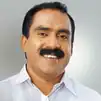 |
INC |
|
| 4 | Paravur | V. D. Satheesan | 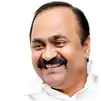 |
INC |
|
| 5 | Vypin | Tony Chammany |  |
INC |
|
| 6 | Kochi | Mohammad Shiyas |  |
INC |
|
| 7 | Thrippunithura | Deepak Joy |  |
INC |
|
| 8 | Ernakulam | T. J. Vinod | INC |
| |
| 9 | Thrikkakara | Uma Thomas | INC |
| |
| 10 | Kunnathunad (SC) | V. P. Sajeendran | INC |
| |
| 11 | Muvattupuzha | Mathew Kuzhalnadan | INC |
| |
| Idukki District | |||||
| 1 | Devikulam (SC) | F Raja | INC |
| |
| 2 | Udumbanchola | Senapathy Venu | INC |
| |
| 3 | Idukki | Roy K Paulose | INC| |
| |
| 4 | Peerumade | Cyriac Thomas | INC |
| |
| Kottayam district | |||||
| 1 | Vaikom (SC) | K. Binimon | INC |
| |
| 2 | Ettumanoor | Nattakom Suresh | INC |
| |
| 3 | Kottayam | Thiruvanchoor Radhakrishnan | INC |
| |
| 4 | Puthuppally | Chandy Oommen | INC |
| |
| 5 | Kanjirappally | Rony K Baby | INC |
| |
| 6 | Poonjar | Sebastian M. J. | INC |
| |
| Alappuzha district | |||||
| 1 | Aroor | Shanimol Osman | INCINC' |
| |
| 2 | Alappuzha | A.D.Thomas | INC |
| |
| 3 | Haripad | Ramesh Chennithala | INC |
| |
| 4 | Kayamkulam | M. Liju | INC |
| |
| Pathanamthitta District | |||||
| 1 | Ranni | Pazhakulam Madhu | INC |
| |
| 2 | Aranmula | Abin Varkey | INC |
| |
| 3 | Adoor (SC) | Adv. C. V. Santhakumar | INC |
| |
| Kollam district | |||||
| 1 | Karunagappally | C. R. Mahesh | INC |
| |
| 2 | Pathanapuram | Jyothi Kumar Chamakkala | INC |
| |
| 3 | Chadayamangalam | M. M. Naseer | INC |
| |
| 4 | Kundara | P. C. Vishnunadh | INC |
| |
| 5 | Kollam | Bindu Krishna | INC |
| |
| Thiruvananthapuram district | |||||
| 1 | Chirayinkeezhu (SC) | Ramya Haridas | INC |
| |
| 2 | Vamanapuram | Sudheersha Palode | INC |
| |
| 3 | Vattiyoorkavu | K. Muraleedharan | INC |
| |
| 4 | Kattakkada | M. R. Baiju | INC |
| |
| 5 | Kovalam | M. Vincent | INC |
| |
| 6 | Neyyattinkara | N. Sakthan | INC |
| |
18th Lok Sabha- 2024
| Parliamentary Constituency | Member (M. P.) | Image | Role |
|---|---|---|---|
| Kasaragod | Rajmohan Unnithan | ||
| Kannur | K. Sudhakaran | ||
| Vatakara | Shafi Parambil | ||
| Wayanad | Priyanka Gandhi (elected in 2024 by-election) | ||
| Kozhikode | M. K. Raghavan | ||
| Palakkad | V. K. Sreekandan | ||
| Chalakudy | Benny Behanan | ||
| Ernakulam | Hibi Eden | ||
| Idukki | Dean Kuriakose | ||
| Mavelikkara | Kodikunnil Suresh | ||
| Pathanamthitta | Anto Antony Punnathaniyil | ||
| Alappuzha | K. C. Venugopal | ||
| Attingal | Adoor Prakash | ||
| Thiruvananthapuram | Dr Shashi Tharoor |
Rajya Sabha
| No. | State | Member (M. P.) | Image | Role |
|---|---|---|---|---|
| 1 | Kerala | Jebi Mather |
Local Body Elections- 2025
I. MUNCIPAL CORPORATION
| Sl. No. | Muncipal Corporation | Total Seats | UDF | INC | Government/ Opposition | Mayor | Deputy Mayor |
|---|---|---|---|---|---|---|---|
| 1. | Kannur | 56 | 36 | 21 | Government | Adv. P. Indira | |
| 2. | Kozhikode | 76 | 28 | 14 | Opposition | ||
| 3. | Thrissur | 56 | 35 | 33 | Government | Dr. Niji Justin | A Prasad |
| 4. | Kochi | 76 | 48 | 42 | Government | Adv. Minimol V.K. | V.R. Sudheer |
| 5. | Kollam | 56 | 27 | 22 | Government | A.K. Hafeez | Karumalil Dr Udaya Sukumaran |
| 6. | Thiruvananathapuram | 101 | 20 | 17 | Other Opposition | ||
| TOTAL | 421 | 187 | 148 | ||||
II. DISTRICT PANCHAYAT
| Sl.No. | Name of the District Panchayat | Total Seats | UDF | INC | Government/ Opposition | President | Vice President |
|---|---|---|---|---|---|---|---|
| 1. | Kasargod | 18 | 8 | 4 | Opposition | ||
| 2. | Kannur | 25 | 7 | 4 | Opposition | ||
| 3. | Wayanad | 17 | 15 | 9 | Government | Chandrika Krishnan | |
| 4. | Kozhikode | 28 | 14 | 8 | Government | Mili Mohan | |
| 5. | Malappuram | 33 | 33 | 9 | Government | ||
| 6. | Palakkad | 33 | 12 | 8 | Opposition | ||
| 7. | Thrissur | 30 | 9 | 7 | Opposition | ||
| 8. | Ernakulam | 28 | 25 | 22 | Government | K.G. Radhakrishnan | Sinta Jacob |
| 9. | Idukki | 17 | 14 | 10 | Government | T.S. Siddique | |
| 10. | Kottayam | 23 | 16 | 12 | Government | Joshy Philip | |
| 11. | Alappuzha | 24 | 8 | 8 | Opposition | ||
| 12. | Pathanamthitta | 17 | 12 | 10 | Government | Deenama Roy | Anish Varikanamala |
| 13. | Kollam | 27 | 10 | 9 | Opposition | ||
| 14. | Thiruvananthapuram | 28 | 13 | 12 | Opposition | ||
| TOTAL | 346 | 196 | 130 | ||||
III. Other Local Bodies
| Sl. Number | Category | Total Local Bodies | UDF | INC Ruled | Total Wards | UDF | INC |
|---|---|---|---|---|---|---|---|
| 1. | Muncipality | 87 | 54 | 29 | 3240 | 1458 | 899 |
| 2. | Block Panchayat | 152 | 79 | 2267 | 1241 | 917 | |
| 3. | Grama Panchayat | 941 | 501 | 17337 | 8021 | 5723 |
See also
References
- ↑ "Cong membership: 33.79 lakh members for Congress in Kerala | Thiruvananthapuram News - Times of India". The Times of India. 16 June 2017.
- ↑ "MM Hassan takes charge as the UDF convener". The New Indian Express. Retrieved 14 September 2023.
- 1 2 "K P C C Marks a Milestone Tomorrow". The Hindu. 21 April 2017.
- ↑ Rajiv G. (22 May 2021). "VD Satheesan: Kerala opposition leader: Congress appoints V D Satheesan as leader of opposition in Kerala assembly | Thiruvananthapuram News - Times of India". The Times of India. Retrieved 6 October 2022.
- ↑ "Kerala: Jebi Mather appointed as Mahila Congress state president". English.Mathrubhumi. 6 December 2021. Retrieved 6 October 2022.
- ↑ Sarkar, Sumit (1989). Modern India: 1885 - 1947. Palgrave MacMillan. p. 229.
- ↑ Sarkar, Sumit (1989). Modern India: 1885 - 1947. Palgrave MacMillan. p. 300.
- ↑ Sarkar, Sumit (1989). Modern India: 1885 - 1947. Palgrave MacMillan. pp. 317–318.
- 1 2 3 4 Jeffrey, Robin (1977). Congress and the Raj. Heineman London. pp. 435–465.
- ↑ Sarkar, Sumit (1989). Modern India: 1885 - 1947. Palgrave MacMillan. pp. 369–370.
- ↑ Sarkar, Sumit (1989). Modern India: 1885 - 1947. Palgrave MacMillan. pp. 369–370.
- ↑ Sarkar, Sumit (1989). Modern India: 1885 - 1947. Palgrave MacMillan. p. 370.
- ↑ Sarkar, Sumit (1989). Modern India: 1885 - 1947. Palgrave MacMillan. pp. 441–42.
- ↑ Jeffrey, Robin (1992). Politics, Women and Well-Being: How Kerala Became a Model. Palgrave MacMillan. p. 156.
- ↑ Jeffrey, Robin (1992). Politics, Women and Well-Being: How Kerala Became a Model. Palgrave MacMillan. p. 174.
- ↑ Jeffrey, Robin (1992). Politics, Women and Well-Being: How Kerala Became a Model. Palgrave MacMillan. p. 207.
- 1 2 3 4 5 Menon, Maya (30 June 2018). "The Five visits Gandhiji Made to Kerala". Malayala Manorama.
- ↑ "Congress MLA-elects make a beeline for Indira Bhavan as AICC inches closer to announcing its Chief Minister pick for Kerala". The Hindu. 14 May 2026. ISSN 0971-751X. Retrieved 8 August 2026.
- ↑ "No question of replacing KPCC chief, says V.D. Satheeshan". The Hindu. 24 June 2023. Retrieved 14 September 2023.
- ↑ "Kerala Pradesh Congress Committee". www.kpcc.org.in. Retrieved 5 July 2026.
