Isothipendyl
 | |
 | |
| Clinical data | |
|---|---|
| AHFS/Drugs.com | International Drug Names |
| ATC code | |
| Identifiers | |
| |
| CAS Number | |
| PubChem CID | |
| DrugBank |
|
| ChemSpider |
|
| UNII | |
| KEGG |
|
| CompTox Dashboard (EPA) | |
| ECHA InfoCard | 100.006.890 |
| Chemical and physical data | |
| Formula | C16H19N3S |
| Molar mass | 285.41 g·mol−1 |
| 3D model (JSmol) | |
| |
| |
| (verify) | |

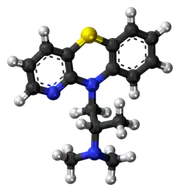
Isothipendyl is a 1st generation H1 antagonist (antihistamine) and anticholinergic used as an antipruritic.[1] In the 2020s, at least, it is rarely used in the first line relief of allergies due to the anticholinergic side effect of somnolence but does have some limited use through topical application in the relief of insect bites and related itching (pruritus).
See also
References
| Benzimidazoles (*) | |
|---|---|
| Diarylmethanes |
|
| Ethylenediamines | |
| Tricyclics | |
| Others |
|
| For topical use | |
| Antihistamines for topical use | |
|---|---|
| Anesthetics for topical use | |
| Others |
|
| Classes | |
|---|---|
| Antidepressants (a.k.a. TCAsTooltip tricyclic antidepressant) |
|
| Antihistamines |
|
| Antipsychotics |
|
| Anticonvulsants | |
| Anticholinergics |
|
| Others |
|
Categories:
Hidden categories:
- Articles with short description
- Short description matches Wikidata
- Articles needing additional references from March 2024
- All articles needing additional references
- Short description is different from Wikidata
- ECHA InfoCard ID from Wikidata
- Articles without EBI source
- Drugs with no legal status
- All articles with unsourced statements
- Articles with unsourced statements from January 2023
- All stub articles
This page is issued from Wikipedia. The text is available under Creative Commons Attribution-Share Alike 4.0 unless otherwise noted. Additional terms may apply for the media files.