Dhaka First Division Football League
| Organising bodies | DSA (c. 1911–1950) EPSA (1951) EPSF (1951–1971) BFF (1972–1992) |
|---|---|
| Founded | c. 1911 1948 (recognized)[a] |
| First season | 1948 (recognized)[a] |
| Folded | 1992 (second-tier (1993–2006)) |
| Country | Bangladesh |
| Confederation | AFC |
| Number of clubs | 20 (1991–92) |
| Level on pyramid | 1 (1971–1992) 2 (1993–2006) |
| Relegation to | Dhaka Second Division League |
| Domestic cup(s) | Federation Cup Independence Cup DMFA Cup Independence Day Tournament |
| International cup(s) | Asian Club Championship (1985–92) Asian Cup Winners' Cup (1990–92) |
| Last champions | Dhaka Abahani (8th title) (1991–92) |
| Most championships | Mohammedan (15 titles) |
| Top scorer | Sheikh Mohammad Aslam (154) |
Dhaka First Division Football League[b] (Bengali: ঢাকা প্রথম বিভাগ ফুটবল লিগ) was the top-tier football league in Bangladesh until 1992. Established as part of the Dhaka Football League during the period when present-day Bangladesh was under the British Raj, it served as the country's premier football competition for many decades. Following the introduction of the Premier Division in 1993, the First Division became the second-tier league until 2006. Together, the Premier Division and First Division formed the Senior Division of the Dhaka Football League.
Mohammedan is the league's most successful club with a record 15 titles, followed by Dhaka Abahani with eight. The two clubs contest the Dhaka derby, traditionally the league's best-attended fixture since the country's independence. Dhaka Wanderers have won seven titles all prior to independence, while BJMC, formerly EPIDC, has won five championships. Victoria has won three post-partition of India titles, with its pre-partition championships unrecognized. The only other champions since partition are: EPG Press, EP Gymkhana, and Azad.
During its time as Bangladesh's top-tier league, in the absence of a National League, the First Division champions qualified for the Asian Club Championship from 1985 and, on one occasion, for the Asian Cup Winners' Cup in 1991–92. From the 1990–91 edition, however, the Federation Cup champions were entered into the Asian Club Championship instead. Mohammedan are the most successful First Division club in continental football, having reached the semi-final group stage once (1988–89) and the quarter-final group stage twice (1990–91 and 1991).
Not all pre-partition league winners have been recorded, and they have not been recognized by the Bangladesh Football Federation (BFF), although winners from the period when the region was part of Pakistan (1948–1970) are recognized. Following independence, the Dhaka Metropolitan Football Association (DMFA) began operating the Dhaka Football League under the supervision of BFF.
History
British Raj era (c. 1911–1947)
| Season | Champions | Runners-up |
|---|---|---|
| 1931 | Muslim Hall | Unknown |
| 1935 | Dacca Hall | Unknown |
| 1936 | Dacca Farm | Unknown |
| 1937 | Dacca Farm | Unknown |
| 1940 | Dacca Farm | Unknown |
| 1942 | Wari | East End |
| 1943 | Victoria | Unknown |
| 1946 | B.A. Railway | Wari |
| 1947 | Not held due to the partition of India and India–Pakistan war of 1947–1948 | |
The Dhaka Sports Association (DSA) was established in 1895 in Paltan, Dhaka, British India, as the governing body for sports in the city. During the first decade of the 20th century, the DSA established the Dhaka Football League, one of the earliest organised football competitions in the region. The earliest known record of the DSA First Division appears in the Englishman's Overland Mail newspaper of 21 September 1911, which reported that the league final between Wari Club and Settlement Club was to be replayed on 13 September.[2] However, no contemporary report confirming the result of the replay has been found.
According to the DSA's 42nd Annual Report for 1937–38, the First Division, Second Division, and Third Division competitions were all held in Dhaka. At the time, the First Division featured 10 teams, the Second Division had 9 teams, and the Third Division comprised 6 teams. In addition to sports clubs such as Wari, Victoria, Dacca Farm, and Luxmibazar, the First Division also included several institutional teams, notably Dacca Intermediate College, Jagannath Intermediate College, Medical College, Dacca Hall, and Muslim Hall, the latter two being residential halls of Dhaka University.[3] The participation of institutional teams declined following the introduction of the Institutional Football League in the late 1930s or early 1940s.[4]

The Ronaldshay Shield, which began in the 1920s, was the region's principal cup competition, with clubs from all three tiers of the Dhaka Football League, alongside various institutional teams, historically participating in the knockout tournament held annually in Dhaka.[5] Wari became the first First Division club from Dhaka to participate in the historic IFA Shield in West Bengal in 1914, followed by Victoria in 1917.[6] Dacca Farm, which won the First Division as a newly promoted team from the Second Division in 1936, won the Mohendra Memorial Football Tournament in Delhi in 1939.[7] The A.R.P. Cup Football Tournament was introduced in 1942 in Dhaka and was won by Wari, who also finished the year as unbeaten champions of both the First Division and the Ronaldshay Shield.[8]
Notably, the clubs were composed primarily of Hindu players alongside European settlers. As the region had no Stadium infrastructure, league matches were played at Wari Ground, Victoria Ground, and the DSA Ground in Paltan. In 1946, B.A. Railway won the first edition of the First Division following World War II.[9] However, the following year, the Dhaka Football League became inactive due to the partition of India and its aftermath, including the India–Pakistan war of 1947–1948.
Post-partition developments (1948–1959)
The Dhaka Football League, including its First and Second Divisions, resumed in 1948 alongside other district football leagues in East Bengal following the partition of India.[10] In the same year, the DSA inaugurated the Independence Day Football Tournament, which would later replace the Ronaldshay Shield as the province's primary cup competition. The partition had a significant impact on the league, as many established players, most of whom were Hindus, migrated to India. Concurrently, several prominent Muslim footballers from the Calcutta Football League in West Bengal relocated to Pakistan, primarily to its eastern wing. Notable among these were Mohammad Shahjahan, Alauddin Khan, Yusuf Khan, Abbas Mirza, Hafiz Rashid, Abdul Khaleque, Motahar Ali Khan, and Mohammad Yasin.[11][12]

In January 1951, the DSA was renamed the East Pakistan Sports Association (EPSA). On 20 May 1951, the East Pakistan Sports Federation (EPSF) merged with the EPSA,[13] assumed control of the Football League,[c] and inaugurated that year's First Division five days later. In 1949, EP Gymkhana became the first newly promoted team to win the First Division following partition, a feat later matched by EBG Press in 1952.[15] Gymkhana's triumph also marked the first time the league was won by an all-Muslim team.[16] Early dominance in the league was established by Dhaka Wanderers, who won six First Division titles between 1950 and 1956, only missing out in 1952.[17] Notably, the 1955 season was abandoned midway due to regional flooding, with Wanderers top of the table, they were subsequently recorded as champions.[18]
In 1954, the Dhaka Stadium was constructed on the former DSA Ground, later known as the EPSF Ground, becoming East Pakistan's first dedicated stadium.[19] From 1956 onwards, First Division matches were regularly held at the venue.[20] The practice grounds of Mohammedan, Wari, and Victoria also hosted league matches until they were taken over by the EPSF during Brigadier Sahib Dad Khan's tenure as president, beginning in 1959.[21] Thereafter, the Dhaka Stadium and the Outer Stadium Ground became the two primary venues for First Division fixtures.

The 1956 season was decided by the High Court after Dhaka Wanderers and Mohammedan, who had signed six Wanderers players before the season, finished level on points at the end of the league stage. Although a championship play-off was scheduled, Mohammedan declined to participate. The EPSF arbitration board awarded the title to Wanderers, a decision later upheld by the High Court. Mohammedan won their inaugural league title the following year.
From 21 October to 10 November 1957, the National Championship, Pakistan's highest-level football competition, was held in Dhaka for only the second time. The local East Pakistan White team, consisting entirely of First Division players, finished as runners-up.[22] Following the tournament, six Bengali players were selected for the Pakistan national team: Amir Jang Ghaznavi, Kabir Ahmed, Nabi Chowdhury, Mari Chowdhury, Ashraf Chowdhury, and Manzur Hasan Mintu.[23]
The EPSF introduced the Aga Khan Gold Cup (considered the predecessor of the AFC Champions League Elite) in Dhaka in 1958, with the trophy donated by Aga Khan IV (Shah Karim al-Hussaini) of Iran.[24] Although the inaugural edition was won by Karachi Kickers from West Pakistan, Mohammedan won the tournament the following year, while also becoming First Division champions in the same year.[25]
Inflow of West Pakistanis (1960–1970)

Towards the late fifties, many First Division clubs began recruiting footballers from West Pakistan, a trend that started with Abid Hussain Ghazi joining Victoria in 1958. Mohammedan and Dhaka Wanderers soon followed by strengthening their squads with players from West Pakistan.[26] Mohammedan's team featured several Pakistani internationals of Makrani descent, including Abdul Ghafoor, Ghulam Abbas, Yousuf Jr. and Abdullah Rahi. The club won the 1961 First Division title after scoring 118 goals and conceding only 17 throughout the campaign.[27]
In 1962, Victoria signed several West Pakistani players from Dhaka Mohammedan and Kolkata Mohammedan. Under the captaincy of player-coach Muhammad Umer, the club won the First Division title that year and repeated the feat in 1964, remaining unbeaten in both championship-winning campaigns.[28] Victoria, however, withdrew from football activities during the 1963 season following the EPSF's suspension of winger Yousuf Sr., who had assaulted an opponent during a league match. The decision coincided with criticism from The Pakistan Observer, which labelled the side Makrani XI and criticised its heavy reliance on non-local players,[29] many of whom also became eligible to represent the provincial team.[30]
On 1 July 1964, Victoria's Umer set a league record of netting 10 goals in a single-match, including a hat-trick (three consecutive goals), in a 13–0 victory over Wari.[31] The influx of West Pakistani players also contributed to the decline of clubs such as Azad (1958 champions) and EBG Press (1952 champions), both of which relied primarily on local players. Throughout the pre-independence era, league matches were played over 70 minutes, consisting of two 35-minute halves. The only exception came in 1962, when the EPSF reduced the duration of league matches to 60 minutes, with two 30-minute halves,[32] a decision reverted within two seasons.[33]
In 1966, Mohammedan won the First Division title, scoring 103 league goals, 51 of which were contributed by forward Moosa Ghazi.[34] In the same year, EPIDC, a club owned by the East Pakistan Industrial Development Corporation, entered the First Division. The corporate-backed side assembled a high-profile squad featuring Pakistani internationals such as Abdul Jabbar, Ayub Dar, and Gafur Baloch, while offering employment within the corporation to its players. EPIDC went on to win three league titles in four seasons, claiming the championship in 1967, 1968, and 1970, the final season before the independence of Bangladesh. Its financial backing enabled the club to surpass Mohammedan as the league's dominant force, while former contenders Victoria and Dhaka Wanderers struggled to match its spending power.[26]
Post-independence: Mohammedan vs Abahani (1971–1992)
| Season | MSC | DAL | ||||
|---|---|---|---|---|---|---|
| 1971 | Not held | |||||
| 1972 | Not completed | |||||
| 1973 | 2[d] | 2[d] | ||||
| 1974 | 9 | 1 | ||||
| 1975 | 1 | 2 | ||||
| 1976 | 1 | 4 | ||||
| 1977 | SLG[e] | 1 | ||||
| 1978 | 1 | 3 | ||||
| 1979 | 5 | 2 | ||||
| 1980 | 1[f] | 4 | ||||
| 1981 | 2[g] | 1 | ||||
| 1982 | 1[h] | 2[h] | ||||
| 1983 | 2 | 1 | ||||
| 1984 | 2[i] | 1[i] | ||||
| 1985 | 3 | 1 | ||||
| 1986 | 1 | 2 | ||||
| 1987 | 1 | 2 | ||||
| 1988–89 | 1 | 2 | ||||
| 1989–90 | 2 | 1 | ||||
| 1991 | Not held | |||||
| 1991–92 | 2 | 1 | ||||
| Total | 8 | 8 | ||||
| Top two | 14 | 15 | ||||
| Hat-trick | 1 | 1 | ||||
| League champions Federation Cup First Division/Federation Cup | ||||||
The Dhaka Football League was not held in 1971 due to the Bangladesh Liberation War and resumed in 1972 under the newly formed Bangladesh Football Federation (BFF). Although it remained a district league, as it had before independence, it served as the highest level of football in the country until the establishment of a national league. Clubs were no longer permitted to field players from Pakistan, while in-game substitutions (one goalkeeper and two outfield players) were introduced for the first time.[35]
The first First Division match in independent Bangladesh was played on 11 June at the Dhaka Stadium between BIDC (formerly EPIDC) and the 1970 Second Division champions, Dhaka Abahani (formerly Iqbal Sporting Club). The following day, Dhaka Wanderers defeated Dilkusha 5–1, with Nazir Ahmed becoming the first player to score both a goal and a hat-trick in the league after independence.[36] However, the season was suspended after matches on 25 August following a series of attacks on referees and was ultimately abandoned, along with the Second and Third Division, after the BFF failed to implement its revised fixture schedule.[37]
The first completed season after independence was held in 1973, when BIDC became the first league champions of Bangladesh. During the campaign, Hafizuddin Ahmed became the first player in independent Bangladesh to score a double hat-trick as Mohammedan defeated Fire Service 6–0 on 16 July.[38] Responsibility for administering the league was also transferred to the Dhaka Metropolitan Football Association (DMFA) under the supervision of the BFF,[39] while match duration was increased from 70 to 80 minutes, consisting of two 40-minute halves.[40] The following year, the league committee introduced the Super League format,[41] and in 1975 extended match duration to the international standard of 90 minutes, consisting of two 45-minute halves.[42] However, the change was reversed from the 1976 season[43] and 90-minute matches were not permanently reintroduced until the 1989–90 season.[44]
Despite BIDC's First Division triumphs in 1973 and 1979, the post-independence era was largely dominated by Awami League-backed Abahani and Mohammedan. Their rivalry, contested through the Dhaka derby, became the defining fixture of Bangladeshi club football during this period.[45] Mohammedan was the only pre-independence champion to maintain its success after independence, while BJMC (renamed from BIDC in 1976) experienced a decline, suffering relegation in 1983. Although the club returned to the First Division in the 1989–90 season, it was unable to challenge for the league title again. Meanwhile, former contenders Dhaka Wanderers and Victoria struggled to remain competitive, spending much of the following decade in the lower half of the table.[46] Of the 18 completed seasons held after independence, 16 were won by either Abahani or Mohammedan, with both clubs securing eight titles.[1]
Abahani won their first First Division title in 1974, in a season where the BFF controversially used goals scored per match instead of goal difference as the deciding criterion, contrary to FIFA regulations.[47] Mohammedan won the next two championships in 1975 and 1976, before Abahani reclaimed the title in 1977 and Mohammedan regained it in 1978. In 1980, the BFF inaugurated the Federation Cup as the country's league cup, with Mohammedan completing the first domestic double by winning both competitions.[48]
Abahani became the first club to win three consecutive First Division titles, securing the championships in 1983, 1984, and 1985. The 1984 season marked a significant development in Dhaka football, as the Dhaka football authorities introduced the three-point system, making the league one of the earliest competitions outside England to adopt the format.[49] The change proved decisive, as Abahani secured the title ahead of Mohammedan despite having a match in hand during the Super League stage. The success also earned Abahani qualification for the 1985–86 Asian Club Championship, making them the first club from Bangladesh to participate in the Asian Club Championship after the competition's revival following a 14-year hiatus.[50] Meanwhile, Brothers Union emerged as another major contender, although they failed to become champions in the First Division era, the club finished as runners-up in 1978 and 1985.[51]
The 1987 season, which reverted to the two points for a win system, was regarded as a peak period for Dhaka football, with Mohammedan signing Iranian international Reza Naalchegar and appointing Iranian legend Nasser Hejazi as head coach, while Abahani recruited Iranian duo Samir Shaker and Karim Allawi, both of whom featured at the 1986 FIFA World Cup. The two clubs finished level on points, requiring a playoff to determine the champions. After the first playoff ended in a 0–0 draw on 9 September, both teams requested to be declared joint champions, but the BFF rejected the proposal, suspended captains Sheikh Md Aslam and Ranjit Saha, and ordered a replay. Mohammedan secured the title with a 2–0 victory in the second playoff on 26 October, played behind closed doors at the Army Stadium following crowd trouble in the previous match.[52] The club completed won its third consecutive title in the 1988–89 season, when the league was held at the Mirpur Stadium for the first time.[51]
Abahani regained the league title in the 1989–90 season after the BFF banned the recruitment of foreign players for the campaign. The First Division was not held in 1991, and the 1991–92 season began on 10 January 1992. During the season, Abahani paid a South Asian record fee of Tk20 lakh to retain captain Monem Munna, who guided the club to its eighth and final First Division title.[53] It was also the final edition of the league as the top-tier of football in the country.
Transition into second-level (1993–2006)
Following the BFF's introduction of the Premier Division, the top ten teams from the 1991–92 First Division qualified for the inaugural Premier Division in 1993. The clubs placed 11th–18th, together with the top two teams from the 1991–92 Second Division, competed in the First Division, which became the second tier. From 1993, the Premier Division and First Division together formed the Senior Division of the Dhaka Football League, a term that had previously referred only to the First Division.[54] Eligibility for continental competition, previously awarded to the First Division champions, was transferred to the Premier Division champions and later to the winners of the National League. The First Division remained the second tier beneath the Premier Division until 2006, although its final season was played in 2004–05.
Following the introduction of the country's first professional national league, the Bangladesh Football League (initially the B.League), in 2007, the Premier Division and First Division were merged into a single Senior Division, which served as the country's second-tier while remaining a district-based competition until 2011. It became the third tier in 2012 following the introduction of the Bangladesh Championship League, the country's second-tier professional national league.
Competition format and sponsorship
Timeline
| Edition | Participants | Important events | ACC slots | Rel. slots | |
|---|---|---|---|---|---|
| 1948 | n/a |
|
none | n/a | |
| 1949 | 9 |
|
none | none | |
| 1950 | 10 | none | none | ||
| 1951 | 12 |
|
none | 1 | |
| 1952 |
|
none | |||
| 1953 | 11 |
|
none | none | |
| 1954 | 13 |
|
none | none | |
| 1955 | 14 |
|
none | none | |
| 1956 | 15 |
|
none | none | |
| 1957 | 16 |
|
none | none | |
| 1958 |
|
none | 1 | ||
| 1959 | 15 | none | |||
| 1960 |
|
none | 2 | ||
| 1961 | 13 |
|
none | none | |
| 1962 | none | 1 | |||
| 1963 |
|
none | |||
| 1964 | 11 | none | none | ||
| 1965 | 12 |
|
none | none | |
| 1966 | 13 |
|
none | 1 | |
| 1967 |
|
none | |||
| 1968 |
|
none | |||
| 1969 | none | none | |||
| 1970 | 14 |
|
none | none | |
| 1971 | The Dhaka Football League was cancelled due to the Bangladesh Liberation War. | ||||
| 1972 | 15 |
|
none | none | |
| 1973 |
|
none | none | ||
| 1974 | 16 |
|
none | 1 | |
| 1975 |
|
none | |||
| 1976 |
|
none | |||
| 1977 |
|
none | |||
| 1978 |
|
none | none | ||
| 1979 | 17 |
|
none | 2 | |
| 1980 | 16 |
|
none | none | |
| 1981 | 17 |
|
none | none | |
| 1982 |
|
none | 1 | ||
| 1983 |
|
none | |||
| 1984 |
|
1 | 2 | ||
| 1985 | 16 |
|
none | 1 | |
| 1986 |
|
1 | 1 | ||
| 1987 |
|
2 | |||
| 1988–89 |
|
none | |||
| 1989–90 | 18 |
|
none | none | |
| 1991 | Not held.
| ||||
| 1991–92 | 20 |
|
none | none | |
Relegation Summary
- 1948–1970
From 1948 to 1970, the EPSF normally allowed only the champions of the Second Division to earn promotion to the First Division, with the exceptions of 1949, 1950 and 1953, during which the top-two clubs of the Second Division earned promotion. However, relegation was irregular during this period, causing the number of participating teams to vary from season to season. Prior to the independence of Bangladesh, clubs would regularly withdraw either before or during league seasons. Although such withdrawals normally followed relegation to the Second Division, the EPSF excused the withdrawals of Victoria in both 1963 and 1969, EP Rifles in 1963, EPIDC in 1969, and Mohammedan in 1970.
- 1971–1992
Due to the Bangladesh Liberation War and its aftermath, the First Division was not held in 1971 and was abandoned in 1972. The BFF continued the tradition of promoting and relegating one team per season (except in 1979 and 1984, when the bottom two clubs were relegated) until 1987, after which two clubs were promoted and relegated each season. However, there was no relegation during the final three editions (1988–89, 1989–90, and 1991–92) of the league as the top tier, increasing the number of participating teams to 20. Following the 1991–92 season, the top ten teams formed the Premier Division, while the clubs that finished 11th to 18th remained in the First Division, which served as the second-tier from 1993 to 2006.
| Edition | Participants | Relegated positions | Relegated 1 | Relegated 2 | Withdrew | Relegated to |
|---|---|---|---|---|---|---|
| 1948 | N/A | |||||
| 1949 | 10 | – | Dhaka Electric Supply | 1950 Second Division | ||
| 1950 | – | New East Bengal | 1951 Second Division | |||
| 1951 | 12 | 12th | Dhaka | None | None | 1952 Second Division |
| 1952 | 12th | Tikatuli | None | None | 1953 Second Division | |
| 1953 | 11 | – | E.B. Railway | 1954 Second Division | ||
| 1954 | 13 | No relegation | ||||
| 1955 | 14 | No relegation | ||||
| 1956 | 15 | No relegation | ||||
| 1957 | 16 | No relegation | ||||
| 1958 | 16th | Tejgaon Friends Union | None | EP Gymkhana | 1959 Second Division | |
| 1959 | 15 | 15th | Tejgaon Sporting | None | None | 1960 Second Division |
| 1960 | 14th & 15th | East End | Kamal | None | 1961 Second Division | |
| 1961 | 13 | – | Adamjee | 1962 Second Division | ||
| 1962 | 13th | Fire Service | None | 1963 Second Division | ||
| 1963 | – | 1964 Second Division | ||||
| 1964 | 11 | – | E.P. Rifles Ispahani DC Jail |
1965 Second Division | ||
| 1965 | 12 | 12th | None | None | ||
| 1966 | 13 | 13th | P.E. Railway | None | None | 1967 Second Division |
| 1967 | 13th | Central Printing Press | None | None | 1968 Second Division | |
| 1968 | 13th | Railway Blues | None | None | 1969 Second Division | |
| 1969 | No relegation | No relegation | ||||
| 1970 | 14 | No relegation | No relegation | |||
| 1971 | Not held | |||||
| 1972 | 15 | Not completed | ||||
| 1973 | No relegation | |||||
| 1974 | 16 | 16th | Fire Service | None | None | 1975 Second Division |
| 1975 | 16th | BRTC | None | None | 1976 Second Division | |
| 1976 | 16th | BG Press | None | None | 1977 Second Division | |
| 1977 | 16th | Shantinagar | None | None | 1978 Second Division | |
| 1978 | No relegation | |||||
| 1979 | 17 | 16th & 17th | Fire Service | PWD | None | 1980 Second Division |
| 1980 | 16 | No relegation | ||||
| 1981 | 17 | No relegation | ||||
| 1982 | 17th | Bangladesh Police | None | None | 1983 Second Division | |
| 1983 | 17th | BJMC | None | None | 1984 Second Division | |
| 1984 | 16th & 17th | WAPDA | Dilkusha | None | 1985 Second Division | |
| 1985 | 16 | 16th | Azad | None | None | 1986 Second Division |
| 1986 | 16th | East End | None | None | 1987 Second Division | |
| 1987 | 15th & 16th | Mirpur Chalantika | Wari | None | 1988–89 Second Division | |
| 1988–89 | Relegation play-off (17th vs 18th) |
None | None | |||
| 1989–90 | 18 | No relegation | ||||
| 1991 | Not held | |||||
| 1991–92 | 20 | No relegation | ||||
Scrateched indicates that relegation was overturned.
Bold indicates that the club withdrew from participating in the second-tier the following season.
Sponsorship
The list below details who the sponsors have been and what they called the competition:
- 1987–90: NBL First Division Football League (referred to as Senior Division NBL Football League in 1987)
- 1991–92: STAR First Division Football League (sponsored by Bangladesh Tobacco Company)
Champions
The list includes the total number of league titles each club has attained following the partition of India.[1]
- Mohammedan – 15 (36.6%)
- Dhaka Abahani – 8 (19.5%)
- Dhaka Wanderers – 7 (17.1%)
- EPIDC/BJMC – 5 (12.2%)
- Victoria – 3 (7.30%)
- All others – 3 (7.30%)
| Club | Titles | Winning years |
|---|---|---|
| Mohammedan | 15 | 1957, 1959, 1961, 1963, 1965, 1966, 1969, 1975, 1976, 1978, 1980, 1982, 1986, 1987, 1988–89 |
| Dhaka Abahani | 8 | 1974, 1977, 1981, 1983, 1984, 1985, 1989–90, 1991–92 |
| Dhaka Wanderers | 7 | 1950, 1951, 1953, 1954, 1955, 1956, 1960 |
| BJMC/EPIDC | 5 | 1967, 1968, 1970, 1973, 1979 |
| Victoria | 3 | 1948, 1962, 1964 |
| EP Gymkhana | 1 | 1949 |
| EBG Press | 1 | 1952 |
| Azad | 1 | 1958 |
Doubles
Two teams have won the double of the First Division and the Federation Cup:
| Club | Number | Seasons |
|---|---|---|
| Mohammedan | 4 |
1980,[f] 1982,[h] 1987, 1988–89 |
| Dhaka Abahani | 1 |
1984,[i] 1985 |
Records
Unbeaten record
- Victoria (1962–1965)
1962–1965 : Victoria became the first recorded undefeated champions in 1962 following the partition of India. Their unbeaten run lasted 67 matches from 1962 to 1965, during which they won the league title in both 1962 and 1964. Notably, they withdrew from the First Division during the latter stages of the 1963 season; however, the EPSF reprieved them from relegation.[66] Their unbeaten streak came to an end on 5 June 1965 with a 3–2 defeat to PWD.[67]
- Mohammedan (1960, 1966, 1969, 1978, 1983, 1985–1990)
1960 : Mohammedan were the undefeated league runners-up behind arch-rivals, Dhaka Wanderers, whom they defeated in the final league game of the season. However, they missed out on the title by a single point, finishing with 25 points from 14 games, having won 11 matches.[68]
1966 : Mohammedan were undefeated league champions, winning 22 out of 24 games and finished 7 points ahead (46 points) of runner-up Dhaka Wanderers.[34]
1969 : Mohammedan were undefeated league champions for the third time. The league consisted of 12 teams, however, EPIDC withdrew after playing 18 games.
1978 : Mohammedan were undefeated champions again, in the normal league round they played 15 matches (8 wins and 7 draws), by the end of the Super League round they played a total of 24 matches (14 wins and 10 draws). Throughout the season they scored 44 goals and conceded 12 finishing with 38 points.[69]
1983 : Runner-up Mohammedan were unbeaten alongside champions Dhaka Abahani. They earned 35 points (12 wins and 11 draws), scored 35 and conceded 35.[69]
1985–1990 : Mohammedan were undefeated in the First Division from 8 September 1985 to 15 March 1990, which is the longest unbeaten run in Bangladeshi domestic football history.[70] They were undefeated for one thousand six hundred and fifty days winning 63 times and drawing 13 times. They scored 160 and conceded 24 goals. The Black and Whites took the league title three times in a row from 1986 to 1989 (1986, 1987 and 1988–89).[66]
- Dhaka Abahani (1977, 1983, 1989–92)
1977 : Dhaka Abahani became the first club in independent Bangladesh to win the league while remaining undefeated. In the first phase of the season, they played 15 matches, winning 10 and drawing 5, while scoring 27 goals and conceding just 5. In the Super League, they won all three of their group-stage matches to reach the knockout round, scoring 12 goals and conceding only 1.[69] DMFA awarded Abahani a 2–0 victory over PWD in the semi-final after the replayed match, which followed an initial 0–0 draw, was abandoned while Abahani were leading 2–0, following an attack on referee Dalil Khan by PWD players over a penalty awarded to Abahani.[71] The club then won the replayed championship play-off final against Rahmatganj 3–1 after the initial play-off final had ended in a 0–0 draw.[72]
1983 : Dhaka Abahani won the league with 41 points from 23 matches (18 wins and 5 draws), scoring 44 and conceding 6. Mohammedan were the runner-up.[69]
1989–92: Dhaka Abahani won the 1989–90 league with 30 points from 17 games (13 wins and 4 draws), scoring 31 and conceding 5. Mohammedan were thr runner-up.[73] The First Division was not held in 1991, thus extending Abahani's unbeaten streak. In the 1991–92 season, Dhaka Abahani completed the league season unbeaten, winning the title for the second consecutive season. They played a total of 19 matches (18 wins and 1 draw), scored 53 goals and conceded 9. With 37 points they had four points more than runners-up Mohammedan.[74]
- EPIDC/BJMC (1967, 1980)
1967 : EPIDC won their first-ever league title as unbeaten champions. The team finished the regular season with 20 victories and 4 draws, scoring 77 goals and conceding 18. Level on points with Mohammedan, EPIDC defeated them in the championship play-off on 23 November 1967, with goals from Salimullah and Abdul Jabbar.[75] Their unbeaten streak was broken on 7 July 1968 following a 2–0 defeat to Mohammedan in their 10th match of the 1968 First Division League.[76]
1980 : BJMC finished as unbeaten league runners-up, one point behind Mohammedan with 37 points from 22 matches (15 wins and 7 draws). They scored 34 goals and conceded six under coach Salimullah. The team was captained by Mostafa Hossain Mukul, while Sheikh Mohammad Aslam was the top scorer with 13 goals.[77]
Goal record


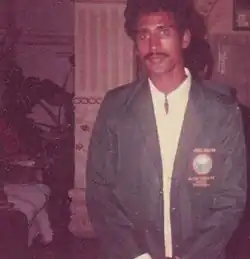
- Most goals in a season : Abdus Salam Murshedy
- Season: 1982
- Number of goals: 27[97]
- Team: Mohammedan
- Most Top Goal Scorer awards : Sheikh Mohammad Aslam
- Season: 1984, 1985, 1986, 1987, 1989–90
- Total goals: 80[65]
- Team: Dhaka Abahani
- Most goals in a game : Muhammad Umer
- Most goals in a season (Pre-Independence) : Moosa Ghazi
- Season: 1966
- Number of goals: 51[34]
- Team: Mohammedan
- NB Stats from the 1972 season are not being counted because the league was cancelled after only seven matchdays.
Notable players
Here are some prominent footballers, who participated in the league.


Asian competition

- AFC Club Championship (performance from 1985–93)
- Dhaka Abahani qualified for the 1985–86 Asian Club Championship as 1984 First Division champions.
- Bangladesh had no representation in the 1986 Asian Club Championship.
- Mohammedan qualified for the 1987 Asian Club Championship as 1986 First Division champions.
- Mohammedan qualified for the 1988–89 Asian Club Championship as 1987 First Division champions.
- Mohammedan qualified for the 1989–90 Asian Club Championship as 1988–89 First Division champions.
- Mohammedan qualified for the 1990–91 Asian Club Championship as 1989 Federation Cup winners.
- Mohammedan qualified for the 1991 Asian Club Championship as 1989 Federation Cup winners. Notably the 1991 First Division was not held.
- Brothers Union qualified for the 1992–93 Asian Club Championship as 1991 Federation Cup winners.
- Dhaka Abahani qualified for the 1993–94 Asian Club Championship as 1991–92 First Division winners. However, they withdrew.
| Team | Appearances | 1985–86 | 1986 | 1987 | 1988–89 | 1989–90 | 1990–91 | 1991 | 1992–93 |
|---|---|---|---|---|---|---|---|---|---|
| Dhaka Abahani | 1 | QS | DNP | – | – | – | – | – | – |
| Dhaka Mohammedan | 5 | – | QS | SF1 | QS | QF2 | QF2 | – | |
| Brothers Union | 1 | – | – | – | – | – | – | QS | |
W: Winners RU: Runners-up SF: Semifinals QF: Quarterfinals R16: Round of 16 GS: Group Stage QS: Qualifying Stage DNP: Did not participate W/D: Withdraw
- 1 Semi-final group round
- 2 Quarter-final group round
- Asian Cup Asian Cup Winners' Cup (performance from 1990–93)
- Dhaka Abahani qualified for the 1991–92 Asian Cup Winners' Cup as 1989–90 First Division winners.
- Mohammedan qualified for the 1990–91 Asian Cup Winners' Cup as winners of the 1990 Ma-O-Moni Gold Cup.
- Mohammedan qualified for the 1992–93 Asian Cup Winners' Cup as 1991 Federation Cup runners-up.
| Team | Appearances | 1990–91 | 1991–92 | 1992–93 |
|---|---|---|---|---|
| Dhaka Mohammedan | 2 | R2 | – | IR |
| Dhaka Abahani | 1 | – | R1 | – |
W: Winners RU: Runners-up SF: Semifinals QF: Quarterfinals R1: First Round R2: Second Round IR: Intermediate Round DNP: Did not participate W/D: Withdraw
See also
Notes
- 1 2 The Dhaka Football League has been held since at least 1911. However, champions from before the Partition of India, particularly in the First Division, have not yet been officially recognized by the Bangladesh Football Federation (BFF). In addition, a complete list of champions from its current three-tier structure during the British Raj is still incomplete and under research.[1]
- ↑ It was the sole Senior Division of the Dhaka Football League until 1993.
- ↑ Unlike football leagues in other districts of East Pakistan (formerly East Bengal), which were administered by their respective district sports associations, the Dhaka Football League was administered by the EPSF from 1951 to 1970 as the highest level of football in the province.[14]
- 1 2 Dhaka Abahani, Mohammedan and Dhaka Wanderers finished joint runners-up.
- ↑ Mohammedan finished bottom of Group "B" in the Super League round.
- 1 2 Mohammedan shared the 1980 Federation Cup with Brothers Union.
- ↑ Mohammedan and BJMC finished joint runners-up.
- 1 2 3 Mohammedan shared the 1982 Federation Cup with Dhaka Abahani.
- 1 2 3 Dhaka Abahani shared the 1984 Federation Cup with Mohammedan.
References
- 1 2 3 4 Hossain, Faaris Na'il. "Bangladesh - List of Champions". RSSSF. Retrieved 8 December 2025.
- ↑ "Football at Dacca". Englishman's Overland Mail. 21 September 1911. p. 19. Retrieved 7 January 2026 – via British Newspaper Archive.
- ↑ ব্রাজিলিয়ানদেরও আগে বাঙালিরা! [Bengalis before the Brazilians!]. Kaler Kantho (in Bengali). 23 May 2014. Archived from the original on 26 February 2025. Retrieved 26 February 2025.
- ↑ "DACCA FOOTBALL LEAGUE CONCLUDE". Amrita Bazar Patrika. 5 August 1942. p. 8. Archived from the original on 10 July 2026. Retrieved 10 July 2026 – via Endangered Archives Programme.
- ↑ Kar, Dhurba (7 July 2022). "Origins and Growth of Football Club Culture in Colonial East Bengal (Present Bangladesh)" (PDF). IJCRT. Archived (PDF) from the original on 26 February 2025. Retrieved 26 February 2025.
- ↑ "I.F.A. SHIELD TOURNEY". Amrita Bazar Patrika. 4 July 1945. p. 6. Archived from the original on 10 July 2026. Retrieved 10 July 2026 – via Endangered Archives Programme.
- ↑ "DELHI FOOTBALL FINAL". Civil & Military Gazette. 20 September 1939. p. 11. Retrieved 7 January 2026 – via British Newspaper Archive.
- ↑ "RONALDSHAY SHIELD FINAL". Amrita Bazar Patrika. 30 September 1942. p. 8. Archived from the original on 10 July 2026. Retrieved 10 July 2026 – via Endangered Archives Programme.
- ↑ "DACCA FOOTBALL LEAGUE". Amrita Bazar Patrika. 22 July 1946. p. 6. Archived from the original on 11 January 2026. Retrieved 11 January 2026 – via Endangered Archives Programme.
- ↑ Alam, Dhrubo (16 July 2018). "Kick, Score, Scream! The History of Football in Dhaka". icetoday.net. Archived from the original on 1 November 2019. Retrieved 27 December 2022.
- ↑ "PRESS MAKE GOOD START". The Pakistan Observer. 11 June 1954. p. 6.
- ↑ "::Sport::15th Anniversary Special". The Daily Star. Archived from the original on 11 February 2023. Retrieved 13 February 2023.
- ↑ "ইস্টপাক স্পোর্টস ফেডারেশন" [EastPak Sports Federation] (in Bengali). The Azad. 21 May 1951. p. 6.
- 1 2 "Dacca football – 1971?". The Pakistan Observer. 11 February 1970. p. 10. Archived from the original on 2 July 2026. Retrieved 2 July 2026 – via gpa.eastview.com.
- ↑ "ই,বি,জি, প্রেস দলের লীগ চ্যাম্পিয়ন হওয়ার গৌরব অর্জন" [EBG Press team achieves the glory of becoming league champions] (in Bengali). The Azad. 2 August 1952. p. 6.
- ↑ "Veteran Calling". The Pakistan Obserbver. 1 August 1969. p. 10. Archived from the original on 14 December 2025. Retrieved 14 December 2025 – via gpa.eastview.com.
- ↑ "Wanderers wander into a quagmire of gambling". The Business Standard. 29 September 2019. Archived from the original on 29 January 2022. Retrieved 5 February 2022.
- 1 2 "First Division Football Abandoned". The Pakistan Observer. 30 July 1955. p. 8.
- ↑ "A glorious day for Dhaka's football". The Daily Star. 6 July 2018. Archived from the original on 7 February 2022. Retrieved 7 February 2022.
- ↑ "Football League Starts Today". The Pakistan Observer. 18 May 1956. p. 8.
- ↑ "CLUBS OFFERED ALTERNATIVES". The Pakistan Observer. 17 July 1959. p. 8.
- ↑ "Punjab wins soccer championship". The Pakistan Observer. 11 November 1957. p. 6.
- ↑ "এশিয়ান গেমস হোক সাফের প্রস্তুতি" [Asian Games should be preparation for SAFF]. kalerkantho.com (in Bengali). 2 August 2018. Archived from the original on 10 July 2026. Retrieved 10 July 2026.
- ↑ "CEYLON–MOHD SPTG FINAL TODAY". The Pakistan Obserbver. 1 August 1969. p. 8. Archived from the original on 10 July 2026. Retrieved 10 July 2026 – via gpa.eastview.com.
- ↑ "Eleven years ago". gpa.eastview.com. The Pakistan Observer. 31 October 1970. p. 10. Archived from the original on 23 December 2025. Retrieved 23 December 2025.
- 1 2 Iqbal, Ayaz Khan | Nayir (22 September 2024). "FOOTBALL: GLORY DAYS, PASS ME BY". DAWN.COM. Archived from the original on 8 October 2024. Retrieved 22 September 2024.
- 1 2 "Soccer League Table". The Pakistan Observer. 27 July 1961. p. 6.
- ↑ "শতবর্ষী ভিক্টোরিয়ায় এখন ঘোর অন্ধকার" [It is dark now in Centennial Victoria]. Prothomalo (in Bengali). 19 October 2020. Archived from the original on 15 February 2024. Retrieved 15 February 2024.
- ↑ "Wither Victoria". The Pakistan Observer. 3 August 1963. p. 6. Archived from the original on 10 July 2026 – via gpa.eastview.com.
- ↑ Mustafa, A.H.M (17 November 1966). "Purpose of national football defeated". The Pakistan Observer. p. 8. Archived from the original on 10 July 2026 – via gpa.eastview.com.
- 1 2 "Victoria Swamp Wari By 13 Goals". The Pakistan Observer. 2 July 1964. p. 7. Archived from the original on 28 June 2026. Retrieved 28 June 2026 – via gpa.eastview.com.
- 1 2 "Soccer League Starts Today". The Pakistan Observer. 5 May 1962. Archived from the original on 2 July 2026. Retrieved 2 July 2026 – via gpa.eastview.com.
- 1 2 "PAKPWD Outplay Central Jail". The Pakistan Observer. 15 May 1964. Archived from the original on 2 July 2026. Retrieved 2 July 2026 – via gpa.eastview.com.
- 1 2 3 4 "Final League table". The Pakistan Observer. 8 October 1966. p. 5. Archived from the original on 5 April 2025. Retrieved 2 July 2026 – via gpa.eastview.com.
- 1 2 "Substitue allowed". The Bangladesh Observer. 11 June 1972. p. 3.
- ↑ ঢাকা ফুটবল লীগে প্রথম হ্যাটট্রিকের কীর্তি গড়েছিলেন বড় নাজির [Boro Nazir achieved the feat of scoring the first hat-trick in the Dhaka Football League.]. Kiron's Sports Desk (in Bengali). Archived from the original on 4 October 2022. Retrieved 4 October 2022.
- 1 2 "সন্ধিনাটাউত্তর বাংলাদেশের ফুটবল" [Football in post-conflict Bangladesh] (in Bengali). Krirajagat. 16 December 1997. p. 28.
- ↑ "Hafizuddin makes history". The Bangladesh Observer. 17 July 1973. p. 6.
- 1 2 "Soccer League begins today". The Morning News. 24 May 1973. p. 8.
- 1 2 "Football league begins today". The Bangladesh Observer. 24 May 1973. p. 6.
- ↑ "Dacca Football League begins from today". The Bangladesh Observer. 3 May 1974. p. 7.
- 1 2 "Brothers surprise Abahani 1–0". The Bangladesh Times. 5 April 1975. p. 7.
- 1 2 "Metropolis league begins today". The Bangladesh Observer. 5 April 1976. p. 6.
- 1 2 "আজ ফুটবল লীগ শূরু হচ্ছে" [Football league starts today] (in Bengali). The Sangbad. 26 January 1990. p. 7.
- ↑ Towheed Feroze (3 June 2019). "Who remembers the Dhaka derby!". Bangla Tribune. Archived from the original on 12 August 2020. Retrieved 28 September 2020.
- ↑ বাংলাদেশের প্রথম ফুটবল লীগে আবাহনীর খেলোয়াড় টিপু'র দূর্বিষহ স্মৃতি [The harrowing memory of Abahani player Tipu from Bangladesh's first football league.]. 3 July 2022. Archived from the original on 28 May 2023. Retrieved 28 May 2023.
- 1 2 "Dilkusha Sporting Club: Never very good". The Business Standard. 1 October 2019. Archived from the original on 22 December 2022. Retrieved 29 December 2022.
- ↑ "Federation Cup". Bangladesh Football Federation. 2010. Archived from the original on 17 September 2011. Retrieved 26 August 2011.
- 1 2 "1st Div Football League from today". The Bangladesh Observer. 18 May 1984. p. 6.
- ↑ "Abahani start with emphatic win over PIA". The Bangladesh Observer. 4 August 1985. p. 6.
- 1 2 "Looking back into Bangladesh football in the 80s". Weekly Blitz. 28 April 2021. Archived from the original on 29 October 2021. Retrieved 13 August 2022.
- ↑ Iqbal, Niar. বাংলাদেশের ফুটবলে একবারই 'দর্শকবিহীন' ম্যাচ [Bangladesh football has only one match without spectators]. Prothom Alo (in Bengali). Archived from the original on 4 April 2023. Retrieved 23 December 2022.
- 1 2 "Remembering Monem Munna: When Abahani paid Tk20 lakh for the mercurial defender". The Business Standard. 12 February 2021. Archived from the original on 7 November 2021. Retrieved 7 November 2021.
- ↑ "At last the ball rolls". The Bangladesh Times. 11 June 1993. p. 6.
- ↑ "আদ হইতে প্রথম ডিভিশন ফুটবল লীগ কেবলা আরম্ভ" [First Division Football League kicks off from scratch] (in Bengali). The Azad. 4 June 1950. p. 6.
- ↑ "ইস্টপাক স্পোর্টস ফেডারেশন" [EastPak Sports Federation] (in Bengali). The Azad. 21 May 1951. p. 6.
- ↑ Tariq, T Islam (13 November 2019). দিনবদলের চেষ্টায় নতুন মোহামেডান [A new-look Mohammedan striving for a turnaround.]. Janakantha (in Bengali). Archived from the original on 8 March 2025. Retrieved 8 March 2025.
- ↑ "ASHRAF TOP SCORER". The Pakistan Observer. 10 July 1957. p. 6.
- ↑ ঢাকা ফুটবল লীগে প্রথম হ্যাটট্রিকের কীর্তি গড়েছিলেন বড় নাজির. Kiron's Sports Desk (in Bengali). Archived from the original on 4 October 2022. Retrieved 4 October 2022.
- ↑ বাংলাদেশের প্রথম ডাবল হ্যাটট্রিকের গল্প. Prothom Alo. 1 May 2020. Archived from the original on 18 December 2022. Retrieved 29 December 2022.
- ↑ আমার অর্থ অর্জন সম্মান সব কিছুর মূলে ফুটবল. Kaler Kantho (in Bengali). Archived from the original on 29 December 2022. Retrieved 28 August 2018.
- ↑ আকাশি-নীলের উত্থান. Utp al Shuvro (in Bengali). Archived from the original on 28 September 2022. Retrieved 29 December 2022.
- ↑ "আজ সিনিয়র ডিভিশন ন্যাশনাল ব্যাঙ্ক ফুটবল লীগ" [Today Senior Division National Bank Football League] (in Bengali). The Sangbad. 13 May 1987. p. 7.
- ↑ Hossain, Faaris Na'il; Burns, Peter; King, Ian. "Bangladesh 1987". RSSSF. Archived from the original on 2 July 2026. Retrieved 2 July 2026.
- 1 2 3 4 5 6 7 Mahmud, Dulal (20 September 2020). ফুটবলার আসলামের আসলাম হয়ে ওঠার গল্প [The story of footballer Aslam's journey of becoming Aslam]. khulnagazette.com (in Bengali). Khulna, Bangladesh: খুলনা গেজেট. Archived from the original on 28 August 2022. Retrieved 5 February 2023.
- 1 2 Alam, Masud (14 January 2020). ঐতিহ্যের পথে ঘুরে দাঁড়াক মোহামেডান [Mohammedans, return to the path of tradition]. prothomalo.com (in Bengali). Prothom Alo. Archived from the original on 28 December 2021. Retrieved 14 January 2020.
- ↑ "VICTORIA GO DOWN TO PAK P.W.D." The Pakistan Observer. 6 June 1965. p. 5. Archived from the original on 2 July 2026. Retrieved 2 July 2026 – via gpa.eastview.com.
- 1 2 "YAKUB, TOP SCORER". The Pakistan Observer. 19 July 1960. p. 6.
- 1 2 3 4 রেকর্ডার পাতায় লীগ ফুটবল [League football on the record books] (in Bengali). Harjit Magazine. Archived from the original on 30 January 2023. Retrieved 30 January 2023 – via Facebook.
- ↑ মোহামেডানের নতুন রেকর্ড সংযোজন [Addition of new Mohammedan records] (in Bengali). Krirajagat. 2 May 2023. Archived from the original on 5 March 2023 – via Facebook.
- ↑ "Abahani declared winner". The Bangladesh Times. 14 September 1977. p. 5.
- ↑ "Abahani annex football league championship". The Bangladesh Observer. 23 September 1977. p. 12.
- ↑ Hossain, Faaris Na'il. "Bangladesh 1989/90". RSSSF. Archived from the original on 7 March 2025. Retrieved 7 March 2025.
- ↑ Bobrowsky, Josef; King, Ian. "Bangladesh 1992". RSSSF. Archived from the original on 24 March 2023. Retrieved 30 January 2023.
- ↑ "EPIDC CLUB BECOME UNBEATEN CHAMPION". The Pakistan Observer. 24 November 1967. p. 8. Archived from the original on 2 April 2025. Retrieved 2 April 2025 – via gpa.eastview.com.
- ↑ "EPIDC taste first defeat". The Pakistan Observer. 8 July 1968. p. 8. Archived from the original on 28 June 2026. Retrieved 2 April 2025 – via gpa.eastview.com.
- ↑ "BJMC become runners-up". The Bangladesh Observer. 10 September 1980. p. 6.
- ↑ Dulal, Mahmud (2014). পাকিস্তান জাতীয় দল বাঙালি খেলোয়াড় (transl. Bengali players in the Pakistan national team) (in Bengali). Bishhoshahitto Bhobon. p. 48–49.
- ↑ কারও সংগ্রহে নেই দেশের খেলাধুলার রেকর্ড!. Jugantor. Archived from the original on 4 April 2023. Retrieved 29 January 2023.
- ↑ Dulal, Mahmud (2014). পাকিস্তান জাতীয় দল বাঙালি খেলোয়াড় (transl. Bengali players in the Pakistan national team) (in Bengali). Bishhoshahitto Bhobon.
- ↑ "Civil & Military Gazette (Lahore) - Saturday 11 July 1959". Retrieved 20 June 2024 – via British Newspaper Archive.
- ↑ "Pakistan Observer 1962.08.09 — South Asian Newspapers". gpa.eastview.com. Retrieved 10 July 2026.
- ↑ Kamruzzaman, Mohammed (1 January 2002). মাকরানি একাদশ [Makrani Eleven] (in Bengali). Krirajagat. Archived from the original on 15 February 2024. Retrieved 15 February 2024 – via Facebook.
- ↑ "Champions Finish League Session With Unbeaten Record". The Pakistan Observer. 28 July 1964. p. 6. Archived from the original on 2 July 2026. Retrieved 2 July 2026 – via gpa.eastview.com.
- ↑ Dulal, Mahmud (2020). খেলার মাঠে মুক্তিযুদ্ধ (transl. Liberation war in the playground) (in Bengali). Bishhoshahitto Bhobon. p. 369. ISBN 978-984-8218-31-0.
- ↑ Ahmed, Fakhruddin (23 July 1970). "Players' gallery | Ali Newaz". The Pakistan Observer. p. 10.
- 1 2 3 4 স্বাধীনতার ৫০ বছর: প্রথম পেশাদার ফুটবলার সালাউদ্দিন. bdnews24.com (Opinion) (in Bengali). 4 March 2021. Archived from the original on 8 March 2022. Retrieved 28 October 2022.
- ↑ সালাউদ্দিন-চুন্নুর 'আতুরঘড়' দিলকুশার নতুন চ্যালেঞ্জ. Dhaka Post. Archived from the original on 18 December 2022. Retrieved 18 December 2022.
- ↑ আমার চেয়ে ভাল স্কোরার কেউ ছিল না. Kaler Kantho (in Bengali). 9 June 2016. Archived from the original on 15 December 2022. Retrieved 15 December 2022.
- 1 2 শুধু ফুটবল খেললে আমার ধারেকাছে কেউ থাকত না. Kaler Kantho (in Bengali). 16 June 2016. Archived from the original on 28 October 2022. Retrieved 28 October 2022.
- ↑ Alam, Masud. বলতে পারেন আমি সালাউদ্দিনকে ঈর্ষা করেছি. Prothom Alo (in Bengali). Archived from the original on 30 August 2022. Retrieved 28 October 2022.
- ↑ ব্রাদার্সে শুরু ব্রাদার্সেই শেষ. Daily Janakantha (in Bengali). 1 June 2016.
- ↑ ৩৬ বছর আগে আজকের এইদিনে সালাম মুর্শেদী ২৭ গোলের দুর্লভ রেকর্ডটি গড়েছিলেন. Kiron's Sports Desk (in Bengali). Archived from the original on 8 October 2022. Retrieved 28 October 2022.
- ↑ লীগ শিরোপা আবার আবাহনীর ঘরে. Krirajagat. Archived from the original on 27 January 2023. Retrieved 27 January 2023 – via Facebook.
- ↑ বাংলাদেশের ফুটবলে সেরা ৭ বিদেশি তারকা. Prothom Alo (in Bengali). Archived from the original on 4 April 2023. Retrieved 7 June 2023.
- ↑ Islam, Rashedul. বাংলাদেশে যা করেছি আমার পরে কেউ তা করতে পারেনি. Prothom Alo (in Bengali). Archived from the original on 19 October 2022. Retrieved 28 October 2022.
- ↑ আমার অর্থ অর্জন সম্মান সব কিছুর মূলে ফুটবল. Kaler Kantho (in Bengali). Archived from the original on 29 December 2022. Retrieved 28 August 2018.
| National teams |
| ||||||||||
|---|---|---|---|---|---|---|---|---|---|---|---|
| League competitions |
| ||||||||||
| Cup competitions |
| ||||||||||
| Defunct competitions |
| ||||||||||
| Rivalries | |||||||||||