Democratic League of Kosovo
Democratic League of Kosovo Lidhja Demokratike e Kosovës | |
|---|---|
 | |
| Abbreviation | LDK |
| Leader | Lumir Abdixhiku[1] |
| Secretary-General | Imri Ahmeti[2] |
| Parliamentary leader | Jehona Lushaku Sadriu[3] |
| Founder | Ibrahim Rugova |
| Founded | 23 December 1989[4] |
| Headquarters | Qafa, Rr. UÇK 2B, Pristina[2] |
| Youth wing | Forumi Rinor i Lidhjes Demokratike të Kosovës |
| Women's wing | Forumi i Grave i Lidhjes Demokratike të Kosovës |
| Ideology | |
| Political position | Centre-right[7] |
| European affiliation | European People's Party (observer)[2] |
| Colours | Red Black |
| Assembly | 18 / 120 (15%) [8] |
| Mayors | 7 / 38 (18%) [9] |
| Municipal councils | 203 / 994 (20%) [9] |
| Website | |
| lidhjademokratike | |
 |
|---|
| Constitution and law |
The Democratic League of Kosovo (Albanian: Lidhja Demokratike e Kosovës, LDK) is a centre-right political party in Kosovo. Founded on 23 December 1989 by Ibrahim Rugova and other Kosovar Albanian intellectuals, it is the oldest major party in Kosovo and one of the principal parties of the post-Yugoslav and post-independence political system. It began as a broad civic and national movement opposing the revocation of Kosovo's autonomy under Slobodan Milošević and became the leading organization of the 1990s Kosovar Albanian non-violent resistance, building parallel political, educational and health institutions while advocating independence by peaceful means.[4][10]
Under Rugova, the party dominated Kosovar Albanian politics before and immediately after the Kosovo War. LDK won Kosovo's first post-war municipal elections in 2000 and the first UNMIK-administered parliamentary elections in 2001, and Rugova served as President of Kosovo until his death in 2006. Since then the party has alternated between government and opposition. It led or participated in several coalition governments, including the governments of Fatmir Sejdiu, Isa Mustafa and Avdullah Hoti, while also experiencing splits, leadership changes and electoral decline after the rise of Vetëvendosje.[4][11]
The party is an observer member of the European People's Party and describes itself as committed to Kosovo's independence, constitutional democracy, a market economy, Euro-Atlantic integration and a close relationship with the United States and the European Union.[2][1] Since 2021 it has been led by Lumir Abdixhiku. In the 2026 Kosovan parliamentary election, held after a prolonged institutional crisis, LDK won 18 of the 120 seats in the Assembly.[8]
History
Foundation and non-violent movement
The LDK was founded in Pristina on 23 December 1989, several months after Serbian constitutional changes had reduced Kosovo's autonomy within the Socialist Republic of Serbia. Its first leadership included writers, academics and public figures associated with Kosovo's Albanian cultural and political life; Rugova, then president of the Kosovo Writers' Association, was elected party president, while Jusuf Buxhovi served as secretary.[1][10] The party was established at a time when political pluralism was beginning to emerge across Eastern Europe, and it presented itself as an organization able to articulate the political demands of Kosovo Albanians through peaceful and democratic methods.
The party quickly grew from a political party into a mass movement. According to the ICTY biographical profile of Rugova, the LDK had the support of around 90 per cent of Kosovo's ethnic Albanian population in the early 1990s and advocated independence by peaceful means.[4] After Kosovo's autonomy was revoked and many Albanians were removed from state institutions, the LDK supported the creation of a parallel system of self-organization. This included parallel schools, health services, political bodies and financial networks, much of them funded by contributions from the Kosovar Albanian diaspora in Western Europe and North America.[4][12]
In September 1991, Kosovar Albanian representatives organized an independence referendum which was not recognized by Serbia or the Yugoslav authorities. In May 1992, parallel elections were held for the self-declared Republic of Kosova; Rugova was elected president and Bujar Bukoshi later headed the government-in-exile.[4][12] The LDK's strategy during this period was generally known as passive or non-violent resistance. It sought to avoid direct military confrontation with Serbian security forces, to internationalize Kosovo's status and to maintain a distinct Kosovo Albanian political structure outside the institutions controlled by Belgrade.
During the Yugoslav Wars, the party's position won international sympathy but also faced growing criticism from younger and more militant activists who believed that peaceful resistance had failed to change Kosovo's status. By the mid-1990s, frustration increased after Kosovo was not directly addressed in the Dayton Agreement, which ended the Bosnian War. The emergence of the Kosovo Liberation Army (KLA) and the escalation of armed conflict from 1997 to 1999 challenged the LDK's monopoly over Kosovar Albanian politics.
Kosovo War and UN administration
During the Kosovo War, LDK remained associated with Rugova's non-violent approach, while the KLA became the central military actor in the conflict. Rugova participated in international diplomatic efforts, including the failed Rambouillet talks in 1999, but his position was complicated after Serbian forces placed him under pressure in Pristina during the NATO bombing campaign. After the withdrawal of Serbian and Yugoslav forces and the establishment of United Nations Security Council Resolution 1244, Kosovo was placed under international administration by UNMIK and NATO-led KFOR.
The post-war period brought competition between LDK and parties emerging from the KLA, especially the Democratic Party of Kosovo (PDK) led by Hashim Thaçi and the Alliance for the Future of Kosovo (AAK) led by Ramush Haradinaj. Despite the wartime rise of the KLA-linked parties, the LDK retained substantial support. In the 2000 municipal elections it performed strongly across Kosovo, and in the 2001 parliamentary election it won the largest share of votes and seats. Rugova became president of Kosovo in March 2002, under the provisional institutions of self-government established by UNMIK.[4]
The LDK also played a central role in the gradual development of Kosovo's institutions before independence. It supported the creation of provisional governing structures, participated in status negotiations and continued to argue that independence was the only sustainable settlement. At the same time, the party had to adapt from a broad resistance movement into a conventional governing party competing on local administration, economic policy, public services and coalition politics.
Rugova era after the war
At the 2001 Kosovan parliamentary election, the party won 47 of 120 seats and emerged as the largest political force. Rugova's presidency gave the party considerable symbolic authority, and the LDK became closely identified with the state-building project and with the blue-and-gold symbolism of the Rugova era. In the 2004 Kosovan parliamentary election, the LDK again won 47 seats and remained the largest party, although the political scene was becoming more fragmented.
Rugova's death on 21 January 2006 marked a major turning point. The party lost the unifying figure around whom it had been built for more than sixteen years. A struggle over succession followed, with competing factions around senior party figures such as Fatmir Sejdiu, Nexhat Daci, Isa Mustafa and other members of the post-war leadership. The internal dispute contributed to the departure of Daci and the creation of the Democratic League of Dardania (LDD), which took a number of deputies and voters from the LDK.
Sejdiu leadership and early independence period
Fatmir Sejdiu succeeded Rugova as president of both Kosovo and the LDK. Under his leadership, the party entered a period of decline. In the 2007 Kosovan parliamentary election, LDK fell to 25 seats, finishing behind the PDK. It subsequently joined a coalition government with PDK, led by Hashim Thaçi, during the period in which Kosovo declared independence on 17 February 2008. LDK deputies supported the declaration of independence, but the party's role in government was secondary to PDK, which held the premiership.
The coalition with PDK was controversial among parts of LDK's electorate, many of whom had traditionally viewed PDK as a wartime and post-war rival. The party nevertheless remained a key actor in institution-building and international recognition efforts. Sejdiu resigned as president of Kosovo in 2010 after the Constitutional Court found that he could not simultaneously hold the office of president of Kosovo and president of a political party.[13] The LDK then withdrew from the coalition government, contributing to early elections later that year.[14]
Isa Mustafa leadership
After the 2010 election, Isa Mustafa, then mayor of Pristina, became party president. He sought to consolidate the party and return it to executive power. LDK won 27 seats in the 2010 Kosovan parliamentary election and 30 seats in the 2014 Kosovan parliamentary election, improving slightly but remaining behind PDK. Following a prolonged post-election dispute in 2014, LDK formed a government with PDK and Mustafa became prime minister. This was the first time since Rugova's death that an LDK leader headed the government of Kosovo.
Mustafa's government dealt with several contentious issues, including the dialogue with Serbia, the planned Association/Community of Serb-majority Municipalities, border demarcation with Montenegro and public-sector reforms. The coalition with PDK again divided opinion within LDK and among its supporters. Critics argued that repeated cooperation with PDK blurred the party's identity, while supporters presented the coalition as necessary for institutional stability.
In 2017, Mustafa's government fell after a no-confidence motion, and early elections were held. LDK ran in a coalition with the New Kosovo Alliance (AKR) and Alternativa, but the coalition finished third behind the PDK-led PAN coalition and Vetëvendosje. The result reinforced the perception that Kosovo's political centre was shifting and that the party could no longer rely on its historical status alone.
2019 election, Kurti coalition and Hoti government
In the 2019 Kosovan parliamentary election, LDK nominated Vjosa Osmani as its candidate for prime minister, while Mustafa remained party president. The party finished narrowly behind Vetëvendosje, winning 28 seats and 24.55 per cent of the vote.[15] After months of negotiations, Vetëvendosje and LDK formed a coalition government in February 2020 led by Albin Kurti, with LDK taking several ministries.[16]
The coalition collapsed after only a few weeks. In March 2020, amid the early stages of the COVID-19 pandemic in Kosovo, LDK initiated a motion of no confidence against Kurti's government after disputes over emergency measures, relations with President Hashim Thaçi and the dismissal of LDK interior minister Agim Veliu. The Assembly voted to dismiss the government on 25 March 2020, creating a political crisis during the pandemic.[17]
In June 2020, LDK deputy leader Avdullah Hoti became prime minister after forming a coalition with AAK, NISMA, AKR and the Serb List.[18] The Hoti government was short-lived. In December 2020, the Constitutional Court ruled that the parliamentary vote that elected the government was unconstitutional because it depended on the vote of an MP whose mandate was invalid due to a criminal conviction; the ruling led to snap elections in 2021.[19]
The 2020 crisis also deepened divisions inside LDK. Osmani, who opposed the no-confidence motion and the Hoti government, was dismissed from the party's leadership in June 2020.[20] She later ran on a joint list with Vetëvendosje in 2021 and was elected president of Kosovo.
2021 defeat and Abdixhiku leadership
The 2021 Kosovan parliamentary election was the worst national result in LDK's history up to that point. The party won 12.73 per cent of the vote and 15 seats, finishing far behind Vetëvendosje, which won an outright majority with Osmani's list as an ally. The result led Mustafa to resign, and Lumir Abdixhiku was elected party president on 14 March 2021.[11]
Abdixhiku presented his leadership as a generational renewal and a return to LDK's original civic and pro-Western identity. The party began to reorganize its branches, policy departments and public communication. It also recovered some local strength in the 2021 Kosovan local elections, winning important municipalities, including Pristina, Peja, Lipjan, Istog and Viti. The local results gave Abdixhiku a stronger position inside the party, although national polling and parliamentary results remained below the levels LDK had enjoyed in the Rugova era.
In the opposition, LDK criticized the Kurti government over economic management, education, energy, health policy, relations with international partners and the handling of tensions in Serb-majority northern Kosovo. It also attempted to present municipal governments led by LDK mayors, particularly Pristina under Përparim Rama, as examples of local administration distinct from Vetëvendosje's central government.
2025–2026 institutional crisis and elections
Kosovo held a regular parliamentary election on 9 February 2025. Vetëvendosje remained the largest party but lost its absolute majority, while LDK improved to 20 seats and 18.28 per cent of the vote.[21] The election was followed by months of deadlock, as no party was able to form a stable government. Opposition parties, including LDK, refused to enter a coalition with Kurti and criticized his handling of Kosovo's relations with Western allies and policy in the north.[22]
After failed government-formation attempts, President Vjosa Osmani dissolved parliament and scheduled a snap election for 28 December 2025.[23] LDK lost ground in that election, falling from 20 to 15 seats and from around 18 per cent to around 13 per cent of the vote.[24] Abdixhiku sought a vote of confidence from party bodies after the loss, and the party entered 2026 amid renewed internal debate over strategy and leadership.
The December 2025 election did not fully end Kosovo's institutional crisis. A new government was formed, but parliament subsequently failed to elect a new president before the end of Osmani's mandate, producing another constitutional crisis and another snap election.[25] Before the June 2026 election, LDK announced that Osmani would run on the party's list and be presented as its presidential candidate, while Abdixhiku remained party leader and candidate for prime minister.[26][27]
In the June 2026 election, LDK improved compared with its December 2025 result, winning 16.69 per cent of the vote and 18 seats according to the Central Election Commission.[8] However, the result still left the party in third place behind Vetëvendosje and PDK. Analysts described the election as a continuation of Kosovo's political impasse, with Vetëvendosje remaining the largest party but short of governing alone and LDK remaining an important but weakened opposition force.[7][28]
Ideology and platform
LDK has generally been described as a centre-right, conservative and liberal-conservative party.[5][7] Its ideological profile has changed over time. In the 1990s it functioned primarily as a national movement for Kosovo Albanian self-determination and independence, built around Rugova's doctrine of peaceful resistance and internationalization of the Kosovo question. After the war and especially after Kosovo's 2008 declaration of independence, it increasingly became a conventional centre-right party emphasizing constitutionalism, institutional continuity, local governance, private enterprise and Euro-Atlantic integration.
The party's social outlook has often been described as conservative, reflecting its roots in traditional Kosovar Albanian society and its association with Rugova's moderate national-democratic politics.[6] Economically, it has promoted a market-oriented approach, support for private business and fiscal responsibility, while also defending public investment in education, health care and infrastructure. In foreign policy, it is strongly pro-Western, pro-European and supportive of Kosovo's membership in the European Union, NATO and international organizations.[2]
LDK's political identity is also strongly tied to Rugova's legacy. The party frequently invokes Rugovism, a term used in Kosovo politics to refer to a combination of peaceful resistance, Western orientation, institutionalism, symbolic statehood, and a moderate national programme. Critics, however, have argued that after Rugova's death the party struggled to convert this legacy into a clear modern programme and was weakened by pragmatic coalition-making, factionalism and competition from Vetëvendosje.[29]
Organization
LDK is organized through a party presidency, a General Council, municipal branches, sub-branches and sectoral policy departments. Its official website lists policy departments including social advancement, youth, health, education, culture and sport, economy and business, rule of law and security, and foreign policy.[1] The party also operates the Women’s Forum and Youth Forum. As of the party leadership elected in 2021, Lumir Abdixhiku served as president, with senior figures including Lutfi Haziri, Gazmend Muhaxheri, Anton Quni and Shqipe Mjekiqi in the leadership, and Imri Ahmeti as secretary.[1]
The party's headquarters are in Pristina. It maintains a nationwide municipal structure and has traditionally been strongest in parts of western and central Kosovo, including Peja, Istog, Lipjan, Viti and Pristina. The party also has a diaspora support base, reflecting its historical reliance on diaspora organization during the 1990s.
Government participation
LDK has participated in multiple governments of Kosovo. During the UN-administered period, it led the largest parliamentary group and held the presidency through Rugova and later Sejdiu. After independence, it participated in coalition governments with PDK and other parties despite long-standing rivalry with the parties that emerged from the KLA.
The party led the government from 2014 to 2017 under Isa Mustafa and from June 2020 to March 2021 under Avdullah Hoti. It was also a junior coalition partner in the first Kurti government in 2020, but initiated the no-confidence motion that brought that government down. The decision remains one of the most debated moments in the party's recent history, with supporters arguing that Kurti had broken coalition trust and critics arguing that LDK damaged its credibility by toppling a government during the pandemic.[17][29]
Since 2021, the party has mostly been in opposition at the national level. It has, however, continued to govern several municipalities. In the 2025 local elections, LDK won seven mayoralties: Dragash, Istog, Junik, Lipjan, Peja, Pristina and Viti.[9]
Controversies and internal divisions
Coalition disputes and party splits
LDK's post-Rugova history has been marked by factional disputes. The first major split followed the succession struggle after Rugova's death, when Nexhat Daci and other officials left to form the Democratic League of Dardania. Later divisions concerned cooperation with PDK, the leadership of Isa Mustafa, and the party's response to the rise of Vetëvendosje.
The most prominent recent internal dispute involved Vjosa Osmani. After serving as LDK's prime-ministerial candidate in 2019, Osmani opposed the 2020 no-confidence motion against Kurti and the formation of the Hoti government. In June 2020, LDK's General Council removed her from the party leadership.[20] She later broke with LDK, ran with Vetëvendosje's list in 2021 and became president of Kosovo. Her return to the LDK electoral list in 2026 was presented by Abdixhiku as a unifying move, but it also reflected the party's search for a broader electoral coalition after poor results in December 2025.[26][27]
Legal and corruption allegations involving members
Several LDK officials or former officials have faced legal allegations over the years, although not all allegations resulted in convictions. Former MP Ukë Rugova, the son of Ibrahim Rugova, was indicted in 2016 by Kosovo's Special Prosecution over an alleged visa fraud scheme involving Italian visas. Prosecutors alleged that the group falsified travel documents for Kosovo citizens; Rugova denied wrongdoing.[30]
The Hoti government was also affected by constitutional controversy rather than a corruption case. In December 2020, the Constitutional Court found that the parliamentary vote installing the government had been unconstitutional because one of the decisive votes was cast by an MP whose mandate was invalid. The judgment forced new elections and brought an end to the LDK-led government.[19]
Presidents of the party
| # | President | Born–died | Term start | Term end | Time in office | |
|---|---|---|---|---|---|---|
| 1 | Ibrahim Rugova |  |
1944–2006 | 23 December 1989 | 21 January 2006 | 16 years, 29 days |
| 2 | Fatmir Sejdiu |  |
1951– | 9 December 2006 | 7 November 2010 | 3 years, 333 days |
| 3 | Isa Mustafa | 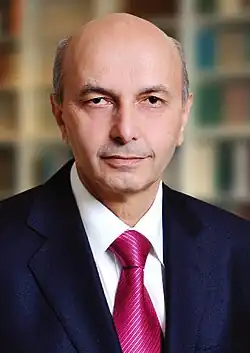 |
1951– | 7 November 2010 | 14 March 2021 | 10 years, 127 days |
| 4 | Lumir Abdixhiku |  |
1983– | 14 March 2021 | Incumbent | 5 years, 169 days |
Election results
Parliamentary elections
| Year | Votes | % votes | Seats | Position | +/– | Government status | Leader or main candidate |
|---|---|---|---|---|---|---|---|
| 1992 | 574,755 | 76.44% | 96 / 140 |
1st |  96 |
Parallel institutions | Ibrahim Rugova |
| 2001 | 359,851 | 45.65% | 47 / 120 |
1st |  49 |
Coalition | |
| 2004 | 313,437 | 45.42% | 47 / 120 |
1st |  |
Coalition | |
| 2007 | 129,410 | 22.60% | 25 / 120 |
2nd | 22 |
Coalition | Fatmir Sejdiu |
| 2010 | 172,552 | 24.69% | 27 / 120 |
2nd | 2 |
Opposition | Isa Mustafa |
| 2014 | 184,596 | 25.24% | 30 / 120 |
2nd | 3 |
Coalition | |
| 2017 | 185,892 | 25.53% | 23 / 120 |
3rd | 7 |
Opposition | |
| 2019 | 206,516 | 24.55% | 28 / 120 |
2nd | 5 |
Coalition | |
| 2021 | 110,985 | 12.73% | 15 / 120 |
3rd | 13 |
Opposition | |
| Feb. 2025 | 171,249 | 18.28% | 20 / 120 |
3rd | 5 |
Opposition | Lumir Abdixhiku |
| Dec. 2025 | 126,163 | 13.24% | 15 / 120 |
3rd | 5 |
Opposition | |
| 2026 | 135,567 | 16.69% | 18 / 120 |
3rd | 3 |
TBD |
Local elections
| Election | Votes for municipal assemblies | % votes | Municipal council seats | Mayors won | Municipalities won |
|---|---|---|---|---|---|
| 2021 | 170,177 | 22.93% | 206 / 1,002 |
8 | Dragash, Istog, Kosovo Polje, Lipjan, Peja, Pristina, Viti, Junik |
| 2025 | 183,218 | 24.27% | 203 / 994 |
7 | Dragash, Istog, Junik, Lipjan, Peja, Pristina, Viti |
See also
References
- 1 2 3 4 5 "LDK – Lidhja Demokratike e Kosovës" (in Albanian). Democratic League of Kosovo. Retrieved 6 July 2026.
- 1 2 3 4 5 6 "Parties & Partners: Democratic League of Kosovo – LDK". European People's Party. Retrieved 6 July 2026.
- ↑ "Parliamentary groups". Assembly of the Republic of Kosovo. Retrieved 6 July 2026.
- 1 2 3 4 5 6 7 8 "Ibrahim Rugova". International Criminal Tribunal for the former Yugoslavia. Retrieved 6 July 2026.
- 1 2 Nordsieck, Wolfram. "Kosovo". Parties and Elections in Europe. Archived from the original on 7 October 2019. Retrieved 6 July 2026.
- 1 2 3 Zulfaj, Jeton; Mulliqi, Brikena; Shala, Mentor; Tahiri, Petrit (15 April 2008). Political Parties in Kosova: Profile and Ideology (PDF). Friedrich Ebert Stiftung. Archived from the original (PDF) on 4 March 2016. Retrieved 6 July 2026.
- 1 2 3 Szpala, Marta (11 June 2026). "Kosovo: old problems following a new election". Centre for Eastern Studies. Retrieved 6 July 2026.
- 1 2 3 "Zgjedhjet e Parakohshme për Kuvendin e Republikës së Kosovës 2026" (in Albanian). Central Election Commission of Kosovo. Retrieved 6 July 2026.
- 1 2 3 "Zgjedhjet Lokale në Republikën e Kosovës – 12 Tetor 2025" (in Albanian). Central Election Commission of Kosovo. Retrieved 6 July 2026.
- 1 2 "Ibrahim Rugova – 1998, Kosovo". European Parliament. Retrieved 6 July 2026.
- 1 2 "Lumir Abdixhiku promises 'comeback' after election thrashing". Prishtina Insight. 15 March 2021. Retrieved 6 July 2026.
- 1 2 Semini, Lazar (10 June 2025). "Bujar Bukoshi, Kosovo independence leader, dies at 78". Associated Press. Retrieved 6 July 2026.
- ↑ "Kosovo president resigns after court rules he breached constitution". The Guardian. 27 September 2010. Retrieved 6 July 2026.
- ↑ "Kosovo in crisis after LDK quits government". SETimes. 18 October 2010. Archived from the original on 21 October 2010. Retrieved 6 July 2026.
- ↑ "Kosovo early legislative elections, 6 October 2019: Final report" (PDF). European Parliament. 2020. Retrieved 6 July 2026.
- ↑ Szpala, Marta (5 February 2020). "Kosovo: a protest movement comes to power". Centre for Eastern Studies. Retrieved 6 July 2026.
- 1 2 "Kosovo's Parliament Topples Government In No-Confidence Vote". Radio Free Europe/Radio Liberty. 25 March 2020. Retrieved 6 July 2026.
- ↑ "Kosovo: Avdullah Hoti becomes new prime minister". Anadolu Agency. 3 June 2020. Retrieved 6 July 2026.
- 1 2 "Kosovo To Hold Snap Elections After Top Court Ruling". Radio Free Europe/Radio Liberty. 22 December 2020. Retrieved 6 July 2026.
- 1 2 "LDK remove Vjosa Osmani from party leadership". Prishtina Insight. 20 June 2020. Retrieved 6 July 2026.
- ↑ "KQZ-së i hapet rruga për shpalljen e rezultateve përfundimtare". Kallxo.com. 13 March 2025. Retrieved 6 July 2026.
- ↑ Bytyci, Fatos (26 October 2025). "Kosovo's parliament fails to elect prime minister as snap election looms". Reuters. Retrieved 6 July 2026.
- ↑ Bytyci, Fatos (20 November 2025). "Kosovo president sets December 28 as date for snap vote". Reuters. Retrieved 6 July 2026.
- ↑ "All votes counted: Kurti's party wins 57 seats, Serb List 9 out of 10". European Western Balkans. 9 January 2026. Retrieved 6 July 2026.
- ↑ Bytyci, Fatos (4 June 2026). "Kosovo to hold another parliamentary election amid deadlock over new president". Reuters. Retrieved 6 July 2026.
- 1 2 "Osmani to run in snap parliamentary election with her former party LDK". European Western Balkans. 6 May 2026. Retrieved 6 July 2026.
- 1 2 "Abdixhiku: LDK unification, the antidote to the situation Kosovo has slipped into". Koha.net. 9 May 2026. Retrieved 6 July 2026.
- ↑ "Elections leave voters fatigued, parties facing the same parliamentary arithmetic". European Western Balkans. 11 June 2026. Retrieved 6 July 2026.
- 1 2 Lumezi, Arian (23 February 2026). "LDK between crisis and transition". Kosovo 2.0. Retrieved 6 July 2026.
- ↑ Leposhtica, Labinot (19 May 2016). "Kosovo Prosecution Indicts Ibrahim Rugova's Son". Balkan Insight. Retrieved 6 July 2026.
External links
- Political parties in Kosovo
- Political parties established in 1989
- Conservative parties in Kosovo
- Liberal conservative parties
- Pro-European political parties in Kosovo
- Parties related to the European People's Party
- 1989 establishments in Yugoslavia
- 1980s establishments in Kosovo
- Members of the Unrepresented Nations and Peoples Organization