Beta-propeller protein-associated neurodegeneration
| Beta-propeller protein-associated neurodegeneration | |
|---|---|
| Other names | Static encephalopathy of childhood with neurodegeneration in adulthood (SENDA), Neurodegeneration with brain iron accumulation 5 |
| Specialty | Neurology  |
| Symptoms | Developmental delay, seizures, mental handicap. In 2nd and 3rd decade patients develop parkinsonism or dystonia |
| Treatment | Anticonvulsant, ketogenic diet, and vagus nerve stimulation might be used for seizures, and DBS for dystonia |
Beta-propeller protein-associated neurodegeneration (BPAN), previously known as static encephalopathy of childhood with neurodegeneration in adulthood (SENDA), is a rare hereditary X-linked dominant disorder caused by a mutation in the WDR45 gene.[1] BPAN belongs to a class of disorders called neurodegeneration with brain iron accumulation (NBIA), which causes brain iron elevation and neurodegeneration.[2] Patients with BPAN develop symptoms, such as early-onset developmental delay, seizures, and further neurological decline, such as dystonia, parkinsonism, and dementia, which develops by early adulthood.[3][4] BPAN is one of the most common NBIA disorders.[5]
As of 2024, 123 individuals with BPAN have been identified.[6] There are more females than males with this disease due to nonviability in males with germline mutations because males have only one X chromosome, where the WDR45 gene is located.[3] The patient with the oldest onset of degeneration is 50 years old as of 2023.[7]
Symptoms


Patients with BPAN might experience symptoms, such as dysautonomia, abnormal eye movements, atrophy of the cerebrum and cerebellum, slow movements, dementia, frontal release signs, developmental delay with intellectual disability, poor speech, parkinsonism, encephalopathy, rigidity, trouble sleeping, and tremors.[8] Patients might occasionally experience aggressive behaviour and optic atrophy.[8] Seizures often start as febrile seizures.[9] Various seizure types have been reported in BPAN, such as absence seizures, myoclonic seizures, generalised tonic-clonic seizures, epileptic spasms and atonic seizures.[10] Some patients experienced precocious adrenarche as young as one to two years of age.[11] Patients can also experience eyesight issues, such as myopia, astigmatism, strabismus, and amblyopia.[11]
On MRI scans of the brain, accumulation of iron in the globus pallidus and substantia nigra can be seen, with a "halo" T1 hyperintense signal in the substantia nigra.[10] Patients with WDR45 mutations might also experience Rett-like syndrome, intellectual disability, West syndrome, early infantile developmental and epileptic encephalopathy, and developmental and epileptic encephalopathy.[12]
Diagnosis
Diagnosis is often suspected based on clinical findings that typically emerge in early childhood, including:[4]
- The onset of multiple types of seizures, which are most severe during childhood and often diminish with age
- Abnormal behaviour, such as teeth grinding while awake or repetitive hand movements
- Developmental delay or intellectual disabilities, frequently accompanied by speech impairments
MRI findings may also indicate the disorder, showing hypomyelination (a deficiency in myelin deposition)[13] and a small corpus callosum, on T1-weighted images and a small corpus callosum. On T1-weighted images, a "halo"-like structure may be visible within the substantia nigra, while T2-weighted images often reveal iron accumulation in both the substantia nigra and the globus pallidus.[4]
Confirmation of diagnosis can be made via genetic testing.[4] If a patient with BPAN has typical features of the disorder, a targeted sequencing of the gene can be made; but in case of symptoms indistinguishable from other disorders, a whole genome/exome sequencing can confirm diagnosis.[4] Rarely, gene-targeted deletion/duplication analysis techniques (such as: long-range PCR) can be used to detect deletion of WDR45 gene.[4]
Cause

BPAN is caused by a mutation in the WDR45 gene.[1] Most people with BPAN have a new mutation, which means that mutation is new and none of the parents have it. Although, there have been cases of people inheriting the pathogenic variant of WDR45 from an asymptomatic parent due to mosaicism.[14] Male patients with BPAN usually have somatic mosaicism, which, in turn, might range from mild BPAN to the classic form of BPAN, although males with germline mutations can have symptoms worse than typical female cases.[11] The spectrum of symptoms in females is not only ranged by somatic mosaicism but also by X-chromosome inactivation, a process where one of the X chromosomes is randomly "turned off"; non-random inactivation might influence the phenotype.[11]
Pathophysiology

In the cell-line model of BPAN, researchers found that WDR45 deficiency impairs ferritinophagy, a process where ferritin is targeted and degraded; consequently, iron is released in lysosomes.[15][16] Due to impairment of ferritinophagy, non-TF (transferrin)-bound iron pathway predominates iron transport, which causes accumulation of iron in cells and mitochondria.[15] Due to the accumulation of iron in mitochondria, its function is impaired by impairing mitochondrial respiration; also, iron goes into a Fenton reaction and generates reactive oxygen species, which is harmful to cells and can initiate apoptosis (a form of programmed cell death) and neurodegeneration.[15] Furthermore, WDR45 deficiency induces endoplasmic reticulum stress-dependent autophagy of FTH1 (ferritin heavy chain) and GPX4, which causes iron accumulation and lipid peroxidation.[17] Also, accumulation of lipofuscin – an indicator of oxidised lipid aggregates – can be seen.[18] WDR45 deficiency promotes abnormal localisation of ATG2A to endoplasmic reticulum-mitochondria contact sites, which enhances transmission of phosphatidylserine (to mitochondria), and consequently phosphatidylethanolamine is synthesised. Phosphatidylethanolamine is highly sensitive to peroxidation; due to this, cells are driven to lipid damage by iron and cause ferroptosis.[18] Fatty acid synthase is not degraded in WDR45 deficiency, which causes lipid droplet accumulation and might contribute to disease progression due to excess lipid droplet toxicity.[19]
WDR45 participates in the disassembly of stress granules by competing with G3BP1, which in turn releases the caprin-1 protein – which is also implicated in neurodevelopmental disorders. In BPAN, this function is lost, which might provide a link between neurodevelopmental and neurodegenerative phenotypes.[20]
Treatment
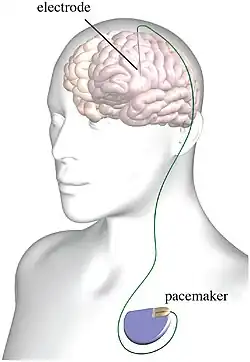
This disease does not have a cure, but management of symptoms is possible.[14][21] Anti-seizure medications are generally used to control seizures; a ketogenic diet and vagus nerve stimulation can also be used.[14] Deep brain stimulation can be used for dystonia in older patients with BPAN.[14] Early involvement of patients in speech, physical, and occupational therapy might benefit them and might maximise their developmental potential.[11]
Iron chelation therapy had been tried but did not show any results. One patient experienced worsening of parkinsonism, which caused withdrawal of the medication.[22]
Research
In 2024, researchers successfully skipped an abnormal pseudoexon – a sequence that resembles an exon, which mutations can activate, causing aberrant protein formation/frameshift or premature termination of translation – in fibroblasts derived from a patient with BPAN, using ASOs, which could prevent or attenuate the onset of extrapyramidal (such as parkinsonism) symptoms.[23][24]
In 2025, researchers found that biotin (vitamin B7) might increase WDR45 transcription on inactive X chromosomes (by X-chromosome reactivation) in BPAN female patients' fibroblasts through histone biotinylation, a process where biotin is attached to histones.[25] Researchers successfully reversed the BPAN phenotype in a mouse using AAV-mediated gene transfer by transferring a normal copy of the gene in the brain.[26]
History
BPAN was first described by Allison Gregory, Brenda Polster, and Susan Hayflick in 2009, when patients initially experienced developmental delays and then developed parkinsonism in their 20s or 30s, to which some patients responded well to levodopa.[27]The disorder was originally called "Static encephalopathy of childhood with neurodegeneration in adulthood" until 2012, when Haack and his colleagues found the causing gene and proposed the name "Beta-propeller protein-associated neurodegeneration."[3][1]
References
- 1 2 3 "Entry- #300894 - NEURODEGENERATION WITH BRAIN IRON ACCUMULATION 5; NBIA5- OMIM- (OMIM.ORG)". omim.org. Retrieved 2026-01-07.
- ↑ Khalilian, Sheyda; Fathi, Mohadeseh; Ghahghaei-Nezamabadi, Akram; Miryounesi, Mohammad; Ghafouri-Fard, Soudeh (2024-12-04). "Neurodegeneration with brain iron accumulation 5: report of three cases". Neurogenetics. 26 (1): 14. doi:10.1007/s10048-024-00783-7. ISSN 1364-6753. PMID 39627470.
- 1 2 3 Haack, Tobias B.; Hogarth, Penelope; Kruer, Michael C.; Gregory, Allison; Wieland, Thomas; Schwarzmayr, Thomas; Graf, Elisabeth; Sanford, Lynn; Meyer, Esther; Kara, Eleanna; Cuno, Stephan M.; Harik, Sami I.; Dandu, Vasuki H.; Nardocci, Nardo; Zorzi, Giovanna (2012-12-07). "Exome sequencing reveals de novo WDR45 mutations causing a phenotypically distinct, X-linked dominant form of NBIA". American Journal of Human Genetics. 91 (6): 1144–1149. doi:10.1016/j.ajhg.2012.10.019. ISSN 1537-6605. PMC 3516593. PMID 23176820.
- 1 2 3 4 5 6 Gregory, Allison; Kurian, Manju A.; Haack, Tobias; Hayflick, Susan J.; Hogarth, Penelope (1993), Adam, Margaret P.; Bick, Sarah; Mirzaa, Ghayda M.; Pagon, Roberta A. (eds.), "Beta-Propeller Protein-Associated Neurodegeneration", GeneReviews®, Seattle (WA): University of Washington, Seattle, PMID 28211668, retrieved 2026-01-07
- ↑ Mollereau, Bertrand; Hayflick, Susan J.; Escalante, Ricardo; Mauthe, Mario; Papandreou, Apostolos; Iuso, Arcangela; Celle, Marion; Aniorte, Sahra; Issa, Abdul Raouf; Lasserre, Jean Paul; Lesca, Gaetan; Thobois, Stéphane; Burger, Pauline; Walter, Ludivine (2023-08-11). "A burning question from the first international BPAN symposium: is restoration of autophagy a promising therapeutic strategy for BPAN?". Autophagy. 19 (12): 3234–3239. doi:10.1080/15548627.2023.2247314. ISSN 1554-8635. PMC 10621268. PMID 37565733.
- ↑ Goedhart, Caitlin; Basalom, Shuaa; Skinner, Stephanie; Brost, Caroline (2024-03-08). "P318: Ironing out the BPAN phenotypic spectrum: A report of three new BPAN cases and review of the literature". Genetics in Medicine Open. 2 101212. doi:10.1016/j.gimo.2024.101212. ISSN 2949-7744.
- ↑ Collet-Vidiella, Roger; Olmedo-Saura, Gonzalo; Ruiz-Barrio, Iñigo; Martínez-Viguera, Ana; Rodriguez-Santiago, Benjamin; Bernal, Sara; Kulisevsky, Jaime; Pagonabarraga, Javier (2023-07-21). "Late-Onset Beta-Propeller Protein-Associated Neurodegeneration: A Case Report". Movement Disorders Clinical Practice. 10 (8): 1211–1214. doi:10.1002/mdc3.13811. ISSN 2330-1619. PMC 10450230. PMID 37635772.
- 1 2 "Orphanet: Clinical signs and symptoms". orpha.net. Retrieved 2026-01-07.
- ↑ Nishioka, Kenya; Oyama, Genko; Yoshino, Hiroyo; Li, Yuanzhe; Matsushima, Takashi; Takeuchi, Chisen; Mochizuki, Yoko; Mori-Yoshimura, Madoka; Murata, Miho; Yamasita, Chikara; Nakamura, Norimichi; Konishi, Yohei; Ohi, Kazuki; Ichikawa, Keiji; Terada, Tatsuhiro (2015-05-01). "High frequency of beta-propeller protein-associated neurodegeneration (BPAN) among patients with intellectual disability and young-onset parkinsonism". Neurobiology of Aging. 36 (5): 2004.e9–2004.e15. doi:10.1016/j.neurobiolaging.2015.01.020. ISSN 0197-4580. PMID 25744623.
- 1 2 Hayflick, Susan J.; Kruer, Michael C.; Gregory, Allison; Haack, Tobias B.; Kurian, Manju A.; Houlden, Henry H.; Anderson, James; Boddaert, Nathalie; Sanford, Lynn; Harik, Sami I.; Dandu, Vasuki H.; Nardocci, Nardo; Zorzi, Giovanna; Dunaway, Todd; Tarnopolsky, Mark (2013-05-17). "β-Propeller protein-associated neurodegeneration: a new X-linked dominant disorder with brain iron accumulation". Brain: A Journal of Neurology. 136 (Pt 6): 1708–1717. doi:10.1093/brain/awt095. ISSN 1460-2156. PMC 3673459. PMID 23687123.
- 1 2 3 4 5 Wilson, Jenny L; Gregory, Allison; Kurian, Manju A; Bushlin, Ittai; Mochel, Fanny; Emrick, Lisa; Adang, Laura; Groups, Beta-propeller protein-associated neurodegeneration Guideline Contributions; Hogarth, Penelope; Hayflick, Susan J (2021). "Consensus clinical management guideline for beta-propeller protein-associated neurodegeneration". Developmental Medicine & Child Neurology. 63 (12): 1402–1409. doi:10.1111/dmcn.14980. ISSN 1469-8749. PMID 34347296.
- ↑ Cong, Yingying; So, Vincent; Tijssen, Marina A. J.; Verbeek, Dineke S.; Reggiori, Fulvio; Mauthe, Mario (2021-12-02). "WDR45 , one gene associated with multiple neurodevelopmental disorders". Autophagy. 17 (12): 3908–3923. doi:10.1080/15548627.2021.1899669. ISSN 1554-8627. PMC 8726670. PMID 33843443.
- ↑ "HYPOMYELINATION definition and meaning | Collins English Dictionary". collinsdictionary.com. 2026-01-05. Retrieved 2026-01-07.
- 1 2 3 4 "WDR45-Related Disorders and BPAN". chop.edu. Children's Hospital of Philadelphia. Retrieved 2026-01-07.
- 1 2 3 Aring, Luisa; Choi, Eun-Kyung; Kopera, Huira; Lanigan, Thomas; Iwase, Shigeki; Klionsky, Daniel J.; Seo, Young Ah (2021-12-08). "A neurodegeneration gene, WDR45, links impaired ferritinophagy to iron accumulation". Journal of Neurochemistry. 160 (3): 356–375. doi:10.1111/jnc.15548. ISSN 0022-3042. PMC 8811950. PMID 34837396.
- ↑ Jiewen, Wang; Nayiyuan, Wu; Mingjing, Peng; Linda, Oyang; Xianjie, Jiang; Qiu, Peng; Yujuan, Zhou; Zuping, He; Qianjin, Liao (2023-12-18). "Ferritinophagy: research advance and clinical significance in cancers". Cell Death Discovery. 9 (1) 463. doi:10.1038/s41420-023-01753-y. ISSN 2058-7716. PMC 10728094. PMID 38110359.
- ↑ Xiong, Qiuhong; Sun, Huimin; Xing, Wenxiu; Li, Xin; Chen, Guangxin; Zhao, Zhonghua; Wu, Changxin; Li, Ping (2023-05-20). "WDR45 mutation dysregulates iron homeostasis by promoting the chaperone-mediated autophagic degradation of ferritin heavy chain in an ER stress/p38 dependent mechanism". Free Radical Biology and Medicine. 201: 89–97. doi:10.1016/j.freeradbiomed.2023.03.012. ISSN 0891-5849. PMID 36940732.
- 1 2 Wiśniewska, Karolina; Szota, Maria; Żabińska, Magdalena; Szulc, Aneta; Grabowski, Łukasz; Węgrzyn, Grzegorz; Pierzynowska, Karolina (2025-11-24). "Iron Dysregulation in Neurodegeneration with Brain Iron Accumulation (NBIA): Links between Mutations Occurring in BPAN, PKAN, MPAN and PLAN Types and Iron Metabolism". Molecular Neurobiology. 63 (1): 152. doi:10.1007/s12035-025-05479-z. ISSN 1559-1182. PMC 12641038. PMID 41276763.
- ↑ Xiong, Qiuhong; Sun, Huimin; Wang, Yanlin; Xu, Qian; Zhang, Yu; Xu, Mei; Zhao, Zhonghua; Li, Ping; Wu, Changxin (2024-03-28). "Lipid droplet accumulation in Wdr45-deficient cells caused by impairment of chaperone-mediated autophagic degradation of Fasn". Lipids in Health and Disease. 23 (1): 91. doi:10.1186/s12944-024-02088-y. ISSN 1476-511X. PMC 10976834. PMID 38539242.
- ↑ Li, Yin; Fang, Jie; Ding, Yuqi; Zhang, Xilong; Liu, Ying; Qiu, Wanting; Xu, He; Kang, Yunzhe; Chen, Jiayu; Gao, Yanyan; Zhao, Yan G.; Yang, Peiguo; Wang, Bo; Tian, Wenmin; Chen, Yang (2025-06-05). "β-propeller protein-associated neurodegeneration protein WDR45 regulates stress granule disassembly via phase separation with Caprin-1". Nature Communications. 16 (1): 5227. Bibcode:2025NatCo..16.5227L. doi:10.1038/s41467-025-60583-x. ISSN 2041-1723. PMC 12141619. PMID 40473629.
- ↑ Meyerink, Brandon L.; Karia, Krishna S.; Rechtzigel, Mitchell J.; Patthi, Prithvi R.; Edwards, Ariana C.; Howard, Jessica M.; Aaseng, Elizabeth R.; Aftab, Shamiq; Weimer, Jill M.; Pilaz, Louis-Jan (2025-02-28). "Mutation in Wdr45 leads to early motor dysfunction and widespread aberrant axon terminals in a beta-propeller protein associated neurodegeneration (BPAN) patient-inspired mouse model". Frontiers in Neuroscience. 19 1545004. doi:10.3389/fnins.2025.1545004. ISSN 1662-453X. PMC 11907653. PMID 40092065.
- ↑ Lim, Shen-Yang; Tan, Ai Huey; Ahmad-Annuar, Azlina; Schneider, Susanne A.; Bee, Ping Chong; Lim, Jia Lun; Ramli, Norlisah; Idris, Mohamad Imran (2018-05-30). "A Patient with Beta-Propeller Protein-Associated Neurodegeneration: Treatment with Iron Chelation Therapy". Journal of Movement Disorders. 11 (2): 89–92. doi:10.14802/jmd.17082. ISSN 2005-940X. PMC 5990906. PMID 29860786.
- ↑ Yamada, Mamiko; Maeta, Kazuhiro; Suzuki, Hisato; Kurosawa, Ryo; Takenouchi, Toshiki; Awaya, Tomonari; Ajiro, Masahiko; Takeuchi, Atsuko; Nishio, Hisahide; Hagiwara, Masatoshi; Miya, Fuyuki; Matsuo, Masafumi; Kosaki, Kenjiro (2024-03-18). "Successful skipping of abnormal pseudoexon by antisense oligonucleotides in vitro for a patient with beta-propeller protein-associated neurodegeneration". Scientific Reports. 14 (1): 6506. Bibcode:2024NatSR..14.6506Y. doi:10.1038/s41598-024-56704-z. ISSN 2045-2322. PMC 10948761. PMID 38499569.
- ↑ Fletcher, Sue; Keegan, Niall P; Mejzini, Rita; Pitout, Ianthe L (2025-06-01). "To splice or not to splice: pseudoexons in neurological disease and opportunities for intervention". Current Opinion in Genetics & Development. 92 102343. doi:10.1016/j.gde.2025.102343. ISSN 0959-437X. PMID 40158386.
- ↑ Reche-López, Diana; Romero-González, Ana; Álvarez-Córdoba, Mónica; Suárez-Carrillo, Alejandra; Cilleros-Holgado, Paula; Piñero-Pérez, Rocío; Gómez-Fernández, David; Romero-Domínguez, José Manuel; López-Cabrera, Alejandra; González-Granero, Susana; García-Verdugo, José Manuel; Sánchez-Alcázar, José A. (2025-02-04). "Biotin Induces Inactive Chromosome X Reactivation and Corrects Physiopathological Alterations in Beta-Propeller-Protein-Associated Neurodegeneration". International Journal of Molecular Sciences. 26 (3): 1315. doi:10.3390/ijms26031315. ISSN 1422-0067. PMC 11818482. PMID 39941083.
- ↑ Carisi, Maria Carla; Shamber, Claire; Bishop, Martha; Sangster, Madison; Chandrachud, Uma; Meyerink, Brandon; Pilaz, Louis Jean; Grishchuk, Yulia (2025-03-01). "AAV-Mediated Gene Transfer of WDR45 Corrects Neurological Deficits in the Mouse Model of Beta-Propeller Protein-Associated Neurodegeneration". Human Gene Therapy. 36 (5–6): 637–652. doi:10.1089/hum.2024.224. ISSN 1043-0342. PMID 39978419.
- ↑ Gregory, A.; Polster, B. J.; Hayflick, S. J. (2008-11-03). "Clinical and genetic delineation of neurodegeneration with brain iron accumulation". Journal of Medical Genetics. 46 (2): 73–80. doi:10.1136/jmg.2008.061929. ISSN 1468-6244. PMC 2675558. PMID 18981035.