In-Depth Analysis[b]
With Assessment
And Torque Ratio[c]
And Efficiency Calculation[d] |
Planetary Gearset: Teeth[e] |
Count |
Nomi-
nal[f]
Effec-
tive[g] |
Cen-
ter[h] |
|---|
| Avg.[i] |
|
Model
Type |
Version
First Delivery · Weight |
S4[j]
R4[k] |
S3[l]
R3[m] |
S2[n]
R2[o] |
S1[p]
R1[q] |
Brakes
Clutches |
Ratio
Span |
Gear
Step[r] |
| Gear |
R |
1 |
2 |
3 |
4 |
5 |
6 |
7 |
8 |
9 |
Gear
Ratio[b] |
 [b] |
 [b] |
 [b] |
 [b] |
 [b] |
 [b] |
 [b] |
 [b] |
 [b] |
 [b] |
| Step[r] |
 [s] |
 |
 [t] |
 |
 |
 |
 |
 |
 |
 |
| Δ Step[u][v] |
|
|
 |
 |
 |
 |
 |
 |
 |
|
Shaft
Speed |
 |
|
|
 |
 |
 |
 |
 |
 |
 |
Δ Shaft
Speed[w] |
 |
 |
 |
 |
 |
 |
 |
 |
 |
 |
Torque
Ratio[c] |
 [c] |
 [c] |
 [c] |
 [c] |
 [c] |
 [c] |
 [c] |
 [c] |
 [c] |
 [c] |
Efficiency
 [d] |
 [d] |
 [d] |
 [d] |
 [d] |
 [d] |
 [d] |
 [d] |
 [d] |
 [d] |
 [d] |
|
9HP 28
9HP 48 |
280 Nm[x] · 2013 · 78 kg (172 lb)
450 Nm[y] · 2013 · 86 kg (190 lb)
480 Nm[z] · 2013 · 86 kg (190 lb) |
42
110 |
42
110 |
91[aa]
133 |
42
86 |
3[ab]
3[ac] |
9.8085
7.9402
[g][s] |
1.5007 |
| 1.3303[r] |
| Gear |
R |
1 |
2 |
3 |
4 |
5 |
6 |
7 |
8 |
9 |
Gear
Ratio[b] |
−3.8049
[s][g]
 |
4.7001
 |
2.8419
 |
1.9094
 |
1.3818
[v]
 |
1.0000
 |
0.8081
[w]
 |
0.6995
[v][w]
 |
0.5802
[v]
 |
0.4792
 |
| Step |
0.8095[s] |
1.0000 |
1.6538 |
1.4884 |
1.3818 |
1.3818 |
1.2375 |
1.1553 |
1.2056 |
1.2107 |
| Δ Step[u] |
|
|
1.1112 |
1.0771 |
1.0000[v] |
1.1167 |
1.0711 |
0.9583[v] |
0.9958[v] |
|
| Speed |
-1.2353 |
1.0000 |
1.6538 |
2.4615 |
3.4014 |
4.7001 |
5.5816 |
6.7197 |
8.1015 |
9.8085 |
| Δ Speed |
1.2353 |
1.0000 |
0.6538 |
0.8077 |
0.9399 |
1.2987 |
1.1161[w] |
0.9035[w] |
1.3818 |
1.7066 |
Torque
Ratio[c] |
-3.5391
–3.4099 |
4.5931
4.5402 |
2.7922
2.7675 |
1.8884
1.8779 |
1.3742
1.3704 |
1.0000 |
0.8005
0.7966 |
0.6904
0.6857 |
0.5717
0.5673 |
0.4653
0.4582 |
Efficiency
[d] |
0.9302
0.8962 |
0.9772
0.9660 |
0.9825
0.9738 |
0.9890
0.9835 |
0.9945
0.9917 |
1.0000 |
0.9906
0.9857 |
0.9870
0.9803 |
0.9854
0.9779 |
0.9710
0.9561 |
|
| Actuated shift elements[ad] |
| Brake A[ae] |
❶ |
❶ |
❶ |
❶ |
❶ |
|
|
|
|
|
| Brake C[af] |
|
|
❶ |
|
|
|
❶ |
|
❶ |
|
| Brake D[ag] |
❶ |
❶ |
|
|
|
|
|
❶ |
❶ |
❶ |
| Clutch B[ah] |
❶ |
|
|
❶ |
|
❶ |
|
|
|
❶ |
| Clutch E[ai] |
|
|
|
|
❶ |
❶ |
❶ |
❶ |
❶ |
❶ |
| Clutch F[aj] |
|
❶ |
❶ |
❶ |
❶ |
❶ |
❶ |
❶ |
|
|
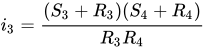
| Geometric ratios: speed conversion |
Gear
Ratio[b]
R & 1
Ordinary[ak]
Elementary
Noted[al] |
 |
 |
 |
 |
|
Gear
Ratio[b]
2 & 3
Ordinary[ak]
Elementary
Noted[al] |
 |
 |
 |
 |
|
Gear
Ratio[b]
5–7
Ordinary[ak]
Elementary
Noted[al] |
 |
 |
 |
 |
 |
|
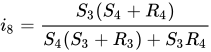
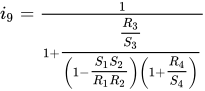
Gear
Ratio[b]
4 & 8 & 9
Ordinary[ak]
Elementary
Noted[al] |
 |
 |
 |
 |
 |
 |
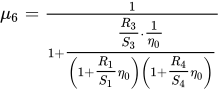
| Kinetic ratios: torque conversion |
Torque
Ratio[c]
R & 1 |
 |
 |
|
Torque
Ratio[c]
2 & 3 |
 |
 |
|
Torque
Ratio[c]
5–7 |
 |
 |
 |
|
Torque
Ratio[c]
4 & 8 & 9 |
 |
 |
 |
|
- ↑ Revised 14 January 2026
Nomenclature
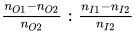
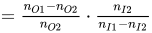
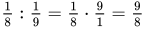
 sun gear: number of teeth  ring gear: number of teeth  carrier or planetary gear carrier (not needed)  sun gear: shaft speed  ring gear: shaft speed  carrier or planetary gear carrier: shaft speed
With  gear is  gear ratio or transmission ratio  shaft speed shaft 1: input (turbine) shaft  shaft speed shaft 2: output shaft  torque shaft 1: input (turbine) shaft  torque shaft 2: output shaft  torque ratio or torque conversion ratio  efficiency  stationary gear ratio  (assumed) stationary gear efficiency
- 1 2 3 4 5 6 7 8 9 10 11 12 13 14 15 16 17 Gear ratio (transmission ratio)

— speed conversion —
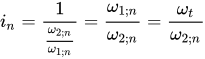
- The gear ratio is the ratio of
- input shaft speed

- to output shaft speed

- and therefore corresponds to the reciprocal of the shaft speeds
- 1 2 3 4 5 6 7 8 9 10 11 12 13 14 15 16 17 Torque ratio (torque conversion ratio)

— torque conversion —
- The torque ratio is the ratio of
- output torque

- to input torque

- minus efficiency losses
- and therefore corresponds (apart from the efficiency losses) to the reciprocal of the shaft speeds too
 - whereby
 may vary from gear to gear according to the formulas listed in this table and 
- 1 2 3 4 5 6 7 8 9 10 11 12 13 Efficiency
- The efficiency is calculated
- from the torque ratio
- in relation to the gear ratio (transmission ratio)

- Power loss for single meshing gears
- is in the range of 1 % to 1.5 %
- helical gear pairs, which are used to reduce noise in passenger cars, are in the upper part of the loss range
- spur gear pairs, which are limited to commercial vehicles due to their poorer noise comfort, are in the lower part of the loss range
Corridor for torque ratio and efficiency
- in planetary gearsets, the stationary gear ratio
 is formed via the planetary gears and thus by two meshes
- for reasons of simplification, the efficiency for both meshes together is commonly specified there
- the efficiencies
 specified here are based on assumed efficiencies for the stationary ratio - of
 (upper value)
- and
 (lower value)
- for both interventions together
- The corresponding efficiency
- for single-meshing gear pairs is

- at
 (upper value)
- and
 (lower value)
- ↑ Layout
- Input and output are on the same side
- Planetary gearset 4 is on the input (turbine) side
- Input shafts are, if actuated, S1, R1 + S3, and C3 + R4
- Output shaft is C4
- ↑ Total ratio span (total gear ratio/total transmission ratio) nominal
 - A wider span enables the
- downspeeding when driving outside the city limits
- increase the climbing ability
- when driving over mountain passes or off-road
- or when towing a trailer
- 1 2 3 Total ratio span (total gear ratio/total transmission ratio) effective
 - The span is only effective to the extent that
- the reverse gear ratio
- matches that of 1st gear
- see also Standard R:1
Digression
Reverse gear
- is usually longer than 1st gear
- the effective span is therefore of central importance for describing the suitability of a transmission
- because in these cases, the nominal spread conveys a misleading picture
- which is only unproblematic for vehicles with high specific power
Market participants
- Manufacturers naturally have no interest in specifying the effective span
- Users have not yet formulated the practical benefits that the effective span has for them
- The effective span has not yet played a role in research and teaching
Contrary to its significance
- the effective span has therefore not yet been able to establish itself
- either in theory
- or in practice.
End of digression
- ↑ Ratio span's center
 - The center indicates the speed level of the transmission
- Together with the final drive ratio
- it gives the shaft speed level of the vehicle
- ↑ Average gear step
 - There are
 gear steps between  gears
- with decreasing step width
- the gears connect better to each other
- shifting comfort increases
- ↑ Sun 4: sun gear of gearset 4
- ↑ Ring 4: ring gear of gearset 4
- ↑ Sun 3: sun gear of gearset 3
- ↑ Ring 3: ring gear of gearset 3
- ↑ Sun 2: sun gear of gearset 2
- ↑ Ring 2: ring gear of gearset 2
- ↑ Sun 1: sun gear of gearset 1
- ↑ Ring 1: ring gear of gearset 1
- 1 2 3 Standard 50:50
— 50 % is above and 50 % is below the average gear step —
- With steadily decreasing gear steps (yellow highlighted line Step)
- and a particularly large step from 1st to 2nd gear
- the lower half of the gear steps (between the small gears; rounded down, here the first 4) is always larger
- and the upper half of the gear steps (between the large gears; rounded up, here the last 4) is always smaller
- than the average gear step (cell highlighted yellow two rows above on the far right)
- lower half: smaller gear steps are a waste of possible ratios (red bold)
- upper half: larger gear steps are unsatisfactory (red bold)
- 1 2 3 4 Standard R:1
— reverse and 1st gear have the same ratio —
- The ideal reverse gear has the same transmission ratio as 1st gear
- no impairment when maneuvering
- especially when towing a trailer
- a torque converter can only partially compensate for this deficiency
- Plus 11.11 % minus 10 % compared to 1st gear is good
- Plus 25 % minus 20 % is acceptable (red)
- Above this is unsatisfactory (bold)
- see also Total ratio span (total gear ratio/total transmission ratio) effective
- ↑ Standard 1:2
— gear step 1st to 2nd gear as small as possible —
- With continuously decreasing gear steps (yellow marked line Step)
- the largest gear step is the one from 1st to 2nd gear, which
- for a good speed connection and
- a smooth gear shift
- must be as small as possible
- A gear ratio of up to 1.6667 : 1 (5 : 3) is good
- Up to 1.7500 : 1 (7 : 4) is acceptable (red)
- Above is unsatisfactory (bold)
- 1 2 From large to small gears (from right to left)
- 1 2 3 4 5 6 7 Standard STEP
— from large to small gears: steady and progressive increase in gear steps —
- Gear steps should
- increase: Δ Step (first green highlighted line Δ Step) is always greater than 1
- As progressive as possible: Δ Step is always greater than the previous step
- Not progressively increasing is acceptable (red)
- Not increasing is unsatisfactory (bold)
- 1 2 3 4 5 Standard SPEED
— from small to large gears: steady increase in shaft speed difference —
- Shaft speed differences should
- increase: Δ Shaft Speed (second line marked in green Δ (Shaft) Speed) is always greater than the previous one
- 1 difference smaller than the previous one is acceptable (red)
- 2 consecutive ones are a waste of possible ratios (bold)
- ↑ 280 N⋅m (207 lb⋅ft) for both gasoline and diesel[1]
- ↑ 450 N⋅m (332 lb⋅ft) for gasoline[1]
- ↑ 480 N⋅m (354 lb⋅ft) for diesel[1]
- ↑ 91/133 or 104/152
- ↑ Thereof 1 dog break[5]
- ↑ Thereof 1 dog clutch[5]
- ↑ Permanently coupled elements
- C1, C2, and R3
- S3 and S4
- C3 and R4
- ↑ Dog brake blocks S3 and S4
- ↑ Blocks S1
- ↑ Blocks R2
- ↑ Couples S1 with input (turbine)
- ↑ Couples C3 and R4 with input (turbine)
- ↑ Dog clutch couples R1 and S2 with input (turbine)
- 1 2 3 4 Ordinary noted
- For direct determination of the gear ratio
- 1 2 3 4 Elementary noted
- Alternative representation for determining the transmission ratio
- Contains only operands
- With ordinary fractions of both central gears of a planetary gearset
- Or with the value 1
- As a basis
- For reliable
- And traceable
- Determination of the torque conversion rate and efficiency
|
|