ZF 3HP transmission

3HP 12 · 3HP 22
Overview
ManufacturerZF Friedrichshafen
Production1963–1975 · 1973–1990
Model years1963–1975 · 1973–1990
Body and chassis
Class3-Speed automatic transmission for longitudinal and transverse engines
Chronology
SuccessorZF 4HP transmission family

The 3HP is a 3-speed Automatic transmission family with a hydrodynamic Torque converter with hydraulic control for passenger cars from ZF Friedrichshafen AG. In selector level position "P", the output is locked mechanically.

Key data

Gear ratios[a]
Model Version First
Deliv-
ery
Gear Total Span Avg.
Step
Components Nomenclature
R 1 2 3 Nomi-
nal
Effec-
tive
Cen-
ter
Total per
Gear[b]
Gears
Count
Cou-
pling
Gear-
sets
Input Shaft
Diameter
Ravigneaux types 3[b] H[c] P[d]
3HP 12 Small Engines 1963 −2.000 2.560 1.520 1.000 2.560 2.000 1.600 1.600 2 Gearsets
3 Brakes
2 Clutches
2.333 12 mm
3HP 12 Large Engines −2.000 2.286 1.429 1.000 2.286 2.000 1.512 1.512
Simpson types
3HP 22 Large Engines 1973 −2.086 2.479 1.479 1.000 2.479 2.086 1.575 1.575 2 Gearsets
3 Brakes
2 Clutches
2.333 22 mm
3HP 22 Small Engines −2.086 2.733 1.562 1.000 2.733 2.086 1.653 1.653
3HP 22 Porsche 944 1981 −2.429 2.714 1.500 1.000 2.714 2.429 1.648 1.648
  1. ↑ Differences in gear ratios have a measurable, direct impact on vehicle dynamics, performance, waste emissions as well as fuel mileage
  2. 1 2 Forward gears only
  3. ↑ Hydraulic torque converter · German: Hydraulischer Wandler oder Drehmomentwandler
  4. ↑ Planetary gearing · German: Planetenradsätze

1963: 3HP 12
— Ravigneaux planetary gearset types —

History

The Ravigneaux planetary gearset types were first introduced in 1963 and produced through the mid-seventies and has been used in a wide range of cars. There are versions for longitudinal and transverse engines.

Planetary gearset concept

Planetary gearset concept: gear ratio quality[a]
In-Depth Analysis[b]
With Assessment
And Torque Ratio[c]
And Efficiency Calculation[d]
Planetary Gearset:
Teeth[e]
Count Nomi-
nal[f]
Effec-
tive[g]
Cen-
ter[h]
Ravigneaux Avg.[i]
Model
Type
Version
First Delivery
S1[j]
R1[k]
S2[l]
R2[m]
Brakes
Clutches
Ratio
Span
Gear
Step[n]
Gear R 1 2 3
Gear
Ratio[b]
[b] [b] [b] [b]
Step[n] [o] [p]
Δ Step[q][r]
Shaft
Speed
Δ Shaft
Speed[s]
Torque
Ratio[c]
[c] [c] [c] [c]
Efficiency
[d]
[d] [d] [d] [d]
3HP 12 160 N⋅m (118 lb⋅ft)
Small engines 1963
25
32
32
64
3
2
2.5600
2.0000[g][o]
1.6000
1.6000[n]
Gear R 1 2 3
Gear
Ratio[b]
−2.0000[o][g]
2.5600
1.5200[p]
1.0000
Step 0.7825[o] 1.0000 1.6842[p] 1.5200
Δ Step[q] 1.1080
Speed -1.2800 1.0000 1.6842 2.5600
Δ Speed 1.2800 1.0000 0.6842 0.8758
Torque
Ratio[c]
–1.9600
–1.9400
2.4836
2.4457
1.4928
1.4792
1.0000
Efficiency
[d]
0.9800
0.9700
0.9702
0.9553
0.9821
0.9731
1.0000
3HP 12 Large Engines
1963
28
32
32
64
3
2
2.2857
2.0000[g][o]
1.5119
1.5119[n]
Gear R 1 2 3
Gear
Ratio[b]
−2.0000[o][g]
2.2857
1.4286
1.0000
Step 0.8750[o] 1.0000 1.6000 1.4286
Δ Step[q] 1.1280
Speed -1.1429 1.0000 1.6000 2.2857
Δ Speed 1.1429 1.0000 0.6000 0.6842
Torque
Ratio[c]
–1.9600
–1.9400
2.2175
2.1836
1.4038
1.3914
1.0000
Efficiency
[d]
0.9800
0.9700
0.9702
0.9553
0.9826
0.9740
1.0000
Actuated shift elements
Brake A[t] ❶
Brake B[u] ❶
Brake C[v] ❶ ❶
Clutch D[w] ❶ ❶ ❶
Clutch E[x] ❶ ❶
Geometric ratios: speed conversion
Gear
Ratio[b]
Ordinary[y]
Elementary
Noted[z]
Kinetic ratios: torque conversion
Torque
Ratio[c]
  1. ↑ Revised 14 January 2026
    Nomenclature
    • sun gear: number of teeth
    • ring gear: number of teeth
    • carrier or planetary gear carrier (not needed)
    • sun gear: shaft speed
    • ring gear: shaft speed
    • carrier or planetary gear carrier: shaft speed
    With gear is
    • gear ratio or transmission ratio
    • shaft speed shaft 1: input (turbine) shaft
    • shaft speed shaft 2: output shaft
    • torque shaft 1: input (turbine) shaft
    • torque shaft 2: output shaft
    • torque ratio or torque conversion ratio
    • efficiency
    • stationary gear ratio
    • (assumed) stationary gear efficiency
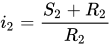
  2. 1 2 3 4 5 6 7 8 9 Gear ratio (transmission ratio)
    — speed conversion —
    • The gear ratio is the ratio of
      • input shaft speed
      • to output shaft speed
    • and therefore corresponds to the reciprocal of the shaft speeds
  3. 1 2 3 4 5 6 7 8 9 Torque ratio (torque conversion ratio)
    — Torque Conversion —
    • The torque ratio is the ratio of
      • output torque
      • to input torque
      • minus efficiency losses
    • and therefore corresponds (apart from the efficiency losses) to the reciprocal of the shaft speeds too
      • whereby may vary from gear to gear according to the formulas listed in this table and
  4. 1 2 3 4 5 6 7 8 Efficiency
    • The efficiency is calculated
      • from the torque ratio
      • in relation to the gear ratio (transmission ratio)
    • Power loss for single meshing gears
      • is in the range of 1 % to 1.5 %
      • helical gear pairs, which are used to reduce noise in passenger cars, are in the upper part of the loss range
      • spur gear pairs, which are limited to commercial vehicles due to their poorer noise comfort, are in the lower part of the loss range
    Corridor for torque ratio and efficiency
    • in planetary gearsets, the stationary gear ratio is formed via the planetary gears and thus by two meshes
    • for reasons of simplification, the efficiency for both meshes together is commonly specified there
    • the efficiencies specified here are based on assumed efficiencies for the stationary ratio
      • of (upper value)
      • and (lower value)
    • for both interventions together
    • The corresponding efficiency
      • for single-meshing gear pairs is
      • at (upper value)
      • and (lower value)
  5. ↑ Layout
    • Input and output are on opposite sides
    • Planetary gearset 2 (the outer Ravigneaux gearset) is on the input (turbine) side
    • Input (turbine) shafts is, if actuated S1 or S2
    • Output shaft is R2 (ring gear of the outer Ravigneaux gearset)
  6. ↑ Total ratio span (total gear ratio/total transmission ratio) nominal
    • A wider span enables the
      • downspeeding when driving outside the city limits
      • increase the climbing ability
        • when driving over mountain passes or off-road
        • or when towing a trailer
  7. 1 2 3 4 5 Total ratio span (total gear ratio/total transmission ratio) effective
    • The span is only effective to the extent that
      • the reverse gear ratio
      • matches that of 1st gear
    • see also Standard R:1
    Digression
    Reverse gear
    • is usually longer than 1st gear
    • the effective span is therefore of central importance for describing the suitability of a transmission
    • because in these cases, the nominal spread conveys a misleading picture
    • which is only unproblematic for vehicles with high specific power
    Market participants
    • Manufacturers naturally have no interest in specifying the effective span
    • Users have not yet formulated the practical benefits that the effective span has for them
    • The effective span has not yet played a role in research and teaching
    Contrary to its significance
    • the effective span has therefore not yet been able to establish itself
      • either in theory
      • or in practice.
    End of digression
  8. ↑ Ratio span's center
    • The center indicates the speed level of the transmission
    • Together with the final drive ratio
    • it gives the shaft speed level of the vehicle
  9. ↑ Average gear step
    • There are gear steps between gears
    • with decreasing step width
      • the gears connect better to each other
      • shifting comfort increases
  10. ↑ Sun 1: sun gear of gearset 1: inner Ravigneaux gearset
  11. ↑ Ring 1: ring gear of gearset 1: inner Ravigneaux gearset
  12. ↑ Sun 2: sun gear of gearset 2: outer Ravigneaux gearset
  13. ↑ Ring 2: ring gear of gearset 2: outer Ravigneaux gearset
  14. 1 2 3 4 Standard 50:50
    — 50 % is above and 50 % is below the average gear step —
    • With steadily decreasing gear steps (yellow highlighted line Step)
    • and a particularly large step from 1st to 2nd gear
      • the lower half of the gear steps (between the small gears; rounded down, here the first 1) is always larger
      • and the upper half of the gear steps (between the large gears; rounded up, here the last 1) is always smaller
    • than the average gear step (cell highlighted yellow two rows above on the far right)
    • lower half: smaller gear steps are a waste of possible ratios (red bold)
    • upper half: larger gear steps are unsatisfactory (red bold)
  15. 1 2 3 4 5 6 7 Standard R:1
    — reverse and 1st gear have the same ratio —
    • The ideal reverse gear has the same transmission ratio as 1st gear
      • no impairment when maneuvering
      • especially when towing a trailer
      • a torque converter can only partially compensate for this deficiency
    • Plus 11.11 % minus 10 % compared to 1st gear is good
    • Plus 25 % minus 20 % is acceptable (red)
    • Above this is unsatisfactory (bold)
    • see also Total ratio span (total gear ratio/total transmission ratio) effective
  16. 1 2 3 Standard 1:2
    — gear step 1st to 2nd gear as small as possible —
    • With continuously decreasing gear steps (yellow marked line Step)
    • the largest gear step is the one from 1st to 2nd gear, which
      • for a good speed connection and
      • a smooth gear shift
    • must be as small as possible
      • A gear ratio of up to 1.6667 : 1 (5 : 3) is good
      • Up to 1.7500 : 1 (7 : 4) is acceptable (red)
      • Above is unsatisfactory (bold)
  17. 1 2 3 From large to small gears (from right to left)
  18. ↑ Standard STEP
    — from large to small gears: steady and progressive increase in gear steps —
    • Gear steps should
      • increase: Δ Step (first green highlighted line Δ Step) is always greater than 1
      • As progressive as possible: Δ Step is always greater than the previous step
    • Not progressively increasing is acceptable (red)
    • Not increasing is unsatisfactory (bold)
  19. ↑ Standard SPEED
    — from small to large gears: steady increase in shaft speed difference —
    • Shaft speed differences should
      • increase: Δ Shaft Speed (second line marked in green Δ (Shaft) Speed) is always greater than the previous one
    • 1 difference smaller than the previous one is acceptable (red)
    • 2 consecutive ones are a waste of possible ratios (bold)
  20. ↑ Blocks R1 (ring gear of the inner Ravigneaux gearset) and S2 (sun gear of the outer Ravigneaux gearset)
  21. ↑ Supports link with freewheel · blocks R1 (ring gear of the inner Ravigneaux gearset) and S2 (sun gear of the outer Ravigneaux gearset) in one direction
  22. ↑ Blocks C1 and C2 (the common carrier of the compound Ravigneaux gearset)
  23. ↑ Couples S1 (sun gear of the inner Ravigneaux gearset) with the input (turbine)
  24. ↑ Couples S2 (sun gear of the outer Ravigneaux gearset) with the input (turbine)
  25. ↑ Ordinary noted
    • For direct determination of the ratio
  26. ↑ Elementary noted
    • Alternative representation for determining the transmission ratio
    • Contains only operands
      • With simple fractions of both central gears of a planetary gearset
      • Or with the value 1
    • As a basis
      • For reliable
      • And traceable
    • Determination of specific torque and efficiency

1973: 3HP 22
— Simpson planetary gearset types —

History

The all new Simpson planetary gearset was introduced in 1973 and was produced through 1990 and has been used in a wide range of cars from Alfa Romeo, BMW,[1] Citroën, Peugeot, and Fiat.[2] There are versions for longitudinal and transverse engines.

Specifications

Specifications
Weight 45 kg (99 lb) with converter
Control mechanical · hydraulic

Planetary gearset concept

Planetary gearset concept: gear ratio quality[a]
In-Depth Analysis[b]
With Assessment
And Torque Ratio[c]
And Efficiency Calculation[d]
Planetary Gearset:
Teeth[e]
Count Nomi-
nal[f]
Effec-
tive[g]
Cen-
ter[h]
Simpson Avg.[i]
Model
Type
Version
First Delivery
S1[j]
R1[k]
S2[l]
R2[m]
Brakes
Clutches
Ratio
Span
Gear
Step[n]
Gear R 1 2 3
Gear
Ratio[b]
[b] [b] [b] [b]
Step[n] [o] [p]
Δ Step[q][r]
Shaft
Speed
Δ Shaft
Speed[s]
Torque
Ratio[c]
[c] [c] [c] [c]
Efficiency
[d]
[d] [d] [d] [d]
3HP 22 320 N⋅m (236 lb⋅ft)
1973
35
73
35
73
3
2
2.4795
2.0857[g][o]
1.5746
1.5746[n]
Gear R 1 2 3
Gear
Ratio[b]
−2.0857[o][g]
2.4795
1.4795[p]
1.0000
Step 0.8412[o] 1.0000 1.6759[p] 1.4795
Δ Step[q] 1.1328
Speed -1.1888 1.0000 1.6759 2.4795
Δ Speed 1.1888 1.0000 0.6759 0.8035
Torque
Ratio[c]
–2.0440
–2.0231
2.4303
2.4060
1.4699
1.4651
1.0000
Efficiency
[d]
0.9800
0.9700
0.9802
0.9704
0.9935
0.9903
1.0000
3HP 22 Small Engines
1973
35
73
41
73
3
2
2.7331
2.0857[g][o]
1.6532
1.6532[n]
Gear R 1 2 3
Gear
Ratio[b]
−2.0857[o][g]
2.7331
1.5616[p]
1.0000
Step 0.7631[o] 1.0000 1.7501[p] 1.5616
Δ Step[q] 1.1207
Speed -1.3103 1.0000 1.7501 2.7331
Δ Speed 1.3103 1.0000 0.7501 0.9829
Torque
Ratio[c]
–2.0440
–2.0231
2.6755
2.6470
1.5504
1.5448
1.0000
Efficiency
[d]
0.9800
0.9700
0.9789
0.9685
0.9928
0.9892
1.0000
3HP 22 Porsche 944
1981
28
68
32
64
3
2
2.7143
2.4286[g][o]
1.6475
1.6475[n]
Gear R 1 2 3
Gear
Ratio[b]
−2.4286[o][g]
2.7143
1.5000[p]
1.0000
Step 0.8947[o] 1.0000 1.8095[p] 1.5000
Δ Step[q] 1.2063
Speed -1.1176 1.0000 1.8095 2.7143
Δ Speed 1.1176 1.0000 0.8095 0.9048
Torque
Ratio[c]
–2.3800
–2.3557
2.6562
2.6275
1.4900
1.4850
1.0000
Efficiency
[d]
0.9800
0.9700
0.9786
0.9680
0.9933
0.9900
1.0000
Actuated shift elements
Brake A[t] ❶
Brake B[u] ❶ ❶
Brake C[v] ❶ ❶
Clutch D[w] ❶ ❶ ❶
Clutch E[x] ❶ ❶
Geometric ratios: speed conversion
Gear
Ratio[b]
R & 2
Ordinary[y]
Elementary
Noted[z]
Gear
Ratio[b]
1 & 3
Ordinary[y]
Elementary
Noted[z]
Kinetic ratios: torque conversion
Torque
Ratio[c]
R & 2
Torque
Ratio[c]
1 & 3
  1. ↑ Revised 14 January 2026
    Nomenclature
    • sun gear: number of teeth
    • ring gear: number of teeth
    • carrier or planetary gear carrier (not needed)
    • sun gear: shaft speed
    • ring gear: shaft speed
    • carrier or planetary gear carrier: shaft speed
    With gear is
    • gear ratio or transmission ratio
    • shaft speed shaft 1: input (turbine) shaft
    • shaft speed shaft 2: output shaft
    • torque shaft 1: input (turbine) shaft
    • torque shaft 2: output shaft
    • torque ratio or torque conversion ratio
    • efficiency
    • stationary gear ratio
    • (assumed) stationary gear efficiency
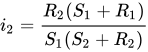
  2. 1 2 3 4 5 6 7 8 9 10 11 Gear ratio (transmission ratio)
    — speed conversion —
    • The gear ratio is the ratio of
      • input shaft speed
      • to output shaft speed
    • and therefore corresponds to the reciprocal of the shaft speeds
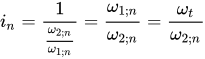
  3. 1 2 3 4 5 6 7 8 9 10 11 Torque ratio (torque conversion ratio)
    — torque conversion —
    • The torque ratio is the ratio of
      • output torque
      • to input torque
      • minus efficiency losses
    • and therefore corresponds (apart from the efficiency losses) to the reciprocal of the shaft speeds too
      • whereby may vary from gear to gear according to the formulas listed in this table and
  4. 1 2 3 4 5 6 7 8 9 Efficiency
    • The efficiency is calculated
      • from the torque ratio
      • in relation to the gear ratio (transmission ratio)
    • Power loss for single meshing gears
      • is in the range of 1 % to 1.5 %
      • helical gear pairs, which are used to reduce noise in passenger cars, are in the upper part of the loss range
      • spur gear pairs, which are limited to commercial vehicles due to their poorer noise comfort, are in the lower part of the loss range
    Corridor for torque ratio and efficiency
    • in planetary gearsets, the stationary gear ratio is formed via the planetary gears and thus by two meshes
    • for reasons of simplification, the efficiency for both meshes together is commonly specified there
    • the efficiencies specified here are based on assumed efficiencies for the stationary ratio
      • of (upper value)
      • and (lower value)
    • for both interventions together
    • The corresponding efficiency
      • for single-meshing gear pairs is
      • at (upper value)
      • and (lower value)
  5. ↑ Layout
    • Input and output are on opposite sides
    • Planetary gearset 1 is on the input (turbine) side
    • Input (turbine) shaft is, if actuated, S1 or R2
    • Output shaft is R1
  6. ↑ Total ratio span (total gear ratio/total transmission ratio) nominal
    • A wider span enables the
      • downspeeding when driving outside the city limits
      • increase the climbing ability
        • when driving over mountain passes or off-road
        • or when towing a trailer
  7. 1 2 3 4 5 6 7 Total ratio span (total gear ratio/total transmission ratio) effective
    • The span is only effective to the extent that
      • the reverse gear ratio
      • matches that of 1st gear
    • see also Standard R:1
    Digression
    Reverse gear
    • is usually longer than 1st gear
    • the effective span is therefore of central importance for describing the suitability of a transmission
    • because in these cases, the nominal spread conveys a misleading picture
    • which is only unproblematic for vehicles with high specific power
    Market participants
    • Manufacturers naturally have no interest in specifying the effective span
    • Users have not yet formulated the practical benefits that the effective span has for them
    • The effective span has not yet played a role in research and teaching
    Contrary to its significance
    • the effective span has therefore not yet been able to establish itself
      • either in theory
      • or in practice.
    End of digression
  8. ↑ Ratio span's center
    • The center indicates the speed level of the transmission
    • Together with the final drive ratio
    • it gives the shaft speed level of the vehicle
  9. ↑ Average gear step
    • There are gear steps between gears
    • with decreasing step width
      • the gears connect better to each other
      • shifting comfort increases
  10. ↑ Sun 1: sun gear of gearset 1: inner Ravigneaux gearset
  11. ↑ Ring 1: ring gear of gearset 1: inner Ravigneaux gearset
  12. ↑ Sun 2: sun gear of gearset 2: outer Ravigneaux gearset
  13. ↑ Ring 2: ring gear of gearset 2: outer Ravigneaux gearset
  14. 1 2 3 4 5 Standard 50:50
    — 50 % is above and 50 % is below the average gear step —
    • With steadily decreasing gear steps (yellow highlighted line Step)
    • and a particularly large step from 1st to 2nd gear
      • the lower half of the gear steps (between the small gears; rounded down, here the first 1) is always larger
      • and the upper half of the gear steps (between the large gears; rounded up, here the last 1) is always smaller
    • than the average gear step (cell highlighted yellow two rows above on the far right)
    • lower half: smaller gear steps are a waste of possible ratios (red bold)
    • upper half: larger gear steps are unsatisfactory (red bold)
  15. 1 2 3 4 5 6 7 8 9 10 Standard R:1
    — reverse and 1st gear have the same ratio —
    • The ideal reverse gear has the same transmission ratio as 1st gear
      • no impairment when maneuvering
      • especially when towing a trailer
      • a torque converter can only partially compensate for this deficiency
    • Plus 11.11 % minus 10 % compared to 1st gear is good
    • Plus 25 % minus 20 % is acceptable (red)
    • Above this is unsatisfactory (bold)
    • see also Total ratio span (total gear ratio/total transmission ratio) effective
  16. 1 2 3 4 5 6 7 Standard 1:2
    — gear step 1st to 2nd gear as small as possible —
    • With continuously decreasing gear steps (yellow marked line Step)
    • the largest gear step is the one from 1st to 2nd gear, which
      • for a good speed connection and
      • a smooth gear shift
    • must be as small as possible
      • A gear ratio of up to 1.6667 : 1 (5 : 3) is good
      • Up to 1.7500 : 1 (7 : 4) is acceptable (red)
      • Above is unsatisfactory (bold)
  17. 1 2 3 4 From large to small gears (from right to left)
  18. ↑ Standard STEP
    — from large to small gears: steady and progressive increase in gear steps —
    • Gear steps should
      • increase: Δ Step (first green highlighted line Δ Step) is always greater than 1
      • As progressive as possible: Δ Step is always greater than the previous step
    • Not progressively increasing is acceptable (red)
    • Not increasing is unsatisfactory (bold)
  19. ↑ Standard SPEED
    — from small to large gears: steady increase in shaft speed difference —
    • Shaft speed differences should
      • increase: Δ Shaft Speed (second line marked in green Δ (Shaft) Speed) is always greater than the previous one
    • 1 difference smaller than the previous one is acceptable (red)
    • 2 consecutive ones are a waste of possible ratios (bold)
  20. ↑ Blocks S1
  21. ↑ Supports link with freewheel · blocks S1 in one direction
  22. ↑ Blocks C1
  23. ↑ Couples S1 with the input (turbine)
  24. ↑ Couples R2 with the input (turbine)
  25. 1 2 Ordinary noted
    • For direct determination of the gear ratio
  26. 1 2 Elementary noted
    • Alternative representation for determining the transmission ratio
    • Contains only operands
      • With simple fractions of both central gears of a planetary gearset
      • Or with the value 1
    • As a basis
      • For reliable
      • And traceable
    • Determination of the torque conversion ratio and efficiency

See also

References

  1. ↑ "BMWE21.net". BMWe21.net. Retrieved 24 November 2013.
  2. ↑ "ZF North America application chart (automatic)". ZF.com. Archived from the original on 22 February 2013. Retrieved 22 November 2013.