2003 São Tomé and Príncipe coup d'état
| 2003 São Tomé and Príncipe coup d'état | |||||||
|---|---|---|---|---|---|---|---|
 Map of São Tomé and Príncipe | |||||||
| |||||||
| Belligerents | |||||||
| Government of São Tomé and Príncipe |
Junta of National Salvation
| ||||||
| Commanders and leaders | |||||||
| Strength | |||||||
| ~200 São Toméan soldiers and 16 ex-members of South Africa's 32 "Buffalo" Battalion | |||||||
| Casualties and losses | |||||||
| None | |||||||
A faction of the armed forces of São Tomé and Príncipe led by Major Fernando "Cobó" Pereira overthrew the country's government in a bloodless coup d'état on 16 July 2003. It was São Tomé and Príncipe's second military coup following a similar revolt in 1995. The coup leaders claimed the coup was a response to government corruption and growing poverty.
The coup was conducted while President Fradique de Menezes was out of the country on a private trip to Nigeria, which Menezes's opponents had accused of having corrupt ties to him. Prime Minister Maria das Neves and other government ministers were detained in military barracks, and the coup leaders declared a military junta. The coup was backed by the Christian Democratic Front, an extra-parliamentary political party whose leadership consisted mostly of participants in a failed coup attempt in 1988, as well as former members of South Africa's 32 "Buffalo" Battalion.
Although Pereira and his co-conspirators initially succeeded in seizing power, international pressure and the threat of a foreign military intervention forced the junta to negotiate an immediate settlement. The coup ended a week later on 22 July, with a number of concessions made to the benefit of the military and ex-Buffalo soldiers.
Background and prelude
Deadlock between the president and National Assembly


President Fradique de Menezes and the National Assembly were in political deadlock after the 3 March 2002 parliamentary election. Menezes initially appointed Gabriel Costa of Independent Democratic Action (ADI) as prime minister to lead a coalition government that included all the parties in the National Assembly. However, on 27 September he dismissed the Costa government and on 3 October replaced Costa with Maria das Neves of the Movement for the Liberation of São Tomé and Príncipe – Social Democratic Party (MLSTP–PSD).[1][2] The move cost Menezes the support of his own party, the Force for Change Democratic Movement (MDFM), as well as its parliamentary partner, the Democratic Convergence Party (PCD).[1]
Consequently in late October, opposition parties tabled a motion to revise the constitution; the proposed amendments would reduce the powers of the president and increase the influence of the National Assembly. In December 2002, 52 of the 55 deputies of the National Assembly voted in favour of the amendments, but Menezes vetoed the amendments and demanded they be put to a national referendum.[3] The National Assembly ignored Menezes's demand and approved the new constitution a second time on 17 January 2003, prompting Menezes to dissolve the National Assembly on 21 January and call for early elections on 13 April.[4][5] However, Menezes and the National Assembly quickly came to a memorandum of understanding on 24 January, in which the amendments would be implemented but a referendum on the country's system of government would be held at the end of Menezes's presidential term in 2006.[4][6] Conflict between Menezes and the National Assembly continued despite the memorandum of understanding, culminating in the publishment of an open letter in April 2003 by Menezes's opponents, who accused him of corruption, incompetence, and a lack of transparency.[7]
Discontent among the FDC and military
The São Toméan government had faced two coup attempts prior to 2003: a failed attempt by dissidents in 1988 and a successful one by the armed forces in 1995. The 1988 coup attempt aimed to overthrow President Manuel Pinto da Costa and replace him with the dissident Afonso dos Santos.[8] However, it was poorly organised and its participants were mostly unarmed; three of the rebels were killed and the rest were arrested and imprisoned before being pardoned by Pinto da Costa in April 1990.[9] The 1995 coup attempt meanwhile involved a majority of the country's soldiers, who were unhappy with the state of the military.[10] The coup's leaders successfully seized power but relinquished control after mediation by Angola that led to government concessions to the military.[11]
In December 1990, Afonso dos Santos founded the Christian Democratic Front (FDC) to contest the country's first multi-party elections that were taking place the following month.[12] The FDC failed to secure any seats and remained extra-parliamentary up until the 2003 coup.[13] The FDC leadership consisted mostly of other participants in the 1988 coup, many of whom fought for South Africa's 32 "Buffalo" Battalion, during the apartheid era. The former soldiers felt entitled to compensation for their service abroad, and by the time das Neves withdrew government support for them in June 2003, they had already been planning a coup for seven months.[14] Das Neves had been vocally against successive governments' support for the ex-Buffalo soldiers, who she claimed were lazy and dependent, and had demanded from her government $70,000 in cash and a medium-sized farm. The FDC had also demanded $130,000 from the government as compensation for a rebel boat that was confiscated after the 1988 coup attempt. Defence Minister Bragança Neto offered $50,000 in a failed attempt to appease the FDC.[15]
The FDC found an important ally in Major Fernando "Cobó" Pereira, who headed the general staff of the armed forces. Pereira was vocal about his dissatisfaction with the state of the military, which had substandard barracks, outdated equipment, and salaries paid in arrears. In June 2003, Pereira sent a letter with the military's demands to Menezes and the National Assembly, but he never received a reply back. The FDC were aware of Pereira's grievances and received his support for a coup.[14]
Coup
Menezes was out of the country on a private trip to a conference in the Nigerian capital Abuja when the bloodless coup began on 16 July 2003.[13][16] Pereira led around 200 São Toméan and 16 ex–Buffalo soldiers in securing strategic sites and detaining government ministers at the Quartel do Morro barracks.[14] Das Neves was hospitalised after suffering a heart attack during a gunfight at her home.[17] The coup leaders – Pereira, FDC president Alércio Costa, and FDC vice-president Sabino dos Santos – subsequently declared a military junta, the Junta of National Salvation. Costa was an ex-Buffalo soldier, and dos Santos had participated in the 1988 coup attempt.[18] In a press conference, Pereira said the military was not interested in holding on to power and would hold early elections as soon as possible.[17] He and his co-conspirators cited government corruption, growing discontent among the population, and the widening gap between the rich and poor as the reasons for their rebellion. The coup received a mixed reaction from the São Toméan public, with some supporting the coup's goals and others disapproving the use of violence.[18]
International response, negotiations, and end
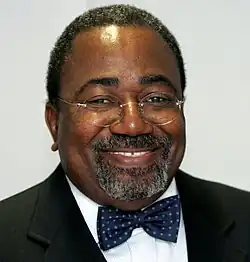
The coup was swiftly condemned by São Tomé and Príncipe's African and Western donor countries, which urged the restoration of the civilian government. The junta rejected the condemnations as hypocrisy, arguing that São Tomé and Príncipe was a sham democracy because vote buying had unduly influenced the country's elections. The junta, however, was not only isolated internationally, but it also lacked support from major political forces within the country.[18] Fearing a foreign military intervention, the junta began negotiating with international mediators from Nigeria, Portugal, South Africa (to negotiate with the ex-Buffalo soldiers[19]), the United States, the African Union, the Economic Community of Central African States (CEEAC), and the Community of Portuguese Language Countries. Rodolphe Adada, the foreign minister of the Republic of the Congo, was the chief coordinator during the negotiations, as his country held the rotational presidency of the CEEAC at the time.[18]
The coup ended with the signing of a memorandum of understanding between Pereira, Menezes, and Adada on 22 July.[18][19] Menezes returned to the country together with Nigerian President Olusegun Obasanjo, underscoring Nigeria's interest in Menezes' reinstatement. The memorandum entailed a number of concessions to the coup plotters, most importantly a general amnesty and a commitment by the government to improve the conditions of the military and address the grievances of the former Buffalo soldiers.[20] Menezes also had to concede on a number of issues as a precondition to his reinstatement; he promised to "respect the constitution and the separation of powers" and approve a law proposed by the National Assembly on "the proper use of oil revenue".[21] Public funds were also to be managed transparently by the government, and the junta was assured that no foreign military intervention would take place in the future.[20]
São Tomé and Príncipe expert Gerhard Seibert commented in 2006 that the memorandum had "safeguarded primarily the corporate demands of the military and the ex-Buffalo soldiers, while political claims were almost absent", and "despite its particularities the 2003 coup was very similar to the previous military takeover in 1995".[21] He also suggested that international interest in a quick resolution to the conflict may have been because of São Tomé and Príncipe's presumed oil wealth.[18]
See also
References
- 1 2 Seibert, Gerhard (1 May 2006). Comrades, Clients and Cousins: Colonialism, Socialism and Democratization in São Tomé and Príncipe. Brill Publishers. pp. 276–277. ISBN 978-90-474-0843-7. Retrieved 27 February 2026.
- ↑ Johri, Meera (2010). "Maria Das Neves". Women in Power: Profiles of Women Presidents and Prime Ministers of the World. Rajpal & Sons. pp. 166–167. ISBN 978-81-7028-891-6. Retrieved 25 August 2026.
- ↑ Seibert 2006, pp. 277–278.
- 1 2 Seibert 2006, p. 278.
- ↑ "President dissolves parliament". The New Humanitarian. 22 January 2003. Archived from the original on 28 August 2020. Retrieved 23 February 2026.
- ↑ Seibert, Gerhard (2003). "The Bloodless Coup of July 2003 in São Tomé e Príncipe". Lusotopie. 10 (1): 246. Retrieved 2 April 2025.
- ↑ Seibert 2006, pp. 278–279.
- ↑ Seibert 2006, pp. 190–191.
- ↑ Seibert 2003, p. 250.
- ↑ Seibert 2003, p. 264.
- ↑ Seibert 2006, pp. 268–269.
- ↑ Seibert 2006, pp. 217–218.
- 1 2 Seibert 2006, p. 279.
- 1 2 3 Seibert 2006, pp. 279–280.
- ↑ Seibert 2003, p. 251.
- ↑ Murphy, Jarett (16 July 2003). "Coup In Sao Tome". CBS. Archived from the original on 28 August 2020. Retrieved 27 February 2026.
- 1 2 "Sao Tome coup condemned". BBC. 17 July 2003. Archived from the original on 28 August 2020. Retrieved 22 October 2016.
- 1 2 3 4 5 6 Seibert 2006, p. 280.
- 1 2 "Coup leaders hand power back to civilian president". The New Humanitarian. 23 July 2003. Archived from the original on 28 August 2020. Retrieved 27 February 2026.
- 1 2 Seibert 2006, pp. 280–281.
- 1 2 Seibert 2006, p. 281.
