Wedding industry in the United States
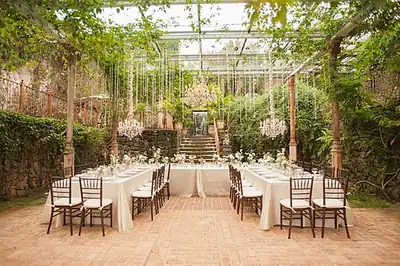
The wedding industry in the United States consists of the businesses, independent professionals, nonprofit organizations, and technology platforms that provide goods and services for weddings. It includes venues, planners, caterers, photographers, videographers, florists, entertainers, officiants, apparel companies, jewelers, rental providers, transportation companies, travel businesses, media publishers, online directories, registries, and software platforms.
The United States recorded 2,041,926 marriages in 2023, corresponding to a marriage rate of 6.1 marriages per 1,000 people.[1] Estimates of the industry's value vary according to whether they include travel, jewelry, apparel, pre-wedding events, and other related purchases. One market-research estimate valued United States wedding services at $64.93 billion in 2024.[2]
The industry is highly fragmented. Although it includes large retailers, hospitality companies, publishers, and technology platforms, much of the work is performed by local small businesses, sole proprietors, freelancers, and independent contractors.[3]
History

The commercial wedding industry developed alongside changes in retailing, advertising, mass media, consumer credit, and expectations surrounding marriage. Between the 1920s and 1950s, department stores, jewelers, bridal magazines, caterers, apparel companies, and other businesses helped standardize practices that came to be presented as traditional American wedding customs.[4]
The marketing of diamond engagement rings became one of the best-known examples of commercial influence on wedding traditions. De Beers advertising helped associate diamonds with engagement, permanence, and romantic commitment during the 20th century.[5]
During the second half of the 20th century, weddings increasingly moved beyond religious buildings and private homes into hotels, banquet halls, resorts, historic properties, and other commercial venues. Destination weddings, professional planning, specialized photography, and elaborate reception production expanded the number of businesses participating in a wedding.
The growth of the internet changed how couples researched and hired vendors. Wedding websites, blogs, online registries, vendor directories, reviews, and digital planning tools reduced reliance on printed magazines, bridal shows, and personal referrals. Social-media platforms later became major sources of wedding inspiration, trends, and vendor discovery.
Structure of the industry
The wedding industry combines products, professional services, hospitality, entertainment, media, software, and travel. A single wedding may involve dozens of separately owned businesses whose work must be coordinated for one event.
Wedding businesses differ substantially in scale and operating model. Some venues, hotel groups, apparel retailers, and technology platforms operate nationally, while photographers, planners, florists, DJs, and officiants commonly serve local or regional markets. Many wedding professionals also work in adjacent markets, including corporate events, private parties, portrait photography, hospitality, tourism, fashion, and entertainment.
Demand is seasonal in many regions. Spring, summer, and autumn dates—particularly Saturdays—may command higher prices or book farther in advance. Weather, tourism, local venue supply, religious calendars, and regional traditions affect the timing and structure of weddings.
Some businesses are vertically integrated. Hotels and venues may provide catering, bars, rentals, accommodations, coordination, and audiovisual production. Bridal retailers may combine apparel, alterations, accessories, and beauty services. Technology platforms may operate directories, registries, media publications, advertising products, and planning software under one company.
Types of wedding vendors
Venues and accommodations
Wedding venues include hotels, resorts, banquet halls, restaurants, religious buildings, country clubs, farms, vineyards, historic properties, museums, gardens, beaches, private homes, and purpose-built event spaces. Venues may host the ceremony, reception, rehearsal dinner, after-party, or several wedding events.
Services included with a venue vary. Some provide only the physical property, while others include catering, bar service, furniture, linens, staffing, coordination, security, parking, and accommodations. Venues may require couples to select other businesses from a preferred-vendor list.
Hotels and resorts participate in the industry by providing event spaces, guest-room blocks, catering, transportation, and honeymoon accommodations. Destination resorts may package ceremonies, receptions, lodging, and planning into a single purchase.
Wedding planners and coordinators
Wedding planners help couples develop budgets, select venues and vendors, negotiate contracts, create designs and timelines, and coordinate wedding events. Planning services are commonly offered at several levels:
- Full-service planning, which may begin before the venue is selected;
- Partial planning, in which a professional assists with specific decisions or stages;
- Wedding-day or event-management coordination, which focuses on final preparation and execution;
- Destination-wedding planning, including travel, local vendors, and legal or cultural requirements; and
- Wedding design, which concentrates on visual presentation, décor, and guest experience.
Some venues employ an on-site coordinator, but that employee normally represents the venue rather than providing every service associated with an independent wedding planner.
Officiants and ceremony specialists
Wedding officiants conduct ceremonies and may be religious leaders, judges, civil celebrants, professional officiants, or people authorized temporarily under state law. Their services can include ceremony writing, rehearsals, premarital counseling, ritual guidance, and assistance with marriage-license procedures.
Ceremony specialists may focus on interfaith, intercultural, multilingual, secular, or religious weddings. Cultural consultants and ritual specialists can help couples incorporate traditions accurately and coordinate the participation of families and religious communities.
Catering, baking, and beverage services
Wedding caterers provide meals, staffing, table service, buffet service, equipment, and food preparation. The price of catering is strongly influenced by the number of guests, service style, menu, staffing, location, and rental requirements. Venues may maintain an exclusive caterer or require the use of an approved catering list.
Bakers and dessert providers make wedding cakes, pastries, dessert tables, and culturally specific sweets. Other food vendors include food trucks, private chefs, late-night snack providers, and mobile food stations.
Bartending companies and mobile bars may supply bartenders, alcohol, nonalcoholic drinks, glassware, insurance, and licensing support. Coffee carts, specialty beverage companies, champagne services, and mocktail bars have also become part of the wedding market.
Photography, videography, and digital media
Wedding photographers document the ceremony, reception, portraits, details, and related events. Services may include engagement sessions, film photography, drone photography, albums, prints, digital galleries, and same-day previews.
Videographers produce documentary footage, highlight films, ceremony recordings, and other edited video. Livestreaming companies provide remote access for guests unable to attend and may offer multiple cameras, private links, and recordings.
Wedding content creators emerged as a distinct vendor category during the early 2020s. They typically record candid, behind-the-scenes photographs and short videos using smartphones and deliver material formatted for Instagram, TikTok, and other social-media platforms. Unlike traditional videographers, who often create cinematic or long-form films, content creators generally emphasize rapid delivery and short-form vertical media.[6][7]
Other visual-media vendors include photo-booth operators, instant-photography providers, aerial-drone operators, analog-film specialists, and companies that collect photographs uploaded by guests.
Entertainment and masters of ceremonies
Wedding entertainment includes DJs, bands, singers, ceremony musicians, dancers, cultural performers, and specialty entertainers. Musicians may perform at the ceremony, cocktail hour, reception, or after-party.
A professional master of ceremonies, commonly called an MC or emcee, hosts the reception and manages communication with guests. The MC may introduce the wedding party and speakers, announce dances and other events, coordinate transitions, and work with planners, entertainers, caterers, and venue personnel to maintain the timeline. DJs frequently provide MC services, but professional MCs may also be hired separately, particularly for multilingual, multicultural, or entertainment-focused weddings.[8]
Specialty entertainment can include magicians, comedians, live painters, caricature artists, fireworks, silent discos, audio guest books, interactive performers, and culturally specific music or dance groups.[9]
Floral design, décor, rentals, and event production
Florists create bouquets, personal flowers, centerpieces, ceremony installations, and other floral designs. Their work may involve imported flowers, seasonal availability, refrigeration, transportation, installation, and removal.
Decorators and event designers provide visual concepts, backdrops, draping, signs, candles, table styling, and installations. Rental companies supply tents, furniture, linens, tableware, stages, dance floors, arches, heating, cooling, and other equipment.
Lighting, sound, staging, and audiovisual companies provide technical production for ceremonies and receptions. Large or highly produced weddings may require rigging, generators, technicians, and production managers.
Attire, beauty, and jewelry
Wedding apparel businesses include bridal boutiques, fashion designers, formalwear stores, suit and tuxedo rental companies, tailors, and alteration specialists. Related products include veils, shoes, accessories, undergarments, and culturally specific ceremonial clothing.
Hair stylists, makeup artists, barbers, nail technicians, henna artists, and personal stylists provide beauty and grooming services. They may serve the couple, wedding party, and relatives at a salon, hotel, private residence, or venue.
Jewelers sell engagement rings, wedding bands, watches, necklaces, and other wedding-related jewelry. Wedding jewelry represents part of the broader jewelry market and has been heavily influenced by advertising and changing expectations surrounding engagement and marriage.[5]
Stationery, calligraphy, and gifts
Stationery vendors design or produce save-the-dates, invitations, programs, menus, place cards, seating charts, thank-you cards, and signs. Digital invitation services provide online delivery, guest tracking, and RSVP management.
Calligraphers, illustrators, engravers, and live artists may create personalized paper goods, signs, favors, or guest keepsakes. Gift-related businesses provide wedding favors, welcome bags, wedding-party gifts, and personalized merchandise.
Transportation and logistics
Wedding transportation providers include limousine companies, buses, shuttles, vintage-car operators, valet services, and transportation coordinators. Their work may involve moving the wedding party between preparation sites, ceremonies, photographs, receptions, hotels, and airports.
Logistical vendors also include delivery companies, setup and breakdown crews, security personnel, parking attendants, coat-check services, portable-restroom providers, and waste-management companies.
Guest, childcare, pet, and accessibility services
Some couples hire childcare providers, professional wedding sitters, pet attendants, or guest concierges. Accessibility services may include mobility equipment, sign-language interpretation, sensory accommodations, accessible transportation, or assistance for elderly and disabled guests.
Other specialized providers include dance instructors, speechwriters, proposal planners, honeymoon fund administrators, weather consultants, and companies that manage marriage-license paperwork.
Wedding technology
Technology is used by both couples and wedding businesses. Consumer-facing tools assist with planning, communication, purchasing, and guest management, while business software helps vendors manage leads, contracts, payments, schedules, and clients.
Wedding websites and guest management
Wedding websites provide event schedules, travel information, accommodation details, registries, dress codes, maps, and biographical information about the couple. Many platforms combine website creation with digital invitations, online RSVPs, meal selections, guest lists, and seating charts.
Guest-management tools may track households, invitations, attendance, dietary restrictions, gifts, transportation, and attendance at multiple wedding events. QR codes and mobile applications can provide schedules, menus, photographs, or updates during the wedding weekend.
Planning and budgeting software
Planning software includes checklists, budgets, calendars, seating-chart builders, floor-plan tools, vendor lists, and shared workspaces. Couples may use dedicated wedding applications or general-purpose spreadsheets and project-management software.
Wedding professionals use customer relationship management systems to track inquiries, proposals, contracts, invoices, questionnaires, workflows, and communications. Online payment systems and electronic signatures have reduced reliance on paper contracts and checks.
Virtual and artificial-intelligence tools
Videoconferencing and livestreaming became more common during the COVID-19 pandemic, when travel and gathering restrictions prevented some guests from attending in person.
Other technologies include virtual venue tours, digital floor plans, online dress shopping, augmented-reality visualization, automated design tools, and artificial-intelligence systems that generate checklists, schedules, speeches, vows, design concepts, or vendor recommendations. The use of artificial intelligence in personal writing and vendor selection has also prompted concerns about authenticity, privacy, accuracy, and disclosure.
Wedding directories and marketplaces
Wedding directories organize vendors by location, service category, style, price, reviews, cultural experience, language, or other attributes. Marketplaces may additionally permit couples to request quotes, message vendors, schedule appointments, or complete bookings.
Directory business models include:
- Free vendor listings;
- Paid subscriptions;
- Featured or sponsored placement;
- Advertising;
- Charges for leads or inquiries;
- Booking commissions;
- Referral fees; and
- Bundled planning, media, registry, or e-commerce services.
Directories may rank businesses through reviews, algorithms, editorial selection, paid placement, or combinations of these methods. Couples may not always know which results are advertisements and which are based on reviews, relevance, or editorial judgment.
The Knot and WeddingWire
The Knot was founded in 1996 by Carley Roney, David Liu, Rob Fassino, and Michael Wolfson. The service began as a wedding-planning portal on AOL before expanding into an independent website, magazine, registry, vendor marketplace, and other wedding-related services.[10][11]
WeddingWire was founded in 2007 by Timothy Chi, Lee Wang, Jeff Yeh, and Sonny Ganguly. The founders developed the service as a two-sided marketplace connecting couples with local wedding and event businesses.[12][13]
WeddingWire and XO Group, the corporate parent of The Knot, merged in 2018. The combined company later became The Knot Worldwide and operates The Knot, WeddingWire, WeddingPro, and other wedding brands.[14]
Zola
Zola was founded in New York City in 2013 by Shan-Lyn Ma and Nobu Nakaguchi. It began as an online wedding registry before expanding into wedding websites, guest-list management, invitations, planning tools, and vendor discovery.[15]
The company combines software and wedding-planning services with e-commerce. Its registry permits couples to add merchandise, experiences, group gifts, and cash funds while controlling the delivery of physical gifts.
Loverly
Lover.ly was founded by Kellee Khalil in New York City in 2012 after her experience helping plan her sister's wedding. The service began as a search and discovery platform that organized products, vendors, and editorial content from wedding publications and blogs.[16]
Loverly later expanded to include digital planning tools, virtual planning assistance, educational content, and vendor discovery.[17]
Venue marketplaces
Venue marketplaces allow couples and event professionals to search for properties according to location, capacity, price, availability, amenities, and event type. Some operate as directories that send inquiries to venues, while others facilitate bookings and collect commissions.
Venue marketplaces can include hotels, restaurants, banquet halls, museums, gardens, historic properties, farms, rooftops, private homes, and unconventional event spaces. Some venue platforms operate across several kinds of events rather than specializing exclusively in weddings.
Specialized directories
Specialized wedding directories focus on particular communities, wedding formats, services, or consumer needs. Examples include directories for destination weddings, religious ceremonies, LGBTQ+ couples, environmentally sustainable events, accessible weddings, cultural traditions, and multilingual services.
Bolen Bliss was founded by Carmen Bolen and Zane Bolen as a multicultural wedding-planning and vendor-discovery platform. The United States directory launched nationally in 2026 and describes its service as helping couples find vendors according to location, specialty, culture, traditions, values, and language needs.[18]
Bolen Bliss organizes vendors into service categories including venues, photographers, DJs, caterers, florists, hair and makeup professionals, planners, bakers, officiants, transportation providers, videographers, rental providers, decorators, live entertainers, and bartending companies. The platform also focuses on vendors serving multicultural, bilingual, interfaith, and culturally specific weddings.
Specialized directories can help smaller vendors reach defined audiences, but their geographic coverage, review volume, verification practices, and business models vary.
Registries and wedding commerce
Wedding registries allow couples to identify gifts they would like to receive. Traditional registries were maintained by department stores and specialty retailers. Online registries expanded the model by combining products from multiple sellers and adding cash funds, charitable donations, group gifting, experiences, travel, and honeymoon contributions.
Zola, founded by Shan-Lyn Ma and Nobu Nakaguchi in 2013, began as an online wedding registry and later expanded into wedding websites, invitations, guest-list management, planning tools, and vendor discovery.[19] The company generates revenue partly through the sale of gifts and wedding-related products.[20]
Wedding commerce also includes invitations, décor, apparel, jewelry, favors, beauty products, party supplies, and personalized merchandise. E-commerce has enabled couples to purchase products from national retailers, independent designers, rental companies, and international sellers.
Multicultural, interfaith, and specialized weddings
The cultural and religious diversity of the United States affects demand for specialized vendors. In 2015, 17 percent of newlyweds in the United States were married to a person of a different race or ethnicity, compared with 3 percent in 1967.[21]
Multicultural and interfaith weddings may require vendors familiar with several ceremonial structures, languages, clothing traditions, foods, musical forms, timelines, and family expectations. A wedding may combine traditions rather than follow a single cultural format.
Specialized services include:
- Multilingual planners, officiants, MCs, and entertainers;
- Caterers familiar with religious or culturally specific foods;
- Designers and rental providers supplying ceremonial objects or clothing;
- Hair and makeup artists experienced with different skin tones and hair textures;
- Photographers familiar with multi-day or culturally specific ceremonies;
- Interfaith officiants and religious consultants; and
- Travel and legal assistance for international families.
Industry research has identified increasing cultural diversity and multicultural or interfaith weddings as drivers of demand for vendors able to accommodate particular traditions and customs.[2]
Other specialized segments include LGBTQ+ weddings, military weddings, disability-accessible weddings, environmentally sustainable weddings, elopements, microweddings, second marriages, and weddings for older couples.
Vendor discovery and booking
Couples find vendors through personal referrals, search engines, social media, directories, reviews, wedding publications, venues, planners, bridal shows, and advertisements. Venue-preferred vendor lists can narrow the available options, while professional planners may recommend businesses with which they have established working relationships.
A typical booking process includes an inquiry, consultation, proposal, contract, and retainer. Contracts may establish:
- The date, hours, and location of service;
- Payment schedules;
- Cancellation and postponement policies;
- Travel and overtime fees;
- Deliverables;
- Substitution or backup arrangements;
- Liability and insurance requirements;
- Meal and break requirements; and
- Rules governing photographs, recordings, and promotional use.
Popular vendors and venues may book more than a year in advance, particularly for Saturdays and high-demand seasons. Other services may be purchased closer to the wedding date.
Business models and employment
The wedding industry includes employees, freelancers, independent contractors, sole proprietors, franchises, and large corporations. Many vendors operate home-based or mobile businesses with few employees. Others assemble temporary teams of contractors for individual events.
Revenue models vary by category. Vendors may charge:
- Flat project fees;
- Hourly rates;
- Per-person prices;
- Rental fees;
- Percentage-based planning fees;
- Packages based on service hours or deliverables;
- Minimum spending requirements;
- Travel fees; and
- Commissions or referral fees.
Catering commonly scales according to guest count, while photography and entertainment packages are more often based on hours, staffing, and deliverables. Floral and décor prices depend on materials, labor, installation, transportation, and design complexity.
Wedding businesses experience irregular cash flow because retainers may be collected months before services are delivered. Cancellations, weather, illness, venue closures, and changes in guest count can affect both vendors and couples. Many businesses require liability insurance and maintain backup equipment or personnel.
Costs and pricing

Wedding spending varies substantially by region, guest count, venue, formality, season, and services purchased. National figures frequently report the arithmetic mean, which can be raised by a relatively small number of highly expensive weddings.
A 2012 survey reported a median ceremony-and-reception cost of approximately $18,000 and a considerably higher mean. The survey's respondents were users of a wedding website and therefore did not necessarily represent every marrying couple in the United States.[22]
Published “average wedding cost” figures may exclude engagement rings, honeymoons, bachelor or bachelorette trips, rehearsal dinners, or other events. They may also be based on users of a particular platform, voluntary surveys, or couples purchasing professional services. Median spending is therefore often more representative of a typical couple than the mean.
Regional differences are significant. Costs tend to be higher in areas with expensive real estate, labor, lodging, and transportation. Guest count is one of the strongest cost drivers because catering, beverages, rentals, invitations, and staffing frequently scale per person.
Wedding-related price premiums
Consumers and researchers have questioned whether businesses charge more for weddings than for comparable parties or events. Differences may reflect additional consultations, formal attire, longer service hours, custom designs, rehearsal attendance, backup equipment, insurance, editing, installation, or higher expectations. In other cases, couples may perceive the price difference as an unjustified “wedding markup.”
Price transparency varies. Some vendors publish starting prices or packages, while others prepare customized proposals after learning the date, location, guest count, and scope of the event.
Destination weddings and honeymoons
A destination wedding takes place away from the area in which the couple lives and frequently combines a wedding with group travel. Destination weddings generate revenue for venues, resorts, airlines, travel advisers, planners, photographers, caterers, tourism businesses, and local vendors.
Couples planning destination weddings may need assistance with marriage laws, translation, currency, transportation, accommodations, local customs, and travel documents. Resorts may sell wedding packages that include a ceremony site, officiant, flowers, photography, food, and lodging.
A honeymoon is a trip taken by a couple following the wedding. Honeymoon services are provided by travel agencies, hotels, resorts, cruise lines, tour operators, and online travel platforms. Some couples use honeymoon registries or cash funds to help pay for transportation, accommodations, meals, and activities.
Pre-wedding travel has also become economically important. Bachelor and bachelorette events may be local gatherings or multi-day destination trips involving accommodations, entertainment, restaurants, and transportation.
Wedding media and social platforms
Wedding magazines, websites, blogs, television programs, and social-media accounts influence trends and help couples discover products and vendors. Major publications have included Brides and Martha Stewart Weddings.
Wedding journalism includes planning advice, fashion, etiquette, vendor recommendations, real-wedding features, and trend reporting. Real-wedding submissions and styled photo shoots allow vendors to display their work and may function as both editorial material and marketing.
Pinterest, Instagram, TikTok, and YouTube have increased the speed with which wedding designs and trends spread. Couples use these platforms to research venues, clothing, hairstyles, floral designs, ceremonies, and entertainment. Vendors use them to maintain portfolios, build audiences, collaborate with other businesses, and attract inquiries.
The distinction between editorial recommendations, paid placement, affiliate commerce, sponsored content, and advertising may not always be apparent to consumers.
COVID-19 pandemic
The COVID-19 pandemic caused widespread wedding postponements and cancellations. Gathering limits, travel restrictions, venue closures, and public-health concerns affected venues, caterers, photographers, planners, entertainers, apparel companies, and travel businesses.
Approximately 80 percent of couples postponed or canceled their ceremonies after the United States outbreak began, according to an industry association cited by The Washington Post in 2021.[23]
Couples adopted microweddings, backyard ceremonies, elopements, livestreams, and virtual participation. Vendors introduced smaller packages, flexible contracts, remote consultations, and rescheduling policies.
Postponed weddings contributed to unusually high demand when gathering restrictions eased. Vendors faced overlapping bookings, staffing shortages, supply-chain disruption, and increased costs.[3] The surge of postponed events also affected prices and availability in subsequent years.[24]
Consumer concerns and criticism
Overspending and debt
Wedding media, social expectations, family pressure, and published cost averages may encourage couples to spend more than they intended. Couples may use savings, credit cards, loans, or family contributions to pay for weddings.
Critics of the wedding industry argue that commercial marketing presents expensive goods and services as requirements for a meaningful marriage. Others note that weddings are large hospitality events involving skilled labor, time-sensitive production, and substantial financial risk.
Directories, reviews, and paid placement
Vendor directories may mix organic results, reviews, editorial recommendations, and paid placement. Couples may not understand why one vendor appears before another.
Vendors have raised concerns about the cost and quality of leads sold by major wedding platforms. A 2025 investigation by The New Yorker reported allegations from vendors who believed they had received false or low-quality inquiries through The Knot; the company disputed allegations of fraudulent practices.[25]
Online reviews can provide useful information but may be affected by small sample sizes, incentives, disputes, manipulation, or differences between a vendor's performance at individual events.
Deposits, cancellations, and vendor failure
Wedding contracts often require nonrefundable retainers because vendors reserve a date and may decline other work. Disputes can arise when a wedding is canceled, postponed, relocated, or substantially reduced.
Couples may lose deposits if a vendor closes, declares bankruptcy, or fails to perform. Vendors may experience losses when clients cancel after labor, purchases, or reservations have already been made.
Discrimination and access
Couples may encounter discrimination based on race, religion, nationality, disability, sexual orientation, gender identity, or the cultural form of their wedding. The growth of multicultural, interfaith, LGBTQ+, and accessible-wedding services reflects both changing demographics and gaps in conventional vendor offerings.
Accessibility concerns include physical access, transportation, interpretation, dietary requirements, sensory needs, and the availability of inclusive clothing, beauty, and ceremonial services.
Wedding insurance
Wedding insurance can cover certain financial losses connected to cancellation, postponement, property damage, lost deposits, damaged attire, vendor failure, severe weather, illness, injury, or military deployment. Coverage and exclusions vary by insurer and policy.
Liability coverage may protect against claims involving injuries, property damage, or alcohol service. Venues may require couples or vendors to provide proof of liability insurance.
Policies generally exclude circumstances known before the policy was purchased. They may also exclude changes of mind, communicable diseases, insufficient funds, or particular weather events. Couples must review deductibles, limits, exclusions, and the definition of covered cancellation before purchasing a policy.
See also
- Wedding
- Wedding planner
- Wedding reception
- Wedding photography
- Wedding videography
- Wedding website
- Wedding invitation
- Wedding dress
- Engagement ring
- Destination wedding
- Honeymoon
- Bachelor party
- Bachelorette party
- Marriage in the United States
- Interracial marriage in the United States
- LGBTQ wedding
- Event management
- Hospitality industry
References
- ↑ "Marriage and Divorce". FastStats. Centers for Disease Control and Prevention. Retrieved August 19, 2026.
- 1 2 "U.S. Wedding Services Market Size, Share and Trends Analysis Report". Grand View Research. Retrieved August 19, 2026.
- 1 2 Bhattarai, Abha (April 10, 2022). "Weddings are booming, but pandemic-related supply chain issues are creating shortages". The Washington Post. Retrieved August 19, 2026.
- ↑ Howard, Vicki (2006). Brides, Inc.: American Weddings and the Business of Tradition. University of Pennsylvania Press. ISBN 978-0-8122-3921-8.
- 1 2 Sullivan, J. Courtney (May 3, 2013). "How Diamonds Became Forever". The New York Times. Retrieved August 19, 2026.
- ↑ "Here Comes the Bride, Followed by Her Content Creator". Elle. January 9, 2024. Retrieved August 19, 2026.
- ↑ "What Is a Wedding Content Creator?". The Knot. March 10, 2023. Retrieved August 19, 2026.
- ↑ "Do You Need a Wedding MC? Duties, Cost and How to Find One". The Knot. April 5, 2024. Retrieved August 19, 2026.
- ↑ "Unique Wedding Vendors That Will Impress Your Guests". The Knot. November 25, 2025. Retrieved August 19, 2026.
- ↑ Shontell, Alyson (February 13, 2013). "The Knot's Married Founders Tell All". Business Insider. Retrieved August 19, 2026.
- ↑ "The Knot Worldwide: History and Founding". The Knot Worldwide. Retrieved August 19, 2026.
- ↑ "WeddingWire Celebrates 10 Year Anniversary". The Knot Worldwide. May 17, 2017. Retrieved August 19, 2026.
- ↑ Friedlander, Blaine (April 9, 2024). "Engagement is the heart of Tim Chi's success". Cornell University. Retrieved August 19, 2026.
- ↑ Adler, Dan (March 31, 2025). "Does The Knot Have a "Fake Brides" Problem?". The New Yorker. Retrieved August 19, 2026.
- ↑ "What's the story of Zola?". Zola. Retrieved August 19, 2026.
- ↑ "How Lover.ly's Kellee Khalil Finds Her Inspiration". Glamour. June 19, 2013. Retrieved August 19, 2026.
- ↑ Zalis, Shelley (August 17, 2022). "Kellee Khalil, Founder and CEO of Loverly, Shows Us How to Get to "I Do" in a Brand-New Way". Forbes. Retrieved August 19, 2026.
- ↑ "Bolen Bliss Introduces Nationwide Wedding Vendor Directory With One Featured Spot Per Category in 935 U.S. Markets" (Press release). Bolen Bliss. April 2, 2026. Retrieved August 19, 2026 – via Yahoo Finance.
- ↑ Cite error: The named reference
ZolaFounders2was invoked but never defined (see the help page). - ↑ "It Started With a Jolt: How New York Became a Tech Town". The New York Times. February 22, 2019. Retrieved August 19, 2026.
- ↑ Livingston, Gretchen; Brown, Anna (May 18, 2017). "Intermarriage in the U.S. 50 Years After Loving v. Virginia". Pew Research Center. Retrieved August 19, 2026.
- ↑ Oremus, Will (June 12, 2013). "The Wedding Industry's Pricey Little Secret". Slate. Retrieved August 19, 2026.
- ↑ Bhattarai, Abha (February 11, 2021). "Smaller cakes, shorter dresses, bigger diamonds: The pandemic is shaking up the $73 billion wedding industry". The Washington Post. Retrieved August 19, 2026.
- ↑ "The coming collapse of the American wedding industry". The Washington Post. July 14, 2026. Retrieved August 19, 2026.
- ↑ Adler, Dan (March 31, 2025). "Does The Knot Have a "Fake Brides" Problem?". The New Yorker. Retrieved August 19, 2026.
Further reading
- Howard, Vicki (2006). Brides, Inc.: American Weddings and the Business of Tradition. University of Pennsylvania Press. ISBN 978-0-8122-3921-8.
- Otnes, Cele C.; Pleck, Elizabeth H. (2003). Cinderella Dreams: The Allure of the Lavish Wedding. University of California Press. ISBN 978-0-520-24008-7.
- Mead, Rebecca (2007). One Perfect Day: The Selling of the American Wedding. Penguin Press. ISBN 978-1-59420-088-5.