The Magazine of Wall Street

The Magazine of Wall Street — originally called The Ticker — was an American financial news magazine, and the world's largest financial publication of its heyday (the mid Progressive Era and Roaring Twenties).[1][2] The magazine ran from 1907 to 1972.[3][4]
History
The Ticker, of The Ticker Publishing Co.[5] was founded and originally owned by Richard D. Wyckoff,[6] a well-publicized[7] financial media author, speculator, and publisher of the early 20th century.

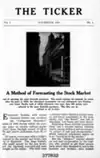
The first, November, issue appeared on October 1, 1907 and the magazine was initially priced at $3 a year, or $0.25 a copy.[6] Wyckoff served as the initial editor from the first issue and for a number of years thereafter; he retained the role until October 1926 but only nominally so in the later part of his editorial role therein.[3][8]
Its circulation was 68,228 subscribers in 1927,[7] exceeding that of The Wall Street Journal’s around the same time[9]—and, prior to 1920, its distribution equaled the combined yearly circulation of all other contemporary financial publications.[10] Around the time of the Wall street crash of 1929, the magazine was valued between $39,000,000 to $117,000,000 (in 2026 USD) and employed 200 people.[8][11][12]
The Ticker was rebranded as The Magazine of Wall Street starting with the May, 1911 issue.[13][14]
Over the course of the 1910s, Wyckoff lost control of 99% of the magazine to his then-wife, Cecilia Shere.[8] In divorce and sale-related proceedings in the mid-to-late 1920s, Wyckoff was forced to sell the rest of the magazine on May 26, 1926[1] to Shere, who by then had been de-facto editor, publisher, and owner of the magazine-company for quite some time. While Wyckoff held on to a nominal editorial role and salary by the time of the divorce, he was quickly fired by Shere once she gained full control.[7][8][15] The sale, and other divorce proceedings, were acrimonious and went so far as to reach the New York Supreme Court; leaving Wyckoff in a difficult financial and personal state thereafter.[7][16][8]
Shere would go on to write for the magazine, under the pseudonym "Charles Benedict".[17]
The magazine entered a decline around the time of the Great Depression[18], rejected a sale to Gilbert Kaplan in the 1960s,[18] rebranded to the Magazine of Wall Street and Business Analyst, and ceased publication by February 1972.[3][4]
Notability

As a result of its quick prominence, the magazine featured interviews with, and (often numerous) articles written by, some of the most famous market-related individuals of its era, including Jesse Livermore,[19] Irving Fisher,[20] Frank A. Vanderlip,[21] J.W. Harriman,[22] Roger W. Babson,[23] and Edward H.H. Simmons.[24] Some of them, like Irving Fisher, would become regular contributors. Wyckoff, himself a well-known financial author and investment guru of his era,[7] often wrote in the magazine under his pen name “Rollo Tape” in its earliest issues as well.[25]
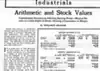
The magazine also featured the works of then little-known authors who would go on to make a name for themselves in the then-emerging fields of value investing, macro investing, trading the news, investor psychology, quantitative finance, technical analysis, and other forms of analyzing and trading market information. This included William Delbert Gann[26] and Benjamin Graham, the "father" of value investing, who honed his thoughts on, and skill in, value investing while writing for the magazine. For example, Graham revealed his method for determining the value of a company's goodwill in the magazine.[27] Graham impressed Wyckoff so much that Graham became a regular columnist[28] and was offered an attractive salary to become the magazine's editor, an offer that Graham's regular employer successfully countered.[29]
Another then-anonymous employee was Joseph Hirshhorn who, at a young age, managed to convince Wyckoff to be a chartist at the magazine.[30]
Famously, the magazine was one of the few leading financial publications that maintained, weeks before the Great Crash, a bullish market view and continued to maintain that optimistic view well into 1930.[31][32][33]
Legacy
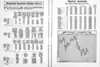
Across the evolving fields of economics, investing, monetary policy, and finance, the magazine analyzed business conditions, stocks, bonds, commodities, and other securities. It featured news columns, opinion pieces, deeper analyses, detailed tables and charts, as well as broader economic, business, and financial data that would later become standard across financial periodicals and premium market data providers, such as Bloomberg Terminal. Due to the breadth, depth, and historical length of this information, researchers still rely on it for historical purposes.[34][35][36][37][32]
References
- 1 2 "Magazine of Wail Street Sold to Woman Who Edits It". The New York Times. 1927-03-11. ISSN 0362-4331. Retrieved 2026-07-30.
- ↑ Wyckoff, Richard Demille (1983). How I trade and invest in stocks and bonds. Internet Archive. Fraser Pub. Co. pp. Foreward. ISBN 978-0-87034-069-7.
- 1 2 3 "The Magazine of Wall Street". Feb. 1911-Jan. 1912,Ticker and Investment Digest,the Magazine of Wall Street. 1907.
- 1 2 about.ebsco.com https://about.ebsco.com/m/ee/Marketing/titleLists/bpir-coverage.htm. Retrieved 2026-08-23.
{{cite web}}: Missing or empty|title=(help) - ↑ The Ticker 1907-11: Vol 1 Iss 1. Internet Archive. November 1907.
{{cite book}}: CS1 maint: others (link) - 1 2 Wyckoff, Richard Demille (1986). Wall Street Ventures & Adventures through forty years. Internet Archive. Greenville, S.C. : Traders Press. pp. 154–158. ISBN 978-0-934380-13-3.
- 1 2 3 4 5 TIME (1928-12-10). "The Press: Prima Donna of Wall Street". TIME. Retrieved 2026-07-30.
- 1 2 3 4 5 Pittsburgh Sun-Telegraph - 1929-11-03. Pittsburgh Sun-Telegraph. 1929-11-03.
- ↑ Scharff, Edward E. (1986). Worldly power : the making of the Wall Street Journal. Internet Archive. New York : Beaufort Books. p. 15. ISBN 978-0-8253-0359-3.
{{cite book}}: CS1 maint: publisher location (link) - ↑ Wyckoff, Richard Demille (1986). Wall Street Ventures & Adventures through forty years. Internet Archive. Greenville, S.C. : Traders Press. p. 236. ISBN 978-0-934380-13-3.
- ↑ The New York Times 1929-09-28: Vol 79 Iss 26180. Internet Archive. New York Times Company. 1929-09-28.
{{cite book}}: CS1 maint: others (link) - ↑ The Atlanta Constitution 1929-11-01: Vol 62 Iss 139. Internet Archive. 1929-11-01.
{{cite book}}: CS1 maint: others (link) - ↑ The Ticker and Investment Digest 1911-04: Vol 7 Iss 6. Internet Archive. April 1911.
{{cite book}}: CS1 maint: others (link) - ↑ The Magazine of Wall Street 1911-05: Vol 8 Iss 1. Internet Archive. May 1911.
{{cite book}}: CS1 maint: others (link) - ↑ "The Press: THE PRESS: Wyckoff Suit Withdrawn". TIME. Feb 4, 1929.
- ↑ "Time 1929-02-04: Vol 13 Iss 5 : Free Download, Borrow, and Streaming". Internet Archive. 4 February 1929. Retrieved 2026-07-31.
- ↑ Spinzia, Raymond E. (2006). Long Island's prominent north shore families : their estates and their country homes. Internet Archive. College Station, Tex. : VirtualBookworm.com Pub. ISBN 978-1-58939-785-9.
- 1 2 "Obituary: Gilbert Kaplan (1941–2016), No Ordinary Dreamer | Institutional Investor". www.institutionalinvestor.com. Retrieved 2026-08-23.
- ↑ The Ticker 1908-07: Vol 2 Iss 3. Internet Archive. July 1908.
{{cite book}}: CS1 maint: others (link) - ↑ Kaplan, Diane (February 1986). "Guide to the Irving Fisher Papers" (PDF). Yale University Library. Retrieved July 31, 2026.
- ↑ "The Ticker 1909-06: Vol 4 Iss 2 : Free Download, Borrow, and Streaming". Internet Archive. June 1909. Retrieved 2026-07-31.
- ↑ "The Magazine of Wall Street 1918-03-02: Vol 21 Iss 11 : Free Download, Borrow, and Streaming". Internet Archive. 2 March 1918. Retrieved 2026-07-31.
- ↑ "The Magazine of Wall Street 1912-05: Vol 10 Iss 1 : Free Download, Borrow, and Streaming". Internet Archive. May 1912. Retrieved 2026-07-31.
- ↑ "Magazine of Wall Street 1927-11-19: Vol 41 Iss 2 : Free Download, Borrow, and Streaming". Internet Archive. 19 November 1927. Retrieved 2026-07-31.
- ↑ Wyckoff, Richard Demille (1986). Wall Street Ventures & Adventures through forty years. Internet Archive. Greenville, S.C. : Traders Press. p. 174. ISBN 978-0-934380-13-3.
- ↑ The Ticker and Investment Digest 1909-12: Vol 5 Iss 2. Internet Archive. December 1909.
{{cite book}}: CS1 maint: others (link) - ↑ Bierig, Robert (April 2000). "THE EVOLUTION OF THE IDEA OF "VALUE INVESTING": FROM BENJAMIN GRAHAM TO WARREN BUFFETT" (PDF). Duke University. Retrieved July 31, 2026.
- ↑ The Magazine of Wall Street 1922-10-28: Vol 30 Iss 13. Internet Archive. 1922-10-28.
{{cite book}}: CS1 maint: others (link) - ↑ Kahn, Irving (1977). BENJAMIN GRAHAM. THE FATHER OF FINANCIAL ANALYSIS (PDF) (Occasional Paper Number 5 ed.). THE FINANCIAL ANALYSTS RESEARCH FOUNDATION. p. 6. ISBN 978-1-934667-05-7.
- ↑ Gunther, Max (1972). The very, very rich and how they got that way. Internet Archive. New York, Playboy Press.
- ↑ Zweig, Jason (2019-10-25). "Putting the Buy-and-Hold Gospel to the Ultimate Test". Wall Street Journal. ISSN 0099-9660. Retrieved 2026-07-31.
- 1 2 Carlson, Benny (March 2023). "CASSEL, OHLIN, ÅKERMAN, AND THE WALL STREET CRASH OF 1929". Journal of the History of Economic Thought. 45 (1): 73–93. doi:10.1017/S1053837221000572. ISSN 1053-8372.
- ↑ De Long, J. Bradford; Shleifer, Andrei (1991). "The Stock Market Bubble of 1929: Evidence from Closed-end Mutual Funds". The Journal of Economic History. 51 (3): 675–700. doi:10.1017/S0022050700039619. ISSN 0022-0507. JSTOR 2122941.
- ↑ Steindl, Frank G.; Bierman, Harold (1994). "Review of The Great Myths of 1929 and the Lessons to be Learned., Harold Bierman, Jr". Journal of Money, Credit and Banking. 26 (3): 514–516. doi:10.2307/2078016. ISSN 0022-2879. JSTOR 2078016.
- ↑ Preda, Alex (2006-10-01). "Socio-Technical Agency in Financial Markets: The Case of the Stock Ticker". Social Studies of Science. 36 (5): 753–782. doi:10.1177/0306312706059543. ISSN 0306-3127.
- ↑ Geisst, Charles R. (1999-09-16), "The Booming Twenties (1920–29)", in Geisst, Charles R. (ed.), Wall Street: A History, Oxford University Press, pp. 152–195, doi:10.1093/0195130863.003.0007, ISBN 978-0-19-513086-7, retrieved 2026-07-30
- ↑ Jagirdar, Sharneet Singh; Gupta, Pradeep Kumar (2024-05-20). "Charting the financial odyssey: a literature review on history and evolution of investment strategies in the stock market (1900–2022)". China Accounting and Finance Review. 26 (3): 277–307. doi:10.1108/CAFR-10-2023-0124. ISSN 1029-807X.