Red chlorophyll catabolite reductase
| Red chlorophyll catabolite reductase | |||||||||
|---|---|---|---|---|---|---|---|---|---|
| Identifiers | |||||||||
| EC no. | 1.3.7.12 | ||||||||
| Databases | |||||||||
| BRENDA | enzyme data | ||||||||
| ExPASy | NiceZyme view | ||||||||
| KEGG | enzyme entry | ||||||||
| MetaCyc | metabolic pathway | ||||||||
| Rhea | reactions | ||||||||
| PDB structures | RCSB PDB PDBe PDBsum | ||||||||
| |||||||||
| RCC_reductase | |||||||
|---|---|---|---|---|---|---|---|
| Identifiers | |||||||
| Symbol | RCC_reductase | ||||||
| Pfam | PF06405 | ||||||
| InterPro | IPR009439 | ||||||
| |||||||
The red chlorophyll catabolite reductase (RCC reductase) family of proteins consists of several reductase enzymes. They act together with pheophorbide a oxygenase to catalyse the cleavage of pheophorbide a to give stereoisomers of a compound which is the primary chlorophyll breakdown product as plants senesce.[1][2]
Function
Pheophorbide is a product of chlorophyll breakdown and a derivative of pheophytin where both the central magnesium ion has been removed and the phytol tail has been hydrolyzed.[3]
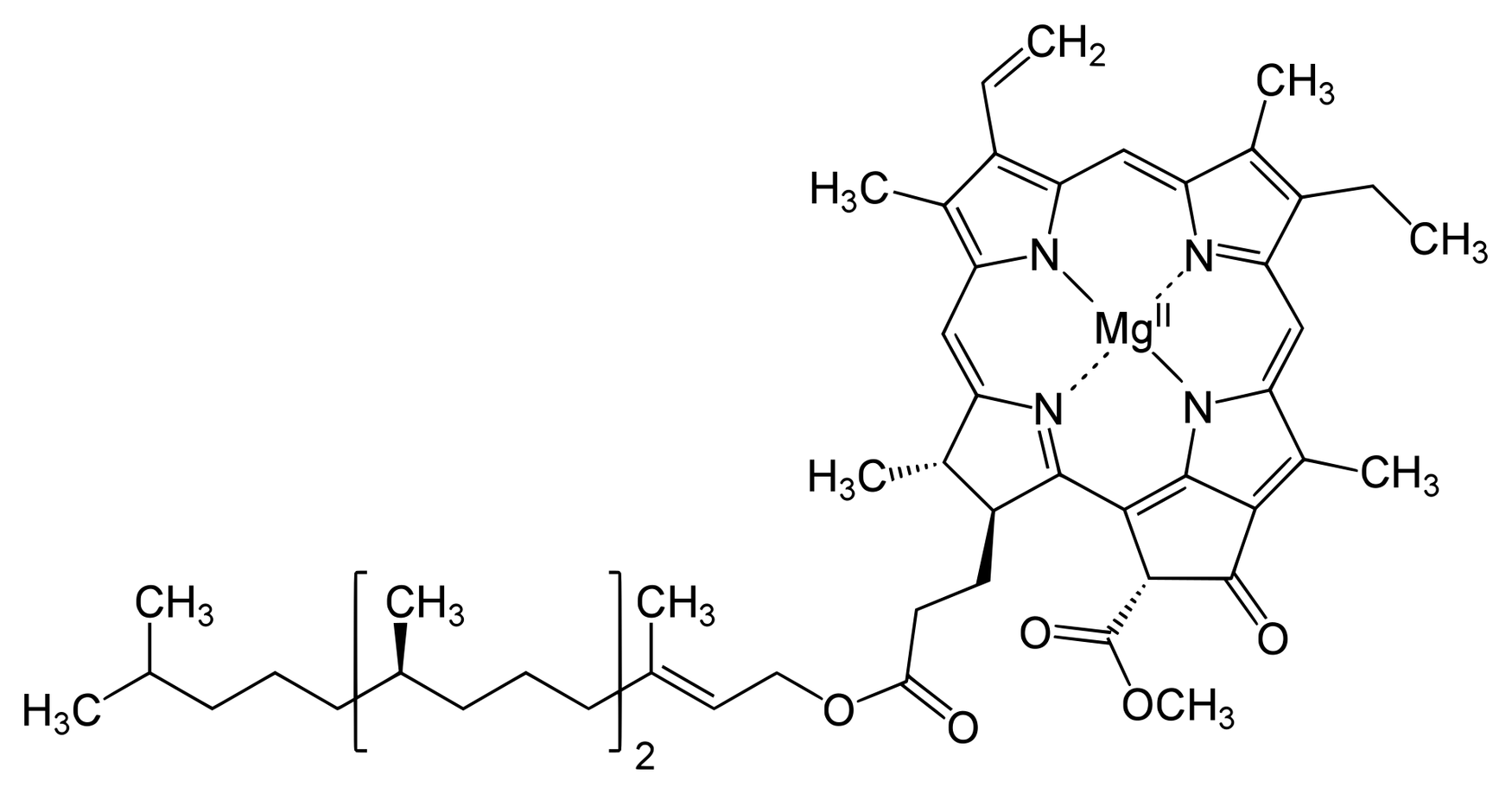

Red chlorophyll catabolite reductase acts while the product of pheophorbide a oxygenase (red chlorophyll catabolite) is still held within that protein.[4] The oxygenase is a Rieske protein containing an iron–sulfur cluster that requires reduced ferredoxin to function.[5] The reductase also requires ferredoxin.[6][7]


chlorophyll catabolite
The fluorescent product can exist in two diastereomeric forms. All plants in a given genera produce a single isomer.[1][4]
References
- 1 2 Hörtensteiner S (2006). "Chlorophyll degradation during senescence". Annual Review of Plant Biology. 57: 55–77. doi:10.1146/annurev.arplant.57.032905.105212. PMID 16669755.
- ↑ Ougham H, Hörtensteiner S, Armstead I, Donnison I, King I, Thomas H, et al. (September 2008). "The control of chlorophyll catabolism and the status of yellowing as a biomarker of leaf senescence". Plant Biology. 10 Suppl 1: 4–14. doi:10.1111/j.1438-8677.2008.00081.x. PMID 18721307.
- ↑ Chen K, Preuss A, Hackbarth S, Wacker M, Langer K, Röder B (July 2009). "Novel photosensitizer-protein nanoparticles for photodynamic therapy: photophysical characterization and in vitro investigations". Journal of Photochemistry and Photobiology B: Biology. 96 (1): 66–74. doi:10.1016/j.jphotobiol.2009.04.006. PMID 19442534.
- 1 2 Pruzinská A, Anders I, Aubry S, Schenk N, Tapernoux-Lüthi E, Müller T, et al. (January 2007). "In vivo participation of red chlorophyll catabolite reductase in chlorophyll breakdown". The Plant Cell. 19 (1): 369–387. doi:10.1105/tpc.106.044404. PMC 1820978. PMID 17237353.
- ↑ Pruzinská A, Tanner G, Anders I, Roca M, Hörtensteiner S (December 2003). "Chlorophyll breakdown: pheophorbide a oxygenase is a Rieske-type iron-sulfur protein, encoded by the accelerated cell death 1 gene". Proceedings of the National Academy of Sciences of the United States of America. 100 (25): 15259–15264. doi:10.1073/pnas.2036571100. PMC 299977. PMID 14657372.
- ↑ Enzyme 1.3.7.12 at KEGG Pathway Database.
- ↑ Wüthrich KL, Bovet L, Hunziker PE, Donnison IS, Hörtensteiner S (January 2000). "Molecular cloning, functional expression and characterisation of RCC reductase involved in chlorophyll catabolism". The Plant Journal. 21 (2): 189–198. doi:10.1046/j.1365-313x.2000.00667.x. PMID 10743659.