Portal:Trinidad and Tobago/Selected cuisine/1
The
Cuisine of Trinidad and Tobago is indicative of the blends of
Indian,
Amerindian,
European,
African,
Creole,
Chinese and
Lebanese gastronomic influences. Many dishes are popular choices for the morning meal in Trinidad and Tobago. These dishes include: salt fish buljol, tomato choka, black pudding, fresh coconut bread, fried Accra, Tannia cakes, and boiled casava.
Portal:Trinidad and Tobago/Selected cuisine/2
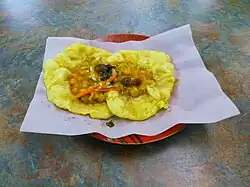
Doubles is a common
street food originating from
Trinidad and Tobago. It is normally eaten during breakfast, but is also eaten occasionally during lunch or as a late night snack and popular hangover food for local Trinidadians. Doubles are made with two
baras (flat fried dough) and filled with
curry channa (
curried chickpeas) and various chutneys. Doubles was first created in Fairfield,
Princes Town by Emamool Deen (a.k.a. Mamudeen) and his wife Raheman Rasulan Deen in 1936.
Portal:Trinidad and Tobago/Selected cuisine/3
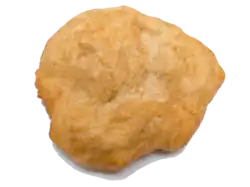
Pholourie (
Pronunciationⓘ), also spelled
phulourie or
phoulourie, is a
snack food commonly eaten in
Trinidad and Tobago and also known in
Guyana and
Suriname. It consists of fried, spiced dough balls that are served with a
chutney. The dough is made up of flour, ground
split peas, water, and spices. Depending on the recipe, green seasoning, garlic, pepper,
turmeric, onions and/or
cumin are used. Then dough balls the size of golf balls are formed and fried afterwards. The fried balls are usually served with a
chutney to dip them in, usually
tamarind or
mango. They are also added to
Karhi.
Portal:Trinidad and Tobago/Selected cuisine/4
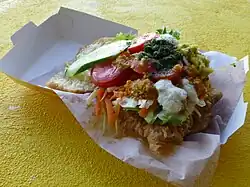
Bake and Shark is a traditional
fast food dish of
Trinidadian cuisine prepared using fried flatbread, shark meat and additional ingredients. It is a classic
street food dish that is sold at a multitude of food stalls and cookshops all over
Trinidad and Tobago. It consists of a fried flatbread ("bake") filled with fried pieces of
shark meat and various other ingredients and sauces. Before frying, the shark meat is either seasoned with a herb blend and breaded, or marinated in a mix of lemon juice, onion, garlic, thyme and
capsicum chinense. Popular additional ingredients are lettuce, coleslaw, tomatoes and/or pineapple; liquid condiments commonly used are mustard, ketchup,
garlic sauce, chili sauce and/or a sauce made from
culantro. In Trinidad, bake and shark is widely associated with
Maracas beach on the Northern coast as it features a multitude of bake and shark stands, and the needed shark is caught in the offshore surf.
Portal:Trinidad and Tobago/Selected cuisine/5
Peanut punch is a beverage that is popular in the Caribbean. The main ingredients of the drink include
peanuts/
peanut butter, milk and sugar. However, variations occur whereby regular milk is often replaced or added to a mixture including
condensed milk, spices (dominantly
nutmeg and
cinnamon),
corn flakes,
Angostura bitters,
glucose powder and quite often
granola mix. The drink is often regarded by some to be an
aphrodisiac due to its high fat,
protein and overall energy content. In
Trinidad, it is made with peanut butter,
milk,
sugar and sometimes
spices. Rum is sometimes used as an ingredient. It is also available commercially in
supermarkets and
grocery stores as well to cater those markets. In
Trinidad and Tobago, peanut punch is a popular drink that is often sold on sidewalks or in established food stores. The drink is traditionally marketed as an energy drink and made with a variety of ingredients according to the vendor.
Portal:Trinidad and Tobago/Selected cuisine/6
Buljol is a salad dish of the
cuisine of Trinidad and Tobago. It consists of chopped
codfish, tomatoes and chilies. The name is of French origin. 18th century colonial power Spain launched the
cédula de población in 1783, an edict that successfully promoted the settling of French (i.e. likewise Catholic) planters in Trinidad who quickly set the population majority. The name is a combination of the French words
brulé (burnt) and
gueule (muzzle), which was changed into "bu'n jaw" in Trinidad's 19th century
patois and finally morphed into "buljol". The name does not relate to the temperature of the dish (it's served cold) but to its hotness, caused by the added hot pepper.
Portal:Trinidad and Tobago/Selected cuisine/7
Pelau is a traditional rice dish of the French West Indies (
Guadeloupe,
Dominica,
Saint Lucia) and popularized in other Caribbean countries such as
Trinidad and Tobago,
Grenada and
Saint Vincent and the Grenadines. Main ingredients are meat (usually chicken or beef, rice,
pigeon peas or
cowpeas, coconut milk and sugar; various vegetables and spices are optional ingredients. Spices used in the dish include cardamom, cloves, cumin and coriander. The meat is
caramelised and the other ingredients are then added one by one, resulting in a dark brown stew. An alternative preparation method is to sauté the meat, precook the rice, prepare the dish and bake it in the oven.
Portal:Trinidad and Tobago/Selected cuisine/8
Chapati (alternatively spelled
chapatti,
chappati,
chapathi, or
chappathi; pronounced as
IAST:
capātī, capāṭī, cāpāṭi), also known as
roti,
safati,
shabaati,
phulka and (in the
Maldives)
roshi, is an
unleavened flatbread originating from the
Indian subcontinent and staple in
India,
Nepal,
Bangladesh,
Pakistan,
Sri Lanka, East Africa,
Arabian Peninsula and the
Caribbean. Chapatis are made of
whole-wheat flour known as
atta, mixed into dough with water,
oil and optional salt in a mixing utensil called a
parat, and are cooked on a
tava (flat skillet).
Portal:Trinidad and Tobago/Selected cuisine/9
The
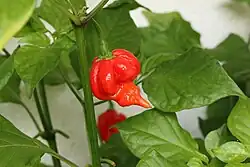
Trinidad Scorpion Butch T pepper is a
Capsicum chinense cultivar that is among the most
piquant peppers in the world. It is indigenous to
Trinidad and Tobago. It was named by Neil Smith from The Hippy Seed Company, after he got the seeds originally from Butch Taylor (the owner of Zydeco Farms in Woodville/
Crosby, Mississippi, and a
hot sauce company) who is responsible for
propagating the pepper's seeds. The "scorpion" peppers are referred to as such because the pointed end of the pepper is said to resemble a
scorpion's stinger.
Portal:Trinidad and Tobago/Selected cuisine/10
The
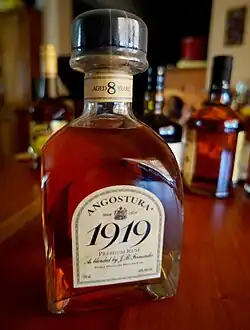
House of Angostura (), also known as
Angostura Limited, is a
Trinidad and Tobago company famous for the production of
Angostura bitters, invented by the company's founder. The company is also a distiller and is the major producer of rum in Trinidad and Tobago. The company also has been used as a vehicle for international expansion by its parent company,
CL Financial. As a result of these acquisitions, the company owns distillers in the
United States,
Canada,
The Bahamas and
Suriname. The company was founded around 1830 in the
Venezuelan town of Angostura (now
Ciudad Bolívar) by a German doctor, Johann Gottlieb Benjamin Siegert, Surgeon-General in
Simon Bolivar's army in Venezuela. Around 1820, he had tried to find a medicine to improve
appetite and
digestive well-being of the soldiers. From the beginning Dr. Siegert was determined to wrest a cure from nature itself, and after four years of trial and error, researching and analysing the qualities of tropical herbs and plants, he finally arrived at a unique blend of herbs in 1824, which he called "Amargo Aromatico" or aromatic bitters. [...] Dr. Siegert hoped to use the bitters to bring relief to his patients, his small circle of family and friends, but these events were to prove otherwise. From these humble beginnings an international industry was soon to rise.
Portal:Trinidad and Tobago/Selected cuisine/11
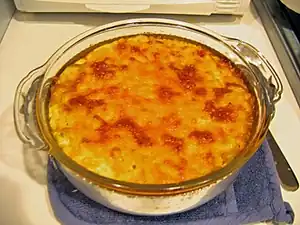
Macaroni pie is a
casserole dish based on baked
macaroni and cheese. Primary ingredients include elbow
macaroni, cheese and milk. Various regional variations exist. In the Caribbean, macaroni pie is typically prepared without using a pie crust, and is sometimes consumed cold, which may be referred to as "Caribbean style". The dish is very popular in Trinidad and Tobago and is often available as a common dish at lunches and dinners. It has been described as a
staple food in Tobago. Cheddar cheese, a key ingredient in the dish, was brought to Trinidad by English peoples. It is sometimes served as a side dish accompanied with stewed meats.
Portal:Trinidad and Tobago/Selected cuisine/12
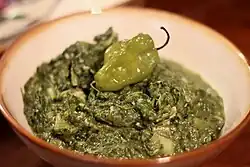
Callaloo (sometimes
kallaloo,
calaloo,
calalloo, or
callalloo) is a popular
Caribbean vegetable dish. There are many variants across the Caribbean, depending on the availability of local vegetables. The main ingredient is an indigenous
leaf vegetable, traditionally either
amaranth (known by many local names including
callaloo),
taro leaves (known by many local names, including
dasheeen bush,
callaloo bush,
callaloo, or
bush) or
Xanthosoma leaves (known by many names, including
coco &
tannia). Since the leaf
vegetable used in some regions may be locally called "callaloo" or "callaloo bush" "dasheen Leaves", some confusion can arise among the vegetables and with the dish itself. This, as is the case with many other Caribbean dishes, is a remnant of West African cuisine.
Trinbagonians, Grenadians and
Dominicans primarily use taro/dasheen bush for callaloo, although
Dominicans also use
water spinach.
Portal:Trinidad and Tobago/Selected cuisine/13
Fried bake is a
Caribbean dish. Many West Indian nations including
Grenada,
Trinidad and Tobago,
Saint Lucia, and
Guyana eat this dish. The main ingredient in fried bake is
flour. It can be served in a multitude of ways. This dish is usually served with
salt fish and steamed vegetables.
Portal:Trinidad and Tobago/Selected cuisine/14
An
aloo pie is a fried
dumpling popular in the
cuisine of Trinidad and Tobago. It is a soft, fried
pastry made from flour and water, and filled with boiled, spiced and mashed
potatoes (
aloo being the
Hindi word for "potato") and other vegetables like green peas or
chana dal (split
chickpeas without their seedcoat). Its shape is similar to a
calzone, and it is usually larger than a
samosa, approximately 13 centimetres (5 inches) long.
Portal:Trinidad and Tobago/Selected cuisine/15
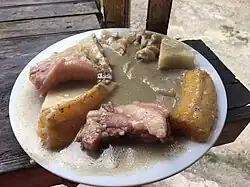
Run down, also referred to as
rundown,
run dun,
rondón,
fling-me-far, and
fling mi for, is a
stew dish in
Jamaican cuisine and
Tobago cuisine. It consists of a soup made up of reduced
coconut milk, with different types of seafood (fish, crabs, small lobsters or shellfish),
plantain,
yam,
tomato,
onion, and
seasonings.
Mackerel and salted mackerel are often used in the dish. Other fish are also used, including locally-caught fish,
cod, salt cod,
shad, other oily fish,
red snapper,
swordfish,
pickled fish,
bull pizzle, and
cassava. Traditionally, the dish is served with
side dishes of
dumplings or baked
breadfruit.