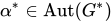
In mathematics, specifically group theory, finite groups of prime power order  , for a fixed prime number
 and varying integer exponents
 , are briefly called finite p-groups.
The p-group generation algorithm by M. F. Newman
[1]
and E. A. O'Brien
[2]
[3]
is a recursive process for constructing the descendant tree
of an assigned finite p-group which is taken as the root of the tree.
Lower exponent-p central series
For a finite p-group  , the lower exponent-p central series (briefly lower p-central series) of
is a descending series
 of characteristic subgroups of ,
defined recursively by
 and
 , for
 .
Since any non-trivial finite p-group  is nilpotent,
there exists an integer
 such that
 and
 is called the exponent-p class (briefly p-class) of .
Only the trivial group
 has
 .
Generally, for any finite p-group ,
its p-class can be defined as
 .
The complete lower p-central series of is therefore given by
 ,
since  is the Frattini subgroup of .
For the convenience of the reader and for pointing out the shifted numeration, we recall that
the (usual) lower central series of is also a descending series  of characteristic subgroups of ,
defined recursively by
 and
 , for
 .
As above, for any non-trivial finite p-group ,
there exists an integer such that  and
 is called the nilpotency class of ,
whereas
 is called the index of nilpotency of .
Only the trivial group has
 .
The complete lower central series of is given by
 ,
since  is the commutator subgroup or derived subgroup of .
The following Rules should be remembered for the exponent-p class:
Let be a finite p-group.
R
- Rule:
 , since the
 descend more quickly than the
 .
- Rule: If
 , for some group
 , then
 , for any
 .
- Rule: For any
 , the conditions
 and
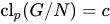 imply
 .
- Rule: Let . If
 , then
 , for all
 , in particular,
 , for all
 .
Parents and descendant trees
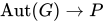
The parent  of a finite non-trivial p-group with exponent-p class
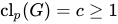 is defined as the quotient
 of by the last non-trivial term
 of the lower exponent-p central series of .
Conversely, in this case, is called an immediate descendant of .
The p-classes of parent and immediate descendant are connected by
 .
A descendant tree is a hierarchical structure
for visualizing parent-descendant relations
between isomorphism classes of finite p-groups.
The vertices of a descendant tree are isomorphism classes of finite p-groups.
However, a vertex will always be labelled by selecting a representative of the corresponding isomorphism class.
Whenever a vertex is the parent of a vertex
a directed edge of the descendant tree is defined by  in the direction of the canonical projection
 onto the quotient
 .
In a descendant tree, the concepts of parents and immediate descendants can be generalized.
A vertex  is a descendant of a vertex
 ,
and is an ancestor of ,
if either is equal to
or there is a path
 , where
 ,
of directed edges from to .
The vertices forming the path necessarily coincide with the iterated parents  of , with
 :
 , where .
They can also be viewed as the successive quotients  of p-class
 of
when the p-class of is given by
 :
 , where
 .
In particular, every non-trivial finite p-group defines a maximal path (consisting of  edges)


ending in the trivial group  .
The last but one quotient of the maximal path of is the elementary abelian p-group
 of rank
 ,
where
 denotes the generator rank of .
Generally, the descendant tree  of a vertex is the subtree of all descendants of , starting at the root .
The maximal possible descendant tree
 of the trivial group contains all finite p-groups and is exceptional,
since the trivial group has all the infinitely many elementary abelian p-groups with varying generator rank
 as its immediate descendants.
However, any non-trivial finite p-group (of order divisible by ) possesses only finitely many immediate descendants.
p-covering group, p-multiplicator and nucleus
Let be a finite p-group with  generators.
Our goal is to compile a complete list of pairwise non-isomorphic immediate descendants of .
It turns out that all immediate descendants can be obtained as quotients of a certain extension
 of
which is called the p-covering group of and can be constructed in the following manner.
We can certainly find a presentation of in the form of an exact sequence
 ,
where  denotes the free group with generators and :\ F\longrightarrow G}
 is an epimorphism with kernel
 .
Then
 is a normal subgroup of consisting of the defining relations for
 .
For elements
 and
 ,
the conjugate
 and thus also the commutator
 are contained in .
Consequently,
 is a characteristic subgroup of ,
and the p-multiplicator
 of is an elementary abelian p-group, since
 .
Now we can define the p-covering group of by
 ,
and the exact sequence

shows that is an extension of by the elementary abelian p-multiplicator.
We call

the p-multiplicator rank of .
Let us assume now that the assigned finite p-group is of p-class .
Then the conditions and  imply
 , according to the rule (R3),
and we can define the nucleus of by

as a subgroup of the p-multiplicator.
Consequently, the nuclear rank

of is bounded from above by the p-multiplicator rank.
Allowable subgroups of the p-multiplicator
As before, let be a finite p-group with generators.
Proposition.
Any p-elementary abelian central extension

of
by a p-elementary abelian subgroup  such that
 is a quotient of the p-covering group of .
For the proof click show on the right hand side.
Proof
The reason is that, since , there exists an epimorphism :\ F\to H}
 such that
 , where :\ H\to H/Z\simeq G}
 denotes the canonical projection.
Consequently, we have

and thus  .
Further,
 , since
 is p-elementary,
and
 , since is central.
Together this shows that
 and thus
 induces the desired epimorphism
 such that
 .
In particular, an immediate descendant  of is a p-elementary abelian central extension

of ,
since
 implies
 and
 ,
where  .
Definition.
A subgroup  of the p-multiplicator of is called allowable
if it is given by the kernel
 of an epimorphism
onto an immediate descendant of .
An equivalent characterization is that  is a proper subgroup which supplements the nucleus
 .
Therefore, the first part of our goal to compile a list of all immediate descendants of is done,
when we have constructed all allowable subgroups of which supplement the nucleus  ,
where .
However, in general the list
 ,
where  ,
will be redundant,
due to isomorphisms
 among the immediate descendants.
We denote the number of all immediate descendants, resp. immediate descendants of step size  , of by
 , resp.
 . Then we have
 .
As concrete examples, we present some interesting finite metabelian p-groups with extensive sets of immediate descendants, using the SmallGroups identifiers and additionally pointing out the numbers
 of capable immediate descendants in the usual format
 as given by actual implementations of the p-group generation algorithm in the computer algebra systems GAP and MAGMA.
First, let  .
We begin with groups having abelianization of type  .
See Figure 4 in the article on descendant trees.
- The group
 of coclass has ranks
 ,
 and descendant numbers
 ,
 .
- The group
 of coclass
 has ranks , and descendant numbers
 ,
 .
- One of its immediate descendants, the group
 , has ranks ,
 and descendant numbers
 ,
 .
In contrast, groups with abelianization of type  are partially located beyond the limit of computability.
- The group
 of coclass has ranks ,
 and descendant numbers
 ,
 .
- The group
 of coclass
 has ranks
 ,
 and descendant numbers
 ,
 unknown.
- The group
 of coclass
 has ranks
 ,
 and descendant numbers
 ,
 unknown.
Next, let  .
Corresponding groups with abelianization of type  have bigger descendant numbers than for .
- The group
 of coclass has ranks , and descendant numbers
 ,
 .
- The group
 of coclass has ranks
 , and descendant numbers
 ,
 .
Schur multiplier
Via the isomorphism  ,
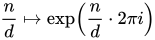 the quotient group
 can be viewed as the additive analogue of the multiplicative group
 of all roots of unity.
Let be a prime number and be a finite p-group with presentation  as in the previous section.
Then the second cohomology group
 of the -module
 is called the Schur multiplier of . It can also be interpreted as the quotient group
 .
I. R. Shafarevich[4]
has proved that the difference between the relation rank  of
and the generator rank of is given by the minimal number of generators of the Schur multiplier of ,
that is
 .
N. Boston and H. Nover[5]
have shown that  ,
for all quotients
 of p-class
 , ,
of a pro-p group with finite abelianization
 .
Furthermore, J. Blackhurst (in the appendix On the nucleus of certain p-groups of a paper by N. Boston, M. R. Bush and F. Hajir
[6])
has proved that a non-cyclic finite p-group with trivial Schur multiplier  is a terminal vertex in the descendant tree of the trivial group ,
that is,


 .
References
- ↑
Newman, M. F. (1977). Determination of groups of prime-power order. pp. 73-84, in: Group Theory, Canberra, 1975, Lecture Notes in Math., Vol. 573, Springer, Berlin.
- ↑
O'Brien, E. A. (1990). "The p-group generation algorithm". J. Symbolic Comput. 9 (5–6): 677–698. doi:10.1016/s0747-7171(08)80082-x.
- ↑
Holt, D. F., Eick, B., O'Brien, E. A. (2005). Handbook of computational group theory. Discrete mathematics and its applications, Chapman and Hall/CRC Press.
{{cite book}}: CS1 maint: multiple names: authors list (link)
- ↑ Shafarevich, I. R. (1963). "Extensions with given points of ramification". Inst. Hautes Études Sci. Publ. Math. 18: 71–95. Translasted in Amer. Math. Soc. Transl. (2), 59: 128-149, (1966).
- ↑
Boston, N., Nover, H. (2006). Computing pro-p Galois groups. Proceedings of the 7th Algorithmic Number Theory Symposium 2006, Lecture Notes in Computer Science 4076, 1-10, Springer, Berlin.
{{cite book}}: CS1 maint: multiple names: authors list (link)
- ↑
Boston, N., Bush, M. R., Hajir, F. (2013). "Heuristics for p-class towers of imaginary quadratic fields". Math. Ann. arXiv:1111.4679.
{{cite journal}}: CS1 maint: multiple names: authors list (link)