Oswald Watt Gold Medal
| The Oswald Watt Gold Medal | |
|---|---|
 Photograph of the Oswald Watt Gold Medal as presented to Edgar Percival in 1936. | |
| Awarded for | A most brilliant performance in the air or the most notable contribution to aviation by an Australian or in Australia. |
| Country | Australia |
| Presented by | Royal Federation of Aero Clubs of Australia (RFACA) |
| First award | 1921 |
| Most wins | Bert Hinkler (1927, 1928, 1931, 1932) Sir Charles Kingsford Smith (1929, 1930, 1933, 1934) |
| Website | Official site |
The Oswald Watt Gold Medal is an Australian aviation award presented by the Royal Federation of Aero Clubs of Australia (RFACA), and has been described as Australia's highest aviation award.[1]
It is awarded for "a most brilliant performance in the air or the most notable contribution to aviation by an Australian or in Australia". Established in 1921 following the death of Oswald Watt, the medal has recognised both notable flights and broader contributions to Australian aviation, and is awarded on merit rather than on an annual basis.[2]
Background
The medal is named after Lieutenant Colonel Walter Oswald Watt (1878–1921), an early Australian military aviator and a leading figure in the Australian aero club movement. Watt became the first Australian military officer to gain a pilot's licence in 1911 and later served with distinction in the French and Australian flying services during the First World War.[3][4] After returning to Australia, he became foundation president of the New South Wales Section of the Australian Aero Club in 1919 and played an important role in the development of civil aviation regulation in Australia.[5][6]
Following Watt's death in 1921, he left £500 in his will to the Australian Aero Club to fund a gold medal to be presented each year to the aviator who achieves "the most brilliant performance in the air" by an Australian or in Australia.[7][8]
The first awards were approved retrospectively in 1927, after the bequest and administration of the medal had been settled.[1] The medal has since been administered by the national aero club federation under its successive names, from the Australian Aero Club Federal Council to the Royal Federation of Aero Clubs of Australia.
List of recipients
The list of recipients includes many of the best-known names in Australian aviation, including Bert Hinkler, Charles Kingsford Smith, Hudson Fysh, and Dick Smith.
| Year | Image | Recipient | Citation[9] | Ref(s) |
|---|---|---|---|---|
| 1921 |  |
Francis Stewart Briggs | Pioneer of long-distance flights in C. J. De Garis's Airco DH.4, including the first east-to-west aerial crossing of Australia from Melbourne to Perth in December 1920 and a one-day Brisbane to Melbourne flight in January 1921. | [10] |
| 1922 |  |
Harry Turner Shaw | Completed the first civilian Melbourne to Sydney flight in May 1922 in a 50 hp Maurice Farman Sport; delayed by engine trouble at Moss Vale, he reached Sydney on the next hop and later returned to Melbourne via Tumut. | [10][11][12] |
| 1923 | No award |
[10] | ||
| 1924 |  |
Flt Lt Ivor McIntyre | Pilot of a Royal Australian Air Force (RAAF) Fairey IIID configured as a floatplane in the first circumnavigation of Australia by air; departing from RAAF Point Cook, Victoria on 6 April 1924 and landing on St. Kilda Beach 44 days later | [10] |
| 1925 | E. J. Jones | Flew from Melbourne to Normanton in north-west Queensland and back to Melbourne | [10] | |
| 1926 | |
Flt Lt Ivor McIntyre | Second award; pilot on a flight with Wing Commander (later Air Marshal) Richard Williams from RAAF Point Cook near Melbourne to the Solomon Islands and return | [10] |
| 1927 |  |
Bert Hinkler | Flew 1,200 miles non stop from Croydon (London, United Kingdom) to Riga, Latvia in 10 hours and 45 minutes. He piloted a prototype Avro Avian 581A (registration G-EBOV). | [10][13] |
| 1928 | Second award; piloted the first non stop solo flight between England and Australia, departing London on 7 February 1928 and arriving in Darwin on 22 February; and back in his home town of Bundaberg a few days later on 27 February. The flight took 128 flying hours using the same Avro Avian 581A (registration G-EBOV) as his earlier non-stop London to Latvia. | [10][14] | ||
| 1929 |  |
Sir Charles Kingsford Smith | Flew his Fokker F.VIIb (Southern Cross, VH-USU) alongside Charles Ulm, Harold Litchfield and Tom McWilliams from Derby, Western Australia to Croydon, London in the record-breaking time of 12 days, 18 hours. | [10][15] |
| 1930 | Second award; in June 1930 he piloted the Southern Cross across the Atlantic Ocean from Ireland to Newfoundland in 31½ hours. Returning to England, he then took delivery of an Avro Avian biplane (Southern Cross Junior) and flew a record-breaking solo flight from England to Darwin beating Hinkler's time by 5 ½ days. | [10][16] | ||
| 1931 | |
Bert Hinkler | Third award; flew a de Havilland Puss Moth from Canada via New York, Jamaica, British Guiana and Brazil across the South Atlantic to West Africa, becoming the first person to fly solo across the South Atlantic. | [10][17][18] |
| 1932 | Fourth award; further recognition for his 1931 Puss Moth expedition, particularly the solo South Atlantic crossing for which he also received the Segrave Trophy and the Johnston Memorial Silver Plaque in 1932. | [10][19][20] | ||
| 1933 | |
Sir Charles Kingsford Smith | Third award; flew the Percival Gull ''Miss Southern Cross'' from Lympne (Kent, United Kingdom) to Wyndham, Western Australia in 7 days 4 hours 44 minutes, setting a new England–Australia record of 7 days, 4 hrs, 44 min. | [10][21] |
| 1934 | Fourth award; with Patrick Gordon Taylor as navigator, flew the Lockheed Altair ''Lady Southern Cross'' from Archerfield Airport in Brisbane to the United States via Fiji and Hawaii, completing the first eastward trans-Pacific flight. | [10][22] | ||
| 1935 |  |
Harry Frank Broadbent | Awarded for his 1935 record flights: a round-Australia circuit in a de Havilland Puss Moth in 3 days, 9 hours, 54 minutes, and a solo England to Australia record in a Percival Gull Six in 6 days, 21 hours, 19 minutes. | [10][23][21] |
| 1936 | 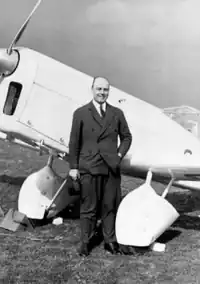 |
Edgar Percival | Awarded for flying a Percival Gull from Gravesend (Kent, United Kingdom) to Oran, North Africa, and back in one day, and for speed-racing achievements including the King's Cup air race and Folkestone Speed Trophy. | [10][24] |
| 1937 |  |
Dr. Clyde Fenton | Awarded for meritorious work as the Northern Territory's flying doctor in 1937, piloting his own aircraft on emergency medical and rescue flights to remote stations and settlements across the Territory. | [10] |
| 1938 |  |
Don Bennett | Awarded for piloting the Short S.20 Mercury flying-boat on the first commercial non-stop east-to-west transatlantic flight, from Foynes, Ireland, to Boucherville near Montreal, in July 1938. | [10] |
| 1939 | No award |
[10] | ||
| 1940 | ||||
| 1941 | ||||
| 1942 | ||||
| 1943 | ||||
| 1944 | ||||
| 1945 | ||||
| 1946 | |
Don Bennett | Second award; for his survey flight for British South American Airways (BSAA), flying the Avro Lancastrian Star Land on a route linking London with the Caribbean and Central America as part of the development of postwar South American services. | [10] |
| 1947 |  |
Harold Brownlow Martin | Awarded for setting a London to Cape Town speed record on 1 May 1947 in a de Havilland Mosquito, flying with Squadron Leader Edward Sismore in 21 hours 31 minutes. | [10] |
| 1948 | No award |
[10] | ||
| 1949 | ||||
| 1950 | Martin Warner | Awarded for his British Empire altitude record in a Slingsby T.25 Gull 4 Glider on December 30, 1950, during which an altitude maximum of 23,500 ft was attained after flying into a cloud and catching an updraft. | [10][25] | |
| 1951 |  |
Patrick Gordon Taylor | Awarded for his 1951 trans-Pacific flight from Australia to Chile in the Consolidated PBY Catalina Frigate Bird II, making the first aerial crossing of the South Pacific between Australia and South America via Tahiti and Easter Island. | [10] |
| 1952 | Sqn Ldr Peter Gordon Fisher | Awarded for piloting an English Electric Canberra jet bomber from England to Melbourne in 23 hours 5 minutes on 12 May 1952, the first flight between the two countries in under 24 hours, and for setting a Darwin to Laverton record of 3 hours 55 minutes. | [10][26] | |
| 1953 | Wing Commander Derek "Jell" Cuming | Awarded for his role in the 1953 London to Christchurch air race as commander of the RAAF's No. 1 Long Range Flight, and for his wider contribution to aviation as a leading RAAF test pilot. | [10] | |
| 1954 | Mervyn Waghorn | Awarded for his 303-mile gliding flight from Narromine to Wangaratta in 1954; Waghorn was a prominent Australian glider pilot and an early president of the Gliding Federation of Australia. | [10] | |
| 1955 | No award |
[10] | ||
| 1956 | ||||
| 1957 | Sir Donald Anderson | Director General of the Department of Civil Aviation, for the most notable contribution to aviation and in particular for his performance on behalf of Australia and Qantas in enabling this country to become an all round the world operator. | ||
| 1958 | Squadron Leader D. W. Leckie | Awarded for leading the RAAF Antarctic Flight at Mawson Station in 1956, flying Auster Mk 6 aircraft in support of Australia's Antarctic expedition, aerial surveying and mapping work in the Prince Charles Mountains. | [10] | |
| 1959 | Alan Edward Chadwick | For outstanding work and devotion to duty with the Flying Medical Service of the Bush Church Aid Society. Notable for his role as Chief Pilot which saw him based at Ceduna, South Australia and included emergency medical services across the Nullarbor Plain and outback communities. | [10][27] | |
| 1960 |  |
Brigadier Guy N. Moore | For a most notable contribution by an Australian to the advancement of civil aviation. Notable for his career associated with aviation administration and public advocacy for civil aviation. | [10] |
| 1961 | No award |
[10] | ||
| 1962 |  |
Henry Millicer | For a most notable contribution to aviation in Australia. Notable for his contributions to the development of the Victa Airtourer and the Victa Aircruiser. | [10] |
| 1963 | No award |
[10] | ||
| 1964 |  |
Edward Connellan | For a most notable contribution to aviation in Australia. Notable for founding Connellan Airways in 1939 and the development of air mail, passenger and medical services across the Northern Territory and central Australia. | [10] |
| 1965 | No award |
[10] | ||
| 1966 | Harry Schneider | For a most notable contribution to aviation in Australia. Notable for supporting the development of the sport of gliding in Australia and establishing a glider manufacturing industry in South Australia. | [10] | |
| 1967 |  |
Sir Wilmot Hudson Fysh | For a most notable contribution to aviation in Australia. Notable for co-founding Qantas Airways in 1920 alongside Paul McGinness and Sir Fergus McMaster. | [10] |
| 1968 | No award |
[10] | ||
| 1969 |  |
George Alfred (Peter) Lloyd | For a most notable contribution to aviation in Australia during his Presidency of the Royal Federation of Aero Clubs of Australia from 1958 to 1970 and in particular as Chairman of the 1969 BP England to Australia Commemorative Air Race. | [10] |
| 1970 | No award |
[10] | ||
| 1971 | ||||
| 1972 | ||||
| 1973 |  |
Sir Norman Brearley | For a most notable contribution to aviation in Australia. Notable for founding West Australian Airways in 1921 and pioneering interstate air mail routes across Western Australia. | [10] |
| 1974 |  |
Sir Lawrence Wackett | For a most notable contribution to aviation in Australia. Notable for his work as an aircraft designer, manufacturer and industrial leader with the Commonwealth Aircraft Corporation and the growth of Australia's aircraft manufacturing industry. | [10] |
| 1975 |  |
Sir Reginald "Reg" Ansett | For a most notable contribution to aviation in Australia. Notable for founding Ansett Australia in 1935. | [10] |
| 1976 | Clive Canning | For the most brilliant performance in flying his own amateur constructed Thorp T-18 aircraft from Melbourne to London and return in the course of which he established a number of FAI World Class Records. Notable for being the first Australia-England flight in a homebuilt aircraft | [10][28][29] | |
| 1977 |  |
Horrie Miller | For a most notable contribution to the development of aviation in Australia. Notable for co-founding MacRobertson Miller Airlines in 1919. | [10] |
| 1978 | No award |
[10] | ||
| 1979 | Bill Moyes | For a most notable contribution to the development of Hang Gliding in Australia and throughout the world. | [10] | |
| 1980 | No award |
[10] | ||
| 1981 | ||||
| 1982 | ||||
| 1983 |  |
Dick Smith | For a most notable contribution to the development of aviation in Australia and throughout the world in his successful Around the World flight in a helicopter. Notable for becoming the first person to fly solo around the world in a rotary-wing aircraft in a Bell JetRanger 206B (S/N 3653; VH-DIK). | [10][1] |
| 1984 | No award |
[10] | ||
| 1985 | ||||
| 1986 | ||||
| 1987 | ||||
| 1988 | Ian Honnery | For the outstanding contribution he made to the development of aviation in Australia, particularly in his dedicated organisation of the 1988 Bicentennial Air Show. | [10] | |
| 1989 | No award |
[10] | ||
| 1990 | ||||
| 1991 | ||||
| 1992 | Chris Dewhirst | For the most notable contribution to aviation in 1991 by successfully piloting a hot air balloon over Mt Everest. This was the first balloon flight of any kind over Mt Everest. | [10] | |
| 1993 | George "Scotty" Allan | For a most notable contribution to aviation in Australia. | [10] | |
| 1994 | No award |
[10] | ||
| 1995 | Jon Johanson | For the most brilliant performance in the air by an Australian in 1995. Notable for flying around the world in a Van's RV-4 two seat homebuilt aircraft that he had built himself, leaving Adelaide's Parafield Airport on 26 June 1995 and arriving back at Parafield on 4 September 1995. | [10][30] | |
| 1996 | Shirley Adkins | For a most noteworthy contribution to aviation in Australia. Notable being the first woman to win the Oswald Watt Gold Medal and previously was a trailblazer as the first female president of the Royal Aero Club of Western Australia and the Royal Federation of Aero Clubs of Australia. | [10][1] | |
| 1997 | Bernard (Bernie) Sarroff | For the most notable contribution to aviation in Australia by organising flying safaris overseas and in Australia | [10] | |
| 1998 |  |
Dr Andy Thomas | For a most notable contribution to Aviation by an Australian. Notable as an Australian-born NASA astronaut who spent 141 days aboard the Mir space station in 1998. | [10][1] |
| 1999 |  |
Dr Paul Scully-Power | For a most notable contribution to Aviation by an Australian. Notable being Australia's first astronaut, his work in oceanography and remote sensing from space as well as his 1984 Space Shuttle mission STS-41-G. | [10][31] |
| 2000 | No award |
[10] | ||
| 2001 | ||||
| 2002 | ||||
| 2003 | ||||
| 2004 | ||||
| 2005 | ||||
| 2006 | ||||
| 2007 | ||||
| 2008 | ||||
| 2009 | ||||
| 2010 | ||||
| 2011 | Squadron Leader Paul Simmons | For a most notable contribution to Aviation by an Australian for his unique combination of professional mastery as an operational fighter pilot, dedication to the mentoring and instruction of junior aircrew, commitment to the preservation of aviation heritage as the Australian CA-27 Sabre pilot and establishment of the LIFT (Learning, Inspiration, Friendship and Trust) youth charity. | [10][32][33] | |
| 2012 | John Wallace Dickenson | For a most notable contribution to Aviation by an Australian for his invention of the modern Hang Glider and making improvements in flight safety. | [10][34] | |
| 2013 | Marj Davis Gillespie | For a most notable contribution to Aviation by an Australian for her voluntary contribution of sixteen years to the Royal Federation of Aero Clubs of Australia, the Flying Training Industry and General Aviation. | [10] | |
| 2014 |  |
Air Chief Marshal Sir Angus Houston | For leadership with the Joint Agency Coordination Centre coordinating the Australian Government's support for the search into missing Malaysia Airlines Flight MH370 and his role as Special Envoy to Ukraine to lead Australia's efforts on the ground in Ukraine to help recover, identify and repatriate Australians killed in the Malaysia Airlines Flight MH17 crash and to assist relatives of Australian victims, and ensure that a proper investigation of the crash was Initiated in accordance with international standards. | [10] |
| 2015 | No award |
[10] | ||
| 2016 | George Alfred (Peter) Lloyd | Second award; for continued and valuable service to the Aviation Industry and in particular, the safety of aviation. | [10] | |
| 2017 | No award |
[10] | ||
| 2018 | ||||
| 2019 | ||||
| 2020 | ||||
| 2021 | ||||
| 2022 | ||||
| 2023 | ||||
| 2024 | ||||
| 2025 | ||||
See also
References
- 1 2 3 4 5 Hitchen, Steve (2020-01-01). "Aviation's Gold Medallists". Australian Flying. No. January-February 2020. pp. 56–61.
- ↑ "Awards". Royal Federation of Aero Clubs of Australia. Retrieved 31 August 2015.
- ↑ "Australians abroad". The Sydney Morning Herald. 18 October 1911. p. 5. Retrieved 12 November 2011.
- ↑ Stephens; Isaacs, High Fliers, p. 16
- ↑ Johnston, Susan (1966). "Watt, Walter Oswald (Toby) (1878–1921)". Australian Dictionary of Biography, Volume 12. Melbourne University Press. Retrieved 23 October 2013.
- ↑ Stephens, The Royal Australian Air Force, pp. 16–19
- ↑ "Encouraging aviation: Late Colonel Watt's legacies". The Sydney Morning Herald. 12 July 1921. p. 5. Retrieved 12 February 2010.
- ↑ "Awards: Oswald Watt Gold Medal". Royal Federation of Aero Clubs of Australia. Retrieved 14 February 2010.
- ↑ "Past Winners". Royal Automobile Club. Archived from the original on 12 June 2018. Retrieved 13 November 2017.
- 1 2 3 4 5 6 7 8 9 10 11 12 13 14 15 16 17 18 19 20 21 22 23 24 25 26 27 28 29 30 31 32 33 34 35 36 37 38 39 40 41 42 43 44 45 46 47 48 49 50 51 52 53 54 55 56 57 58 59 60 61 62 63 64 65 66 67 68 69 Oswald Watt Gold Medal winners list, Royal Federation of Aero Clubs of Australia. Retrieved 9 October 2019
- ↑ "Flying Helmet - Major H.T Shaw, RFC & RAF, circa 1918". museumvictoria.com.au. Museum Victoria. Archived from the original on March 3, 2014. Retrieved 27 February 2014.
- ↑ "SHAW, Harry Turner (1889-1973)". gnet.tgc.vic.edu.au. Retrieved 2026-04-17.
- ↑ "HINKILER'S VENTURE". The Daily Advertiser (Wagga Wagga). 1927-08-29. p. 2. Retrieved 2026-04-17 – via National Library of Australia.
- ↑ "Bert Hinkler & Avro Avian G-EBOV". www.airwaysmuseum.com. Retrieved 2026-04-17.
- ↑ "1929-07-10 – Aviation Historical Society of Australia". www.ahsa.org.au. Retrieved 2026-04-17.
- ↑ "Air Commodore Sir Charles KINGSFORD SMITH MC, AFC [1897 – 1935]" (PDF). United Service Club. Retrieved 2026-04-17.
- ↑ "Herbert John Louis "Bert" Hinkler". Australian Aviation. Retrieved 2026-04-17.
- ↑ "hinkler_hjl". www.britishaviation-ptp.com. Retrieved 2026-04-17.
- ↑ "History". www.bundaberg.qld.gov.au. Retrieved 2026-04-17.
- ↑ "Bert Hinkler - His achievements". www.hinklerresearch.org.au. Retrieved 2026-04-17.
- 1 2 Lewis 1970
- ↑ VH-USB "Lady Southern Cross" (Part 3)
- ↑ Isaacs, Keith. 'Broadbent, Harry Frank (Jim) (1910–1958)' Australian Dictionary of Biography, National Centre of Biography, Australian National University, published first in hardcopy 1993, accessed online 18 March 2015
- ↑ "Edgar Wikner Percival". Australian Aviation. Retrieved 2026-04-17.
- ↑ "Sydney Soaring Club's Slingsby Gull 4, c. 1948 - airframe parts" (PDF). Australian Gliding Museum. Retrieved 10 October 2019.
- ↑ Writers, Staff (2022-05-10). "From the Archives, 1952: Canberra bomber's record-breaking flight". The Sydney Morning Herald. Retrieved 2026-04-18.
- ↑ "Allan Chadwick - bush pilot". www.samhs.org.au. Retrieved 2026-04-17.
- ↑ Johanson (1997) p.59
- ↑ "World Aviation in 1976". century-of-flight.net. Archived from the original on 15 May 2009. Retrieved 27 February 2014.
- ↑ "VAN'S RV-4 Registration No. VH-NOJ", information placard, South Australian Aviation Museum
- ↑ "Dr. Paul Scully-Power | National Air and Space Museum". airandspace.si.edu. Retrieved 2026-04-17.
- ↑ "Squadron Leader Simmons Wins Oswald Watt Medal - Australian Flying". www.australianflying.com.au. 2012-06-04. Retrieved 2026-04-17.
- ↑ australianaviation.com.au (2012-06-12). "'Simmo' awarded Oswald Watt Gold Medal". Australian Aviation. Retrieved 2026-04-17.
- ↑ "Hang Glider Inventor takes the Oswald Watt - Australian Flying". www.australianflying.com.au. 2013-10-18. Retrieved 2026-04-17.
- AFC website list of Oswald Watts Gold Medal recipients retrieved 2007-08-21.
- Johanson, Jon (1997). Aiming High: The Little Australian Built to Fly the World. Kent Town, SA: Wakefield Press. ISBN 1-86254-424-7.
- Royal Federation of Aero Clubs of Australia