Martinsburg Mining, Manufacturing and Improvement Company
The Martinsburg Mining, Manufacturing and Improvement Company was a company founded in 1890 in Martinsburg, West Virginia.[1][2] The company developed the Boomtown Historic District and the Martinsburg Mining, Manufacturing & Improvement Co. Historic District. Land for the Interwoven Mills was provided from the company.[3]: 13
In the early 1890's, the Martinsburg Mining, Manufacturing, and Improvement Company bought hundreds of acres on the south side of Martinsburg.[1][2][4] The company organized its officials by spring of 1891.[5]
Boomtown Historic District
Boomtown Historic District | |
 Fountain on Virginia Ave | |
  Location within West Virginia 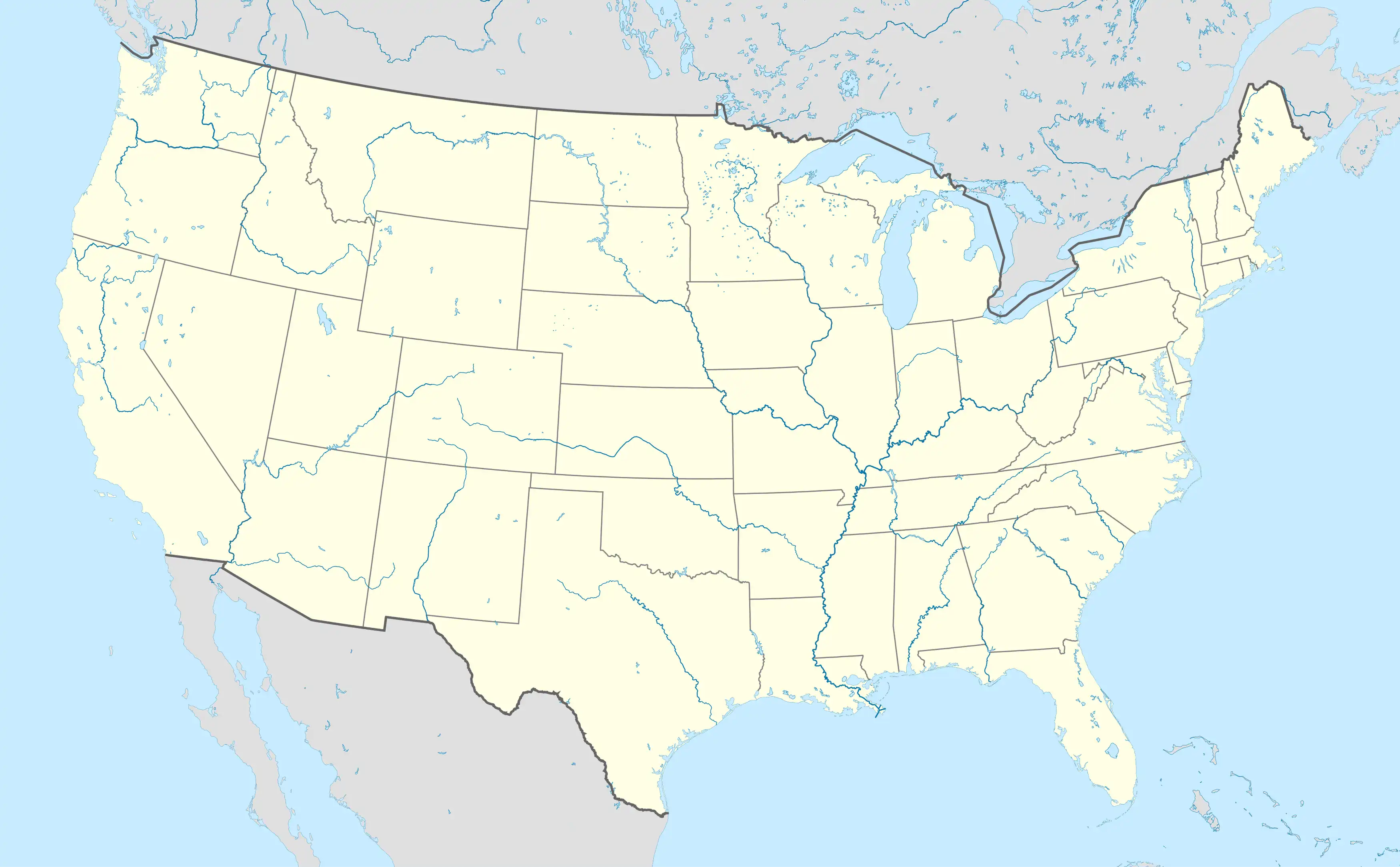 Location within the United States | |
| Location | Roughly along Winchester Ave. to Arden Rd., W. King St. to Red Hill Rd., W. Stephen, W. Addition St, and Raleigh Sts., Martinsburg, West Virginia |
|---|---|
| Coordinates | 39°27′6″N 77°58′44″W / 39.45167°N 77.97889°W |
| Area | 142 acres (57 ha)[6]: 40 |
| Built | 1891 |
| Architect | Multiple |
| Architectural style | Greek Revival, Queen Anne, Shingle Style |
| MPS | Berkeley County MRA |
| NRHP reference No. | 80004414 |
| Added to NRHP | December 10, 1980[7] |
The Boomtown Historic District is a streetcar suburb boomtown consisting of the western and southern portions of Martinsburg, West Virginia, generally along the alignments of West King Street and Winchester Avenue. It includes a former industrial section of the town, home to a number of textile mills, as well as the housing that was built for mill workers.[6]: 38–39
Boomtown's central core is along Virginia, West Virginia and Faulkner Avenues, centering on the fountain at Virginia and Faulkner. The area consists of primarily middle-class Victorian-style houses, in contrast to the more modest working-class houses on the opposite side of Winchester Avenue.[6]: 38
The area was designated a historic district in 1980.[7] It includes the separately-listed Abell-Kilbourn House.[6]: 9
Development
Boomtown was laid out with 3,000 lots, 42 streets, and a sperate area for manufacturing plants. These were completed on April 12, 1891.[8] On October 30 and 31, Boomtown opened when the Martinsburg Mining, Manufacturing, and Improvement Company held a two-day sale of the lots in the subdivision.[1][6]: 31 The sale was successful with good advertisement. The lots were bought by clients from Chicago, New York, and other areas.[1] They made $94,430.[9]
Boomtown opened in conjunction with the Martinsburg Street Railway.[1][6]: 31, 38 The street railway traveled on Raleigh Street on its approach to Boomtown;[10] where it then ran along the rear of the development, to its eastern side.[3]: 13
Textile mills
Boomtown's industrial section laid at the intersection of King Street and the Winchester Turnpike. This held textile mills[6]: 14 recruited by the MMM&I Company.[4][2][8] The Chesapeake and Ohio and the Cumberland Valley Railroad started operations to the mills in 1873.[6]: 14 The area was established by the Cashmere Mills, Crawford Woolen Company, Interwoven Mills, Shenandoah Pants Company, and Southern Merchant Tailoring Company in 1891.[1][4][6]: 37 The Crawford Woolen and Cashmere Mills stood along Stephen Street.[6]: 37 These mills made Martinsburg a leader in manufacturing.[11][4] After 1891, in the following fifteen years, the industrial area was populated by the Heiston Construction Company, Purdy Picture Frame Company, H. P. Thorn Lumber Company, and other large stores and corporations. Forty years after, these mills and textile industries were lost and were replaced with new businesses.[1]

Interwoven Mill
The Interwoven Mill was the largest manufacturing factory in the Eastern panhandle of West Virginia, the factory was a boom for Martinsburg.[3]: 14–15
In 1893, Charles Kilbourn took over operations at the Middlesex Mill, which was owned and operated by Colonel R.J. Hickman. Charles implemented the knitting machine, which was invented by his father. In 1899, Charles's father started Kilbourne Knitting Machine Company in New Jersey, Charles acted as vice president. After a fire, the Kilbourne Knitting Machine Company relocated to the Interwoven Mill. Both mills were expanded and renamed to the Interwoven Mill after Hickman's death.[3]: 14 By 1922, the Interwoven Mill expanded to nearly triple it's 1897 size.[3]: 15
In 2018, the Interwoven Mill was up for sale as adaptive reuse.[12]: 39 The Interwoven Mill became the Interwoven Lots,[13] an approximately 400 unit apartment and 5,500 square foot commercial space. The project consists of 3 phases and has a planned cost of $80 million dollars.[14][15][16]
Martinsburg Mining, Manufacturing & Improvement Co. Historic District
Martinsburg Mining, Manufacturing & Improvement Co. Historic District | |
 House on Raleigh St | |
Location within West Virginia Location within the United States | |
| Location | New York, Virginia, West Virginia, Maryland, Florida, and Faulkner Avenues, Martinsburg, West Virginia |
|---|---|
| Coordinates | 39°26′59″N 77°58′26″W / 39.44972°N 77.97389°W |
| Area | 64 acres (26 ha) |
| Built | 1891-1952 |
| Architectural style | Late Victorian, Late 19th And 20th Century Revivals |
| NRHP reference No. | 02001519 |
| Added to NRHP | December 16, 2002[17] |
The Martinsburg Mining, Manufacturing & Improvement Co. Historic District is a national historic district located in Martinsburg's city limits, bordering the Boomtown Historic District to its southeast. The Martinsburg Mining, Manufacturing & Improvement Co. Historic District encompasses 289 contributing buildings located within 19 city blocks built between 1891 and 1952. It includes a residential area developed by the Martinsburg Mining, Manufacturing & Improvement Company as worker housing. They are one to 2+1⁄2-story, single family, detached, semi-detached, and multi-unit housing built in wood frame, brick or brick veneer, and concrete block. Also located in the district is the Gothic Revival-style St. Luke's United Methodist Church. It includes examples of vernacular interpretations of popular architectural styles including Queen Anne, American Four Square, and Bungalow styles.[18]
The area was listed on the National Register of Historic Places in 2002.[17]
See also
References
- 1 2 3 4 5 6 7 "Downtown Martinsburg Historic District" (PDF). National Park Service (published March 2023). November 1, 1979. pp. 92–93. Retrieved May 6, 2026.
- 1 2 3 Sullivan, Ken (2006). The West Virginia Encyclopedia. West Virginia Humanities Council. p. 457. ISBN 978-0-9778498-0-2.
- 1 2 3 4 5 Gioulis, Michael; Wood, Don C. (June 1, 1994). "National Register of Historic Places Registration Form: Abell-Kilbourn House" (PDF). National Park Service. Retrieved July 6, 2009.
- 1 2 3 4 "Experiences". City of Martinsburg. April 11, 2016. Retrieved June 5, 2026.
- ↑ Evans, Willis Fryatt (January 1, 2001). History of Berkeley County, West Virginia. Heritage Books. p. 129. ISBN 978-0-7884-1945-4.
- 1 2 3 4 5 6 7 8 9 10 "National Register of Historic Places Inventory - Nomination Form: Boom Town Historic Districts" (PDF). National Park Service. 1980. Retrieved July 6, 2009.
- 1 2 "National Register Information System". National Register of Historic Places. National Park Service. March 13, 2009.
- 1 2 West Virginia. The Morning Herald. April 12, 1891. p. 2. Retrieved May 28, 2026.
- ↑ "Saturday. Nov. 7, 1891". Martinsburg independent. November 7, 1891. p. 2. Retrieved August 3, 2026.
- ↑ "The Street Railway". Martinsburg independent. December 21, 1895. p. 3. Retrieved May 26, 2026.
- ↑ United States Investor and Promoter of American Enterprises. Vol. 3–4. Investor Publishing Company. December 23, 1893. p. 6.
- ↑ "Martinsburg, West Virginia Comprehensive Plan - 2018" (PDF). wvu.edu. December 2018. Retrieved June 9, 2026.
- ↑ "The Interwoven Lofts Apartments in Martinsburg, WV". Interwoven Lots. Retrieved June 12, 2026.
- ↑ Jenkins, Jeff (October 28, 2021). "Martinsburg officials hope mill conversion project will boost King Street's future". WV MetroNews. Retrieved June 12, 2026.
- ↑ Lockhart, P. R. (November 21, 2023). "Eastern Panhandle faces affordable housing shortage". Mountain State Spotlight. Retrieved June 12, 2026.
- ↑ Keefer, Emily (November 5, 2021). "Monument Companies explains plans, hopeful timeline for Interwoven Mill and Perfection Garment Company sites". The Journal. Retrieved June 12, 2026.
- 1 2 "National Register Information System". National Register of Historic Places. National Park Service. March 13, 2009.
- ↑ Geoffrey B. Henry and Jared N. Tuk (April 2002). "National Register of Historic Places Inventory Nomination Form: Martinsburg Mining, Manufacturing & Improvement Co. Historic District" (PDF). wvculture.org. State of West Virginia, West Virginia Division of Culture and History, Historic Preservation. pp. 7–8. Retrieved June 2, 2011.


- Greek Revival architecture in West Virginia
- Historic districts in Martinsburg, West Virginia
- Houses on the National Register of Historic Places in West Virginia
- Industrial buildings and structures on the National Register of Historic Places in West Virginia
- Queen Anne architecture in West Virginia
- Shingle style architecture in West Virginia
- Victorian architecture in West Virginia
- Houses in Berkeley County, West Virginia
- Historic districts on the National Register of Historic Places in West Virginia